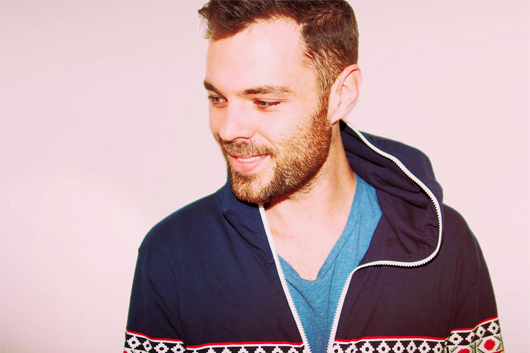
2013 has been good to Benjamin Damage; following the February release of his XLR8R Pick’d Heliosphere LP, the Berlin-based artist has made numerous festival appearances, issued a couple of remix 12″s, dropped an excellent XLR8R podcast, and is now set to release a brand-new EP of original material via 50Weapons. The four-track 4600 record is said to be an homage to the rare ETI 4600 synth. As Benjamin Damage puts it, “Most of the source sounds come from my recently repaired ETI 4600, a massive synth I rescued from a garage it had been sitting in for 30 years. It’s a really unique machine with a reverb chamber and pin matrix. It spent 18 months with a synth-obsessive in Suffolk, who fixed the major design faults and believes it is the only existing model that has ever worked properly.” The DJ/producer’s next release will drop on October 25, but before then, its tracklist and a preview of EP cut “Nebula” can be found below.
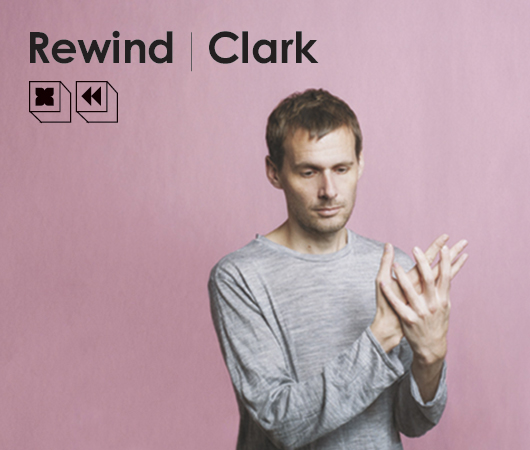
Chris Clark, best known by his slightly more compact moniker, Clark, is an artist motivated by clarity. His impressive dozen years on Warp Records have seen him hone a style that’s paradoxically driven by both abrasive texture and intimate subtlety. While Clark is no stranger to creating tracks for a club environment, he finds a calmness behind even his most driving and challenging works, and perhaps it is in this dichotomy of chaotic noise and frail minimalism that the crux of his sound resides. Speaking to the Berlin-based producer, it’s clear that method and concept are critical to him. “I start with concepts and then I find myself being imprisoned by them,” he says. Clark began his career utilizing relatively raw techniques—recording and re-recording MiniDiscs of field recordings and samples in different environments—and he still prefers to have those tools available to him, even though his techniques and studio have evolved significantly during the past decade. With a new remix collection, Feast/Beast, appearing this week, we got in touch with Clark and asked him to reflect on his back catalog and the progression of his creative process over the years.
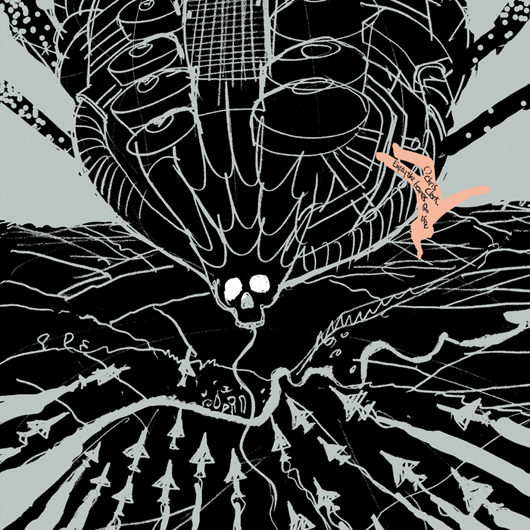
Clarence Park (Warp, 2001) It was such a long time ago. When I was working on Clarence Park, I had loads of pot plants in my room, and I spilled one of the plants on my Atari but just left it there and somehow it still worked. That fits as a kind of metaphor for the album; there’s a sort of slapdash, earthy quality to it. I was very young, but very motivated, and I think that comes through.
The working method was completely different then; I had a very basic set-up in my room—a sampler and an Atari, which I used for about three years. The process was quite extensively honed in the processing and layering of sounds. It was a journey of discovery because I was only just becoming familiar with how to write melody and get interesting textures. I would use MiniDiscs with spliced edits of beats that I’d reprocess through samplers over and over and over again. The music I wrote before was intentionally ugly and unsignable, just textures and noise and bad comedy porn music really—a puerile desire to be antagonistic and stand out… but Clarence Park signified the change into much more emotional, melody-driven terrain.
Also, I was into visual art at the time, and would make lots of photocopy montages; I was fascinated by print and grain and I’d get lots of gaudy or plush, sophisticated imagery and degrade it with photocopies again and again, trying to visualize the effect of decay and erosion on material. It was pretty naive stuff, but I was young; I was under 20, so my approach to it was unrefined. I’m really into Eddie Campbell (the illustrator of From Hell) It’s monochrome, flat, and saturated—sketches, really—but there is an intent and emotional ambiguity there. It’s potent. Perhaps I was leaning into that aesthetic around Clarence Park, and I’ve since tried to develop it. I think there’s something about being able to use crude material but use it with great care and commitment. You can use very cheap means but you can treat them like your life depends on it.
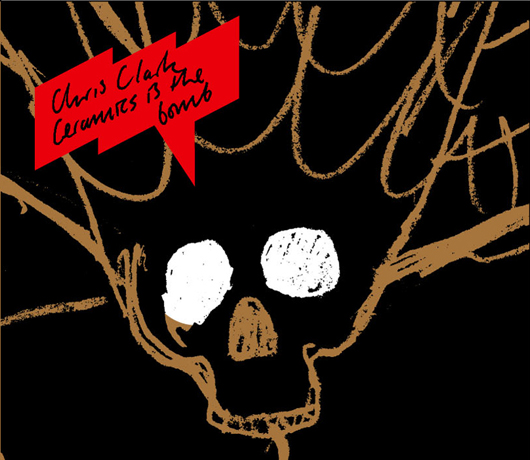
Ceramics Is the Bomb (Warp, 2003) I think it’s actually one of my least favorite things I’ve done. People will say stuff like, “It’s the best thing you’ve ever done and it’s all been downhill from there,” and I just think that’s categorically incorrect, but you know—subjective opinions. I wrote it all on tour with Plaid and Luke Vibert, so it was sort of ramshackle. Back then, it was kind of the honeymoon period with artists getting to produce with laptops, and I was obsessed with having one machine you could do everything on.
Empty the Bones of You (Warp, 2003) I wrote most of Empty the Bones of You in a pokey little room in Brighton. It was the first time I’d knuckled down properly and realized I wanted to get serious with music. I went to Thailand on holiday and had brought along a MiniDisc recorder that I used to take field recordings of different textures, and again got into reprocessing those sounds, developing more of an idea of the spatial placement of sound and how that can emotionally draw you in. I got more ambitious with structure and “knock” in terms of rhythm. It’s quite a skeletal-sounding album, sort of deliberately thin; I didn’t want it to be abrasive and chunky, but delicate and frail, like it’s on the point of collapse. In truth, it was partly because I didn’t have a good enough studio to explore the sound that became Body Riddle, which was more plump and fleshy.
Throttle Furniture (Warp, 2006) Throttle Furniture was more written around Body Riddle in the same torrent of activity that [would eventually be] responsible for Turning Dragon.
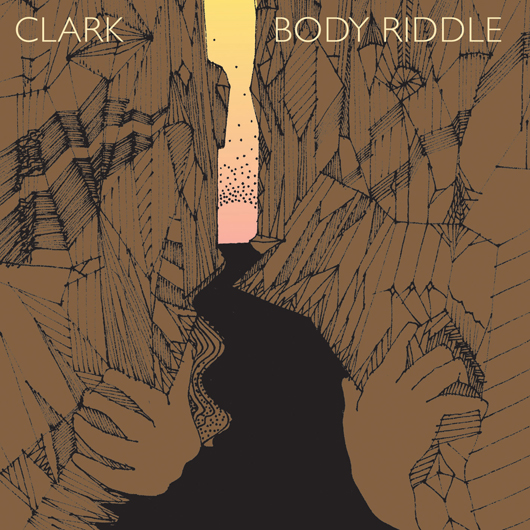
Body Riddle (Warp, 2006) “Observe Harvest”—the Japanese bonus track—was originally meant to be the first track on the album, and it’s just kind of a wall of noise that would put many people off . It’s funny how with time, you can think back on creative decisions and whimsical strategizing and go, “What the fuck was I thinking?” I think that side of my sound would work as an album if it was all tracks like that, but Body Riddle was a lot about exploring live instrumentation and piano and warm drum recordings. Body Riddle was finished about six months before one final track fell into place—”Night Knuckles”—which was actually written before Clarence Park was released. I’m really proud of it as a melodic piece, but I’d completely forgotten about it. I’d been searching for that elusive thing that was going to coin the album, and a friend fortunately suggested it.
Throttle Clarence (Warp, 2006) Throttle Clarence was mostly stuff written around the time of Clarence Park that just didn’t make it. I’d been sending stuff to Warp pretty much every week, and was the least organized person about archiving it.
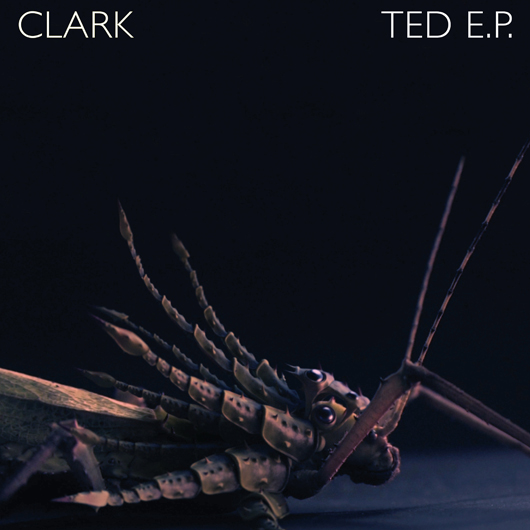
TED EP (Warp, 2007) TED had a lot of deliberately macabre exercises in mid-range, major-scale harmony that I tried to undercut with horrible detuning. Not to be intentionally like, “Ooh, this is dark and scary,” but more that I found it fascinating how the relationship between major and minor is turned on its head once you introduce texture. I don’t think I explored it as much as I wanted to—it’s pushed a bit more on Iradelphic.
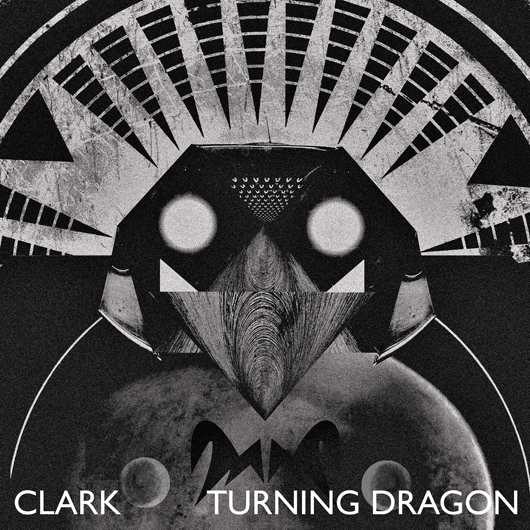
Turning Dragon (Warp, 2008) A lot of Turning Dragon had been written around the time of Body Riddle. I’d just moved to Berlin and the press sort of wanted to see the record as something that happened to me when I moved there—”English Producer Moves to Berlin and Discovers Techno”—but that wasn’t the case at all. I actually was writing more of Iradelphic in Berlin, and on acoustic guitar. It was actually made in conditions of austere sobriety, which I think is the best way to write music, really. I used to stay up late and smoke weed and make a track and it’d be the most banal thing ever; I’d wake up the next day and listen to it and feel nothing but shame. It’s good having a routine. It’s quite a jagged, tormented record really, but it has it’s ecstatic moments.
This is going to sound sort of prosaic, but around that time I discovered the iPod and I would put like 400 of my tunes on there and go on walks and get into deep headphone listening. It was the first time I’d realized that going on walks and listening to music—not just my own, I’m not that narcissistic—let me focus on a strict attention to detail. To me, the builds and placement of sounds on that record actually perfectly fit going for a walk. It’s quite a headphone album in a full-on sort of way.
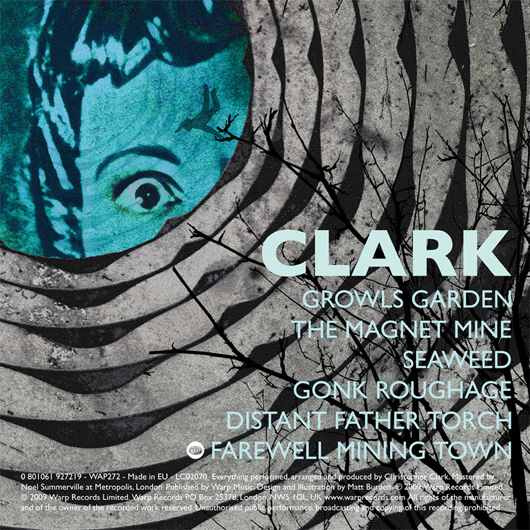
Growls Garden (Warp, 2009) I remember having the order set and doing Warp’s head in by changing it on the day the mastering was being done. I think I sent [label founder] Steve Beckett a playlist that had like four tracks for Totems Flare, then within a few months I had like 20, and Growls and Totem were pared down from that. Growls came together really quickly—it was around Christmas when I finished it, so I have festive memories; it smells of Christmas pudding to me.
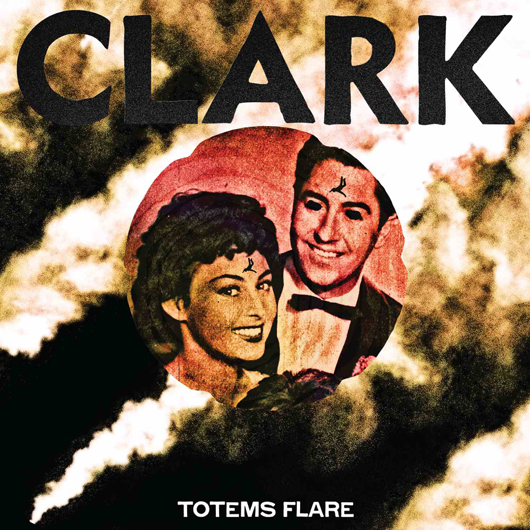
Totems Flare (Warp, 2009) I actually can’t remember much of that period—not because I was living in Berlin and “discovering techno”—but just because I was working loads and it’s all sort of a blur. I think the peaks on Totems Flare are higher than Turning Dragon, but it’s less consistent. That’s possibly why it was less well received, but because it really broke new ground for me, I don’t feel like I compromised anything. I remember listening to the tempo change in “Totem Crackerjack” on repeat for about four days. That was probably the most fun track to write. The track order is a bit idiosyncratic and perhaps frustrating, but the “Eureka” moments felt really real to me, and I pushed things further than I could on Turning Dragon. The whole loudness/distortion thing… it’s appealing because it’s like you’re trying to say something almost beyond what the recording medium can contain, and that’s really thrilling to me. But after that, I was quite done with this hyper, smashed, exultant, electronic sound. Iradelphic was the antidote to all that.
“Willenhall” b/w “Baskerville Grinch” (with Bibio) (Warp, 2011) Bibio and I have done a lot of stuff together that’s never been released. It’s just a matter of finding time. This wasn’t an actual collaboration, but just a couple similar-sounding tracks; it’s a nice meeting point of our two sounds with his electronic stuff next to mine. We’re two sides of a very similar coin. He’s very close to me, he’s a really good mate—I don’t see enough of him, but we’re in email contact a lot.
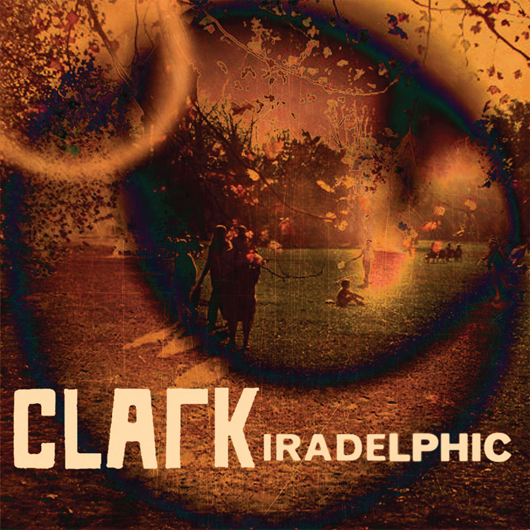
Iradelphic (Warp, 2012) I know Iradelphic is some of the most heartfelt stuff I’ve ever done, and even though a lot of it is years old, it still really resonates with me. Of course, if I thought it was utterly perfect, I wouldn’t still be writing music… You’re always subject to contingency in terms of what you want to say, and Iradelphic was subject to a long process of deliberation and trimming it down, but I’m really happy with it. “The Pining” was originally recorded when I wasn’t that good on guitar, but after playing like eight hours a day for three months, I re-recorded the guitar part. Some people shy away from redoing stuff, and I used to because it can be quite painful. You can have a demo with something kind of magical about it, and when you try to re-record it, it gains a professional sheen but loses its edge. I think you’re never in a worse position if you just give it a go; you can always use the earlier version. For me, that mental, cognitive application is where the discipline comes in. I used to think just turning out four tracks a week and having a huge archive would be amazing, but now I find some things really benefit in being nurtured—just working those 10 tracks for an album and letting everything else fall and being a complete perfectionist about it. I think that’s probably where I’m headed.
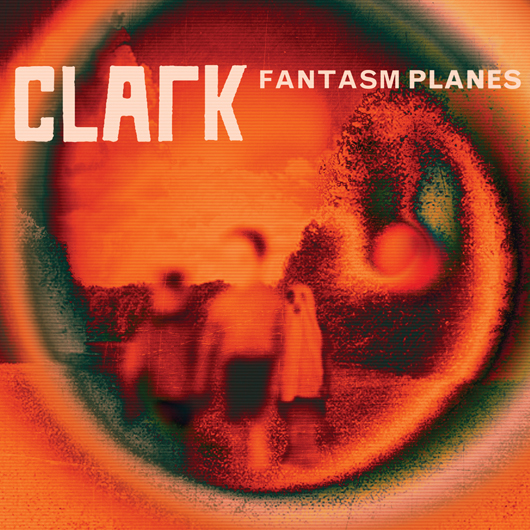
Fantasm Planes (Warp, 2012) Fantasm was stuff that would’ve gone on Iradelphic if it had been more distorted and full-on—something more given to live shows with more energy. It does feel linked to Iradelphic on some levels with the slight Kraut influence, and I was also influenced a lot by Geoff Barrow’s production. With the title track, I wanted to see what a flute sounded like with a really tough bassline underneath it, and it grew from that.
Feast/Beast (Warp, 2013) A lot of Feast/Beast was written this year, but wasn’t properly released yet. Even though there’s a lot of stuff on there, it was cut down quite a bit and remastered. I wanted to have a year where I didn’t put out anything new because I needed to regroup and prepare for the next album. I’ve been feeling a bit like I didn’t want to do remixes anymore, so I thought, “Just put them all out.” I definitely wouldn’t knock the remix [as an artform] though; it can be really fulfilling to work with because you’re less precious with a remix than you are with your own stuff. The time limit also brings energy into the writing.
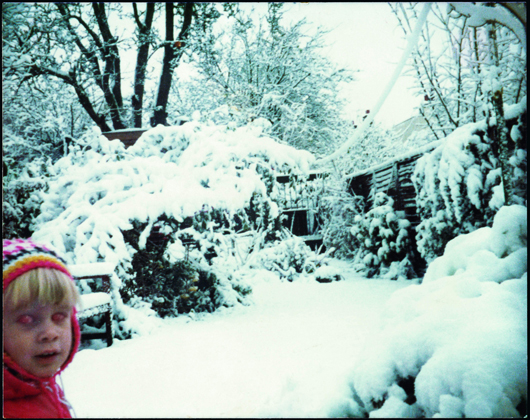
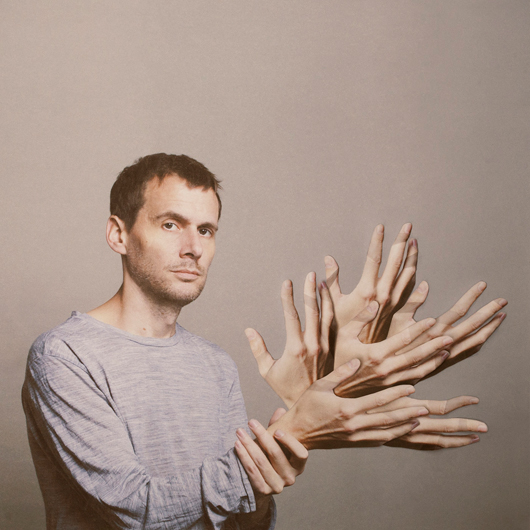
Feast/Beast was really a fun project to do because it flowed really nicely, and we managed to get this artwork that pulled it together. A lot of times the artwork is the last thing you do, and the thing that delays the record. I came across Alma Haser‘s work because my girlfriend and I had stopped in Frankfurt when we couldn’t get a flight to Berlin. She bought this magazine that had Alma’s work in it, and I thought, “This is amazing. I’ve got to get in touch with her.” I think if you’re a purist, you’d see the art as a bit silly, but I couldn’t do what I do if I had a silly attitude towards it. It’s playful.
Rob Chadwick, Jonny Cade, and Brett Sinclair are the minds behind a new dance label called Catch, and their first release comes from Frenchman Aurelien Riviere (a.k.a. DoubtingThomas). “Your Name Here”—taken from his upcoming The Fall EP (out on October 7 as a vinyl package, with digital formats arriving on October 21)—swells from a few percussive flourishes and pitch-shifted vocal samples into an off-kilter, organic slab of techno. With a refined amount of seemingly random guitar and beat seasoning over the main drum structure, DoubtingThomas invites replayability and elevates the cut above predictable, stubbornly minimal artists working in similar territory.
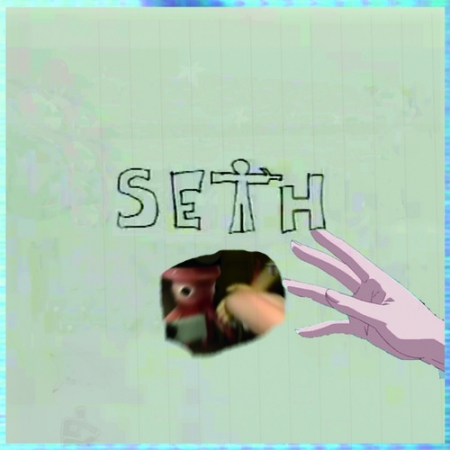
Following Gobby‘s Fashion Lady LP from earlier this year, the Brooklyn techno galvanizer has teamed up with vocalist James K for a new project called SETH. And though the duo compiled a sort of precursor of a mix about a year ago, the smeared and slimy “Don’t Open Your Make” is our first taste of SETH’s original music. Here, Gobby and James K sound sublimely incandescent, lazily balancing on the back of their beat. The singer’s strangely ethereal vocals bring to mind ’90s-era trip-hop with nods to the more gothy sounds of the ’80s, as the production’s angular and discordant melodies align “Don’t Open Your Make” more with UNO’s left-of-center aesthetic. The rest of SETH’s debut EP, Chick on the Moon, will be released on October 8.
Emerging from the subterranean murk of American underground cassette culture sometime around the end of last decade, Rene Hell (a.k.a. Jeff Witscher) has demonstrated a remarkable ability to shapeshift and transform his sound since making the move to Type for his 2010 album, Porcelain Opera. For his latest sideways step, the producer/musician has moved to label-of-the-moment PAN in order to release his notably more minimalist new full-length, Vanilla Call Option. Allegedly inspired by the weightless, placeless experience of travel, the album constitutes a decisive break from Witscher’s increasingly elegant, classically leaning string- and synth-based compositions. Instead, Vanilla Call Option opts for an uncompromising musique concrete sound palette, one that’s heavy on digital scree, wildly oscillating modular synth tones, and an occasionally suffocating sense of dynamics.
The album was primarily composed in airports, performance spaces, and public libraries, and seems to offer a reflection of those transitory spaces. Vanilla Call Option‘s production is marked by a crisp fragility, one which seems on the verge of shattering at any moment and evokes the impersonal, alienating design of such public, functional spaces. The album’s first track, “Smile Models,” has a restless dynamic that is indicative of the release as a whole; opening with harsh, high-pitched noise and the guttural moaning of abused instruments, the piece then shifts into much more ambient territory, which is in turn sporadically interrupted by stuttering synth arpeggios. It’s undeniably difficult to get a grip on, but the track nonetheless makes for compelling headphone listening. Another thematic element running through Vanilla Call Option is its interesting deployment of the human voice. On “Unpack; glue,” for example, Witscher weaves imposing walls of white noise around muffled, chattering voices, which, barely audible, are rendered mute and asphyxiated. “Var_len” offers a different approach, layering choral vocal gasps alongside oscillating synths and scattered low end. Either way, the results are never short of unnerving.
The processed digital noise found on Vanilla Call Option is an interesting retreat from Witscher’s previously warm, often faintly nostalgic sound. However, what Vanilla Call Option lacks in terms of the eminent listenability of the gloopy synth drones and deconstructed techno that characterized previous Rene Hell releases, it makes up for in a compelling conceptual framework and a rich attention to sonic architectures. Witscher has some serious conceptual ambitions, and while there are moments when the album feels slightly undercooked, this dynamic, disorienting record proves that he remains an artist with a considerable degree of promise.
Following last week’s announcement that LA vocalist Kelela—the talented singer featured on Kingdom’s “Bank Head” single—would drop a new mixtape early next month via Fade to Mind, our first preview of the collection’s new material has made its way onto the web. Produced by LA duo Nguzunguzu, “Enemy” takes shape as a percussive, Eastern-tinged beat, the sparse arrangement of which allows for Kelala’s exceptional vocal prowess to take the lead. The tune can be streamed in full below, ahead of the songstress’ Cut 4 Me mixtape—which features additional productions from Girl Unit, Jam City, Kingdom, Bok Bok, and more—set to see a release on October 1.
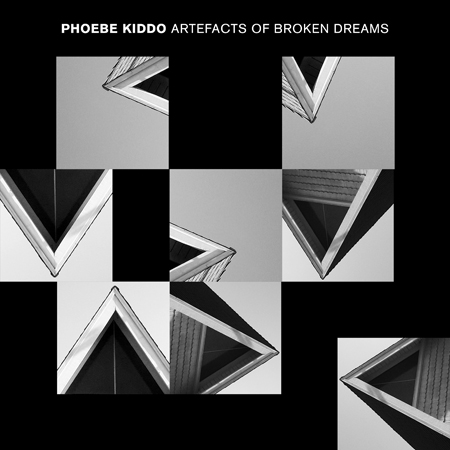
The Anenon-helmed Non Projects label is set to release the debut full-length from Berlin resident and RBMA graduate Phoebe Kiddo next week. And following the free download of ghostly, atmospheric album cut “When the Soul Lies Down,” XLR8R now has an exclusive stream of the dense, 10-track Artefacts of Broken Dreams LP. Said to have been pieced together using “borrowed studios, [and] whatever means were at hand” while Kiddo relocated from Melbourne to San Francisco, Madrid, and Los Angeles before ultimately landing in Berlin, the album takes on a wide sonic scope with an emphasis on detailed textures and subtle movements. Before the burgeoning producer’s first long-player drops on September 24, Artefacts of Broken Dreams can be heard in its entirety below.
On this all-Australian remix, rising Syndney soundsmith Wave Racer takes on “Don’t Be Shy” by DCUP (pictured above), the title cut from the Melbourne-based producer’s forthcoming EP. Taking quite a few pages from Rustie’s oft-borrowed playbook, Wave Racer infuses the original song with an all-encompassing neon glow, balancing the skittering boom-bap which drives his production with sparkling arpeggios, bright guitar strums, and a never-ending array of gliding synth touches. DCUP’s original version of “Don’t Be Shy” and Wave Racer’s remix will be joined by further reworks from Tyler Touche, Boys Get Hurt, and Slumberjack when the Don’t Be Shy EP officially drops on September 23.
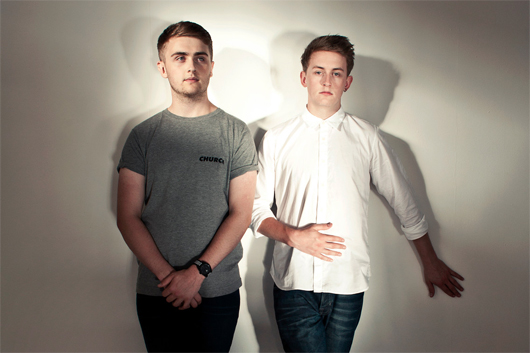
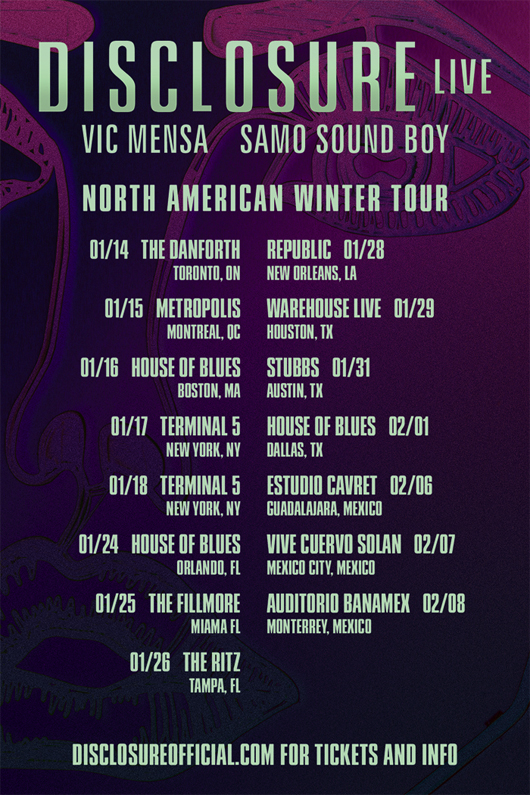
Globetrotting brotherly duo Disclosure has certainly had a busy year, releasing its debut LP this past summer and embarking on a seemingly constant tour schedule ever since. Still, the pair seems nowhere near ready to take any substantial amount of time off, with the announcement of a new set of North American tour dates beginning in January of next year. The upcoming winter 2014 tour will see Chicago-based MC Vic Mensa and—most notably—Body High co-head Samo Sound Boy join Disclosure on its month-long jaunt across the States, Canada, and even down to Mexico. The full list of winter tour dates can be found on the flier below, where the pair’s upcoming fall North American tour dates are also included.
October 09 – Showbox SoDo, Seattle WA October 10 – Knitting Factory, Spokane WA October 11 – Knitting Factory, Boise ID October 12 – Knitting Factory, Reno NV October 16 – House of Blues, San Diego CA October 17 – Fonda, Los Angeles CA October 18 – Fonda, Los Angeles CA October 19 – Treasure Island, San Francisco CA October 22 – Boulder Theater, Boulder CO October 24 – House of Blues, Chicago IL October 25 – Headliners, Louisville KY October 26 – Terminal West, Atlanta GA October 27 – Mountain Oasis, Asheville NC October 28 – 9:30 Club, Washington DC October 29 – Union Transfer, Philadelphia PA
Last month, word of new Knxwledge releases for Dublin label All City surfaced, and now, we have a video from the prolific LA beatmaker’s forthcoming three-track Rap Jointz Vol. 1 EP. The quick “Nothesame” track features a guest appearance from Blu, and is a fairly straightforward, classic-sounding cut—albeit one that sounds decidedly jumbled and submerged. The video itself is a stuttering and warped series of episodic images which follow the seemingly stream of conscious narrative of Blu’s verse. A thick haze of smoke undulates in and out of the frame as the video’s lead stumbles through different events and locations, making for an apt visual accompaniment to Knxwledge’s blunted production. The narcotic Rap Jointz Vol. 1 is set to drop on September 24 (preview and pre-order it here) with the Kauliflowr LP arriving shortly thereafter in October. A quick mix of selected tracks from Knxwledge’s upcoming album can be previewed below.