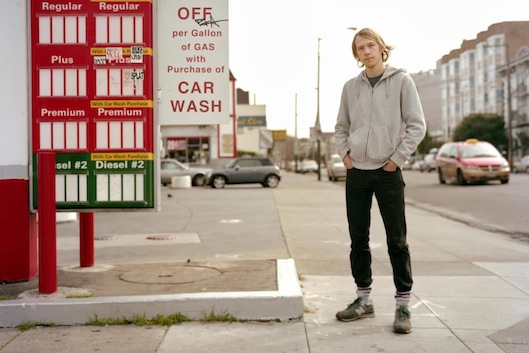
Brooklyn duo Beacon (pictured above) just released the melancholy The Ways We Separate album via Ghostly, and are following it up by sharing a pulsating house remix of album track “Drive” from fellow Brooklynites No Regular Play. This new version of the R&B-tinged tune leaves the original track’s yearning vocals and minor-key atmospherics fairly intact, but the addition of a restrained and steady 4/4—not to mention a slick, understated sax melody—is welcome.
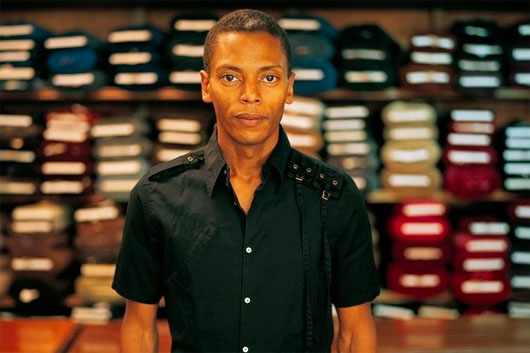
Rumor has it that legendary Detroit DJ/producer Jeff Mills turned 50 this week, and to celebrate, German blog Nerdcore has compiled seven classic mixes from Mills’ late-’80s WLJB Detroit radio show—which were recorded as The Wizard—and offered them for free download. The mixes clock in at about 30 minutes each, and sound as if they were recorded straight to cassette tape during their separate original broadcasts between 1986 and 1989. Even though their audio quality may not be great, the recordings still provide an insightful view into the mix of musical ideas that helped make Detroit such a fertile city for house and techno during that era. The Wizard’s seven classic mixes can be streamed and downloaded in the player below.
It’s hard to believe it has been three years since Barcelona quartet Deloreandelivered our favorite record of 2010 with Subiza. Now, it appears new material from the Spanish dance-pop outfit may be on the horizon with a teaser video for a brand-new track and an offer of a “special gift” appearing on the band’s new website. Though details are rather scarce at this point, we have just over 90 seconds of new audio from what is likely Delorean’s first single from its forthcoming record (though it’s unclear if “Apar” is the title of the album or the song itself). The preview video can be watched below, and those interested in receiving a “special gift” from Delorean in the days to come are encouraged to sign up for the group’s mailing list by heading here.
Manchester’s Walton is one of the Hyperdub stable’s most gifted young producers, who at the age of 22 has already released three EP’s through the label and is set to drop his debut album on July 1. In anticipation of the arrival of the Beyond LP, the bass-minded producer has made available an appropriately futuristic video for album track “Frisbee.” The clip juxtaposes mechanical imagery, such as pistons monotonously working, with ominous visuals of human skeletons and oil droplets spilling, all rendered in gloriously cruddy CGI. It’s definitely in keeping with the dark, jittery sci-fi vibe of the track, which is a smudged, grime-influenced slice of contemporary UK bass music.
A month after dropping a 20-track, two-part remix album to accompany his debut full-length, Skylight, Bubblin’ Up Seattle-based producer Kid Smpl has announced the details of his follow-up record. The Armour EP is said to mark a decidedly subdued turn for the producer, exploring an introspective side of bass music that runs heavy on the cinematic atmospherics. Before Armour drops on July 22 via Hush Hush, its tracklist and artwork can be found below.
01. Why Did I Breathe (feat. DJAO) 02. Promist 03. Armour 04. Necklace 05. Breathing In Space
Brooklyn experimentalist and co-owner of the Software imprint, Daniel Lopatin (a.k.a. Oneohtrix Point Never) has announced that his next album is set to arrive this fall via electronic music institution Warp. R Plus Seven is a 10-track LP which said to contain “many familiar sonic touchstones” of Lopatin’s work, despite it being “a major departure” from the excellent music heard on Rifts and 2011’s outstanding, XLR8R Pick’d Replica. Furthermore, the music is described as being the closest that Oneohtrix Point Never has ever come to “resembling traditional song structure.”R Plus Seven will be released on October 1, around the same time Lopatin will be touring various parts of the world. Those dates, along with the tracklist and artwork for R Plus Seven, can be found below.
01. Boring Angel 02. Americans 03. He She 04. Inside World 05. Zebra 06. Along 07. Problem Areas 08. Cryo 09. Still Life 10. Chrome Country
9/17/13: Our Lady of Lebanon Maronite Cathedral (Brooklyn, NY) 9/22/13: Sacrum Profanum (Kraków, Poland) 9/27/13: Le Trabendo w/ Mondkopf (Paris, France) 9/28/13: Today’s Art Festival (The Hague, The Netherlands) 10/03/13: Islington Assembly Hall (London, United Kingdom) 10/04/13: Berghain w/ Stellar Om Source + Lorenzo Senni (Berlin, Germany) 10/05/13: De Kreun (Kortrijk, Belgium) 11/16/13: Walker Art Center w/ Tim Hecker (Minneapolis, MN) 11/22/13 – November 24, 2013: ATP Weekender @ Pontins Holiday Centre (East Sussex, United Kingdom)
Zomby‘s DIY PR strategy is some unholy alliance of Aphex Twin’s pranksterism and Kanye West’s egomania. Those with enough stamina to follow the technically anonymous English producer—now based in New York—on Twitter are treated to a daily psychodrama where flashes of insight are woven into a running commentary on fashion, music, how cool his dog is, and his love/hate relationship with Apple products. This is all more or less expected of a highly functioning stoner who’s too famous for the underground and too underground for what remains of the mainstream, someone who wants to retain control of his public image while reminding us that he could care less about it. With Love is as frustrating and compulsively consumable as Zomby’s online presence, yet it suffers from its own consistency in almost exactly the same way.
Coming in at 33 tracks spread over two discs, Zomby’s follow-up to Dedication is a metastasized version of that album’s funereal sound. There are breakbeat-driven digressions that recall Zomby’s 2008 homage to hardcore, Where Were U in ’92, and experiments with canned trap sounds and structures, but the album is centered around his tried-and-true formula of cascading 8-bit synths and skipping beats. By the time we get to the second disc, we’re numb to the producerly excellence on display. With its monochrome tastefulness, With Love is out to make good on Zomby’s claims about how quickly he works, and how prolific he is—there are shades of Richard D. James’s Mozartian productivity—more than it’s out to push his well-established sound in a new direction.
With Love
There are some astounding moments on With Love, to be sure, but the double-album format doesn’t allow listeners to appreciate the highs for long. The album trailer, with its Béla Tarr-meets-Givenchy tableaux vivants, feels like a more natural setting for the music than the album itself—the visual rhythms give the music some room to make an impact. With Love presents itself as a lone-wolf beat tape, with tracks ending abruptly like cryptic pirate-radio transmissions. Unlike the work of someone like Burial, though, there isn’t any ambitious overarching structure to guide us through the maze of urban sadnesses or indicate peaks and valleys. The sound is polished to such a high sheen that we become snow-blind, unable to perceive the truly great moments among the blandly ratcheting ones. This album is grimly serious about Zomby’s importance in the same way his Twitter feed can be, but it lacks moments of self-aware piss-taking that, in puncturing the mythology, would make it feel like an achievement. Either a lot of effort went into making this seem effortless or Zomby can actually produce this well in his sleep. Whatever the case, it makes for a strangely flat listening experience.
It’s more interesting to think of With Love as three albums weaving in and out of each other. There’s the album that mostly continues in the vein of Dedication, there’s the album that’s a more experimental, darker version of Where Were U in ’92‘s junglism, and there’s the album wherein Zomby’s trying out to be Gucci Mane or Chief Keef’s next go-to producer. Zomby’s the last person who’d want anything to do with a concept album. His songs, individually or grouped in albums, are distinctly anti-narrative. Still, finding a way of breaking With Love down into its constituent parts makes its strengths and its flaws easier to grasp.
With Love album trailer
Zomby’s taste in music is impeccable. He’s got as good a handle on the virtues of trap as he does on grime or jungle, yet his attempts to replicate the sound are surprisingly rote and unimaginative. The second disc is heavy on trap, which gives it a lugubrious, interminable feel. “Digital Smoke”‘s lurking videogame synths sound good, if entirely expected from the producer, but its underpinning of ratcheting hi-hats and booming kicks are as goony and anonymous as any stock Soundcloud trap producer. “How to Ascend” starts off the in the same Low End Theory-tryout purgatory, but is saved by its brevity and an urgent, stabbing synth line. “Vast Emptiness” is similarly unimaginative but stylistically coherent, suggesting, if nothing else, that Zomby might exist to credibly provide the content for a radio station in the next Grand Theft Auto. Although Zomby’s imperative has been cry-now-cry-later funeral-parlor music for a while now, there’s something conspicuously joyless about his take on Yung Chop territory—for someone who loves Chief Keef so much, there’s none of the mind-blowing exuberance of a “Kay Kay” or the menacing restraint of “Citgo” on display here.
On the other hand, Zomby’s forays into breaks, particularly drum & bass territory, are brilliant. Chopped-up Amen breaks have been creeping back into electronic music after a lengthy period out of fashion, with producers from Legowelt to Andy Stott sneaking in some sampled funk among their straighter beats. Zomby was ahead of the pack in terms of revitalizing those sounds, but he slows things down to devastating effect on tracks like “It’s Time,” which curls leisurely upward like incense smoke among cries of “It’s time to get fucking mental.” The urgency is barely contained by the treacle-like crawl of the cut. He proceeds to up the ante throughout the first disc, with the hardcore mania/ecstasy nightmare of “Overdose”—a callback to 4 Hero’s classic “Mr. Kirk’s Nightmare.” This production style culminates in the fuzzy dopamine drum rush of “777” (no relation to the Autechre tune), whose cruddy 8-bit-sampler quality is a welcome stray hair in this otherwise tight razor fade of an album.
When Zomby hews close to Dedication‘s gothy sound, he also comes up with winners; the second disc opens promisingly with “Black Rose,” where a vaguely medieval, thickly atmospheric melody harks back to 4AD’s Dead Can Dance heyday. Elsewhere, the gloominess is cut with unexpected hints of funk, as with the sweet Rhodes driving the suitably nostalgic “Memories” or the cunning bass-guitar riff of “Isis.” Zomby’s clearly grown into working with vocals in a way he wasn’t on Dedication, whose most memorable moment was the unfortunate Panda Bear cameo on “Things Fall Apart.” “Isis” sounds like the result of someone giving Inga Copeland bunk directions to the Hyperdub studios—the delay-cloaked vocals give the impression of Hype Williams gone garage. As tired as ’90s R&B vocal appropriations have become in bass music, “Rendezvous” manages to make vocal grabs from “The Boy Is Mine” sound genuinely sick—set over time-stretched, artifact-laden digital screams, Monica and Brandy are enlisted in Zomby’s warped take on the sound. Zomby wants us to think he’s a cultural oracle, but he’s more of a curator than an innovator. His fandom make tired or discredited sounds feel universally relevant, but he’s only circumstantially ahead of the curve.
If productivity is no object in Zomby’s world, With Love argues convincingly that he could use an editor. A big part of the producer’s appeal is his fragmentary, atmospheric approach—the idea that these are divinely mandated transmissions from another world. But from a materialist perspective, without buying into Zomby’s messianic pretensions, he’s a gifted producer who finds himself at a level of notoriety that’s well suited to the fact that he looks to no other authority but himself. With Love is insular and often captivating, but too often falls between the cracks—between his self-image and the real world, between form and formlessness, between virtuosity and predictability. When we check into the music, there’s usually something excellent to admire—technically, if not aesthetically. With Love‘s problem is that it puts its talent on display over 33 tracks—given Zomby’s hubris, it’s not impossible that this is some sly allusion to Jesus’s lifespan—and offers few reasons for the unconverted to care.
It’s when Zomby lets go of the bombast and indulges his nostalgic, emotive tendencies that With Love snaps into focus—and when he borrows bombastic, stock sounds that the album feels like an undifferentiated slog. There’s still some dissonance between the producer’s dryly excessive Twitter persona and his at times too-serious attempts to back up that arrogance with his music. Listeners willing to digest his latest album in small doses or on shuffle will find gold among the dross, but as a unified statement, it leaves much to be desired. Not quite enough of a step up in quality to justify its length, With Love would be the statement it intends to be if Zomby focused on something other than his own bulletproof persona. His branded Twitter diarrhea is an exhausting spectacle, but at least it owns up to the producer’s contractions and isn’t totally devoid of humor. Much like his feed, With Love goes on forever. Too often, by the time it has something to say, we’ve already tuned out.
To celebrate the recent release of his debut record under the Plaza moniker, SF producer Johan Churchill has offered up a robust tune full of sweet synth licks, funky basslines, and fresh, evolving rhythms. Aptly self-described as “electro-lounge” music, the “Fish Water” groove showcases Churchill’s production chops with his crafty synthesizer use, often creating crisp and interesting timbres despite relying on the aforementioned instrument for most of the recording’s melodic sounds. The pace of Plaza’s unreleased production is rather quick, and the fact that it’s still danceable despite its sharp turns is a testament to Churchill’s talents. Plaza’s debut LP Flip Phone is out now via Sound Boutique.
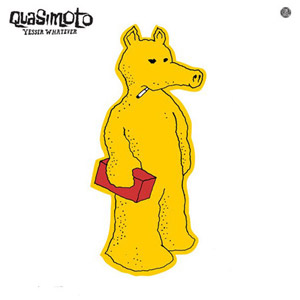
Calling Otis Jackson Jr. prolific would be an understatement. Throughout his long and storied career, the Oxnard, California native and Stones Throw heavyweight has put out dozens of releases under a litany of pseudonyms and side projects, and although he’s arguably most well-known for his production skills as Madlib, his rap alias Quasimoto and the two LPs released under that name, The Unseen and The Further Adventures of Lord Quas, have also garnered considerable recognition. However, Jackson’s material under that name seems to have been put on the backburner for the time being, considering the last Quasimoto release dropped eight years ago. In an attempt to honor Quasimoto’s body of work or—hopefully—build hype for an upcoming album, Stones Throw has seen fit to compile and put out Yessir Whatever, 12 tracks of Quasimoto and Madlib rarities recorded over 12 years.
First things first: for those who aren’t familiar with his work, Quasimoto is not for everyone. The character, allegedly conceived by Jackson during a week-long mushroom binge, raps in a nasal and vaguely helium-addled tone created by manipulating and speeding up Jackson’s natural voice. Furthermore, Jackson is not the most technical rapper; his verses are often simplistic, but his easygoing, relaxed cadence and delivery seamlessly blend into the mix. The subject matter is also a bit unremarkable; Yessir Whatever‘s 12 tracks touch upon topics such as Quas’ prowess with women (“Broad Factor”), calling out false MCs and freeloaders (“The Front”), reminiscing on old flames (“Astronaut”), coping with the responsibilities and expectations of adulthood (“Youngblood”), and, of course, weed (“Sparkdala”). Jackson does demonstrate some storytelling ability on “Am I Confused?,” where he raps about a cycle of turmoil and self-destruction, which includes struggling with illegitimate children, infidelity, substance abuse, and AIDS going on all around him. “Green Power,” which immediately follows “Sparkdala”‘s ode to marijuana use, showcases melancholy musings by both Quasimoto and Madlib on the power that drugs and money hold over people, including the depressing lines “Nothing’s gonna happen to you, at least nothing new/Smile (if you know what’s good for you)” over distant piano samples.
Beats, however, are at the forefront of Yessir Whatever. The production work is consistent, and its sound is nothing short of what one would expect of Jackson, featuring a classic hip-hop sound—replete with dusty kicks and snares—as well as heavy sampling of obscure soul, jazz, and pop culture, all of which is wrapped in a haze of vintage crackles and pops. “Broad Factor” kicks things off with a funky guitar sample and spacey, intermittent synths placed over a neck-snapping rhythm. “Seasons Change” centers around a seductive slow-jam sample, and, in typical Madlib and Quasimoto fashion, the song quickly segues into an outro featuring a quirky sample of Neil Diamond’s “The Pot Smoker’s Song.” Although the LP is relatively consistent in sound (even for material spanning a 12-year period), its latter half seems to focus on Jackson’s fine tuning and studio mastery rather than his particular aesthetic, and is thus where many of the better offerings can be found. “Planned Attack,” in which Quas bigs up his lyrical prowess over boom-bap production reminiscent of vintage East Coast rap (there’s even a Jeru the Damaja sample in its hook), is a good example of this. There aren’t exactly any witty punchlines or quotables, but the lyrics themselves are delivered with a flow that rides the beat well, and utilizes Quas’ nasal battle-rap rhymes as just another component of the production. “Am I Confused?” is another standout, basing its melody around an infectious xylophone sample and altering Jackson’s voice in each new verse, making it sound as though multiple MCs are on the track.
While its age can sometimes be a bit obvious, Yessir Whatever is well put together and organized; it feels less like a blatant retrospective (or worse, a “greatest hits”) and more like a forgotten beat tape. If the rumors that Jackson has scores of unreleased Quasimoto and Madlib tracks stored away are true, the possibility of future compendiums such as Yessir Whatever would certainly be a welcome one, especially if they’re as well curated as this one.
London techno duo Dense & Pika has put much emphasis on its reliance on analog and outboard gear to achieve a heavy, punishing sound, and the new video for the DJ/producers’ recently released “Move Your Body Back” aims to extend this aesthetic choice to their visuals. Flat, grey imagery of soldiers, children in gas masks, and other scenes of war are overlaid by a grid and the occasional flash of Hotflush’s logo. It certainly goes hand-in-hand with the thundering sub-kick and repeated chants of the track, though the obfuscating visuals do little else in adding to Dense & Pika’s story. The duo’s self-titled EP is available now on vinyl and digital via Hotflush.