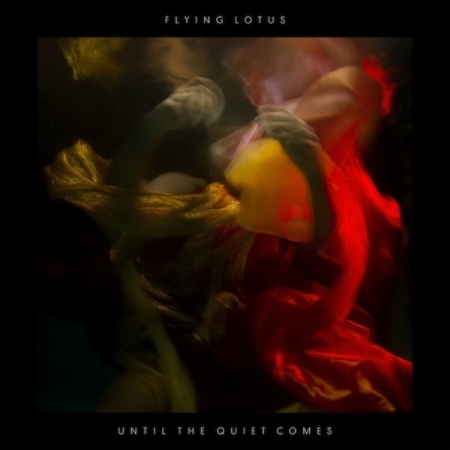
Well, it’s finally here. About a week before its official release on October 2 via Warp, you can listen to the fourth LP by Los Angeles producer Flying Lotus, Until the Quiet Comes. Though it seems like we’ve heard just about all of Steven Ellison’s new album in the form of short films, music videos, and varioussnippets, today marks the first time you can listen to every last second of the 18-track, 47-minute record. Head over to NPR to do just that.
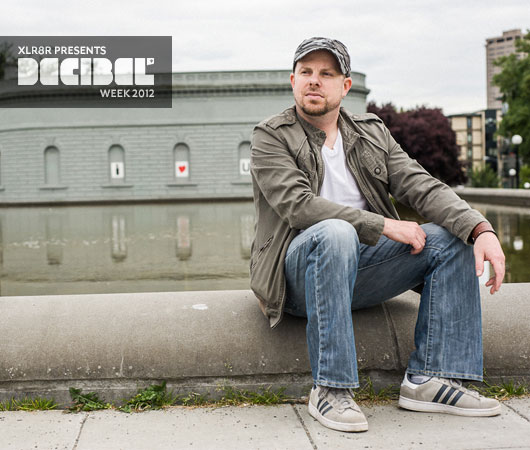
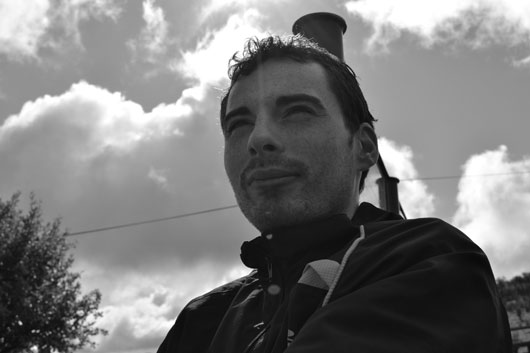
Seattle’s Decibel festival is set to get underway this week, marking the ninth edition of the annual West Coast gathering for forward-thinking electronic music acts and devotees. Since its humble beginnings in 2004, Decibel has steadily grown in size and reach each year, and now stands as one of the US’ most comprehensive electronic-music festivals dedicated to showcasing underground and emerging talent. Still, Decibel’s rise to prominence is a somewhat unlikely story, built from a truly grassroots organization and run by music lovers and volunteers under the guidance and curatorial prowess of Seattle DJ/promoter Sean Horton, the festival’s founder and director. Throughout the week, XLR8R will be posting a series of Decibel-related content, and we figured that there would be no better way to begin than to chat with Horton himself, who provided some insight into what drives the festival and how it has managed to consistently evolve throughout the years.
What’s your background and how did you come up with the idea for Decibel?
I grew up in the Detroit area and was exposed to Detroit techno early on, so that planted the seed. I blame the early Plastikman Plus 8 parties for getting me into electronic dance music, and the need for experiencing well-curated events. I took that with me when I moved to Seattle in ’95. I was going to school for audio engineering and started promoting shows in college—throwing underground, multimedia-based events with lighting, videos, DJs, and live electronic music. Decibel didn’t come up as an idea until 2003, and it was largely influenced by two festivals I had been to earlier that year, Movement in Detroit and MUTEK [in Montreal]. Movement seemed to capture more of a party feel, while MUTEK had this intensely intellectual A/V component, and I really loved both of those atmospheres. If you look at Decibel, I think you’ll see a lot of similarities between both of those festivals in terms of the programming.
Would you say Decibel tries to find a balance somewhere between the two?
Yeah, that’s a fair estimate. I’d say right now, just based on the format, we’re more similar to MUTEK in the sense that we’re not a city-center type, outdoor festival. We’re club-based, and that’s by design. We prefer to have intimate club and theater experiences. There are so many amazing venues in Seattle, and I really wanted to showcase all these different places that I’d been booking for the past decade. But, in terms of the music, I think you’ll find that we’re bridging the gap between more accessible forms of electronic music. I don’t think you’d see MUTEK book DJ Shadow or Erykah Badu and those types of artists.
Is there a particular guiding principle or curatorial approach to the festival?
It’s very selfish really [laughs], but I do all the curating myself. I base it on music that I personally like, music that I would generally want to see in a live setting. There are a lot of DJs, bands, and performers out there that just don’t pull it off live, and for me, I usually don’t book an artist unless I’ve seen them perform and they would be a good fit within a particular showcase. There’s a particular way I try to build the energy throughout the night, with a starting point and end point for each showcase. There are also optical events that happen earlier in the day from 6 to 9 p.m., [before] the club showcases from 9 p.m. to 2 a.m., and then the after-hours from 2 to 7 a.m. I like to think of it as a natural progression between all three of those experiences throughout the day. That’s the way that I’ve always curated Decibel. It’s very personal because that’s the way I like to experience things.
Is that an idea you had from the onset, or is that something that’s developed as the festival has grown?
It’s been that way since the beginning. We’ve grown in terms of the size of the venues and the size of the festival—we started at 2,500 attendees the first year and had around 23,000 last year. We’ve grown substantially each year, but I’ve taken the same formula from year one and just expanded it. That goes for the education stuff as well, the DB conference aspect. With the conference, which goes from 12 to 6 p.m., you could almost make it a 5-day, 24-hour festival—not that I would recommend that. It’s more that there’s something for everyone, and there’s an activity to do at all parts of the day.
What do you think makes Seattle such an optimal place for a festival like this?
The tech industry is huge here, and that’s affected the subculture. Seattle’s subculture is newer, and over the past five years, we’ve seen a real resurgence in technological music, technological art, technological film—all of these things that have been influenced by companies like Boeing, Amazon, Microsoft, etc. All these incredibly gifted programmers and designers have come here and as a result, more people are producing and enjoying music that would maybe be considered “leftfield.” And Seattle is just a beautiful city. There are so many great parks and places to visit and it’s a tourist destination until about mid-October. Decibel comes right around the end of summer and beginning of fall, which is just a perfect time for Seattle; it serves as kind of an end cap to all the summer craziness.
You are approaching a decade-long run as a festival. Was there ever a turning point or a moment when you realized that Decibel was going to work for the long-run?
Yeah, our second year. In that first year, there was a lot of experimentation—we were working with a lot of venues for the first time and really still getting our feet wet with the community. In the second year, 2005, we more than doubled our audience and were able to expand to larger venues and still hit capacity at almost every showcase we did. To me, that was the year that really solidified Decibel as a brand in terms of festivals. It also was the year we saw a lot of people coming from outside of the city and Washington, and it’s been that way ever since. As of now, about 40% of our audience comes from outside the Northwest.
Given that, it still seems that the festival has a very grassroots, community-based feel to it. How do you accomplish that?
Well, a lot of that is from Decibel being a volunteer-based organization. Pretty much everyone in the organization—of which there are about a dozen core managers/directors—are all close friends with similar passions. We all have day jobs, so it’s truly a labor of love, and I think that’s part of what makes it unique—especially with a festival that’s grown to the size and magnitude that we have. There really isn’t much money at the end of the year. If we break even, we’re all patting each other on the back [laughs]. I’d love for us to be able to quit the day jobs and focus all of our attention on Decibel because I think we’d get a lot out of it, and be able to do even greater things from a creative perspective, but we’re just not there yet. At this point, I’m spending as much money as it takes to create a program that I feel is going to be just as good as the previous year. [We’re] constantly outdoing ourselves and growing substantially in the amount of artists and venues we work with. It is challenging, but we have a very talented team of consummate professionals that look at Decibel much the same way that I do—it’s a labor of love and gives them a chance to build something on an international level. That’s really what I intended Decibel to be, a community of people who learn from each other and grow from each other and then can eventually branch out and do their own thing.
Any favorite memories from Decibels past?
Every year there’s a handful of artists that capture the spirit of what’s happening that year, both in technology and music. Last year, being able to do the US debut of Amon Tobin‘s ISAM was monumental for us; bringing something on that level of complexity and innovation really captures the spirit of Decibel to me. I have to say, I thought it was really entertaining to see Deadmau5 in 2007. I think it was his first Northwest appearance, and he played a really banging techno set to a club that held just 600 people. Being able to bring artists in their infancy that then go on to become much more established, well-known acts is something that I pride myself on as a curator. Every year it seems we have a dozen or so artists that we book ahead of the curve—Flying Lotus played in 2005, Justice performed in 2006—all artists that were really in development at the time. Hopefully we can continue to book them too, but as electronic music’s popularity begins to rise, it’s becoming financially difficult for grassroots festivals like our own to continue to book artists that we had the pleasure of booking in the past. That’s my only concern, that with the continued success of electronic music, it will become a corporate endeavor just like anything else that becomes successful in North America, and maybe as a result you won’t see festivals like MUTEK, Communikey, and Decibel be able to survive.
And what acts are you looking forward to having at the festival this year?
DJ Shadow will be debuting a new set, and Entroducing… is definitely one of my top-five albums of all time, so I’m excited to see what he does. I’m very excited about John Talabot and Pional, which will be the Northwest debut of their live set. Matthew Dear will be performing his new material with his band for a full A/V set. We’ve been booking him since 2004, so I’d put that up on the top of my list too. And I’ll definitely be front and center for Actress at the XLR8R showcase too.
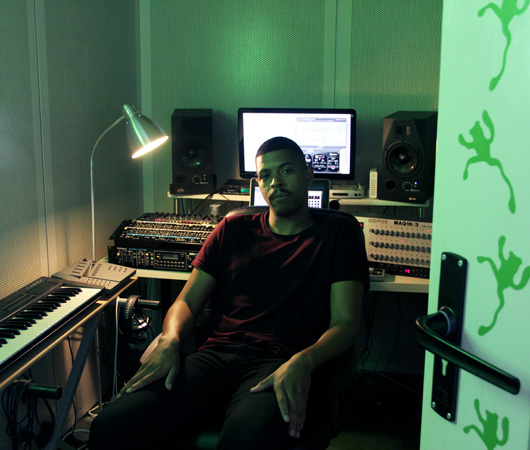
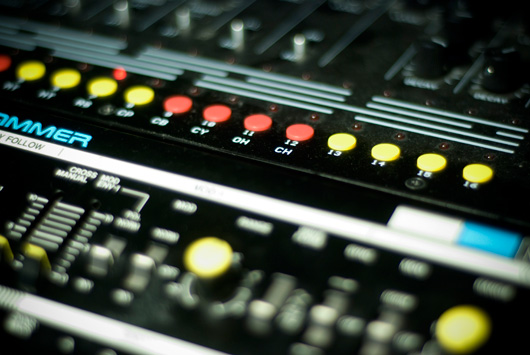
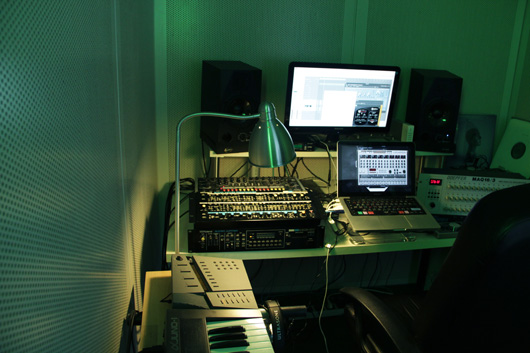
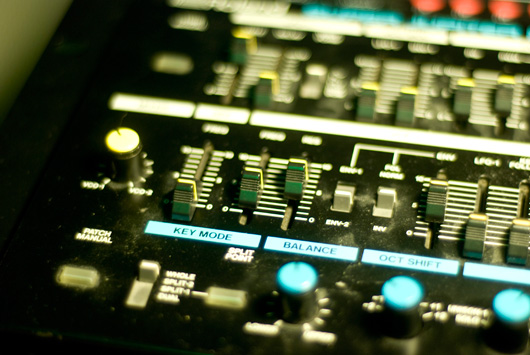
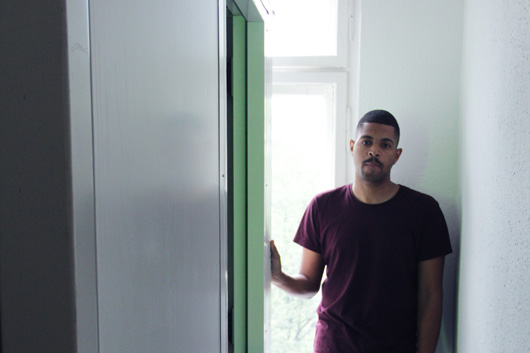
Lando Kal (a.k.a. Antaeus Roy) has made a lot of pit stops over the course of his career, but only seems to be getting better with each new city he calls home. After first gaining notoriety in his hometown of San Francisco as one half of Lazer Sword, Lando relocated to New York for a spell, and followed that up with a move to Berlin. He’s found a home in the German capital, making music inside a space-age studio cabin that’s the envy of just about every producer who sees it. Interested in taking a look at this contraption ourselves, we paid Lando a visit and got him talking about his favorite gear, the evolution of his production methods over the years, and his forthcoming solo LP.
XLR8R: When did you start making music and what was your initial set-up like? Lando Kal: I’ve been doing it for a good 10 years now. Right out of high school, I just immediately got into it. Actually, if we go way, way back, I used to use that Playstation 2 game, MTV Music Generator. It’s funny, because I talked to [Machinedrum] about this before, and he used it, too. It was the worst way [to produce], but it was also cool because you could actually sample CDs that you put in the Playstation 2, and add these crappy drums over them. I [remember sampling] some old Astrud Gilberto bossa-nova album; I looped almost the full chorus and just put some extra drums over it.
But when I officially had somewhat of a set-up, I used an SP-12 E-mu sampler. I had one turntable and I also used Acid software and Reason. Between all of that, I was pretty much making fully sample-based material.
Were you making music alone before Lazer Sword came about? Yes, I definitely was. That’s more or less how Bryant [Rutledge (a.k.a. Low Limit), my partner in Lazer Sword,] and I clicked. He had a similar music-making technique and we had similar interests in terms of the music we were making at the time. But yeah, it was definitely before [Lazer Sword that I started making music.] I’d say it was a good four years before we even met.
When you two finally did meet, it seems like Lazer Sword became a live act pretty quickly. How did you do the live show? Initially, we didn’t know what we were doing. We just wanted to have as many things on the table as possible, which proved to be the worst-case scenario. We basically tried to move what we had in our studio to the club. It was kind of a disaster. Timing was always off. We had a MicroKorg, an SP-303, a couple of other samplers, and a backing track in Ableton. We jumped into it pretty quick, because we had a live sense of producing at the time, sampling things and putting in quick melodies on the fly. We also knew certain promoter friends around San Francisco that were up for having us, so we just went in, basically.
At what point did you start differentiating gear for the studio and the club? I think it was more or less [a result of] figuring out an easier process of playing live, something that was a bit more streamlined and easier for travel, but was still a very live, improvised form of playing. Naturally, we kept a lot of the extra outboard analog gear back at home, and we integrated MIDI controllers to where—even though it was fully digital at that point—we were still able to press loops on the fly and add things in. Every set was still different from the next, or the one before.
While you guys were both in San Francisco, did you have a joint studio? For a while, I wasn’t actually living with Bryant yet, but he had such a big room that I just kept all of my music gear in there. So we did have a joint studio for the first year, maybe two years. Then I actually moved in, and I had acquired a bit more things over that year, and I moved into a different room; so then, we had separate studios.
Eventually, you moved to New York. Is that when you really started digging into solo production again? [In terms of] when I really got into the idea of putting out [solo productions], and got confident with it more, I think New York is what did it. Obviously, I was far away, and we weren’t always going to be collaborating that often with the Lazer Sword stuff, so I finally started getting in the mode of playing out solo more, and producing a lot of solo stuff, and getting confident enough to send it out to other people and put the feelers out.
What was your setup like at that time? I had a Juno-106 synth and a Roland 606 drum machine. I was still using more software than hardware, but I tried to incorporate the outboard gear that I had as much as possible. That started semi-shaping my sound, and it helped me find my identity with the music I was making at the time. But it was pretty minimal; I had a couple of effects processors, a couple of drum machines, the 106, and this Yamaha TQ5, a weird, answering-machine-looking synth that I’ve had for a bit.
Were you still on Ableton at that point? That was also weird, because I had switched to Logic, just because I was looking for something new. I figured getting new software and learning it would kind of push me in a different direction. Throughout my production career, Ableton is the software I’ve used the most, but Logic I’m just a bit more attached to. I still use Logic now.
When did the move to Berlin happen? Two years ago.
Now you have this studio cabin, how did you get it?
Some friends I’ve grown to know through my wife Lynn, who’s Dutch and from Amsterdam, they used to do a lot of these live-production gigs. There would be a crowd, and a group of producers would be working on the same stems that were given to everyone. They’d work on these tracks, and it was a live situation, but they would invite certain MCs. And that was the thing, the guest MCs were pretty big names. They had EPMD, they had Ghostface Killah. Basically, the producers would finish these beats within the two-hour limit that they had, and then they would have these MCs go into the sound cabin to record over these beats. So it was a full-on, live kind of thing.
They were doing that for quite some time, but after those shows were over, the sound cabin was just in storage for a long time. So I asked my friend what he was doing with it, and he was like, “I have to pay so much for storage, if you can get a van and drive the studio from Amsterdam to Berlin, you can have it for free.” So I did that, and it comes in one-meter panels, and I just brought it into the house and built it up in my guest room. [Editor’s Note: Since the time of this interview, the cabin has been moved into a different studio space.]
Did you actually do the driving yourself? No, Lynn actually did all the driving.[laughs] It was hard work [building the studio] though, those panels are heavy as hell! I needed a lot of help with it.
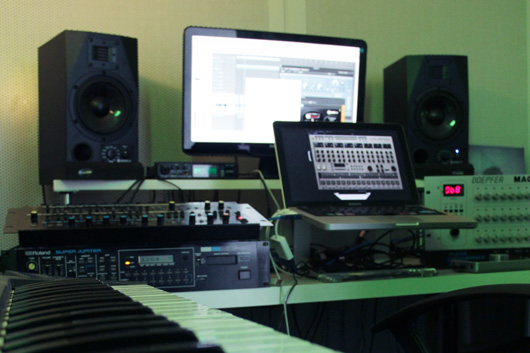
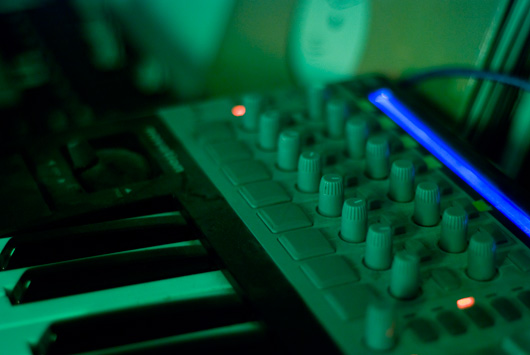
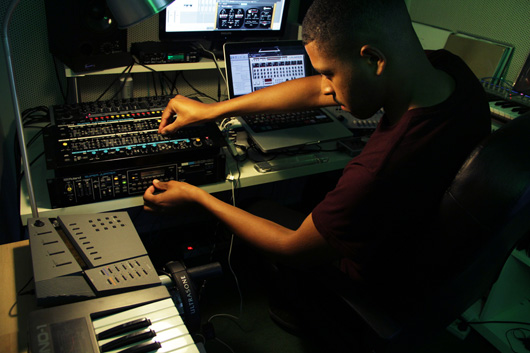
Now that you’ve settled into this space, you’ve acquired even more outboard gear. Yes. Like I said before, I’m always trying to experiment and just change up my workflow a bit, to change a bit of my inspiration and how I go about working on tunes. I figured trying to go more outside the box was the next step for me. Once I got comfortable with the sound cabin, I just went wild and started buying a lot more outboard gear. Just the whole hands-on feel of producing, I’ve absolutely fallen in love with it, which is why I’ve acquired as much as I have. Over the past couple of years, I’ve picked up more vintage 80’s and 90’s gear, including my Alpha Juno 1, the Yamaha TQ5, and a MKS-80 with the MPG-80 programmer, among other random smaller modules. I’ve also been using a Machinedrum a bit more lately, along with my Acidlab Miami fed through different effects. I’ve mainly just been experimenting with hardware sequencing a lot more.
What are your favorite pieces of gear right now? I have the Super Jupiter, a Roland MKS-80. [I also have] a programmer that was made the same year, the MPG-80, and I use that in pretty much every track lately. It’s amazing. There are so many really cool, quirky sounds and weird atonal bits that you can get from it. That mixed with my Doepfer MAQ 16/3 sequencer, [which I also] use a lot with everything. It’s really fun to just sequence sounds live with it. There are just so many different options and weird directions you can go with the sequence. That’s a nice toy of mine.
How has being in Berlin affected your production approach? Obviously, you’re surrounded by music everywhere. It’s primarily different mutations of house and techno, and I naturally started getting into more house, and going back to a lot of classic sounds with a soulful, Detroit flair to them. I’ve always loved that [sound], so I just kind of tried it out on my own, to somehow capture my own identity with that style, but still stay in the same vein. Living in Berlin, obviously [that kind of music] is accepted here. I get to play out more often. When it comes to the music I’ve been working on lately, it just connects a bit more.
These days, is your production process almost entirely analog? If I do sample anything, it will be vocal things, or something that has to do with vocals or other weird sorts of found sounds. With the analog gear that I have, I can’t do things that are atmospheric. [If I want to put in some] weird, bloopy, computer, glitchy things here and there, [or] if I want to add some effects to fill in the blanks, that’s when I’ll sample. But for the most part, it’s fully analog.
Even the drum machines? I have analog drum machines, but I do actually have software versions of the 909. I use the Drumazon a lot. So, in a sense, I do sample drums. But I try and take the drum machines I have and just tweak them a lot. I morph them into different sounds, to where you wouldn’t necessarily notice that it’s an 808 or 606 hi-hats or something.
Where do you see your solo music heading? I feel like it’s getting even more experimental. This album I’m working on, it’s more or less just a lot of composition, and not necessarily all drums. It’s been getting a lot moodier. The music is a bit deeper, and definitely has more of a warehouse vibe. It’s definitely more repetitive than previous releases I’ve done, which tended to be more detailed and choppy, with a lot of things going on. I’m trying to create a bit more space. But it is getting moodier; [I’m making] stuff that could probably work more in a really late-night environment, whether it fits into a techno or house line-up or anything in between.
So you’re definitely going to put out an artist album as Lando Kal. Yeah, I’ve been really adamant about it lately. I’ve finally gotten a little time off from touring, and I’ve acquired some new gear that I’ve been experimenting with and liking the results. So I just want to make that a big part of an album. I don’t want to rush it. [The release date] is still up in the air, but it’s definitely going to happen.
In the hands of London trio Vondelpark, soaring indie-rock tracks like “So Calm” by UK band Cave Painting become almost unrecognizable in the best way. There are hints of the original—noodling guitar solos are embedded into the thick medley of flickering synth notes and layered ambience, the anthemic singing is scaled back to a near whisper, and the drum beat leans toward a garage-influenced shuffle—but Vondelpark was able to infuse itself into the remix, too. The production outfit’s taste for smoky, reverberating noise rises to the forefront of the mix, making for a densely textured sonic fog.
With scarcely a trace of Balam Acab’s waterlogged textures or Holy Other’s warm, blanketed tones, Order of Noise still seems entirely at home on Tri Angle. In truth, the imprint has already displayed a knack for picking out producers capable of making complete statements with their first full-lengths, and Vessel‘s debut LP only further solidifies that fact. But more so than just its status as a solid debut album, Order of Noise suits the label because it finds a distinctive voice within the world of underground electronic music, a realm where artists are often identified simply by repeating stylistic cues, tempo ranges, and rhythmic choices as opposed to a palpable sense of personality. Vessel bucks that trend, choosing not to stay in any one pocket for too long and loosely stringing together an album that can be unpredictable, but is also fascinating by the same stroke.
While Vessel’s proclivity for jumping between tempos and micro-genres (moving between abstract techno, dub, and even a bit of IDM at his leisure) defines the record’s course, there is a sonic consistency throughout that helps hold these feats together. Sometimes, it’s the overdrive-singed synth melodies or layers of sizzling pads pushed just into the red, usually joined by drums whose distorted paths help bite through the mix. Truly, no song is without its crunch. Still, this inclusion of overdriven elements within Vessel’s soundscapes never comes off as overindulgent, as the Bristol-based producer balances these fuzzier inclinations with sets of warbly tones and densely developed sonic structures for a sound that is enthrallingly detailed, nuanced, and surely anything but lo-fi.
As the 12-track effort unfolds, it is this aesthetic through line that allows Vessel to act as a chameleon when it comes to the other elements of his music. The first three songs seem to transition in incremental steps from an ambient excursion to alien dub, and then on to slow-brewing, off-kilter techno. From there, the record jumps back and forth in grand gestures, rarely touching on a similar rhythmic pattern or melodic theme—”Aries” shuffles in a bed of gurgling pads; “2 Moon Dub” takes a synth-led voyage through, well, more dub; and “Lache” ventures even further into sunken, slow-moving techno. Truthfully, all of the tracks on Order of Noise are a bit hard to categorize, in a sense bearing comparison to the heyday of labels like Warp, where artist albums were not so strictly confined to a single genre and were instead expected to creatively explore different tempos, feels, and stylistic slants. On Vessel’s debut, the highlights—”Silten,” “Scarletta,” and the powerfully twisted “Court of Lions” to name a few—are perhaps the most murky in terms of genre, proving that Vessel’s talent does not lie in which part of the electronic-music spectrum he chooses to spend his time, but rather what he’s able to do regardless of which corner he finds himself operating.
In all honesty, Order of Noise can be a disorienting listen—it’s not hard to get lost along the path, considering how drastic its moves can be. But when this record lands on a great idea (which is certainly a regular occurrence), the captivating qualities of Vessel’s songcraft and his strength for piecing together textural marvels make up for any confusion along the way.
Dublin producer and Hsuan label head Arianna is giving away one of his latest productions, “At Night,” a pulsing-yet-airy footwork tune that floats from half-time to double-time while also utilizing shuffling garage hi-hats to help propel the beat. It also features sporadic bursts of tough, pitched-down vocals, which the tunesmith offsets with some lighter female singing reminiscent of the divas from early-’90s house cuts.
It’s often taxing when an artist so chained to his medium decides to move into new territory. For years, Daniel Lopatin’s Oneohtrix Point Never was marked by the sound of his beloved Juno-60, nicknamed “Judy.” With Judy’s apparent breakdown, and an increasing computer-music influence creeping in from his sometime home Editions Mego, Lopatin’s 2011 LP, Replica, was suffused with samples, which he ably manipulated to fit his dystopian palette. Jeff Witscher’s Rene Hell is similarly exploratory, moving from cosmic drone to flirtations with dance music. And, like Lopatin, he made a profound, album-length statement last year in the form of The Terminal Symphony, which effectively fused his spiraling synthetics with modern classical leanings. Noting these likenesses, Vermont’s NNA Tapes has paired the two for a split LP. Neither side is a grand departure from their recent work.
In fact, Lopatin’s side is his recent work. “Music for Reliquary House” is a 22-minute suite assembled from parts of last year’s Reliquary House, composed alongside imagery by video artist Nate Boyce. Hearing it on record, where those vital visuals are foregone, is akin to hearing a soundtrack, in particular one that’s inextricable from its parent film. It’s pleasing enough, but rarely transcendent. There’s an innate feeling throughout that one piece of the puzzle is missing.
At any rate, “Music for Reliquary House” shows how skilled a sample manipulator Lopatin has become, as it’s suffused with the kind of scrambled, endlessly chopped vocals that dotted Replica. They’re subject to a variety of atonal movements, submerged in searing digital noise or left to drift above synthetic choral drones. There are rare snatches of melody throughout, but they’re melodic in the odd way that internet dial-up tones’ splintery, collapsing bells are. As the piece nears its finale, there’s a sense that Lopatin is trying to tie his erratic collage together. His vocal snips start to form words, albeit incoherent ones. At the same time, he works in moments that resemble a string section warming up and an odd glimpse of grunge guitar. Its ultimate ending on an abrupt operatic crescendo is comical—firstly because this grand gesture is so out of place with the rest of the piece, and secondly because it cheekily implies that summating its themes is a foolhardy task. As with Replica, “Music for Reliquary House” overtly comments on telecommunication. The chief result of its stammering, interwoven chatter is disconnectedness.
Witscher’s side, In 1980 I Was a Blue Square, is also based on interruption, though his approach is considerably calmer. “Meta Concrete” finds him pairing an elegiac piano solo with sizzling noise and granular blips. On the string-led “Quelque Terreur,” his synthetics take on the role of tinkling glass, while “Prelude to the Bridge” tangles piano and synth arpeggios, which are intermittently subsumed by fizzing bursts. The serenely floating strings on “Variation in C” are largely devoid of interference, as is the solemn closer “BL, QS.” Compared to The Terminal Symphony, these compositions are more restrained and inward-looking, though they use a similarly limited palette of keys and digital electronics. Witscher’s use of noise bursts throughout is less jarring a concept than it may initially seem, as these tend to amiably gel with his arrangements. His spare keys and sweeping strings are heavily sentimental, and in spite of his attempts to infuse them with chaos, they end up dominating. As a result, the suite can feel overly polite, an attempt to combine classicism and dissonance in which the latter is afraid to offend the former. While it may not live up to its mission statement, In 1980 I Was a Blue Square is composed with a certain meditative grace. Like The Terminal Symphony, it finds Rene Hell becoming an increasingly sophisticated outlet. And if Witscher’s side has any commonality with Lopatin’s, it’s this impetus to evolve his sound into new—if not radically divergent—shapes.
Before kicking off her North American tour with Ital tonight in her hometown, Brooklyn-based artist Laurel Halo has just shared her remix of one of Lianne La Havas‘ all-too-familiar singles, “Forget.” We’ve already featured a variety of Lianne La Havas remixes this year—including versions from Soul Clap, Ganggaddy, Maya Jane Coles, and Shlomo. Despite the array of talent among the remixers, Laurel Halo’s take on “Forget” still manages to bring something different to the table. The track begins with an atmospheric pad that is coupled with the drone of cricket chirps, all of which slowly builds with the help of fluttering 16th-note percussion. An arpeggiated synth, rolling percussion, and a smooth sub-kick combo help solidify the beat before La Havas’ soulful vocal melodies join the mix.
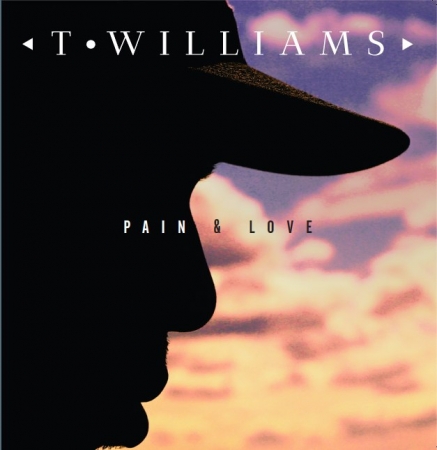
UK house patron T. Williams has been pretty damn busy, as of late, announcing his forthcoming mix album for Rinse and prepping the release of his Pain & Love EP for PMR. Today, we get to hear some of the fruits of his labor, as the latter of those two offerings is now available to stream in full. You can listen to T. Williams’ four-track record in the player below before it drops next week.
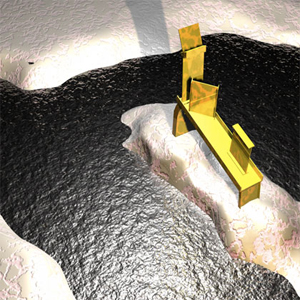
Lyon’s tropical-bass champions Douster and Jay Weed come together under the name Saaeon Express, and have just released the video for their new collaborative track “To the Third District.” The tune is the lead cut from the pair’s new EP for BeBup, Pathway Through the Third Zone. Featured here, the CGI clip takes the viewer through a sort of dystopian Earth that has been dominated by machinery. Towards the end, the Cristo Redentor statue has been taken through the “third district,” multiplied, and sold in a dark gift shop both on its own and inside snow globes. It all compliments the eerie undertones of the spooky, techno-leaning jam. After checking out this creepy clip, you can stream snippets of Saaeon Express’ Pathway Through the Third Zone EP before it drops on October 1.