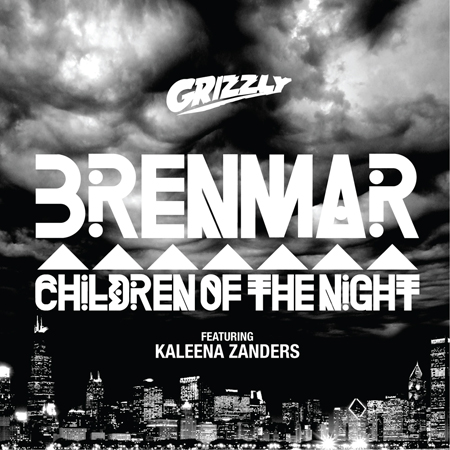
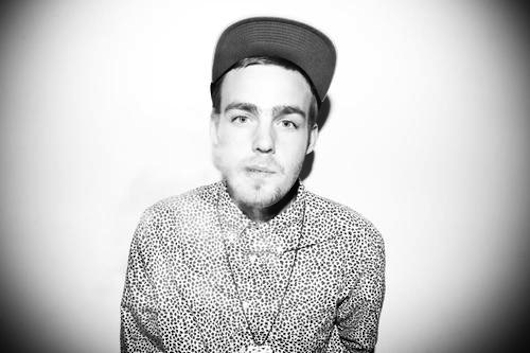
Earlier this summer, the New York-based, Chicago-bred talent Brenmar (a.k.a. Bill Salas) unveiled his FACT mix, which he stocked full of bass-heavy cuts of Southern hip-hop, silky R&B, and kneck-jerking rhythms like his own cover of Kevin Irving’s 1987 classic “Children of the Night,” which the producer has announced will see an official release via Sinden‘s Grizzly label on September 24. A slightly slower version of the tune, one that bursts with blunted bass tones and Kaleena Zander’s vibrant, husky vocals, will feature as the record’s b-side. You can check out previews of both sides before the single drops next week, below.
Word has been floating around for a short while that Brooklyn’s Daniel Lopatin (a.k.a. Oneohtrix Point Never) and Canadian noise auteur Tim Hecker have been at work on a collaborative LP, the details of which the pair has just revealed. The forthcoming album is called Instrumental Tourist (artwork above), and boasts 12 tracks representing both “two artists transcending their respective visions by agreeing to a new language” and the first installment of SSTUDIOS, a series curated by Lopatin’s Software imprint—which he runs with Ford & Lopatin partner Joel Ford—bent on bringing together electronic artists to create works of “quality and vision.” Before Hecker and Oneohtrix Point Never release their album on November 20, you can check out its tracklist and listen to its opening cut below.
Uptown Psychedelia Scene From a French Zoo Vacinnation For Thomas Mann Instrusions Whole Earth Tascam GRM Blue II GRM Blue III Racist Drone Grey Geisha Instrumental Tourist Ritual For Consumption Vaccination
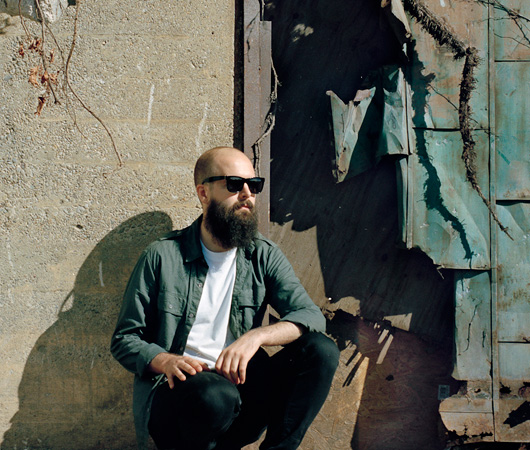
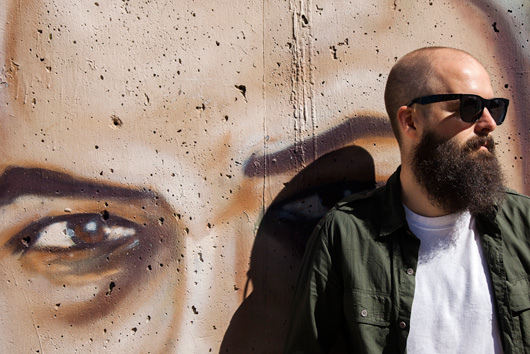
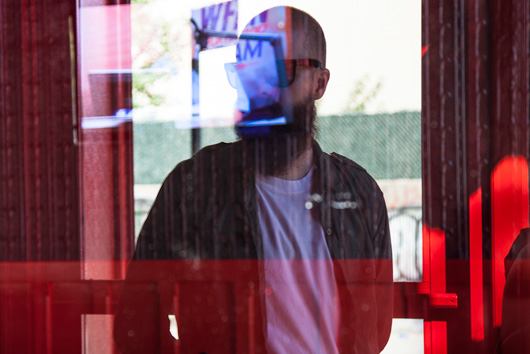
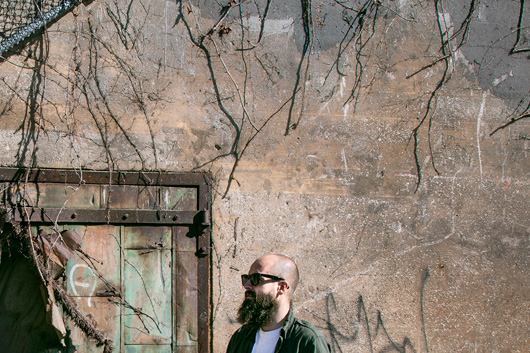
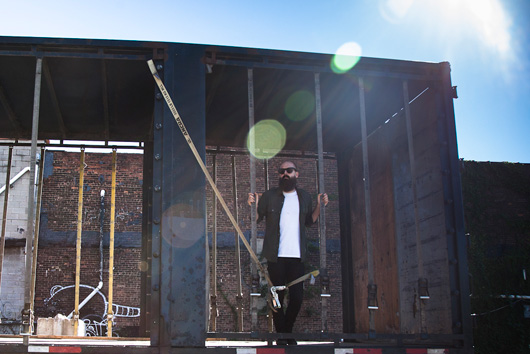
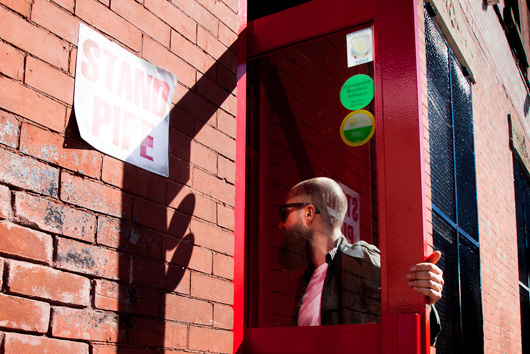
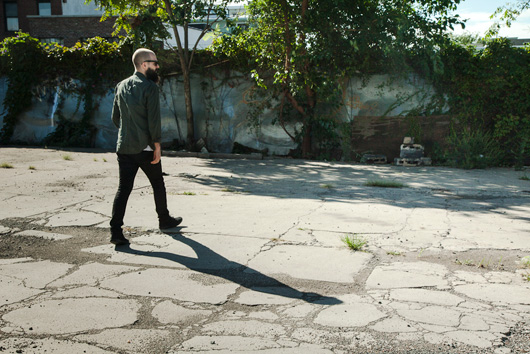
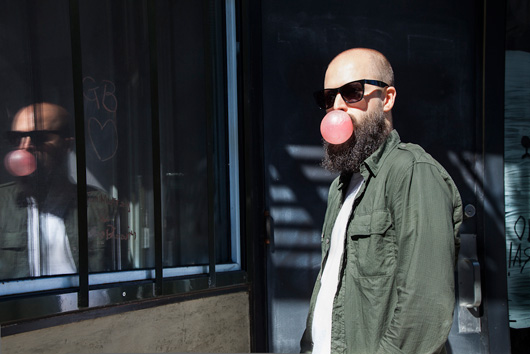
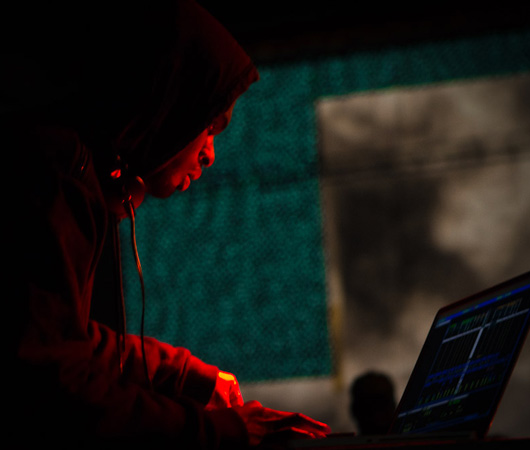
On any given day, you might find Dre Skull (a.k.a. Andrew Hershey) flying to London to DJ at Notting Hill Carnival, recording with Lil Scrappy in Atlanta, working with an 18-year-old R&B vocalist he met on Craigslist, or hanging out with bounce rapper Katey Red in New Orleans. You might find him in Williamsburg grabbing a vegan pizza slice and a green juice. Then again, you might not be able find him at all. Despite his distinctive look—Wayfarers, loose-fitting clothes, and a dark, wiseman-style beard that makes him look something like a skinny Rick Rubin—the Brooklyn-based DJ/producer/Mixpak Records boss remains an elusive figure, the skull nodding in the back of the dance rather than the head in all the party photos. He’s equally to hard to pin down musically, but it’s precisely this fluidity that has allowed him to move between producing anthemic ’90s dance cuts for Midwestern indie rapper Juiceboxxx, working with rappers Pusha T and Lil’ Scrappy, and creating reggae riddims voiced by the likes of Sizzla and Beenie Man.
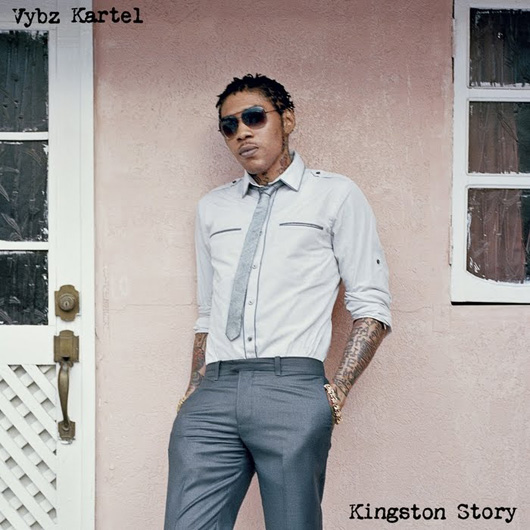
The last year of Dre Skull’s life has been the most compelling part of the tale yet. In June 2011, he wowed everyone by releasing an entire record with bad-boy dancehall star Vybz Kartel on (The album, Kingston Story, was recently re-released as a joint venture between Mixpak and Vice Records.) Several months later, he got a text from Diplo asking him to fly to Jamaica with Major Lazer to work on Snoop Dogg’s forthcoming record. Snoop had no intention of making another rap album—he wanted to make an LP inspired by Jamaican music and would eventually reincarnate himself under the reggae alias Snoop Lion. Meanwhile, videos from Kingston Story were racking up over seven million YouTube views and, amidst wild rumors, Vybz and members of his Gaza camp were incarcerated in Jamaica on murder charges. Somehow, Dre Skull sat in the middle of all this, prompting the question: how did an ultra-humble art-school dude from suburban Massachusetts go from performing at Deitch Gallery on a trampoline to being one of urban music’s rising production stars?
“I’m so curious about pop songs–they kind of have a hold on me or the idea of figuring out how to make them,” explains Dre. (Full disclosure: This isn’t our first meeting—I’ve worked with Dre Skull on music projects in the past and he is a former roommate of mine.) “Maybe I’ve chosen that as the goal because it making pop seems like the hardest thing to me. I’ve never felt like I’ve had a natural aptitude toward music, but somehow, that’s what’s made it interesting; I take a bit of an analytical approach to finding out what goes into making the songs that I like.”
Listening to a few raw instrumentals Dre Skull made for Snoop, it’s hard to believe he ever didn’t know how to write a pop song. These are wonderfully constructed and catchy skeletons, anchored by soaring and melancholy choruses contributed by top-liners such as Jahdan Blakkamoore and Angela Hunte (who wrote the hook of Jay-Z’s “Empire State of Mind” and has dubbed Dre “The Prime Minister”). Long hours of studying everything—from chord books to Hot 97 to The KLF’s manual on how to have a number-one hit—seem to have paid off.
Dre composed about 17 or so tracks before he met up with the Major Lazer team (Diplo and production partner Ariel Reichstad) to work with Snoop, but that didn’t stop the recording process from being intense. While the trailer for a forthcoming documentary on the project (being issued by Vice) shows Snoop partying, smoking, and being blessed by Bunny Wailer, the producers look kind of stressed. “The production team was doing something like 18-hour days for two-and-a-half weeks straight, with only about one full day off near the end,” recalls Dre. “We’d often hear that Dogg was ready to record, but then we inevitably might not see him for a bit. After a while, we’d see him on Twitter saying he was Ustreaming live in Jamaica. So we would pull up the Ustream of Snoop—who was on camera listening to reggae, smoking a blunt, drinking Red Stripes, and talking to his audience—and we’d use that as a way to gauge when the recording would start. The whole time he was on a porch just below the studio, about 75 feet away.”
“Overall, though, the process was incredibly smooth and the album came together just so,” says Dre. “Snoop was super cool. It felt like meeting the Snoop I’ve grown up listening to—he is that person, it doesn’t fall away when he’s hanging out. And he’s really all about music. The first day at Tuff Gong when Snoop was listening to tracks for the first time, just seeing him knocking his head to tracks of mine was special.”
It’s songs by the likes of Snoop, Supercat, and TLC that originally diverted Dre away from the art-punk scene that defined his teen and early college years, though that background had a profound influence on everything that came later. “I wasn’t ever a kid only riding for one type of music… sort of how I am now I guess. We would listen to Fugazi and The Pixies, and rap was definitely an early love: Public Enemy and the Beastie Boys, among others. Then I got into Lee Scratch Perry—reading about him and the idea of a producer as an important piece of the puzzle was pretty influential. Maybe because I wasn’t a particularly good musician, that got me excited. He was kind of a wild guy. He would record an amazing song on two-inch tape, then dig a hole in his backyard and bury the tape for a few weeks; then he would dig it up and play it and be like, ‘Yeahhh. Now it sounds good.’ Literally, he would say stuff like, ‘It’s got to get some of that earth in the sound.’ At that time, I was interested in the recording process and I was messing around with a four-track and delay pedals, and he was the guy that took that to the furthest point that I had heard about.”
Dre Skull eventually began spending summers with a childhood friend in Providence, Rhode Island, home to famed art school RISD. It was the heyday of warehouse jam sessions and wild freakouts involving the Fort Thunder collective, which birthed visual artists Jim Drain and Ara Peterson, as well as the noise-rock duo Lightning Bolt (who Dre once toured with selling merch). “DIY wasn’t some great thing I worshipped, but it was an empowering thing to see that you can put out records, you can tour, and you can put out merch just because you say you’re going to do it,” he recalls. “You don’t really need any permission or you don’t have to send your demo out and hope that someone responds. All you need to do something is to decide you want to do it and then figure out how to navigate it.”
Through Providence connects, he would eventually move into a four-story warehouse in Brooklyn with a bunch of artist friends and start developing the ideas that would ultimately lead to Dre Skull and Mixpak Records. At first, though, he was in a series of conceptual performance art “bands,” with names like Farcefield and Slow Jams and the Bobby Brown. The latter was a hip-hop-and-sampling-influenced art disaster that one reviewer called “an unwieldy mixed media circus somewhere between Fluxus performance and MTV’s Jackass.” “It basically performance art,” he remembers. “For instance, we reworked a Yoko Ono piece where she and this guy had sex in a bag; we would go inside a bag as this threesome and then on a video screen there would be footage from inside the bag as if the footage was live. After a while, we got kind of obsessed with technical failures. As a performance-art group, we were relying on pre-recorded videos and musical elements—one DVD skip and you’re over. So we started playing with those audience expectations of failure or what a band does. What we were doing—not in terms of our performances, but where our minds were—was deconstructing popular culture. After a while, I started thinking that I’d rather construct culture from the ground up than deconstruct culture that other people had made. I wanted to see if I could actually craft a popular song.”
Even with the “success” of such projects—they performed shows at Deitch Projects, PS1, and MoMA—Dre was nursing serious urban dreams… and luckily, he’s kept most of his old production sketches on the seven or so hard drives that populate his studio. “There are songs that I made in [that] era that ended up on the Kartel record,” he says, laughing. “I guess I had enough insane faith back then that these tracks were good enough to hold back or put in a stash. I was thinking, ‘This would be a good track for Rihanna,’ or whoever, but at the same time, I had no idea how to go about getting it to them. In the end, I did meet with some major label A&Rs and bring them tracks. In some ways, [just getting those meetings] gave me the hope to continue.”
Of course, producing an entire Vybz Kartel record didn’t exactly materialize out of thin air. The road to Kingston Story began in 2008, before Mixpak Records had even been born. “Initially, I was interested in working with a Jamaican vocalist and using the internet, I figured out how to do that,” says Dre. “You can find the wildest shit on the internet! For example, a collection of every major-label A&R’s email that someone copied and pasted in some weird website that has now been retained by Google. I found a go-between person, and talked with them about [what dancehall vocalists in Jamaica] I could get to. I ended up making a track for Sizzla; we did it strictly over the internet, like a dubplate-session style.”
The track, “Gone Too Far,” launched Mixpak Records in March 2009, surprising many who knew Dre Skull from his electro remixes and the trio of ravey hip-house jams he released with longtime friend Juiceboxxx, a Wisconsin indie rapper. Though the bpms were changing, a fledgling Dre Skull sound had already begun to emerge: shimmering trance synths, one-two brass-band stomps, and catchy chord progressions. These uplifting sounds would eventually form the backbone of bonafide Skull hits like Popcaan’s “Get Gyal Easy” and Vybz Kartel’s “Go Go Wine.”
Shortly after “Gone Too Far,” Dre sent a 120-bpm beat (eventually released as “Loudspeaker Riddim”) to Vybz Kartel’s camp in Jamaica, hoping to get it voiced. Then he waited… and waited. In the meantime, he released a weird house record (“I Want You”) and a flagrantly explicit track by sissy-bounce rapper Sissy Nobby, whom he discovered in New Orleans. Then, he waited some more.
After months of being told that Vybz was writing to the track, a message came through that he wasn’t going to submit anything. Frustrated, Dre pondered his next move. “I already had the instrumental for ‘Yuh Love’ on my computer,” he says. “It wasn’t exactly what I wanted to do with him, but it had already been three or four months. I sent it and within 48 hours I had an email that said, ‘Mad tune! Sell off.’ It was a strange roll of the dice. I didn’t want to put it out for a few months, but they leaked it to YouTube literally that day. So I mixed it, got the cover art, and put it out within 10 days with no promo or anything, and it has had an amazing life over the last few years.”
“Even though I was already dreaming about producing big records in the US, I don’t think it was in my imagination that I would be making records with people in Jamaica,” he continues. “The success of ‘Yuh Love’ got me feeling like I could do that.” Dre’s initial plan for his first trip to Jamaica was to work on three tracks—one each with Vybz Kartel, Busy Signal, and Elephant Man. This idea was squashed as soon as he landed by a business email from VP Records, who refused to let him put out any singles with their artists and wanted right of refusal for any track he worked on with Busy Signal or Elephant Man. So Dre called up Kartel and they ended up making three songs in one night. “He loved my production and he said, ‘Yo, we just made a mini-album.’ Something about him using the word ‘album’ made me think… So I took those tracks, figured out the deal, and started to go back to Jamaica every few months.”
Despite having access to the best studios in Jamaica, most of Kingston Story was made where Kartel felt comfortable—with his (now estranged) engineer Notnice at a bedroom studio in a heavily-gated apartment complex in Kingston. “I personally had never come across someone who had that kind of talent,” Dre says of Kartel. “He would sit down in a chair, turn the lights off in the room, and have a microphone recording. From the first time he hears the song, he starts making guttural sounds, just searching for a melody. Within 10 minutes, he’d start putting down the final takes on vocals, not writing down anything. Except for the very last time we recorded together, every time he’d be done with a whole song in an hour and a half, sometimes 45 minutes. On the craziest one, he did an entire 12-bar verse backwards: bar 12 first, then bar 11, bar 10.”
The music and vibes came easy—getting Kartel to show up did not. “Kartel would basically say ‘Let’s work tonight 8 p.m.’ and cancel every night… at 8 p.m. I couldn’t do other sessions with other artists, or anything really. From 8 p.m. to 2 a.m., I was constantly being told another hour.” When it came time for Kartel to sign the record deal, it got extra crazy. “Kartel knew I was scheduled to leave Jamaica the next day and I was hoping not to leave without the contract. He told me to come to the studio and when I got there, I was locked out and he wasn’t there. He kept telling me he was 10 minutes away from meeting me (for five hours) and I waited on the dead end of this sketchy street until five in the morning. I was sitting in the front seat of a car and I had all this cash stashed under the seat. I was probably making the neighbors nervous, and it also felt like I was going to get jacked. Crazy shit would go down, like a black Beemer with fully tinted windows pulling up, putting their headlights on my car on the perpendicular and just sitting there for a few minutes. But I wasn’t going to leave. In retrospect, maybe Kartel wanted to give me a test of some kind before he signed, or he might have very well been partying with a lady at Street Vybz Thursdays. Who knows?”
Even with the hoops he occasionally has to jump through, Dre takes a pretty equanimous approach to things—despite his menacing-sounding name, he is a chill dude. “If you go outside your own front door to work on music, you got to drop a couple preconceptions, or be willing to understand how things get done (or don’t get done). Or at the very least have some patience and not feel entitled to quick responses or easygoing endeavors or deals.” This has often meant taking a zen approach, and letting some projects fall by the wayside, like working with Diamond from Crime Mob or finishing a New Orleans bounce documentary he started with a photographer friend.
While Dre Skull searches for his perfect pop moment overground, he’s got plenty bubbling up in the underground. He also has some rather cutting-edge (albeit secret) plans for his Mixpak Records label, an eclectic roster that includes rising dancehall star Popcaan, tropical bass stormers Poirier and Dubbel Dutch, and even a Japanese all-girl punk group called Hard Nips. Though Mixpak is best known for its tropical vibes and hand-drawn aesthetic, it remains an impossible label to categorize sonically, with ingenue Andy Petr turning in experimental future garage, Jubilee trafficking in Miami bass-inspired sounds, and a new compilation series (Mixpak Pressure) kicking off with a series of trap instrumentals.
“My take on a modern music listener is that they’re open to listening to a lot of different music,” says Dre, explaining the label’s ethos. “Throughout the day, they’ll listen to a dancehall mix, a deep-house mix, Pandora, and all these other things. It’s like what Afrika Bambaataa was doing—if he liked it and he felt like it would get the club rocking, he would drop it. Whether that’s a good business model, I don’t know. It’s definitely more complicated. But for me to do a narrowly focused label feels like a fraud. I would feel like I was selling my interests and my passions short. I feel, in a way, that I’ve chosen a harder battle, but I don’t think I could have chosen another way.”
Like a zen master, Dre breathes deep, takes a swig of green tea, and contemplates his future. “The best advice I ever got basically said: ‘If you endeavor to do something well, after three years of working on it, you might not realize you have improved all that much. After 10 years, you might realize you are finally getting better, but after 20 years, you will realize you are a changed person.’ It’s a story about patience and dedication that I take to heart.”
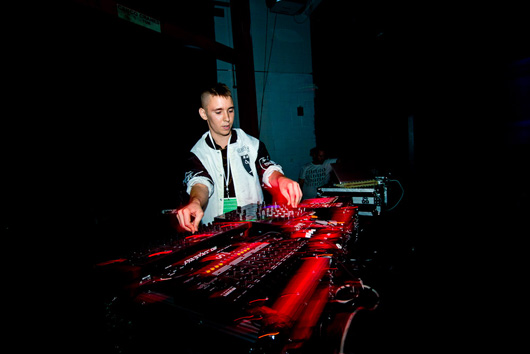
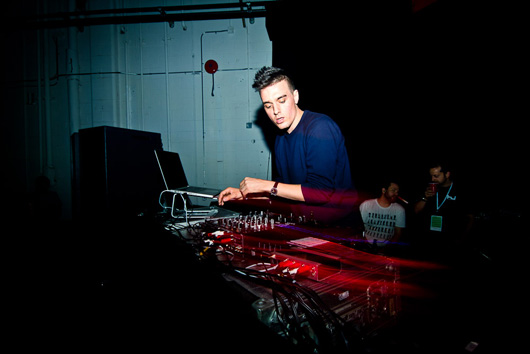
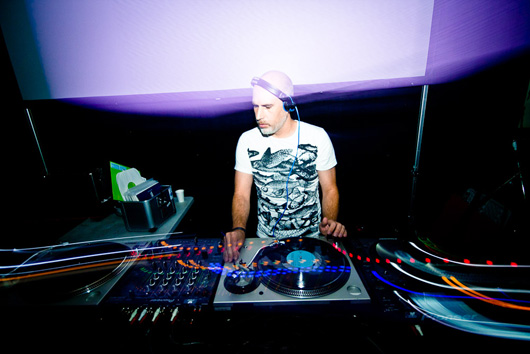
Over the weekend, XLR8R made a quick trip to Vancouver to check out the 2012 edition of the New Forms Festival. Modest in scope but impressive in the quality of its curation, New Forms felt like a low-key affair, albeit one punctuated by a number of innovative artists (including Actress, pictured above) and cutting-edge music from a cross-section of the globe and the electronic-music spectrum. The festival’s music portion was spread across three days and two nights in various locales around the city, meaning that each day offered plenty to enjoy. We did our best to catch everything, but summarizing it all would be just about impossible, not to mention tedious. As such, we’ve picked out 10 things about New Forms that particularly struck our fancy, and also mentioned a couple of things that didn’t.
1. DJ Stingray
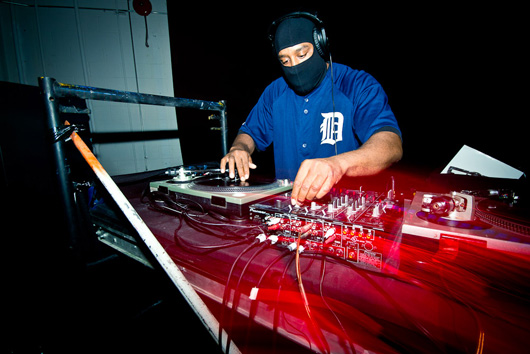
In the wake of his blistering XLR8R podcast, which helped kick off New Forms last week, it was no surprise that Detroit veteran DJ Stingray came correct with his set on Friday night. Taking the stage in the cavernous hangar at the Centre for Digital Media at 2 a.m.—the exact hour when alcohol sales come to a closer—the Detroit veteran faced a very real risk of scaring away attendees, many of who had been milling about for hours and were likely beginning to think about heading home. Given the scenario, some artists might have chosen to play a “safe” set in the interest of maintaining the crowd, but Stingray appeared to have no such sense of compromise. Blasting right out of the gate, he dropped one fleet-footed electro-techno hybrid after another, quick-mixing his Drexciyan selections and weaving together a flurry of cracking 808s, acid squelches, and energetic breakbeats. Even with the rash of 808 and old-school-electro worship that has permeated the bass-music sphere in the past year or two, it’s safe to say that other DJs quite simply don’t sound like Stingray, as few would have dared to play that hard and that fast in such an unrelenting fashion. That’s not to say that his set at New Forms was some kind of punishing session; on the contrary, it was a lot of fun, and kept the crowd bopping well past 4 a.m.
2. Kode9
The Hyperdub don has been hitting the festival circuit pretty hard in 2012, and his DJ skills, which were never really in question, have only become stronger as a result. Once again, Kode9 delivered a blistering set to close out Saturday night’s festivities, one that was surprisingly focused on various strains of ghetto sounds from the US, including lots of juke, footwork, club, and hip-hop. Granted, he also mixed in bits of house, bass, garage, dubstep, and drum & bass with a veteran’s ease, but much of the set seemed to gravitate away from the 130-140 bpm range. Nevertheless, that did nothing to detract from the crowd’s enjoyment; if anything, all the nods to rap and R&B got people even more hyped. It’s also worth noting that Kode9’s involvement with New Forms wasn’t limited to the dancefloor. He also put together an installation in conjunction with AUDiNT. Without question one of New Forms’ A/V highlights, Kode9 conceptualized a dark room filled with smoke and fitted with a directional speakers. Attendees entered with flashlights and would have different auditory experiences depending on their position in the room. It was a unique experience, and definitely the installation that had the most people talking over the course of the weekend.
3. Teebs
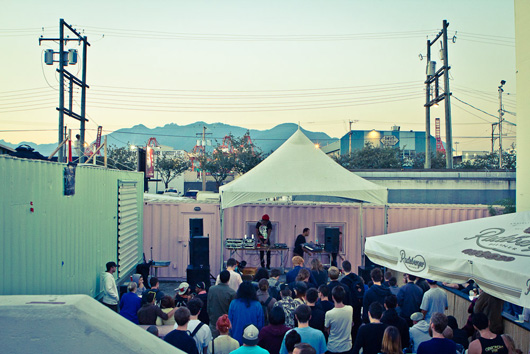
On Saturday afternoon, the New Forms happenings shifted over to the Waldorf Hotel, where the festival hosted a number of panel discussions, which were followed by outdoor sets by a number of Vancouver artists. Headlining the day was LA beatmaker Teebs, whose sunset performance transformed a relatively mellow afternoon into an actual party. Utilizing a simple setup and manipulating tracks on an SP-404, Teebs played mostly his own tracks, but also mixed in a few cuts from people like Flying Lotus, Samiam, and Jeremiah Jae. As expected, the beats were heavy on the twinkling melodies and atmospheric flourishes, but they also carried enough low-end weight to get people moving. And with Teebs constantly filtering and tweaking the tracks, the set had a real sense of dynamism, one that couldn’t even be extinguished when the power for the entire stage unexpectedly cut out halfway through his performance. Teebs took the mishap in stride, cracked a smile and a few jokes, and went right back to dropping quality tunes when the electricity returned.
4. Actress
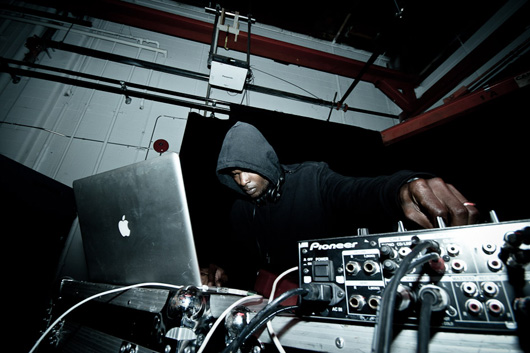
Arguably the most anticipated act of the entire festival, Actress performed at midnight on Friday to a packed hangar at the Centre for Digital Media. His sets are known to fluctuate wildly, but the shadowy UK producer came with the dancefloor in mind on this night, focusing much of his set on hard, churning techno rhythms. Performing live with his laptop and a MIDI controller, he did occasionally venture into more introspective and experimental territory, which was great, but many of the tunes he selected wouldn’t have been out of place at Berghain. The audience wasn’t exactly ready for this—there was a lot more swaying than all-out dancing—but the music sounded excellent, and fit the space’s stark, industrial vibe rather well.
5. Sinjin Hawke
After tabbing him recently in our Bubblin’ Up series, we were definitely excited to see Barcelona-based producer Sinjin Hawke at New Forms, especially because he was slated to perform one of his infrequent live sets. Hawke is often lumped in with the world of bass music, but his set—which impressively did not include a laptop—showcased a real love for hip-hop, even if the music wasn’t rap in the strictest sense of the word. Let’s put it this way: his set featured a lot of 808 drum sounds. In less skilled hands, this might have been a problem, but Hawke enthusiastically lept around the sonic spectrum, offering melody-rich, R&B-infused bass sounds one minute before unfurling some frenetic footwork the next. Undeniably youthful in its orientation and appeal, his set nonetheless offered proof that the current generation of SoundCloud-reared, internet-savvy producers is capable of doing more than regurgitating whatever sounds have been deemed trendy at the moment. With its flurry of rapid-fire kicks, dramatic synth melodies, and liberal usage of hip-hop and R&B vocal snippets, Hawke’s set may not have been “deep,” but the music presented a real depth of purpose and a coherent artistic outlook. It also happened to be a whole lot of fun.
6. Kuedo
Last year’s Severant was one of our favorite albums of 2011. As such, the recent announcement of Kuedo‘s first North American tour was met with much rejoicing in the XLR8R office. As it turned out, his first performance on this side of the Atlantic took place at New Forms, and the former Vex’d member did not disappoint. Performing with a laptop and a MIDI controller, his set combined heavy, gut-rumbling low end with euphoric washes of synth melodies. That may be a simple description, but the music was truly potent, threatening to overload the crowd’s auditory (and emotional) inputs, but never quite going too far over the edge. His sound palette was familiar, yet it’s hard to compare Kuedo to other acts, as he’s carved out a distinct musical niche, and continues to extract its maximum potential. Plainly said, his set sounded big, and we—along with most of the crowd in the hangar on Saturday night—were happy to let ourselves get lost in it.
Daniel Bell
7. The consistent quality of the music
Although we’ve highlighted a handful of performers that truly stood out, it needs to be said that the weekend was more or less devoid of performances that we’d refer to as “bad” or even “not good.” New Forms was obviously curated very carefully, and while artists like Daniel Bell, Legowelt, Canblaster, Pilooski, Kangding Ray, and Veronica Vasicka perhaps didn’t have the same “wow” factor as the acts we’ve described above in more detail, all of them were solid, if not downright enjoyable. Most festivals fall prey to the temptation to book a few stinkers, often in an effort to boost the draw of the overall line-up, but New Forms organizers clearly knew better, and let quality, rather than popularity, guide their curation.
Centre for Digital Media: Hangar
8. The venue
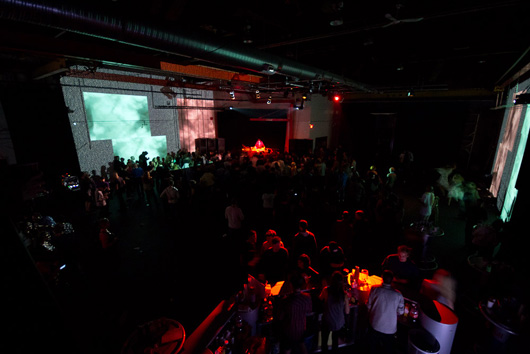
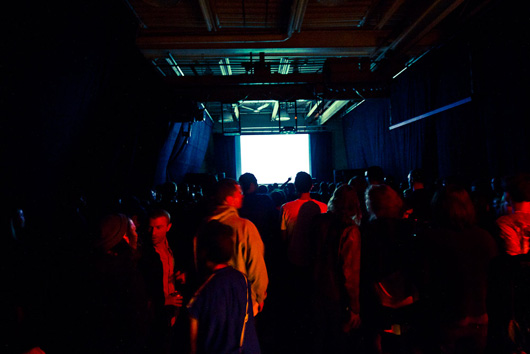
As stated previously, the bulk of the festival took place at Vancouver’s Centre for Digital Media, and the New Forms organizers’ usage of the space is to be commended. The venue has a post-industrial feel, one that lent the proceedings a sort of gritty aesthetic that recalled rave’s glory days, particularly in the main hangar room. That said, the space wasn’t simply some abandoned warehouse. It may have had exposed fixtures, high ceilings, a concrete floor, and a stripped-down vibe, but the place wasn’t sketchy or unclean. On the contrary, being at New Forms each night felt like being in a cool gallery, one equipped with booming—although admittedly not always clear—sound, top-flight DJs, and cool visuals that transformed the space without being intrusive. And when attendees wanted a break from the main hangar, there was the more intimate second room, which belonged to Vancouver’s eatART. Interestingly enough, although the music wasn’t quite as compelling in there, the room’s cramped quarters probably helped foment a vibe that was arguably more upbeat and fun than that found in the hangar. On Saturday especially, attendees often had to wait in a serious line to get into eatART, as the room continually was at capacity. Clearly, something was being done right in there.
Centre for Digital Media: eatART
9. The crowd
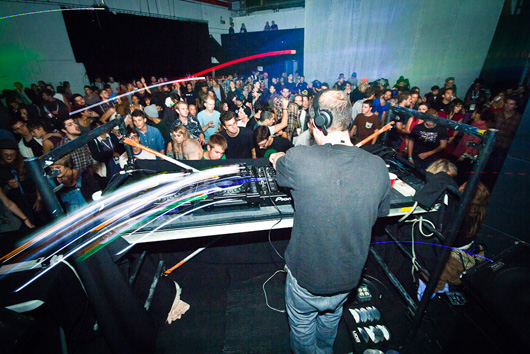
When it comes to festivals, the thing that most people tend to complain about is the crowd. After all, who wants to be surrounded by thousands of obnoxious kids and rowdy assholes? Thankfully, neither contingent showed up en masse to New Forms. The weekend’s events attracted a noticeably older crowd, and one that was generally quite music savvy. Granted, given that the festival’s biggest headliners were Actress and Kode9, it wasn’t exactly surprising that a more refined audience would turn up. It also helped that the crowd size was generally in the hundreds, not the thousands. Even calling New Forms a festival is a bit of a misnomer; that’s not meant as a slight to the organizers, but the events were small-to-medium sized and clearly curated with a very specific, educated, and open-minded audience in mind. Being at New Forms was not dissimilar to the experience of a festival like MUTEK (albeit a scaled-down version), which is likely why the weekend attracted a similarly excellent group of attendees. This approach may have led to a little mellow reflection and laid-back enjoyment on the dancefloor than one might have expected, but when compared with most festivals’ wealth of people simply going apeshit, we don’t think many folks at New Forms were complaining.
10. Sunday in the park
The festival’s final day took place in Vancouver’s New Brighton Park, a spot situated in a picturesque location right on the waterfront. Free and open to the public, the park was full of people from all walks of life, and New Forms kept them entertained by curating a quality line-up of DJs of performers. Arriving later in the day, we only managed to take in the last few acts, including a live performance from local duo Larry James, a tag-team effort from Kevin McPhee and Ronnie Falcon, and a closing set from DC duo Beautiful Swimmers. All dropped various strains of house, but generally kept things groovy, which fit the mood perfectly as the sun went down. Honestly, it’s almost always hard to go wrong with sunshine, drinks, BBQ, and good music, but New Forms definitely wrapped up its festivities in a highly enjoyable fashion.
Teebs at the Waldorf Hotel
… And the things we didn’t like
All in all, New Forms ran smoothly, and most people in attendance seemed more than pleased with the results. In truth, the festival had an intimate feel, which often meant running into the same attendees day after day and comparing notes. While most of the commentary was overwhelmingly positive, no event is perfect, and a couple of critiques kept popping up.
The sound
In fairness, the sound at the Centre for Digital Media wasn’t bad. However, it also wasn’t great. The eatART room definitely could have used some additional volume. Over in the hangar, volume wasn’t really a problem, but clarity was. Perhaps the room itself was to blame, as industrial spaces aren’t exactly designed with acoustics in mind. Nevertheless, with so many quality artists jumping behind the decks on Friday and Saturday night, the festival experience would have been even more excellent if the sound system had been better.
Venue proximity
While New Forms’ nighttime activities were happening at the Centre for Digital Media, the daytime events were located at the Waldorf Hotel and New Brighton Park, two spots that aren’t especially nearby. Granted, Vancouver is relatively small, so going from place to place in a car never requires a long trip, but people without automobiles either faced paying for a taxi, embarking on an hour-long walk, or attempting to navigate the city’s not-always-convenient transportation system. It was a small inconvenience, but something that presented a bit of a hurdle for those looking to attend everything. Plus, as New Forms continues to grow in the years ahead, this issue will only become more important.
Overall though, these complaints are admittedly minor, and it would be hard to deem the 2012 edition of New Forms anything but a success. This is a festival that has been going for more than a decade, and while its scope may remain small—the organizers might prefer to say “focused”—it’s readily apparent that New Forms has a clear vision, one centered around bringing together an assortment of boundary-pushing electronic artists with similarly forward audio-visual installations. It was refreshing to attend an event where the promoters recognize that the correlation between “bigger” and “better” is tenuous at best. New Forms knows its limitations and plays to its strengths, which goes a long way toward explaining why it’s so good.
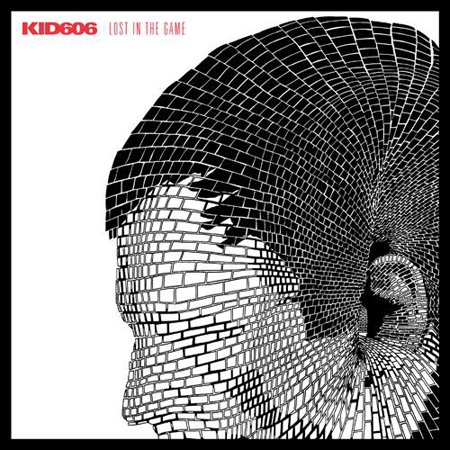
We’ve always kept a close eye on the constantly evolving and changing sound of Berlin resident Kid606 (a.k.a. Miguel De Pedro). In recent months, he’s been hinting at a laid-back and glitch-influenced direction, like “Gimme Summer,” the first leak from his upcoming Lost In The Game album that appeared back in August. This week, the prolific sound explorer will release his latest LP via his own label, Tigerbeat6, and he’s sent over one of the tunes from the record to whet our palettes. “New Boss Same as Old Boss” remains in the shoegaze-inspired vein of his recent projects, and builds into a dozy sway of low end and rhythmic patter from the initial onslaught of blurred, fuzzed-out synths.
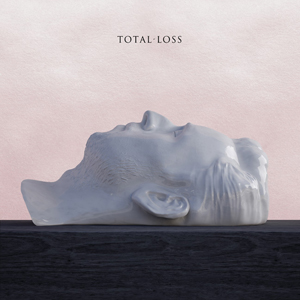
Love Remains, How to Dress Well‘s hauntingly beautiful 2010 debut, dealt with the excruciating pain of navigating a seemingly endless depression, but Tom Krell’s second LP, Total Loss, explores his personal journey through the hell that is clinical depression—his friend and his uncle recently passed away, and his long-distance relationship fell apart—and his ultimate triumph over years of intense emotional suffering. A quick glance at the tracklist instantly reveals what the listener is in for; with titles like “Cold Nites,” “Struggle,” “World I Need You, Won’t Be Without You,” it’s immediately apparent that Total Loss is an incredibly dark album, with each song serving as a meditation on a different facet of the mourning process.
At first, it seems like Total Loss continues where Love Remains left off; opener “When I Was in Trouble” starts off with sampled sounds of pouring rain, hazy and muddied with distortion. But soon, the fog lifts to place Krell’s gorgeous falsetto front and center, strong and confident, with greater clarity than ever before. “Dear mama, didn’t you try to tell me that everything was gonna be safe?/Dear mama, didn’t you tell me tell me everything was gonna be right?” Krell sings with breathtaking sincerity over the storm quietly brewing. This shifting dynamic—arresting vocals at the forefront, minimalistic beats and mysterious clicks and whistles pushed into the background—gives the album its emotional core, with Krell’s fight to stay above water on full display in his fragile voice.
“I love to fly,” says a despondent kid in the Streetwise sample that kicks off “Say My Name.” “It’s just, you’re alone. You have peace and quiet, nothing around you but clear blue skies. No one to hassle you. No one to tell you where to go or what to do. The only bad thing about flying is having to come back down to the fucking world.” It’s a bleak start, but Krell moves into slightly brighter territory, perhaps attempting to ease the seemingly relentless pain with delicate horn and string arrangements and more upbeat tempos. Krell’s penchant for old-school R&B ballads breaks through on the midsection of the album; “Running Back” and “And It Was U” (in which Krell sings a ghostly duet with himself) are lighter and more romantic than the rest of Total Loss, signifying his realization of the healing power of love in times of darkness while showing off his vocal talents.
By the end of the album, Krell starts to see a light at the end of the tunnel, a hint of relief after ages of anguish. After eulogizing his lost loved ones on the epic “Set It Right”—Eileen, Dan Dan, Aunt Sam, Jamie, Mama, Dad, Andrew, Dawn, Grandma, Francie, Danny, Aunt Faith, Will, Jamie—he can finally let go and begin to breathe again. “I have my place, I have my home, I have my future,” he sings on closer “Ocean Floor For Everything.” He continues, “We never really plan for the worst of things, do we?”
Total Loss is an overwhelming album given the rollercoaster of emotions Krell goes through over the course of its 11 tracks. If you’re not in the right mood, it might be tough to listen to forty-plus minutes of melancholy soundscapes evoking misery, despair, and loneliness—pretty much every awful feeling associated with profound loss. But those who can relate, even the slightest, to what Krell was going through when he made the record will likely find some comfort in the product of his suffering.
Dutch producer KRSUR recently released his new “Wayfarer” single via Myor, and sent over the ELOQ (pictured above) remix from that record. As opposed to the stunted drums, bright synths, pitch-bent melodies, and glitchy vocal cuts of the sparkling original production, the version by the Copenhagen-based artist is harder-hitting, and combines organic drums with 808 samples, alongside arpeggiated synths, warped vocal samples, and a punchier chorus.
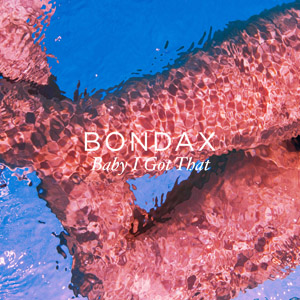
The teenage duo of Lancaster upstarts known as Bondax has built a budding career from its keen ability to warp emotive vocal samples into glistening pieces of pop-infused bass music. The latest example of such, the Baby I Got That EP, shows a touch more refinement than the pair’s past efforts, with a more solid sound structure holding together the producers’ catchy, Balearic-kissed twistings this time around.
Perhaps because of its members’ age, Bondax has made music inspired by the club, but maybe not truly intended for it. “You’re So,” the track that first launched the duo into view, only boasted a minute-plus worth of drums, instead spending more time putting together immersive buildups and breakdowns than parlaying rhythms intended for a dancefloor. In the same way, much of Bondax’s output since could be considered headphone-aimed bass music—it’s instantly catchy and skillfully crafted, but out of place in a more traditional club context. However, the Baby I Got That EP signals more of a lean towards dancefloor-minded fare. In particular, the title track—although chugging just below 110 bpm—is, at its simplest, an updated take on Balearic house, the song’s shimmering chords and summery percussion joined by thick low end and an expertly reworked vocal line from which the tune takes its title. It’s an easy-to-swallow afternoon anthem, equally fit for sun-soaked dance parties or simply iPod enjoyment.
Unfortunately, the strength of this title track goes largely unsupported by its accompanying tunes. Bondax’s other original offering, “It’s You,” delivers well enough on the production side of the spectrum, but can’t help but feeling like a sketch—its vocal-sample chops and melodic patterns fall far short of much of the pair’s work to date. Dirtybird’s Justin Martin‘s also turns in a pair of “Baby I Got That” remixes (they’re actually just two versions of the same rework, with the second serving as a shorter edit), but they come off as a calculated jump from the original to club-primed audio (although Martin does land on a pretty enticing bassline in the process).
Nevertheless, two things remain abundantly clear over the course of Baby I Got That—Bondax is a group still finding its feet amidst the evolving bass-music sphere, but it’s also one working with loads of promise.
Throughout the week, a whole lot of material gets posted here on XLR8R. And while we know—and love—that some hardcore readers will eagerly pour over every single news story, interview, podcast, video, and MP3 download that appears on the site, we also realize that for most people, it’s impossible to see everything, which means that some quality XLR8R content is likely to get missed in the hustle and bustle of everyone’s daily lives. In the interest of making it easier for everyone to catch up, every Friday we present The Lowdown, a weekly wrap-up of the top 10 tidbits from our site.
1. We visited Magda (pictured above) at her Berlin studio for the latest installment of In the Studio, where she told us about her equipment, her evolution as a producer, and her split with Minus.
2. After spending a long weekend in Croatia at the inaugural Dimensions Festival, our review cataloged the highlights and lowlights… and stirred up a lot of emotional responses in the process.
3. In advance of his appearance at this weekend’s New Forms festival in Vancouver, Detroit electro warrior DJ Stingray put together a fiery mix for the XLR8R podcast series.
4. Four Tet shared his new remix of Nigel Godrich’s new band, Ultraísta.
5. For the latest edition of Deep Inside, we spoke with UK dubstep legend Mala about his new album, his travels to Cuba, and how his latest work fits into the context of his storied career.
6. Amsterdam producer Saux remixed “Sweet Talk” by rising UK pop princess Jessie Ware, transforming the song into a bouncy piece of slow-motion house with a nice groove.
7. We kicked off our new Trainwreck feature with a horror story from Matthew Dear, who told us about the time he crashed his tour van on his first trip to New York.
8. Ahead of her new album for DVA’s label, London’s Shy One offered up her remix of French Fries’ “Hugz” as a free download.
9. R&B crooner How to Dress Well shared a stream of Total Loss, which drops next week.
10. This week’s contest presented readers with the chance to score a snazzy laptop bag from Booq. Enter now before it’s too late!
An expanded version of the The Lowdown is also available via a weekly email newsletter. Those interested in an even more in-depth round-up of XLR8R content, including a complete listing of all the free downloads we’ve offered in the past seven days, should sign up by entering their email address below.
Anticipation is about to boil over for the fourth long-player set to drop from Los Angeles beat maestro Flying Lotus, Until the Quiet Comes, so the tunesmith is helping us let off a little bit of steam by unveiling a new video that previews more of the tunes from that highly anticipated album. Aptly called “Small Moments,” this gorgeously shot, underwater piece—directed by Beeple (who has collaborated with FlyLo before)—features a minute and a half of clips of each of the 18 tracks set to appear on producer Steven Ellison’s upcoming album, which will drop via Warp on October 2. You can check it out below.
XLR8R Couldn't find the embed function for type: "vimeo" and source: "<iframe src="http://player.vimeo.com/video/49443519" width="530" height="192" frameborder="0" webkitallowfullscreen="" mozallowfullscreen="" allowfullscreen=""></iframe>".