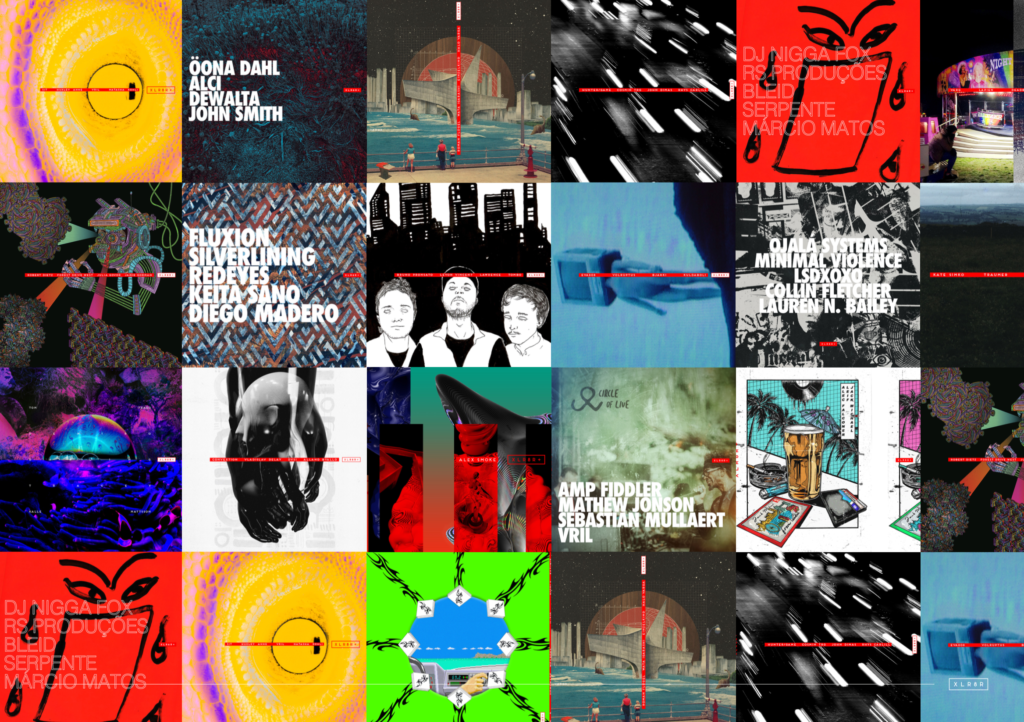
Gothenburg, Sweden-based duo The Tough Alliance‘s energetic electro-pop is anything but violent, and though the two childhood friends have onstage antics that include swinging baseball bats and have been cited as hooligans by the press, the video for “Neo Violence” finds them in a rather reflective state. With nary a baseball bat to be found, Henning Fürst and Eric Berglund sit quietly amid doric columns and Technicolor light beams while the synths and beats swirl around.
Opio “Some Superfly Sh!t (Remix)”
Erstwhile member of the Hiro Imperium family, Opio, has been steadily dropping tracks off his sophomore album, Vulture’s Wisdom, Volume 1, released earlier this year. Now it’s time for the remixes. Besides throwing in some clips and blips from the 1972 blaxploitation film, Superfly, Opio also enlisted help from several friends on this remix. Fellow Hiero crew member Del the Funky Homosapien showed up to guest, as did Detroit veteran Guilty Simpson, and The Architect, who produced Vulture’s Wisdom.
Yelle Readies Remix Single
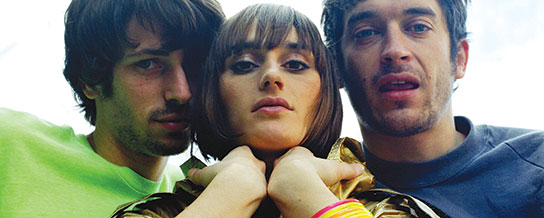
French chanteuse Yelle is ready for the remixes, namely for her track “Ce Jeu,” off last year’s full-length, Pop-Up. The track has been making the rounds about the club circuit, so the inevitable remix was bound to be announced soon.
The Ce Jeu EP contains the album version of the track, as well as a remix by bandmate Tepr and two mixes created by fans from the recent contest held at the group’s MySpace page. The whole package will be released digitally on October 14, with a vinyl version to follow on November 25.
Meanwhile, ready your masks for Yelle’s upcoming shows:
10/07 Dallas, TX: House Of Blues
10/09 Austin, TX: Mohawk
10/10 Miami, FL: Polish American Club
10/11 Orlando, FL: The Social
10/13 Washington, DC: 9:30 Club
10/14 New York, NY: Webster Hall
10/15 Boston, MA: The Roxy
10/21 Chicago, IL: Logan Square Auditorium
10/22 Milwaukee, WI: Turner Hall
10/24 Denver, CO: Ogden Theatre
10/25 Salt Lake City, UT: Urban Lounge
10/27 Seattle, WA: Neumos Crystal Ballroom
10/29 Portland, OR: Berbati’s
10/31 San Francisco, CA: Mezzanine
11/01 Los Angeles, CA: Henry Fonda Theatre
11/02 San Diego, CA: Beauty Bar
11/03 San Diego, CA: UCSD
Video: “Ce Jeu”
Photo by Bastien Lattanzio.
Heidi to Host BBC Radio Show
The much-lauded electro DJ and erstwhile member of the Get Physical family (she’s also a charming XLR8R TVguest), Heidi, is set to make a foray into the world of radio. Beginning October 23, she’ll host a new BBC Radio 1 show, In New DJs We Trust, every fourth Thursday of the month.
If her DJ sets are any indication, fans can tune in from 2 – 4 p.m. and hear an array of house, techno, and the gazillion sub-genres in between. The show will also feature a “Classic Cut” track, hand-picked from Heidi’s personal favorites, as well as an item called “Below the Belt.”
Richie Hawtin will guest on the first show, scheduled for October 23 at the aforementioned time. Tune in via your browser, or listen to the show after the fact here.
Au Revoir Simone “Lark (Ruff and Jam Remix)”

Synth-pop lovelies Au Revoir Simone will soon release Reverse Migration, a collection of their favorite remixes and covers fashioned from their critically-esteemed 2007 debut LP, The Bird of Music, on November 11 via the band’s own imprint. The album boasts reinterpretations from a slew of indie all-stars, Hot Chip’s Alexis Taylor, The Teenagers, Darkel of AIR, Montag, Best Fwends, and Pacific! being a few of them. Here, Belgium-based production duo Ruff and Jam’s remix of the floating, uplifting “Lark” keeps with the soft feel of the original, adding breadth to generate a sensual, electro nu-wave track with touching build-up, climactic release, and a beautiful sense of space.
Portland Peeps: E*Rock
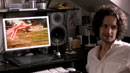
E*Rock is not only a producer of freaked out computer sounds, he also runs two labels, designs countless album covers and posters, and makes flash animation that’s not for the seizure-prone. In his free time, he likes to transform Wii controllers into MIDI devices and tour with Ratatat. His secret to endurance? Punany. Cocaine. Sparks!
Lizzy Parks Raise the Roof
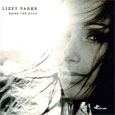
Songstress Lizzy Parks has already cut her teeth with the likes of Chris Bowden, the Heritage Orchestra, and numerous live gigs. Raise the Roof, her second full-length, goes deep into jazz, with major production props from Nostalgia 77 (nee Ben Lamden) and lush strings from Riaan Vosloo of N77’s live octet. Parks is clearly front and center, never becoming overshadowed by the brilliant, organic arrangements. There’s no shortage of variety here, as “Time” is an intimate number with beautiful touches of haunting melancholy, while “Spring Time” swings with a snappy, energetic fusion of horns, organs, and bass to match Parks’ bouncy vocal stride. Confident from start to finish, Raise is a marvelous and exquisite delight.
Department of Eagles In Ear Park
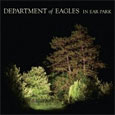
Dan Rossen is one half of Grizzly Bear’s songwriting team; he’s the classical-minded experimentalist to Ed Droste’s pop savant. In Department of Eagles, his project with Fred Nicolaus, Rossen eviscerates the Great American Songbook, rearranging sepia-toned tropes—barroom pianos, marching-band snares, Victrola waltzes—into supremely complex art songs. Lead-off single, “Nobody Does It Like,” sounds like a computer-generated Phil Spector production, with velvety oohs and ahhs woven around a high-stepping bass bounce. Aptly titled album closer, “Balmy Night,” meanwhile, is a banjo-and-guitar raga in the shape of a stately antebellum ballad. Needless to say, In Ear Park is the kind of release that becomes increasingly special with repeat listens.
Kenny Galactic “Catz on Earth”

In “Catz on Earth,” off Destination: the Moon!, Kenny Galactic gives the impression of a child trapped in a room busying himself with toys and gadgets from past generations. Overwhelmed by an abundance of stimulation, he aimlessly jumps from one dated contraption to another to see what each is capable of. Galactic (a member of the always-referred-to-in-the-third person, so-strange-it’s-ordinary Portland-based collective, Rob Walmart) produces a sample-heavy young and playful track that’s chalk-full of wobbly bass, off-timed, crunchy analog beats, wavering synths, and murmuring loops that converge to have true purpose amidst the chaos.
Portland, OR: Living on Video
Since the early 2000s, Portland has produced the most prolific and vital experimental filmmakers and video artists in the country. The city’s strong sense of community and support for the arts has made it a breeding ground for video art. There is also an abundance of screening venues, including Holocene, Machine Works, The Hollywood Theater (which also has a stage for live accompaniment), The Guild Theater, and Cinema 21; established galleries such as PICA and PDX Museum of Contemporary Art are also strong supporters of local artists.
There are many different niches and styles of film and video art emerging from the city, but one commonality is a strong tie between video and music–not surprising, considering that everyone in Portland is in a band. Given the amount of venues available and the curatorial freedom they’re afforded, filmmakers and video artists have the luxury of being able to construct often costly and space-consuming installations.
Presented here are four artists who’ve discovered their unique voice in the City of Roses.
The Vanguard: Matt McCormick
Matt McCormick was just as surprised as anyone by the international attention received by The Subconscious Art of Graffiti Removal, his 2001 collaboration with indie film stalwart and Portland expat Miranda July. The 16-minute video addresses the subconscious creation of modern art by those who are hired to buff, or “remove,” graffiti. The haphazard cover-ups become completely new works of art, calling to mind Russian constructivism and abstract expressionism. The Subconscious Art received numerous prestigious awards and honors, propelling Portland’s film and video artists into international view.
The zeitgeist was here, and McCormick was already an integral part of it. In 1996, he had started video label Peripheral Produce after renegade screenings got Portland residents asking where they could get their own copies of the videos. The company soon expanded into a distribution hub for experimental film and video, and McCormick felt that it was time for the city to stake its claim in the worldwide film community. “There were a lot of venues for people to show their work, and it was going on all the time, yet there was not one definitive screening,” he recalls, explaining his reasons for founding the PDX Experimental Film Festival in 2002.
Though he’s still an unwitting ambassador for Portland experimental film and video, McCormick’s true passion is his own work. “I have no one specialty,” he says, “but maybe that is why I’m good at directing.” Humble words, considering he handles his own directing, writing, cinematography, sound design, and editing. These days McCormick is putting most of his effort into completing his first full-length film. He also recently finished a video installation for a local hotel–its flickering images of a bridge silhouetted by sunset are quiet and haunting, showcasing McCormick’s uncanny ability to highlight something touching and human about the relationships between inanimate objects.
Along those lines, his 2004 work, Towlines, is a breathtaking experimental documentary that exposes the subservient nature of the hard-working tugboat. The quiet strength of the towline that never quite gets the attention it deserves becomes a poignant observation of the nature of human society. It is not a stretch to compare the noble tugboat to McCormick, whose quiet wit and constant hard work is keeping Portland at the forefront of experimental filmmaking.
The Outlaw: Vanessa Renwick
Vanessa Renwick is as wild and untamed as the Northwestern wolf packs that are her latest obsession, which fueled a recent film project and 2003’s Hunting Requires Optimism. The latter is a video installation that consists of 10 refrigerators–nine open to a moving image of a lone wolf’s unsuccessful hunt, the last to the fearsome howl of the creature as it successfully captures its prey. Only one in 10 wolf hunts is successful, and Renwick focuses on the hope of that 10 percent. This dark optimism is a common theme throughout her work.
Renwick’s general aesthetic is at once old-fashioned and aggressively modern. Her desire, perhaps “need,” to forge her own path, with an extensive filmography dating back to 1983, gives the sense that she is living out her own version of a modern-day Western, with no rules and no boundaries.
As true as she is to her love of the Northwest, Renwick is especially loyal to Portland, where she has lived and worked since 1989. Her first screenings in the city were hosted by Peripheral Produce events in the early 2000s. “It was a prolific time for me,” recalls Renwick. “Matt [McCormick]’s show deadlines spurred me to get started on the work.”
Her installation projects lean more toward site-specific and interactive work. “I like people sitting together worshipping the projected light,” she claims, “but I also like getting them off their asses together with the moving image.” The most striking example of this audience interaction is her 2002 installation The Yodeling Lesson, in which the audience was required to pedal on a bicycle to power the video projector, thus keeping the installation running. The images projected in this homage to Portland’s unofficial mascot, the bicycle, featured her longtime friend (and the creator of the Xtra Tuf zine) Moe Bowstern bombing the Mississippi Avenue hill on a bike, completely naked.
Renwick’s film and video work–which she refuses to use as a significant source of income (opting instead to paint houses or work as a bike messenger)–always demonstrates a wry sense of humor, combined with a deep respect for her subject, whether it be wildlife, bicycles, or the audience itself.
The Rogue: Cat Tyc
Cat Tyc’s first love was writing. She accidentally caught the video bug while working at a digital video company in New York, when a piece
of text she had recently written simply “worked itself into a video,” becoming her first piece, Speed Freaks Do Bach (2004). Tyc now sees the two forms of art as interchangeable. “Poetry and video are both using language,” she says. “The intuition is exactly the same, it’s only using different tools.”
Tyc has produced countless music videos for Portland bands, and even in her personal work, songs often get a starring role. The Synesthesia series (2006) is a collection of videos (including Furness and The Night the World Caught on Fire) that explores the neurological phenomenon in which the stimulation of one sense (such as sight, sound, or smell) leads to automatic, involuntary experiences in a second sense. The videos in the series are set to songs, but Tyc’s visual depiction of “seeing” sound moves into a realm far deeper than music video, becoming something closer to abstract illusionism.
Tyc has recently shifted her focus toward more politically driven pieces, including a site-specific installation that tackles the issue of gay marriage, tentatively titled PDA, and her first full-length film, Umbrella, a narrative that addresses the emotional effects of a woman’s decision to have an abortion. As director and writer of the film, she sees her script as “a road map.” It guides the crew until she reaches the editing process, which, she says, “brings it back to me again. Before that, the project is everybody’s.”
The Cub: Uli Beutter
Beutter grew up vacationing in the States with her family and quietly dreaming of working in film. Her travels led to a fascination with the U.S., which eventually prompted her to move from her small village in Germany to the equally small town of Eugene, OR in 2001. She studied theater and broadcast media until she moved to Portland in 2004 to realize her dream of being behind the camera. Beutter enrolled in the burgeoning film program at The Art Institute, where she met Alec Cohen, her strongest collaborator. While still in school, Beutter and Cohen started the video firm Sandy Montana (which also employs artists Kurt Nishimura and Tom Brown) as a way to earn money from filmmaking, allowing them to work on projects that were closer to their hearts.
Beutter states that the tone of her commissioned work, mostly commercials and music videos, is much more light-hearted than her “little heart pieces,” which are where she “works out her issues.” Her solo work, White (2007), is a haunting video installation about conformity, during which she negotiates herself inside a huge white box along with a group of people painted white from head-to-toe. The two-minute Heritage (2004) is an emotional work in which she recounts her first-hand experience of bigotry and being a stranger in a strange land, narrating over footage from Luis Buñuel’s Land Without Bread, a movie that strikes a chord of nostalgic longing for a faraway time and place.
Beutter’s involvement in the Portland film and video network has been fairly limited in contrast to veterans McCormick and Renwick. “They are the curators, whereas I am someone who would screen in a little room,” she explains. “[When I got started], they were a different league of artists, and still are.” Nonetheless, Beutter’s first screening was at McCormick’s 2005 PDX Film Festival–a perfect example of the general spirit of support and community within the Portland film and video scene.