2562 Aerial

Melding techno and dubstep is not as easy or as natural as some might imagine. Beyond a basic tempo, techno’s dominant pulse is fundamentally at odds with dubstep’s characteristic stuttering step. Yet Aerial manages to fuse the two together seamlessly into a new kind of machine, one whose bass and echoes dip way down low, but whose glistening snares and skipping kick drums only heighten the energy. Recalling traits of Renegade Soundwave more than Stewart Walker on tracks like “Techno Dread” and “Enforcers,” 2562 nonetheless clearly has ears for the smallest detail. Tracks such as “Moog Dub” are deep enough to warrant either a night of quiet wonder or an hour of mad dancing. Or perhaps both.

The Handmade’s Tale

The scene at the Renegade Craft Fair in San Francisco belies its confrontational name: Combing through the isles at the Fort Mason pavilion, you see mostly females in their 20s and 30s hocking knitted, sewn, and kiln-fired wares of all types. Upon closer inspection, there is something slightly different about the items on offer, something much subtler than the “renegade” tag suggests. “It seems to be all about context,” says If’N Books’ Deb Dormandy, in a clip from the upcoming documentary Handmade Nation. “My [handmade] books wouldn’t sell that great next to batik silk scarves, but if there’s, like, a batik silk scarf with a skull on it next to [my booth], I sell much better.”

It’s likely a similar scene at the Austin Craft Mafia’s meetings, where there’s nary a pair of cement shoes to be found (ballet flats, maybe), but there’s still a definite distinction to be made with today’s new breed of crafter/maker. “I see the use of the oppositional aesthetic as a way to distance the indie crafter from the more traditional craft scene,” explains Cortney Heimerl, Handmade Nation’s assistant producer and co-author of the forthcoming book of the same name. “‘Craft’ is such a problematic word. The young people that are involved in creating what people have come to refer as ‘the new wave of craft’ or ‘indie craft’ use very traditional methods–embroidery or pottery or knitting–but use very different themes and issues… They needed a way to separate one type of craft from another.”

Those themes and issues range from the aforementioned skulls to ones addressed by groups like Knitta, who take the “renegade” bit to heart. In the documentary, members of the Houston, TX-headquartered (but worldwide) collective are shown tagging buildings, lampposts, trees, and even stone scraps of the Great Wall of China with woolen cozies, transforming urban landscapes to rejuvenate their often drab steel-and-concrete aesthetics.

Though not all indie crafters are activists in the traditional sense, they do believe they’re shaping the way people shop, one stitch at a time. “It is a movement that is helping to change the face of consumerism,” offers Heimerl. (Which, as any quilter-provocateur will tell you, is political.) And that’s where the internet has come in: If you think the Long Tail theory provides a glimmer hope for the future of indie record sales, just think what it will do for punk macramé. What was once frowned upon as “women’s work” has grown into viable communities and self-made businesses, where buyers groups, online societies (sharing knitting- and small-business tips), real-life meet-ups, and direct sales have all flourished.

“Within the DIY community you will find trained academic artists, crafters who have day jobs and sew by night, full-time crafters who have left their day jobs behind, stay-at-home moms, and crafters who just make stuff for the sake of creating,” says Faythe Levine, director of the Handmade doc and co-author of the book.

“The underlying message of DIY itself is ‘you can do it,’” says Levine, who draws parallels between indie filmmaking and crafting. “Work with what you have, pool your resources, tap into your community, and make it happen. That is exactly what I did. I turned making a film into my craft–same message as before, different medium. The documentary has become my platform to show it is possible to have an art community that is about supporting one another and sharing ideas, that craft is approachable and all-inclusive.”

So all-inclusive that no one stares down their noses at enthusiasts of Bedazzling and Puffy Painted Fruit of the Loom sweatshirts?

“Of course not,” Heimerl replies.

Pluxus Solid State

It starts with a series of crackles and pops, then a melody line straight out of the Morricone songbook begins forming out of a mass of thickening beats. Enter guitars, keyboards, and drums, and a sugary electro-pop tune emerges. That’s “Transient,” the opener on Solid State, the new full-length by Swedish trio Pluxus. The formula is repeated on “Kinoton” to even better effect. The tune thumps along on bass plucks and electronic fuzz, then really comes on with a burst of playful guitars and lovely space-age vocoder-treated poetry (“Shine like a star/Shine down on me”). But the song seems truncated at three and a half minutes–the best part appears ready to launch and then suddenly it’s done. “Sansui” and the title track shuffle and bump in the same fashion, though slightly darker, and with just a hint of Scandinavian winter in the air. Pluxus leaves you wanting more.

Madvillain “Boulder Holder”

Madvillainy, from 2004, marked a seminal release in the career of producer and L.A. indie hip-hop darling Madlib. Four years on, Stones Throw has reissued, repackaged, and remixed the album (okay, technically Madlib did the remixes himself), and wrapped it all in a mysterious box that’s only available via the label’s site. And while we could go on and on (and on and on and on) about how much we love the multi-genre-influenced, crisp-as-a-whip beats, Madlib’s music has always spoken for itself. So just hit download now.

Madvillain – Boulder Holder

What You Talkin’ Bout, Willits? Part 4

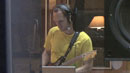
Christopher Willits finally returns from a summer of touring, but not without some behind-the-scenes footage to share with you lucky viewers of his monthly series. Here, Willits gives us an in-depth look at a four-day recording session he did at SnowGhost Music Studios in Whitefish, Montana. SnowGhost is one of the most state-of-the-art recording studios in the country—and one of the only ones to use DSD (direct stream digital) technology. Willits turns hosting duties over to SnowGhost’s Brett Allen to give us a closer look at the studio’s finer points, then lets us in on some of the techniques he’s using to record his new EP.

Daedelus: Fine and Dandy

As a child, Alfred Weisberg-Roberts was a loner. Young Alfred was not tromping about shirtless on a skateboard with the Z-Boys in his hometown of Santa Monica, California; he was inside reading, learning how to play classical instruments, and traveling through fictional worlds of his own creation. He had an interest in mythology, and particularly enjoyed the story of Daedalus, a skilled craftsman and ingenious inventor. And though he can’t save dance music from repetitious doom and drone, the modern-day Daedelus (spelled differently to avoid confusion) may just be able to save a few souls on the dancefloor–especially with his new album, Love To Make Music To.

Though Love To Make Music To may be Daedelus’ most high-profile album yet, he has been a prominent fixture on the L.A. avant-beats scene since 2001, starting with Portrait of the Artist (Distill) and Her’s Is >[sic] (Phthalo). On 2002’s Invention, he defined his atmospheric, intense-yet-sexy sound, while ’03 and ’04 yielded five more full-lengths, including The Weather–a collabo with MCs Busdriver and Radioinactive that he calls his “moon-bounce hip-hop record” and Of Snowdonia and A Gent Agent, two doe-eyed sleepwalks whose swirling synths and choppy beats occasionally coalesce into an all-out jungle frenzy.

Since catching the ears of Ninja Tune, Daedelus has released his most polished records yet: 2005’s Gilded Age-meets-future-rap number Exquisite Corpse, and 2006’s Denies the Day’s Demise, where he masters the grandness of his samples while exploring the samba idiom.

Daedelus, a student of classical jazz, fell in love with rave music at age 14, when he first heard U.K. pirate radio. All of his records have invoked this influence, but Love To Make Music To wears the reference clearly on its sleeve, as it finds the artist surveying the current landscape of dubstep, electro, hip-hop, and Baltimore club music. “Fair Weather Friends” is a happy, electro-pop teen dream, while darker tracks like “Hrs:Mins:Secs” and “I Took Two” marry wonky basslines to hard-hitting kicks. On “Bass in It,” Taz Arnold of Sa-Ra shouts out various regional forms of bass music, while “My Beau” is a calculated rework of Ghost Town DJ’s 1996 Miami bass jam “My Boo” that’s dedicated to Victorian dandy Beau Brummell.

Of course, this wouldn’t be a Daedelus record without a fanciful concept, and Love To Make Music To is imbued with a magical back-story. During the 1893 Chicago World’s Fair, Alfred is electrocuted while traveling in Nikola Tesla’s entourage. He rises from the dead two days later and creates this record (in Tesla’s labs) to explain what music of the future sounds like.

It’s a clever conceit, one that ties together Daedelus’ simultaneous interest in the future and the past. It also helps audiences understand his eclectic live show, for which he’s ditched the laptop (which he calls “the little blue screen of death”) in favor of an ultra-futuristic Monome–a handmade MIDI controller with open-source software that allows for serious ad hoc beat-smithing. And he plays it while dressed like a Victorian dandy.

You see, when he’s not immersed in chopping beats, Alfred and his wife, Laura–who have changed their last name to Darlington–pursue their interest in 19th-century culture, searching for frock coats at flea markets and making sweet, faraway-sounding folk music together as The Long Lost (their album is also forthcoming on Ninja Tune). Though this old-world style may seem in complete opposition to his ultra-contemporary music, Daedelus leverages the two with humility and a disgusting amount of style. We called him up in L.A. to find out how.

Does one record stand out as defining your sonic aesthetic?

For a long time, I thought the most important piece I had done was my first release, “A Mashnote.” It got released on a compilation called dublab presents: Freeways. It’s a song full of all these swooping strings, and it has this funny broken rhythm that keeps on morphing around and never really sitting still. It has the sound of keyboard clicking at the beginning, clacking out a little love letter I was writing. It was a crazy accidental track that people really liked; it had a life of its own. I thought I’d never be able to do anything like that again. Also, I thought, “I really want my music to be conceptual and physical. I don’t want either element to overpower the other one but, gosh, it’s fun to have both.” I quickly learned the truth is that, if you’re ever really happy with something, you can’t do it again because it’s kind of dead and done. If anything is a complete statement, I would probably have no reason to do another record.

Why did you choose the title Love To Make Music To for your new album?

I have always tried to assign way too much meaning to album titles and song titles. I did a record called A Gent Agent and I put so much meaning into every song, and all the samples tied into the song titles… and nobody cares. They’re going to download it, they’re not going to have the artwork. It’s totally cool. I come from the perspective of the more you put there, the more people can get into possibly. You dig a hole and if you dig it deep enough, everyone could be buried there.

For this [album], it’s two things. I’ve always played around with the idea of environmental listening music. You could call it easy-listening music, lounge-record style. [It’s about] trying to take that idea and totally twist it to the point where you’re making your own movie music. ‘Music to make love to’ is a common phrase from that period: ‘Music to Romance to,’ ‘Music to Dine to.’ Love To Make Music To was an easy twist on it. It really shows how I’m making music backwards. I’m not making music for the situation, I’m making music for the situation that isn’t there. This is my first record where I feel comfortable trying to make it dance more. Every track is pretty uptempo, pretty engaged in that idea. I want more verbs! Less nouns, more verbs. It’s perfect.

Which track came the most naturally?

The one I knew I needed to [have] on there… was “I Car(Ry) Us.” Not because it’s a not-so-clever reference to Icarus–worst title ever, possibly–but I wanted to have a bit more tragedy on the record. It was getting to be this bright, shiny thing, and I hope that song really gets the sweet-and-sadness of the Daedalus story. The lyrics are all from the point of view of Icarus. Trying to tap that emotion is my advantage on this whole thing.

How do you search out samples?

I try to come from the conceptual idea of having no limits about it. I treat everything like a sample–be it an actual record of some sort of source material or instruments I’m playing, I’ll throw it into the same audio editor. I see people… sampling for cliché purposes, like, ‘Oh, this is this great Parliament loop. Here’s this great thing and I want to keep its essence so I’m not going to touch it too hard.’ You can’t destroy a sample. You can maul it as much as you want but you can never really lose its essence. So why not put as much personality into it as possible? In terms of sample selection, I try to be very smart about what I’m using because I know people are going to suss it out. I try to be sensitive to that and to leave my own mark on it. It’s impossible not to–as soon as you record it and isolate it from its other parts, it’s marked. For instance, when your needle drops on a record, at home or at a record store, you might hear something, a rhythm turned around a way you never could hear it because you’re not starting on the one, you’re starting on the two-and. And suddenly it’s this crazy Afrobeat thing and you’re like, ‘Oh my god, I want to get that!’

How do you think your records have evolved over time and what major changes have you made?

I am not a super-confident creator. I don’t write notes on paper and go, ‘Aw, this is awesome! This is brilliant!’ I really usually work from a place of fear and lack of confidence. In a way, having the confidence to make dance [music] is big, because with previous records I’ve buried myself in conceptual ideas. [Now, I’m] really letting the music play by itself. It’s like you take a choir of kids and let them fight it out–there’s going to be a pecking order that evolves. There’s gonna be melodies that come out of the music itself.

I try to stay pretty unconscious generally in the studio. I try to keep my process pretty quick and tight so that when I’m ripping through records, for instance, and I come across a melody that’s particularly nice, I’ll just take it real quick and twist it on its head as fast as I can before I really am conscious of it. That way it usually yields results that are a little outside of myself, which is the best. Same thing with instruments: When you sit down at a piano, one of the keys is kind of sticky, it doesn’t play too well, so you skip that key and use all the other keys and suddenly a melody happens naturally out of that. Everything has that moment. There’s a natural stubbornness to almost everything–if you play around with it you’re going to find it sings its own way.

What do you like best about using the Monome?

It’s a non-rigid performance device. You can be really sensitive and improvise everything. I might have some game plan, like, ‘Oh, I’ll play this song probably, and I’ll play this song,’ and maybe in the course of the night people will yell songs and [I’ll] drop it in, combine it with something else, and have the computer be there to [have] a rapport with the audience. [That’s] so different than what most computers do with electronic music, which is [create] a wall between the audience and a performer. Like a physical wall. The Great Wall. I really do feel like this machine is allowing real communication rather than musical communication. It transcends language and all these kind of barriers.

When and why did you start wearing frock coats?

That was something that was at the back of my brain for a long time. The heightened sense of itself, the foreignness. The real sense of the clothing started between my wife and I. We would kind of dress up at home. Not like cosplay or roleplaying or anything so deviant, we just both enjoyed the contour and the look. Maybe it’s also the kind of thing where I was a chubby kid as a child and definitely awkward [because of] it. At a certain point in college I lost a lot of weight and the idea of fitted clothes was really amazing. Also there was a sense I was dealing in mod culture in the late ’90s; these Northern soul parties. Also there was a certain bend, at least in L.A., on jungle culture being mod culture. It was a natural progression. You take all of this soul music that we’re sampling, all these James Brown breaks and stuff, and think about what they’re doing with it now. It is a direct connection and yet, why are people wearing silly baggy clothes when they can

be wearing this wonderful fitted clothing? I had been wearing it around the house with my wife and taking portraits and pictures and silly things. But when it came to stage time I would dress up in normal clothes and I was like any bum… The audience is looking at a reflection of themselves and there’s nothing to it. If anything, it takes the air out of the room a little bit. It makes it kind of bland. At the same time I was messing around with using laptops onstage, as was the terrible fashion of the time. And it was another element of super-mundaneness. I was nervous enough onstage; I’ve never been a natural performer. In 2003 I began to be serious about it and decided to try to see what worked. The first [idea] was to get away from the laptop and the second was to get more comfortable onstage.

Do you consider yourself a dandy?

Absolutely. There’s one key tenet–I’m not too much of a pretty boy, so I’m maybe missing some of the essential things that made dandies dandies. One of the important things to me about the conceptual idea for the dandyist movement was the fact that every gesture was art. That’s big. It’s what really married me to people like Beau Brummell. He would spend three hours every morning getting himself together because he was his own work of art. He would wear something slightly askew because it meant something. I mean, gosh, if everything we did meant something? It would take a long time to do things! And that would be wonderful. Anytime you have to dip your watch chain into perfume and then into tea because you want the scent just right? I mean, if somebody’s close enough to smell your watch chain, it means a lot.

Who are your Victorian style icons?

Beau Brummell’s a big one. You have all the great composers of the time, all the crazy poets. It was a period of time when, if you didn’t have syphilis, you weren’t an artist. That was a weird baseline: disease equals artistry. It gives you the kind of power of imagination that you needed to be a great artist. I try not to think of someone specific, but I really like the pre-death-of-Prince-Albert Victorians, because there was a lot of color and more flair.

Do you have an interest in Greek mythology in general?

Greek mythology tends to be really good because the stories are so heightened. All of this is just about peacocking to the absurdity that art should be. You have a story about Zeus changing into a swan to sleep with some girl he likes? Orpheus: greatest musician of his age, able to communicate with the animals. Ruins it all because his love for his betrothed overpowers him to look back. It so much has to do with sampling, it’s bananas. When I’m sampling nowadays I try to take a page from [Orpheus’] story and I try not to really learn what I’m sampling. I have the records and everything but I try not to think about it because if they ever put me under a polygraph test, I wouldn’t really know. Somebody will be like, ‘Oh, you used this stupid record that’s super-common,’ and I’m like, ‘Oh, I shouldn’t be doing that!’ It’s definitely a lesson learned. Your unconscious mind sometimes is the most powerful one and you don’t want to learn too much or it can come back and drag you to Hades. You look at mythology from other countries too, it’s stories–that’s all we’re here to do, tell some stories.

Anything else?

I really have changed my mind recently about being a musician. I’m not in the business of music. Music is my passion, not my business. My business is caffeine management. All I do is intake a certain amount of caffeine until people deem that it’s time, possibly, for me to be onstage and I’ll do that. Then I’ll un-caffeinate for a while until I have to repeat the process. I recommend Red Bull Cola and coffee-flavored gelato.

More on Daedelus
TV: Episode 71–The Evolution of Daedelus

Tres Beau
A Victorian sartorial primer.

“Being a guy and existing in our current world of accessories, like what do we have?” opines Daedelus. “I can wear sunglasses. I can wear shoes. I can wear maybe a baseball cap. It plain old sucks. Fashion is a dialogue; you’re saying something with every piece you’re wearing. So, let’s talk about what a man could wear [in Victorian times]. He could wear shoes, spats, he could wear socks, suspendered socks, he could wear belts, britches, suspenders, frock coats, waistcoats, half coats, quarter-length coats. It was freezing so you could wear coats on top of coats on top of coats and you’re great, you’re grand. People were wearing anything and it was awesome.”

Finding the perfect Victorian-era gear is, as Daedelus explains, “like record hunting. If you turn off your mind to the possibility, you’re not going to find it. But if you’re open, you can find crazy treasure anywhere.” Check out some of his favorite 19th-century swag.

Hair jewelry
“Every time your betrothed would go off to war, they might give you a lock of their hair. Also, when someone died of disease, you took some of their hair. People were making jewelry out of human hair. The amount of knotting and tying! Hair is not a format that takes well to working with. It’s more difficult than any precious metal.”

Mad hatters’ top hats
“The hatter would take mercury and be able to bend pieces of felt and cloth into these crazy creations, driving them batty at the same time… which is fun, but unfortunate for them.”

Pocket watch
“Any time you take technology and mix it with an art it usually produces crazy results. [Take] the pocket watch… For one, it’s big and it says a ton about the person, their station [in life]. Everyone all of a sudden needs to know the time. Before the cell phone, did you need to reach anyone that fast? No. And before the pocket watch did you need to get anywhere that fast? Not really.”

Tailored coats
“Suddenly, men have a waist! Whatever happened to the waist, why is it gone? Women have it. Women have bellybuttons, men have bellybuttons. We both have waists. Okay, we can do this.”

Spats
“Spats are dope! They are really inventive because you had to have a way of keeping all that terrible mud out of your shoes. All of a sudden you take something made for utilitarian purposes and you give it a fashion, actual aesthetic purpose–it sings.”

Annual Style Issue

XLR8R checks in with neo-Victorian Daedelus at home in L.A., while peeking into scenes all over the country: We get nasty with New Orleans sissy bounce queens, get beautifully lost with Aaron Rose, and rewrite the history of Athens, Georgia’s freak-beat scene of the ’70s and ’80s. We also gather the goods on Wu-Tang’s RZA, The Faint, and Jay Reatard, then swing way east for the lowdown from Philly artists Adam Wallacavage and Andrew Jeffrey Wright.

Podcast 51: Modeselektor’s Jetlag Mix

While 2007 saw the release of both their Happy Birthday full-length and Boogy Bytes Vol.3 mix, Berlin duo Modeselektor has been relatively quiet in 2008. Well, that’s about to change, as the pair is planning to take their distinct brand of noisy, chopped-up techno on the road as part of the Jetlag Tour 2008 with Ellen Allien.

With multiple stops scheduled on both sides of the Atlantic, the Jetlag Tour is bound to live up to its name for the artists involved. Questions of sleep deprivation aside, the boys are clearly amped about this tour, as they dropped this exclusive mix into our laps for the XLR8R podcast. Running the gamut from dubstep and bassline to French house and kwaito, this podcast shows that Modeselektor will be bringing some serious heat to the Jetlag Tour this September. Photo By Birgit Kaulfuss.

Tracklisting
1. Kode9 vs. Badawi – Den of Drums (ROIR)
2. Cylob – With This Ring (Rephlex)
3. Dj Mujava – Township Funk (Warp)
4. 2562 – Techno Dread (Tectonic)
5. Black Noise – Nature of the Beast (Original Black Noise Mix 2) (End to End)
6. TRG – Missed Calls (Subway)
7. Screaming Soul – Warfare (Ruckspin & Planas Remix) (Ranking)
8. British Murderboys – Hate Is Such a Strong Word (Counterbalance)
9. Elemental – Blob (Runtime)
10. Alex Cortex – Huyendo pt.2 (Klang Elektronik)
11. Zomby – Strange Fruit (Ramp)
12. TRG – Oi! Killa! (Cool and Deadly)
13. Mr. Oizo – Patrick 122 (Ed Banger)

Subscribe to this podcast: iTunes or mp3 format. For help, click here.

Download MP3
Download M4A (iTunes enhanced)
Subscribe to Podcast (RSS)

Podcast_Mix_2008_08_25

An Interview with Aaron Rose

XLR8R chats with Beautiful Losers curator Aaron Rose.

What’s your other big project right now besides just getting Beautiful Losers the movie out?

Aaron Rose: Well I co-edit a magazine with Ed Templeton and Brandon Fowler called A&P Quarterly. It’s a free quarterly art magazine and I’m on deadline today for that and I’m totally not done with all my stuff.

And then I’ve been playing music for the last year. We formed a band called The Sads and that has sort of been growing in commitment and you know we’ve put two records out so far and we’re working on a third.

Oh, two records in a year is kind of a lot…

Yea, well one’s a seven-inch. One’s an EP and one’s a seven-inch. So it’s not like we haven’t done a full-length album yet. I curate a billboard for UNDFTD which is a shoe store out here in L.A. There’s always, like, tons of little projects going on.

You seem like you move pretty fluidly between the independent world and some more corporate things. Have you ever had a situation where you questioned what you were involved in because it was a corporate thing that involved artists?

Um… every morning when I wake up! Yeah, I mean, I’ve been doing it long enough. When I first started working with bigger companies it was much more of a struggle for me because whenever somebody else is paying for what you are doing, regardless if it’s a company or an art collector, you have to kind of bend over to make ’em happy. And I wasn’t used to that. When what you’re doing is underground, there is no one to answer to. You have total freedom because nobody cares… or the only people that care are other underground people. And then when you start getting into situations where you have patrons, there is always a compromise. And those compromises have been difficult over the years, you know–different companies I’ve worked with have sort of said one thing and then when you get into it, it’s a different story and then your projects kind of die, or lose their soul. Over the years you learn to ask all the right questions up front; once you know all those answers, you can decide whether or not you want to do it. But it took a while to learn those questions and there’s really no, like, handbook for it.

Maybe you should write on.

I know, it would actually probably help a lot of people. It’s about finding out the scope of what they expect and you know everyone always has their message, so what’s their message? How much of their message needs to be in it? And that’s usually the deciding factor whether or not to take a project. Like, if the thing is gonna be like branded with logos all over it, usually you’ll just say no.

Is there a logo on your UNDFTD billboard?

There is, but it’s very small and it’s not attached to the artwork–it hangs off of the scaffold that holds the billboard up. It has a very small sign and it’s just the UNDFTD logo and the Nike logo. So if you’re really looking at the billboard, you see it, but if you’re just driving by, it’s almost invisible. That was part of that question to Nike: does the art have to have a Swoosh on it?

Is there any project that you would like to do but you can’t because of monetary reasons, or one you’ve abandoned because it was too complicated?

Never abandoned. Dream of opening a school and that’s probably, hopefully, the way I’ll spend the second half of my life, assuming I have a second half of my life. That is a huge undertaking and I don’t have the money for it. So that’s something that I’ve been working on for years and years and years, just in terms of concept, but it’s something that requires an enormous amount of capital to pull off the way I’d want to pull it off.

There was this idea that was floating around for a couple of years that I pitched to different companies to do basically a pop-up art museum. We would rent a vacant lot in a different city and erect a pre-fabricated building that’s open 24 hours, and has a bookshop and a cafe, and a museum inside. It’s there for three months and it’s gone and then it moves to another city. Bands play and there are different curators doing different shows; you can go there at four o’clock in the morning and hang out. That was something that I really wanted to do for a long time, but it’s financially I don’t have access to that kind of money. Maybe one day it will happen. People really loved the idea but when I sent the budget, people were like “Eh, no.”

The idea of not selling out was pretty crucial to the underground in the ’80s and ’90s and it feels like that concern is not really there for people between 16 and 25 now. It’s like, they actually want to sell out.

Blame hip-jop. (laughs)

Do you think that’s true?

I think hip-hop ruined our culture, yes. It turned all the girls into hoes and all the boys into babies. Um, sorry.

No, I like that. That’s a great quote.

I mean, in all seriousness I think that has a lot to do with it. I think when punk rock and DIY and all that started to merge with hip-hop, you can really see that. Skate fashion and hip-hop fashion are almost merged now. I think the original values of skating and punk and DIY culture got diluted within the younger generation. Because hip-hop is all about money and cars–it’s like selling out is the goal. It’s one of the things that we talk about in the Beautiful Losers movie, because the generation of people that I came up with were the first generation of street culture that had to wrestle with that kind of stuff. The original punk rock scene never really had that kind of success. Corporations weren’t coming to Black Flag to make a shoe or to brand their products. There was maybe some record label stuff, but we were the first generation who had to deal with a corporation trying to corrupt our underground culture. Actually, the hippies probably dealt with it. I remember all the VW adds were, like, hippie ads and stuff back in the ’60s.

Marketing also seems to have gotten so detailed and clever, and it seems the younger generation have grown up with it so embedded in their lives. So it’s almost hard for them to have a question because it’s hard for them to separate it out. Also, it’s like “If everything is going to be sold out anyway, why don’t I just sell my shit out before someone else gets it?”

Right, or “before someone rips me off,” which is something that we dealt with. It was like, they would come to us, and if we said no, then they would just rip us off anyway. Like, a company would have some in-house artist draw your style. And then what are you gonna do? Sue them? You’re a kid.

I know someone like Mike Mills really dealt with that. He had an incident with The Gap where they came to him to do some stuff, he said no, and then they just did it. And Urban Outfitters sends kids out with digital cameras to take photographs of art shows. Then they have big presentations and they rip off everything from the art shows and they use it as their in-store display.

Totally. That being said, what kind of stuff is inspiring you at the moment?

L.A. is really good right now. I’m really happy to be living here. There is a scene happening on the West Coast right now that like is almost as powerful as what happened in the ’80s here. That’s super inspiring to me. I wish I could be here more to experience it. There’s an art scene and magazines and bookstores and a music scene that’s very community-oriented and also experiencing a level of success as well.

Are you referring to The Smell and…

Yea, The Smell, and Family, and Ooga Booga, and a string of sort of smaller galleries that are going on. And Arthur Magazine and our magazine. There is just a very interesting, really vibrant self sustaining culture made by people from within it. It won’t last. It never does. But right now it’s really awesome. It’s just like there’s an amazing feeling going on. You know, where everyone is helping people with other things.

Did you move to L.A. from New York?

Yeah, in 2001. I grew up in L.A. and I had been in New York for 12 years and it had gotten to a point where I running Alleged Gallery at that point in New York and the business had gotten to a point where I would have been way over my head financially. New York was changing dramatically. You can see how New York is now, the rents and everything are out of control. And I was trying to compete, but I was still showing underground stuff. I just couldn’t do it. It got to a point where it was just killing me. It was causing all kinds of problems with my relationships with the artists. It was too much of a struggle, so that was a big part of it. The city got too expensive and unless you were selling really commercial stuff it wasn’t possible to survive. And I’m not independently wealthy so I didn’t have, like, a float fund to get through that kind of stuff.

I also moved to New York when I was 19. It was the most amazing place in the world, but time had passed and I had changed and the city had changed. I stayed in New York for a long time based on that 19-year-old fantasy of what my life was. When I was in my 30s, I took a really harsh look at it and realized that that fantasy had left quite some time ago and it was keeping me there. And my family is in L.A. and I wanted to get close to them. I was offered a space in Chinatown, which was an up-and-coming arts district at that point, and the rent was $400 a month. I was paying $10,000 dollars a month in New York.

Right, so then did you do the gallery in L.A.?

We did it for a year. But it wasn’t the same. Once you’ve been in New York and done that in New York, it just was the same. The art world is so small here. It’s an industry in New York; here it’s just a leech off the entertainment world. It just wasn’t exciting. I mean, I’m glad people do it… but coming out of New York you’re used to having a busy gallery all day long and in L.A. you are sitting there for a week and nobody comes in.

Do you think that’s the same for the gallery owners right now?

Yeah, for sure. That’s just the way it works here. The art business in L.A. is all done on the phone. It’s not really a public service. People don’t say, “Oh, let’s go look at galleries today;” it doesn’t really figure in people’s radar. All the galleries that I know in L.A. do all their business on the phone, usually with people who don’t live in L.A.

L.A. is a very strange place.

L.A. is weird, yeah, and I can find many reasons to not like it. But the scene that I’m talking about right now is just amazing. It’s just great to be around people who are able to go out on a limb creatively and survive. That makes me want to do that. You know, that was something that I couldn’t do where I was before.

What is your favorite weird place in L.A.?

I hang out this place called Choke Motorcycle Shop all the time. It’s a moped and scooter repair place; they also make coffee and the baristas that work there are some of the most talented in the world. They are really crazy artists about their coffee. But you walk in and it’s just a dirty moped shop with guys covered in grease and tools laying all over the place, and the smell of gas and oil, and a ratty old couch, and then you can get the best coffee in L.A. I go there pretty much everyday and it’s definitely weird.

What kind of people are in there?

Greasy motorcycle people! And then the few people who know about it who are there for the coffee. But yeah, there’s like sort of a really trendy coffee place around the corner from it that there’s always a line out the door and then there’s never anyone getting coffee at Choke. People are intimidated by the dirt wizards.

What was the initial first seed of the Beautiful Losers thing? Do you remember when you thought it up and what inspired you?

It was right around the time that the gallery closed in L.A. in 2002. I went through this, “OK what now?” You have a business for 10 years that sort of defines you; when you don’t have that business anymore, you have to start thinking about what you can do. At that time, art was the only thing I really knew, plus a lot of the artists that I had been working with over the last 10 years had become pretty famous in their own right and so going around and putting together proposals for museum shows seemed like the most logical thing to do. All that time I had met enough people that I could at least get in the door at some places in terms of like “Look at my zine I made.” Which is basically what we did, we made a zine. I got together with a guy named Christian Strike who had a skateboard magazine called Strength back in the ’90s, and he got rid of his magazine right at the same time I got rid of the gallery. He was much more of a business guy, so he worked on the business side of it and I worked on the creative side of it and just went around pitching and eventually someone said yes. That was like 2001-2003.

Were you making the movie at the same time that you were doing the art show?

We started shooting the movie before actually the art show. But it wasn’t really going to be a movie. It was just running around with video cameras to document stuff and not really knowing like where it was gonna to end up. I was kind of hoping that it would end up becoming something, but we weren’t actively looking to make a movie. But when the exhibition happened, and the book, and the book did really well, it made sense to kind of brand it all together and that gave us the opportunity to walk up to film financing people and say “Look we did this, and this was really successful and now we want to make into a movie.” So that all happened later like around 2005-2006. But in the early part, it just seemed like there was a lot going on in that scene that was worth shooting it even if we didn’t use it for 20 years or something.

What is your favorite moment in the film?

Wow. That’s a really hard question. Okay, there’s a scene where Ed Templeton is in the middle of this sort of wasteland in the middle of his suburban neighborhood swinging on a rope swing. It doesn’t seem like it would be much, but to me it defines what the whole movie is about, which is staying a kid no matter what; no matter how big you get, still being able to fly around on this rope swing. It’s like total freedom. Every time that scene comes on I’m riveted.

What is the best advice you’ve ever been given? I’m pulling out all the hard questions now.

The best advice I’ve ever bee given… oh, man. Never go back.

Which means what to you?

It means just keep going forward, just keep plugging forward; don’t go backwards in your life. You know what I mean? I guess it’s like a no regrets kind of thing. But the guy who told it to me didn’t say “Never have regrets.” It was never go back; whether you succeed or you fail, just go.

You seem to have a very keen sense of what is going to be important later or what’s going to be important while it’s happening. Have you always been like that?

Pretty much since I was a teenager, I had a radar for that stuff. I can sniff stuff that’s real. What I realized is the real stuff always sticks around at the end. And a lot of stuff can get big for a couple of years and be based on a superficial premise and it can blow up–especially in the world we live in today, so much shit blows up and then it’s gone. The real stuff ends up sticking around, it just doesn’t ever really blow up. Or it blows up slowly. And for some reason I can just sense authenticity; I have a great bullshit radar.

Let’s move on to these style questions. What’s an item of clothing or accessory that you once owned that you wish you still had?

Is it okay if it wouldn’t fit me now? When I was 14 or 15, I was really, really into the mod scene. I dressed like a mod everyday and I would order all of my suits from England. We would get on the phone, me and my friend, and call England and use my mom’s credit card to order three-button ’60’s-style suits from Carneby Street in London. I wish I had those suits now because I searched high and low. All those stores that made them back then are out of business.

Did your mom get mad?

No, she was just happy I was wearing suits. I wore a suit to school. She loved it.

I feel like you have kind of a signature look, when did that evolve?

Kind of right around that time. I mean, I’ve gone through different phases. But the hat and the plaid shirt and the Dickies, like that started at 16, and 18 was sort of when that look set in. Then I moved to New York I got really involved in skating in New York for quite some years, so my style changed a little bit more to a skater thing, ’cause it was hard to skate in a porkpie hat, so I wore baseball caps and baggy pants and t-shirts. That was a brief moment there I don’t like to look at. But yeah, it pretty much developed it when I was a teenager. It grows out of a fusion between my mod stuff and a kind of cholo-punk thing that was going on in L.A. And it just kind of stuck.

Okay, final question. What would be your message to somebody younger who wants to do what you do?

Oh man. I don’t know the answer to that question. Ignore everything I just said. Put me out of business.


Harrison Blakoldman “Full Speed”

A recent find of ours on the music discovery crapshoot that is MySpace, Harrison Blakoldman crafts his own brand of electro-soaked hip-hop beats meant for those tuned into the exciting wave of forward-thinking boom-bap. The Paris-based beatsmith, who tells us he is “59 years young,” is a somewhat mysterious character, offering no real photos or information on his website. Instead, he lets the music speak for itself. On “Full Speed,” Harrison delivers some Dabrye-esque appregiated synth lines alongside swing-heavy drum programming that could easily be enjoyed in the headphones or the whip.

Harrison Blakoldman – Full Speed

Page 2866 of 3781
1 2,864 2,865 2,866 2,867 2,868 3,781