SuperBlast: Of Paint and Pixels

Berlin graffiti writer-turned-graphic designer Manuel “SuperBlast” Osterholt has put in work for Ecko, Sony PSP, and Nokia’s Nseries (as well as some limited-edition items for Wood Wood and Montana Cans) but don’t call him a sell-out. As his career retrospective Neo Utopia: The Art & Work of SuperBlast (Publikat/Gingko; paperback, $29.95) shows, the guy’s got skills with paint can and pixel, and this book thoughtfully considers the moral and ethical implications of both getting up and getting paid by corporate clients.

But why commit to print in the first place? “A book is like freezing time,” says Osterholt. “You get an overview of your process and development and… maybe you can spark a thought for somebody, who then can benefit from it and pass it over to somebody else. For me, creating is something you don’t own.”

Similarly deep sentiments find their way into Neo Utopia, though the text is freewheeling and haphazard. No mind–what this book lacks in the editing department, it makes up for in wit, charm, and ogle-worthy images of SuperBlast’s work, whose bright colors, folk-art-esque characters, and free-ranging lines contain echoes of Dutch designer Parra and U.K. sketch artist Jon Burgerman, Brazilian street artists Os Gemeos and even old-school grafists such as Dondi White. Perhaps the raddest thing about this 160-pager, though, is the inclusion of SuperBlast’s fonts, the product of his training with typography maestro Lucas de Groot (who designed the Thesis and Calibri font families). “I love letters,” explains Osterholt, “so I want to understand all aspects of them.”

XLR8R recently sat down to chat with Osterholt about the book, his work, and the German graffiti community.

XLR8R: How did the idea for a book of your work come about?

Manuel Osterholt: I love books in general, so there was always an interest to create one of my own. A book is like freezing time. You get an overview of your process and development and share it with people who are interested. Maybe you can spark a thought for somebody, who then can benefit from it and pass it over to somebody else. For me, creating is something you don’t own. It’s free and it’s floating around until somebody picks it up and brings it to a form. The value of a book lies in this thought—passing on ideas.

Where did you get the name SuperBlast?

I started my graffiti career around ’89 with the name Komet. Later, at the end of the ’90s, when I started to mix up graphic design with my artwork, I felt a need for a more official name to separate my graphic and street work. So I played around with the name SuperBlast,which has a reference to my writer name. Also, it’s kind of an homage to all the dope writer names from the ’70s, like SuperKool and so on. The name carries this double meaning of “super explosion” or “super Fun.” I like the idea of the name, of being powerful; it is also ironic and doesn’t take itself too seriously.

How does creating design work differ from your street pieces?

Both are ways to get ideas out. I try to balance them, though. When I’m sick of staring at the screen, I take my paint and enjoy doing something real with my hands. When I’ve messed around enough, I’m also happy about the possibilities I have with the machine. The feeling that I would relate to making a design or piece is happiness. The emotion is similar process-wise, when I realize that I hit something. Of course having paint in the hand has a more alive feel to it and the size of your painting is more impressive than that little monitor, where you push little vectors from one side to the other. And mostly you’re in the fresh air, which also helps with the endorphins.

How does the German graffiti community stack up against heavyweights like New York, Melbourne, and LA?

My friend Adrian Nabi, who runs BackJumps Magazine, has put on one of the best urban street culture exhibitions annually for the past three years. There is a lot going on, especially in Berlin. We have world standard graffiti-style writers. Classically trained, but really pushing the borders in this field. The government, as far as I know, is not as tough on graffiti as it is in the States, but is also not very helpful.

What graphic designers, graffiti artists, and comic book artists have influenced you?

There are too many to count. Also, I get inspiration from day-to-day situations, ancient religious art, the Dada and Modernist movements, and Pop art.
But all-time classics are M.C. Escher, Paul Rand, Herb Lubalin, Dondi White, Mike Mignola, Will Eisner, George Herriman, Walt Kelly, Chris Ware, and Basil Wolverton. Unreached are also Terry Gilliam’s Monty Python animations and Heinz Edelmann’s art direction for the Beatles’ Yellow Submarine.

Is blue your favorite color?

I do not really have a favorite color. It depends on my mood. I chose the color blue for my “Utopia Truth Paint” spraycan because of its color theory meaning. Blue is related to depth, wisdom, and truth.

Your street work is often very rooted in your hand style; do you ever feel that your design work is less personal or less expressive?

It depends. Right now I have the freedom to mostly work for clients who collaborate with me for my personal style. That brings a lot of freedom.
But in general I like both options of work. I try to have a good mix of both to keep the fun in my daily routine. It creates new ideas and the different ways to approach a problem, influences the other field.

How does the process of creating fonts differ from your graffiti pieces?

They are very different in a way, but similar at the end. To create a piece, you build a bunch of letters standing together, each with an attitude. The whole name or word is a unit and the letters interconnect. There is a certain dynamic created between them and it is influenced from the background, situation or feeling. If you take the process of building a font as opposite, then you realize that there are other tasks involved. Every single letter in the alphabet, capital and lower-case letters, needs to work with each other. So you need to have a certain system behind it. It is a more structured work, which is less free than hitting a wall with semi-wildstyle letters. As I paint mostly freestyle, without a sketch, I have to be concentrating on every single line at every moment. It’s more of an improvised play that deals with the surface and the moment itself. Of course you also have a system here, in which you deal with its borders. Like in every craft, I guess. The great thing about the two ways to approach letters is that you can change viewpoints. For me, there are influences from both sides that help me to understand the other part better. Both come actually from handwriting and took another direction.

Who are your favorite DJs, MCs, and bands?

From punk/hardcore to hip-hop, soul, funk, rare groove, jazz, music has to have the right energy. Early inspirations were Black Flag, Dead Kennedys, Bad Brains, Beastie Boys, Run DMC, then on to The Hives, Refused, The Roots, Mos Def, Madlib, Stones Throw Records, Blue Note, Keb Darge, The Propositions, and my homies Marc Hype and Jim Dunloop! The music I listen to while working depends on my mood and the deadline. Relaxed or more powerful differs from situation to situation.

You also create designs for shirts. What shirt labels and brands do you really like?

There are a lot of great brands out there. From Chocolate Skateboards to Zoo York, and from Rockwell, SolitaryArts, Stacks to Wood Wood and Upper Playground (my first design with them comes out in October of this year). And of course, my upcoming shirt label: Utopia/Truth.

Deepchord Vantage Isle Sessions

For those that missed the fleeting vinyl release in 2007, Rod Modell’s Vantage Isle resurfaces on Echospace as a full CD with extra trimmings. Co-piloted by Steven Hitchell (Soultek), Sessions stacks up 13 versions of the title cut in classic Deepchord form, taking the Basic Channel/Maurizio design of dub-techno into new streams of the subconscious. Like parallel universes layered one upon the next, each expression explores the core matter from a unique angle, from deeply minimal static and rhythm interactivity to the push-pull of swirling ambient tides. The central 4/4 pulse is a common thread–at times earth-shakingly dominant and at others barely discernible, like distant signal strobes through the mist.

Labels We Love

For our annual Labels We Love issue, we pulled out all the newest labels you’re sure to love in months to come. We flew down to L.A. to get the scoop on cover star Flying Lotus and checked in with mash-up pioneer Steinski, VP Records maven “Miss” Pat Chin, Sweden’s Lykke Li, and DJ Godfather. All that while going bang with Bang Gang DJs, negotiating a chat between Sub Pop headmaster Jonathan Poneman and RCRD LBL auteur Peter Rojas, and keeping up to speed with the month’s tech gear.

Outtakes: Steinski

Excerpts from our interview with hip-hop mix legend Steve Stein, better known as Steinski. To read the full feature, download a pdf of XLR8R 119.

XLR8R: When did you first hear hip-hop?

Steve Stein: I heard it on a New York radio station called WPIX, which was an excellent station while it lasted (which was maybe two years). (Blondie’s) Deborah Harry and Chris Stein were guest DJs on one of the shows. They showed up and said, “We’re just gonna play some records that we heard at this party in the South Bronx last night, we borrowed them from the DJ.” And I was taping it and I wasn’t really listening… And the next day when I went back to the cassette, I was absolutely riveted. I was like, “What is this? This is great!” And I listened to it enough to figure out that one of the groups was called The Family, because they didn’t give any kind of names and labels or anything. I went into a record store that I used to shop at for seven-inches but they also had a 12-inch section and they actually had (The Family). There were so few rap records available on vinyl at the time that it isn’t so surprising they actually had this because there wasn’t much of a selection to have. I took it home and I listened to it, and I was like “Wow!” I went back the next day and bought everything else in the section–one of everything else.

What were some of the records that you bought in that huge load?

It wasn’t that huge, man. There were only like, eight. That’s all there was. It was probably a couple of the Enjoy records that Bobby Robinson was putting out, so there was the Funky Four on Enjoy before they were on Sugar Hill. I’m sure there was a Grandmaster Flash record in there and a couple of other things. There were no major labels at that point. Sugar Hill was maybe just happening. I don’t know if this was before or after “Rapper’s Delight.” It must have been before, because I had never heard “Rapper’s Delight.” This was before, and if there was a Sugar Hill record, it wasn’t one of the major ones. I still have some of that stuff. There’s something on Queen Constance [Records], some Fly Guy rap. It was some very early, idiosyncratic stuff. It was wonderful.

Do you remember the first hip-hop mix you heard that was based on samples?

There were samples in some songs, not hip-hop songs; they were in dance tunes. One of the samplers came packaged with the sound of a sheet of glass breaking. I forget the name of that dance tune but they used that and it was considered to be very innovative at the time. I don’t know if we made our records yet when we heard The Art of Noise. I’m not really sure.

At what point did you believe that you could make a mix just like the ones you heard on the radio or on a record?

We haven’t really heard anything like what we did. What we did was a remix of a song. Mixtapes back then were maybe the songs overlapped. If you were a disco DJ, maybe they were beat-matched, but there wasn’t all that crazy stuff in there. We were certainly influenced by a lot of other things but not by hip-hop mixes that used samples.

Do you consider “The Payoff Mix” to be more of a “break-in” piece like the records by Buchanan and Goodman [1950s pioneers who created novelty records using samples of pop songs]?

I’d say that it has a relation to it. But it’s definitely not the same thing. The break-in records had a structure where they would set up a madhouse scenario with call-and-response and that’s how they plugged everything in and made it happen. It was a three-minute drama or a funhouse ride, and ours was five minutes and nothing lasted very long. We didn’t have to outside announcers–the Buchanan and Goodman records all have voices telling you what was going on: “Well, here’s a DJ from outer space. Well, here’s a DJ from behind the Iron Curtain, and now here’s a bunch of nutty questions answered by popular records.”

Or “Mr. Jaws” [a 1975 Dickie Goodman track where the movie shark is interviewed about why he ate a swimmer].

Exactly, like Mr. Jaws!

I compared the Buchanan and Goodman tracks to the Steinski and Double Dee mixes and I sensed that the closest they are to the Buchanan and Goodman pieces are the punch-line samples.

Yeah, like the Marx Brothers. Which is probably right. That’s probably the most overt and direct relationship. Aside from making a record out of a bunch of different records, the difference is that we were going to be the hand that’s felt but not seen, whereas Goodman and Buchanan are in there, they’re players.

I understand that you and Double Dee first heard about a mix contest.

Whenever we did the first mix it would’ve been about…

’83?

If it was ’83 then we would’ve heard about it six months before we won the contest. First, the ad came out and Dave, a guy that Douglas had been working with, came in and said, “You and Stein should do this.” We did it a week or two after that to make the deadline. And then of course, Tommy Boy stretched out the judging for a month longer than they said. That’s when we found out that we won.

Since you were both in advertising at the time, did you use tricks of the advertising trade for that mix?

Douglas’s technical expertise came from years of advertising. He had to make musical segues in one-minute commercials where you could hear five or six new Eagles songs in 60 seconds or five or six of the new Motley Crüe songs in 60 seconds. He was amazingly good at mixing voices and doing music segues.I came in with the training of a couple years of advertising and just an instinct, more than anything, of how to make something interesting. So we were tossing ideas back and forth with a little bit more liberty than we might’ve had in an advertising job. Here, the constraints were: It needed to be five minutes long, it needed to be a remix even though ours was a touch-and-go remix on the original song, and after that it was pretty much do anything we wanted.

Were there any particular advertising techniques that went into the mix?

In that case, I would say that it was Douglas’s ability to work with all of the elements that we were using so well.

How about the catchy, ad-like sounds that pop up?

Whenever I tried to do an actual commercial that had a feel like that at the agency, it got shitcanned immediately because it was just way too crazy. I worked with Douglas on these neo-experimental, commercial techniques for clients like Atari because they couldn’t figure out how to do radio advertising. I was coming up with an idea and I remember a creative director once telling me, “If I heard that in a car, I’d drive it into a tree!” Yeah, there were techniques but they weren’t techniques you might hear on the radio from the agency I was working at.

What do you think makes a hip-hop mix truly click? Is there a logic to it?

It’s interesting because I’m not a very analytical person. For me, it’s really a gut thing. Of course, that makes for a dull interview because it’s one of those “I know it when I hear it” things, but that’s as good as I can get.

I find that humor plays a large role in your mixes.

Yes, it does. I really enjoy doing it because I not only like the content but I like the timing and being able to mess with stuff in that respect. But it’s not like I’d go, “It ain’t a hip-hop mix if it doesn’t a joke in it.” That is just one of those things that I tend to like. I sneak stuff in there because that, to me, keeps it interesting.

When the “Payoff Mix” won the contest, and you and Douglas made the “Lesson” mixes, what did you think of the reactions?

Oh God, it was gratifying beyond belief. It was fun to do, it’s not like you sat around and agonized about it. It felt really good and it was relatively easy to do the first mix, and the other ones were too but they just too longer. It was intoxicating. First of all, having people come up to us in clubs and go, “Oh, you’re the guys who did that mix? Boy, I really liked that.” But hearing our stuff on the radio–I haven’t even thought of that. I was a writer in an advertising agency… at least in my reality construct, they don’t get songs on the radio. And being able to turn on the radio and hear my songs, [thinking] “Oh, my God. This is such a rush, I can’t even begin to tell you.”

I noticed that the break doesn’t last too long in the mixes, but the rhythm is kept going.

Again, that’s Douglas being able to speed stuff up, slow it down, get it to happen right on the money. Once we started using digital material, I was able to contribute a lot more. But when it was just the first three “Lessons,” that was all Douglas.

I recently listened to Grandmaster Flash’s old mixes and Afrika Bambaataa’s “Death Mix”…

Oh my God. Is that the greatest record that ever was? Oh lord, I love that mix.

They would usually re-edit one break before moving onto the next, and they would spend half a minute on each break.

Obviously, you can see now how things have changed in party rocking where you have any number of people who can move from record to record between 15 and 30 seconds. The first time I saw anybody do that was J. Rocc playing at the Fillmore and my jaw dropped. I’d never seen that before, it was fantastic. Being able to fit that together live practically the way we fit it together in the studio. Obviously, I’ve seen a number of quick-mixing DJs since then, but the fact that people have evolved to that extent in their turntable skills is incredible.

A track that came to mind when I listened to your JFK piece was Paul Hardcastle’s “19.”

I think it’s quite possible that he heard the Kennedy record. The Kennedy record was distributed by the New Musical Express very widely in the U.K., so it’s possible that it had some sort of influence on him. They were fairly similar. By that time, Coldcut had already made one or two records so people who were doing spoken word stuff were figuring it out. It started moving in a lot of interesting, different directions.

As we speak of adding hip-hop rhythms to a piece on a historical event, what’s the challenge?

Getting the mood right, at least for me. I’m not really a musician. I kind of walk in there and kind of bang stuff together to see what works for me. A lot of times what works for me is some combination of things that don’t sound fully cooked and odd because I’m not a musician. But getting a mood right and making a thing cohere is a major battle for me.

Given that you started working with tape and we’re now in the age of digital mixing, do you think it added more advantages or complicated things?

Anything that gives you many more options is bound to complicate things if you’re weak-willed, and I am. When Douglas and I did the remix of “Jazzy Sensation” for Tommy Boy, that was a lot more complex and nuanced than the tape mixes. There was an infinite amount of tracks, you can shrink stuff and expand stuff very easily, you can layer stuff around and change the timing very easily whereas that’s really restrictive in a tape environment to have to keep something at different times or play something in a different interval. In a computer, it’s very easy to compose that way. It’s made a lot of denser stuff possible. That’s why it took me 18 months to do that record, Nothing to Fear. That was all Pro Tools.

When did you start digitally editing and mixing?

In the ’90s, I was working at a production house where I had the opportunity to learn Pro Tools. I already watched Pro Tools be adopted at the studio where I did all of my production work. I would say that I had a little bit of a head start on it. It was hard, man. I was basically saying, “I’m going to become an engineer/producer on this software!” I have to say that I owe a lot to some friends of mine who were getting a lot of panicky phone calls from me around dinnertime. “How do I do this?” [makes panic noises]. I always tried to be generous to people who called me up with similar problems because I feel like I’m paying forward to the people that helped me. That was rough, that was a heavy-ass learning curve, but I did it. I remember calling up a friend of mine and going, “Man, this is just like communism! The means of production are in the hands of the people now. Ha, ha!” That’s really what it felt like.

Since you sample people’s work, do you see yourself pointing listeners to those artists’ work?

In some ways, yes. This sounds a little like looking through my own belly button, but it’s recontextualizing stuff or making people see it in a different way. It’s not like I’m going to walk around and mumble to myself about having everyone see things in a different way, it’s just something that I do. It’s past a certain point where I don’t think about it much. Somebody interviewed me 10 or 15 years ago, and I said, “Legal or illegal, I’m going to make the records.” This is just something I do, it’s like breathing. It’s an instinct for me. I don’t sit around. Something will just strike me [and I think], “Oh yeah, that’s the right element I can work with that, let’s do something.”

I understand that your early mixes were not commercially released and were instead released as promotions. Do you believe that the impact of the “Lesson” tracks would’ve changed if they were commercially released after all of their samples were legally cleared?

That’s interesting, I don’t know. They’ve been bootlegged wildly over the years. Maybe they might’ve had a commercial impact outside of the hip-hop community, but within the hip-hop community, some of those records like “Lesson 3” have never been out of print, man. That’s been bootlegged constantly since it came out and there have been whole bootleg compilations like the Ultimate Lessons. I have a feeling that the “Lessons” have certainly affected a lot of people in the hip-hop and dance communities, and maybe they have seeped in other parts of the world. Although, I would have to say that digital editing, which makes something like [the “Lessons”] ridiculously easy, has done as much to spread it as any particular work. Any 14-year-old with a computer in the bedroom can sit around and make great music if he wants, and make all kinds of crazy-ass mixes and things. That’s a wonderful thing and that’s more due to the computer rather than how widespread the “Lessons” became.

There’s a cult following around the “Lessons.”

Yeah, it’s a sort of cut-and-paste aficionado thing. Which is dandy.

It’s interesting how the “Lessons” popped up in interesting places a decade later, such as DJ Shadow and Cut Chemist’s own versions of the “Lessons.”

That amazed me when I heard about that stuff. I was like, “What, those guys remember who we are?” I had not withdrawn from the scene but I’ve become a lot less involved in it and pretty much assumed we were history. That anybody remembered who we were was like, “What? We got name-checked on an album? By whom?” It was astonishing.

You eventually got involved with Ninja Tune and Stones Throw…

I got involved with Ninja Tune before it was Ninja Tune, when it was just Matt and John. I went and hung out with them in England, they were very generous with their time in shooting projects over. They are pretty great guys. The Stones Throw stuff came about a little later, I forget exactly how I met Egon but it was great when he called up and said, “Hey, do you want to do one side of a 12-inch, (“Ain’t No Thing”)? We’re going to have J. Rocc and on the other.” I was like, “Oh yeah, that will be fun.” To use all of this great material, [I thought], “Wow, this is great, man, whoopee!” That was fun to do.

What’s a card-carrying member of the American Association of Retired People now working on?

[Laughs] And I am! Advertising of course, the day job essentially. I’m trying to add a lot more stuff to my DJ set because I’m not going to be touring much during the summer or it doesn’t look like it. Hopefully, I’ll be back on the radio. I’ll be adding to my DJ set and working on that and also probably do a radio show again, which will be so much fun. That’s a whole other thing. That’s not cut-and-paste or techniques stuff, that’s now evolved into me in talking about stuff…Those shows are archived by the way, if you want to check them out. Some of them are pretty good. My last show was at WFMU.

Is there any music that you’re really into and have your ear on the ground listening for?

To tell you the truth, I don’t know how close my ears are to the ground. There’s a lot of stuff that I like a lot. I’m always listening to old funk stuff. I’ve been getting into Shorty Long, I like that stuff. I always listen to gospel. The other thing that I’m looking at, Douglas and I are going to release material, which more than amazes me. We opened the Hard Sell tour when it was in New York with Chemist and Shadow. We opened for them for two days and we have our set recorded, and I’m going to be selling that through my website. That’s a big deal. For one thing, getting my site set up for e-commerce is about as easy as chopping your foot off, but I’m almost there. That should be happening pretty soon.

Keak Da Sneak Arrested

Oakland, CA-based rapper and key figure of the hyphy movement Keak Da Sneak has been arrested on four felony counts, it’s been reported.

According to website HipHop DX, Keak was arrested late last week and charged with resisting arrest and carrying a firearm. He also had an outstanding warrant.

Hassana Chanelle is reporting that Keak was hospitalized before going into custody, and that his lawyers are “confident that the legal system will work in [his] favor and are looking forward to being exonerated from all charges.”

Keak faced a judge on Monday, July 14 and will remain in jail until bail is posted.

Free Deerhoof Show and Broadcast Tonight

If you’re in Brooklyn tonight, head down to Prospect Park Bandshell for a free Deerhoof show. The unconventional indie rock trio from San Francisco will be playing songs off their forthcoming Kill Rock Stars album, Offend Maggie, set for release October 7.

For those of us not in the borough, NPR will broadcast the show live nationally, as well as on WNYC.org for New York locals. Both the performance and the broadcast will kick off at 7:30 EST. Tune in.

Photo by Daisuke Shimote.

DJ Hatcha: Five Things To Do On Tour

Terry Leonard got his DJ name Hatcha from a reference in the Steve Segal movie Marked For Death. Like the adventurous film character, Leonard loves fast cars and fiery dubstep beats. He indulges these passions by driving around London in his gunmetal gray MTech 330-I BMW and DJing clubs around the world.

Leonard reckons he was the first dubstep DJ, dating back to 1999-2000, when the music was emerging as a new heavier U.K. garage offshoot. He helped DJ Artwork run South London’s Big Apple record store, a hangout spot for Benga, Skream, Youngsta, and other foundation dubstep producers and DJs.

He began DJing local clubs and hosted shows for four years on London pirate radio station Upfront FM before joining Rinse FM in 2002. He was the influential station’s first dubstep DJ, joined soon thereafter by Kode 9, Youngsta, and N-Type.

In 2005 he was offered a weekly spot at prominent legal radio company, KISS-100, where he (and co-host MC Crazy D) can be found weekly Tuesdays-Wednesdays from 1-2 a.m. Along the way, he has released his own tracks and mixed Volume 1 and Volume 4 (with Youngsta) of Tempa’s Dubstep All-Stars compilation series.

He’s been DJing in the U.S. for four years and cites L.A., New York, and San Francisco as his favorite cities. He also rates Chicago, Denver and Seattle as up-and-coming dubstep hotspots. “The scene is growing, and it’s growing nicely,” he says. “The people know the tunes, they love the music, and they’re just into it.”

Although DJing clubs and radio stations is his main priority (“I’m on the road non-stop!”) Leonard just co-produced the Brothers Grimm triple-pack vinyl LP with producer Kromestar, which drops this fall on the U.K.’s Eight:FX Recordings. As we sat in a cozy San Francisco flat, Leonard rolled his evening meditation out and gave XLR8R the low-down on his favorite things to do on the road.

DJ Hatcha’s Top 5 Things To Do On Tour in The U.S.

Visiting Studios
I like collaborating with local artists, working on tunes, hearing all new tunes the Americans are doing. Everyone in the U.S. seems to be hungry for [dubstep] at the moment and they’re coming through strong: San Fran, New York, L.A., everywhere. I like some bits by producers like Juju, DZ [Canada], Subframe, and Jus Wan. Those guys are coming up fast.

Eating Mexican Food
I love Mexican food on the West Coast, and especially the burritos in San Francisco–can’t beat ‘em! I like a burrito with steak, chicken, lots of cheese, rice, beans, and a bit of salsa. I don’t really like all that mad guacamole stuff, no sour cream or cilantro. That’s the Hatcha burrito! I’ll have it with a strawberry agua fresca.

Herbal Remedies
I like sampling all the different kinds of weed from state-to-state. Not too much though, ‘cause I always got loads of things to do. I love the Ogre [strain]. I always have it when I come to San Fran. New York Diesel is nice too. Yeah, there’s a few nice bits.

Proper Shopping
When I go shopping I’m looking for trainers and I’ve got a bit of a watch fetish [he says, displaying a sparkly gold and platinum model]. I like looking at the tracksuits; I’ll grab the odd pair of jeans here and there. Anything I buy, like trainers–it has to be matching! I’ll buy Adidas for my Adidas outfits and Nike’s for my Nike outfits. I don’t like all of the mental, colorful stuff; I go for the plain and simple designs. I’ll also buy some shoes for my little boy.

Sightseeing
I like to go out and look at the scenery in all the places I visit. I wouldn’t want to regret [that I hadn’t seen things] when I get older. I’ll say to the promoter, ‘C’mon boys, let’s go’. Let’s get a couple of beers and get out there.

Koushik “Lying in the Sun”

Vermont-based producer and longtime member of the Stones Throw family Koushik dropped his first release on the label four years ago, but is only now getting around to unleashing his debut album. Well worth the extended wait, Out My Window combines ’60s pop sensibilities with ’90s-era hip-hop beats, all of which are held in place by Koushik’s unique voice, which he manipulates and arranges into ethereal patterns that give the entire album a truly dreamlike quality. This one is for lying on cushions and staring out the window on a Sunday afternoon.

Koushik – Lying in the Sun

Mishka Unveils New Compilation Series

Mishka is well known for having an ear and eye tuned to the scene, and for its latest tastemaking project, the New York-based clothing company turns to mixtapes, with its new Keep Watch series.

Each mix will be released in conjunction with a party and available for free download via Mishka’s site and iTunes. To start things off, the company invited Canadian duo Jokers of the Scene to compile a disc of tunes that are loud, fun, and adequately fit for the dancefloor.

JOTC will celebrate not only this inaugural release, but also the five-year anniversary of their club night Disorganized. The party is set to take place July 17 in Ottawa, with DJ, producer, and life of the party Diplo headlining.

Keep Watch: Vol 1
01 Audiofly & Paul Harris “Miscalate”
02 Bumblebeez “Rio (Boy 8-Bit Remix)”
03 Style of Eye “Girls”
04 Fairmont “Fade and Saturate”
05 Congorock “Runark (Jokers of the Scene Remix)”
06 Machines Don’t Care “Afrojacker”
07 Sawtooth Sucka “Letting Go (Andy George Remix)”
08 Bart B More “Bingo Players (Diplo Remix)”
09 DJ Rob “The Chase”
10 Jokers of the Scene “Acidrod (Destroy Disco Remix)”
11 Baobinga “State of Ghetto Jackin”
12 Nacho Lovers “Go On (Jokers of the Scene Remix)”
13 DJ Rush “Motherfucking Bass (Popof Remix)”
14 Lil Bo Tweak “Pressin’ On”
15 Rejected “Let’s Go Juno (Harvard Bass’s More Chords Edit)”
16 Santogold “Les Artists (Switch Remix)”
17 Thundertheist “Jerk It (Jokers of the Scene Remix)”

Donations Welcome: The Album in 2008

DRM code is crackable, CD sales dropped 9.5 percent in 2007, and you can score an album for free just by knowing the correct words to punch into Google. The age of the traditionally distributed album is officially over. Well, perhaps not quite over, but more and more, artists and labels are turning to alternative ways of getting their music out to fans, and whether it’s zipping up the tracks and throwing them on a website for free download or just sending a mountain of MySpace bulletins, the indie side of music is taking back control of where albums go and how they get there.

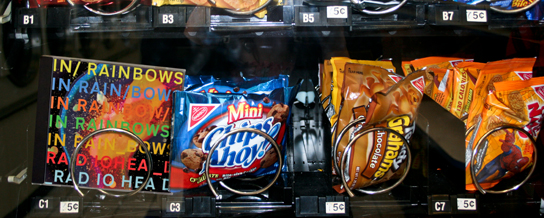
Gaining recent fame in the press is the pay-what-you-want model of distribution. For the uninformed, the concept consists of an artist releasing their album in digital format, then letting consumers decide the price they’d like to pay for it. Radiohead might have pushed this practice into the spotlight with the release of In Rainbows last year, but the Oxford, U.K.-based superstar band isn’t the only outfit to champion it. Saul Williams released The Inevitable Rise and Liberation of Niggy Tardust! in November of 2007 and gave users the option of giving a $5 donation in place of purchase, and more recently, Girl Talk unleashed Feed for Animals, offering different packages for different price ranges.

Could this be the way forward? XLR8R polled a handful of artists, labels, bloggers, and consumers to find out their take on the concept and what it could possibly spell for the future of indie music.

Calvin Johnson
K Records

The pay-what-you-can scheme has usually been applied in the underground music world to performances. It is an excellent system that allows folks to attend shows, even when their budgets are limited. In my experience, it works well. Most folks will pay the “suggested donation” amount; others will pay more, subsidizing those that are a little short that week. [The concept] helps build a sense of community. People feel more involved with [what is] happening and the other attendees, and it makes each person more than a spectator, as they have become a participant in the event. Pay-what-you-can broadens the accessibility of the event; accessibility has always been an important issue for me in the world of art, music, culture, and politics.

Anthony Volodkin
The Hype Machine

Pay-what-you-want is a great idea that fits certain bands with very particular audiences. So far, most of the artists trying it are inventive, daring leaders and have a following to suit the idea. That said, it’s unlikely to scale, as few acts resonate the way Radiohead, NIN, or Girl Talk do with their numerous fans, and there is still some inherent novelty in the idea that it helps these releases along as well.

Girl Talk(a.k.a. Gregg Gillis)

It feels like buying any sort of music is donation-based these days, whether you are using the model we used or not. Anyone can download or hear any song for free on file-sharing networks, blogs, and YouTube. It’s not like 15 years ago, when hearing a song had value in and of itself. Back then, you would hear a song on the radio, love it, and you couldn’t hear it again unless the radio played it or you bought the CD. You’d wait by the radio to hear that song again. That’s over. You can hear whatever you want right now, and if are you really down with it, then you can choose to buy it. Doing the pay-what-you-want model is just acknowledging reality. We know you can get this for free or pay for it. It’s up to you, so why would we play dumb? I don’t know how it will play out in the future, but it’s novel enough now, and people respect that you are being upfront with them. Like, “Hey, they are being reasonable for a change, I guess we should throw them some money!”

Jesse Tittsworth

I remember giving $0 for the Radiohead album just to be able to listen to it. After listening to each track for a few seconds, I gladly created a second account and donated five pounds. In my case it was worthwhile. The problem is that I feel it’s temperamental at best. I think the number of people that will happily pay for music will decrease in time. I’m guessing music will eventually become free altogether in the near future. It might get to the point where money is made on services (gigs, producer fees, etc.) and licensing. I mean, it’s pretty much that way already.

Because I am in a position to make money on services, I give a lot of my music away for free. In fact, I gave away most of my back catalog via blogs last December and called it the “12 Days of Titts’mas.” After running it for about a month, I archived the tunes on tittsworth.com with a PayPal donation button. Maybe a dozen folks contributed, though it was never my goal or expectation to make money in this way. It was more of a thank-you to those who support me, and also a boost to help make my music and also club music more accessible. I totaled a quarter of a million hits, and that’s just from one of the websites (discobelle.net)… not bad for a bunch of older songs. So to me, I value the exposure more than the mechanicals royalties. With my forthcoming album on Plant Music, we are giving away selected MP3s (128 kbps) and remixes to promote the album, which will be for sale physically and digitally. I don’t think the label would be comfortable enough with a pay-what-you-want model at this point. I think the move right now is:

1. Give away just enough to generate interest.
2. Sell the vinyl first.
3. Then, quickly follow up with digital sales.
4. Finally, once sales have started to taper, move it to pay-what-you-want or give it away altogether.

Pete Johnson
Photographer/Nostalgia-Addled Futurist/Gentleman/Scholar

I really like the concept of the pay-what-you-want album. If a buyer knows that the money they spend on an album is going mostly into the pocket of those who created the music, well, I think nearly everyone I know would pony up least $5 to put into the pot. If that holds true, the band is going to come out ahead. But stepping in and cutting out the middleman is really difficult to pull off (and risky). Most bands don’t have the resources–time and technology–to pull it off. Ultimately, though, if you really believe in the music you’re making, why not? Some bands are in it for the scene and the quick cash, and some are in it to make something dynamic. The “take the power back” approach is for the latter group. It’s the most resourceful mainstream reinterpretation of DIY ethos to come along in quite awhile. For lack of a better phrase, it’s totally punk rock. I tip my hat to Radiohead for taking a stand, and Girl Talk for getting in line behind ’em.

Nate Nelson
Stones Throw

The internet broadens the accessibility of music. The pay-what-you-want [scheme] is just another outlet in an ever-evolving business model. There are numerous ways to get music out there: eMusic, Last.FM, imeem, iTunes, YouTube, Amazon, rcrdlbl.com, stonesthrow.com, etc. Pay-what-you-want works for a certain type of artist, but it won’t work for all of them. Artists must find their niche and fanbase and cater to that group.

There’s something to be said for the power-in-numbers theory. Whether it be a good publicist, a great manager, an exceptional record label (and staff), even a really top-notch music publisher, an artist must have smart, talented people behind them to be successful. The Radiohead experiment didn’t happen because five dudes in the band woke up one day and, on a fluke, said, “Hey, let’s let people pay what they want for our next record.” It was an experiment pulled off by a very exceptional pool of people who had a business plan in place before any steps were taken.

The term “record sales” has lately been confused. Too often people point to the traditional definition of record sales, which was a very lucrative business model for labels back in the latter part of the 20th century. It was a model where labels pressed up physical units of recorded music and tried to drive as many units into the retail market that consumers demanded. The monetization of music today is changing. Physical units are on decline and dedicated retail outlets are on their way out, but that doesn’t mean that the business will dry up. There still is demand for recorded music and smart business people will find ways to monetize that demand.

Page 2895 of 3781
1 2,893 2,894 2,895 2,896 2,897 3,781