
The Cool Kids “Box of Rocks”

Chicago-based hip-hop duo The Cool Kids has made a lot of musical headway in a very short time. Besides being one of the most blogged about groups in today’s current music scene, Antoine “Mikey Rocks” Reed and Evan “Chuck Inglish” Ingersoll have also released their debut full-length, The Bake Sale, a few singles, and, most recently, their That’s Stupid mixtape, which this track is from. Prepare for rattling beats and baronial rhymes.
Detroit vs Sheffield
Master of the Bump
M83 Readies New Digital Single

For his next trick, Frenchman Anthony Gonzalez–better known as shoegazey electronic producer M83–will release the single “Kim & Jesse” off his latest Mute album, Saturadays = Youth. The digital package will include the original track, along with a radio edit and remixes from DatA and Montreal producer Montag. The whole deal drops tomorrow at your friendly neighborhood digital download store.
Gonzalez, meanwhile, is finishing up a U.S. tour, with just a couple more dates in California, after which he’ll head back to Europe for some festival performances.
Dates
07/19 Mountain View, CA: Shoreline Amphitheater
07/20 Los Angeles, CA: Verizon Download Festival
07/25 Turku, Finland: UMF5
08/09 Lausanne, Switzerland: Noise Festival
08/15 Bretagne, France: Brest Festival
08/16 Hasselt, Belgium: Pukkelpop
More on M83
Feature: M83: Teen Dreams
MP3: “Graveyard Girl”
XLR8R TV: M83’s Teen Romance
Photo by Anouck Bertin.
Pusher Drops Reggae-Soul Remixes

French dance music distributor Pusher Distribution, previously covered in XLR8R news, is offering a fresh batch of soul-reggae singles and EPs from a variety of independent labels this July that could possibly launch a summer music trend. Pusher will promote five new singles and EPs all featuring reggae covers or edits of classic soul and funk cuts.
Pusher found success last year with a the debut album by French reggae soulsters The Dynamics, whose Version Excursions contained superb funky reggae takes on songs by Rolling Stones, The White Stripes, Herbie Hancock, and Curtis Mayfield. Pusher’s latest crop expands France’s take on Jamaican soul covers.
New titles in Pusher’s reggae-funk series include:
Mash-up act Taggy Matcher’s “Root Down” (Stix) 7” sees Beastie Boys’ vocals set to a traditional reggae groove, backed with a reggae cover of Bob James’ jazz-funk breakbeat, “Nautilus,” on the flipside.
Vintage hip-hop gets the reggae touch on Supamomo’s “Say What” (Restaurant) single. Pharoahe Monch’s bombastic “Simon Says” is pasted over a driving roots riddim, while the B-side is a skanking version of Black Moon’s “How Many MC’s.”
But the series is not without a little tongue-in-cheek nod to Francophone culture, as witnessed by Bost & Bim’s “Spongi Reggae” edit of Daft Punk’s “Harder, Stronger, Faster” (Bombist), with a sweetly rendered dub version of Marvin Gaye’s “Let’s Get It On” on the flip.
Other soul-reggae titles available this month include Mato “Mary Jane” (Big Single) covering Rick James’ nugget, and Bombist mashing up the Beatles’ “Because” with a roots riddim.
In May, Pusher also unleashed Motown Flies Jamaica, nine reggae covers of the Detroit soul label’s finest tracks, including ones by Stevie Wonder, Dianna Ross, The Temptations, and Edwin Starr.
Find Pusher titles in the U.S. at Groove Distribution, Dusty Grooves, and Turntable Lab.
Digital Imagery: Fact or Fiction?
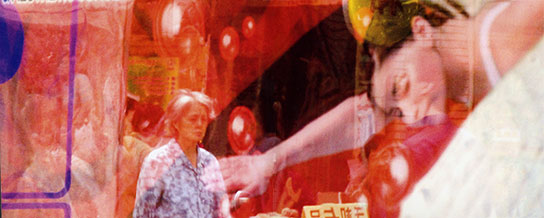
It’s a commonly accepted truth in the world of advertising that if you tell people they need something enough, they’ll eventually believe it; if you continually reinforce the idea that a man might choose to drink a Budweiser rather than bed a swimsuit model, something trips off inside his brain that allows that possibly to enter, and fantasy begins to blur with reality. Digital imagery has only made that line fuzzier, says photographer Chris Kitze, whose book, The Electric Image (powerHouse; hardcover; $40), explores the collision of the real and virtual worlds. Here Kitze explains a bit of the science and psychology behind the ones and zeroes.
XLR8R: You say that it wasn’t until the advent of digital technology that the ubiquity of large-scale photo-realistic ad images were made possible. But haven’t we always been inundated by billboards and the like?
Chris Kitze: Yes, we’ve always been bombarded with advertising. Any place you have masses of people, you naturally have people trying to sell them something, which is especially true in centers of capitalism. If you look at outdoor advertising in public spaces, which is one of the areas of contemporary culture The Electric Image is concerned with, digital production has made possible the ability to globally reproduce images that have a much greater fidelity than was possible previously, and the scale is monumental. In the not-so-distant past, large images on billboards were painted by artists and you definitely had a different cartoonish or caricatured look. Retouching techniques using digital technology create virtual images that were very difficult to create using analog techniques, whether using chemical photography or hand painting. So today any advertiser can afford this level of production value and you see it everywhere. The difference is the hyper-realism of the imaging produced by digital technology are charged images by themselves. You knew the painted billboards referenced the original; we want to believe that the digital images are the original. People seem to have bought into this magic act.
This has led to the globalization of this kind of imagery. Whether I am in Shanghai, New York, or Paris, I get a similar sensibility and aesthetic and the concept that everything is everywhere. Part of this is the powerful multi-national consumer and business brands that are now ubiquitous. When I was a kid it was so exotic to go to Europe–things were much different from the States and there were lots of things that you would never find at home. What is most different now is not the technology but the way people place themselves in this landscape. We have come to accept the virtual as real and vice versa. The apparent richness of the digital image compared with the analog version creates a greater seduction and charged effect, which for advertisers makes digital more compelling.
How has digital technology changed that, really, aside from slight changes in presentation (ie. moving images) and cost?
Commercial images are now ubiquitous and integrated into the landscape to the point where it is difficult to tell where the advertising ends and reality begins. It has created an immersive world where everything is a product placement. For example, I was in Hong Kong a few months ago and every double-decker bus is wrapped with giant photographs of models and products that covered literally every square inch of the bus. Before digital, you might have seen small panels on a bus with images; now, the entire bus has been turned into an ad. It’s as though the wristwatch is driving down the road.
However, I believe the biggest change lies in the use of computers and windowing software, which provides a cluttered visual environment with colliding representations of documents, images, videos, programs, and ideas that has indoctrinated people to this way of seeing.
What was your aim with the photographs that make up The Electric Image?
I show the collision of the real and virtual worlds that surround us, and the difficulty we have in decoding truth. This deflates the myth of advertising by reflecting the real against the ideal.
In the book, the images are catalogued with long strings of numbers and letters. What is their significance?
These strings of letters and numbers are identifiers for each file, called an SHA-1 –a computer code that generates a nearly unique ID for each file. If I have two files and the generated codes match exactly, it is very nearly certain that the files are identical (more info is on page 63). What’s significant about this is the way files can be nearly infinitely and exactly duplicated, much like the imagery in the ads so to that extent it talks to originality and reproduction, key issues of photography. I wanted to distill the image down to what appears to be a meaningless string of numbers and letters and hint at yet another representation of the image, much like a photograph of a photograph. At another level, you see a reference to the photographic negative here. The SHA code is an authenticator of provenance, but unlike the negative, it allows the digital file to function as a plurality of originals, since the files are available for open-source use.
Is there something that happens, scientifically, when one views a digital image (on, say, a backlit computer or TV screen) that’s different from viewing an analog, printed image? If so, how do you find this phenomenon has impacted the approach of advertisers?
There is a difference between transmitted (computer screen, backlit transparency) and reflected light (printed image on board or paper), no question. The quality of the light and the way you experience the image are different–the transmitted image has more immediacy and vibrance, though it is well known that text is easier to read when printed on paper than on a screen. A backlit image has a sculptural quality and depth the reflected cannot match. In the advertising arms race that takes place on the street every day, it’s all about grabbing attention. Advertisers have crafted messaging, placement, and the execution of their “works” to exploit the properties of these kinds of media such as video JumboTron, illuminated bus shelters, and the like. It’s a safe bet to expect commercial interests to create even more captivating titillations as technology evolves. As a non-scientist, I’m not in a position to give you a scientific explanation.
What do you think is happening to the way we process multiple layers of images in “noisy” settings, like, say, Times Square?
It’s safe to say that most everyone, especially younger people who have been exposed to digital media their whole lives, is able to multitask and process multiple layers of images, sounds, and information. Everyone drives and talks on their cell phone, uses their laptop while watching TV, or has multiple windows doing different things on their computer (mine has about 30 open as I compose this email). This wasn’t the case even 20 years ago and when you talk to some elderly people, they often have a hard time dealing with this [phenomenon]. It may seem confusing, but these places really force the spectator–that’s what they are, viewing these kinds of spectacles–to try to take in this visual overload and because many of us live this way all the time, we have come to expect it. There is no escape. After the initial shock and awe of multitudes of images in a place like Times Square, things settle down and you start to notice smaller, more digestible things where you filter things out and create meaning. You walk around and become aware of the virtual world we inhabit. This ability to process visual overload is opening the way to the belief in and acceptance of multiple dimensions and realities as a worldview.
Do you find that people’s absorption/consumption of media is evolving to the point where we have a naturally better sense of “reading” media?
Certainly there is a skill in reading and intelligently consuming media. I think the difference is between knowing and understanding the media, as McLuhan pointed out. Because we are now surrounded by media of all kinds, it has been so gradual that no one noticed it happening. I think we’ve moved from an awareness to immersion–where we have become woven into the fabric of the reality around us. Many people have more comfort with the sensory overload of advertising than they do with the blank naturalism of nature.
Does this phenomenon also work in reverse, say, with young people being so inundated with “false” images that they tend to accept them as “real”?
I think the point is to ask ourselves, ‘What is ‘true’ and ‘false’ in this mediated age anyway?’ Here’s a quote from Jeremy Mende, the designer of the book: “Is an archetypal myth used in advertising any less true than the same one used in epic poetry? Is an emotion that is experienced through an interaction in Second Life any less real than one in first life. The same brain functions and chemistry are activated.” We have a desire to privilege non-mediated interaction but isn’t that really a value judgment as opposed to a naturalistic “truth”? I couldn’t have said this better myself–this is what I mean by decoding truth.
In this regard, can you explain your concept of “visual distortion”?
Anytime you record something, you replace the original with representation–regardless of the accuracy of the recording. Any kind of mediation also distorts. The images in this book actively use optical (they are all reflections in store windows), spatial, and conceptual distortion. These question the friction between the real and the virtual image and who we are and who we pretend to be.
Bad Dudes Eat Drugs


You can expect something special when a band called Bad Dudes releases a record called Eat Drugs on a record label called Retardisco. And when said band features members of L.A. noise-rock fixtures like The Mae Shi, Silver Daggers, and Upsilon Acrux, the stakes are pretty high. Fortunately, Eat Drugs is an exciting 11 tracks of mostly instrumental prog-punk with a weirdo party vibe running beneath. Opener “Mjölner” kicks out some Fucking Champs-meets-Frank Zappa jams that are soon met by the 8-bit dance-punk of “Better Than Nature.” Genres and time signatures be damned.
Various New Orleans Funk: The Original Sound of Funk Volume 2
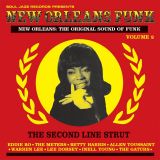
Memphis had Stax, Detroit had Motown, and New Orleans had, well, a bunch of fucked-up, in-fighting local labels that never really managed to push the Crescent City’s funk and soul tunes to the sort of superstardom that they should have been sharing. Soul Jazz doesn’t even dig too far in the deep cuts here; instead, The Original Sound of Funk Volume 2 offers a flawless set from Louisiana’s songwriting royalty: Allen Toussaint, Betty Harris, Eddie Bo, Lee Dorsey, and The Meters included. If you’ve spent any time trying to figure out why classics like “Chicken Strut” never made it to household-name success, this compilation just makes the question even harder answer.
Apollo Sunshine “666: The Coming Of The New World Government”
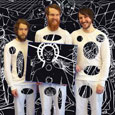
Don’t let that song title fool you–Apollo Sunshine really aren’t that stressed out about the end of the world. Nor are they anywhere near as dark or heavy as the title might suggest either. In fact, their neo-psych jam sessions on Shall Noise Upon, their latest album which was recorded in the Catskills, would lead a listener to believe this band is, in fact, a fairly relaxed outfit. The Leverett, MA-based trio first turned heads in 2003 with the album Katonah, and have since continued to gain musical momentum with subsequent albums and EPs booming with their ’60s-style, pleasantly chaotic tracks.
Apollo Sunshine – 666_ The Coming Of The New World Government
