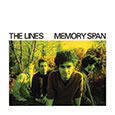
The Lines Memory Span

From 1978 to 1982, British post-punk also-rans The Lines made records brimming with the early-’80s success checklist: vaguely fey vocals, passable guitar skills, eccentric lyrics, and titles referencing the social upheaval of Thatcher’s Britain. What The Lines lacked was any interest in the music biz–they never toured, and practically insisted on failing to capitalize on any successes. Musically, however, the handful of records The Lines made, all collected here on CD for the first time, provide the missing link between U.K. and U.S. post-punk. Listening to the brilliant “Nerve Pylon” and “Two Split Seconds,” it’s impossible not to hear the DNA of the Athens scene, and indeed all of 1980s American college radio.

Augustus Pablo The Mystic World of Augustus Pablo: The Rockers Story

By now, the late Augustus Pablo’s contributions to music are well known to reggae and dub fans. One of Jamaica’s most inspirational musicians and producers, Pablo’s name is often uttered in hushed tones with the same reverence usually reserved for sacred voices like Nesta Marley, Jacob Miller, and Burning Spear. A contemporary (and sometime collaborator) of not only Miller, but dub originators Lee “Scratch” Perry and King Tubby–“King Tubby Meets the Rockers Uptown,” Pablo’s Tubby-fied version of Miller’s “Baby I Love You So,” not only presents its own holy trinity, but stands as one of the seminal dub classics–Pablo’s spiritual influence on roots reggae is easily comparable to John Coltrane’s cathartic effect on jazz. Pablo strove not for commercial success but for purity of form–an unthinkable ideology in today’s dancehall-dominated climate. Unlike many Jamaican musicians, he didn’t over-record; his low-key nature and disdain for the spotlight–he reportedly disappeared into the hills for months at a time in between albums–probably prevented him from being fully appreciated in his lifetime.

It’s not a stretch to call Pablo the most natural of reggae’s mystics, or the most innovative of dub’s masters; his style of dub may even be the wisest. While men like Tubby, Scientist, and Scratch were brilliant arrangers and engineers in their own right, Pablo’s trademark minor-key melodica and keyboard playing made him much more than a mere knob-twiddler. As dub’s echoes have gradually spread across other continents, Pablo’s aesthetic influence can be heard not only in frontline electronic acts like Thievery Corporation, Jazzanova, and Boozoo Bajou, but in the layered subtleties of IDM, downtempo, broken beat, nu-jazz, and dubstep artists all over the globe.

There have been other Pablo collections before–including Original Rockers, a stellar one-disc effort from the short-lived Island Jamaica imprint–but there’s never been as comprehensive a look into the man, the mystery, and the music as The Mystic World of Augustus Pablo: The Rockers Story. A staggering 68 songs deep, the set stands as a testament to the fact that, despite his legendary reputation, Pablo was somewhat underrated as a producer. Vocal licks for artists like Jr. Delgado, Johnny Osborne, Earl Sixteen, The Immortals, The Heptones, and Hugh Mundell prove that Pablo was just as capable of building a track as deconstructing one; yet as solid as these a-sides sound, they’re outdone by Pablo’s duppy-cleansing dub rinses and meditative instrumentals like “555 Dub,” “One Step Dub,” and “Rockers Meet King Tubby Ina Firehouse,” which feel like they were lovingly steamed inside an ital calabash for weeks before being pressed onto tape.

Pablo’s world is subdivided into quadrants: Classic Rockers, Roots Rockers, New Style Rockers, and Rarities. The discs bookend each other, to a degree. Classic Rockers serves up Pablo’s most-recognizable tracks, like “East of the River Nile,” “Keep on Dubbing,” and “Africa Must Be Free.” Rarities fuels collectors’ drool with sublimely obscure songs like “Third Eye,” “Twin Seal,” “Higgy Higgy,” and one of the set’s standouts, Sister Frica’s “One in the Spirit.” With tunes like “Pablo Red in a Dread” (a slow-bubbling version of Yabby You’s “Conquering Lion”), Roots Rockers could easily have been called “Classic Rockers II.” Meanwhile, New Style Rockers captures late-period Pablo (including Delgado’s “Raggamuffin Year” and “One Step More”) majestically. Amazingly, there’s no fall-off in quality whatsoever over this four-disc set covering several decades of dub–just layers of sound and space.

Damien Correll: Getting Rad

Below are outtakes from Josiah Hughes’ interview with graphic designer Damien Correll. To read the full feature, download a pdf of XLR8R‘s June/July issue, out now.

XLR8R: What is your favorite font?

Damien Correll: I love geometric type. I think Futura is one of the most perfect typefaces ever. I have a lot of favorites, mostly the classic standards, but Futura is a face I go back to routinely.

What does a day in your life look like?

I really try to keep regular hours. I wake up at a reasonable time and take care of the tedious-yet-important email and paperwork game. Then I usually just ride my bike down to my studio and get as much done as possible. That separation of space is really important to me. It’s totally a mental thing, but having a dedicated space to “make” is extremely important.

What is Rad Mountain and how did Rad Mountain get started?

Rad Mountain is essentially a studio space a few of us share in Brooklyn, New York. It originally started with Ryan Waller, Garrett Morin, and Wyeth Hansen, but in the past two years Justin Fines and myself moved into the space. We are all freelance designers, but all of us show work in galleries in some capacity here and there.

How does your artistic approach differ from your work with Rad Mountain?

I am still figuring that all out. At Rad Mountain we all work separately on both commercial and artistic endeavors, but lately we have been smashing our heads together and collaborating as a studio more and more. We all have a similar sensibility, which is fantastic, but we each have a very definitive style and even particular types of projects we work on. Currently we are at a point where we are still trying to figure out what it is we make as a group. It has been a great learning experience for all of us, actually. Thus far the projects we have produced don’t exactly look like the work each of us would normally produce, but they still make sense within our individual bodies of work. It’s more of a genuine collaboration.

What future plans do you have for Rad Mountain?

We want to continue to work as a group, that’s for sure. We’re currently working on an online store where we are going to unload all of the random prints, t-shirts and everything else we make on the world. At the moment, we don’t have any plans of being a full-fledged studio, but I don’t think any of us are opposed to that happening either. We’re just not eager to shake things up just yet. Although, as we continue to work together more frequently and we nail down our process, we have been eager to take on bigger projects together.

Immortal Technique on Malcolm X

It’s no secret that Immortal Technique is well read. Among the many texts the revolutionary has absorbed, none have had more of an impact on him than The Autobiography of Malcolm X. While not the first rapper to cite this 1965 classic as an inspiration, Tech feels that he shares a unique connection with the life of Malcolm X, the ex-con-turned-minister and people’s champ.

“[The book is] a story of struggle and transformation of someone who’s living a criminal life and says, ‘You know what? I wanna turn this around. I wanna change myself and become something much greater–not just for myself, but for my people, because I see a potential in them that they may not see in themselves.’”

“I always related to that directly ’cause I was like, ‘I live my life a criminal. I’m sitting here locked up–this has gotta stop. I gotta do something. I gotta stop fighting the wrong causes and get the selfishness out of myself so that I can start getting some work done. If I have to do that aggressively, and there are obstacles in my way or people in my way that need to get crushed, well then that’s just what it is.’”

Roedelius/Story “As it Were”

Ohio-based neo-classical composer Tim Story has made a life-long ambition come true teaming up with producer Hans-Joachim Roedelius, better known as the producer behind German band Cluster. The two began working together in 1996, and for Inlandish, their latest collaborative album, they brought in Roedelius’ trademark pianos, acoustic instruments and jagged electronics. It’s a challenging listen, but, as with many things in this world, ultimately rewarding by the end.

Story:Roedelius – As It Were 1

J-Live Tours For New Album

Brooklyn, New York MC J-Live embarks on an East Coast tour this week to support his latest release, Then What Happened, out now on BBE Records. The new album features producers Jazzy Jeff, Oddisee, and Numark, who ease in reggae samples, supple scratching, and jazzy riffs on the 13-track release bursting with Live’s wry observations and odes to hip-hop’s past, present, and future.

A former middle-school teacher, J-Live is sounding hungry on his fourth album since 1995. Then What Happened dropped May 27 and contains a fresh batch songs imbued with Live’s dexterous wordplay and no-nonsense commentary. With his signature cascading rhymes and pointed social observations on tracks like “Be No Slave” and “We Are!,” it’s easy to see why guests like Jurassic 5’s Chali 2na and De La Soul’s Posdanous wanted to be on this recording. On “The Zone,” Live sums up his sentiment rhyming: “I rock $#!t like this to give ya ashbacks/ To when rap didn’t sounds like asscrack/ Back to when you was wack, you got laughed at/ Not souped up and jacked for your ASCAP”

Anyone who has seen or heard J-Live’s live freestyles knows that he has a story-teller’s ability to keep the listener locked in. Check it out for yourself when he swing through the East Coast later this month.

06/03: Charlotte, NC: The Evening News
06/04: Raleigh, NC: Cat’s Cradle
06/11: Orlando, FL: The Social
06/13: Chicago, IL: Subterranean
06/27: Albany, NY: Red Square
07/03: Cleveland, OH: Grog Shop
07/05: Pittsburgh, PA: Shadow Lounge
07/25: New York, NY: Knitting Factory

Photo by Corren Conway of Forever12.

Flying Lotus Preps Brainfeeder Part 2

L.A.’s Brainfeeder Radio saw massive success when they hosted Flying Lotus, so naturally, the man born Steven Ellison is returning for Brainfeeder Radio Part 2. For six hours on Tuesday, June 10, Flylo’ will be pushing the tunes over the worldwide airwaves, many of them rumored to be unreleased tracks and remixes. Check the times for your location here.

Then, on Saturday, June 14, Ellison will join Danny Breaks, Digital Mystikz, Kode9, Hudson Mohawke, Rustie, Gaslamp Killer, Ras G, Samiyam, and Take in London for a night of heavy bass madness. An exclusive Brainfeeder CD will be given away to all ticketholders. Head over to 7-11 Hearn Street beginning at 8 p.m.

Flying Lotus on XLR8R TV

Photo by Christopher Woodcock.

Jet Black Crayon: The Spaces Between

Jet Black Crayon’s music is a metaphor for watching the veteran skater glide down Valencia Street on a Sunday at sunset. It’s not about the craziest tricks, the most extreme endurance, or partying ’til you puke; just the smooth ebb and flow of wheels on concrete, punctuated by the intensity of traffic or slight hills. The San Francisco-based trio–consisting of skater/musician Tommy Guerrero, DJ Gadget, and recording engineer Monte Vallier, plus attendant collaborators–has continuously served up jam sessions that meander through post-rock, funk, and downtempo. Their new album, In the Interim, is more of the same hazy groove, and comes with a DVD, wherein JBC’s talented filmmaker friends offer visual accompaniment to various songs. We caught up with six of them, and asked them where inspiration’s been hiding.

Jet Black Crayon’s In the Interim is out now on
“I’m obsessed with lines and the song sounds, to me, like someone drawing lines,” says SF-based Andrew Paynter, 34, of his meditative black-and-white video of flashing pavement and L.A. street scenes (shot from a skater’s perspective while in motion).

XLR8R: What’s your advice for aspiring filmmakers?

AP:

Follow through with your ideas and don’t let exterior things influence you too much.

What’s the toughest lesson you’ve ever had to learn?

Nothing in life is permanent. Enjoy things while you have them, as at some point they’ll all dissolve away.

What are you working on?

A mural in San Francisco in conjunction with Juice Design, an ongoing book project with Geoff McFetridge, and a colab with Dr. Romanelli and Lupe Fiasco.

“8 Bad Years”

Skate videographer Greg Hunt’s clip pays homage to skate films of the mid-’80s. “I shot the whole video on an old Quasar VHS camera and tried to keep everything historically accurate: board, clothes, tricks, filming, and editing,” says L.A.-based Hunt. “It was a lot of fun for me and a lot of work for Kevin, who was the skater. He had to learn all those old school tricks and then do all kinds of modern tricks on a 1985 setup!”

XLR8R: What’s the toughest lesson you’ve ever had to learn?

Greg Hunt:

When returning from a month-long trip

never

take your eyes off the shoebox full of shot footage. That is, unless you feel like laying in bed for a week staring at the ceiling.

What are you working on?

Alien Workshop’s

Mind Field

video.

“Lost in the Fog”

The murals of San Francisco’s Mission District make up most of the backdrop to this flick starring the JBC members drinking Tecate, buying diapers, and stealing each other’s bikes. It’s shot by 33-year-old SF local Dan Wolfe, who’s best known for his work on the

Eastern Exposure

skate videos and his recent clip (with artist Jeremy Fish) for Aesop Rock’s “Pigs.”

XLR8R: What’s the toughest lesson you’ve ever had to learn?

Dan Wolfe:

Don’t rack up credit-card debt buying cameras and computers.

What are you working on?

Various short projects with Juice Design/Adidas Skateboarding, internet video stuff, and an HD skate movie.

“Post Meridian”

Parisian Christophe Beaucourt’s piece is a commentary on man versus nature–“an industrial poem,” he calls it. Via grainy ski resort footage, this lover of backcountry freeriding explores the way ski lifts, electric pylons, and warning signs clash with the pristine mountain snow, all set to a backdrop of smoky, meditative loops and ominous piano.

XLR8R: What’s your advice for aspiring filmmakers?

Christophe Beaucourt:

Accept critics’ points of view as constructive and not as defiance to your ego. Many directors sweat scorn.

What’s the toughest lesson you’ve ever had to learn?

During too many years, I experienced alternative businesses getting successful and then behaving as “real” businesses. They earned a lot of money but I never got paid.

What are you working on?

Since 2006, I have been the writer, director, artistic designer, and main producer on a sci-fi short movie. This year, I found a production deal so the movie will live on its own through festivals. It’s called

Sombrero

; it’s about creativity and the fact that, whether you deserve it or not, you can’t make a masterpiece on demand. Watch the trailer on YouTube.

“Brighter Days”

New York photographer and filmmaker Cheryl Dunn has an impressive back catalog that includes the movie/book

Bicycle Gangs of New York

, documenting Espo and Twist’s

Street Market

show and Mark Gonzales’ 1999 skateboard ballet, and the artist-driven documentary

Sped

. For this DVD, she juxtaposes children playing with footage of mosh pits and anti-war protests. “The feeling of the music was solemn yet confrontational at times. I just wanted to comment on what was happening in the streets.”

XLR8R: What’s your advice for aspiring filmmakers?

Cheryl Dunn:

Don’t be afraid to not know things. Experiment and explore the medium and don’t let others intimidate you. Just make things.

What’s the toughest lesson you’ve ever had to learn?

That opportunity and success, more times than not, has to do with who you know rather than what you know.

“My Fair Romans”

Jet Black Crayon member Monte Vallier soundtracks this song, based around spoken-word from Pete Simonelli, with found footage and super 8 images that have to do with “the pursuit of pleasure and depravity loosely based around the fall of the Roman Empire… uh, San Francisco.” Vallier, a 44-year-old music producer and recording/mixing engineer, wanted to see the band push their more cinematic side, and edited many of the films on the DVD.

XLR8R: What’s your advice for aspiring filmmakers?

Monte Vallier:

Don’t get bogged down with the overwhelming scope of a project. Just concentrate on one thing at a time.

What’s the toughest lesson you’ve ever had to learn?

Nothing is guaranteed. Just because you’ve had a success on a project, you still have to prove yourself every time. You are only as good as your last project.

What projects have you got coming up?

My wife Victoria and I are commencing work on a short film based on a dream that she had, I’m starting to write material for the next Jet Black Crayon record, and I’m working on an album with a band called The Japanese Motors.

Charles Bradley & The Bullets “Now That I’m Gone”

Brooklyn-based funk imprint Daptone Records has been busy digging out its most treasured 45s and compiling them together for Daptone 7 Inch Singles Collection, Vol 2. The digital-only compilation was released earlier this week, and sees 13 of the label’s most famous tracks from artists like Lee Fields, the Mighty Imperials, and Sharon Jones. Daptone laced us with this groovy, soul number from Charles Bradley, whose raw vocals make a pretty convincing case for his broken heart in the track.

Charles Bradley & The Bullets – Now That I’m Gone

Page 2925 of 3781
1 2,923 2,924 2,925 2,926 2,927 3,781