Teyana Taylor: A Harlem Dance Queen

It’s not unusual to hear grandiose claims echoing down the halls of any high school. But no other high-school student has the bragging rights to cultivating two dance crazes (the “Chicken Noodle Soup” and the “Tone Wop”), choreographing Beyoncé’s dance moves for both the music video and 2006 VMA performance of “Ring the Alarm,” having her own episode of MTV’s My Super Sweet 16, and being signed to Pharrell Williams’ label.

Teyana Taylor is the latest lifeform beamed up to Pharrell’s Star Trak spaceship, and she seems to have stepped straight into a Harlem-meets-Hollywood fairytale. You’d think she’d be soaring on cloud nine, yet on the eve of her debut release, From a Planet Called Harlem (Star Trak/Interscope), Taylor is as down-to-earth as they come. “I’m pretty honored,” she says with a signature rasp that belies her 17 years. “I’m just a regular kid from Harlem that’s doing me.”

Taylor’s name began buzzing on industry tongues after the pandemonium surrounding 2006’s surprise smash “Chicken Noodle Soup” by Webstar (featuring Young B). “I was really grinding, skateboarding, doing my thing,” Taylor reflects. “But I wasn’t looking for a [record] deal.” Yet when her dance prowess unexpectedly landed her a meeting with Pharrell himself, it was as if Cinderella finally met her hipster godfather. “I’m thinking, ‘This is my idol I’m standing in front of,’” she recalls. “It was crazy because we both had on the same shoes!” The singer soon found herself in Atlanta recording tracks with producers like newcomer Hit Boy, Bangladesh, and Jazze Pha, who helmed the lead single “Google Me.” The result is an impressive collage of futuristic R&B embellished with hip-hop hyperbole, tales of teenage love, and name-drops of Pharrell’s two fashion enterprises, Billionaire Boys Club and Ice Cream.

With a billowy mane of curls and sporting the latest limited Nike SB Dunks, Taylor represents a burgeoning subculture within the Generation Y demographic: she’s an unpredictable female streetwear style maven in the vein of Kelis, J*Davey, or Tiombe Lockhart. And with TRL and 106 & Park within her grasp, she has outlets to connect with her tech-savvy, retro-style-conscious audience and officially initiate the rebirth of cool. But in the meantime, she doesn’t mind sticking to what she loves best: XBOX 360, PS3, watching Jimmy Neutron. “I do the same things that a typical kid my age does,” she concedes, “but I’m a little more weird.”
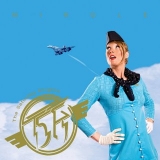

The Saturday Knights Mingle

Seattle hip-hop weirdoes The Saturday Knights were apparently approached by Def Jam and Downtown Records before settling with local (mostly) reissue imprint Light in the Attic. Listening to Mingle, their debut long-player, the major-label attention comes as no surprise. Fronting goofy party lyrics over feel-good beats, their hip-hop is playful enough to delve into the sort of rock influences that garner massively wide appeal. Featuring guests as diverse and the Dap-Kings and Kim Thayil from Soundgarden, “45” has undeniable feel-good appeal. Still, the rock-rap-style tracks like “Dog Park” are a little too Smashmouth for us. If they would have gone with Def Jam they would have been rich!

Thank You “Empty Legs”

The frantic assault of whistles and drums at the beginning of this track should tell one everything they need to know about this Baltimore-based trio’s music. We recently profiled this band on our Top Ten, and our friends at Thrill Jockey were nice enough to give us a track to share with the masses. “Empty Legs” is from Thank You‘s recently released album, Terrible Two, and if guitar chords woven through drums, incomprehensible shouting, and strange electronic noises is your fare, this is one to download. Photo by Nate Dorr.

ThankYou_EmptyLegs

edIT Offering Reward for Stolen Laptop

A producer’s laptop being stolen is essentially the equivalent to a band losing every single one of its instruments, and unfortunately, such a thing occurred last night in Denver to edIT. The L.A.-based producer played a show with his Glitch Mob crew, after which someone snagged the computer and disappeared.

From edIT:

“Say it ain’t so. It was bound to happen and it has happened. My laptop has been stolen in Denver, Co. We are offering a $1500 reward to the person holding it ransom. No hard feelings. We just need the laptop back. Please just send an email to [email protected]. We will arrange for the laptop to be delivered via FedEx anonymously with cash on delivery. Please find the kindness in your heart to do the right thing.”

Photo By Barbara Talia.

OPOPO “Clockstop”

We don’t know what OPOPO stands for, but the three members of this band sure do know how to make a slamming beat. Half punk rock, half dance music, “Clockstop” is a trip through heavy basslines, raw analog synths, and distorted vocals. The Canadian trio hasn’t been on the scene very long, but with tracks like this, a recently released, self-titled EP, and a live performance rumored to be outrageous, these guys will be a known entity of indie music in just a short time.

OPOPO – Clockstop

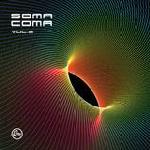
Various Soma Coma Vol. 2

Scottish label Soma’s cred lies on the dancefloor, but its downbeat side has certainly been responsible for more than a few afterparty shenanigans. Collected here, for the second time, is an impressive smattering of songs from Soma–from rather hokey electronica to sublime deep-space bliss to an odd bit of straight-up reggae–showcasing its contributions to the morning after. It’s all nice enough while feeling, well, a bit retro but, all told, Slam (found frequently in banging form) and Black Dog (contributing two tracks from 1993’s Temple of Transparent Bells) run away with the comp, which should be of little surprise.

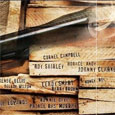
Various The Mighty Striker Shoots at Hits

If a Mount Rushmore in honor of Jamaica’s most legendary record producers is ever sculpted, it’s fair to say that Bunny “Striker” Lee’s likeness should be cut into stone alongside Clement “Coxsone” Dodd, Duke Reid, and Joe Gibbs. During the rock steady and roots reggae years of the late ’60s up until the late ’70s, Lee’s name became synonymous with consecutive chart-topping hits on Jamaican radio. The Mighty Striker Shoots at Hits highlights some of Lee’s best work during the roots reggae boom of the 1970s, mashing up covers and originals from roots rockers such as Barry Brown and Johnny Clarke with ballads by Cornel Campbell and Ronnie Davis. This compilation is an essential for all reggae collections.

Grand Pianoramax “The Hook”

A follow-up to the group’s 2005 self-titled debut, The Biggest Piano in Town finds New York-based outfit Grand Pianoramax mixing funk, spoken word, and hip-hop together, with emphasis placed on, naturally, the piano. Group leader Leo Tardin has a knack for chord progressions on the keyboard, and on this track shows off his jazz chops while a crisp snare keeps beat in the background. For the album, Tardin brought on everyone from New York drummers Deantoni Parks and Adam Deitch to spoken word master Mike Ladd and Platinum Pied Pipers MC Invincible on board for guest appearances.

Grand Pianoramax – The Hook

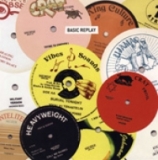
Various Basic Replay

Basic Replay has already re-issued most of the cuts here, originally recorded years or decades ago. But this compilation not only puts these tracks on CD (for the first time, in most cases), it also gives a nice cross-section of the label’s efforts. The breadth includes everything from the echo-y dub splendor of King Culture’s “Nice Up the Session Version” to Courtney Melody’s fantastic dancehall vocals on “Black Liberation.” Ackie opens the disc with the gunshot-laced “Call Me Rambo,” and Prince Jazzbo closes with “Replay Version,” a bone-deep groove for all its electronic eeriness. The album’s range means it sometimes sounds a little scattershot, but the tracks are so good that the collection almost always hits the mark anyway.

Osborne vs. James T Cotton

XLR8R gets an in-depth look at two new Spectral takes on the post-rave soundclash, James T Cotton‘s Like No One and Osborne‘s self-titled album.

As Soundmurderer and SK-1, Todd Osborn and Tadd Mullinix attacked overproduced drum & bass with bomb-scare fury, refashioning classic ragga jungle into their own retro/not-retro creation. Now, a few years later, the two have pulled a similar trick with house and techno, but instead of sitting on the bare fringes of a too-far-gone scene, they’re in the middle of their own zeitgeist. Based out of Ypsilanti, Michigan, a town 30 miles outside of Detroit, Osborn and Mullinix have given new meaning to the word prolific: No one else can claim to have their hands in so many different genres and not come off like dilettantes.

Osborne (mind the “e”) is Todd Osborn’s first full-length; his new material focused on a smoother, deeper aesthetic akin to the Balearic vibe that fueled Britain’s ’ardcore uproar. It’s a far cry from the typical Soundmurderer mash-up, but the move back through rave’s lineage makes sense, given the history. The diva vocals on the velvet-roped anthem “Ruling” are the kind of thing Remarc or Nookie would have sampled during jungle’s heyday–the soul-laden interlude before the crashing tide of amens.

Luke Vibert and Analogue Bubblebath-era Richard D. James are another crucial component of Osborne’s sound. The plaintive “5th Stage” and “There” are all jammed-out keyboard melodies, like a rock song in techno clothing; lo-fi and effortless, driven by rave urgency, these tracks are IDM before it had the name. Likewise, on the dancefloor-oriented “Evenmore,” Osborne recalls Suburban Knight’s “Art of Stalking” bassline, but makes it sound like warehouse-y British techno, full of Phuture Assasin dub alarms and cavernous, stutter-stop claps. It’s “rave” in the classic, macro sense–the sort of thing people played before genre rules forced everyone to pick a side.

Differing from Osborne’s inclusive approach, Tadd Mullinix’s second album as James T. Cotton, Like No One, is strictly for the DJs–he makes no concessions to the home listener. Mike Dearborn’s Chicago jack anthem “New Dimension” is an obvious starting point for Mullinix’s sound here, heard in the murkiness of Roland drum machines smeared across dusty analog tape. But where Dearborn lets his melodies continually build, Mullinix cuts back and focuses on the hypnotic aspects of his grooves. “Don’t Even Try It” is deceptively simple for that reason; the off-kilter drop-outs and flanged dynamics make rigid sequencing feel like a breathing thing.

Mullinix is also a fantastic collaborator, and D’Marc Cantu, DJ Traxx, Ellis Monk, and Osborn (as TNT) show up on “Like No One” to further the jak-beat agenda. Most notable is the track with Cantu under the 2AM/FM guise, “Sensational Rhythm.” Built up over 10 minutes of circular chants, antique house rhythm, and acid bass, “Sensational” is industrial psychedelia at its most stripped-down, with the “hook” nothing more than a repeating, hypnotic shock.

When considering both albums as a whole, it’s clear that Osborn and Mullinix share a deep reverence for classic house music, but where they jump off from those allegiances is very different. Osborn’s strength is deep melody and slow building structure; he falls more into the Frankie Knuckles archetype of house-as-pop. Mullinix, on the other hand, follows Ron Hardy’s lead–sweaty, psychedelic and raw, yet traditional in a noisy, rockist way. It’s a separation that’s likely at the root of why these guys are so good–their indulgences are balanced by each other, rooted equally in the past as in the future

Page 2938 of 3781
1 2,936 2,937 2,938 2,939 2,940 3,781