Hakan Lidbo “Planet Earth”

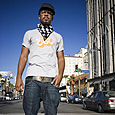
In case you missed our announcement awhile back, Hakan Lidbo and the Swedish Space Corporation are collaborating to send a music signal into outer space. The signal, featuring tracks from a compilation of Swedish artists, will blast off toward a hospitable-looking solar system on June 4. Hopefully the project will reach intelligent life, “so that,” Lidbo has told us, “[it] can receive and decode the signal and hear the music.” By all calculations, our solar system could be receiving a response signal as early as 2030. We’re keeping our fingers crossed. Music for Alien Civilisations, featuring this Lidbo track, will be released on Earth, too, but keep in mind that the music “really is not meant for human ears–but for beings in unknown worlds.” Wyatt Williams

Planet Earth

Book Talk with Xiu Xiu

To anyone familiar with the soul-ripping poetics of experimental indie rock band Xiu Xiu, it should come as no surprise that Jamie Stewart is just as bookish as he is intense. Here, we take him to Moe’s Books in Berkeley, California, where he discusses the novel that influenced Xiu Xiu’s most recent album, Women as Lovers. He also rounds up a collection of books that represent his range of interests–from darkly political to just plain cute.

Kail “Wendy”

L.A. rapper and erstwhile Project Blowed member Kail examines every nook and cranny of his hometown’s streets on his latest Alpha Pup release, True Hollywood Squares. As its name suggests, the album takes a close look at the less glamorous aspects of Tinsel Town and the characters who inhabit that space. His lyrics, which straddle the line between unflinchingly honest and outright hilarious, fit smoothly over an 8-bit-driven hip-hop beat that keeps the brain thinking and the ass shaking.

Kail – Wendy

Drew Daniel’s Book of Genesis

Last year, in between moving across the country, touring, finishing graduate school, and co-creating this month’s new Matmos album, Drew Daniel also managed to pen a book. His contribution to Continuum’s 33 1/3 series of long-form essays (each based on a classic album) is a brisk burrow through the substrata of meaning encoded in Throbbing Gristle’s oft-derided genre stew 20 Jazz Funk Greats; the volume is book-ended by glimpses of Daniel responding to the album as a high-school goth “jerk” and 20 years later as a conceptual electronic musician. We sat down with Daniel to find out more about Throbbing Gristle’s bastard album.

XLR8R: Most of the 33 1/3 books are about a band’s quintessential album, but this isn’t at all the definitive Throbbing Gristle album.

Drew Daniel: I wanted to produce a book that was strong, not just [write] about an album that was strong. In a way, it’s a frustrating album because of its diversity. [By the time 20 Jazz Funk Greats was released], psychedelia had already allowed albums to be sort of internally fluid with different genres. Throbbing Gristle exacerbated that to the point of irritation and fucking with the fanbase in a more… aggressively wimpy way. That’s what’s cool about this album: [TG is] failing to live up to their own fans’ bloodlust.

You disappear from the book right when you first listen to the album and hate it. When did you start to appreciate it?

It kept cropping up as the kind of thing one could plausibly mix with newer music. I got a radio show in college, right when techno was kind of growing and the industrial scene was turning into a bad cliché. And yet I kept being able to mix TG’s work with even the weirdest records that were coming out. I guess it was a gateway drug. I don’t think I would have had a tolerance for those early techno records if I hadn’t listened to TG.

Was it tough to not relate to TG as a musician in the book?

I feel like if someone knows [Matmos’] work then they’ll sort of know what it is that I’m describing about TG that had a big influence on us. I remember reading about a TG concert where there was a Turkish circumcision on-stage. That totally amazed me. It just laid out there this whole idea of noise-music shows as a puberty rite. I loved how literal they could be.

I was surprised that you take it at face value when [TG frontman] Genesis P-Orridge tells you that the lyrics to “Six Six Sixties” came from a god called Mebar.

My job is to describe those meanings. If [they] are part of [TG’s] world, then that’s part of the art. I don’t know if Mebar exists or not… The projection of the idea that there’s a network of meaning that radiates out from the artwork–that’s part of the TG approach. That’s part of what I aspire to with Matmos.

New Bloods The Secret Life

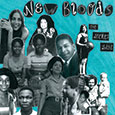
The Secret Life is a promising rough draft. Within just 23 minutes, this Portland trio summons the ghosts of The Raincoats, The Slits, and various post-punk greats. So many elements click: contorted rhythms that stop and start on a dime, stark, minimalist basslines that never waste a note, and Osa Atoe’s violin melodies that shift between menace and comfort (best heard on “Doubles” and “The Cycle Song”). Unfortunately, the disc’s vocals lack the same passion. They range from strained punk rage to flat dirges that often shortchange the lyrics. Still, the New Bloods have the potential to be an ace party band for any dank basement beneath a punk squatter’s sleeping floor.

Tickley Feather Tickley Feather

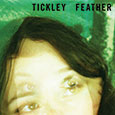
Annie Sachs makes music in her bedroom and this self-titled debut as Tickley Feather sounds just like you’d imagine. Rather than let production limit her, though, Sachs turns cheap synths, budget effects, and fuzzy four-track recording into an expansive, lush pop album. Naïve vocal melodies echo into the distance, keyboards howl like synthesized wolves, and a cheap drum machine keeps the strange, simple beats. The 20 short songs conjure everything from magic spells to dreamed-up parties, while childlike fantasies run amok. Despite selecting tracks from four years’ of home recording, producer Rusty Santos mixes the album with remarkable coherence. Sachs’ dreamy voice ties her songs together and allows for glimpses into the unreal without ever leaving the bedroom.

Ilar & Hedvall Melt

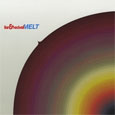
Swedish producer Anders Ilar has been on a home run streak lately, what with this album, a top-shelf podcast for Resident Advisor, and a solo full-length entitled Sworn all under his belt in recent months. This particular collaboration with kindred spirit and fellow Swede Fredrik Hedvall explores the darker corners of the dancefloor. Minor chords and the disembodied blurts of a Speak & Spell set the mood on “Slip’ N Slide,” the disc’s second track. “Lava” is a vaporous take on the Basic Channel aesthetic, while the beats of “Fool” tumble out of the speakers in three-dimensional form. The pinnacle of the disc is “Avowal,” though–a nine-minute exercise fraught with tension and dark as bruise blood.

David Ramos “Pulse (Myopathic Scubacop Remix)”

Named one of Modern Drummer magazine’s Top 10 Progressive Drummers of Today, hip-hop/experimental artist David Ramos has a musical resume that includes everything from performing with folk outfits to making beats for the likes of Busdriver and Aceyalone. His forthcoming debut album, This Up Here, showcases his multi-instrumentalist capabilities, with an army of synths, acoustic guitars, glockenspiels, keyboards, and “shitty drum machines” bouncing off one another. And of course, what’s an album these days without a little remix treatment? Here, Ramos’ brother Ceschi chops up the drum beats and adds some ambience to the original track.

David Ramos – Pulse (Myopathic Remix)

Page 2941 of 3781
1 2,939 2,940 2,941 2,942 2,943 3,781