Paint it Gold Pt. 4
Carl Craig Carl Craig Sessions
Since taking a bit of a break from his Planet E label in 2006, Detroit techno production and remixing giant Carl Craig has returned to the fold, offering some solid creative output. Sessions is two mixed CDs’ worth of vintage and new C2, spanning time, space, and a more than a few aliases with dark textures, deep layers, and bumpin’ grooves across genres. From his Innerzone Orchestra alias’ timeless “Bug In the Bass Bin” to his recent Grammy-nominated re-rub of Junior Boys’ “Like A Child,” Craig shows no sign of stopping, and continues to move stealthily past many of his techno brethren stuck back in the ’90s.
Willits + Sakamoto Ocean Fire
Groundbreaking guitar tweaker Christopher Willits and Japanese electronic guru Ryuichi Sakamoto are more concerned with exploring sonic textures than they are with blowing minds on their first full-length collaboration. Billed as a tribute to the beauty and fragility of the oceans, the album unfolds as a set of long tone pieces that mimic the languid, dreamlike motions of sea life bobbing in the ocean’s currents. Not much happens, but like Brian Eno’s Music for Films or Peter Gabriel’s Rabbit-Proof Fence soundtrack, the abstract washes of sound create such a sense of movement and space that they can still be mesmerizing. Rumbling, almost sub-bass tones dominate “Sea Plains” and “Chi-Yu,” while “Ocean Sky Remains” evokes something mystical with its whale-song cries and cascades of processed guitar and keyboard drone. Ultimately, despite all the technology deployed, the album feels ancient, vast, and more than a little unsettling–not unlike the depths of the ocean.
License to Thrill
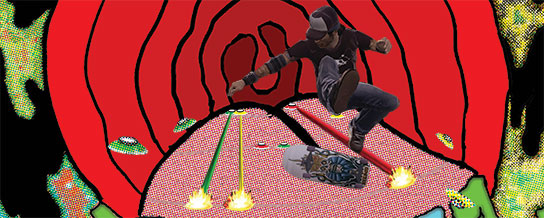
Activision’s Tim Riley pulls off some of the music industry’s biggest coups.
Tim Riley has a sweet job. His title, “Worldwide Executive of Music,” sounds serious and, to some extent, it is: Riley is ultimately responsible for all of the music licensing for videogame publisher Activision’s entire stable of games, from Guitar Hero to True Crime to Tony Hawk’s Pro Skater. He brokers million-dollar artist deals, rubs shoulders with the likes of Jay-Z and Interscope’s Jimmy Iovine–basically, he’s one of the major players in the ever-growing intersection between games and music.
Set deep in the back of Activision’s cubicle farm in Santa Monica, CA, Riley sits in his black matte sanctuary; a converted recording room transformed into a soundproof workspace, it has been visited by Johnny Rotten, Slash, and Cut Chemist, among others. Awards, autographed Guitar Hero controllers, and more eBay-worthy music paraphernalia than you can shake a sensor-loaded drum stick at cover the walls, along with boxes and boxes of albums that Riley receives each day for possible inclusion in Activision’s games.
Less than 10 years ago, getting artists to lend their music to game soundtracks–never mind creating original music for them–took begging, pleading, and plenty of cash. These days, things are a whole lot easier. Riley has more weight to throw around than anyone in this industry–a level of power that once belonged to scions of the record industry. Now, the artists come to him. As we chat, Riley’s email inbox dings with a message from Wyclef Jean, requesting a meeting.
But not everyone gets to email directly. “There are a few different ways for bands or artists to get their music into Activision games,” says Riley, “but the most common method is really just to send us a CD. We spend a lot of time at live shows, reading the trades, music magazines, and websites, and even looking for unsigned acts on MySpace–it’s super-important for us to see where the music trends are, and to try to deliver our customer the absolute best music possible in all the Activision releases.”
Riley came to Activision with more than a decade of street cred; he’s worked at Jive, Giant/Revolution, Warner Bros., and Geffen. All the A&R hustle paid off: When he started doing freelance music consultation for Activision, he already had established relationships with artists and labels, which made getting big names into games infinitely easier. Activision gave him the go-ahead to create an internal music department at the company–arguably the first of its kind.
With the next generation of gaming consoles, Riley believes we’ve just begun to scratch the surface. “These new machines give us so much more space and speed to work with,” he says. “It allows us to host more music-based content, and with the downloading capabilities they offer, I think we’ve only just cracked the seal on downloading music through games.
“It’s been said before, but I kinda like the analogy: Videogames are becoming like the new college radio,” he continues. “You want exposure? Get on the Tony Hawk soundtrack, and everyone who plays it will hear your song a million times.”
Of course, much of how the actual licensing deals work depends on the individual title. “Without getting into particulars, I can tell you that with a game like Tony Hawk, most all of the music is licensed on a non-exclusive buyout term–and with a music-based game like Guitar Hero, the music is licensed under a royalty-type of agreement. And the fees will differ from artist to artist.”
Riley got Jurassic 5 to create an original song for the Fantastic Four trailer, and worked with Swizz Beatz on a slew of original remixes for Shark Tale–“Car Wash” and “Play That Funky Music,” to name a couple. He’s working with Radiohead on some stuff he can’t talk about–and that’s just the tip of the iceberg.
And certainly, logistics can’t be ignored. “There have been so many situations where we’ve got things set to work with a band, and they literally just can’t findthe masters,” says Riley.
Sometimes the deal simply gets scrapped, but other times there are alternate avenues to explore. Riley enticed Living Color to re-record “Cult of Personality” for Guitar Hero, and guitarist Vernon Reid even added a part to make the song harder to play. But of all the coups Riley has staged, convincing the Sex Pistols–who hadn’t been together in the studio in about 30 years–to re-record “Anarchy in the U.K.” at the Dust Brothers’ Los Angeles compound may be his biggest, boldest move yet. With this sort of power, Riley may just be singing a different tune in the years to come: “Videogames Killed the Video Star.”
Guitar Hero III: Legends of Rock and Tony Hawk’s Pro Skater 4 are out now from Activision.
Autechre “Altibzz”
Rob Brown and Sean Booth, the two English IDM pioneers that make up Autechre, have been relentlessly tweaking their distinct sound for the last 20 or so years. Autechre hasn’t released a record since 2005’s Untilted, making for the longest break in Brown and Booths’ career thus far. Quaristice is their response to that break, a 20-track album as varied as anything they’ve ever released. They’ve talked in interviews about a long tour and a relocation contributing to the delay, but the album’s relatively short tracks sound like they’ve been shaped and distilled over time, much to their benefit. The result is an assaulting sweep of damaged synths and impressionistic noise. “Altibzz,” the opening track, is both a spell of drony, ambient bliss and a calm before the storm. Wyatt Williams
Q & A: Robert Hood
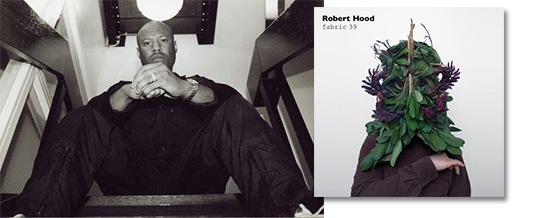
Carleton S. Gholz recently spoke with Robert Hood, the longtime techno DJ and producer who is also known as the founding member of legendary Detroit collective Underground Resistance. Hood currently resides in Alabama, where he recently took time to answer questions about playing in Europe, the future of Detroit, and his latest release for Fabric.
XLR8R: We are talking today because of your recent mix for the Fabric nightclub and record label in London. Why is Fabric such an important place for dance music?
Robert Hood: A lot of places I’ve played were clubs with techno themes or techno nights. In my opinion, Fabric is a techno discotheque. Fabric gives techno artists a forum to come in and focus on the dancer, and not entirely on the DJ’s performance.
Could you imagine a situation where you might have had a musical career that lasted this long without Europe?
As far as my career in music, it is hard to consider a future without Europe’s support. Before my career even began, artists like Thomas Dolby, Heaven 17, and Kraftwerk had a profound influence on my musical direction. Then, as my musical career took me to the U.K. and Europe, I paid attention to how the kids across the water moved to this music. It made me focus on how to get inside of their minds. I noticed that Detroit and Berlin were bouncing ideas back and forth. It was no longer enough to want Detroit to feel my sound. I needed the entire planet to feel me.
Your Fabric mix travels throughout Europe in terms of the artists and labels that you use. Can you talk a little about your current relationships with the Music Man label in Belgium and Logistic in France? What is the current status of your M-Plant label? Is it a good time to make records compared to other times in your career?
The Music Man situation is stable as another means of putting out music–we’re still getting it done, you know what I mean? As far as Logistic goes, I still play with John Thomas, but I’m no longer working with the label at present. The M-Plant catalog [will] soon be available in digital form, and later in physical form sometime this year. I think this is an experimental time for distribution right now. We’re all taking advantage of innovations in alternative distribution.
You have mentioned wanting to tell stories with your music and that with each of your projects you “like to read like a book.” Can you talk about a favorite book and how it might help you think through your own music?
My favorite book is The Principles and Power of Vision by Dr. Myles Munroe, which is more of a self-help/inspirational book than a book with a storyline. It’s helped me and inspired me to re-focus on my God-given gift and uniqueness.
You were clearly influenced by hip-hop in the late 1980s and early 1990s, as evidenced by early tracks like “Dance to the Beat.” At the time, did you think that techno and hip-hop were connected?
In those days techno, hip-hop, and house wasn’t as segregated as they are today. I remember going to clubs where you could hear a mixture of all these sounds. I still listen to hip-hop but not rap; DJ Muggs vs. GZA/The Genius’ album Grandmasters (Angeles 2005) has been a major influence on my music. My first thoughts on minimalism came from Run DMC’s “It’s Like That,” because it was so stark and stripped down.
It is the 20th anniversary this year of Techno: The New Dance Sound of Detroit (Virgin 10 Records). In the liner notes to the album, the writer, Stuart Cosgrove, starts by saying, “Think of Detroit and you automatically think of Motown. But be careful not to think too loud because the new grandmasters of Detroit techno hate history.” Cosgrove goes on to argue that techno was anti-Motown, a pure break with the past musical and cultural history of Detroit. Looking back on it, do you think that was true?
How can you know where you’re going if you don’t know where you’ve been? Techno is supposed to be future music but you can’t forget your musical roots, your history. If you do, you’ll end up lost, with no sense of direction. Berry Gordy first made it possible for young black men to own and operate a successful record label–a label that created timeless music. You can’t forget the innovations that Stevie Wonder, Marvin Gaye, and the Motown engineers made in recording. Without James Brown and others, I truly believe there wouldn’t be techno. We shouldn’t dwell on the past but we should never forget because it makes you appreciate who you are today.
You have talked about “thinking of Detroit like a museum” in the sense of its demise as an industrial powerhouse, its abandoned buildings, gray sky, etc. Can you imagine ever living in Detroit again?
Detroit is turning into the vibrant city it once was cosmetically. But the inner workings of the city’s administration are in question. I can’t say if I would ever go back. I’m content where I am, with my family, believe it or not. It’s a content place.
Feedelity and Smalltown Supersound Form New Label
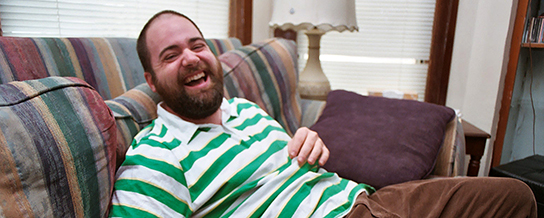
Lindsrom’s Feedelity Recordings and Smalltown Supersound–home to Tussle, Bjørn Torske, and others–have announced they will merge to form a new label, Strømland Records. Though information on the new label is still a little scarce, the two parties have confirmed a first release, the self-titled debut album from S.F.-based musician Dominique Leone.
A man of many talents, Texan-born Leone is known as a prolific songwriter, producer, singer who knows as much about classical music as he does about pop, and uses both in his own work. Think weirdly arranged synths and guitar chords paired with vocals everyone is likening to the Beach Boys, and you’re in the ballpark.
Tracklisting
1. Kaine
2. Sim
3. Goodbye
4. Nous Tombons Dans Elle
5. Tension
6. Duyen
7. The Return
8. Blist
9. Claire
10. Left, the Other Left
11. Conversational
Leone will also be playing a few live dates along the West Coast. Check ’em here:
03/29 Berkeley, CA: Maybeck Studio
03/30 Berkeley, CA: Maybeck Studio
04/02 Eugene, OR: Cozmic Pizza
04/09 Portland, OR: Someday Lounge
04/10 Hollywood, CA: Knitting Factory
04/12 Phoenix, AZ: Sinkweeds
Photo by Jess Halverson.
Les Savy Fav Releases First-Ever Live Album
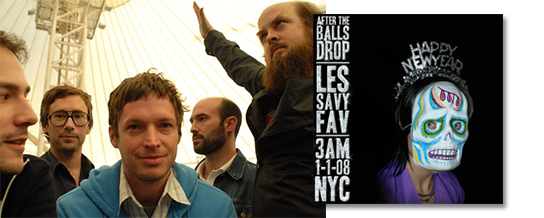
You haven’t seen a live indie rock show until you’ve caught Brooklyn-based outfit Les Savy Fav. The idiosyncratic art-rockers, who originally formed in 1995, are highly regarded for their onstage performances, which include kissing audience members and multiple costume changes, among other activities.
Though you won’t actually get to see such antics with the release of the band’s first-ever live album, the audio should be a treat in and of itself. The digital-only album, titled After the Ball Drops, is taken from band’s historic, 3 a.m. performance on January 1 of this year at New York’s Bowery Ballroom. In addition to charging through several of their own tracks, many of which are off the Let’s Stay Friend release, the boys also covered the Pixies, Nirvana, and Creedence Clearwater Revival at the performance. The album drops on April 29 on French Kiss.
After the Ball Drops Tracklisting
1. Equestrian
2. Patty Lee
3. What Would Wolves Do?
4. Sweat Descends
5. Yawn Yawn Yawn
6. We’ll Make A Lover Of You
7. The Year Before The Year 2000
8. The Lowest Bitter
9. Who Rocks The Party
10. Tim Speech
11. Hey Tonight (Creedence Clearwater Revival Cover)
12. Debaser (Pixies Cover)
13. Astro Zombies (Misfits Cover)
14. Sliver (Nirvana Cover)
15. Everybody’s Gotta Live (Love Cover)
In other Les Savy Fav news, live shows are planned for the lucky folks living in the following U.S. cities:
04/04 Washington, DC: The Black Cat*
04/05 Philadelphia, PA: TLA*
04/25 Indio, CA: Coachella
04/27 San Francisco, CA: Great American Music Hall*
* w/ The Dodos