Podcast 31: Them Jeans

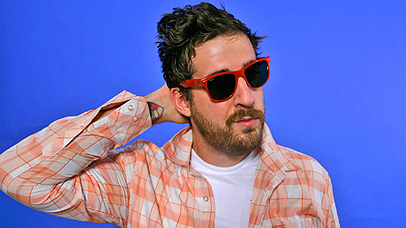
Los Angeles-based Jason Stewart–a.k.a. Them Jeans–provides us with this rocking mix of electro, rock, and disco tunes, along with a little Fleetwood Mac and Radiohead. Stewart is widely known for the numerous edits and mash-ups he’s sent to every corner of the blogosphere, his work as a graphic designer, and his remarkable height. Check this mix and download to use as the soundtrack to your next house party.

Tracklisting
1. Holy Ghost! “Hold On” DFA
2. Thom Yorke “The Eraser (XXXChange Remix)” XL
3. Sebastian Tellier “Sexual Sportswear” Lucky Number/Record Makers
4. Hercules and the Love Affair “Blind” DFA/EMI
5. Fleetwood Mac “Little Lies (Dub)” Warner Brothers
6. Sally Shapiro “I’ll Be By Your Side (Rude 66 808 Remix)” Diskokaine
7. Fred Falke “8:08 pm @ The Beach”/Hot Chip “Ready For The Floor” (Them Jeans Blend) DFA/EMI
8. MIdnight Juggernauts “Shadows (First Love Intro)” Siberia
9. Alter Ego “Jolly Joker (Vampire Weekend M79 Blend)” Klang
10. Treasure Fingers “Cross the Dancefloor” Fool’s Gold
11. The Outrunners “Cool Feeling” Valerie
12. Of Montreal “Jimmy (M.I.A. Cover)” Unreleased
13. Radiohead “Jigsaw Falling Into Place” XL

Subscribe to this podcast: iTunes or mp3 format. For help, click here.

Download MP3
Download M4A (iTunes enhanced)
Subscribe to Podcast (RSS)

Podcast_Mix_2008_03_13

Q&A: Cryptacize

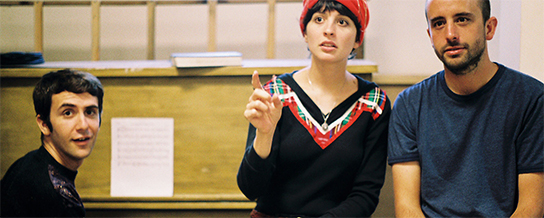
Cryptacize is not your average Bay Area band. Boasting ex-Deerhoof member Chris Cohen, Kill Rock Stars’ veteran soloist Nedelle Torrisi, and classically trained drummer Michael Carreira, the band eschews any hyphy references and stoner-rock vibes, opting instead for fuzzy noise, discordant melodies, and showtunes-inspired mayhem on its most recent release, Dig That Treasure (Asthmatic Kitty). XLR8R recently sat down with Torrisi to get story behind both the band’s history, it’s changing sound, and the future of art-rock.

XLR8R: How was Cryptacize formed?

Nedelle Torrisi: Chris and I became friends a few years back. We wanted to write in a style that was new to both of us, so we really took our time writing and becoming comfortable with collaborating. We found Mike (or rather, Mike found us), and he changed the direction of everything. His role is not that of a typical drummer–no offense to drummers. He’s really minimal and severe, and he changed the songs completely.

There is a strange Broadway-showtunes feel to many of your tracks. Do you guys draw inspiration from the genre?

We are definitely inspired by this genre, among others, of course. What we like is how musical theater keeps the audience suspended between belief and disbelief–the style of storytelling where you are constantly being pulled out of reality and into this dream-state where people can sing and dance and talk directly to you, the audience member, who theoretically isn’t there. You could say that Cryptacize is obsessed with the idea of belief, or at least that’s something that Chris and I want to sing about. We want to somehow demystify our beliefs, in order to believe in them.

What did you guys grow up listening to?

Mike and Chris are both drummers and played in rock bands when they were young. Mike discovered classical music in high school and composed and played in orchestras until he became an elementary-school music teacher. Chris dabbled in lots of different types of music, but never had any formal training. He doesn’t prefer any one kind of music to another but generally likes things that are weird. Growing up, I played the violin and sang in musicals. I also had an En Vogue-inspired duo with my friend. We played a Casio keyboard and were pretty horrible, but listening back to the cassettes is pretty revealing. I haven’t changed much!

How did you link up with Asthmatic Kitty?

Chris is a friend of Mike Kaufmann–one of the people who runs the label. He knew him from way back, when Mike played in Soul Junk.

What other rad things can we expect from Cryptacize in the future?

We’re going to tour the U.S. a few times this year, and we’re playing in Europe for part of the summer. Asthmatic Kitty is putting out a split 7″ with our friends Why? around June. And we’re going to record our next album, which we hope can come out in the first half of 2009. But our most major concern is writing a song that our cat will like–so far she hates them all.

Negativeland: Documenting No Wave

Whether it’s the recent reissue of Downtown ’81, the perennial appeal of Jean-Michel Basquiat’s paintings, the release of Disco Not Disco (a compilation featuring “post-punk, electro, and leftfield disco classics” from Delta 5, Konk, James White and The Blacks, and more), or a new disc from The Bush Tetras, there’s no doubt a No Wave revival is afoot. Not only are the period’s music compilers busy, but new books on the scene’s continued relevance and its niche underground cinema are on the horizon, lending credence and understanding to the movement spawned by the mantra “Just say no.” Here XLR8R revisits No Wave’s legendary films, clubs, and bands through the lens of its chroniclers and participants.
Ken Taylor

No Future
No means yes, according to Marc Masters’ new book about No Wave’s rock nihilism.

It sounds like a counter-culture fairytale. In late ’70s and early ’80s Manhattan (a burnt-out bohemia before Giuliani and gentrification), an uninhibited, nihilistic music scene quickly formed, flourished, and flamed out.

No Wave (Black Dog Publishing; softcover, $29.95) by Marc Masters distills the essence of this vital movement, when a slew of energetic and eclectic artists like ESG, Lydia Lunch, and The Contortions created unique (at times primitive) music that deconstructed rock. “You can do so much more when you reject everything,” offers Masters.

While No Wave influenced countless bands, it’s easy to misstate the depth of talent involved. Masters’ lengthy analyses and first-hand accounts fill in the gaping holes in the historical record with artist testimony, profiles of neglected groups and albums, rare photos, fliers, fanzines, and the occasional quote from a New York Times review. Here we asked Masters to tell us about five musical touchstones from that era.
Patrick Sisson

Various Artists
No New York
(Antilles/Island, 1978)

The record that helped birth No Wave was conceived by Brian Eno, after he attended the May 1978 Artists’ Space festival featuring numerous No Wave bands. Ten groups were originally slated to participate, but the final record offered only four: The Contortions, Teenage Jesus and the Jerks, Mars, and DNA. Eno’s production slightly flattens the groups, but the radical dissonance of each still shines through–especially James Chance’s hyper quintet, The Contortions, who peak with a spastic, unrehearsed version of James Brown’s “I Can’t Stand Myself.”

Teenage Jesus and The Jerks
Teenage Jesus and The Jerks EP
(Migraine, 1979)

Teenage Jesus and The Jerks were headed by Lydia Lunch, who wrote short, sharp songs centered on pounding beats, raging slide guitar, and desperate screams. This record, commonly known as the “Pink” EP due to the color of its sleeve and vinyl, collects two blistering seven-inches and two live tracks. The highlight is “Orphans,” a nightmare tale of mauled children and bloody snow that captures Lunch’s violent worldview with bludgeoning force.

Mars
Mars EP
(Infidelity, 1979)

Formed in 1975, Mars was the first No Wave band. The quartet began by jamming on Velvets tunes, but quickly forged a chaotic mix of scraping guitars, oblong beats, and shrieking vocals from China Burg and Sumner Crane. Their outward-bound sound culminated on a five-song miasma known as the Mars EP, filled with stark dissonance and possessed yelps. Lester Bangs rightfully called it both “psychotic noise” and “their masterpiece.”

DNA
A Taste of DNA EP
(American Clave, 1981)

DNA was Mars’ brother band, led by Brazil-raised guitarist and singer Arto Lindsay. They started as a skewed avant-rock trio with Ikue Mori on drums and Robin Crutchfield on keyboards, but when bassist Tim Wright replaced Crutchfield, their sound got funkier and snakier, without losing its gnarled edge. A Taste of DNA is nearly perfect, especially “Blonde Red Head,” a fractured slice of sloping art-pop that’s both noisy and hummable.

Theoretical Girls “U.S. Millie”
b/w “You Got Me” 7-inch
(Theoretical, 1978)

The No New York groups were all from the Lower East Side, but No Wave flourished in the artier SoHo, too, primarily in the form of Theoretical Girls. Their sole single displays the two sides of their schizophrenic art-rock personality: “U.S. Millie,” penned by the classically trained Jeffrey Lohn, is a joyous mix of pumping keyboards and a goofy near-rap, while Glenn Branca’s “You Got Me” is a bombastic slam that Branca reworked into his very first guitar symphony three years later.

Bush Tetras: Ground Zero
The Bush Tetras’ drummer offers up his five favorite No Wave/post-punk venues.

No discussion of No Wave, post-punk, or punk-funk is complete without at least a mention of The Bush Tetras. Like so many bands of their time, they flourished in New York’s downtown scene, and despite putting out just a handful of EPs and singles, became legends in their own right, staging shows on the Lower East Side that blurred the line between rock concert and performance art. Drummer and founding member Dee Pop schools us on the five coolest venues from the era.
Ken Taylor

Tier 3
This was the first club to have The Bush Tetras (in February 1980). It was a serious hang for all of us and all our favorite groups developed there.

CBGB-OMFUG
What else can be said? And if the waitresses liked you, you could get a pitcher of Long Island iced teas for a buck. RIP Hilly Kristal.

The Mudd Club
After Tier 3, you went to The Mudd Club and learned how to become a vampire. It went late. Everyone wore sunglasses, and you needed them because when you left it was daylight.

Hurrah’s
Uptown and slightly more posh. It had couches with pillows, which we would use for battles, like 8-Eyed Spy vs. the Tetras or Delta 5.

Max’s Kansas City
Celebrity-spotting, advanced posturing, and general decadence. Great DJs, too.

The Bush Tetras’ Very Very Happy is out now on ROIR.

Wave of Mutilation
Jack Sargeant sweeps the cutting room floor of No Wave’s DIY film scene.

Author, curator, and lecturer Jack Sargeant’s Deathtripping: The Extreme Underground (Soft Skull Press/Counterpoint; softcover, $18.95) is more than just a look at the unexplored world of No Wave cinema. It’s a definitive guide that’s both survey and oral history, contextualizing the scene’s frequently overlooked filmmakers into the grand scheme of sludgy, urbane 1970s and ’80s NYC. Originally published overseas in 1995, Deathtripping ably examines each frame (with film stills and interviews with the likes of Richard Kern, Nick Zedd, Beth B, and others) and the filmmakers’ artistic statements (most notably Zedd’s manifesto “Cinema of Transgression”) from the points of view of a cultural theorist and agit-pop-cultural omnivore. But unlike many other documents of the No Wave period, Deathtripping manages to bridge the gap between the genre’s earliest inklings and its continued relevance through the ’90s. Below, Sargeant weighs in on his favorite films from the era.
Ken Taylor

Richard Kern Fingered (1986)
The first film in any list has to be Fingered. Kern’s second collaboration with Lydia Lunch is not only one of the most disturbing portrayals of sex and violence committed to film, it is also one of the most entertaining, with Lunch and co-star Marty growling at each other like demented characters from some obscure hardboiled novella.

Beth and Scott B Black Box (1978)
Totally different in sensibility, but equally motivated by an interest in power relations, the No Wave/para-punk films of Beth and Scott B are a sustained analysis of contemporary control technologies, none more so than Black Box, which examines the sadism and power plays that transpire with contemporary interrogation techniques.

Tessa Hughes-Freeland and Tommy TurnerRat Trap (1986)
Rat Trap is one of the most incredibly visceral portrayals of addiction committed to celluloid.

Jeri Cain RossiBlack Hearts Bleed Red (1992)
Fifteen minutes of film noir-inspired mayhem, with painter Joe Coleman playing an escaped psychopath.

Nick ZeddWar Is Menstrual Envy (1992)
The editor of The Underground Film Bulletin and author of the “Cinema of Transgression” manifesto also directed an epic of experimental cinema in War Is Menstrual Envy, a crazed, visionary multiple-projection feature about underwater sex, the annihilation of humanity, and the end of oppression.

Seiji SK Tooks Vol. 1: Seiji DJ Tools

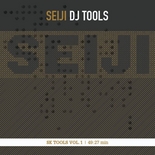
DJ tools are arsenals of sound employed by decknicians to work dancefloors in distinctive ways. Paul Dolby (a.k.a. Seiji), one of the most creative and prolific members of the renowned U.K. crew Bugz in the Attic, is an illustrious choice to launch Sonar Kollektiv’s new DJ Tools series. If you’re expecting only mere incidentals and interludes, cast those expectations aside. “Somehow” is a hand-clapping morsel of bouncy, funky boogie, while “Not You” gets its groovy bassline on. The tracks span two to three minutes on average, but each possesses its own concentrated burst of musical potency. DJ skills not required; open minds and naughty behinds will suffice.

Clark “Truncation Horn”

Clark has always been known for mixing laptop electronics with rock-style drums. Turning Dragon, his latest album on his longtime home Warp Records, finds the artist moving towards a even tougher, more explosive, sound, adding cut-and-paste samples and enough distortion to put all those electro kids from Europe to shame. Clark will be turning dance clubs into raves in Europe throughout 2008, and will hopefully hit Stateside soon after.

Clark – Truncation Horn

Principles of Geometry Lazare

Principles of Geometry, the French duo of Guillaume Grosso and Jeremy Duval, have created one of the more generally insane releases of late in the Tigersushi family. Synth fetish music made by Aphex Twin-obsessed forest creatures, Lazare giddily chases around moods and ideas with no discernable end in sight. A snarly Cannibal Ox drops in on a float-along synth track (“Napoleon”) and gets spit out at the other end of Black Strobe’s studio, while tracks like “Titan” and “Shaber Hill” set up delirious cat’s cradles of analog-synth tones. The album’s gem, “A Mountain for President,” with the bonus of Sebastien Tellier’s voice, is alone worth the price.

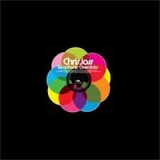
Chris Joss Teraphonic Overdubs

For those moments when you just have to sport a wide-lapelled, caramel-leather jacket, fringed bellbottoms, and stacked platforms, French producer Chris Joss has the requisite soundtrack. Lalo Schifrin-loving Joss leans on both the psyche-funky De Wolfe Music Library of the ’60s and ’70s and black cinema’s wokka-chikka sounds on his fourth full-length release. Yet he’s not merely a harvester–despite nearly losing his right arm in 2006, he’s responsible for all of the disc’s instruments, live and otherwise. Strains of organ, wah-wah guitar, flute, and faux sitar burble about Joss’ cheesy strings and punched-in background vocals. More atypical is Joss’ penchant for unusual time signatures, modded out with the occasional harpsichord or marimba. While Teraphonic Overdubs gears up in spots, you’ll be riding on a mostly mellow grooveline.

Arthur Russell: Cornfields & Disco

The phrase “ahead of its time” was tailor-made for the music of Arthur Russell. A classically trained cellist from Oskaloosa, Iowa, Russell moved to New York at age 21 in the early ’70s, and took the city’s avant-garde, rock, and disco scenes by storm. By day he was the music director at experimental art space The Kitchen; at night he produced disco classics like “Is It All Over My Face” and “Go Bang” under the names Loose Joints and Dinosaur L. He bridged the art and disco worlds with his avant-pop compositions under his own name. However, when he died of AIDS in the early ’90s, he was still relatively unknown. That changed in 2004, when Soul Jazz and Audika Records released compilations of his work, introducing his music to the likes of Jens Lekman, Electrelane’s Verity Sussman, and 25-year-old filmmaker Matt Wolf, whose new film, Wild Combination: A Portrait of Arthur Russell, examines Russell’s relationship with his music, his Midwestern roots, and his life and death in New York City. We asked Wolf about his own process of discovering Russell.

XLR8R: What made you decide to make this film?

Matt Wolf: A friend of mine in San Francisco recommended Arthur’s records to me, and it was [his] initial description that, even before hearing the music, made me think that this could be an amazing movie. He described [Russell as] this gay disco auteur in farmer-plaid shirts who would ride the Staten Island ferry endlessly, listening to cassette tapes of his own mixes. I wrote Tom Lee, Arthur’s partner, saying, “I’m an experimental filmmaker and I’m interested in doing a non-traditional film scored to Arthur’s music, and I wanted to ask for your permission.” When I heard from Tom, I went to go meet up with him in the same apartment that he once shared with Arthur, and I just really intensely connected with him… The connection that he felt to Arthur seemed so alive and real that, at that moment, it occurred to me that perhaps a biographical film that wasn’t just visually driven or experimental in nature would be possible.

You call your film “a portrait.” What’s your intention there?

Going into the process of making this film, I knew that there were a lot of conventions, and even traps, of the biographical genre and also the music-film documentary genre. I wanted to avoid some of those traps and also try to think of new creative strategies to deal with the posthumous biography of the under-recognized artist. There were a lot of challenges, particularly the lack of material of Arthur or any recorded image of him speaking, so I knew that I would have to take an unconventional approach. In doing so, I didn’t set out to make a definitive documentary that interviewed every collaborator…. And I also chose to focus really extensively on his relationship with Tom and with his parents and the meaning of the landscape of Iowa in his life and his work–and the kind of iconography of New York City and water. All of these choices, I think, make the film much more of a portrait than ‘The Arthur Russell Documentary’ or ‘The Life and Work of Arthur Russell.’

Is it hard to make a film about someone who’s dead?

In terms of who gets to tell parts of his story, I chose people with a certain kind of empathy for Arthur and I think that’s a big reason I rely upon Tom to tell a lot of the story–a lot of this is Tom’s story. It’s really difficult because there’s a lot of moments where I definitely–in a visceral way–reckon with the death of Arthur. Through the process of making a film, you objectify the material and you objectify the person so intensely, but there are these bursts or moments where you just reckon with the reality that this person died and how intensely it affected the people you’re working with.

Aside from Tom and his parents supporting him financially, how did Arthur stay afloat while he was playing music?

There’s this article about Arthur from the ’80s that talks about Arthur’s style of being an entrepreneur, and it’s extremely telling of Arthur… There’s this anecdote about him, in the ’70s or ’80s in the East Village, selling t-shirts on a rack for like 25 or 50 cents each. Then a few years later, like, everybody in the East Village on St. Mark’s Street was selling [the same shirts] for $10. I felt like that was an incredible allegory for Arthur’s struggle.

Wild Combination: A Portrait of Arthur Russell will begin screening at festivals in the spring.

Aphex Twin, Goldfrapp Added to Gigantic Coachella Lineup

Unless you’ve been living under a heavy rock the last few months, you’ll no doubt have heard the initial lineup announcements for this year’s Coachella festival in Indio, California. The event promoters are keeping the names coming, having now added Goldfrapp and Aphex Twin to the list, which also features Justice, Hot Chip, Animal Collective, Cook Kids, Cinematic Orchestra, and a ga-zilliion others (if you’ve got curiosity and a decent set of glasses, peep the full lineup below).

The 2008 festival will also feature onsite accommodation in the form of two, four, and six-person tents that come with airbeds and pillows, breakfast, and deluxe showers, though you’ll probably pay a small fortune for such luxuries.

Single day and three-day passes for the event are available now at Ticketmaster.

Current Lineup
Roger Waters, Portishead, Jack Johnson, Kraftwerk, the Verve, the Raconteurs, Death Cab for Cutie, Love and Rockets, My Morning Jacket, Aphex Twin, the Breeders, Justice, Café Tacvba, Fatboy Slim, Spiritualized, Tegan and Sara, Goldfrapp, Serj Tankian, the Swell Season, Sasha & John Digweed, Gogol Bordello, Rilo Kiley, Chromeo, the Streets, Dwight Yoakam, M.I.A., the National, Metric, Hot Chip, Cold War Kids, Animal Collective, Kate Nash, Múm, Slighty Stoopid, Stephen Malkmus & the Jicks, Above & Beyond, Danny Tenaglia, Pendulum, DeVotchKa, Booka Shade, Simian, Mobile Disco, Sharon Jones & the Dap-Kings, Murs, Stars, Flogging Molly, Mark Ronson, Redd Kross, Dimitri from Paris, Battles, Turbonegro, Autolux, Aesop Rock, the Field, Les Savy Fav, Scars on Broadway, Linton Kwesi Johnson, Midnight Juggernauts, Islands, the Cool Kids, Does it Offend You, Yeah?, Enter Shikari, Sons & Daughters, Minus the Bear, Sia, Calvin Harris, Holy F*ck, Spank Rock, dan le sac Vs Scroobius Pip, Boys Noize, Black Kids, Diplo Junkie XL, Black Mountain, Adam Freeland, Annuals, Cinematic Orchestra, Santogold, Jamie T, Jens Lekman, Kid Sister with A-Trak, the Teenagers, John Butler Trio, Duffy, I’m From Barcelona, Vampire Weekend, VHS or Beta, Deadmau5, Carbon/Silicon, Manchester Orchestra, Dan Deacon, Erol Alkan, Architecture in Helsinki, Man Man, Sandra Collins, Yo! Majesty, AUSTIN TV, Adele, Busy P Little Brother, Cut Copy, Shout Out Louds, Bonde Do Role, Plastiscines, Black Lips, St. Vincent, Brett Dennen, Datarock, Akron/Family, MGMT, Professor Murder, Surkin, Para One, Orgasmic Curses, James Zabiela, the Bees, Reverend and the Makers, SebastiAn, Kavinsky, Porter, Rogue Wave Dredg, the Bird and the Bee, Yoav, Modeselektor, Grand Ole Party , New Young Pony Club, 120 Days American Bang, Luckyiam, Electric Touch, Yelle, Uffie featuring DJ Mehdi

Page 2979 of 3781
1 2,977 2,978 2,979 2,980 2,981 3,781