Solvent Readies Limited-Edition CD

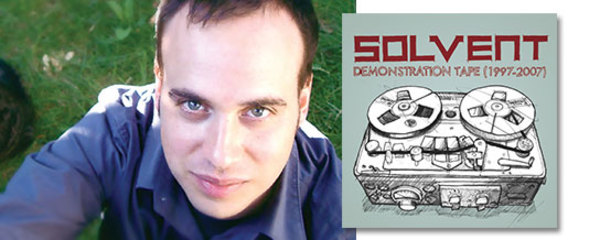
Somewhere between reinventing the electro-pop wheel for labels like Ghostly and Morr, co-founding his own imprint, Suction Records, and giving a little of his precious time to side projects, ten years have passed for Jason Amm, the Zimbabwe-born, Toronto-based producer known in the music world as Solvent. Thus, Demonstration Tape (1997-2007), a forthcoming compilation from Ghostly that documents Amm’s output over the last decade, from his signature club hit “My Radio” to the vocodor-heavy “For You.”

Those of you rolling your eyes at the idea of yet-another “greatest hits” compilation should note that many of the tracks here are out-of-print, something that hopefully renders the collection–set for release on January 29, 2008–worth picking up, particularly since the CD version is limited to 700 copies. And if all that is not enough, the comp also includes three previously-unreleased tracks.

Meanwhile, Amm is gearing up for some live dates in the Midwest and Canada, starting in mid-January.

01/18 Montreal QC: Zoo Bizarre
01/19 Tornonto, ON: The Rivoli
01/24 Detroit, MI: TBA
01/25 Chicago, IL: The Empty Bottle
01/26 Milwaukee, WI: Stonefly

Switch: Artist of the Year

Switch is not what you think he is. You might even say he’s double-sided.

There’s one Switch who never wants the party to end, a prankster who dreads being bored. Then there’s another–Dave Taylor–who is low-key and understated, owns a farmhouse in Cheshire, and has a few carefully plotted plans to turn pop music on its ear.

It’s 7 p.m. on a rainy Friday night. The lychee martinis are starting to flow and that means I’ve got the mellow Switch sitting across from me. We’re in a noisy Thai restaurant in Echo Park, a few minutes’ drive away from The Echo where, just hours from now, Switch’s mix of choppy, eccentric, bassline-driven house will confuse the L.A. kids who’ve come to hear Diplo rock hits from the blog and Snoop Doggy Dogg.

Where Diplo is known for mixing up styles from record to record, Switch mixes up styles within individual tracks, piling bizarre elements upon a 4/4 framework until each song is a crazy stew of references and sounds. It ain’t jock house–it’s jocular house, with plenty of fun samples (guns cocking, whistles) and more pitch-shifted, cut-up vocals than a Best of Freestyle compilation. And then there’s that signature Switch bass–buzzy and synthetic, careening up and down the scale to create a propulsive wave that’s maddening in the headphones and devastating on the dancefloor. Switch puts the fun back into house with an absolute disregard for purity and the element of surprise shows up everywhere; this is best illustrated in his remixes, such as his take on P. Diddy’s “Tell Me,” a carnival ride whose breakdown consists of a full minute of Christina Aguilera’s acapella backed by… nothing.

Hip-House?
“I love doing that crazy, crazy breakdown where you think it’s going to go off and go somewhere and it doesn’t; instead it comes back real minimal,” says Taylor between bites of spring rolls and satay. Having already added his own trademarks to dance music, and even spearheaded his own genre–more on the aptly named fidget house later–Taylor continues to muse about how to do things differently. Currently, he’s thinking about making three-minute bangers.

“I’m definitely learning to hear my music in a different way right now,” explains Taylor of touring the U.S. with Diplo. “In Europe, I’m the one that’s crazy when I come on [to DJ]. Playing with [Diplo] I feel like the tame one. And the amount of music that people consume right now, they don’t want to listen to the same record for six minutes. People want records that get in, do something dramatic, and make you throw your hands in the air. If you look at the way hip-hop DJs work stuff, you could do that with house music. I think that would make house more appealing on a bigger scale. Let’s make it a little more short, sharp, sweet, and… rubbish!”

Switch Stance
Taylor doesn’t actually want to make rubbish–it’s just that he says that word a lot, and it often interrupts a sentence when he feels like he’s getting too deep or serious or silly-sounding. He’s self-deprecating, and speaks fondly of friends back home who tease him for what he does. Though he would love to be part of a groundbreaking music movement–and is presently amassing a stable of collaborators to help make it happen–he doesn’t want to be the center of attention.

“I don’t even usually do interviews and stuff,” says Taylor. “If I’m working with [someone], it’s about producing [them] and I’m not even bothered if my name’s not on it. It’s not like I’m shy. It’s just not me. I don’t really want to be like a Timbaland or Pharrell, where they’re almost like artists themselves. It just isn’t my nature to be like, ‘Look at me!’ I love seeing people that have that quality, and I just see myself as a facilitator of people that want to do that.”

Flipping Out
Growing up in an old section of Harlow, Essex, about 30 miles East of London, Taylor has always been looking for something different. “When all my mates wanted to stay in the pub, I’d be up in London on my own, going to clubs and stuff,” he recalls. “I was really into soul and R&B, like all those early Teddy Riley records, new jack swing. Everybody would be listening to crazy rock records and I’d be trying to sell my mixtapes that I made off the radio with Soul II Soul on them.”

Luckily, Taylor had older friends he had met through a shared love of Man Parrish, Bambaataa, and breakdancing. “When [the local breakdancing crews] were having burns against different schools, I’d be the little mincer that they’d bring in at the end to do a backflip,” he explains. A few years later, the same dudes started producing early jungle tracks for the Labello Blanco label and Taylor would often hang around their studio. “The first time I saw someone using a mixing desk and soloing the drums–actually deconstructing records that I was already familiar with as a whole record and me hearing it in different parts–I was about 15 or 16,” recalls Taylor. “And that was it. I just thought that was the coolest thing in the world.”

Taylor messed around a bit with early drum & bass–appearing with Paradox on Mixrace’s seminal 180-bpm release “Too Bad For Ya” (Moving Shadow) in 1992–but soon tired of the scene, and nearly abandoned production entirely until he saw U.S. house maestros Todd Terry and Kenny Dope spin at a London warehouse party. “I remember thinking, ‘Shit! This is it,’” recalls Taylor with a grin. “My girlfriend was studying in the South of France, so I gave up my job, bought a computer and a sampler and went and lived with her for a year.”

House Calls
By the 2000s, Taylor was recording for the likes of Slip ‘N’ Slide, Freerange, and his own Dubsided imprint under the name Solid Groove. He and Jesse Rose teamed up to form Induceve, and with Trevor Loveys he created the first incarnation of Switch, releasing Freerange classics like “Get Ya Dub On” and “Just Bounce 2 This” that prefigured his current sound.

But perhaps the most important indicator of big things to follow came in 2005. Both M.I.A.’s “Pull Up the People”–co-produced by Taylor (under the name A. Brucker)–and “Love Guide” (a collabo with Miss Thing for Wall of Sound’s Two Culture Clash) were busting out of stereos from U.K. to the U.S.A. DJs from all genres were obsessing over surprise banger “This Is Sick” and “A Bit Patchy,” a bootleg that twisted Incredible Bongo Band’s “Apache” into a perfect fusion of hip-hop and house. Taylor and Rose had begun seeding the media with the name “fidget house,” to see if the press would make a movement out of the music that their crew–which also includes Loveys, Sinden, Herve, and Duke Dumont–was producing.

On The Move
While Switch’s name was quickly becoming a mantra for some, few outside the club world or the MP3 blogosphere were accessing his sound. Not that Switch was too concerned with promo; he was busy traveling across the globe in search of new inspiration. A brief residency in New York brought him closer to American underground genres like Baltimore club, ghetto-tech, and juke. Then he was jetting off with M.I.A. to work on Kala, journeying to Southern India to record temple drummers for “Bird Flu,” to Trinidad to channel soca’s energy for “Boyz,” and to St. Lucia (presumably to chill out).

All the while, he ran Dubsided and sparked two new endeavors with Sinden–the Counterfeet label and their Get Familiar party at Fabric in London. He found some new vocalists (he’s currently working with Santi White of Santogold and a Swedish singer and rapper called Mapei) and worked on beats for a dancehall album with Diplo in Jamaica. When we spoke, he had just returned from a crazy few weeks in Kingston, recording the genre’s top shottas (Turbulence, Elephant Man, Lexxus, Gyptian, Leftside & Esco) for a double-disc to be released in spring or summer of 2008.

Rebel Yell
And yet, Switch remains restless. “I’m moving to L.A. because I’m bored,” he exclaims, not quite joking. Taylor has been spending more and more time in the City of Angels as he works on a new album for Tricky, hoping to restore electronica’s Basquiat to his moody hip-hop roots. (Switch also produced a track for Britney Spears–it didn’t work out–and is rumored to be working on stuff for Missy Elliott’s new record.) He plans to move to California next year, and, with his fidgety friends, start a full-service production house for artists.

“I think club music’s been kind of dormant for a few years and it’s finally coming back around again,” he enthuses. “There’s a really healthy movement going on in the States. Hip-hop is at an interesting point where people have grown out of what it has been. It seems like there’s a big hole in the market for something fresh and exciting–a different presentation, a different mood. I don’t know what’s next, but I can hear something for a second and know if I want to fuck with it. That’s my gauge.”

Smash Hits
Switch’s Top Ten of 2007

1. Mapei
You have to check for this girl. She’s so stupid-good. Her rapping is the shit, her singing is the shit, she makes her own videos, and live she be on that crazeee shit.

2. Drop the Lime
Possibly the most original new club shit coming out of NYC at the moment. Word up, Luca.

3. Duke Dumont
He is gonna bang! His ideas bang! His productions bang and his DJ sets bang.

4. DJs Customizing Tracks
This is making DJs interesting again. The element of surprise returns to the ones and twos.

5. Erol Alkan
Possibly my favorite DJ on the planet at the moment. This dude is so studied… He’s so sure of what he’s doing it makes me want to give up.

6. Jamaica
No dickheads. The most musically raw place I’ve ever been to. The relationship people have with music across the board there is so inspiring.

7. Feist
Something I didn’t expect to like. My favorite cool female pop voice this year.

8. Australia
The most responsive club crowds I’ve witnessed in a while.

9. Fabric
They kicked me off the decks at me and Sinden’s own Get Familiar night because I might have had one too many and played the same Herve remix three times in a row.

10. Justice
I wasn’t with it! It was Diplo that made me listen to the album properly… It’s a boring choice but they smashed that shat with a bat. Splat.

More Best of 2007
Sage Francis’ Top Five Albums of 2007
Best Artists of 2007
Best of 2007 by Cameron Bird
Best Albums of 2007
Best Singles of 2007
Best of 2007 by Busy P
Best Live Events of 2007
Best of 2007 by Dust La Rock
Best Visual Artists of 2007
Best of 2007 by Dirt Crew
Best Music Trends of 2007
Best Style of 2007
Best of 2007 by Mochipet
Best of 2007 by DJ Ulysses
Best Music Technology of 2007

Pikelet “Bug-in-Mouth (Faux Pas Remix)”

A mainstay in several Melbourne hardcore bands, Pikelet made a sharp left turn recently and released an album of lo-fi harmonies and ambient melodies. Fellow Australian Faux Pas, whose own Changes EP recently dropped, assumed remix duties for “Bug-in-Mouth,” adding an housy feel reminiscent of the early ’90s to Pikelet’s original composition.

Pikelet – Bug In Mouth (Faux Pas Remix)

Various Airport Symphony

For this brilliant compilation, sound artist and Room40 label head Lawrence English recorded the sounds of Brisbane Airport and had 18 remixers translate them into music. Many focus on the jetliners’ sonic booms cutting through the air and the rich drone of engines: Muzak for terminals. That sense is best captured in Tim Hecker’s majestic “Blue Ember Breeze,” where a searing guitar rises eight miles above the earth. Peculiar moments are made poetic: Jason Kahn’s mix of birds, living and mechanical, greet each other; Christopher Willits’ sample of a flight attendant demonstrating oxygen-mask use before the sound crashes in; Joel Stern daydreams a dazed trumpet solo amid chatting birds. With Airport Symphony , English shows that airports aren’t just a source of air pollution.

Daft Punk Alive 2007

A year ago, few people had seen the live Daft Punk spectacle, and that was part of the fun. Their latest release captures the duo live in front of 18,000 fans at Paris’ Palais Omnisports de Paris-Bercy, but after numerous high-profile performances (and even more low-profile bloggings), some of the excitement may have drained. That’s not to say the tracks here aren’t exhilarating; almost every cut is reworked or mashed up, and with each build-up, the anticipation in the arena is palpable (think: futbol match). As a live electronic album, this is a huge success; as a historical document, stick to the Coachella YouTube videos.

Ewan Pearson Piece Work

The title’s allusion to the form of employment in which a worker is paid a fixed “piece rate” for each unit produced seems a little churlish: While Pearson’s discography might imply that he’s churned the remixes out at a great pace, this 21-track retrospective also reminds that there’s enough quality in there to suggest that his acceptance of commissions is about more than just free-market economics. Compiling reworks of the likes of Closer Musik, Cortney Tidwell, Depeche Mode, and Goldfrapp (twice), Piece Work strikingly highlights Pearson’s faithfulness to the original “song,” as if his intent is to reframe the work of others rather than totally re-imagine it.

Somewhere: Buenos Aires, Argentina

Until recently, cumbia has been anything but cool in Buenos Aires. For decades Argentinian trendsetters wanted no part of this traditional folk-dance music of Colombian origin. With its repetitive percussion, cheesy keyboards, and trite lyrics, cumbia was often dismissed as music for the lower classes and the rural areas outside of Buenos Aires.

That perception was only strengthened by the emergence of cumbia villera, a harder-edged style that emerged from the villas of Buenos Aires in the midst of the economic crisis that began in 1998 and peaked in 2002. The lyrics horrified mainstream Argentinians with lurid tales of crime, drug use, and cheap women.

Despite the unfriendly climate, a new crop of Buenos Aires cumbia DJs and producers has recently emerged with a different perspective. Growing up in a country where traditional cumbia was banished to family parties and kiddie dances, musicians are now mixing cumbia rhythms with modern hip-hop and electronic sounds. Cobbling together tracks on crappy PCs with pirated music software, these bedroom artists operate in a world where CD-Rs constitute an official release and producers scour open-air bootleg markets in search of new sampling material. Dubbed new-school cumbia, cumbia beat, electro cumbia, and cumbiatronica, their work is being embraced by the hipster set.

Local dubstep/grime wizard Daleduro cites something he calls the “M.I.A. phenomenon” as being responsible for the style’s emergence, and explains: “In 2005, there was a global movement to look to the third world for new kinds of beats. In Buenos Aires that manifested [itself] as people taking a look at cumbia.”

Daleduro fuses cumbia rhythms into his bass-heavy beats, and he’s not alone. Northern California transplant Oro11, who first discovered cumbia on a garish Saturday-afternoon television variety show, crafts a unique mix of cumbia with hip-hop and dancehall. More experimental offerings come from producer El Remolón, who puts the genre into an IDM framework, while fusing cumbia with minimal techno is the preferred formula for Marcelo Fabian, who also happens to be producing the new album from local reggaeton/dancehall MC Princesa.

Last year these artists found a home with the launch of Zizek, a weekly urban beats club that now takes place at the venerable Niceto Club in the city’s ultra-trendy Palermo neighborhood. Serving as the city’s unofficial cumbia clubhouse, Zizek is one of the few places to escape punchi punchi, the omnipresent Euro-dance music that dominates the Buenos Aires club scene.

Zizek cofounder Grant Dull, who also runs bilingual website WhatsUpBuenosAires, states that the club is “a platform for a new generation of Buenos Aires clubbers to hear cumbia.” When asked why the music is making such strides, he answers, “Cumbia is taking shape as post-crisis Buenos Aires realizes that it’s actually part of Latin America.”

Matt Furie: Fur, Fangs, Fantasy

Matt Furie’s mind must be a crazy place. It’s populated with bats wearing polo shirts and riding BMX bikes, French-kissing birds with boobs, and weeping daisies. Also present are ALF and Falkor (the dragon from The Neverending Story), Freddy Krueger cradling a child, and a guy with a hamburger for a head.

You might wish you had such interesting things tripping trails through your cerebral cortex, so luckily there’s Furie’s art, where an assortment of brightly colored friends, foes, and furry things share bizarre, often tender moments with each other. Though his work may seem like nothing more than an ironic monster mash, there is a startling humanity to these colored-pencil-and-ink drawings that makes you want to look at them again and again. Plus Furie’s got a real talent for drawing hair and an ability to tug at nostalgic heartstrings; with their gummy lips, cool sunglasses, and fondness for breakdancing and bad graffiti, his funny-faced dudes are definitely designed to amuse children of the ’80s.

Since exporting himself to San Francisco from his native Ohio six years ago, Furie’s work is slowly catching on. Following a variety of shows around the Bay Area–at Needles & Pens, Adobe Bookshop, and Low Gallery–and some promo from local art website Fecal Face, he is moving southward and eastbound with shows at The Cartoon Network offices and New Image Art in L.A., Giant Robot in NYC, and in Venice and London.

Furie, whose name is a bastardization of fiore (Italian for flower), isn’t one for long musings, but we stalked him on the internet and found out that he’s a fan of house pets (especially cats), Richard Scarry, Mindfreak, and Aphex Twin. Then we had to know more, so we emailed him to get the lowdown on the sex lives of Rubix cubes and why Muppets rule over Snorks any day.

XLR8R: What was your favorite childhood game?

I used to ride my bike around and pretend I was Wolverine. My handlebars had different imaginary buttons that did different things, like shoot passersby.

What effect do you think growing up in Ohio has had on your work?

My mom was very supportive of my creative tendencies and she sent me to weekend drawing classes and paid for guitar lessons and stuff like that. I went to good public schools that offered lots of art classes, both during and after school, so it was a rich and imaginative place for me as a kid.

What scares you the most?

The overproduction of plastics, urban sprawl, and deforestation.

You seem to have recurring characters… Do you have names for them in your head and do you think of them as part of a continuing storyline?

The Rubix cube person, Cuboid, is sometimes a boy and sometimes a sexually active girl. The Skeletor-esque dude (a.k.a. Kid Skelly) is sometimes a nerdy, skinny kid and other times a caring grandmother. Both of those characters are based on actual toys I brought home from my day job as toy-sorter at the Community Thrift store.

Name one artist whose work you really admire.

I really admire Will Sweeney from the U.K. He creates a huge world full of intricate architecture, vehicles, four-legged vegetarian-sandwich creatures, ogres, hotdog villains, dog-people, fruit-people, complex war machines, castles, owl police, magical bearded cats, perfectly shaped sunglasses, and so much more.

What do you find really funny?

Bodily functions like pooping, peeing, barfing, ejaculating, burping, and farting.

What was your best moment of 2007?

The quiet moment in between jumping off of a houseboat and landing in the lake.

What was your worst moment of 2007?

Any moment at the laundromat.

What’s the one cultural moment of 2007 that stands out in your mind?

I read an article in a National Geographic that described how the albatross flies for thousands of miles to a feeding area it has been going to forever and mistakes washed-up brightly colored junk, like bottle caps and lighters, for food.

What is the best lesson you have learned in the last couple of years?

Don’t sweat the petty, pet the sweaty.

What music do you listen to while you work?

AFX, Brian Eno (ambient), Stone Temple Pilots (karaoke practice), Skinny Puppy (Too Dark Park), Ariel Pink, Holy Shit, Jonathan Richman, Kraftwerk.

Did you draw a lot of different things before you do what you do now, or has it been similar all along?

I used to draw people a lot more. There are sooo many interesting things to draw, there is no limit.

When did you move to San Francisco?

I moved here with my college roommate, Nasty Neff, in 2001, because it sounded like fun and I wanted to be like Robert Crumb. My work developed a lot out here because San Francisco is awesome and full of grown-up kids that like cartoon art.

What is your favorite California slang?

“Ghost riding the whip,” which I think means to hang out of your car and dance while driving or maybe to get on top of the car and dance while it’s driving. I also like the car modification in Oakland that made cars go “Woooooooooo!” and was popularized by a YouTube clip of a really funny dude doing his impression of the noise.

When was your last creative crisis and what was it about?

I always feel like I spend too much time in my room.

What’s one thing you got rid of that you wish you still owned?

My card collections that included Super Deformed mini-stickers from Japan and hecka Garbage Pail Kids.

What is your favorite moment in ’90s kitsch?

That show Dinosaurs that had the baby that said, “Not the mama!”

What is your favorite book?

Animals: 1,419 Copyright-Free Illustrations of Mammals, Birds, Fish, Insects, etc., A Pictorial Archive From Nineteenth-Century Sources, selected by Jim Harter.

What do you do when you’re feeling uninspired?

Watch videos on YouTube. Then… Boom! Inspiration!

Tell us a funny story about working at the thrift store.

People poop all over the place there, both inside and out.

Do you collect anything?

Plastic hamburgers, earrings, and M.U.S.C.L.E.s.

Horror movies, action figures, or comic books?

Action figures. It’s what we used to do before they developed all those damn videogames.

Muppets, sock puppets, or Snorks?

Muppets: Big Bird, a guy in a garbage can, a wooly mammoth, Animal, Miss Piggy, Grover, Kermit. Need I say more?

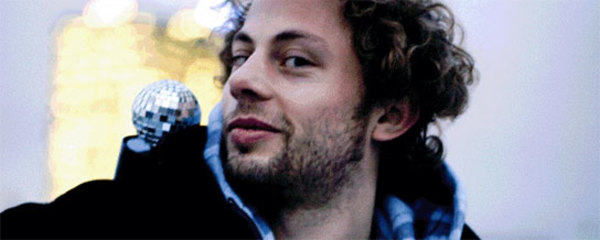
Mike Ladd “Trouble Shot”

Though by no means his debut album (he’s released nearly ten, along with a couple literary magazines), Nostalgialator is a first of sorts for Boston-born, Paris-based Mike Ladd. This latest album marks his debut for EL-P’s Definitive Jux imprint, a fact that has the music world buzzing. Fans of Ladd should expect his usual hip-hop-meets-rock-meets-electronics mashup.

Mike Ladd – Trouble Shot

Page 3041 of 3781
1 3,039 3,040 3,041 3,042 3,043 3,781