Melodium and Planet Asia Videos on xlr8r.com

France’s Laurent Girard (aka Melodium) produces his own video of the track “Flacana 05.” Here he captures sped-up sunsets and sweeping skies, among other scenic stills. (He also gives XLR8R the chance to use as many words as possible that begin with the letter “s” in one sentence.)
Meanwhile, for his video “Thick Ropes,” rapper Planet Asia drives around the city, hangs out with his crew, and shows off his vast selection of fitted caps.
Watch both of these and two-hundred more at xlr8r.com’s Video Section.
Melodium “Flacana 05” (Audio Dregs)
Planet Asia “Thick Ropes” (ABB)
The Best of 2006
In 2006 Justice caused indie kids and rave die-hards alike to return to the dancefloor. The French duo stars on the cover of our annual Best of 2006 issue, where Your favorite artists, label owners, and graphic designers contribute to our annual poll of the best, worst, and most essential music, style, and culture of 2006. Other features include Border Community, John Tejada, Rub-N-Tug, and Tom Moulton.
Wolf Eyes In The Studio
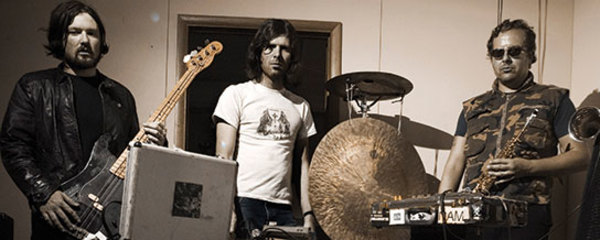
Five years ago, I emailed Wolf Eyes to request some of their records for my college radio show. In the package that erstwhile member Aaron Dilloway sent, wedged between a hand-scrawled note and hand-colored Nautical Almanac and Wolf Eyes vinyl, were a bunch of ads for products from Korg and Roland, likely torn from a music gear trade mag. But what was embedded on Wolf Eyes hardly resembled something made in a crisp and clean studio on the latest pro-audio offerings. Rather, the shrieking vocals, subsonic pulses, and metal-on-metal scrape-squeals seemed like they could only come from one place: a gritty basement (in Detroit? Ann Arbor?) filled with ripped-apart synths, radios, and ghosts of technology past.
Wolf Eyes’ raison d’être hasn’t veered much from those days, but their inimitable sound certainly has gained them a following; their latest, Human Animal (their second LP for Sub Pop, the first since Dilloway departed the band) has got even the most conservative of indie rock hipsters singing the praises of dirty noise. We tapped Wolf Eyes co-founder Nate Young, and current member John Olson, to give us a glimpse into what makes the wolf really howl.
XLR8R: Does Wolf Eyes have a regular studio, per se?
John Olson: No, we’ve got a computer with Pro Tools on it; that’s it. We used to have a studio, but now it’s more just a room… nothing fancy at all. Dread was recorded off the back of Nate’s amp, direct to MiniDisc in one take. [For Human Animal] we laid down almost all the tracks on our home studio, and brought them to [Brendan Gillen of Ectomorph] to help us beef them up.
A lot of people think that what you guys do is sort of random.
JO: There’s nothing random about it.
Is there a goal in mind?
JO: We were like, “We wanna write a slow jam,” so we took some acoustic drum bits and pieces and crab sounds, and we made it into “Rationed Rot.” It’s all homogenized sounds, kind of reorganized.
Did you say “crab sounds?”
JO: Yeah, they were from old Folkways records and sound effects records and things like that.
Do you use a lot of samples?
JO: I wouldn’t necessarily call them samples. It’s more like “needed” sound. We’re not really around crabs and stuff like that, but we’ll crinkle cans to try to get a sound we want. But, like, the basis of the rhythm for “Rationed Rot” is a recording I have of a dog with heart murmurs. But we’re not into it for the environmental or humane things; we just liked the sound.
For the live show, do you look for the sturdiest gear?
Nate Young: [We use] the cheapest stuff possible. We use a lot of Behringer mixers and Radio Shack mixers, and that is actually a lot of our setup: feedback run through a ton of different mixers.
You make a lot of gear, right?
NY: One thing I always get a lot of sounds from in the studio is just an average radio, rewired so that it doesn’t pick up any stations. It just kinda picks up a shortwave signal.
The typical brands you find in other studios in your arsenal, too?
NY: Not really. The fellas have been laying off the effects and the pedals lately, just kinda dealing more with rawer sounds, like tape manipulation and mic’ing pieces of metal. Name brands have kinda dropped off our map [laughs]. I have, like, a DOD delay that… I don’t prefer it–I just think it’s easier. I prefer a nice, thick tape delay but, as far as traveling and just out of utility, I think it’s fine. When we record, we fine-tune it and maybe get rid of standard plug-ins that we’re using for a slap back and put a nice reverb on there or something.
So you do use digital effects…
NY: Yeah, we definitely implement them, just as a utility, and then take them away. And then we’ll go into a studio that has nicer effects, nice tape delays, and spring reverbs and stuff. What else we use is that Bi-Filter from Electro-Harmonix. That’s something we use on the drums a lot to get it real nice and thick.
What’s your favorite musical tool in your studio?
NY: Personally, it’s just my oscillators, my electronics. I enjoy those the most. Though recently I’ve been playing just a spring reverb that’s been extremely effective.
What’s the most important ingredient in a Wolf Eyes studio session?
NY: Probably a liquor store within walking distance.
Busy Signal: Off the Hook

To make it in dancehall, you need an image, a Puritan work ethic, and endless lyrics. But a good catchphrase never hurts. So when you hear “Sound di big ting dem!” just before the riddim drops, you know that Reanno Gordon (a.k.a. Busy Signal) has just commanded your full attention.
On Step Out (Greensleeves), his first full-length album, the 23-year-old runs the gamut from an ode to his mother to tracks with (and for) the ladies, but the focus is on the frenetic songs that first got him noticed. “Born and Grow” is a DJ Karim-produced love song to his native Jamaica that samples Eric Donaldson’s patriotic “Land of My Birth.” Conversely, “Where I’m From” speaks to his country’s rougher elements and corrupt government. But it’s the title track, with its vocal stutter-step over a trancey instrumental and badman lyrics (“Bwoy dis, end up inna bodybag, toe tag/Escape ‘pon bicycle, mi don’t drive Jag“) that has the biggest chance of crossing over to a wider audience.
The album is incredibly polished for an artist with only two years of performances under his belt. The achievement can be attributed in part to his membership in The Alliance–the crew led by the legendary Bounty Killer–whose roster includes Vybz Kartel, Bling Dawg, and Mavado. “[If Bounty] knows that you got a talent and you’re serious about what you’re doing, he will accept you,” says Busy. “He’s [been] there for me throughout my career… like a big brother.” He also counts artists like Capleton and Sizzla as mentors. “They do different music from Bounty Killer, but I try to be an artist that does not really do one topic. It’s dancehall, but at the same time, it’s versatile.”
When asked if he feels that Bounty’s years-long lyrical war with Beenie Man puts him in a precarious position, Busy answers that their battle is bigger than him. “They’ve been doing that before I had any mind of being where I am now,” he explains. But would he respond if Beenie dissed him? “I don’t really compete with my talent. I try to stay focused and do good music so that a wider range of people can enjoy it instead of pointing my song at one person. Right then and there, [that would] make that person’s fans hate me.”
Busy has already found himself in such a situation. Another young upstart, Idonia, has recorded a number of songs aimed directly at Busy. (Ironically, Idonia also has ties to Bounty; the two have even recorded songs together.) “I don’t know that guy… never greet, never meet nowhere,” says Busy of the unprovoked lyrical attacks. “But here’s the thing: [in] Jamaica… the bad mind dem chip in. Whenever you try to make something of yourself, you always have somebody tryin’ to draw you down, to distract you. I try to stay focused as much as possible. Sizzla taught me that, Capleton taught me that. Even Bounty Killer… tells me to stay focused and don’t really pay nonsense no mind. Doing that would have me pinned down beside somebody for the rest of my career.”
XLR8R’s Issue 103 On Newsstands

The December issue of XLR8R (#103) is hot off the printing press, and features our annual roundup of the best of the year. For 2006, Parisian duo Justice tops the list with their distorted disco, James Holden‘s Border Community label reinvents trance, Rub-N-Tug chats it up with 12″ creator Tom Moulton, and a few choice photos of the XLR8R crew crop up from our 100th issue parties in September.
Head over to our magazine section for a full preview of the issue and to read some of the features from it. Once you’ve whetted your appetite, pick up the latest issue, on newsstands now.
XLR8R is available at most major bookstore and music chains, as well as numerous independent record stores and boutiques around the world. For specific inquiries, email us.
Make Your Own Video For The Quiet Life
To celebrate the re-release of the Poo Poodles sold-out Here Comes the Future …The Future is Now, The Quiet Life is announcing their Make A Video Contest! Basically, five songs from the album are currently posted on Quiet Life’s site waiting for no one less than the world’s greatest artist (you?) to pick one and blow minds with a ground-breaking, experimental video.
All of the songs are short in length, so Quiet Life encourages budding auteurs to go crazy with flash, video, animation, stop motion, etc. Deadline is December 15, 2007.
Not only will winners achieve fame and fortune, but Quiet Life is offering some kick-ass prizes too. No, we don’t know what those are yet, which is why we recommend you head over to the site for more details.
Flying Lotus 1983
Flying Lotus is the great-nephew of the sainted Alice Coltrane. Now that I have your attention, dig what this talented L.A. producer is laying down. 1983 is a rare species of cosmic underground hip-hop. Flying Lotus combines Madlib’s affinity for jazzy arrangements and chord progressions, Nobody’s and Daedelus’ psychedelic textural proclivities, and J Dilla’s economical, dusted funkiness. Further, the supremely rich and unusual tones Flying Lotus creates suggest that his great-aunt’s musical talent has seeped into his own brain. Fans of innovative instrumental hip-hop are all the richer for that fortuitous skill transference.
Jean-Claude Vannier L’Enfant Assassin Des Mouches
The arranger for Serge Gainsbourg’s classic Histoire de Melody Nelson, Vannier surpassed his French associate with his own 1972 LP, L’Enfant Assassin des Mouches, which inexplicably remained out of print until its 2005 reissue. L’Enfant emits a cornucopia of compellingly eccentric sounds, both musical and found. It is polymorphously perverse, restlessly style-hopping among psych rock, jazz, funk, baroque prog, musique concréte, and unclassifiable madness. Vannier’s orchestrations and choirs veer between whimsical and menacing, and his flamboyantly dizzying arrangements convince one that L’Enfant has enough fascinating facets around which to base an awesome film-preferably by Alejandro Jodorowsky.
Svalastog Woodwork
On Woodwork, Per Henrik Svalastog plays traditional instruments such as Norwegian zither, ram’s horn, and cow’s horn, and then runs them through computer software programs, coating each with an appealingly odd sheen. What ensues is a peculiarly Scandinavian take on folktronica: emotionally reserved yet not without poignancy; elegantly designed, and fizzing with miniaturist intrigue. Svalastog’s digital processing is so subtle that you never feel like you’re fully in the distant past, nor in the up-to-the-minute present. Woodwork suspends you in a golden mean in which synthetic and organic elements are in wondrous equilibrium-a rare feat.