Jan Jelinek To Release Tierbeobachtungen

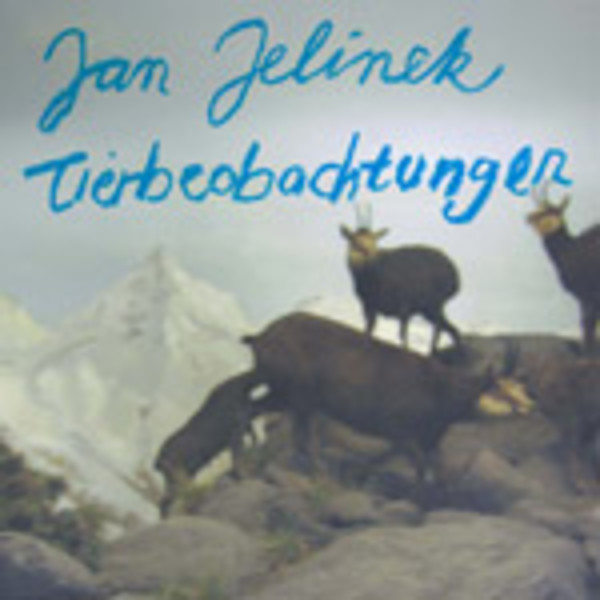
You probably can’t repeat its title fast three times in a row, but Berlin-based “sound designer” Jan Jelinek‘s latest album is definitely worth checking out when it hits the record store shelves. Focused on the animal (which is apparently making a comeback in music) Tierbeobachtungen (animal observations) is all about nature’s free and unbridled aspects. It follows then, that the album is some of Jelinek’s most relaxed and personal work to date, incorporating things he’s learned during live appearances with his trademark minimalist synths, vibraphones, and found sounds. All said and done though, this animal is more a deer standing calmly in the woods than a wild beast, something Jelinek clearly intends.

Tierbeobachtungen is out October 20, 2006 on ~scape.

New At INCITE Online, Oct 3

If you would like to receive weekly updates on our FREE downloads, subscribe to the XLR8R Podcast. iTunes 4.9 or higher recommended.

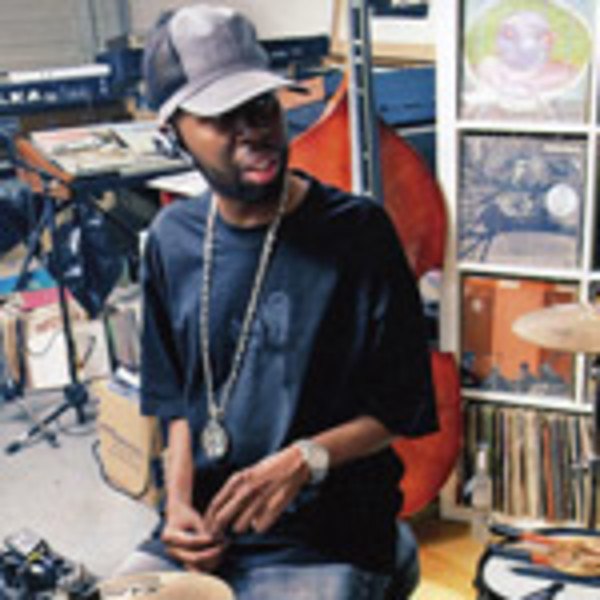
Bizzart – Collaborations with Deerhoof and Soul Junk are a testament to the restless spirit inherent in his music, a sound that straddles the worlds of hip-hop and performance art. he also splits his time behind the mic and in front of students at a private school in Pasadena.

Count Bass D – Nashville, TN is hardly known as a center for hip-hop, but it’s also why he seems to thrive there. He works far outside of the margins of Music City USA, and maybe even farther outside of the bi-coastal hip-hop blueprint.

Trentemøller – His latest release, The Last Resort, will prove to be his true opus. An ode to breakups, the album captures a whole range of emotions in subtle, melodic miniatures; dreamy ambient pieces; dusty beats; deep dub tracks; and driving, groove excursions.

ObliqSound – More than just some tracks inside flashy packaging, Volume 2. of the ObliqSound Remixes is contained a suite of nu-jazz gems reworked by the likes of Matthew Herbert, Osunlade, Mark de Clive-Lowe, and more.

Pit er Pat – The band toured extensively through most of 2005, and for Pyramids, they carried with them the creative momentum that those shows had fueled, recording the music as it came together organically, capturing the sounds at their freshest.

American Expatriots in Berlin

Generations of North American eyes have viewed Berlin as a paradise. The romance was there in the Roaring Twenties, amidst the clatter of glasses, laughter, and brassy horns of the city’s speakeasies and cabarets. During harder times, Berlin’s West became an Eden worth risking one’s life to escape to.

Years after the masses’ optimistic hands took down the Wall, and Loveparade flooded the streets with millions of bohemian revelers, the rent is still dirt cheap, many clubs are open all night long, and nimble artists can scrape by without holding down a “real” job. Paradise, my friend. Paradise.

In the past few years, Berlin has reeled in many American and Canadian artists, DJs, hipsters, and bohos. Techno mavens like Richie Hawtin, Daniel Bell, and A Guy Called Gerald took residence there, along with rapper Fat Jon of Five Deez and post-techno explorers and iconoclasts like Andrew Pekler, Khan, and Kevin Blechdom. Like Los Angeles, Barcelona, and Brooklyn’s Williamsburg district, the media has portrayed Berlin as an enclave for expatriate artists.

But not all of them are simply trend-following lemmings; many North American Berliners moved to the German capital for a change of pace, either financially, socially, or politically. Stewart Walker, the formerly Boston-based minimal techno producer who moved there in 2003, saw the city as a relief. “Somebody told me recently that Berlin is how New York would be if all of the professionals got up and left, and only the artists remained,” he recounts. “That’s a simplification, but it still excites me.”

Hawtin, who has called England, Canada, and New York home, explains that he wanted to reconnect with his European roots and live in a different, but comfortable place. “I left my car three years ago in Canada and traded it in for my bicycle,” he says. “The neighborhoods, people hanging out, walking around–the city is alive, unlike most automobile-driven North American cities.”

Of course, “cheap” is the golden word to many artists seeking to eke out a modest living. Most pay a smidgen of what they might in New York or San Francisco for apartments twice the size.

“I pay more than the average artist in Berlin, because I chose to have a renovated apartment in a nice, tree-lined neighborhood,” says Walker. “But the benefit of Berlin is that you can pay around €200 (about $260) a month for a good-sized apartment. They are rare, but still available,” he notes, adding that they’re often coal-heated. For just €400 a month, techno experimentalist and California native Andrew Pekler is kicking back in a centrally located, 900-square-foot flat with hardwood floors and a balcony.

Walker argues that many of Berlin’s ongoing urban troubles have benefited artists from abroad. “The problems that vex the general population are what allow the immigrating artist population to thrive,” he notes, “[Like] a bankrupt city government, no jobs, too much space, cheap rents, confusion over land rights, etcetera.”

As ex-Oakland, CA resident Kevin Blechdom puts it, “[Almost] everyone is really poor, but are doing what they want to do.”

Paradise, right? But do American artists just up and move, and show up at a club ready for work?

“Europe is pretty accommodating when it comes to accepting artists from America,” says Walker. “I have a residence/artist visa, which allows me to live here but specifically precludes me from getting a job.?But earning money as a performer is allowed. The main requirements are that I maintain health insurance, earn an income, and pay tax on it.”

Pekler applied for, and received, permanent-resident status through Berlin’s Culture Ministry. “Basically, I had to show that I was an artist with professional contacts to record companies in Berlin,” he explains.

Of course, those connections don’t get you health care (which all native and naturalized Germans are provided; outsiders are required to get it themselves). “Germany is quite socialist when it comes to maintaining a social safety net,” informs Walker. “There’s lots of squatters who receive ‘the dole,’ and we always laugh about how, if you’re jobless, you can also get a stipend for each dog you have.”

But there’s more to it than money, despite the scarcity of day jobs and the frequent need to hustle. Berlin’s communities are music- and art-heavy; less the scenester-ruled places that the US offers. “One can participate here and there and yet remain fairly anonymous, without going through the networking vortex that seems prevalent in scenes elsewhere,” says Pekler.

But it doesn’t work out for everyone. Matthew Curry (a.k.a. Safety Scissors) briefly lived in Berlin because he felt artistically encouraged by the city’s “openness,” but much of the music got to him after awhile and he chose to move back to San Francisco.

“I did eventually realize that there was a lot of monotony in the clubs, and the everlasting techno times did get a bit grating,” he says. “Maybe I just missed San Francisco, but I surely noticed a lack of grit and more song elements in the music. Those things missing in the predominant Berlin scene became more important in my music.”

Naturally, barriers still abound for North Americans in Berlin: everything from learning German to enduring long, depressing winters to attempting to create cell phone accounts (companies often demand proof of residency). But where posters of Dubya catch more darts than dartboards do, sometimes they’ve got bigger problems. Drunks (“and Canadians,” Blechdom notes) often hassle Americans for being “ignorant Yankees.”

“My reaction is usually just sarcasm, you know, ‘Ooh, you’re so political!” Walker laughs. “They don’t usually know more than the people they’re trying to insult. I’ve had people tell me with a straight face [that] they don’t need to visit America to be an authority on its problems.”

Perhaps it’s the exception more than the rule, but the city’s Cold War past and old division of East and West is still present in the streets; it’s only been 16 years since Germany was reunified. A few stops on the metro can take you to an entirely different city within Berlin, one of decaying Communist-built structures, a recently restored, 30-foot-tall bust of Lenin, and the “Plattenbauten” on Karl Marx Allee, a famous prefab proletarian housing development designed just like those in Warsaw and Moscow. To many former East Germans, communities were stronger and people were more altruistic during the Communist era, says Walker. “There was no monetary one-upmanship, only friends and family, and work and vacation.”

Those ideas of community haven’t died entirely, though–they’re what folks like Hawtin relocated for: a strong sense of safety and a tremendous feeling of life in the streets. “You go out on the streets, walking around at night, without having to worry about much. Sometimes you are coming home from the club at 5 a.m. on your bike and the streets are still busy with people walking, riding, and hanging,” he texts XLR8R, while sitting in one of the city’s many parks. “It’s just different, and sometimes hard to explain.”

Berlin’s Melt! Festival

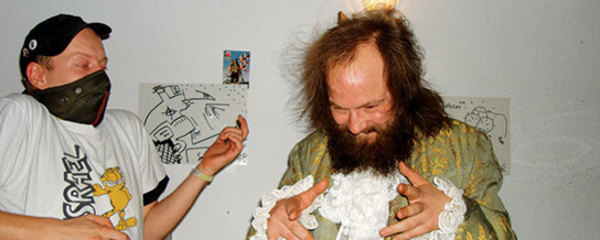
A disused steel-mining facility nearly two hours east of Berlin hosted Intro’s genre-shattering Melt! Festival (July 14-16, 2006). Pop stalwarts Pet Shop Boys competed with the utterly charming duo of Phonique and Erlend Øye–who DJed and sang, respectively. Trail of Dead’s energetic guitars and on-stage mosh-pit antics impressed; Isolée’s set was enough to make Ecstasy obsolete, and Nathan Fake blew crowds away with neon-pink noisescapes and artful machine noise. Repping Deustchland were cutesy German indie band MIA, Beastie Boys-influenced techno rap duo Mediengruppe Telekommander, and the dorky Deichkind, who paired ’90s dance hits with costumes and fire. Late-night lake swimming, bratwurst, and a smoke tempted me away from a wee-hours dance-off with Sid Le Rock and Moonbootica, and I missed the second day. (Friends reported 2ManyDJs and Battles rocked, and Aphex Twin and his phalanx of wheelchair-bound basketball players disappointed.) Designed to please “rock nerds, pop aesthetes, and electro heads,” Melt! proved suitably mind-altering.

Latin Rapper Announces Hip-Hop Scholarship

LatinRapper.com, a popular and hugely comprehensive sight for Latin hip-hop and reggaeton music, recently announced the establishment of the annual Hip Hop scholarship. Latin undergraduates who submit an essay through LatinRapper.com will be eligible to receive the $500 scholarship to apply towards their education. Says the ezine’s owner Dante, “As a college graduate from a low-income background, I understand how even the smallest assistance may contribute to someone’s academic and professional career.” He hopes to see the dollar amount of the scholarship climb in the next few years, as well as he number of essays, in a move to not only improve education in the community, but also to use it towards fueling the careers of Latin artists.

The deadline for this year is 12.00 Noon, Thursday, November 30, 2006
The annual Hip Hop scholarship will be announced during National Hispanic Heritage Month, September 15 – October 15

latinrapper.com

Brooklyn Bodega And Room Service Group Host J Dilla Celebration

Few people are not aware that hip-hop heavyweight James Yancey, aka J Dilla or Jay Dee, passed away this past February of complications from the disease Lupus. Over the last several months celebrations, tributes, and fundraisers have sprung up worldwide to commemorate one of the most important producers in hip-hop and raise awareness about the disease.

Brooklyn Bodega, along with The Brooklyn Brewery and The Room Service Group, hosts another such celebration this fall, remembering Dilla’s life and raising funds to help fight Lupus. Proceeds will go to the Dilla Foundation, which is run by the late artist’s mother.

The event, where you can make requests for any of Dilla’s tracks and also give a shout out to him on a special wall, will take place November 1, 2006 at The Brooklyn Brewery.

brooklynbodega.com

Now Playing At Peepshow: Pier 70 And The Magical Pianos

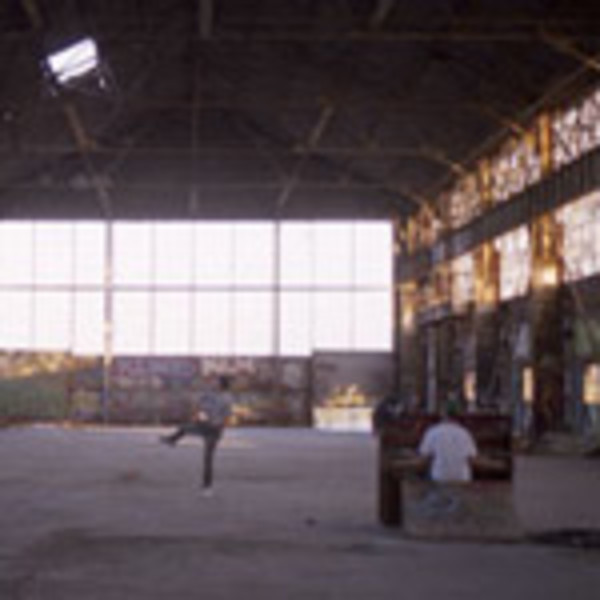
“A shipyard back in the bustling days of industrial San Francisco, now a place for graffiti, drinkin, loungin, breakin stuff, skateboarding, and-more recently-for playing music.”

Photographer Chris Gould discovers that there’s more than just boat parts in abandoned shipyards, then goes on to capture the artwork, swings, debris, and three pianos all found on San Francisco’s Pier 70. What a concert hall that would make!

Only at Peepshow

Tauba Auerbach Exhibition At Deitch Projects

Yes and Not Yes marks the first New York exhibition of artist Tauba Auerbach, and will feature over twenty paintings and drawings centered around the theme of language. Auerbach’s self-proclaimed fascination with this theme has led her to incorporate it in much of her work, examining how verbal sounds relate to the written symbol. Also explored is how those symbols, as Deitch Projects site genuinely asks, “begin to muck it all up?” Head out to the exhibition to find out what’s being mucked up and how.

Yes and Not Yes runs Thursday, October 5 – Saturday, November 4, 2006
Opening reception is Thursday, October 5 from 6-9pm.

Deitch Projects, 76 Grand Street, NY
deitch.com

Steve Bug: Bleeps That Burrow

You know when you’ve got roaches in your apartment and you just can’t get rid of them? Producer, DJ, and label boss Steve Bug is a bit like that–always lurking around the edges of dance music, popping up to drop a bomb from his Poker Flat label (like the dark, crispy distortion of “Shick,” a recent collaboration with Matthias Tanzmann), lay down a DJ set full of devastatingly long fades at Cocoon in Ibiza, or deliver the latest installment of his Bugnology series, software-enabled compilations of minimal- and tech-house. Bug is much more welcome than his six-legged counterparts, but he’s just as indestructible–and impervious to current trends.

That’s not to say the Berliner doesn’t appreciate the finer things in life–got to love a DJ who cites avant-garde Spanish restaurant El Bullí as an inspiration for his music. He also recently moved to a quiet street in Berlin’s upscale Mitte neighborhood and his favorite tipple while working on tunes is… green tea. It’s a bit hard to reconcile this staid existence with his burbling, menacing tracks (like “Smackman,” which anchors the middle portion of Bugnology 2).

Perhaps a bit of quiet is just Bug’s key to holding things down. After getting his start behind the decks at a small Ibiza bar in 1991, he built his reputation in hometown Bremen before releasing his first tracks in 1993; three years later, he started his Raw Elements label. Today, in addition to a constant flurry of DJ gigs and producing his own recordings, Bug runs three successful imprints–minimal/tech-house outpost Audiomatique, deep house label Dessous, and Poker Flat, Bug’s best-known label, with over 70 singles and nearly 20 albums in its catalog.

Witness to the massive changes that have occurred in German dance music in the past dozen years, Bug has the somewhat jaded outlook of a survivor. “After the big trance and hard techno years in the ’90s, clubs got smaller again and people finally opened up to other music again–it was possible to play deep house, house, electro, and Detroit techno in the same set. Unfortunately, a lot of people are not as open-minded anymore; they only want to listen to minimal stuff and everything apart from that is not cool enough for them.” A victim of his own sound’s success? Hardly. Bug may scuttle undercover for a moment or two, but he’s sure to resurface. Get your shoe(s) ready.

Page 3307 of 3781
1 3,305 3,306 3,307 3,308 3,309 3,781