Vex’d: Being Cross Sounds So Good

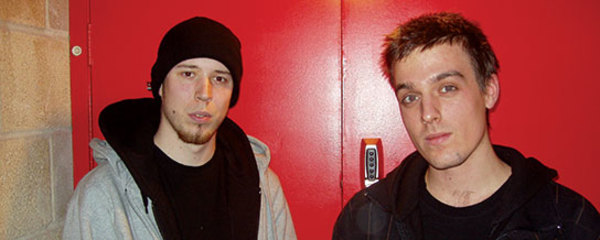
Since moving to London from the cheery (if boring) suburbs of Maidenhead, 26-year-olds Jamie and Roly have been pissed off and broke. You might even say Vex’d. Luckily, such conditions are ideal for making sinister grime tunes, the likes of which can be found on their debut album, Degenerate. With horror movie strings and samples, menacing sine wave basslines and chopped breaks that are the equivalent of a baseball bat to the skull, the record makes the ultimate argument for grime as the music of a generation raised on videogames. (Not surprisingly, Roly is a videogame tester and Jamie used to poach samples from Xenon 2 with his Amiga.)

With a hefty amount of echo effects, dancehall samples and old school bleeps and pops, Degenerate also nods bluntly at a youth spent listening to jungle, darkcore and dub. Jamie, who’s just ducked inside from a freak rainstorm, recalls two of the moments that would eventually shape the Vex’d sound. “[The drum & bass night] Metalheadz at the Blue Note–that changed everything, especially seeing DJ Kemistry play ‘Rings Around Saturn.’ And there was a time Roly and I went to see Jah Shaka playing a dub set. At the time I didn’t know that you could get that kind of buzz out of music that wasn’t at 170bpm. It was so slow but it was so deep. You know when your eyeballs start to wobble because of the bass? It was amazing.”

A love of experimental low-end–and an increasing lack of inspiration coming from drum & bass–eventually led the Vex’d boys toward the dubstep scene, which they were introduced to through tunes by Kode 9 and Plasticman. “Around 2000, we had abandoned the idea of writing jungle, but we didn’t know how to take the influences that had been given to us and make it into something else,” explains Jamie. “Eventually darker garage stuff started to appear on our radar [and it was a sound] that we could relate to. [Dubstep] was just radical, minimal and freeform music.”

Last year, the pair–who met through music and skateboarding at the age of 16–debuted with two twelves, “Pop Pop” and “Lion,” for Bristol label Subtext (which one suspects is their own imprint). The tunes quickly became favorites with the Forward crowd and caught the attention of Mike Paradinas (u-ziq), who conscripted them to join his grime army at Planet Mu.

After months locked in the studio and the July release of Degenerate, you’d think Vex’d would be keen to get out and party, but there’s no rest for these studio soldiers. “I love the variety of [our album],” says Jamie. “I’m pleased with its form. But most of the stuff was written six to eighteen months ago. Dubstep moves so fast and every new record that comes out signals a new possible direction for the music and a new sonic form for people to be influenced by. I just can’t wait to put out some new music!”

Ladytron: Spell Bound

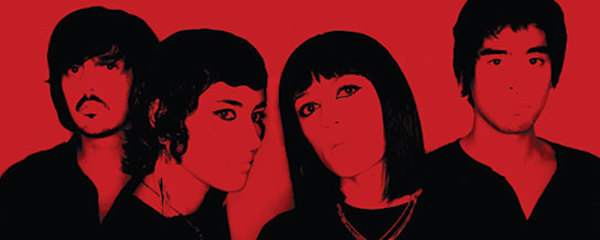
Of all the early praise directed at Ladytron for their new record, Witching Hour, the response that resonated most came in the form of tough love from a longtime friend. Upon hearing the album for the first time, Steve Pross, formerly the manager of the quartet’s now-defunct label Emperor Norton, took founder Daniel Hunt aside and said, “You are now the band you were pretending to be five years ago.” Others might have interpreted this as a backhanded compliment, but Hunt knew exactly what he was trying to say. “I completely understood it,” he says on the line from his Liverpool flat. “I don’t think he meant to discredit what we were doing before–but I don’t feel like we’re aspiring to be something anymore.”

Bewitched
Stood beside 2001’s debut 604 and 2002’s Light & Magic, Witching Hour is a skyscraper. Not only is its production more agitated and alive, but its songs are sleeker, more aerodynamic and better crafted. Rounded out by multi-instrumentalist Reuben Wu and vocalists Mira Aroyo and Helena Marnie, all of whom contribute music by committee, there’s a darker, more menacing bent to Ladytron circa 2005; cutesy tick-tock electro about movie theaters and cracked LCDs has given way to hurricane songs about destruction and screams bleeding through the walls.

Ladytron’s showing increased confidence in its ability, which Hunt says was nourished by spending the majority of 2003 on the road. “We hadn’t really toured properly before we recorded Light & Magic,” he says. “When we finished, we’d become such a monster live that it was just night and day from before–it had become something mean and screechy and dynamic. We’d learnt so much and there was so much we wanted to do. We could’ve toured for another six months at least, but we wanted to crack on with the record.”

More Money, More Problems
Starting the record would be a cakewalk; seeing it through would be another thing entirely. After concluding Light & Magic‘s traveling roadshow with a homecoming gig in Liverpool in September 2003 (their support: a little-known Scottish band called Franz Ferdinand), Ladytron immediately commenced work on demos for Witching Hour. New material flowed readily; within a few months, they’d mapped out the entire record. But by the time they were ready to start recording in April, their ill-fated UK label Telstar had gone into administration. “They put us in the studio but didn’t tell us that this was going to happen. They must have known, so it was kind of an odd situation,” Hunt laughs. “We were like ‘What do we do? Do we carry on recording?’ So we just went ahead. They paid for at least part of it, but we had the fallback position of Emperor Norton in the States, so we were like ‘Well, fuck it. It doesn’t matter.'”

Famous last words. As the summer wore on, it became clear that Emperor Norton was also on the verge of running aground. Island UK had stepped up in Telstar’s absence, so there was never a point where the band was homeless, but that summer was a tumultuous one. Despite being all but mixed by June 2004, Witching Hour was still light years away from being released; although Hunt knew that Ladytron was too well established not to land on its feet, he acknowledges that the band could have faced a huge momentum killer.

It’s a testament to the durability of Witching Hour that all four bandmates remain excited about the record nearly 15 months after making it. “This sounds narcissistic, but I can still listen to it on my iPod and enjoy it,” he says. “I still hear little things I hadn’t heard before.” With the benefit of hindsight, Hunt also acknowledges that the label antics and the resulting layoff might be a good thing in the long run. For starters, it means they’re on solid ground in both North America and Europe for the first time in a while. “Within a couple of weeks of signing to Telstar, we thought we might’ve made a mistake,” he recalls. “We were attracted to the label for all the wrong reasons–they had all these R&B acts on there and we just thought it was hugely amusing, looking completely incongruous on their roster. The main thing is we thought we’d be invited to all their parties and stuff, which probably wasn’t the best basis for a healthy business relationship.”

Blade Runners
With any luck, the extended delay has washed away some of the lazy clichés that have plagued Ladytron since day one. Hunt is eager to finally outrun descriptors like ‘aloof’ (demeanor), ‘asymmetrical’ (haircuts), ‘electroclash’ (meaningless) and, perhaps most inexplicably, ‘Kraftwerk’ (sounds like). On the matter of that last bugaboo, Hunt simply sighs. “Our first single sounds like ‘The Model’, but we recorded it six years ago!” he says. “They are one of the greats, but if you told somebody that we sounded like Kraftwerk and they went and downloaded a bunch of our MP3s, they’d think you were full of shit. I mean, obviously we were named after a Roxy Music song, which would’ve been a more obvious place to look for influences, and Low by David Bowie is probably the closest thing to this record. I think we articulated that here better than ever.”

In keeping with past tradition, Reuben and Mira of Ladytron are doing a DJ tour this month, with a proper full-band tour to follow in the new year. Until then, Hunt’s sharpening his knives in preparation for record number four. Given the layoff, it’s hard to blame him for looking ahead. “[Witching Hour] is the closest thing to definitive that we’ve done, but I think the next one will be even more so,” he promises. “That’s another way the layoff has been good–we’ve got quite a lot of stuff in reserve now.”

Analog Graveyard: The Machines That Populate Ladytron’s Synthetic Paradise.
While heavily treated guitars continue to make a dent in Ladytron’s sound, the band’s studio is still ruled by keyboards. While Hunt claims the band owns at least 20 vintage pieces, he also admits to having lost count somewhere around 1998. Here he talks shop about Ladytron’s studio gear, live setup and recording philosophies:

“Most of the bassy riffs are a Roland SH2 or a Korg MS20. Reuben especially likes sticking his Korg MS10 through Electro Harmonix boxes and fattening them up. For the poly stuff, we used Farfisa organs and Solina string machines–basically the same stuff we’ve used all along, but we probably treated it a bit rougher. We also used a load of the producer’s toys as well–Reuben’s got an ARP 2600, which you can sit around with for a full day trying to get something useful out of and fail, and the next day you switch it on and it’ll automatically make something genius.

“I’ve got this really shit, five-pound, sub-Casio keyboard that I got off this trader; the chords for ‘International Dateline’ were written on that. It’s good to have that kind of gear. The shit toys can end up being quite inspirational.

“Our stage set-up is like Bell Laboratories. It’s hugely complicated and it’s a nightmare for anybody working with us. We’ve tried to rein in the amount of old analog gear we take out live with us just for logistics’ sake–the stuff was breaking down and we had numerous keyboards just burst into flames. On the record itself, we’ve got free reign of course.

“Software synths are fine, especially for composition on a laptop. Once those sounds are down, we’ll always look at alternatives. But sometimes you just end up using [the originals], especially if they’re something basic like a string synth, cause you’re not going to get a different sound out of anything else unless you really want a load of AC hum or crackle. [Softsynths] are so much better now than they were when we did the last record. The main thing is that it’s not the fact that you’re using software or hardware, it’s just making something sound different and not using presets.

“Our approach goes back to the whole Eno/Bowie Low thing–the treatments are as important as the synths. We like to confuse synths and guitars quite a lot–there are some things people hear they assume is a guitar that’s a synth and vice versa. On the last album, there were guitars all over ‘Cease To Exist’ and a few of the other songs, but they were treated in a way that people didn’t recognize them.”

Micromusic.net: Home of 8-Bit

Considering that most people’s exposure to electronic music first comes through videogames, it’s no surprise that micromusic.net, the world’s most active chip and 8-bit music portal, just celebrated its sixth anniversary. Hackers and modders, gamers and musicians meet to chat, post tunes and events and trade bits of software in this vibrant community. Numbering 13,400 members, the site has regional microHQs in L.A., N.Y.C., London, Newcastle, Stockholm, Brussels, Paris, Berlin, Basel, Zurich, Melbourne, Enschede and Tokyo which throw events, run workshops and broadcast radio shows. The benevolent eyes of carl, wanga, ne?mo, and lektrogirl oversee the eye-poppingly colorful interface, which has close to 500 tracks available in its up/download section. lektrogirl stresses the whole site is a “mega group effort,” built on the open-source idea that exchange and giving are profitable for all. Coding suggestions get written back into the site and many users go further by creating tools to help them make the music, converting C64s into 303s and coding trackers for Gameboys. (Microbuilder.com is available for enthusiasts wanting to start their own community.) Those stuck in slowtime can order the Music for Joggers CD, which contains tracks from site members as well as wanga-designed micro-k K-Swiss shoes.

Steve Spacek: Future Soul Flying

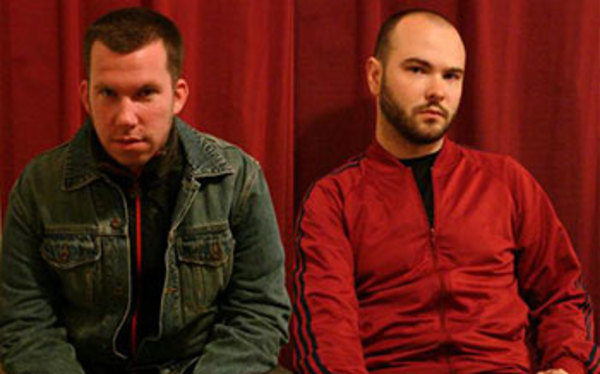
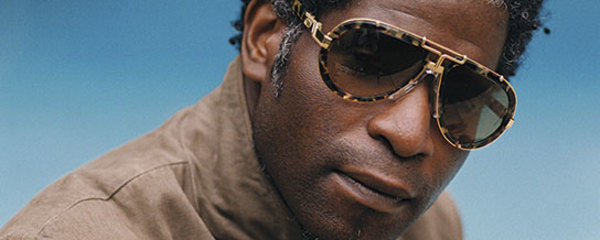
When it comes to musical collaborations, Steve Spacek has led something of a charmed life. From his highly regarded partnership with the band Spacek to vocals for GB and Platinum Pied Pipers, the London-born singer and producer has become synonymous with effortlessly hot future soul. So it’s no surprise that when he hooked up with beat baron Jay Dee (a.k.a. J. Dilla) for a track on Spacek’s first solo album, cutting a classic was kid’s stuff.

“We’ve always respected Jay Dee and loved what he’s done,” says Spacek. “He went through some tracks he’d been working on, and when he landed on [“Dollar”], he knew that was it–he just looked up at me and stopped.”

The resulting track sets the tone for Space Shift. When Spacek sings “Ya gotta let your dollar circulate,” he’s talking actual blood, letting that American optimism run through his veins and percolate out like a 21st century Curtis Mayfield, ready to “move on up.” It’s a change in the weather from the minimal London rain of Spacek’s critically acclaimed 2003 album Vintage Hi-Tech to the sunny LA sci-fi soul of Space Shift.

“In London it’s overcast,” says Spacek, now transient between London, LA and Australia, where his new baby lives. “And it’s underground–literally, you lock yourself away in a studio with no windows. Here, the door’s open, people are coming in and out all the time, the breeze is coming through.”

That cooling, unifying breeze floats through Space Shift, from the West Coast bounce of “Thursday” to the hotted-up futuristic Afrobeat of “Three Hours of Fun” (produced by bandmate Morgan Spacek). But besides the American influence–Mayfield, Donny Hathaway–on Spacek’s vocals and MPC soul sounds, the singer brings a UK flavor to Space Shift with his decidedly open-minded approach.

“In America, people tend to say, ‘Oh, I’m into this [genre] now,'” says Spacek. “The way I would listen to music in the UK, I think it’s more liberated. People who’ve pushed boundaries [in America], like Timbaland, [are those who] go down different routes–music is perceived [that openmindedly] in the UK on a daily basis.”

With tracks already under way for a new record from Spacek (the band) and Steve continually meeting new potential collaborators, expect to hear more and different sounds from the Spacek soul massive in the near future.

“We used to think that there was this niche we had, but in that niche was a whole universe,” he says. “But there are places I haven’t even gone to on this record that I wanna explore. And music is infinite.”

Philip Smart In The Studio

It’s hard to imagine any movement slipping through the cracks in New York, yet the story of reggae/dancehall here remains largely undocumented. Colored with artists like Sister Carol, Shinehead, Scion Sashay Success, Sammy Levi and, yes, Shaggy; labels like Wackies, Jah Life, Wittys and Mr. Doo; and soundsystems like Downbeat, King Addies and LP International, it’s a legacy somewhat blurred by the dual citizenship of many of its practitioners.

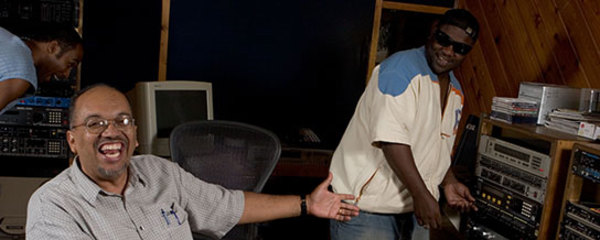
One local institution whose clout cannot be denied, however, is Philip Smart’s HC&F Studio, arguably the most significant and longest-running reggae studio in the US. Located just outside of New York City in Freeport, Long Island–the home of Flavor Flav–HC&F was founded in 1982 as an extension of a local trucking business run by relatives of Smart’s (their first initials were H, C and F). The studio was built with the help of the band Monyaka, who would score an unlikely international dance hit with the funky, R&B-flavored “Go Deh Yaka,” the first song ever recorded at the studio. Brooklyn-based producers like Jah Life and Whitfield “Witty” Henry would come to rely on HC&F, with major Jamaican stars like Horace Andy, Tenor Saw and Cocoa Tea following local artists into the vocal booth. Barrington Levy’s “Murderer” was recorded here, as was the late Garnett Silk’s haunting “Retreat Wicked Man,” along with nearly every single that broke dancehall into American radio in the early 1990s: Shabba Ranks’ “Mr. Loverman,” Supercat’s “Don Dada” and Shaggy’s “Oh Carolina” and “Boombastic,” to name a few.

But the story of HC&F begins in Kingston, where Smart grew up with Augustus Pablo in middle-class Havendale. After collaborating on the writing of Jacob Miller’s “Baby, I Love You So,” he followed Pablo to King Tubby’s, where he would witness the sessions that would ultimately comprise the legendary King Tubby’s Meets Rockers Uptown.

“I’d be there every night after school, watching,” Smart recalls from HC&F’s wood-paneled Studio A. “Until one day Tubby get up and say Gwaan and take the vocals up.'”

Taking the name Prince Philip, Smart soon found himself mixing tracks like Johnny Clarke’s “None Shall Escape the Judgment.”

“Producers felt comfortable working with me so Tubbs could go on to the other business like building amplifiers. Eventually, Tubbs respect and trust me enough he gave me my own keys–he never trust nobody like that before, not even (Prince) Jammy.”

A thirst for new techniques led Smart to New York, where he took a course in audio engineering at Electric Lady Studios. “They wasn’t really teaching me much I didn’t already know but the experience of being in New York led me to bring back some new ideas to Jamaica. This was the time when we brought in the sound effects–thunder, chains and gates closing, the oscillator tunes.”

Relocating to New York for good in 1976 to attend the now-defunct School of Broadcasting and Announcing (he would go on to host WNYU radio’s Get Smart for nearly 20 years), steady work from Brad’s Records in the Bronx convinced Smart of a need for a 24-hour reggae studio in New York.

Ultimately, HC&F would find its niche at the dawn of the post-Sleng Teng computer production era.

“We built drum patterns for a lot of the sessions then so producers start to come here for that,” Smart recalls. “Nobody was worrying about production credits–we were more interested in developing a sound. At that time it was all about one love and unity. We just wanted to hear some reggae played on WBLS.”

The fruits of this period can be heard on 5 Borough Fire, a recently issued compilation on HC&F’s new in-house reissues label, Street Platinum & Gold, which features Smart’s sparse, bass-heavy productions for Scion Success and Nicodemus, among others.

Today the studio remains as relevant as ever: Hard Drive, Headache and All Out are among the riddims it has issued recently through VP and Greensleeves. Elephant Man, Vybz Kartel, TOK and Wayne Wonder, who recorded the bulk of his album No Holding Back here, are all familiar faces.

Like Tubby before him, Smart continues to mentor younger engineers and producers–alumni who continue to use the studio include Sting International, Chris Goldfinga and Eric “Big Jeans” Delisser. He’s also adapted with the times, creating distinctive takes on today’s manic dancehall riddims like the synth-heavy Project X, issued last year through VP.

“Dancehall represents originality to me in terms of music production, maybe because I have done so many decades of drum and bass,” Smart says. “But I think the original era of reggae needed to be represented.”

Nego Mocambique: Sweating It Out

With only one self-titled record to his name (on the Segundo Mundo label), inventive Brazilian producer Nego Moçambique (the alias of 32-year-old Marcelo Martins) has already played at Barcelona’s Sonar festival, Montreal’s MUTEK, and in Paris and London. But he didn’t have to travel that far to catch DJ Hell’s attention. The head of Gigolo Records saw Moçambique live in Rio last February, and was blown away.

“He sounds like a mixture between Kraftwerk and Green Velvet with a Brazilian touch,” Hell told local newspaper O Globo. “He uses very few things on stage, but makes an incredible sound and has tremendous presence. Everything he played in two hours was excellent. He can be big, if he wants to.”

“I noticed this guy, clearly a foreigner, paying attention,” says Moçambique, when asked about the gig. “Suddenly, my mixer malfunctioned and this person not only showed me what was going on, but fixed it. I thought, ‘What a nice gringo!’ Turns out it was DJ Hell. We exchanged emails and we have been talking about doing something for his label. It’s funny because he liked exactly the songs I didn’t think were the best ones.”

A music student, Moçambique never considered becoming a DJ. Living in the country’s capitol, Brasília, he wanted to create his own sound. “Because Brasília is far from the so-called Rio/São Paulo cultural axis, things were more amateur and I had more liberty to experiment,” he explains. “DJs have gotten really specific [these days]. This segmentation has transformed styles into ghettos.”

Using only hardware, Moçambique started producing with a Boss DR-5 drum machine and an Emu Morpheus synthesizer. These days, his live PAs are achieved with an MPC 1000 sampler, a Virus C synthesizer and a Fatman valve compressor, all plugged into an eight-channel board. The thing that hasn’t changed is his sound, which evades genre classifications even as it references black music, baile funk, Afrobeat, electro, house and breakbeat. In his propulsive, minimal tracks, Moçambique samples everything from Gilberto Gil to Barrington Levy and Prince, but never in an obvious way.

“I say I make funk with a Brazilian accent, but there’s also other influences,” Moçambique offers. “When I’m making music I try to balance something for every mood, stuff that everyone can dance to.” Instead of trying to emulate whatever is the newest trend abroad, he fuses his own references and makes his own parameters. “Music is made of what you live,” he declares. “You have a daughter, you’re crazy for your wife, the day is beautiful, you’re feeling good…I make music about that.”

Jeremy Fish: Wild Things

Jeremy Fish inhabits a world of rats shaped like grenades, trees with breasts and skull-shaped hot air balloons. That is to say that his art mixes violence and vice with resolutely cute elements. Highbrow stuff this ain’t–Fish’s work is a direct reflection of his love for nature, roadtrips, dirty jokes, women and, above all, skateboarding really fast down San Francisco’s steep hills.

Fish grew up in upstate New York but headed west in 1994 to attend San Francisco’s Art Institute. Nurtured by the close proximity of beautiful vistas, gut-busting burritos and peep shows at the Lusty Lady, he refined his bold, confident pen strokes and his repertoire of skulls, bunnies and camper vans with wings. His knack for creating self-assured, iconic images landed him a job as art director at Think Skateboards. It also led to a monthly illustrated series known as “The Big Stupid” for skateboard bible Slap Magazine; the project found him collaborating with Andy Howell, Bigfoot and Pushead, among others.

When he’s not helming his “top secret” Silly Pink Bunnies gang–whose logo, a bunny with a shaka handsign for a face, is festooned all over the Bay–Fish keeps super busy churning out paintings, illustrations, sculptures, toys (his plastic bunny van is available at strangeco.com) and eye-popping decks for The Unbelievers, a company he co-owns with skate rogue Scott Bourne. Upon the release of his latest endeavor, a book for Upper Playground called I’m With Stupid, we decided to ask Fish a few questions. We found him in the Zurich airport hungover from fondue and Schnapps, but he took the time to give us a few of the quick and mysterious quips he’s known for.

XLR8R: What’s the last great book you read?

Jeremy Fish:Hell’s Angels by Hunter S. Thompson. It rocked. I heard they kicked his ass afterward. I don’t read much. It hurts.

If you could have a superpower, which one would you want and why?

Super “show me your boobs guy”: the overwhelming superpower to prompt women of all ages to display their breasts in said superhero’s general direction.

What is your favorite music to make out to?

The ocean.

What’s the best skateboard trick you can do?

Ruining my body.

What’s the most important thing you learned in art school?

Talking shit, ignoring art kooks.

Do you feel like art school helped, hurt, or had no effect on the art you make?

It helped my work ethic, and hurt my view of art, artists and the formal art world.

What’s your favorite thing going on in skateboard deck design right now?

Matt Irving from Delphi Collective and Todd Bratrud (Consolidated/Burlesque Design) pretty much. Chris Wright is also amazing.

You live in the Bay Area so you must have some good slang. What are you known for saying all the time?

Skin up, nice one, anything.com/whatever.

It appears you like road trips and camper vans. Tell us a good road trip story.

I once drove a 30-year-old van around the country with my dad. I took him to North Dakota, which was his 50th state, and got a photo of him holding up the five-zero handsignal in front of the state sign. I love driving around the U.S. I try to do it every other year or so.

What are you really into drawing right now?

Animals. Rival animals that by nature oppose each other. Predators and shit. The sheep and the wolf, the worm and the bird and so on. But they are pals–promoting romance and shit. And some skulls. They’re scary.

Throwing the goat, flipping the bird or peace sign?

Flipping the bird with all four paws.

What is your favorite medium?

Pen and paper. Micron pens and Bristol board mainly.

What’s the biggest hurdle you’ve had to get over in your career?

People in my life. People who can’t support me and what I’m doing. This is a pretty lonely road.

What is the idea behind The Unbelievers and how did you come up with the name?

My partner Scott Bourne came up with the name. It means believe in nothing. Don’t follow what you are told, don’t be a sheep. We are a small skateboard mega-corporation. It’s a lot of fun. Skateboarding is supposed to be, I think.

What’s your favorite secret spot in San Francisco?

The Rite Spot…but please don’t go there.

How do you feel living in San Francisco influences your art?

Infinitely. Between the sick-ass psychedelic hippie heritage, the foundations of modern street skateboarding, the hills, the beach, the park, my friends, Fecal Face, Upper Playground, medicinal grass, my little shack in the avenues and all the amazing women that are probably somebody’s girl.

Name one piece by one artist that has had a profound effect on you and why.

Everything by Will Barras. He’s an amazing illustrator/painter dude from London who works in a real assembly line technique, making lots of pieces in the time it takes to make one. He’s really unique.

What was the initial concept behind “The Big Stupid” series that you did for Slap Magazine and how did it change over time?

I wanted to make a comic that had to do with skateboarding with little to no text. I also wanted to collaborate with other artists I admired. It just got weirder, and after three years they cut me off. I still love Slap and Mark and Joe.

What movie character do you most identify with?

The Dude. Jeff Lebowski [from The Big Lebowski].

What are some of your upcoming projects?

I am working on some animation projects, a shitload of art shows and as much traveling as I can manage. I am also working on skinning up the biggest I’ve ever skunned. I also plan on working myself to an early grave, as I really love my job.

Assassin: Taking Aim

Jeffrey “Assassin” Campbell is a leader of a new generation of Jamaican dancehall artists who are hoping to elevate the genre by providing music with more lyrical depth.

“I try to maintain a certain level of integrity in the material,” says Campbell from his home in Jamaica. “It is not all about the frivolous dancehall. We try to add substance to the mix rather than just all hype and entertainment.” As in the States–where thug posturing in hip-hop has become a tired cliché–Jamaican dancehall’s obsession with guns, violence and homophobia has threatened to stunt its growth.

Determined to flip this script, the 22-year-old deejay brings a conscious vision to his recent full-length debut, Infiltration, the first of a multi-record deal he signed with VP and Penthouse Records. Tracks like “Free at Last” echo themes found in classics like Peter Tosh’s “400 Years”; using Martin Luther King’s famous phrase as a jumping-off point, Campbell says his song gives voice “to the journey of black people.”

Campbell’s own path hasn’t been easy. Growing up in Papine, Kintyre, a town east of Kingston, he believed that getting an education was the key to escaping the gang life that impacted many in his community. After attending Kingston’s Camperdown High School, he planned to study journalism at the University of West Indies. While at Camperdown, he developed the talent that would earn him his nickname. “The name came from being involved in lyrical battles in the lunchroom,” he explains.

The journey that would take Campbell beyond the lunchroom began in school, when he gave a song to his friend Briggy, whose uncle happened to be Spragga Benz. Spragga used Campbell’s lyrics for his hit “Big Up All Di Shotta Dem.”

Encouraged by his success as a ghostwriter, Campbell expanded what he calls his “recognizance mission” after graduating in 2000. He hooked up with esteemed producer Donovan Germain of Penthouse Records and charted the 2002 single “Ruffest and Tuffest.” Having experienced regional recognition, Campbell is now ready to extend his operation worldwide.

Although he still plans to attend university, his focus with the release of Infiltration is to get his voice heard, and to help dancehall evolve. “On this debut album, we’ll show we have the potential to move forward from this stage where we are at now,” he declares.

Page 3407 of 3781
1 3,405 3,406 3,407 3,408 3,409 3,781