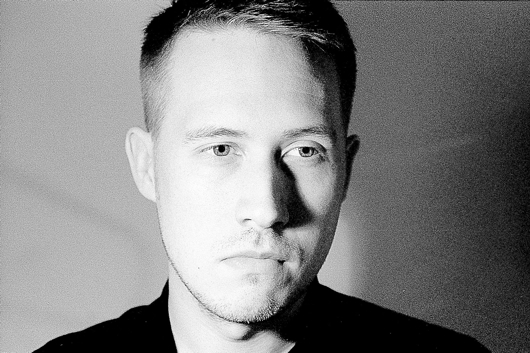
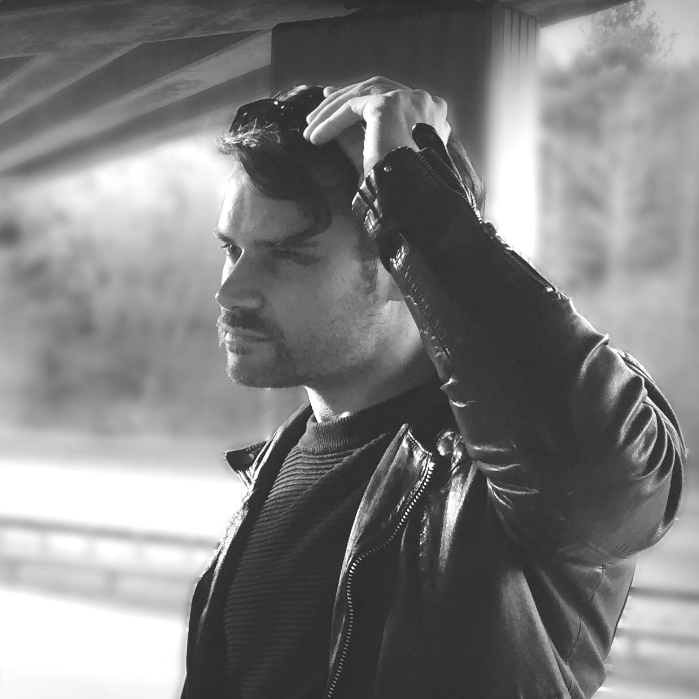
The great outdoors plays a big part in the music of New York’s Evan Shornstein. As electronic producer Photay, he fashions meticulous tracks loaded with field recordings made in the wild and earthy percussion. They’re features that throw his otherworldly machine sounds into sharp relief, and contribute to a highly original sound that’s found a home on highly regarded labels Astro Nautico, Ninja Tune, and Infinite Machine.
Shornstein grew up in the rural seclusion of the town of Woodstock in upstate New York and became hooked on IDM, techno, and ambient at a young age. He was desperate to escape the countryside and after studying music composition at college, he moved to Brooklyn, NYC. Yet after experiencing the stress of the urban sprawl, Shornstein began to miss the quiet he’d left behind. This friction between the contemplative natural world and the synthetic noise of city life has become a feature of his music, with its pleasing, unexpected contrasts.
His productions, with their coagulations of live drumming and metallic clanks, and collisions of jazz chords with abstract reverberations, reflect the dual parts of his personality.
After releasing his self-titled debut album in 2012, Photay caught the attention of Brooklyn’s Astro Nautico. His EPs for the label, Photay and Sadie, got him noticed. After remixing Sarathy Korwar and Jordan Rakei for Ninja Tune, he’s released his latest, most high-profile record through Astro Nautico.
Onism takes its title from John Koenig’s concept of onism, or the “frustration of being stuck in just one body that inhabits only one place in time.” It’s clear that Photay would prefer to be in multiple locations at once from the intriguing mixtures in his music. Album track “Inharmonious Slog” is a fresh assembly of bright analog riffs and disco rhythms, while “The Everyday Push” melds outlandish synth modulations with touches of African and South Asian instrumentation, and “Bombogenesis” is skewed, deliriously colorful house. Photay’s certainly going places, as we find when we talk to him about early influences, leaving and returning to Woodstock, and getting more into club music.
What was your route into electronic music?
My very first memory of electronic music was in a dance company in my elementary school. I was eight or 10 at the time. The teacher was playing some remixed traditional Indian music. My parents caught wind of my enthusiasm for it, and they were trying to find a good electronic CD to buy me. They spoke to a lifeguard at the local pool we went to. He said, “You should get him The Altogether by Orbital.”
Were there others who shared your enthusiasm for electronic music at that time, or did you feel like an outsider?
Growing up I didn’t know anyone else who enjoyed this type of music. My friends and peers in early grade school despised it. At the time, this didn’t phase me at all. I was convinced that everyone should know about it and everyone should love it as much as I did. I kept hyping the music and trying to play it for my friends. I remember riding the bus to school one day in like fifth grade, and insisting that my friend listens to my new favorite song—which just so happened to be an eight-minute aggressive techno track. He was not hyped about it, but in retrospect, I commend him for listening through.
What was the moment you felt confident in your productions?
I was turned onto the other IDM greats at the time, in the late 1990s, early 2000s, such as Squarepusher and Autechre. I was listening to all that growing up, but it wasn’t until about seventh grade, so probably age 11 or 12, when my parents got me two turntables and a mixer. That was the first time I started recording things. I was scratching, doing turntablism, with a digital recorder. I was able to record myself manipulating breakbeats. Eventually, I got my first Mac computer and started to experiment with different software. I tried all the major DAWs and took a big liking to layering. Whether it was a cohesive song or not, I was getting into the freedom of infinite layers.
The first release under the name Photay was the first confident thing I put out on my own. I’d say that was the first thing I packaged up in a cohesive form, and that I was ready to put online. That was my sophomore year in college. Before that, it was all drafts, and things I showed to friends, but I never considered until that year packaging it up and putting it out, calling it an LP.
What do you use to produce your stuff—analog gear, soft synths, or a mix of both?
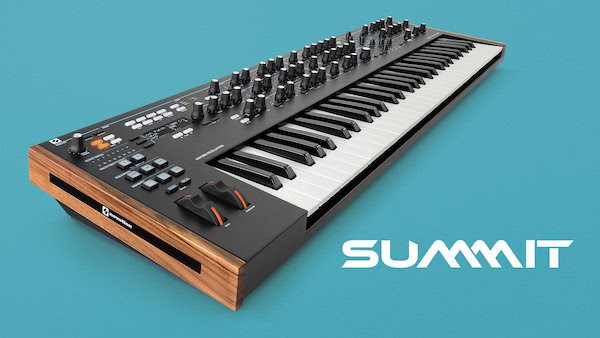
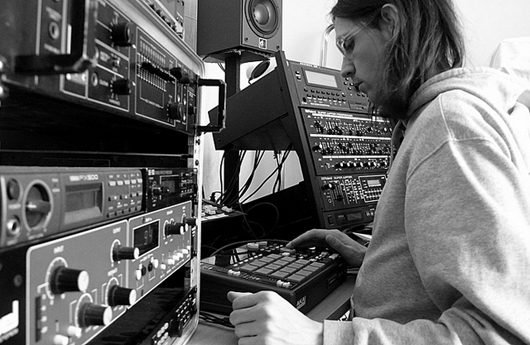
I use Ableton as the foundation for all my work. It helps me organize ideas. I don’t watch a lot of tutorials or anything, so a lot of it is guessing or instinct. Over time I’ve incorporated more and more physical gear. At the moment, I use a Korg Minilogue, Korg MS-20, Prophet 6, Electro-Harmonix Cathedral Reverb, OP-1, and field recordings. I’m not a purist by any means. I like working inside and outside of the box. One of my favorite synths is Ableton’s stock “analog” synth. It’s so simple and so easy to use. I like a healthy balance of analog and digital.
What are your other favorite synths or machines? What makes them special?
My favorite synth that I currently own is the Korg Minilogue. It’s funny because I bought the Prophet a few months after and although the Prophet is very special, I end up using the Minilogue more. It’s efficient and simple. I have a lot of success starting ideas quickly and following through. It’s also convenient to travel with on tour. Recently, I’ve also been quite enamored with this little “Realistic” (Radioshack’s early analog synth/audio brand) reverb unit that my friend Phil Moffa gave me. It’s a nice little springy reverb, but I use it as overdrive, running audio into it too high and hot. Beyond all synths and machines, I’m currently most fascinated with natural reverb. I’ve been very inspired by Paul Horn’s “Inside the Great Pyramid” and “Taj Mahal.”
What state of mind do you get into when you make music?
Best case scenario, I lose track of time and the constant dialogue in my head disappears. Occasionally when using the computer, I have this very slight feeling of astral projection. For instance, when I’m really in the zone working, my mind picks a physical location (typically somewhere I’ve been before), and I sort of subconsciously explore it. Looking around, taking a tour, surveying the landscape. I guess it’s sort of like one side of my mind fidgeting, while the other is obsessing over a synth patch or a chord progression.
Are there any particular techniques you like to use?
I often write melodies by soloing in a deliberately sloppy manner, accidentally striking neighboring notes and jumping octaves. Then I go back, fine tune a bit and layer the line quite a lot. If I’m lucky, I have my chorus melody.
I also tend to combine multiple songs I’m working on into one. I’ll drag an element from another song I’m writing and drop it into my current project. Often a helpful way for me to get through a creative roadblock.
You’re from Woodstock in rural upstate New York originally. Has the countryside and nature of your life in the town impacted upon the music you make?
I grew up in Woodstock and went to college right outside New York City. I’ve been in Brooklyn ever since. When I was younger, I always wanted to go to the city, to escape the folk music and classic rock culture of Woodstock. But after being exposed to the city, it’s a place I go back to, and I draw a lot of influence from the quiet. Onism is 50/50 of my influence from club culture in the city and my appreciation of the quiet upstate, its small details, and nature.
“I go through phases where I get really excited, I overcommit myself and leave little time for breathing. I think this is mostly a result of being over-stimulated.”
What do you like about the great outdoors? What does it offer in contrast to city life?
The great outdoors forces me to slow down. I go through phases where I get really excited, I overcommit myself and leave little time for breathing. I think this is mostly a result of being over-stimulated. Spending time outdoors in nature never fails to bring me back to earth (no pun intended). The silence, the scents, the air, it’s all humbling and inspiring. I love hiking and camping for this reason. You realize how vulnerable you are as a human. Whatever food and water you pack is your lifeline, and you have to ration. You hear a rustling in the leaves or an animal howl in the night and your heart stops. It’s terrifying, and it gives me a never-ending sense of wonder and the unknown. I find that refreshing in an age where we have access to oceans of information at our fingertips in matters of milliseconds, 24 hours a day.
Do you put field recordings in your music?
Yes, more subtly on this record. On “The Everyday Push,” there’s a field recording of crickets on the Route 1 highway that curves around the California coast. It’s subtle on the track, literally just like a frosting to cover up the digital silence. For me, there is a personal memory attached to the recording, which adds a depth to the track. Natural sounds keep the track from feeling sterile or stagnant. I use a lot of convolution reverb, reverbs modeled after real spaces. Instead of using blatant water, or thunder, it’s more like I’m running a lot of sounds through the same sonic space and visualizing a landscape or one scenario.
Have you had any strange or interesting experiences while out gathering field recordings?
Great question! A few years back, my friends and I set out to explore an abandoned, decaying military base on this island along the Hudson River. We stumbled upon a creepy single room bunker with an amazing dark reverb. I insisted that we all sing a giant chord together. I love this recording so much. I’ve used it in about four different songs I’m writing currently.
Halfway through writing my LP, I made a little rule that I would only work on the piece “Storm” during actual storms or dramatic weather. I was working on the piece one day upstate during a heavy wind storm. As predicted, we lost power as the wind gusts strengthened. As my speakers powered down to silence, I immediately noticed an eerie sound outside in the distance. I grabbed my field recorder and ran outside. This eerie sound was a cacophony of a dozen or more sirens emanating from police cars and fire trucks. They were coming from all different angles as well, speeding through little backcountry roads. This recording is at the end of “Storm” and quite buried in the mix. I just gave a listen to the original recording again while writing this, and it brought me right back to the eerie essence of that day.
What else have you sampled and put in your music?
On my first self-titled EP, I sampled the GSM cellphone interference sound at the very end of “These Fruits, These Vegetables.” In the beginning of “Illusion of Seclusion,” I sampled the first few cellos of an orchestra tuning up. I sampled a bunch of fireworks on “Astral Projection,” mixed with a broken tape recorder attempting to play the Apollo 13 soundtrack. On my very first self-released album 1st, I sampled the buzz created by my finger touching an auxiliary cable on “Impedance.”
“The title is a meditation for everyone, but also for myself, it’s something that comes and goes, so it’s a nice reminder.”
You named the record after the concept of onism. What is about that idea that interests you?
“Onism” is a word I came across after the LP was finished that perfectly summed up my frame of mind for this record. It’s that battle for being present where you are, rather than being drawn to another place. Whether it’s social scenarios or visiting another country. Over the course of two years making a record, things change in your life, you might move around a lot. In this particular case, there was some wanderlust and some energy to get up and travel again. The record stays there as an artifact of time. No matter what changes, the record is still there. If I’m unhappy with living in New York at the moment, at least there are these tracks I’m working on that are going to follow me around and give me a sense of ease. It’s that vicious cycle of romanticising the grass is greener, in no matter what place you are. The title is a meditation for everyone, but also for myself, it’s something that comes and goes, so it’s a nice reminder.
How much live instrumentation there on the album?
It’s a bit of a combination actually. There’s djembe African drum, live balafon, the marimba instrument from West Africa, that’s on “The Everyday Push.” My buddy Jaden who I studied with, he plays saxophone all over the record. There’s live cello.
Are you musically trained?
I did have drum lessons but it was less traditional. I learned to read music, but I had an amazing drum teacher where we would just sit down to play for an hour non-stop. Drumming has become a very natural thing for me. The drums on the record are a combination, some are programmed, some are hand drumming, or drumming on different surfaces and then recording it. Actually, a couple of recordings are from a trip I took six years ago to Guinea when I was studying hand percussion.
I studied music theory, but I would say when I’m making music, the technical side is turned off in my head. A lot of my teachers were pushing me into more traditional aspects of music. In retrospect, I appreciate that hugely.
There are strings on “Bombogenesis”…
That was an old buddy of mine as well. I had wanted to work with strings for a long time, and that was a session with just one player. There are samples: the track “Outré Lux” has clarinets, not necessarily sampling another record but an orchestra sample pack. I like recording my own sounds, so there are some clarinets with processing, reverb, and whatnot.”
I can hear funk and jazz in your sound in addition to the more overtly electronic aspects. Are those forms of music an influence?
Definitely, it’s nice that you hear that. I’m a drummer at heart, and my favorite stuff to play when I was growing up was breakbeat-oriented funk. A lot of 1970s stuff, and the hip-hop that sampled those breakbeats. I was influenced by those patterns. As for jazz, the track “Balsam Massacre” for instance combines industrial sounds with jazz seventh chords. It adds a familiarity in the midst of the more experimental production.
“It goes back to my base influence, Aphex Twin. Some of his music’s really scary, even the drum sounds are really menacing, but there are these fluffy little melodies on top. That juxtaposition really stuck with me.”
There’s also a suggestion of Daedalus and other playful producers in your sound.
Absolutely. I like the playfulness. It goes back to my base influence, Aphex Twin. Some of his music’s really scary, even the drum sounds are really menacing, but there are these fluffy little melodies on top. That juxtaposition really stuck with me.
The album mostly skirts the dancefloor but “Bombogenesis” is a hint that you also like club music. Is that another aspect of the Photay sound that you’re keen to explore?
It is. For a while, I was battling with a growing interest in club music, but wanting to keep integrity within a sound. I had a lot of friends who were switching up their sound drastically from hip-hop to straight up club-formatted stuff. I love DJing and I’m a huge fan of techno, house, and disco. For this record, I didn’t want to deny those influences, but I also wanted to continue building the arc of a sound.
On “Bombogenesis,” the classic references to techno or house are there. Over time I’m starting to implement that more and more. I’m starting to feel more comfortable being blatant with it, just going for it. Another thing I’ve been doing is making some dubs of tracks. I think I might create a couple of extended club edits of the tracks where they’re more stripped down to have a more functional use.”
Are there other Brooklyn producers you feel an affinity with?
Yeah certainly. First and foremost, a lot of my friends I went to college with, we ended up collaborating and heavily influenced each other. My buddy Ari Finkel who goes by the name Dali Vision, he does very experimental stuff, he’s always exposing me to the farthest end of the avant-garde. The record label I work with, Astro Nautico, they release a lot of music from Brooklyn-based artists, like Time Wharp.
What’s coming up?
There are quite a few remixes, a couple that are on their way out in the next month or so. I’m doing quite a bit of touring and I just got off a week supporting Bonobo in the States, which was great. This Monday I set off on a North American tour, for the west coast, and a bit of Canada, and then off to Europe in October and November. And working on a lot of music. It’s an exciting time.”