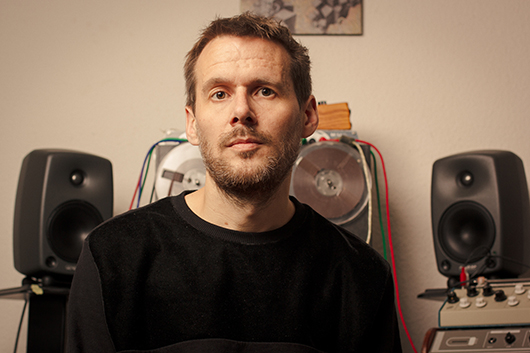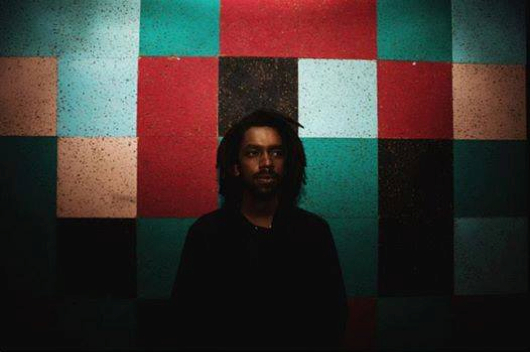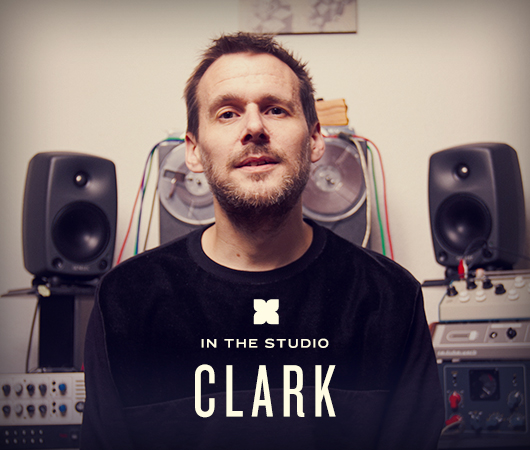
When listening through his extensive discography, Berlin-based English producer Chris Clark appears to be a prime candidate for XLR8R‘s ongoing In the Studio feature series; all seven of his albums seem like they’re absolutely brimming with hand-crafted original sounds, intricately processed synth patches, and all manner of hallucinatory effects processes. And that includes Clark, the artist’s eponymous new LP for Warp, a confident record which finds its creator returning to the gritty dance music of an album like Turning Dragon and forging a newfound, techno-friendly space with those ideas. However, Clark’s way of discovering that space, not to mention excellent lead singles like “Unfurla” and “The Grit in the Pearl,” was counter-intuitive to the usual In the Studio feature: he abandoned his cluttered Berlin HQ, sequestered himself in a cabin in the English countryside, and only brought a few necessary pieces of equipment with him.
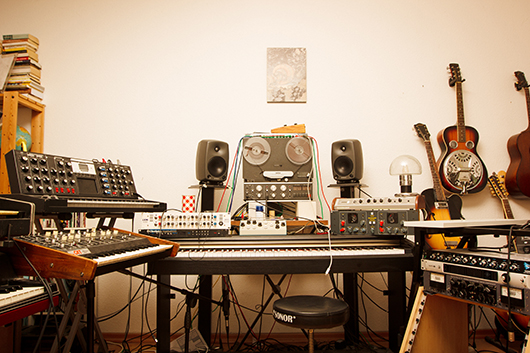
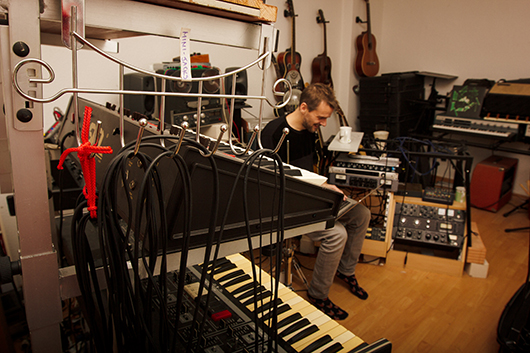
Some could view Clark’s recording method as a refinement—or, as he puts it, “less is more”—while others might think of it as a waste of perfectly good gear. Truth be told, the guy has a ton of machines, trinkets, pedals, and instruments scattered around the studio connected to his apartment in Prenzlauerberg, which is where our photographer went to shoot, but little of it was used on Clark. And after our conversation with the busy producer, it was soon made clear that he uses his collection very sparingly in general. That dichotomy became a large part of this interview, as he explained why he whittled down his equipment for Clark, how he feels about fetishizing gear, the pros and cons of software versus hardware, and what processes he prefers to simply recording any of his coveted analog synths direct to tape. There’s still plenty of talk about compressors, field recordings, Ableton, and what exactly Clark aims to achieve with all of his tools, which just goes to show that even an anti-gearhead can’t stop himself from completely nerding out from time to time.
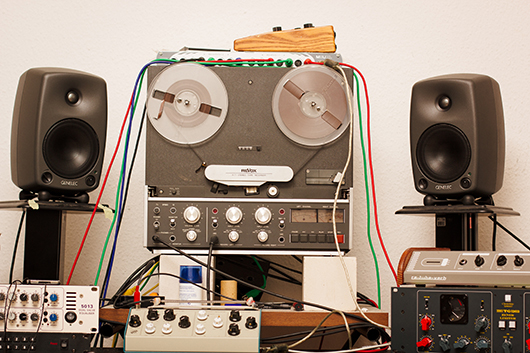
XLR8R: When was it that you moved into your Berlin space and started building the studio?
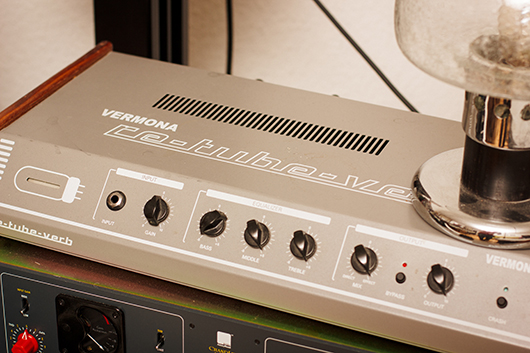
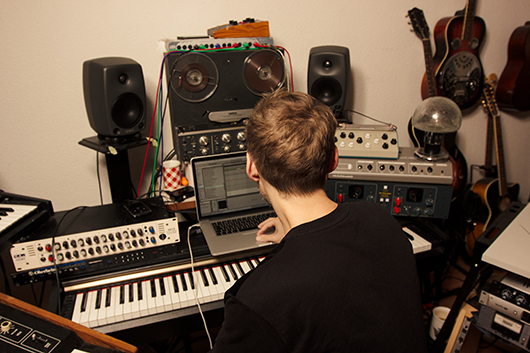
Clark: I finished Turning Dragon there [in 2007], but that was all on a computer. And then I started buying synths and compressors and drum machines and mixers and effects and phasers and distortion pedals and delays… You know, the whole lot. I just invested in it. Then, slowly but surely, it’s all kind of dropped off my agenda in terms of being go-to tools, because I just know what I want more from sound. You realize there are many ways you can skin a cat—you can get beyond the equipment. And that’s the ideal phase to be in, for me, where it’s not about the equipment. Equipment can be enabling tools, but they’re also barriers to ideas in some ways.
Is that because of how you understand what they can and can’t do?
Yeah. It’s also about getting beyond the point of novelty, or technique; that point where you hear a sound and realize a synth can do that, and you’re really stoked because you never knew that you could achieve that sound. But then there’s the taste part of you that says, “Yeah, but is that good?” Just because you can do that, should you do it? Probably not.
I think it’s just confidence, ultimately. You just get more confident, and now I’m really confident just using a laptop. [I use] some gear when I really need it—like, if I need a synth, I’ll hire one. But I’m in no way into the fetish side of equipment buying. I’m kind of anti that, actually. Aggressively anti.
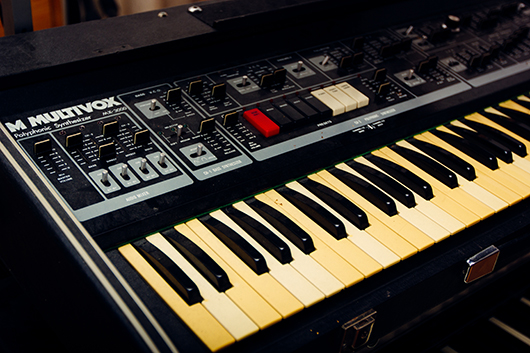
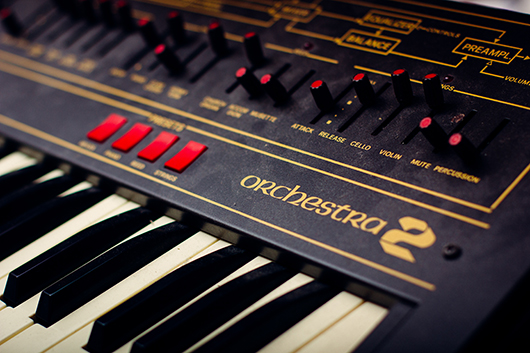
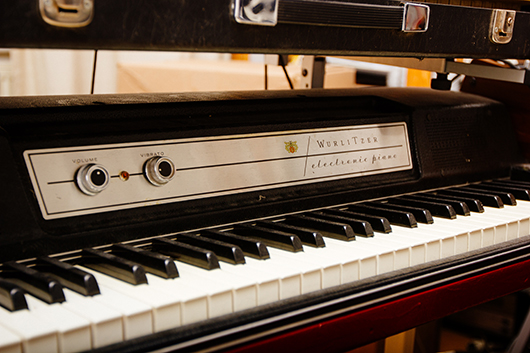
But you did have a moment where you were buying stuff.
Yeah, I did, for sure. But I wouldn’t want people to sort of think that you need that to make music. I hired a Jupiter for this album, and it’s on there. It’s a really nice synth. But I’m not into this, “Oh, let’s put it onto a silver platter. It’s a Jupiter! Listen to how pure that sounds…” I used it on “The Grit in the Pearl,” and I just heavily reverbed it. It’s just this one bit, the drop at the end that kind of smudges then gets really psychedelic. That’s the Jupiter, but it could be a soft synth, it could be another Roland. I know that I just wanted this cathedral-type reverb that shimmers in the distance, and that’s what I was thinking. Shimmery, reverb, resonant, a bit of color… But the Jupiter is irrelevant, really. That’s not dictating how the music flows.
After you finished Turning Dragon, though, you were done with laptops and wanted to try something different.
MIDI—connecting synths and getting them all running in sync. Then going, like, “Yeah! I’ve done it.” [laughs]
Was that something that lead to Totems Flare?
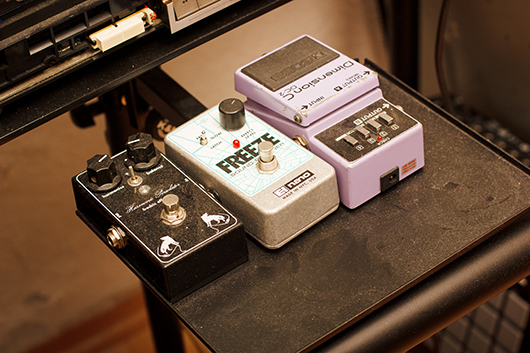
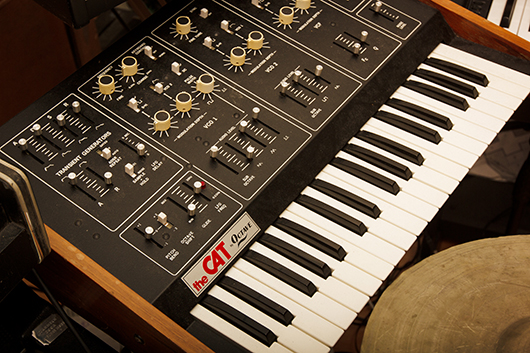
Kind of. Totems Flare, “Growl’s Garden”—the bassline in “Growl’s Garden” is like a combination of an hour’s worth of jamming on that riff with soft synths, a Roland, the Kitten, and Moog Prodigy through distortion pedals and delay. And I just layered that riff again and again until you don’t know what they synth is and you’re just sort of mixing paint, really.
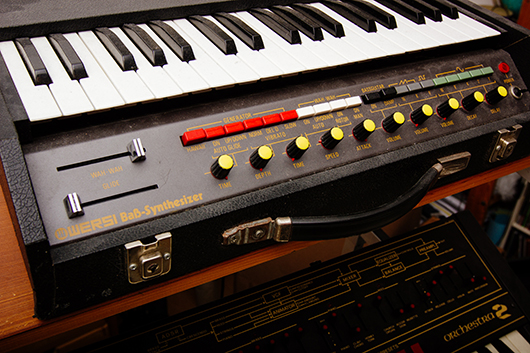
So you’ve never been a purist with sounds. You’re willing to take a little bit of everything in order to make what you want.
That’s not to say I don’t like that purity. Like ’70s or ’80s library music, when the automated aspect of synths came in and you just hear dry synths on tape—I love that. I listen to that. But it does feel quite retro, like it harkens back to that technology. It’s like a piece of furniture that looks nice. But musically, I really like texture and the grain that processing puts on things. I like when stuff sounds like it’s behind something, and it’s not too raw. I like that sort of distance, and I don’t know why. I’m sure that some people probably hate that about what I do, and that’s cool, as well. But I like feeling that something is a bit oblique and a bit ugly, in a way. A bit distorted and not quite correct. For me, that’s interesting, and you can only really do that with lots of processing—plug-ins.
How did that mindset play into the set-up you used on Clark?
Just endless processing in Ableton. Just freezing, printing, freezing that, printing that, re-pitching, transcribing that into sample libraries, bouncing that… I don’t want this to sound too grandiose, but it will: If you think of an orchestra, that palette of sounds (first violin, second violin…), and how you would do that electronically, it’s something I have to spend a lot of time with in order to transcribe sounds into different voices. Like on the new Jon Hopkins record [Immunity], he’s kind of transcribed his tracks into a live instrument setting. I like the idea of music being fluid like that. It’s more idea-based and form-based, instead of being dictated by any particular synth.
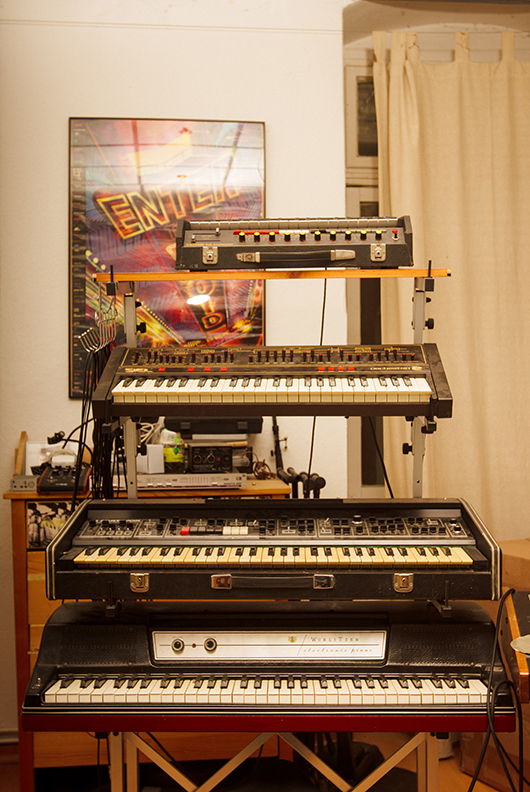
But you did still use some hardware.
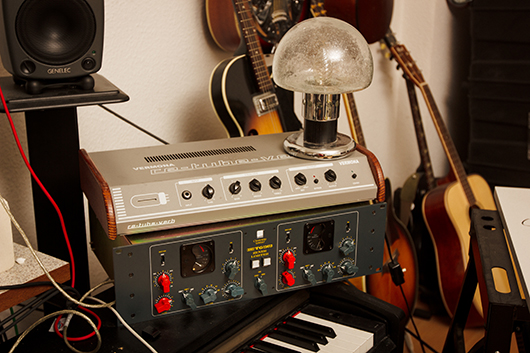
I had a really nice summing bus [mixer], the Bustard, and a Chandler compressor, which was like the worst choice I made.
Why?
It’s just that at the end game of mastering, you want like a sturdy wife of a compressor. You want something that’s just going to be reliable and something you can lean on—it has to sound good in any situation. The Chandler is just like a femme fatale; the meters are screwed, they go out, you don’t really know what you’re reducing, the notches are hard to move… But in the right place, it’s just savage, but creamy, as well. It’s not savage in a digital, brittle way, like it still sounds voluptuous. For drums, it’s amazing, but if you nudge gain into it a little too much, it just starts spitting at you.
Do you have better luck with other compressors?
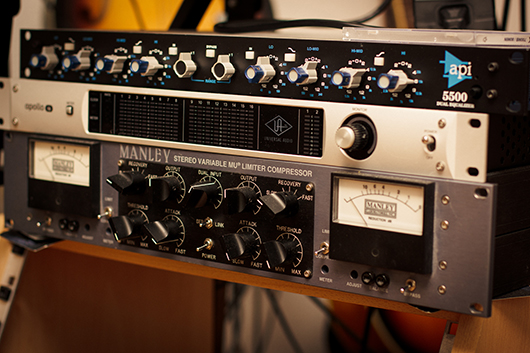
The Manley is what I use in Berlin, and it’s really sweet. That’s a wifey. But software compressors are amazing, as well. I mainly use them. Compression on software is amazing. And when you start using a few of them, and then start reprocessing, it becomes really hard to tell the imprint of what’s doing it. And you always want to get away from people saying, “Oh, he’s using this and this and this.”
You like the mystery.
Yeah, it’s for myself, as well. I hate hearing my process back. I still want to be slightly amazed by what I’ve done, or think, “How did I do that?”
So achieving that on Clark meant mostly using software?
Yeah, I learned Ableton on this album—I had used Logic before—and it completely changed how I worked. I really went into it, and like a month later, I thought, “Yes, this is the program.” It’s so good. My Logic arrangements were like 60 tracks and a timeline that goes on for an hour—like, “There’s a sketch there, this bit is a sort of counterpoint…” It was just a mess, but my Ableton song files are so streamlined. That’s when I started getting my confidence back.
Clark, as opposed to the jazzy drums on Iradelphic or Body Riddle, is more rigid. Not in a bad way, but definitely there’s more of a techno feel.
Yeah, it’s deliberately mechanical. It definitely lacks something, and it gains something else. Like, “Strength Through Fragility” has this massive sort of jazz drum bit at the end that’s still in there, but it’s really filtered. That kind of roar that comes up from it and sounds like thunder is all jazz drums.
Is that a live recording?
I think some of it is tom rolls that have been processed, and some of it is pitched-down electronic drums. But I just did it all with MIDI.
Did you do much with live audio?
There are lots of field recordings, like snow and stuff being scrunched outside. There’s a sound in “There’s a Distance in You” that’s like a chair being scraped, and it’s an awesome sound. I was doing a residency with my girlfriend in Leipzig, and there’s this massive hall we had to walk through every day. I just ran a chair through and recorded it with a rifle mic. You know, just a screeching chair is such an ugly sound, but it’s so great. It’s kind of like the same thing on “Roulette Thrift Run”—that’s just a creaky door, but it’s almost like this sort of Ornette Coleman thing. It’s one of those total accidents that wouldn’t work in the same way if I did it again.
Would you say Ableton was the key to this record, or were there any other instruments or software?
I mean, I could’ve done it on Logic, and I didn’t use the Session View. I just arranged in Ableton. It was a key in as much as learning something new helps the process and keeps you fresh, I think. I was using it in a very similar way to Logic, but I was just more clear about what I wanted. This record was about less is more, in a way. I’ve been very prolific in the past—like with the studio, setting up the synths, having them MIDI synced, having all this gear. This felt like a stripping back.
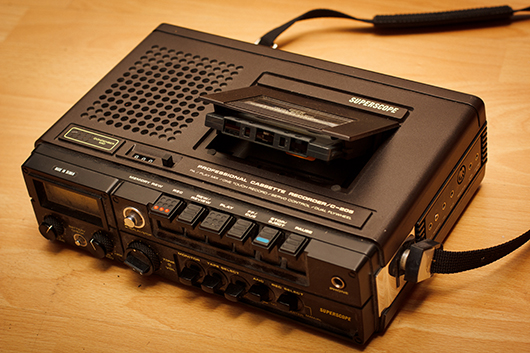
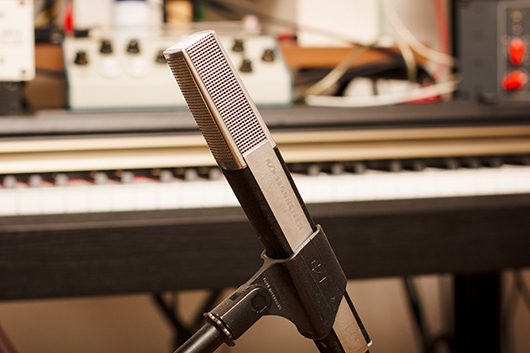
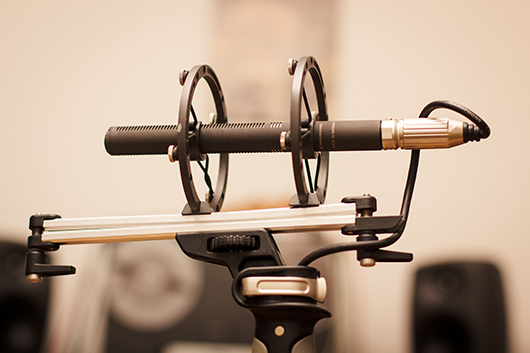
How did being in a cabin away from your home change your workflow?
Well, I was alone, and I’d get up early. Wake up at six and work ’til six. It wasn’t that monastic. It wasn’t like, [in a deep voice] the gong rings and now I channel! [laughs] It wasn’t that romantic, but more like: get up, scratch your head, make loads of tea, get caffeinated, and just go. It was really rewarding.
And there was a race against the clock, as well. I didn’t have to finish this year, but it was just an ideal time for [the record] to come out. It started sounding really wintery, and it became quite a theme. My manager told me that if I finished it by the end of July, we could get it out in November. And then I started thinking about people buying the record, and it would be really cold in Berlin and Europe around then, and that could feed into the vibe of the record. It was just so focused and concentrated, and I’ve never really written a record in that way before.