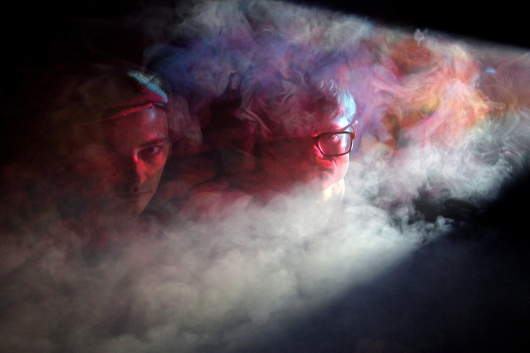
Veteran Bay Area producers Kit Clayton and Brian Hock (a.k.a. C.L.A.W.S.) have announced a new collaborative EP under the name Kit n C.L.A.W.S. The four-track release, which is due to drop in late November on the Gooiland Elektro label, is said to find the pair creating “deep trance indulging moody house tracks with acid influences.” A mesmeric, undulating cut from the EP called “Toxoterror” is available to stream in the player below, and we’ve also included the release’s full tracklist.
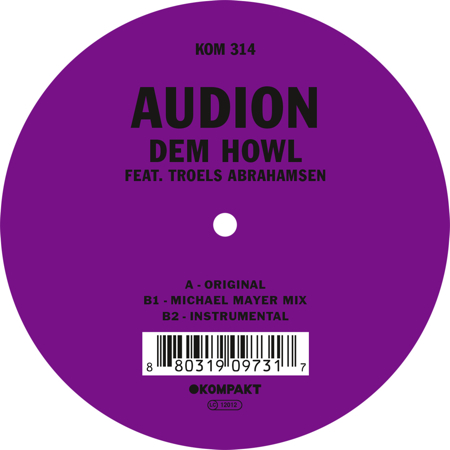
Matthew Dear’s forthcoming single as Audion—set to arrive via Cologne institution Kompakt on November 3—is now available to stream in full. Incorporating a crisp vocal performance from Troels Abrahamsen, “Dem Howl” is a patient and expansive production, one which takes over seven minutes to thoughtfully plot a course through warm, swelling pads, understated melodies, and a precisely crafted series of dancefloor rhythms.
Set to be joined by an instrumental version and a Michael Mayer remix (with an additional Joris Voorn remix serving as a digital bonus) when it lands on November 3, a full stream of Audion’s forthcoming “Dem Howl” single is premiering in its entirety below.
In the rapidly evolving world of electronic music, it’s all but impossible to keep track of every new artist, label, party, and genre. At the same time, certain names will inevitably pop up again and again at the XLR8R office, some of which we’ve only given passing mention to on the site. In an effort to get our readers up to speed with some of the things—both new and old—that we’ve been digging lately, we recently launched a new feature series called ‘Get Familiar,’ which aims to shine a spotlight on subjects we think are worthy of a little more attention.
London producer K15 (a.k.a. Kieron Ifill) has created one of the best closing tracks in recent memory. “Yellow” and its bittersweet piano wrapped up Funkineven’s XLR8R podcast back in June, the Apron boss has also played the track on BBC1, and now, it’s set to drop in early November as part of the five-track Insecurities EP, a double 12″ on Kyle Hall’s Wild Oats label. Granted, Hall has been supporting Ifill’s tracks for a while now, even sending the producer video of crowds reacting to the EP’s pensive, pad-heavy titular cut.
Despite these developments, K15 sits amazed at the internet-aided response to his music. He’s never been the sort of artist that maintains a heavy online presence, and he actually began his musical journey in a decidedly old-school manner, attempting to imagine warehouse parties via trips to the record store. “I was really into house and garage during my teens. Obsessed is a better term,” says Ifill. “I bought lots of jungle records but because of my age, I could never go to raves—which was the epicenter of it all—so I sought sanctuary in records, radio, and tape packs.” This tale of pirate radio education is common for multiple generations of UK producers, but K15 wasn’t satisfied by a steady diet of club bangers, so he also immersed himself in jazz and broken beat, genres that have informed the emotional chord progressions at the core of his current work.
The blue chords of K15’s most memorable tracks are reminiscent of Theo Parrish’s string of ’90s and ’00s classics (e.g. the Blade Runner-sampling “Solitary Flight”), and Ifill attributes his gift for soul-stopping melodies to his study of the pianists and musicians that infused jazz with space-age synth sounds. “Herbie Hancock, James Mason, they are people that I admire,” Ifill explains. “They make music, they are vibe creators, so any weird off-kilter jazz tendencies come from them.” This appreciation for sounds that aren’t “of the moment” also helped Ifill forge a bond with Kyle Hall. The Detroit producer shot Ifill a message via SoundCloud last year, and they connected over a shared affection for broken beat elder statesmen Dego and Kaidi Tatham. (The latter actually remixed K15’s “Bordeaux” on a 12″ released by WotNot Music earlier this year.) That said, K15 isn’t someone who’s overly enamored with the past. He also cites contemporary jazz artists like Zoe Rahman, Gwilym Simcock, and Sam Crowe as influences and reps for modern-day grime as a place of continued growth within the hardcore continuum.
During daylight hours, Ifill teaches English to underserved youth, but he still manages to work tirelessly in his bedroom studio during off-hours. He’s quietly built up a catalog of eight EPs, including Theme Music for a Pariah and The Black Tape, the latter of which deals with the loss of his mother. Like most bedroom producers, he’s sitting on a wealth of unreleased material, a situation he plans on changing with the support of Wild Oats and Wotnot. “We don’t live forever,” he says, “so I need to do what I can, make what I can, and release what I can with the time I have.” If the unreleased material is anywhere near as solid at “Yellow,” Ifill is sure to garner plenty more attention, both online and at the local record shop.
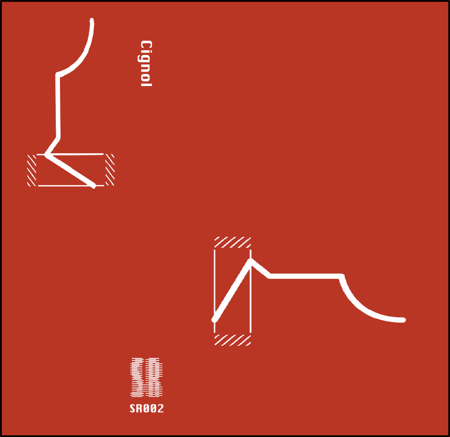
After appearing in XLR8R‘s Downloads section early last month while operating under his Dr. Nol alias, Dublin producer Cignol has returned with a new record in hand, the Tidal Sheer EP. Serving as the second effort from fledgling UK label Seagrave, the cassette/digital release offers four synth-streaked productions including the electro-indebted “Sys486.” Again finding Cignol carefully tweaking out an arsenal of thick synthesizer tones, “Sys486” appears on a moodier tip than the last outing we heard from the Irish producer, with dark chords and pensive melodies spread across the track’s skittering 808 beat.
‘Real Talk’ is a series of artist-penned essays that appears on XLR8R from time to time, and our latest missive comes from Hieroglyphic Being (a.k.a. Jamal Moss), who we asked to comment on some of the controversy that’s sprung up in recent months surrounding his unique approach to DJing. Fresh off the release of his The Seer of Cosmic Visions collection via Planet Mu, Moss graciously agreed to tackle the issue, and also used the opportunity to talk about some of his history and influences and how they’ve come to shape his current artistic outlook.
XLR8R has asked me to write an essay “In Defense of My DJ Style,” noting there has been some commotion lately about my “unorthodox” DJ Style.
Firstly, there’s no reason for me to go on the defense or feel offended about my situation, because I have basically tried to get in where I can fit in. That’s part of the basic hustle of the industry. When I started out, I, generally speaking, just wanted to do live PA shows. If people don’t know who you are, you have to get in front of them so they can see you and get some kind of perception of what you’re about. At the beginning, I had to go on the road and do whatever I could. I wanted to play live, but for some reason, people were more attuned to having me come play vinyl. That still blows my mind, because I never tried to push myself as the disk jock, or as a selector. I figured I’d just give it a go and then hopefully people would get what I was about and then try to get me to do the live stuff.
Nowadays, it’s a balance. They (promoters) still want me to play vinyl, but when it comes to live shows, some people are still skittish about that situation. When people come at me at DJ gigs, I think they are pissed off because maybe they expect me to be playing live. I’ll get people in the crowd trying to figure out what is going on. But I’m trying to figure out what’s going on too! Still, I go through and do what I am supposed to do to the best of my ability. Sometimes I’ll crack up because people’s perceptions of what’s going on at that moment can be so skewed. I just go with the vibe of what’s going on in the surroundings. I try to acclimate myself to this very obtuse situation. I play stuff that I’m into, the stuff that influenced me as I was coming up. And in turn, hopefully when they hear what I play as a DJ, when I go out and play live they’ll start to understand where those influences come from. Basically, my dream is that people will come out and support the live shows—which is where I think my purpose is meant to be. I am more into the abstract experimental stuff. The problem with being labeled a DJ, especially for me, is that I’m not a DJ. Some people consider me to be the worst DJ ever, but I’ve never said I was a DJ. I have no ego about playing vinyl because I’m from Chicago, and in Chicago, you have dudes who can get on six turntables and be flawless.
I can’t embellish or explain in fine detail what I am trying to convey when I am there in the moment playing records in a club. It would be self-propagating BS on my part to attempt to do so. But I can say that I do try to play stuff that people will appreciate, in a format they can understand. Maybe my attitude is different than other DJs, because I have never really clicked with DJs, even here in Chicago. I only ever clicked with DJs as a dancer. For me, it was only ever about the vibe, or certain eclectic selections, because those are the things that gave me muscle memories. Hi-hat patterns, snares, notes, melodies, and all that stuff have been translated into tunes that are in the core of my fiber now because I’ve danced on the floor to them for many years. For example, many people can say they like a certain style, but I might say it ain’t for me because I don’t feel any real vibration coming from it. All I can do is step up and say, “This is what feels right for me.” I’m dealing with my own specific muscle memory whatever musical situation I find myself in.
When I go out and play records, I do get a sense of what people feel the most. That helps me sit down as an A&R person to decide what kind of material to put out on my label Mathematics Recordings (Groove Distribution). It helps me grow further and develop in artistry all around—running a label, playing out, and making tunes. If I play a certain record, and it has a certain aesthetic, I can tell—the whole vibration of the room changes, the music has a certain dynamic, the alpha waves in the brain change, the synapses in the bodies of certain people in the crowd change. Later on, I’ll remember that moment—I think it’s called muscle mirroring—and I try to go back and capture some essence of that when I mess around and create back at the house.
The same thing applies when I hear demos coming from certain artists. I’ll try to listen for that vibe and energy on the material they’ve sent me and if I hear it, I’ll take it out and test it. I’ll sign it when I feel that the tune is hot because it’s getting that same kind of dynamic reaction. I put things out because I feel they are the epitome of what I came up with growing up with in Chicago. When I hear people half my age coming up with this stuff, it amazes me that somehow the universe transmitted that same frequency to them to be able to grasp that era. It doesn’t matter that they might have heard it through some Blogspot or some other DJ like Kerri Chandler, Joe Claussell, or Theo Parrish. For these young artists to send me stuff, I feel honored because it reminds me of stuff that came out in the early or mid ’90s. In other words, even though I am not that happy with the state of stuff that comes out on other labels, I try to the best of my ability to represent the music that nurtured me. I just want to represent what I know. But for every one person I put out, there are a lot of people I have to tell “no.” And for every one person whose record I put out, there are five people I need to sit down with and nurture. Because I have expertise from the floor, from being out there making movements, I can give those artists an idea of the scope of what they are aiming for. Again, it’s that muscle memory.
If I look back and think about some of the key events that gave me muscle memories, the first one was probably around fifth grade in my school. People weren’t really calling it house music then, but we had a holiday party before the winter break and I heard some tunes played on a cassette tape from a college radio station that just blew my mind. The second event was in my freshman year at the sock hop at my old high school. I remember it was Boo Williams and a couple of other DJs playing. It might have been Gene Hunt too. And they played a whole bunch of stuff. And of course this is aside from the Music Box situation that I’ve talked about many times and can’t keep talking about—you know, that whole Ron Hardy situation. I just remember moving a certain way at the sock hop. I was lost in the music, lost in the bassline, outside of what was going on around me. I heard things that moved my spirit and in turn, I moved my body. It made me realize that I could dance to this stuff for the rest of my life. I wasn’t worried about anything else. I was just happy being a dancer. For me, everything goes back to that point.
Basically, when it comes down to it, there are certain things that just resonate throughout me. But because I’ve stopped being a dancer now, it’s all become spiritual and mental and I think my creativity has been lacking because I’ve slowed down on the movement. I need to get back into movement in order to instill a better output from my end I feel. I’m critiquing myself on certain things, just comparing what I am creating now to what I was creating back then. There are certain tunes where I can be spot on, but there are certain tunes where I’m not because the influences are different now—spiritual memory, mental memory—and they are slowly suppressing the whole awesome movement memory that kept me vibrant, fluid, and energetic back in the day. I’m actually conscious of that now and I’ve got to somehow embrace that again in order for me to be stronger and better at my craft.
Right now, I have four astral bodies that are displaced within my physical body. The movement, the spirit, the mental spirit, and the emotional spirit—they are all disconnected at this point. When you hear what I do, you can actually sense that. For my Planet Mu album The Seer of Cosmic Visions, it’s all about the separate astral parts of me becoming one. Part of me is 15, part of me is 22, and part of me is 32. And as of 32, I lost it—I have no more of that raw muscle memory. The whole process of The Seer of Cosmic Visions project, and I thank Planet Mu for hooking this up, is that they captured the movements of my life, those moments when I sat down to actually try and capture those movement memories and make them into actual physical sounds.
The Seer of Cosmic Visions has got stuff from my catalog from 1996 through to about 2013. A lot of this came from cassette tapes, minidiscs, VHS tapes, whatever; it got to a point, and maybe that’s why it’s good, that the physical sat in the background and the mental started to arise. I started to learn the process of developing as a creative artist. I called it The Seer of Cosmic Visions because literally at the age of maybe 12 to 16 I somehow did a remote viewing kind of thing. I had a vision when I was dancing. There was no one in the background. It was far in the future. I was older, heavier, and in a certain environment listening to a tune. I felt that somehow through this situation, this sound, I could elevate myself. Later on, when I was in my early 20s, this came back to me again—this revelation. I had the same experience of being elevated. And then again, in my 30s, no BS, that tune that I had visions about came into being—I finally created it. I know this sounds esoteric. I’ve learned to embrace this kind of thing now. If we want to go on a Doctor Who-style narrative, this is my fourth iteration in life, in this physical life. I’ve done many things before this and will probably do many things after this. But to get back to the DJing thing—I don’t really give a shit that people think I’m the worst DJ because I never claimed to be one. It’s kind of ignorant and futile of them to knock me for something I never claimed to be. The way I look at it, it’s a big cosmic joke.
Following the announcement last month of its upcoming Thermal EP for the Break World imprint, Teengirl Fantasy have turned in a new video for the record’s lead single, “Lung.” The precise production finds the duo of Logan Takahashi and Nick Weiss incorporating the talents of Lafawndah, whose lush vocals lead “Lung” throughout its impassioned run. Lafawndah (pictured above) also serves as the lead for the track’s video, as the conceptual clip continues to push and drag the vocalist backwards before she ultimately descends into the ocean.
Co-directed by both Lafawndah and Teengirl Fantasy, the full video for “Lung” can be watched below; the pair’s Thermal EP will see its official release on November 18.
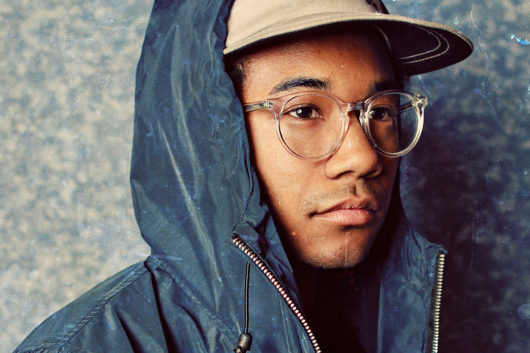
With Bay Area-based producer/songwriter Chaz Bundick’s (a.k.a. Toro y Moi) forthcoming debut LP as Les Sins just over a week away from seeing its release, a full stream of shuffling album cut “Talk About” has surfaced. Following behind LP singles “Bother” and “Why”, “Talk About” finds Bundick further exploring the club sensibilities of his Les Sins project, crafting a shaker-heavy tune flushed with thick, buzzing chords and further enhanced by a slippery bassline and tasteful chops of a memorable line from Nas’ 1994 hip-hop classic “One Love.”
Les Sins’ latest production can be streamed in full below before the project’s debut LP, Michael, lands via Bundick’s own Company imprint November 2.
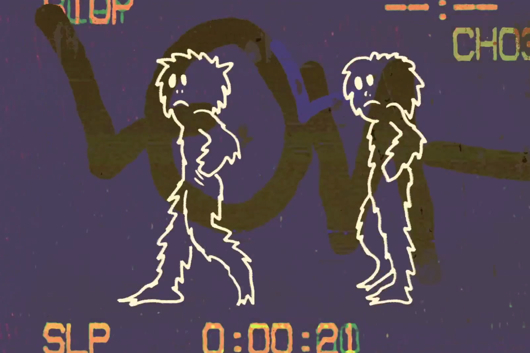
Lone has returned with a new video for “Restless City,” a track from his latest full-length, Reality Testing. For the new clip, the Manchester producer and R&S mainstay has enlisted the talents of directors and animators RUFFMERCY and Patch D. Keyes, who imagine a colorful and twisted world of bizarre creatures—smoking bananas, skateboarding hotdogs, gun-toting apples, and a variety of hand-drawn hounds among them—to accompany Lone’s dusty, soul-swept production.
The full video for “Restless City” can be watched below, while Lone’s Reality Testing LP is out now via R&S.
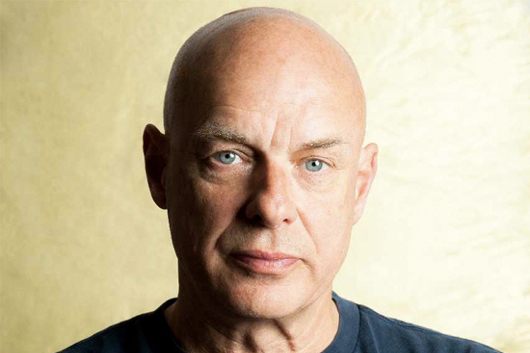
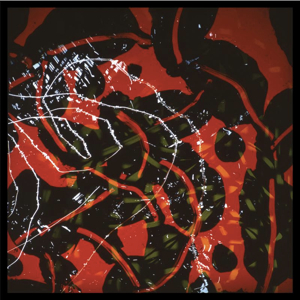
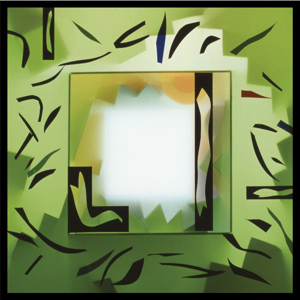
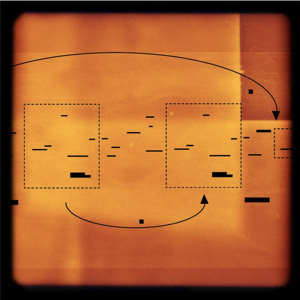
British electronic music pioneer Brian Eno is set to reissue four rare solo albums via the All Saints label, the sister imprint to Eno’s own Opal imprint. The reissue series will cover four Eno albums from the 1990s: Nerve Net (1992), The Shutov Assembly (1992), Neroli (1993) and The Drop (1997). Of the four records to be reissued, Nerve Net has remained completely unreleased until now, while each of the other records will include additional unreleased material along with the original recordings—The Shutov Assembly will include seven unreleased recordings taken from the same period; Neroli (said to be considered Eno’s ultimate realization of “mood music”) will include New Space Music, an “hour-long piece of ambient, long-form drone music”; and The Drop will incorporate nine rare Eno tracks from 1997, previously only available through a limited-edition release which was tied into the artist’s 2006 77 Million Paintings exhibit in Japan.
Furthermore, the CD versions of each reissue will include a second disc of new material recorded by Eno “in the spirit of the original release,” as well as a 16-page booklet including photographs, images, and writings by Eno on each of the albums. Ahead of their December 1 release date, we have included the cover artwork and tracklist for all four albums below.
Nerve Net
CD Tracklisting Disc 1 – Nerve Net 1. Fractal Zone 2. Wire Shock 3. What Actually Happened? 4. Pierre In Mist 5. My Squelchy Life 6. Juju Space Jazz 7. The Roil, The Choke 8. Ali Click 9. Distributed Being 10. Web 11. Web (Lascaux Mix) 12. Decentre
Disc 2 – My Squelch Life 1. I Fall Up 2. The Harness 3. My Squelchy Life 4. Tutti Forgetti 5. Stiff 6. Some Words 7. Juju Space Jazz 8. Under 9. Everybody’s Mother 10. Little Apricot 11. Over Vinyl Tracklisting A1. Fractal Zoom A2. Wire Shock A3. What Actually Happened? B1. Pierre In Mist B2. My Squelchy Life B3. Juju Space Jazz B4. The Roil, The Choke C1. Ali Click C2. Distributed Being C3. Web D1. Web (Lascaux Mix) D2. Decentre
The Shutov Assembly
CD Tracklisting Disc 1 – The Shutov Assembly 1. Triennale 2. Alhondiga 3. Margraph 4. Lanzarote 5. Francisco 6. Riverside 7. Innocenti 8. Stefelijk 9. Ikebukuro 10. Cavallino
CD Track Listing Disc 1 – Neroli: (Thinking Music Part IV) 1. Neroli Disc 2 – New Space Music 1. New Space Music
There is no vinyl edition due to the artist’s wish not to break up the music with split sides.
The Drop
CD Tracklisting Disc 1 – The Drop 1. Slip, Dip 2. But If 3. Belgian Drop 4. Cornered 5. Block Drop 6. Out / Out 7. Swanky 8. Coasters 9. Blissed 10. M.C. Organ 11. Boomcubist 12. Hazard 13. Rayonism 14. Dutch Blur 15. Back Clack 16. Dear World 17. Iced World
Disc 2 – Bonus Material 1. Never Stomp 2. Systems Piano 3. Bonk 12 4. Luxor Night Car 5. Targa Summer 6. Cold 7. Little Slicer 8. Surf Birds 9. Targa
Vinyl Edition A1. Slip, Dip A2. But If A3. Belgian Drop A4. Cornered A5. Block Drop A6. Out / Out A7. Swanky B1. Coasters B2. Blissed B3. M.C. Organ B4. Boomcubist B5. Hazard C1. Rayonism C2. Dutch Blur C3. Back Clack C4. Dear World C5. Slicing System C6. Sharply Cornered D1. Iced World
London transplant Terrell first appeared on our radar earlier this year, when the producer dropped an EP’s worth of raw, atmospheric tracks via the First Second label. While Terrell has been relatively quiet on the release front since then, the UK artist recently surfaced with the soul-strewn house of “Werk That,” a production first offered for free via the budding talent’s SoundCloud. Spanning just under six minutes, “Werk That” is a lively bit of house, one-fueled by chopped Rhodes chords and hypnotic vocal snippets which bounce around the tune’s sharp hats and active layers of percussion. Not to be overlooked, the track’s occasional whistle blow is a nice touch too.