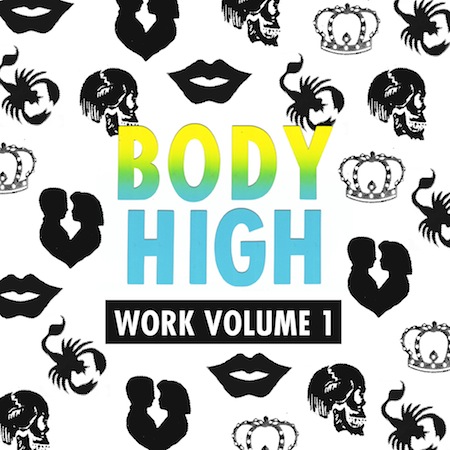
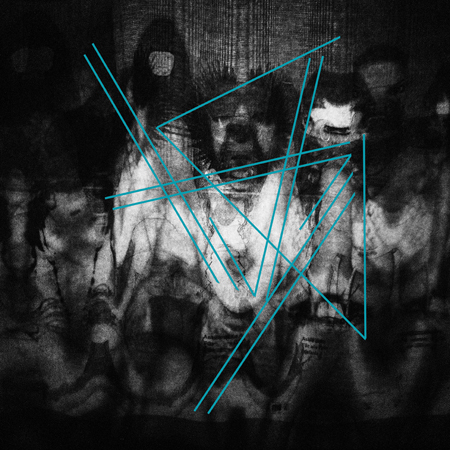
The Los Angeles-based Body High label has unveiled details for an upcoming compiliation titled Work Vol. 1, which will include new and previously released material from label heads Samo Sound Boy and Jerome LOL, as well as mainstays like Floyd Campbell, DJ Funeral, and more. Work Vol. 1—the first official compilation from Body High—will drop on November 19, and the label has shared a new collaboration from Samo Sound Boy and Floyd Campbell. Called “Give Up,” the pair’s tune is an acid-tinged, stark cut that seems to pull the history of underground club music into its unwavering orbit. That track can be streamed below, where the full tracklist of Work Vol. 1 can also be found.
1. Myrryrs – Intro Theme 2. Samo Sound Boy & Floyd Campbell – Give Up 3. Matpat – Feel Your Body 4. Jerome LOL – Alma 5. Samo Sound Boy – Your Love 6. Cedaa – Kawasaki 7. Floyd Campbell – Stretch 8. Pipes – Let’s Get Closer 9. Myrryrs – Memphis 10. Grown Folk – Freak Dis 11. DJ Funeral – Shutterbug
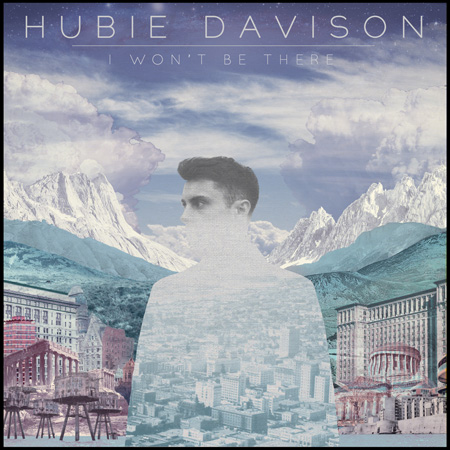
“Haven,” a track from Irish producer Hubie Davison‘s I Won’t Be There EP (out today via Berlin-based Leisure System), begins with a mild-mannered, ambient intro before launching into a sleek, weightless groove that subtly recalls past work from Nicolas Jaar or Gui Boratto. Wordless vocal coos coalesce into warm synth pads ahead of an elegant change of direction, when the production dries up and settles into a mechanical rhythm. Davison’s roomy percussion sounds and idiosyncratic drum palette keep things from sounding overtly retro, and as “Haven” transitions to a slightly more syncopated beat, it becomes clear that I Won’t Be There is a debut record from an artist who has quite a lot to say but is in no hurry to say it.
Ghostly stalwart Matthew Dear has remained constantly active over the years under his given name, but the hard-edged techno of his Audion moniker has taken a back seat as of late (though we did get a chance to see his performance at Movement Detroit this year). The last solo record he released with that name was in 2009, but he has now announced a return to the Spectral imprint, sharing a brand-new tune which will appear on the career-spanning Audion X LP. “Motormouth” is one of two never-before-heard songs set to arrive when the 18-track compilation drops on December 9. Before then, the single can be streamed below, where the artwork and tracklist for Dear’s Audion X can also be found.
01 Motormouth 02 Sky 03 Cloth (Just a Couch) 04 Mouth to Mouth 05 Noiser 06 Look at the Moon 07 Fred’s Bells 08 Billy Says Go 09 Kisses 10 The Pong 11 Titty Fuck 12 It’s Full of Blinding Light 13 I Am the Car 14 Just Fucking 15 Your Place or Mine 16 Wield 17 Just Me 18 Taut
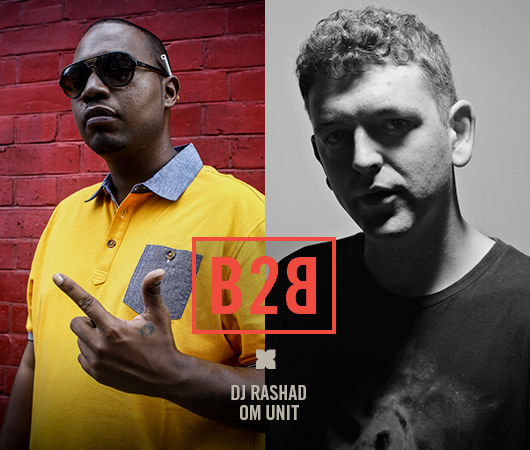
Although they’re coming from very different places, both musically and geographically, Chicago footwork producer DJ Rashad and London-based Om Unit (a.k.a. Jim Coles) have a perhaps surprising amount in common. The release of DJ Rashad’s latest full-length (and first for Hyperdub), Double Cup, has seen the footwork pioneer playing with a broader sound palette than ever before, incorporating a decisive jungle influence in the form of the breakbeats littered throughout the album. Likewise, Om Unit is a producer with a long history of picking up disparate influences and fusing them in unexpected ways—most notably blending footwork and jungle on many of his signature productions. His just-released debut album, Threads, which is being issued via Civil Music, is a testament to the genre-hopping producer’s versatility. In short, the two producers literally personify the increasingly blurry lines between the bass-centric sounds emanating from either side of the Atlantic. In light of this, it seemed apt to get together with the pair and discuss inspirations, the differences between the US and the UK, the virtues of collaboration, and the global reach of footwork.
XLR8R: Could you each talk a little bit about your musical backgrounds?
DJ Rashad: Pretty much what I do is footwork; besides that, I also make rap beats and whatever else I like and think is hot at the moment—I just like to fuck around. Other than that, I used to play the drums in sixth grade all the way through to high school when I quit and started DJing, and that’s really been it.
Om Unit: I’ve been making music since about ’93, making hardcore, jungle, stuff like that. Same as Rashad actually, I was playing the drums from around 13, 14 years old for a few years. I took piano and stuff as a kid, got into DJing in the mid ’90s, and have been making music and doing stuff professionally for the last 10 years or so. The Om Unit project has been going for I would say the last three years.
Om Unit
XLR8R: Were you aware of each other’s music before this interview?
DJR: Oh yes, definitely. Big fan.
OU: Absolutely. I think I heard Rashad via Mike Paradinas at Planet Mu and I heard about footwork music through him as well. I went to see Rashad DJ down at Plastic People in London and had a conversation with him and he just filled me in on it and it kind of grabbed me. I didn’t really know too much about the stuff that came before. I’d heard of DJ Assault and some of the ghettotech stuff, but wasn’t really that clued up. But footwork spoke to me, and Rashad is obviously one of the guys who’s really flying the flag as far as I can see.
DJR: It’s pretty much the same thing. Om Unit man, shit. Planet Mu for sure. They did a couple of releases right as Bangs & Works came out—I think you did one with Machinedrum as well, Jim—that and then I went deeper, a lot of people schooled me. Also, you were doing rap beats before this as well in another project.
OU: That’s right, as 2Tall.
DJR: 2Tall, yeah man. I have to say ever since I’ve been put onto Jim’s shit there ain’t been no looking back, it’s just fucking amazing.
XLR8R: Coming from opposite sides of the Atlantic, do you guys both look across the pond for inspiration?
DJR: I do, definitely—you can’t help it.
OU: I think it’s hard not to in England. It’s the internet, it’s just all there. British culture is like most cultures in the West in that it’s very much based on a heavily commercialized, manufactured kind of sound, so we have to look to those little pockets of where the action really is. Chicago’s been a hotbed of music for—you could go way back. We tend to import stuff and then twist it a bit in our own way.
DJ Rashad
XLR8R: What about you Rashad? There’s a bit of a jungle influence on Double Cup.
DJR: Oh yeah.
OU: What kind of stuff have you found from the UK that you’re really into?
DJR: Oh, you already know: jungle, garage, grime. I’ve been put onto so much shit coming over here man.
OU: I can believe that. You spend a lot of time out here, eh?
DJR: I can’t lie, before I came out there, I wasn’t hip to none of the sound, and it’s fucked up because I was missing out on a lot of good shit. But people took the time and educated me proper on jungle, grime, and everything else—it’s fucking crazy. But we love it, all of us do.
OU: That’s the thing I think. Music like jungle, grime, garage, dubstep—that’s what we’d say is British music in a way. But it’s funny because all of that is a reappropriation of American music in a certain sense. UK garage took on its own sound and obviously was heavily influenced by New York and Chicago house music. It’s beautiful, it’s great.
XLR8R: Both of you often get lumped in with the very broad ‘bass music.’ What’s the significance of bass in your music?
DJR: There’s a lot of bass. Half of the track is bass, man.
OU: Yeah, that’s it. It’s music for soundsystems, that’s what it feels like. [Bass music] is kind of like a non-genre, it’s more like an approach to music I suppose.
Double Cup
XLR8R: Can you talk about the influence of hip-hop on your music?
DJR: Hip-hop was huge for me because that’s all I listened to beyond the music [I ended up making myself]. I grew up with it, it’s just always been here with me.
OU: Hip-hop has informed almost all aspects of modern culture, it’s just part of daily life now—for everybody, I think. Even down to the way that we make music, the machines and everything we use—without hip-hop, everything would be so different. Hip-hop production has informed anyone that sits down and has a sample kick and a snare, and is making a beat. No matter what that is, even if it’s like a dance track or whatever, you’re still using sampled drums, which is essentially a hip-hop technique. To me, footwork is hip-hop in a sense. You might see it differently, Rashad.
DJR: I get what you’re saying, I can see that. I never thought of it quite like that.
OU: Obviously, there’s a different intention. But to me, it’s not a million miles away from the roots of hip-hop with the dances.
DJR: Exactly, like breakdancing and hip-hop.
OU: Yeah, that ritualistic thing that I think is so important. The dance side of it is actually something which is almost overlooked over here. That whole thing of something spontaneously happening in a room, that’s so hip-hop to me.
XLR8R: Jim, you’re sort of known for being one of the first people to mix up footwork and jungle. What’s your take on how hybridized everything in dance music has become these days?
OU: I’ll start by saying my reason for doing that. Hearing footwork music for the first time, the first thing that hit me about it is the way that it drops, the programming of it. The fact that it’s 160 bpm, it spoke to me in the same way that jungle spoke to me when I was a kid. It kind of just made sense; I was mixing jungle and footwork together in sets and I thought, “Let me just take some of these old classics and make some edits,” and it just made total sense—it blends perfectly. I think it would have happened regardless if I did it [or not], and it’s also nothing new. Like Rashad said earlier, he’s connecting with sounds over here like garage, and UK garage is only a few degrees in orientation away from Chicago house music, so it’s just a natural thing.
XLR8R: What do you make of the popularity of footwork in the past couple of years, Rashad?
DJR: It’s amazing, man. It’s huge for us, me and Spinn and everybody over here, to see how it just came and took a crazy turn to all over the world and is still going strong. It’s a good feeling, man.
OU: What’s almost better though is I feel like there was a lot of media attention a couple of years ago, and everybody jumped on board, and I think a lot of people sort of slid off. They got it, they understood it, and they sort of moved on, but it feels like it’s still developing. I think footwork has been allowed to fertilize itself, influence other people, and grow in its own way without too much hype, which is great. I’m still playing stuff out from a couple of years ago and people come up to me like, “What the fuck is this?”
Threads
XLR8R: Both of your new records have a certain, perhaps surprising, kind of maturity to them. How did you guys find working with the album format?
OU: Tricky. It’s a different thing. I think when you make a record, it’s like a small snapshot of time, and I think an album is a lot more challenging.
DJR: As far as mature, that’s kind of what I was trying to do compared to the other albums I’ve released so far. Just do something different than what a normal Rashad record would be and experiment with jungle and acid house and our regular sound as well. Instead of the hype me, it was kind of the slow, screwed-down me.
OU: I have to say Rashad, I got your album a little while ago. I actually put it in headphones, and I’m a geek for mixing down, and I think the way you’ve mixed it is really impressive actually. There’s a lot of space and I can hear how you’re deliberately EQ’ing stuff and placing it in the right place. That’s a testament because a lot of the footwork stuff is so raw, and for people like me that are a little bit audiophile, it’s refreshing. For me, [Threads] is actually the fourth album that I’ve done—the first as Om Unit—and it’s definitely way more well realized than the stuff I’ve done before. I feel like I’ve taken influences… there’s a couple of tunes on there that have definitely got a footwork vibe to them, but there’s everything on there. There’s hip-hop stuff, there’s a dubstep influence.
Om Unit
XLR8R: There’s also a lot of collaboration on both of your new albums. How important is collaboration to your creative processes?
DJR: I like to collaborate with everybody, and even other people I’ve never collaborated with before, I try. It’s just cool to vibe and everything; for me, it’s just kind of what we’ve always been doing anyway. I like to do it, I think it’s kind of important to what I do. You don’t have to collaborate with people, but I like to.
OU: I think it’s important. I love it. I almost enjoy it sometimes more than being on my own. I think the way we make music is so strange in comparison to how people originally made music. It used to be that you’d have to learn an instrument, you’d have to be in a room with people, you had to be good, and you had to learn the traditions. Whether it was guitar, drums, singing or whatever, you had to learn to work with other people, and I think what comes with that is a lot of emotional intelligence. How to handle someone if they’re having a bad day and you need to get the best out of them. There’s real serious social skills involved in that and I think that modern music making is quite a solo thing, and there is a danger that you can get too stuck in your own mind and your own world. I love collaborating because it helps you to shake it up a bit and also learn stuff from other people. You sit down with someone else and you see that they have a totally different approach, and you can learn so much. And you can teach them too and there’s a synergy that you have.
XLR8R: How did you wind up working with Hyperdub, Rashad?
DJR: I kind of just built the relationship with Steve [Goodman (a.k.a. Kode9), the head of Hyperdub,] over the last couple of years and it kind of just boiled down to asking him. I was trying to release an LP on there and he was like, “Come out with it,” and here I am.
OU: He’s a good guy.
DJR: Yeah, he was real cool, man, everybody over there. Just like Mike [Paradinas] as well, both guys are real good. They know what they’re doing and are really trying to push this thing further than what we ever, ever imagined it could be.
XLR8R: Jim, you just released something on Metalheadz, how did that come about? That must feel like a pretty big honor.
OU: Yeah, I’m very honored to be part of the Metalheadz family now. Goldie has been a real mentor over the last few months—he’s really been schooling me. I got approached by them last year, and it was just amazing. I couldn’t really believe it, to be honest. I grew up listening to their records. Metalheadz, for those who don’t know, the first three or four years of that label pretty much shaped what we now know of as drum & bass, so it’s a legendary label and it’s amazing, absolutely amazing.
DJ Rashad
XLR8R: How do you guys stay inspired musically?
DJR: I have to say the fans for me, and the music too. The dancers as well over here. And me myself, this is something I like to do as well. Even if I wasn’t selling records, I think I’d still be doing this.
OU: I don’t really know how to do anything else. I don’t want to do anything else, and I’m always inspired because I keep it moving. I think that’s really the key thing. Something Goldie told me about, David Bowie schooled him on reinvention and I think that’s something that struck home with me as well. As people, we keep growing, so to try and be the same person you were 10 years ago, that’s going to go stale very quickly. There’s always new stuff happening around you, so there’s never an excuse not to reach out and listen and try new things. And I think really to be a successful creative person, you have to be able to step outside of your comfort zone as much as you possibly can, in order to grow. I think that that’s the thing—if you keep pushing and doing new stuff, people enjoy that journey with you because they know you’re going to come up with something different. Like [Rashad] said, it’s the fans. They keep you on your toes as well. You have that feeling of expectation, they’re really going to be waiting for this one, I better bring some shit because otherwise…
Having released on labels like Culprit and Kindisch, DJ/producer/vocalist Adeline has a penchant for creating muscular and seductively rhythmic tracks, which is apparent on one-off cut “Make Me Feel.” The Swedish artist’s tune explores every facet of her ethereal vocals and expanding pad lines throughout the ebb and flow of its seven minutes; her singing comes in and out of focus while she chants “make me feel good” as the beats underneath breakdown and reform.
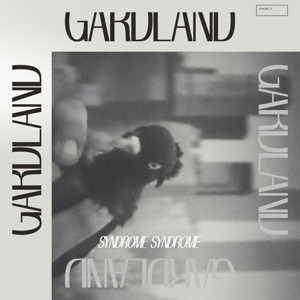
Perhaps more than any other electronic genre, techno has long been an especially functional form of dance music, largely serving its primary purpose when utilized in the confines of a club or any other dancefloor setting. Oftentimes, this is exactly how it should be; the kind of high-tempo hypnotism and bespoke repetition techno offers is a nuanced experience meant for those seeking the meditative state of mind it can induce. But in recent memory, the less functional ends of the genre have also been explored at length, with artists like Actress, Vessel, and Andy Stott contorting its structure and smearing its edges into a more album-appropriate style of music, a permutation of techno suitable for the kind of concentrated listening that the bustle of a dancefloor doesn’t usually allow. Young Australian duo Gardland operates in a similar vein on its debut LP, Syndrome Syndrome, though what producers Alex Murray and Mark Smith actually managed to uncover is a sweetspot straddling a techno middle ground that relies as much on form as it does function.
Gardland outlined the process which brought about Syndrome Syndrome when speaking with UK online magazine Dummy, explaining how the album was recorded in a small town outside of Sydney over the course of 10 days while each of its members was unemployed. Murray also described the music in that interview as “exploration with a four-four kick drum underneath.” Listening to the LP, both the duo’s workmanlike efficiency and languid search for any kind of finite resolution are readily apparent. A fine example is “Katarakt,” with its subterranean undulations blindly pushing toward an unspecified endpoint and screeching, phantasmic synths drifting and morphing through its dark, hardware-specific groove. Tracks like that, “Magicville,” and “Ode to Ode” give the illusion of forward movement when everything is in fact churning around a fixed point as wisps of analog timbres and atonal noise fly past in the background. It’s a simple and satisfying effect, like an old driving scene shot using rear projection, and grants most of Syndrome Syndrome the charming versatility usually found in the sort of electronic music that appeals to record bags and record collections alike.
As its quick and focused creation implies, Syndrome Syndrome is generally formulaic, but Murray and Smith have somehow turned this to their advantage. For every lackluster tune the duo produced in that manner (the title track, for instance, makes for a jumbled and unexciting start to the record), there are powerful and entrancing gems like “One in None” and “Nothing But Not Zero,” the pitch-perfect results of Gardland refining its sound pallette and “jam session” style of songwriting through consistency and repetition. A dependence on formula is also what gives Syndrome Syndrome a rewarding sense of coherency. Whether it’s “Hell Fur”‘s slow-grooving jaunt through gnarled and nightmarish soundscapes or spelunking into the damp and dubby crags of dancefloor jam “Ride Wid Me,” Gardland’s path is always the same—only the scenery changes, and even those differences are decidedly subtle. In this way, the LP’s 11 tracks play like a string of variations on two or three ideas, but most of Murray’s and Smith’s experimenting is strong enough that Syndrome Syndrome sounds more like a collection of singles written by a veteran outfit dedicated to perfecting one beloved sound.
Formerly known under his O.S.T. alias, Berlin producer Chris Douglas is set to drop a new LP as Dalglish later this week via PAN, the outstanding label we highlighted last month during our annual Labels We Love coverage. Now ahead of its release on November 8, Douglas has shared a full stream of the album exclusively on XLR8R. Described as “complex and cavernous,” Dalglish’s Niaiw Ot Vile is a 10-track record dedicated to the artist’s late friend and founder of the Isolate label, Wai Cheng. The dense LP can be heard in its entirety below.
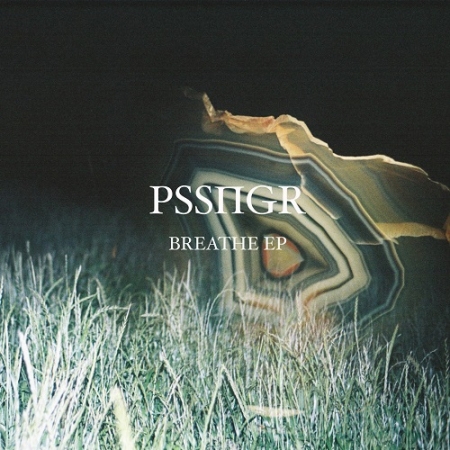
Based in rural Gloucestershire, English beatmaker PSS?GR (born Jonathan Tonks) has a way with earthy soundscapes. He fuses instrumental hip-hop inclinations with a taste for sprawling post-rock, making Tonks’ Breathe EP (out on December 9 via Tape Club) a sort of collage of his influences. Opening with a harp sample soaked in vinyl crackle, the forthcoming record’s title track is an atmospheric cut with a decidedly terrestrial slant, one which embodies the kind of lonesome late-night hours that the producer often works through.
Brian Durr (a.k.a. BD1982, a moniker that combines his initials and year of birth) is a producer, label co-owner, touring DJ, and a man familiar with foreign environments. The artist’s latest EP for his Diskotopia label, Casings—which is available in a four-track vinyl version and a more substantial seven-track digital version—presents itself as a pastiche of his diverse musical tastes; the record finds him pulling from dancehall, grime, techno, and ’90s-era rap, and fashioning them together into his own particular strain. Coming shortly after Durr’s return to his native New Jersey following an extended stint in Japan, Casings offers an intriguing formula, but the results sometimes come across like a work in progress.
The EP does start strong with the digital-only “Bakkwaa,” a cut of codeine dancehall with a rhythm that harkens back to jock-jams rap without sounding dated. Liberal use of filters, delay, and reverse effects lends the song’s pads an ultra-processed, massaged quality that gels well with the 808 cowbell tone placed daintily at the end of every few measures. Other instances of smart genre blending include “Writuals”—where spooky, impalpable pads overtake the track’s robo-Caribbean vibe—as well as digital-only cut “The Ground Opens,” which employs a sluggish dancehall foundation with a tonal fidelity reminiscent of Actress’ lo-fi experiments.
Reaching for fresh, hybrid forms, Casings‘ intentions are commendable, but its ambitions tend to exceed the end product—some offerings might have been better left in the sketch phase. The title track, for example, feels half-baked in its ambient presentation, with a Burial-like textural aura that sounds mundane despite its sonic intricacy. “Blessed” recalls Martyn’s Ghost People in its rave-inspired, alternate vision of the future, but the track stays in one stagnant pattern for its duration. “Blud” harnesses a sinister vocal sample and mewling siren tones to great effect, but the beat has no backbone, presenting a scattershot rhythm that doesn’t quite congeal. Durr may be on to something with this sort of experimentation, but in the future, he might be better served by keeping his creations in the oven a bit longer.
Throughout the week, a whole lot of material gets posted here on XLR8R. And while we know—and love—that some hardcore readers will eagerly pour over every single news story, interview, podcast, video, and MP3 download that appears on the site, we also realize that for most people, it’s impossible to see everything, which means that some quality XLR8R content is likely to get missed in the hustle and bustle of everyone’s daily lives. In the interest of making it easier for everyone to catch up, every Friday we present The Lowdown, a weekly wrap-up of the top 10 tidbits from our site.
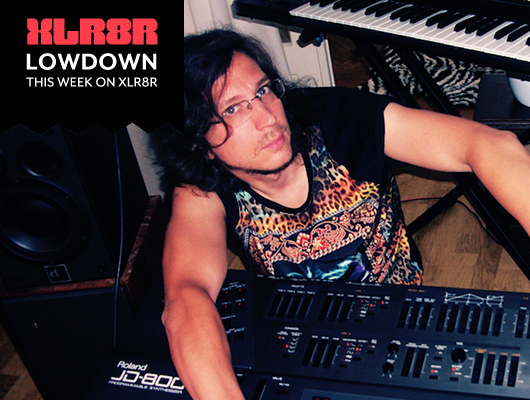
1. Prolific Dutch synth wizard Legowelt (pictured above) gave away a free sample pack of sounds from a Roland JD-800, one of the many vintage synthesizers in his collection.
2. UK duo Disclosure surprised everyone by unveiling a new tune this week, a pop-house number called “Apollo.”
3. This week’s XLR8R podcast was put together by Berlin-based Noah Pred, who will be issuing his new LP, Third Culture, next week.
4. UK pop songstress Katy B shared a new track this week. Entitled “I Like You,” the song was actually produced by fellow Brit George FitzGerald.
5. Veteran producer Mark Pritchard has been busy as of late, and this week he dropped a massive new mix that explored his passion for vintage jungle.
6. Just before it released the new CSFLY Remixes EP, Mount Kimbie shared a stream of DJ Koze’s remix of “Made to Stray.”
7. There has been a lot of intermingling between pop music and the electronic sphere over the past year or two, so XLR8R decided to look at the phenomenon a little more closely with our Pop Goes the Dancefloor feature, which includes commentary from Duke Dumont, George FitzGerald, Bondax, Jessy Lanza, and more.
8. The most popular track from our Downloads section this week came from French producer Kulkid, whose “U Were the One” combines a snappy house beat with a steel-drum rhythm and other upbeat elements.
9. Following a long production hiatus and the recent release of a new EP, Dopplereffekt seemed ripe for re-examination, so we put together a list of 10 essential facts about the mysterious duo.
10. Hotflush boss Paul Rose (a.k.a. Scuba) announced that he will soon be releasing a new single under his SCB alias.
An expanded version of the The Lowdown is also available via a weekly email newsletter. Those interested in an even more in-depth round-up of XLR8R content, including a complete listing of all the free downloads we’ve offered in the past seven days, should sign up by entering their email address below.