Five Minutes with Shlohmo at MEG Montreal 2013

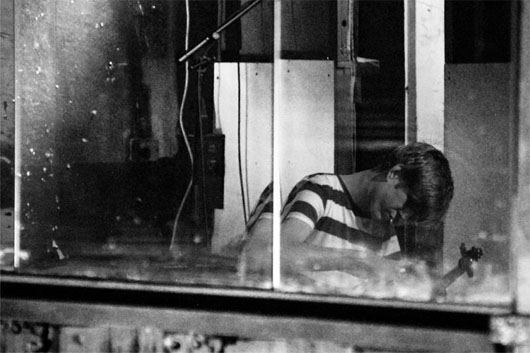
Last weekend, XLR8R went north of the border to check out a few days of MEG Montreal—for those that missed it, our complete festival review is here—and while there, we convinced a few of our favorite artists to sit down for a quick chat. One of them was Shlohmo (a.k.a. Henry Laufer), who headlined Thursday night’s festivities at Club Soda. Just before the LA producer took to the stage, we got him talking about his love for Montreal, his recent forays into professional studio production, the current state of his Wedidit collective, and what’s happening in his increasingly popping hometown.

XLR8R: You’ve played Montreal a bunch of times before. Do you have any particular affinity for it?
Shlohmo: Yeah. It’s definitely one of my favorite places to come back to. Whether it’s my intention or not, I feel like I always end coming back here more than other places, but I’m really glad I do… I feel a very nice vibe from the people. The people that I fuck with here are very similar to the people that I fuck with in other cities, like in LA. They remind me a lot of my friends.

You released the Laid Out EP earlier this year. Are you working on new material?
I’m working on a bunch of stuff right now. During all of my free time, when it’s just me, I’m really trying to work on a record, like an LP for next year. But I’m very back and forth between that and I’ve also been doing production for other people. I’ve been trying to get into the songwriting scene a little bit.

When you do production for other people, is it for singers and rappers?
Yeah, I’ve been trying to get into that. And I worked with a songwriter for the first time. I made a beat and he wrote a top line—that was the first time I’ve ever done something like that. I’m just getting used to studio world, because my music comes from very bedroom, by-myself-type shit. It’s an interesting dichotomy doing both at the same time and kind of seeing the industry side of things while I’m working on a record. I’m definitely trying to make the record very not that.

When you’re doing professional studio work, is it fun?
It is. Just because it’s something that I don’t do often. I was always interested in it, but I never really got to see what it was like being in the studio with someone. It’s fun sometimes, and then other times, after like six or seven hours when everyone is too faded to work anymore, the room gets stale as fuck. Then it gets awkward when no one wants to say anything about how to move forward.

In those situations, do you have to sometimes say, “This isn’t working”?
Right now, I’m just the guy that makes the beat. I’m trying to direct the situation a little bit, but I’m still getting comfortable doing that. I don’t know how to work Pro Tools, so I’m still trying to translate shit to an engineer. I’m like the middleman between rapper and engineer a lot of the time. People just can’t talk to each other. It’s always like that. Learning to be a producer’s producer, middleman-type guy is fucking with me. But I like it because it’s interesting.

Moving back to your own work, Laid Out definitely had a few clubbier tracks on it. There used to be a huge divide between what your own music sounded like and what you were playing in the club. Are you trying to bring those together a little bit?
I don’t even think it was necessarily a conscious “let’s make this an album that’s easier to play out in DJ sets.” I think I’ve just been listening to a lot more techno, electronic dance stuff, and older house. The 115-to-130-bpm house rhythm is really getting me.

I feel like [my music] still sounds like me, like it’s all the same synth and vocal work. It’s funny, a lot of this new record [I’m working on], it’s going 160, 180 bpm. It’s not necessarily drum & bass, but I’ve been mad inspired by breaks and older jungle stuff. My girlfriend is a huge fan of old jungle and grew up in that. I was so unaware, living in LA, and I was young. I didn’t know where to find jungle. Hearing that now, and getting the history of it, I’ve just been listening to that a lot. So, the bpms are getting faster I think.

More and more, it seems like the Wedidit crew is “growing up” and the individual members are getting more attention. How is the collective progressing and what is your role at this point?
It has really been progressing behind the scenes this last year, and next year is going to be crucial. Before, it was literally a blog. We didn’t have a trademark or LLC or nothing. It was a fake record label. We were putting out music online and the money was going into our Paypal. We didn’t have a bank account or anything. So this year, we are setting up distribution deals and are actually working with people. We have a whole team; it’s still our people—people we grew up with—but now we have people working for us, like salaries and shit. My homie Nick Melons, he runs most everything now. He’s really doing the management role. It’s been a huge weird learning process because it grew up online… We don’t know how this shit works. He’s handling a lot of the work of running a label and I’m [being] more of a co-creative director with him. I do all of the art. I still do all the record covers and a lot of the design for the web stuff.

It seemed like the Wedidit membership was a bit fluid and nebulous for awhile. Has it solidified into something more defined?
We have a really solid really faction right now. We live in the same city, the direct family.

Who is in that?
RL Grime, Groundislava, Juj, me, D33J, Nick Melons, all the crucial LA heads. The extended family is being extended through releases, and there are people like Tommy Kruise, Salva, Baauer. All the people that we hang out with contribute. It’s weird. Like Salva is only not in Wedidit because of Frite Nite, and I’m not a part of Frite Nite because of Wedidit. There is mad crossover, like Body High; Jerome LOL and Samo Sound Boy are Wedidit, but not.

How do you feel about the LA scene right now?
LA is really coming through recently. There is always some shit going on now, and I can’t say that it was the same before I moved away [a few years ago]. Granted, I was also not 21 when I moved away, but it’s not just club shit. There’s warehouse shit going on all the time. House music is coming back. There are weird techno raves that you can actually go to now. It’s cool. We’re talking about opening a night ourselves. Everyone is getting older and saying, “Oh, I can start a club night now,” from my generation. I feel like LA is definitely coming up. Downtown, there are people walking around now. That wasn’t a “thing.” It’s crazy, definitely different than what it was even three or four years ago.


Listen to Another New Song from Delorean

We started hearing about the forthcoming new album from Barcelona dance-pop band Delorean back in June, not long before the quartet shared the lead single from Apar, “Spirit.” And now, with roughly a month left before Delorean’s next LP drops via True Panther, we’re being treated to another of its upbeat and summery tunes. “Destitute Time” finds the Spanish group working with singer and label mate Cameron Mesirow (a.k.a. Glasser), who provides the breezy tune with some of her trademark stratospheric vocals. Delorean’s new song can be streamed in the player below, before Apar drops on September 10 and the band embarks on its world tour this fall (dates below).

Sept 7 – Button Factory – Dublin, UK
Sept 11 – Cargo – London, UK
Sept 12 – 0T301 – Amsterdam, NL
Sept 14 – Werkstatt – Cologne, Germany
Sept 15 – DOK – Ghent, Belgium
Sept 17 – Fleche D’Or – Paris, France
Sept 18 – Nachtlenben – Frankfurt, Germany
Sept 19 – Dynamo – Zurich, Switzerland
Sept 20 – Bi Nuu – Berlin, Germany
Sept 23 – Blaa – Oslo, Norway
Sept 24 – Strand – Stockholm, Sweden
Sept 25 – Stora Vega – Copenhagen, Denmark
Oct 7 – Independent – San Francisco, CA
Oct 9 – Neumos – Seattle, WA
Oct 10 – Branx – Portland, OR
Oct 11 – Fortune Sound Club – Vancouver, BC
Oct 14 – 7th St Entry – Minneapolis, MN
Oct 16 – Magic Stick – Detroit, MI
Oct 17 – Legendary Horseshoe Tavern – Toronto, ON
Oct 18 – Il Motore – Montreal, QC
Oct 19 – The Sinclair – Cambridge, MA
Oct 22 – First Unitarian Church – Philadelphia, PA
Oct 23 – Webster Hall – New York, NY
Oct 24 – Black Cat – Washington, DC
Oct 26 – Mountain Oasis – Asheville, NC
Oct 27 – Masquerade – Atlanta, GA
Oct 28 – Exit/In – Nashville, TN
Oct 31 – Lincoln Hall – Chicago, IL
Nov 2 – The Riot Room – Kansas City, MO
Nov 4 – Opolis – Norman, OK
Nov 5 – Club Dada – Dallas, TX
Nov 6 – Fitzgerald’s – Houston, TX
Nov 8 – 10 Fun Fun Fun Fest- Austin TX
Nov 12 – Lowbrow Palace – El Paso, TX
Nov 13 – Rhythm Room – Phoenix, AZ

Five Minutes with Poirier at MEG Montreal 2013

As many of our readers have likely noticed, XLR8R spent last weekend in Quebec checking out MEG Montreal—our complete festival review is here—and in between the myriad of shows, we convinced a few of our favorite artists to sit down for a quick chat. One of them was Ghislain Poirier, who was actually enlisted to perform twice on Friday night. We caught up with him the day before, and once we got to talking, he detailed a bit of his history with MEG, told us a lot about his Boundary project, revealed a few details about the new remix compilation he’s putting together, and reaffirmed his love for dancehall.

XLR8R: You’re actually from Montreal, so can you tell us what your experience with MEG has been over the years?
Ghislain Poirier: I played MEG the first time in 2003. I remember the show because it was at the SAT, and it was with TTC and Antipop Consortium. But Antipop didn’t come all together, and some [members] were stuck either at the border or in New York. I played two other times—one gig with DJ Marlboro from Brazil, and the other one was at Metropolis, but I don’t remember who else was on the bill. This year is the fourth time, and the festival is still here after all of these years.

You spent a lot of time this year getting the Boundary project ready, and you’ve played a few shows. Is that a project that you’re still going to be pushing forward?
Definitely. I’ve been very inspired by the whole process. So far, we’ve done three live gigs, there’s another one coming, and hopefully there will be a few this fall. It’s not even so much the gigs for me; the Boundary thing will continue. I probably have 30 sketches for new songs that I need to develop… I’m on a roll, and I have this weird goal that I want to do three Boundary albums in three years. It might be three albums in four years, but there’s a lot of creativity, a lot of bubbling going down there. It’s definitely something that I’m focusing on. I didn’t have that much time to compose music this summer, but I want to have another album for MUTEK in 2014 and synchronize everything with that. The ideas are there, it’s just a question of putting the time into it.

Is Boundary the only production and writing that you are doing? Or are you stil doing stuff as Poirier?
Yes, there’s new stuff as Poirier. This year I’ve done more remixes… I kind of slowed down a bit on that [side of my music], but now I might do more stuff with [MC/vocalist] Face-T very soon. I have a roll of new dancehall beats and I miss doing proper, slow dancehall jams. I’m also actively involved with Boogat, because I co-produced his album that he released this year.

It’s funny because this year it’s like I’m kind of busy, but I’ve been involved very strongly in three projects. There was the Boundary album, obviously, but I also co-produced the Boogat album while doing a few songs for it. Now, we’re working on another album for him and I’m very closely [involved] in the process; even when there is another producer, I’m part of the team.

And then I’m working on another project; I’m the creative director, it was my idea, and I pitched the whole project. There’s this guy in Quebec, Robert Charlebois, you’ve probably never heard of him. But he was huge. He actually kind of revolutionized music in the ’60s and ’70s, making rock, funk—but very hardcore. Stuff that Madlib knows. Stuff that the crate diggers know… I’m making a whole remix album [that pulls from] all of his catalog. The guy probably has like 30 albums, but the juicy stuff, the more adventurous stuff, was from the late ’60s and ’70s. So I’m doing the whole project. I got a remix from Fulgeance, one from Oh No, one from Kid Koala. I’m doing a few [tracks] also and I’m waiting for other remixers as well. I need to finish the project by September.

The marketing and presentation of Boundary was very subtle, and the music wasn’t presented as “Poirier’s New Project.” Was that a conscious choice?
Yeah, it was. So far, I’ve been happy with the result. I didn’t want people to be confused or disappointed by what it is, and I wanted to be very clear that [Boundary] is something else. I always felt that the Boundary name should come before Ghislain Poirier, and not the reverse. [I didn’t want it to be] Ghislain Poirier’s new project Boundary, but Boundary, the new project from Ghislain Poirier… because of the message we delivered, I didn’t have a backlash of people saying “Why is it not like Poirier?”

I don’t have the same kind of goals with [Boundary]. I’m making that music because I really want to make it. It’s been self-released. That’s further than an indie release. That’s self-released. There was no fucking Kickstarter shit for that. I didn’t beg anybody. No government. Nobody. I just do the project because I want to do it. I feel strongly about that, and I don’t mind if it’s more secret or obscure in a way… I’m just trying to do quality music that I’m really happy with. And if I’m happy with it, I can share it, sell it, and play it better.

However, most of your DJs gigs are still as Poirier, playing dancehall, soca…
Yeah. Poirier is for DJing and Boundary is all live. So that’s the definition. In the last year, I’ve been playing a lot of dancehall as a DJ.

On a global scale, dancehall, soca, and other “tropical” or “global” rhythms haven’t decreased in popularity, but in terms of people in the US and Europe being interested, it seems like the interest level has gone down. Are you still finding yourself as equally passionate about these sounds as you were before?
Oh yeah, definitely. It’s different, as you mentioned. But for me, I loved dancehall before, I loved dancehall through [the hype], and I still love dancehall. I feel like the base of all tropical bass is dancehall. It’s very funny, because I will post something that is very dancehall, something very related to Jamaica, and all the people that like “tropical” stuff will like it. Cuz we’re all coming from [dancehall] in a certain way. That was true club music from another country that invaded the world, and still does. There’s so much going on there, it’s unbelievable. In Jamaica, there are less people than there are in Montreal. They have a good-sized diaspora of people—there are a lot of Jamaicans elsewhere—but for such a small amount of population, there is such influence.

Wintercoats “Everyone Seems to Be in on Something (Kyson Remix)”**

After sharing a remix at the hands of Irish tunesmith Mmoths early last month, Wintercoats (pictured above) has dropped another rework from his Heartful EP—released back in April via Yes Please. Rising Berlin resident and recent Friends of Friends signingKyson takes on EP cut “Everyone Seems to Be in on Something,” pulling Wintercoats’ heavenly original track down into more reserved territory; the tune’s airy vocal pads leisurely float along as a procession of intricate percussion hits and recoiling noise fill the empty spaces. Wintercoats’ full Heartful EP is still available as a name-your-price download via Bandcamp.

Everyone Seems to Be in on Something (Kyson Remix)

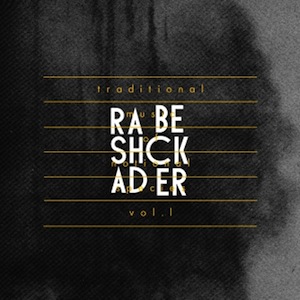
Rashad Becker Traditional Music of Notional Species Vol. I

Heads will recognize the phrase “Mastered and cut by Rashad Becker at Dubplates & Mastering, Berlin” as a kind of electronic-music seal of approval. Even if we don’t listen to the music on the physical medium it’s optimized for, Becker’s imprimatur lends gravity. Taking over after the departure of Robert Henke (a.k.a. Monolake), Becker has helmed the Basic Channel–founded facility since 1997. The volume of his back-end credits is overwhelming, but mastering remains a slippery concept, and Becker’s debut album for the redoubtable PAN challenges whatever feeble expectations we’ve managed to eke out. His day job is a hard-to-grasp complex of objective tasks with subjective aims—rolling off frequencies, finessing the stereo image, tailoring tracks for vinyl or CD, all in the service of the artist’s perceived intention. It’s a minefield of intentional fallacy, enough make an English major’s head explode. His own music, however, is feral and immediate, albeit a continent away from dance music. It’s a reminder that, despite moments of crossover success, PAN is primarily an experimental, uncompromising prospect.

Traditional Music of Notional Species Vol. I turns out to be a straightforwardly descriptive title, as these things go. The album—divided somewhat arbitrarily into numbered “Dances” and “Themes”—sounds like the mutant form of communication Korg Electribes and modular synths would develop after having been abandoned in the woods and left to propagate freely. Becker seems to be simply documenting these insectoid sounds in their natural environment, à la Chris Watson, rather than creating them in the traditional sense; hinged squawks of feedback, serrated chirrups of watery, LFO-damaged synths, and even vaguely human moans are captured in precise topographic detail, and left in big yawning loops. For music so resolute and unique in its vision, it’s also richly referential. Without ever sounding exactly like anything else, Becker’s music has slivers of conceptual overlap with the unstable tones of Jon Hassell’s fourth-world music, Bee Mask’s febrile techno-naturalism, and David Tudor’s scandalous, juddering spurts.

Becker’s debut album appears difficult because it is not made for what the artist terms “music-hostile environments,” or their attendant attention spans. Like the best avant-garde music, Traditional Music is intended for a kind of pure, unprejudiced listening style, ideally on a well-tuned hi-fi. These looping sounds cohere, albeit in strange and non-narrative shapes, but require a degree of patience and open-mindedness that is thin on the ground, even for listeners who connected with, say, PAN’s Lee Gamble releases. The absence of anything close to immediate gratification might induce an itchy anxiety in those accustomed to running music in the background. Still, despite its thorny convolutions, Traditional Music of Notional Species Vol. I also provides us with the tools to really hear it, and expands the hushed reverence surrounding Becker’s name to his own work, not just others’.

Video: Quasimoto “Catchin’ the Vibe”

Madlib‘s Quasimoto alias recently released the Yessir Whatever LP—a collection of unreleased tracks, rarities, and b-sides—via Stones Throw, and today the iconic LA beatmaker/MC has shared a video for album track “Catchin’ the Vibe.” Quasimoto is in a laid-back mode here, with hazy, unassuming beats providing a mellow base for his stoney raps. The accompanying visuals were directed by Tuomas Vauhkonen and Jeremias Nieminen (who set out to film the piece in Southern California, but were denied permits), and are said to feature a costumed cameo from Lord Quas himself. As should be expected, the video itself revels in the pranksterism we’ve come to expect from Madlib’s helium-voiced alter ego, as it follows local actors around locations in Finland and Romania.

Spirit Guide “Boo Suena”*Ounce*

Brooklyn producer Spirit Guide just sent over this shuffling cut from his forthcoming Intimacy EP, which is due out on August 14 via Ounce. “Boo Suena” represents a wide palette of inspiration for the artist, as he combines seemingly unrelated samples to form a genre-defying whole. Breakneck drumwork, sub-infused basslines, and aggressive synths are all at work here, and as a result, the track’s quieter moments become all the more important. Often, it’s that same negative space which nearly brings the tune to a screeching halt—like the appearance of a lone, distant piano in the track’s spontaneous ambient bridge, for example—before Spirit Guide smartly returns to an infectious chorus which emanates darker undertones.

Boo Suena

Boo Suena

Raffertie Sleep of Reason

For several years, we’ve known Raffertie as the name behind a range of timely club tunes; his releases have crossed an admirable array of respectable labels, including Planet Mu, Special Branch, Black Acre, and current home Ninja Tune. Still, even as he was building this respectable discography, it was hard to pin down exactly who Raffertie was. Build Me Up, the leading single and EP from Sleep of Reason, changed that, as it pulled back the UK producer’s veil of relative anonymity and presented a voice and a face. This often difficult (and sometimes ill-advised) transition—from producer to songwriter, from beatsmith to vocalist, from persona to ego—is one that inherently reveals a lot about a musician. Raffertie has crossed this divide with aplomb.

Stylistically, though we’ve seen Raffertie experiment with different sounds before, Sleep of Reason marks a stark divergence from his previous expositions. The grittiness present in his prior work is still there, but it’s more of a logical accent to the dark air that hangs over the record—the music is more songwriter mournful than dancefloor baleful. Slowly decaying textures and icy whispers of processed vocals borrow a page from the obvious comparisons—James Blake and Burial—but the result is a far cry from derivative.

If anything, the album’s main shortcoming is that this new sound’s range doesn’t quite support a full-length. The top half of Sleep of Reason feels out the limits of the template, while the bottom half comes across like the sketches that gave way to those more refined moments. For instance, “Known” starts promisingly with an ominously droning string bass and sparse textural flourishes before an arpeggio line breaks through the fog. Unfortunately, the composition builds and drops new elements before they have a chance to evolve into something grander, and the intoned vocals are a little too muddy to carry much weight. “Trust,” on the other hand, wears much more on the surface; the vocals are front and center, and the track is built upon a slowly plodding beat. Here, the songwriting feels somewhat crude, especially with its nigh-sophomoric lyrics—”if someone told me this was it/if someone told me who to kiss.

That said, these missteps are ultimately evidence of a nascent, developing aesthetic, as opposed to a misguided explorative phase. “Build Me Up” is eminently fresh, with a backswung pop hook built around the familiar absent thud of ducking compression as layered vocal chords ebb in the background; it pulls from a myriad of inspirational sources, but still stands on its own. Similarly, “Rain” starts off with lonely sustained guitars, sounding not too far from The xx, but Raffertie’s take grows more soulful with a swelling of vocal counterpoint and harmony.

On the whole, Raffertie uses his voice to great effect on Sleep of Reason, on occasion even pulling a single line for a sample. “Gagging Order” offers a prime example of this technique, and also happens to be one of the more dynamically arranged tracks on the album. It begins with a minimal hook of rolling hi-hats and a simple piano progression, but heavy bass gradually comes in, the piano part blooms, and the song evolves into a minor epic—for a track running just under four minutes in length, it features a range of novel ideas.

Sleep of Reason is an ambitious effort, and one that presents a distinct statement. Raffertie by and large stays out of the way of his songwriting, and opts for subtlety over bombast—an asset that eludes many songwriters.

Watch Hot Natured’s New Video for “Isis (Magic Carpet Ride)”

Following last month’s announcement of its debut full-length, Different Sides of the Sun, UK supergroup Hot Natured—which includes Hot Creations label heads and esteemed producers Jamie Jones and Lee Foss, along with Ali C and Luca L of Infinity Ink—has shared a brand-new video for its Egyptian Lover-featuring single, “Isis (Magic Carpet Ride).” The three-minute clip follows a group of friends, who spend the night drinking and dancing before winding up on the floor. Given the strange and amusing string of events which ensue throughout the psychedelic video, we’d wager they all took a special pill or two to end their evening. The seductive, feel-good piece for Hot Natured’s new tune can be seen below.

Fantastic Mr Fox “The Trap” b/w “Jackal Youth”

Following his intial burst of material that appeared in 2009 and 2010 and subsequently made Fantastic Mr Fox a prominent early explorer of the “bass music” hybrid, the Berlin-based producer has not been in much of a rush to check in with his listeners. After a silent 2011, last year’s San’en EP saw his productions drift towards more song-like forms, only to have the single-sided “Power” 12″ that followed point back to the dancefloor. “The Trap” b/w “Jackal Youth” marks the next point in Fantastic Mr Fox’s gradual evolution, delivering two songs that continue to push the man’s noted knack for chord structures and tricky rhythmic twists into a more tool-like package.

“The Trap” and “Jackal Youth” complement each other well. Each tune exists somewhere in the lower end of the 120-bpm spectrum, and while the a-side cut does implement a tastefully catchy vocal sample to guide its movement, both tracks’ rhythmic offerings seem to be the intended focal point. Though his output hasn’t exactly been prolific over the years, Fantastic Mr Fox has nonetheless landed on a sound palette that is distinctly his own, one that can specifically be heard in the the church organ-like chords, brassy stabs, and mangled—but not overbearing—brand of percussion which he uses to fill the edges of these tracks’ predominantly four-on-floor drum patterns.

Still, for those who have followed Fantastic Mr Fox’s career over the years, it will be hard not to feel like a little something is missing from this single. While these tracks would certainly not be out of place in a club setting, at this point, coaxing dancefloors is still not the producer’s strongest attribute. In some ways, Fantastic Mr Fox sounds like he’s still trying to find his own path in this realm; “The Trap” is vaguely reminiscent of Blawan’s “Getting Me Down”—though the otherworldly reach of that tune has been replaced with Fantastic Mr Fox’s usual bluesy air—while “Jackal Youth” uncovers some intriguing patterns and sonic ideas, but overall feels a bit lackluster. In the end, “The Trap” b/w “Jackal Youth” is perhaps a necessary evolutionary step in Fantastic Mr Fox’s career, one which his fans should hope will be greatly outshined when the man eventually drops the debut full-length he is reportedly in the midst of crafting.

Page 1615 of 3781
1 1,613 1,614 1,615 1,616 1,617 3,781