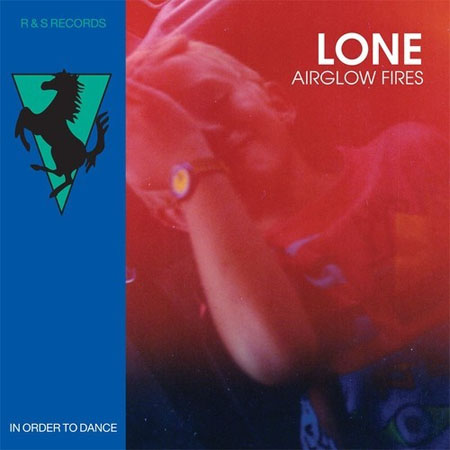
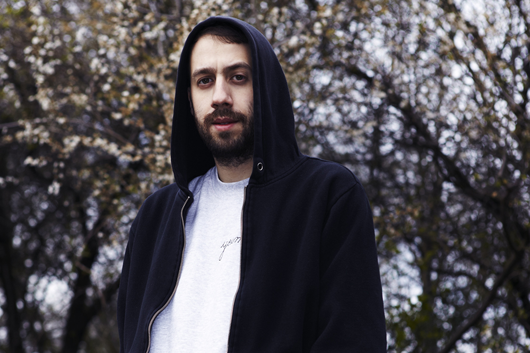
Late last month, we learned that Lone was in the midst of prepping a new 12″ single for his regular label home R&S, and now the Nottingham producer has shared a stream of that record’s warm, jazzy a-side, “Airglow Fires.” Before the “Airglow Fires” b/w “Begin to Begin” single drops on July 8, we’re treated to a slice of playful house with just the right touch of melodic flair and an extra helping of soul-drenched chords. And for those patient enough to make it through the entirety of Lone’s latest, a brief hip-hop instrumental sketch closes the final 30 seconds of “Airglow Fires,” which is something we haven’t heard from this shapeshifting artist in sometime.
It has been almost three years since Gold Panda‘s solid debut, Lucky Shiner, was released—time which has seen him expand his sonic pallette tremendously from his early bouts of starry-eyed boom-bap. Following the producer’s unveiling of the genre-hopping “Brazil” single in April, the entirety of his sophomore album, Half of Where You Live, is now available to stream in full. Half of Where you Live was born out of Gold Panda’s recent move from his hometown of Essex to Berlin, and takes a more world-weary stance in both production and inspiration than his previous work. (The LP’s original announcement conceded that the album was designed as “city music.”) Half of Where You Live is due on June 11 via Ghostly and Notown, but the full effort is streaming here, courtesy of NPR.
Vienna-based production duo Mieux throws together three different—though equally relevant—facets of electronic music into a furiously toxic stew, taking care not to fall too far onto any side of the house, juke, or UK-bass spectrums. Here, the pair converts German groovesmith and Up My Alley labelmate TBRCK‘s lean electro cut “Droptop” into an iron-fisted banger, replacing the original production’s mellow tinge with a hollow, shambling bounce. Like a gunshot grazing both Bristolian house and Chicago footwork, “Droptop (Mieux Remix)” is one truly ferocious cut. Mieux also just released the four-track Neufant EP, which can be streamed after the jump.
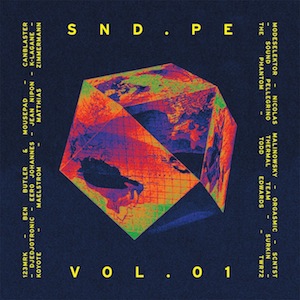
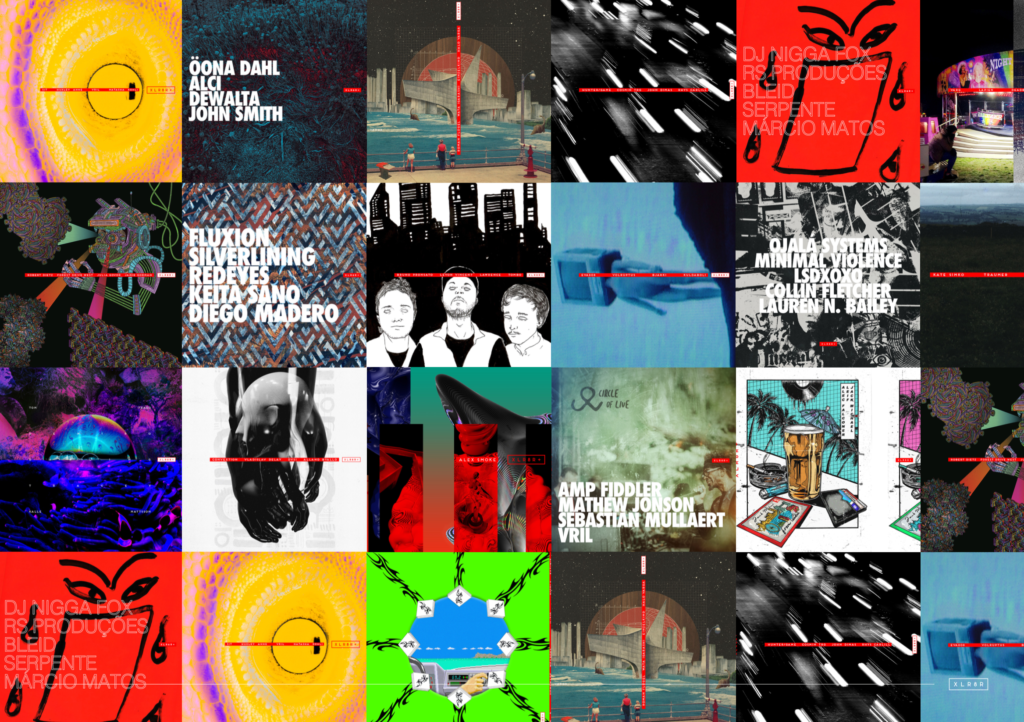
After four years of conducting business, Parisian label Sound Pellegrino is set to drop its first full-length release in the form of a compilation of exclusive tracks from the label’s impressive roster of regulars and sometime collaborators from the worlds of house and bass music. Featuring contributions from such venerable names as Todd Edwards (pictured above), Surkin, Modeselektor, and Matthias Zimmermann, the 13-track SND.PE Vol. 1 will be released on June 17. What’s more, the Sound Pellegrino crew is set to appear on BBC Radio 1’s Diplo and Friends show on June 15 and on LuckyMe’s Rinse FM show on June 20. But before all of that, the tracklist and artwork for SND.PE Vol. 1 can be found below.
01. Ben Butler & Mousepad – Still Moving 02. Matthias Zimmermann & SCNTST – Rick 03. Orgasmic – Diamond Falls 04. The Phantom – Cruising 05. Jean Nipon & Koyote – R.M.S. (to Steve) 06. 123Mrk – Can’t Believe 07. Nicolas Malinowsky – Skateboarder 08. K-Lagane – Bump 09. TWR72 – Heat 10. Surkin & Todd Edwards – I Want You Back (Canblaster rework) 11. Modeselektor & Sound Pellegrino Thermal Team – Negativity 12. Djedjotronic & Maelstrom – Buran 13. Eero Johannes – Real Virtuality
Footwork and ghetto-house legend Traxman (a.k.a. Cornelius Ferguson) is recovering after being shot in the leg during an armed robbery in Chicago on May 28. The producer, having just returned from a recent tour in the UK, was confronted on his way to a local store, shot, and had $250 in cash and his passport stolen. Planet Mu started a fundraiser on Indiegogo this past weekend to raise $500 to replace the money and Traxman’s passport. The goal has already been met, and according to the fundraiser site, Traxman is “in good spirits and on the mend.” Nonetheless, further information can be found, as well as donations made, here.
Simply put, MUTEK 2013 was a pleasure to attend. The Montreal festival was in its 14th year, and although we didn’t arrive until the second day of the festivities, MUTEK proved once again that it’s more or less the standard bearer for how to put together—and execute—and high-quality event. Of course, being in Montreal and taking place during the first days of summer certainly helps, as few places feel more glorious, welcoming, and, yes, downright adorable when the sun is shining, but MUTEK is so much more than that. This year in particular, the line-ups were strong, the hiccups were inconsequential, the sound and visuals were top-notch, the crowds were enthusiastic and intelligent—a rare combination in the modern festival landscape—and the performances were… well, many of them were downright sublime. In short, there was a lot to love about this year’s MUTEK, but a few things really put it over the top.
Nils Frahm is absurdly talented.
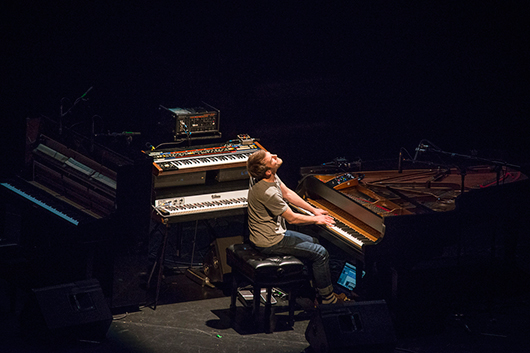
German composer/producer Nils Frahm opened up Thursday’s installment of A/Visions (MUTEK’s audio-visual series) and absolutely floored the audience with his performace. Bouncing between three different set-ups (one with synths, the other two with more traditional pianos) and offering inventive takes on classical composition, Frahm’s set was an absolute stunner. Without question, the guy is a virtuoso, but there’s a real charm to his work, as the music transcends the limits of most classical piano fare. Although the show took place in a seated theater, it’s no stretch to say that there was a real electricity in the room, particularly when he augmented his playing with synth pulses and electronic loops. It’s not often that one sees a standing ovation at an electronic music festival, but Frahm received several over the course of the night.
Frahm actually had a busy week at MUTEK, as he also performed at a special edition of the Boiler Room on Sunday. Later that day, he played for a third time, opening up for Pantha du Prince & The Bell Laboratory at the Maison Symphonique. (Frahm was enlisted at the last minute after an unexpected cancellation by scheduled openers Bugge Wesseltoft and Henrik Schwarz.) If MUTEK gave out a “Most Valuable Player” award for 2013, it very likely would have gone to Frahm.
Andy Stott’s live show is a can’t-miss proposition at this point.
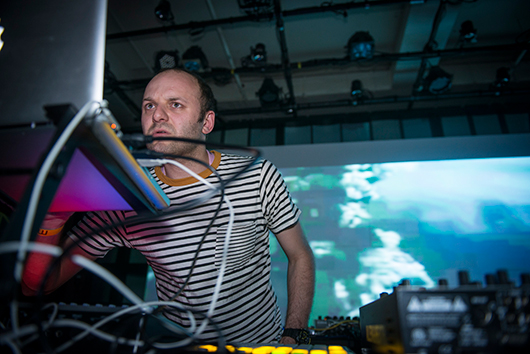
Over the past year, Andy Stott has been a fixture on the electronic festival circuit. His set at last year’s Decibel Festival was one of our favorites, and his Thursday night performance at MUTEK was similarly excellent. After opening with a harsh squall of dirge, the UK producer eventually moved into his dark and dubby comfort zone, piloting a journey through an assortment of chugging, slow-motion house and techno. While there was certainly a doom-and-gloom bent to Stott’s music, there was also a steady build to the proceedings, which climaxed in a bevy of classic hardcore breaks and riled the crowd at the Sociéte des Arts Technologiques (commonly referred to as the SAT) into a frenzy.
Martyn’s new live A/V show has a lot of heart. Literally.
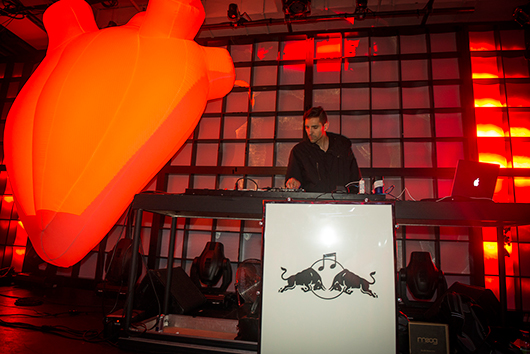
Martyn has a new album slated to arrive in the fall, and he’s recently unveiled a new live A/V show to go along with the music. Both the LP and the show are titled The Air Between Your Words, and his headlining performance on Thursday night at the SAT marked only the third time he’d done the show for an audience. The visual aspect of the show was striking, as Martyn brought a giant, inflatable heart (modeled after a human heart, not a Valentine’s decoration) onstage, which was illuminated throughout the performance by a constantly morphing series of graphics and various visual elements. (The show was actually designed by Martyn and his 3024 partner Erosie, who does all of the label’s artwork.) As for the music, Martyn dropped a few staples, including “Masks,” “We Are You in the Future,” and the requisite flash of drum & bass toward the end of his set, but there were also a lot of new tracks, including several songs with a surprising amount of organic percussion sounds. Martyn has moved more towards proper house and techno in recent years, and his rhythmic sensibilities have become increasingly straight in the process, but much of his MUTEK set was marked by cycles of clattering drum patterns and a kinetic sense of motion, which actually served the music quite well.
Ghislain Poirier’s new Boundary project is good… and hard to categorize.
On Friday night, Ghislain Poirier—who’s been operating for the past few years as simply Poirer—debuted his new Boundary project at the SAT. After years of turning out various permutations of bass-heavy electronics, dancehall, and soca, Poirier is exploring new ground with Boundary. However, explaining that ground is rather difficult, even after seeing the live set. Poirier took the stage with drummer Chris Olsen, and over the course of an hour, the two turned out a compelling session of percussion-heavy electronic sounds. At the same time, it wasn’t really straightforward dancefloor fare. One could detect elements of techno, but the music rarely settled into a steady 4/4 groove. The rhythms evolved and changed, the tempos shifted, and the show felt more like watching a band than settling into a dancefloor at a club. It’s tempting to reference terms like IDM or ambient when describing Boundary—and there were certainly parallels to ’90s-era Warp in the music—but the show was far more raw and visceral than that, especially with the live drums. At the same time, the duo also cooled things out occasionally and offered some introspective, even cinematic moments. In short, putting Boundary into any kind of neat box is just about impossible. Poirier isn’t following any trends or current movements; instead, he simply appears to be following his own artistic vision. So far, it appears to be working, even if the pundits—ourselves included—are left scratching their heads.
Jon Hopkins is about to blow up.
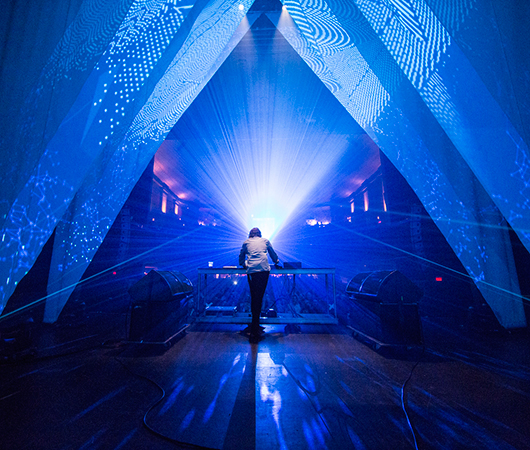
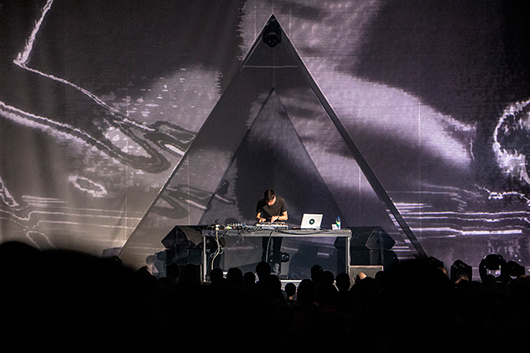
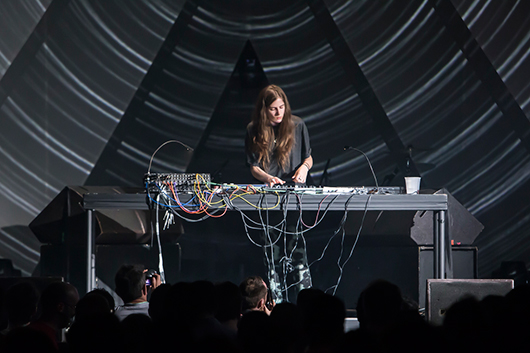
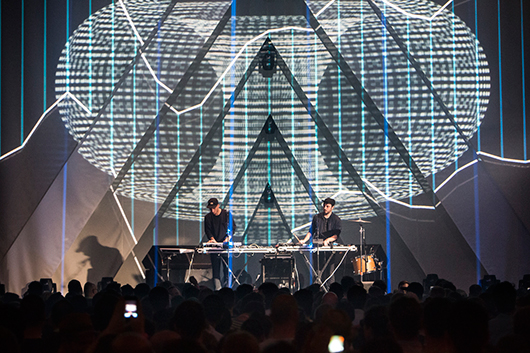
UK producer Jon Hopkins has been in the game for more than a decade, and though we’ve usually liked his music just fine—his 2009 Insides LP was particularly good—it appears that he’s finally made the proverbial leap and is about to assume a new level of prominence within the electronic sphere. Primarily known for his lush soundscapes and emotive melodies, Hopkins’ new album, Immunity, which drops this week, finds him successfully utilizing those elements within a techno template, and on Friday night at MUTEK, he brought this thunderous new sound to a packed house at Montreal’s massive Métropolis venue. Big is the best word to describe the music, as the beats boomed, the melodies were epic, and each track filled the sonic spectrum from top to bottom. Adding to the grandiosity of it all were the visuals, as Hopkins was stationed in front of a two-story series of white screens, each one with a progressively smaller triangular cut-out. Projected onto the screens was a constantly evolving mélange of geometric shapes and more abstract imagery, and the overall effect was truly stunning.
Hopkins’ show brought to mind the work of his Domino labelmate Four Tet—another artist whose once-delicate production aesthetic has shifted toward the dancefloor—though Hopkins has actually taken his music further into the club, ultimately offering something that for all its richness is actually much harder and more visceral. Comparisons aside, the show was impressive, and undoubtedly of of MUTEK 2013’s standouts.
Robert Hood still does techno better than just about everyone.
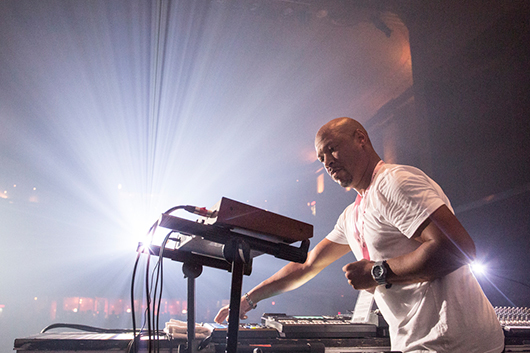
Robert Hood was given the headlining slot on Friday at Métropolis, and even following the bombast of Jon Hopkins, the veteran producer went on stage and handled his business. Performing live, the Detroit veteran (who now lives in Alabama) didn’t offer much in the way of surprises, but that didn’t make the music any less compelling. After 20-plus years in the game, he’s going to do what he’s going to do, and he knows how to do it well. As such, hard techno was the order of the night, and watching Hood tap out drum patterns on his gear while his booming kicks rattled the floor was an absolute thrill. It was relentless, it was raw, it was Robert Hood. We certainly weren’t complaining.
Hood appeared again on Sunday evening, closing out the special MUTEK edition of the Boiler Room. Blending hard techno with some housier fare from his Floorplan project and a handful of vintage gems (Plastikman’s “Spastik” and New Order’s “Blue Monday were definitely played), it’s no exaggeration to say that Hood absolutely smashed it, stealing the show after an impressive afternoon of music.
Graze just might be something special.
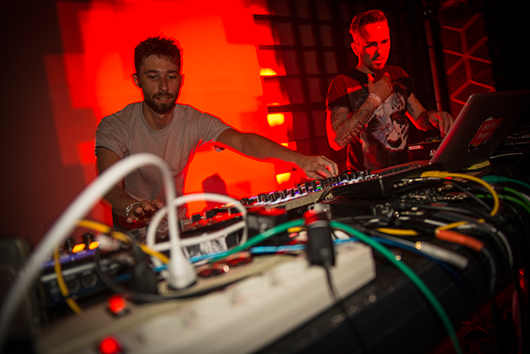
Anyone who’s been regularly reading XLR8R over the past few months has likely noticed that we’ve taken quite a liking to Graze, the new collaborative project from Adam Marshall and XI. Following the duo’s excellent self-titled EP (and our Bubblin’ Up profile), we were admittedly excited to witness the pair’s debut live show at MUTEK. Tasked with closing out the SAT on Friday night, Graze wasted no time in unfurling its percussion-heavy attack. Simply put, Graze is all about drums, and the vitality of its music lies in the duo’s ability to layer rhythmic patterns effectively. There wasn’t much in the way of melody, but the pair honestly didn’t really need it—the percussion alone had already ensnared the crowd. Given that, when the occasional synth flourish or rave throwback did find its way into the proceedings, the effect was particularly potent, and the energy level would noticeably jump. Clearly, it’s still early days for the Graze project, but Marshall and XI have certainly gotten off to a great start.
Laurel Halo is weird—in a great way.
XLR8R co-sponsored a showcase on Saturday night at Métropolis, and one of the early slots was given to Laurel Halo. Performing live with a small arsenal of gear, Halo’s set was entirely instrumental and loosely rooted in techno, though the rhythms and tempos were far too spastic (and at times abstract) to be neatly categorized. There was nothing very linear about her performance, yet that did nothing to detract from the music’s appeal. Much of the set brought to mind the work of artists like Shackleton, in that the tracks had a sort of organic vitality and were constantly morphing, changing, and shifting as Halo manipulated her rig. The tempos—and the energy level—rose and fell, but there was nonetheless a constant build, and by the end of her hour on the stage, Halo was banging it out in proper techno fashion, much to the delight of the dancefloor.
We have nothing bad to say about John Talabot.
We admit it. We love John Talabot. Not surprisingly, his show on Saturday night at MUTEK did nothing to change that fact. As always, Talabot took the stage alongside fellow Spaniard Pional; the duo has essentially spent the last year on the road, and that experience was readily apparent in its well-rehearsed live set. Though the sound was admittedly a bit off during the performance—it seemed to lack a bit of low-end heft—there was little else to take issue with during the hour-long session. The set was heavy on tracks from ƒIN, although many had been slightly tweaked and/or extended for a live setting. Songs like “Destiny” and “So Will Be Now…” obviously stood out, but the pair also slipped a couple of unreleased tracks into the set, including the infectious “I’ll Be Watching You,” a pop-tinged number that’s been a part of the Talabot live show for awhile now. The show ended with another live staple, a mash-up of sorts which combined Talabot’s debut 2009 single “Sunshine” with his piano-house-flavored remix of Teengirl Fantasy’s “Cheaters.” It was a joyous finale, and hammered home just how much potential Talabot and Pional have as they move into the future.
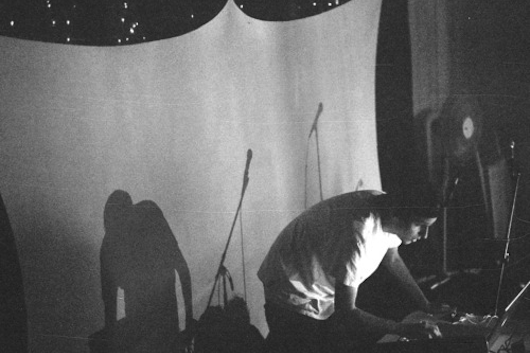
Deadbeat
MUTEK understands the importance of the visual element.
At its core, MUTEK is an electronic music festival. However, its mission goes well beyond that, as festival organizers have always made a point to celebrate more than just the music. Technology is a big part of the MUTEK experience, as are the visual arts. As it happens, the two often go hand in hand at the festival, and 2013 was no different. On the whole, the MUTEK shows looked great. The A/Visions shows were impressive, but even the purely musical events at the SAT and Métropolis offered a stellar visual element. At these kinds of festivals, even the most ardent techno and electronic music fans can grow weary or find their attention drifting, particularly after absorbing hours of thudding rhythms, but MUTEK, as it always does, took extra care to break up the monotony with top-shelf lighting, visual projections, and stage design.
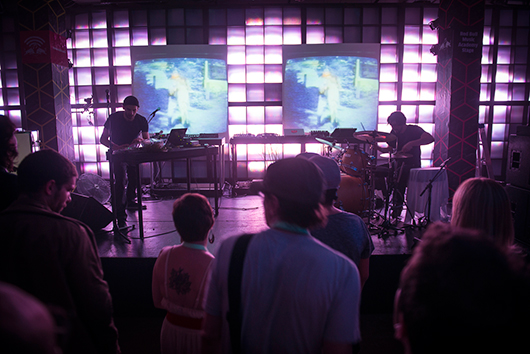
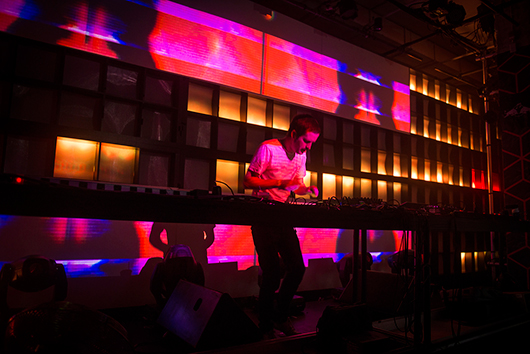
The festival updates the visual aesthetic of the SAT stage every year, but this year’s treatment was particularly good, with a large-scale lattice of colored light boxes covering the wall behind the stage. Looking not unlike an old-school disco dancefloor or even some of today’s flashier MIDI controllers, the grid was illuminated in an endless of geometric patterns, which enriched the overall experience. That said, the Métropolis definitely took the crown for the most impressive visuals, particularly once the giant screens were unveiled on Friday night. In tandem with an array of light beams that were installed all around (and above) the stage, a series of graphic projections offered a visual element that was both immersive and on par with the high quality of the music emanating from the stage.
Boiler Room in the SATosphere
Missing Piknic was a bummer, but Boiler Room was fantastic.
Every year, the Sunday afternoon Piknic at MUTEK is one of the festival highlights. After nearly a week of shows inside clubs and theaters around the city, the chance to head out to Parc Jean-Drapeau and hear DJs in the open air while soaking up the summer sunshine is always a great way to wrap up the festivities. We’re guessing that Piknic offered more of the same this year—a closing set from John Talabot going back-to-back with Axel Boman sounded especially promising—but… we didn’t go.
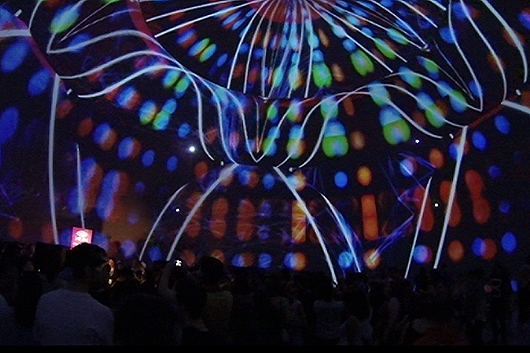
That said, we had a very good reason. For the first time, Boiler Room came to MUTEK, and assembled a stellar line-up that included, Nils Frahm, Prison Garde, Boundary, Deadbeat, Onra, and Robert Hood. Even better, the whole thing took place the SATosphere, an incredible dome space on the top floor of the SAT that allows for enormous 360-degree projections. As such, the entire affair was breathtaking from a visual standpoint, and the quality tunes only added to the enjoyment. We’ve already mentioned the ace performances from Nils Frahm and Robert Hood at Boiler Room, but Boundary and Prison Garde (who composed a brand-new live set of synthy, vibey techno—which he said was inspired by Cold War radio transmissions—especially for the show) were also standouts. After hearing Robert Hood in particular, we left with no regrets about our decision to attend. That said, next year it would be nice if Piknic and Boiler Room were not happening simultaneously, as both were well worth checking out.
Pantha du Prince & the Bell Laboratory reaffirmed our faith in music.
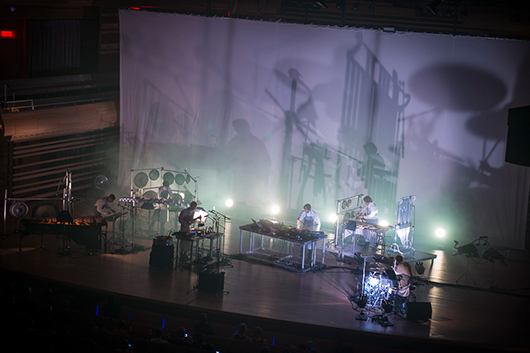
This may sound like an exaggeration, but the Sunday evening performance from Pantha du Prince & The Bell Laboratory was only one of the best shows we’ve seen, well, ever. It was that good. Situated in Montreal’s pristine Maison Symphonique, the sound was absolutely perfect, something which became apparent as soon as the six-piece ensemble sauntered onstage—dressed in lab wear—while slowly ringing hand bells. What began as intermittent tones slowly coalesced into a hypnotic melody, after which the individual members assumed their various stations on stage. While Pantha du Prince himself appeared to be manning the electronic elements, the members of The Bell Laboratory (apart from the drummer) were all playing chime instruments—bells, xylophones, and even gongs were all part of the proceedings. True to the Elements of Light LP, the songs developed slowly, gradually building into gorgeously melodic pieces of techno. Although the Maison Symphonique is a seated venue, audience members couldn’t help themselves from getting up—some even darted into the aisles to start an impromptu dance party.
It’s difficult to communicate just how good the music sounded, but the acoustics of the room allowed the group’s array of chimes to sonorously float through the space. It was an ideal setting for Pantha du Prince to showcase his music, especially this project, as the music was rich, lush, and complex but also came across sounding light as air. As the show proceeded, the energy level in the room was buzzing, as it quickly became clear that we were all witnessing a very special event. MUTEK was full of wonderful performances and great music, but this show was on another level entirely.
It’s rare that even the most inventive producers are allowed the freedom or the scope to undertake a project like this and do it justice. After seeing the Pantha du Prince & The Bell Laboratory in action, we were thankful that Hendrik Weber was afforded the opportunity. It was a truly phenomenal musical experience.
Juju & Jordash closed out the festival in fine fashion.
It’s not often that Juju & Jordash make their way to North America, which made the Amsterdam-based duo’s performance MUTEK a much-anticipated event, even though it kicked off around 2 a.m. on Sunday night. The pair was also tasked with following Moritz Von Oswald and Juan Atkins, who were performing music from their joint Borderland album. That set was intriguing, with the two techno legends slowly developing sedate, bass-heavy techno, but the energy level quickly leapt once Juju & Jordash took the stage. As always, the music was completely improvised, but the duo—which relies extensively on jamming both in the studio and in the live setting—was clearly at ease, assembling one dancefloor-ready rhythm after another and comfortably exploring various facets of the house spectrum. While this approach did mean that there was no particular “track” to listen for or get excited about, the music had a loose, adventurous flair, and actually demanded the audience’s collective attention, as even the best Juju & Jordash grooves were only going to happen for a few moments before disappearing into the ether. After experiencing so many things and hearing so much great music over the past few days, it somehow felt appropriate to end on such an ephemeral note.
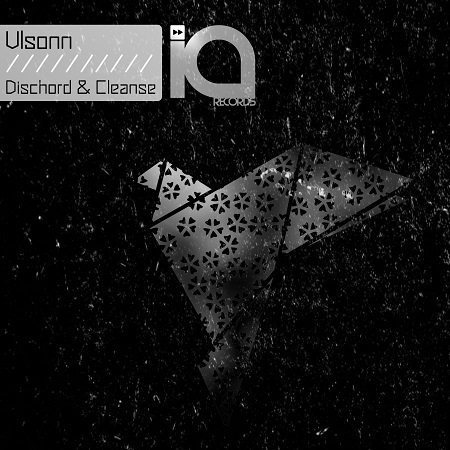
Rising Canadian garage enthusiast Vlsonn already has a slew of works kicking around in his archive, and now has finally set a date for his Dischord & Cleanse EP—the producer’s official debut on Immersed Audio—to drop. “Bison Run” falls square in the middle of that project’s runtime, setting up a wobbly organ and clattering percussion before moving those pieces towards the dancefloor, letting the organ mischievously pound out a killer riff and cutting in an obligatory R&B sample over top of the increasingly chaotic track. If nothing else, Vlsonn can claim the EP certainly does live up to its title. Dischord & Cleanse is out June 10 via Immersed.
On the first release for his new Hadal label, Hessle co-founder Kevin McAuley (a.k.a. Pangaea) continues to toy with the amalgamation of techno, hardcore, and jungle influences that characterize the sound of his double EP from last year, Release. But where that record occasionally sacrificed dancefloor impact in favor of intricacy and structural complexity, McAuley’s latest three tracks make no such compromise; instead, they blend detailed sonics with irresistibly full-on rhythms to create some of the most enjoyable club tunes we’ve heard all year.
“Viaduct” is a storming construction of fuzzy percussion and warehouse-ready rhythms. Its opening loops pack an immediate impact, as the shuffling, degraded drum-machine beat combines with teases of minimal melodic elements to entice the listener with an oddly comforting feeling of oversaturated warmth. Once the straightforward kick and hi-hat pattern enters around the two-minute mark, however, the track kicks into gear and unfolds into something reminiscent of late-’90s British techno at its most gritty and direct.
On the flip, “Mission Creep” treads similarly club-friendly territory. Its composition of abrasively rhythmic vocal snippets and uneven, white-noise hi-hats make good on the detailed percussion that McAuley teased on Release, but the energetic backbone of dense kicks and tight, whip-like snares keep the production’s focus directly on the dancefloor. “Razz,” meanwhile, is the most hyperactive moment on Pangaea’s 12″, as its relentless churn of toms and outbursts of crackling synths utterly ooze with peak-time energy. Before Viaduct, the producer demonstrated a knack for combining classic strains of club music into something more unique and unusual, but the artist’s latest offering takes things a step further—amalgamating the best of vintage techno with dubstep’s hardcore and jungle roots to create music that’s meant solely for laying a dancefloor to waste.
Dusty textures are chopped, glitched, and strewn across English producer Microburst‘s remix of Lotide‘s “Lemonade Love.” In this cut the former producer displays his knack for tastefully glitched percussion, which—when combined with Lotide’s warm melodies and thick soundscapes—results in a gracefully low-key tune. A collaborative effort that crossed the Atlantic, this cut is hopefully only the beginning of the two producers’ work together. Microburst’s remix of “Lemonade Love” will appear on a forthcoming self-released EP from Lotide (pictured above) to drop later this summer.
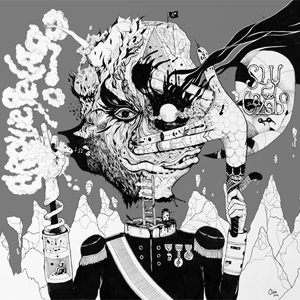
Midway through the titanic title track on Archie Pelago‘s new EP, two tiny melodic fragments from the preceding two tracks come racing through the footwork-indebted sprawl, only to get torn asunder and absorbed into the song’s gravitational pull. At 15-plus minutes, Sly Gazabo‘s namesake cut throws an almost excessive amount of ideas at the listener and very rarely repeats itself, making the EP a paramount listen in more ways than one. For starters, it’s the inaugural record on the Bubblin’ Up three-piece’s newly launched Archie Pelago Music imprint, and secondly, it’s the Brooklyn group’s most musically accomplished, experimental work to date.
“In the Room,” with its earworming saxophone/violin interplay and persistent groove, is one of the finest tunes the outfit has yet completed. Like the rest of the EP, the track is stuffed to the gills with tiny flourishes of sound—from the bizarre, happy-go-lucky breakdown nestled in its core, to the stand-alone notes and melodies delivered by an array of instruments—but is kept refreshingly buoyant thanks to its exceptional hook and persistent groove. If “In the Room” is the catchy centerpiece around which the rest of Sly Gazabo revolves, flickering opener “Avocado Roller” kicks things off in proper fashion. Coming to life little by little with a clanging house skeleton, the production eventually moves into a tougher, bass-driven groove supported by an ascending synthline and the leisurely shuffle of interplaying vocals and strings.
Indeed, the front half of Archie Pelago’s record is decidedly more house-inspired than the freakouts which comprise the back half. Closing track “Nancy’s Library” owes quite a bit to juke, albeit disarmingly so, as it leans on mellow flutes and a gentle, well-orchestrated string section. The trio somehow makes the Chicago-bred genre sound soft without eschewing its inherent bite. “Nancy’s Library” is too relaxed to be proper footwork, but the same cannot be said for the EP’s title track.
Longer than the rest of the record’s tracks combined, “Sly Gazabo” is difficult to make sense of at first. It’s musically chaotic, erratically throwing whatever the group has around its studio into a 160-bpm burn and wringing some harsh, thudding chords out of the mess. The madness continues past four minutes, but things gradually ease up as gentler, reverb-soaked chords transform the tune into something else altogether. It’s fiercely experimental, invigorating, and despite its length, never runs out of steam or ceases to be interesting—much like Sly Gazabo as a whole.