LA-based DJ/producer Urulu has had an impressively busy 2013 so far, with the latest fruits of his labor appearing in the form of a collaborative EP alongside London duo Chaos in the CBD for the Needwant imprint. Perhaps because the man just can’t help but keep churning out new tunes, Urulu has offered up “Lonely Weekend,” a “re-interpretation” of the “Twenty Eight” from R&B crooner The Weeknd. Urulu thankfully strips away much of the overwrought emotion of the original track, laying down a deliciously deep and inviting production on top of which filtered snippets of “Twenty Eight” can be heard bathed in reverb and delay.
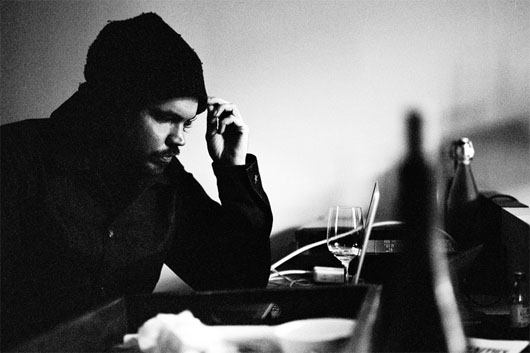
Detorit’s Movement festival kicks off this Saturday, bringing a slew of renowned DJs and producers to the legendary Midwest city for a three-day celebration of dance music. In addition to the many noteworthy sets taking place as part of the festival, an array of extra events and afterparties are planned to coincide with Movement, and—fortunately—a definitive guide has appeared to help festival-goers navigate their many options. Put together by Resident Advisor, the list of afterparties is substantial, with artists like Carl Craig (pictured above), Juan Atkins, Kyle Hall, Richie Hawtin, Nina Kraviz, Basic Soul Unit, Marcell Dettman, Claude VonStroke, Benjamin Damage, and our current podcast contributor Stacey Pullen all set to display their talents at various gatherings around Detroit. Resident Advisor’s full guide—which includes over 30 parties across five days—can be found here.
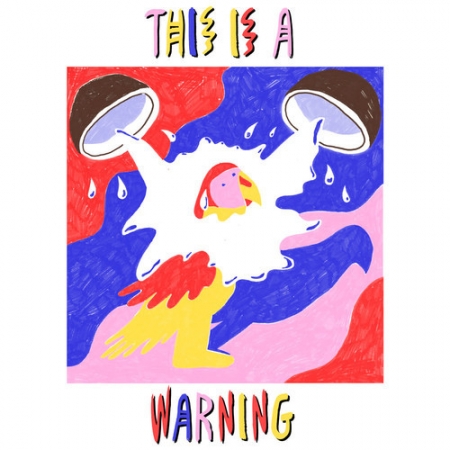
As we announced last week, Slugabed will be dropping a free EP of new material this Friday through his own Activia Benz imprint. Before the This Is a Warning EP sees a release though, the UK producer has offered up a track from the effort, “True Born,” as a preview of what’s to come. This particular offering takes a space-age hip-hop approach, unleashing rolling snares and 8-bit melodies while incorporating plenty of growling, grime-indebted sub-bass which reveals the tune’s origins as an edit of one of Slugabed’s favorite jungle tracks.
Guillermo Scott Herren (a.k.a. Prefuse 73)—a man who was in many ways a forefather to the current beat scene—has, along with photographer Angel Ceballos, announced the launching of the Yellow Year label, which will serve as home to an ongoing collaborative series pairing Herren with a number of equally talented producers. The label’s first EP, set to arrive sometime next month, will feature Chino Hills wunderkind and Brainfeeder associate Teebs working alongside Herren. Deemed Speak Soon, the 12-part series will also find Prefuse working with producers such Nosaj Thing, Lapalux, Synkro, Nathan Fake, Dimlite, and more over the months to come. For now, a small snippet of Speak Soon‘s first edition with Teebs can be previewed via the teaser video below.
Maybe Hyperdub‘s youngest upstart, 22-year-old Sam Walton, who produces simply as Walton, has been issuing 12″s and EPs for the UK label since 2011, slowly building an arsenal of stripped-down, low end-specific dancefloor cuts. But after plenty of build up, word of the Mancunian’s debut long-player has arrived. Called Beyond, the 13-track LP is said to adhere to a “fresh and subtle intersection between music that doesn’t seem to naturally fit together—[such as] old Eski grime, funky, and Detroit house and techno—but with smudged edges and a colourful industrial sound palette.” All but one of the cuts on Walton’s upcoming album are previously unreleased, the exception being “Can’t U See,” which will appear on the Baby EP on May 27. Beyond won’t be released via Hyperdub until July 1, but before then, its artwork and tracklist and can be found below.
1. Beyond 2. Nothing To Feel 3. Help Me Out 4. Can’t U See 5. You&Me 6. Love On The Dancefloor 7. Every Night 8. Memories 9. Frisbee 10. Take My Love 11. City Of God 12. Grit 13. Amazon
It may be hard to believe, but the past three years have seen a surprising return to service for the humble 12″ record. The format which DJ culture was essentially built from is enjoying something of an in-vogue moment, as vinyl sales have reportedly risen to a 16-year highpoint of $177 million. Exactly why this has happened now is difficult to say, but it’s hard not to see the renewed popularity in the recent glut of limited-edition, vinyl-oriented dance-music labels. While this is undoubtedly a good thing, it also brings a variety of latent issues to the surface. To better explore those concerns, XLR8R went looking for the opinions of a variety of people who hold the almighty 12″ dear.
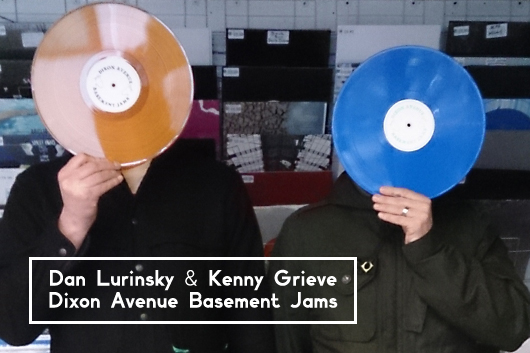
“I’d say it’s less [difficult to sell vinyl] now than it was 10 years ago,” explains Dan Lurinsky, an employee at Scottish record shop and distributor Rubadub who also runs Dixon Avenue Basement Jams with partner Kenny Grieve. “Sales across the board took a dip a while back when the whole ‘digital revolution’ hype kicked off, and a lot of record distributors and labels went out of business or went digital-only. Once they found that there wasn’t actually a pot of gold at the end of the digital rainbow, they either gave up or went back to releasing records. In recent years, sales have ramped up again with a lot of the younger generation opting to buy vinyl rather than go [completely] digital.”
Having practically made himself an instution of the Detroit landscape since his first 12″ came out in 2007, Kyle Hall is no stranger to releasing and selling records. His Wild Oats imprint combines vinyl fetishism with the availability of digital distribution, offering the majority of his catalog for download while also doing things like releasing 10-copy runs of 5″ and 7″ records. “Doing these limited releases is a great way to keep people engaged and having fun with buying records, and learning more about the artists,” says Hall. As he describes it, he uses them as a promotional tool. “Today, people expect [to get] things really quickly, and keeping up with that demand with records is harder because of the time it takes to manufacture vinyl. So, as a vinyl label, you have to come up with more creative ways to keep people engaged with what you’re doing at all times. Some ways we do this is by giving things away for free, or doing special limited versions of releases.” The DJ/producer goes on to add, “I think people like having something exclusive and special.”
One of the distinguishing characteristics of limited-edition records is that, like any scarce collectible, they sometimes gain value on the second-hand market. “I don’t think that’s necessarily a bad thing,” Hall confesses. “I think its just a reflection of the increase in demand for underground dance vinyl these days. In some ways, it’s great because now more people are into it, and that means more quality records will be coming out and are more likely to be pressed in greater quantity. I know some people gripe about the high prices, but that’s part of what makes this hobby of collecting records special, the fact that records are not things we consider to be disposable in the way so many things are today. Records are like art, and I’m glad more people appreciate that now.”
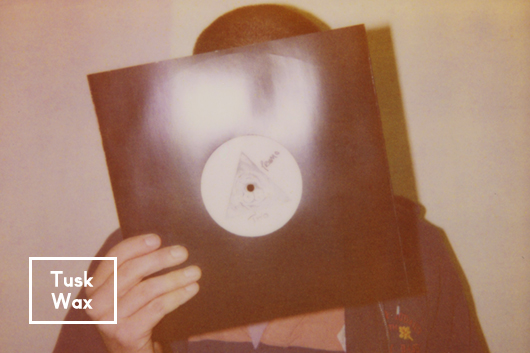
As Hall says, people might gripe, but scarcity and exclusivity have been a part of DJ culture since the beginning. Tusk Wax, an established label which trades in limited, hand-stamped house cuts, stands by its decision to keep its output rare. “A part of people supporting Tusk Wax has been that they know I will never repress. It’s a one-time thing: Buy now or don’t buy at all. It helps me because the records shift due to people knowing they will be one of only 500 people in the world who have that record. A repress would be about making money, and I don’t do it for money. Now, the counter to that argument is that I’m putting ‘limits on the music, man’… But what I’m actually doing is adding value by limiting quantity. Some people struggle to see that. It always amazes me when they don’t.”
Belgian imprint We Play House takes a similar stance. Late last year, it released 150 copies of FCL’s “It’s You (San Soda’s Panorama Bar Acca Version),” a track which sold out and became available on Discogs for prices as high as $700. Despite the clear demand, label head Red D (a.k.a. Bart Van Neste) still has no desire to repress. As he explains, “I always say, as a DJ, you love limited releases as long as you’ve got one, and if you don’t, you’re pissed off, and you’re gonna nag that the releases are too limited.” For him, it’s all about keeping the integrity of his original idea alive: We Play House is based around a primary series of releases that appear on both vinyl and digital, though they’re occasionally augmented by more limited material. “The basic idea was 150 copies for the fans and friends that had been following us since day one, and then [“It’s You”] blew up,” says Van Neste. “But that doesn’t mean I’m going to repress it. The original idea was 150 copies, and even though it’s suddenly successful, and I can do 2000, I’m not gonna do it. That’s something that people sometimes find hard to understand.” And so far he’s stuck to his word—though, technically, Defected did release a digital version earlier this month.
That said, $700 is a lofty figure for a record that came out only a couple of months ago. And, upon closer investigation, that amount is only one of many high-ball prices placed on the “It’s You” 12″ by speculators. (Incidentally, $233 is the highest anyone has actually paid for the record on Discogs.) Van Neste identifies these kinds of sellers as being a part of a wider problem enabled by the kind of “scalper tactics” employed by unscrupulous sellers operating in the second-hand market. “I blame Discogs sellers, the Discogs sharks, and the people buying up releases,” vexes the label head. “If there’s a 300-copy limited release of a new Moodymann [record], for example, I’m pretty sure that like 150 or even 200 of those [would be] bought by Discogs sellers who just buy 40 copies [each] if they can. So, they are actually the ones [ruining] a lot of people’s ability to buy through a normal channel.”
Dixon Avenue Basement Jams’ Dan Lurinsky agrees: “I’ve been buying and selling records on Discogs for many years, but recently, it has just started to get crazy with all of the speculators buying doubles of “limited” releases just so they can go straight home and put it up on Discogs for an inflated price. I don’t think it’s fair on the people who want to buy it for the actual music.” Maybe because of this, Lurnisky’s label is more flexible with its repressing policy, seeing it as a way of mitigating price jumps on the secondhand market. “We have no real issue with labels doing limited releases if that’s what they want to do,” he explains, “but we don’t see the point in it ourselves as a label. All our releases are pre-sold first, and then we press how many we think there is a demand for and we will repress if need be. That way, we help defeat the speculators, and it also means that the artists and label can at least get paid something.”
Some, however, are more openly critical of limited editions. Michael Hain, the store manager at Berlin record shop Hardwax, is cautious about this recent influx of limited editions. “I’m not in all cases a fan,” he confesses. “I understand that the labels have to try to survive in decreasing sales, but my point of view [has] always [been] that the music itself has to make the sale, you know?” He stresses, “If the argument or the point for the record is [that it’s] ‘limited’—which, in fact, almost all record releases are, even if they don’t say it. I mean, I don’t know what the average starting edition these days is, but it’s probably 500. So, if someone says something is limited to 500 copies, then it’s not really limited in a special way. [It’s an attempt] to create an aura [around a record], and that’s sometimes too artificial for my taste—it’s too much targeting the second-hand market or Discogs.” Hain goes on to explain how some labels will even save their own records to post on Discogs so they can demand the same prices as independent resellers. “The main goal should be to get good music out there. This is what a label should do,” demands the retailer. “And if that doesn’t work, then the business model is not right.”
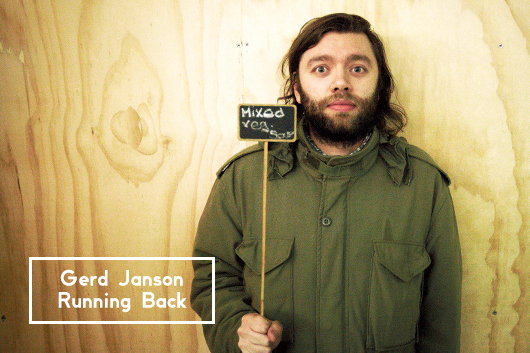
Gerd Janson, the head of German house imprint Running Back (which operates as a digital and vinyl hybrid and sometimes issues between 5,000 to 10,000 copies per release), speculates that the tactic is just part of basic human psychology. “Everyone is aware of how this works: how tiring it can be, and how it stresses the scarcity, importance, and value of a medium.” He goes on, “But [that] doesn’t help to spread the music, except for raising its status on Discogs. Having said that, I still fall for it every time myself.”
As if Janson’s concerns aren’t worrying enough, We Play house boss Van Neste has observed a more dishonest trend: “There are a lot of labels that use ‘limited’ as a marketing point, which is something I don’t like. I know a lot of examples, but I’m not going to name names because a lot of people are doing it. People say, ‘vinyl-only, 500 copies limited’ and then press up 1,500 copies because it keeps on selling. Okay, that’s fine for all the people who want it, but they’re just using the ‘limited’ sticker to make it more tempting for people to immediately go and buy it. They say, ‘Oh, [you ‘d better] be quick because it’s going to be gone,’ [but then] they keep on pressing it.”
Maybe the best way to avoid this altogether is to follow the advice of Hieroglyphic Being (a.k.a Jamal Moss), whose Mathematics label has been primarily releasing vinyl since 2001. “Don’t [get into this business] for the hype, or the expectation that you’re going to be going somewhere travelling, meeting females, doing drugs, or making the booty bounce and slapping dollar bills up in the club,” rants Moss. He quickly continues his tirade, saying, “This industry is supposed to be about contributing to the continuum. Creativity is about making the world a better place for other human beings to get through existence for the better, not for the worse. So, when you go into this, you’ve got to do it to make the world a better space for everyone else with the creation of art. But, in the process of doing it, do your research, come up with a master plan of how you want to push forth your brand. When it comes to your logo, when it comes to your artwork, when it comes to your sound, the medium you want it to be in, the way you represent yourself, and how you represent yourself to others—that can go a long way. Because whatever happens, even if you don’t hit the big time, at least you can pat yourself on the back and say you gave it a go and you did it the right way.”
Van Neste has even more explicit words for novices. “First and foremost, I’d hope that the person starting a label has got taste. Two years ago, everyone was complaining that the digital market was completely flooded with music that’s crap. And if people asked me why I preferred vinyl, I’d say it’s because there’s quality control—it’s harder to sell and it costs more. But now, the vinyl market is being flooded in the same way as the digital market; everyone’s putting out 200 copies of limited stuff. And to be honest, the same percentage of crap is being released on vinyl as it was on digital, which brings me to my point. In short, if you’re gonna start a vinyl-only label or a label [that releases some vinyl], please be critical of what you’re going to release. Take your time to really look for music that you would be dying to buy yourself, and don’t just flood the market.” And if vinyl’s current popularity should one day prove to be fleeting, Van Neste’s point is essential advice for a label working with any kind of medium.
Yesterday, the Cascine imprint dropped the debut single (artwork above) from newly formed production pair Airbird & Napolian (a.k.a. Joel Ford of Ford & Lopatin and LA producer Ian Evans). The digital single’s a-side, “In the Zone,” is a breezy slice of synth-obsessed beatwork, but b-side “Special” is a much more energetic affair, one which channels French-style filter house and ’80s synth-pop into a modern, slightly shuffling package. The result is somewhat reminiscent of Chaz Bundick’s work as Les Sins but with an extra dose of retro gloss added on top. Airbird & Napolian’s “In the Zone” single precedes the pair’s forthcoming debut full-length, which is set to drop this winter via Cascine.
London’s Needwant label has enlisted event and mix curators Future Disco to deliver a collection of summer-minded tunes for the forthcoming Poolside Sounds Vol. II compilation. Focused on the sunshine-flecked, warm-blooded sounds that are primed for the months to come, the forthcoming mix will feature tunes from Locked Groove, Last Magpie, DFRNT, Axel Boman, and others, with a sprinkling of exclusive cuts—including a remix of the late, great Romanthony—thrown in as well. Poolside Sounds Vol. II will come as a mixed—put together by Future Disco founder Sean Brosnan—and unmixed collection for those wishing to uitlize the tunes for their own summer dancefloor concoctions. Before the compilation drops on June 24, its complete tracklist and promotional teaser video are included below.
01 DFRNT “Nobody Stop Me (feat. Caye Slaymaker)” 01 Kiwi “Mayfly Feat Amy Skippings” 02 James Welsh “The Way” 03 J.Wiltshire “Take It off My Mind” 04 Last Magpie “Who Knows Where Love Goes” 05 Bonar Bradberry “3two5” 06 Man Tear “Outside Amore” 07 Softwar – This Time Around 08 Axel Boman “Cubic Mouth” 09 Nightplane “Gates Of Dawn” 10 Cleov “Crush On You (Chasing Kurt Remix)” 11 Locked Groove “Do It Anyway” 12 Paolo Rocco “Move Body, Move Forward” 13 Romanthony “Bring You Up (PBR Streetgang Remix)” 14 Antonio Olivieri “Tiny Nut” 15 Artful & Ridney “Missing You Feat Terri Walker (Future Disco Odyssey Edit)” 16 Panama “It’s Not Over (Dave DK Dub)”
RP Boo (a.k.a. Kavain Space) is often credited for helping to create the footwork genre with his 1997 tune “Baby Come On.” Legacy is actually RP Boo’s first-ever full-length release, but his prowess as a producer is readily apparent here. Simply put, the tunes on Legacy don’t move quite like anything else within this sound, and the LP quickly displays just how inadequate many producers—particularly those outside of the Windy City—are when adopting juke and footwork as their own.
There’s no gentle entry, as a barrage of rolling toms, rimshots, and snares introduces album opener “Steamidity,” a thick bassy mess of sticky percussion and chopped strings. The song’s seemingly epileptic level of impaired movement is tense, dramatic, and utterly dangerous. As the album proceeds, it becomes difficult to shake the notion that growing up in Chicago’s juke/footwork culture is essential to properly creating the creepy, gritty atmosphere that defines the sound.
Somewhat surprisingly, though, RP Boo’s record isn’t entirely a footwork album. Tracks like “Red Hot” work inside the realm of the genre’s forefather, ghetto house, and some of the most exciting moments on Legacy occur when RP Boo clearly connects one with the other. Morphing bangs and chants set the stage for “There U’Go Boi” before micro-programmed drum fills suddenly shift gears from a linear pulse to the off-kilter skitter of an entirely different snare pattern. With string samples reminiscent of Star Wars, “Robotbutizm” has a nauseous and gaudy lurch, which eventually takes on a frightening pace with the wet smack of electro. “Speakers R-4 (Sounds),” meanwhile, is a marvel, and RP Boo’s masterful use of reverb makes the tune sound like being in the room of a frenzied warehouse party. At points like this, claims of Space being a footwork originator are understandable; he gleefully casts flurries of dark drum energy down winding tunnels of crushing sub bass, transmitting disembodied utterances and fractured rhythms with a veteran’s finesse.
Few truly distinctive examples of footwork have found their into the world lately, but RP Boo’s LP goes a long way towards revealing the potential diversity and immensity of the genre. Where other juke/footwork efforts can seem inaccessible, or at least difficult for outsiders to approach, RP Boo employs bits of vintage soul samples, mainstream hip-hop, film soundtracks, oddball clips of dialog, and all sorts of other sampled material throughout Legacy. More importantly, he layers them in ways that sound especially peculiar and alien, even if they’re merely the result of Space’s instinctive tapping on an MPC. The effect is disconcerting and frenetic—even in the context of the primed madness of footwork—and certainly won’t come across as easy listening for most. Regardless, Legacy still feels like the work of a true original.
SoCal beatsmith Baths (a.k.a. Will Wiesenfeld) is gearing up for the release of his sophomore LP, Obsidian (artwork above), but before it drops on May 28, the 10-track album is now available to stream in full. Obsidian finds Wiesenfeld returning to Anticon for the second full-length of his career while largely eschewing the beat scene-inspired sounds which marked his debut for the label back in 2010. Baths’ forthcoming LP can be heard courtesy of Pitchfork, here.