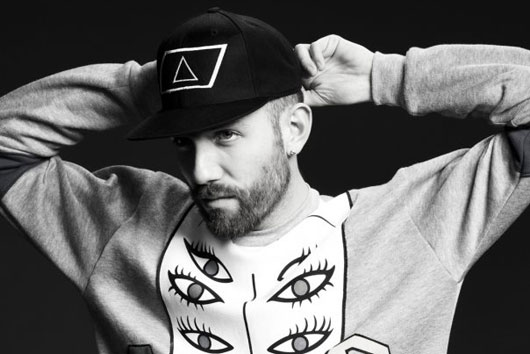
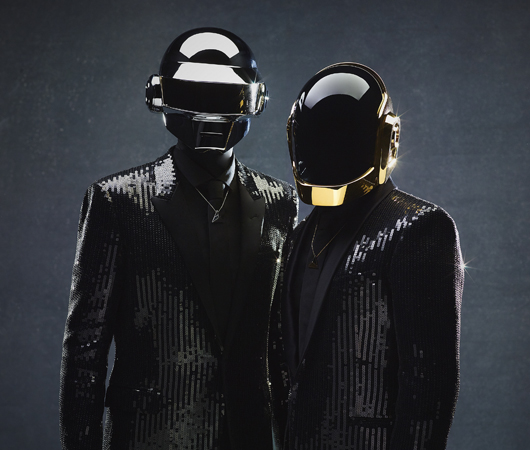
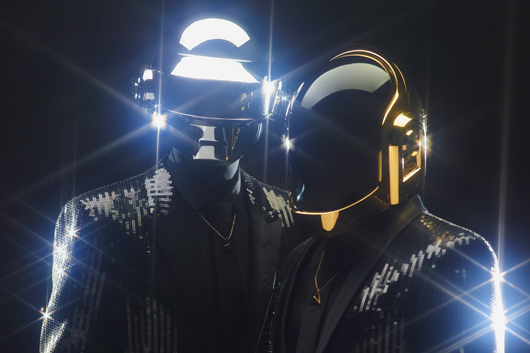
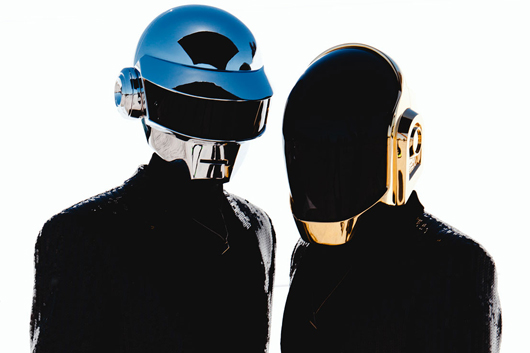
As we reported earlier this month, Will Saul’s Close project will be releasing a single for its “My Way” tune featuring remixes from Midland, Tanner Ross, and UK duo Dusky (pictured above), whose deep rework for the upcoming effort can now be streamed in full. The “My Way” single is set to drop via !K7 on June 24—two weeks after Close’s debut LP, Getting Closer, sees its official release—but before then we are given a peek into what the forthcoming 12″ has to offer, with Dusky turning in a characteristically sharp remix full of dense synths and sultry low-end. The London pair’s remix of the Joe Dukie-featuring “My Way” can be streamed in full via the player below.
Burgeoning Toronto-based pair Ambalance has passed along this remix of the title cut from its new EP, Are You Around, which is out today. Smartly placed in the hands of West Coast low-end wrangler Grenier, the already heavy and icy production is taken into more astral territory on this particular rework. Where the original is a more driving affair, Grenier uses his remix to open the track up to more atmosphere, carving spaces within the slow-moving synth patterns to add massive kicks and touches of off-kilter percussion. Ambalance’s Are You Around EP (artwork above) is a self-released effort available now through the outfit’s Bandcamp.
Kingdom has been busy preparing for the May 28 release of his Vertical XL EP—last week he offered a bootleg edit of Cassie’s “All My Love” and now the LA-based producer has shared a new mix assembled for Logo. Clocking in at just over 30 minutes, the mix features tracks from the man’s forthcoming EP, as well as tunes from Girl Unit, Divoli S’vere, and Fade to Mind labelmate Massacooramaan, among others. Kingdom’s new mix can be heard in full below or accompanied by an assemblage of high-tech motion graphics, here.
Toronto producer—and former XLR8Rpodcast contributor—Basic Soul Unit has announced he will drop a new EP next month which will serve as the inaugural release for the man’s newly announced label endeavor, Lab.our. While it is unclear what exactly the label, which Basic Soul Unit will co-run alongside long-time friend Jason Ulrich, has in its sights for future releases, it does seem clear that the Lab.our label plans to release work from artists other than just its label heads. Though when one of the parties at the helm of an imprint is a veteran producer with records for Still, Nonplus, New Kanada, and Midnight Shift to his name, having him kick off the label’s run is surely a good place to start. No artwork or exact release date for Basic Soul Unit’s forthcoming EP have been shared, but the tracklist for Lab.our’s first release—expected to drop sometime in June—is included below.
It has been a while since we’ve heard of anything being released by Scottish label LuckyMe that isn’t related to Hudson Mohawke, Lunice, or the music those two producers make together, so we’re especially pleased to discover that it will soon drop an EP by Canadian DJ/producer Jacques Greene. The three-track On Your Side will feature a collaborative track with tender R&B crooner How To Dress Well, alongside two solo cuts from the Montreal-based artist. One such tune will be “Quicksand,” a track Jacques Greene shared earlier this year. Before the On Your Side EP gets a digital release on June 3 and a physical release on July 1, its collaborative tune can be previewed below, where the tracklist can also be found.
A1 On Your Side (feat. How to Dress Well) B1 Faithful B2 Quicksand
After sharing a lengthy disco mix last week, Skream is already back with another generous offer, giving away two unreleased tracks for free. Packaged in an online single, “Diam” and “Mood to Funk” harken back to Skream’s more dub-wise days, clocking in around 140 bpm and packing in a good deal of bass weight in their respective runs. The pair of free efforts can be downloaded in MP3 or WAV form via Digital Soundboy, here.
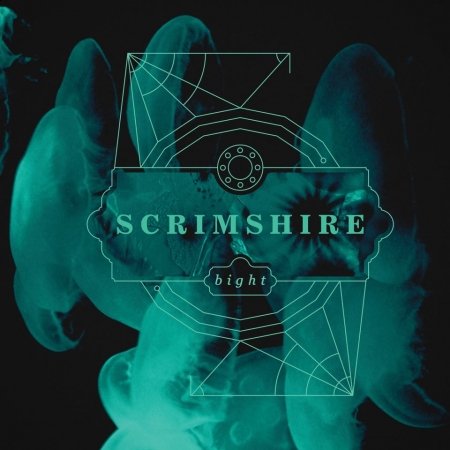
On Scrimshire‘s forthcoming LP, the London producer/vocalist utilizes an eclectic range of influences ranging from disco to fusion to more contemporary electronic styles. Much of this is present in “Kindle a Fire,” even after mysterious, ungoogleable producer Aronnax gets his (or her) hands on it. Regardless of whether or not this stranger is from North Carolina, Germany, or just Scrimshire mucking about himself, this is a plodding, humble rework. Orphaned guitar and vocals try to crawl out from underneath a ride-and-snap pattern that becomes increasingly persistent over the course of the tune’s seven minutes. There are a lot of details to wade through, most of them subtle or barely audible, but all of which point to either the work of an intricately detailed Scrimshire, a meticulous, curtain-shy unknown, or—most likely—both. Scrimshire’s Bight LP, from which the original “Kindle a Fire” appears, is due on May 27.
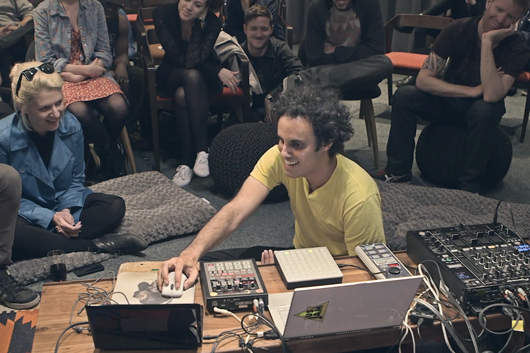
Not unlike yesterday’s lengthy pictorial feature in which Mount Kimbie explained how its studio set-up was transformed for live performance, a video of UK producer Kieran Hebden (a.k.a. Four Tet) detailing the inner workings of his own stage rig to a small class at Red Bull Music Academy has hit the internet today. Come to find out, the basics of his onstage gear are rather straightforward. Hebden is essentially splitting up his Ableton set into various channels, sending them into his mixer, and adding his own nuanced tweaks on the fly with FX processors, controllers, and even a second computer. Despite the relative simplicity, it’s an interesting and informative session with one of the strongest producers and performers working in electronic music today.
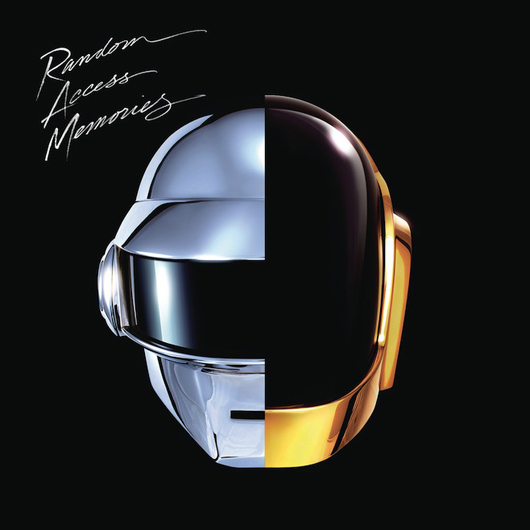
Hype is a necessary, though often dangerous tool for marketing music in the digital age. Now seemingly more than ever, an album’s or single’s success relies heavily on how many people and media outlets are talking about the product across social media and other corners of the internet before they hear it. This approach to selling records is important for obvious reasons, but isn’t without its side effects, the worst of which might be how it inflates the public’s expectations. When fans are worked into a tizzy over a span of months while a label slowly leaks out minute details about a particular release, they are practically manipulated into thinking this music might very well be the best thing they could ever possibly listen to. 2013 has seen an above-average amount of hype so far, with long-awaited records from acts like The Knife and Boards of Canada making unexpected appearances in the year’s release calendar, but none even come close to the fanfare which preceded the fourth album by French duo Daft Punk, Random Access Memories.
The earliest murmurs of RAM appeared well over a year before it was released, and intentionally or not, sparked the small beginnings of a media frenzy. Nile Rodgers of seminal disco outfit Chic spoke to the press about “making a new record [with Daft Punk],” later elaborating that after dancing around his dining room with the pair while they had “the time of [their] lives,” he felt that their collaboration was “meant to be.” But word of one of dance music’s biggest crossover acts working with an important artist such as Rodgers was only a sliver of what was to follow. Soon after, legendary producer Giorgio Moroder and award-winning classic rock singer/songwriter Paul Williams both came forward saying they’d been a part of the recording sessions for the as-yet-untitled Daft Punk album. These unofficial announcements set music news outlets on a rampage to cover any and all things related to the French duo, but it went beyond seeking information in hopes of generating an extra bit of web traffic—they wanted to appear to have the scoop on the next Daft Punk record, official details and concrete facts be damned.
It should be pointed out that none of this seemed like the master plan of Thomas Bangalter and Guy-Manuel de Homem-Christo, their record label, or their marketing team. In fact, the band didn’t even announce that RAM would be co-released by Columbia until February of 2013, which, as expected, served as another bit of fuel for the media’s increasingly suffocating coverage. But then the real marketing started, and all bets were officially off. An all-too-brief segment of music aired as a commercial during the March 2 episode of Saturday Night Live, giving the world its first taste of a brand-new single from Daft Punk, nearly seven years after the release of Human After All. A palpable sense of excitement and heightened anticipation rippled around the world, and with the help of the press and its insatiable appetite for the nearly perpetual motion offered by such marquee stories, a feeling that bordered on pandemonium built up around this record. During the past few months, it often seemed like little else really mattered in the world of music besides whatever Daft Punk did next.
The actual details of Random Access Memories began to appear soon after the SNL clip, much of which was delivered in unprecentendly calculated and grandiose ways. Instead of outrightly releasing its lead single, Daft Punk placed an extended snippet of “Get Lucky”—which the SNL loop turned out to be a part of—to appear like an ad during the biggest American music festival, Coachella. Along with the video, the album’s title was shown with a star-studded list of collaborators: Nile Rodgers, Giorgio Moroder, Pharrell, Julian Casablancas, Chilly Gonzales, Paul Williams, Todd Edwards, DJ Falcon, and Panda Bear. A cheap cellphone video of that clip went viral almost immediately. Next, RAM‘s tracklist was exclusively unveiled using the latest in-vogue social media platform, Vine, and Vice brand The Creators Project launched a lengthy series of official video interviews with nearly every artist who worked on the duo’s upcoming record. Eventually, it announced that the release party for Random Access Memories would be held in Wee Waa, Australia, a particularly remote town on the island continent. Daft Punk was literally everywhere.
When the catchy and unquestionably fun “Get Lucky” was finally released on April 19, it felt like a foregone conclusion. And though everyone was certainly happy to have this new song, a slight sense of freshness seemed to have been lost in all of the previous false starts. Pharrell’s voice still glided over the funky guitar licks and Daft Punk’s high-stepping disco groove as effortlessly as we’d heard before, but that was kind of the issue—though it was only just released, everyone had been obsessively listening to all available parts of the song for weeks and there was precious little more to it than what we’d already heard. And though there were 13 tracks comprising over an hour of music still set to be released as Random Access Memories on May 21, at that point the world only had one four-minute radio edit of a six-minute song to listen to. Coupled with the fact that fans had been hearing about Daft Punk’s new album since February 2012, not to mention waiting for the follow-up to the band’s third LP for almost seven years, they were basically forced to concoct their own wild ideas of what RAM would be. And the possibility that any record, no matter its quality, could come close to living up to the expectations of every rabid Daft Punk fan in the world—many of which wouldn’t mind hearing “One More Time” 10 more times and think that “Harder, Better, Faster, Stronger” is already all of those things—might as well be non-existent.
Random Access Memories
It was just last week when iTunes posted the full stream of Random Access Memories, strangely enough on the same day that a video of Daft Punk showing off the double-LP version of its new album in a “spaceship” surfaced. (With all of the promo material having been issued piecemeal before, two appearing in one day—and the whole album, no less—was an unexpected treat.) Of course, every online music-news source did its duty in posting the link, and fans (not to mention curious bystanders) rushed to their computers to take part in this moment of contemporary music history, collectively satiating their overly piqued curiosities. The questions were many. Would it be as funky and upbeat as the first single? Were there going to be any dancefloor-friendly tunes like those classic Daft Punk albums? Was Panda Bear going to sound any different singing with a pop band? Was a “rap” by Giorgio Moroder even a good idea? Could this album change the face of contemporary music? Would Daft Punk finally capitalize on the EDM boom they unknowingly spearheaded years and years ago? Didn’t a song called “Give Life Back to Music” have to be the coolest thing ever? And after an initial listen of the hour-plus RAM, it turned out that most responses to these speculations were either “Sort of” or “Not really.”
Incredibly, the music on Daft Punk’s fourth long-player skirted just about every preconception possible, a difficult fact to reconcile with the fact that building up hype is essentially done by stoking the desires and preconceptions of a target audience. Fans hoping for revitalized versions of “Around the World” or “Robot Rock,” crossing their fingers for something vaguely futuristic, or even looking for an album full of “Get Lucky”s will be sorely disappointed. Random Access Memories was both literally and conceptually written from the ground up. After spending a significant amount of time working on its initial ideas for the songs, Daft Punk recorded the music almost exclusively with live instruments performed by seasoned professionals in big-budget studios around the world. How much of the playing Bangalter and de Homem-Christo actually did themselves isn’t entirely clear, but just as when their artistic integrity was once called into question over sampling issues, it’s also beyond the point. Daft Punk is the sole conduit of RAM, and that much shines through as strongly as ever. It’s just that this time, the pair has left the comfort of modern electronic dance music to channel the annals of ’70s and early-’80s funk, disco, and (to a much smaller extent) rock, filtering the classic sounds through their own hopes of what contemporary pop can be.
Breaking down RAM to its 13 components doesn’t help much in the way of understanding how Daft Punk came to release such a surprising record, as its tracklist is patently scattershot. Headstrong opener “Give Life Back to Music” is a solid taste of the proggy leanings to come, but isn’t content to stick to just one sound, constantly jumping from anthemic chords and keytar leads into a far more subdued and grinning disco pastiche. Then, almost out of nowhere, the band slips into a sultry and sad slow jam called “The Game of Love.” Its resemblance to Discovery‘s “Something About Us” can’t be ignored, but whether it’s because of that familiarity or despite it, RAM‘s deep and emotive second track is also one of its strongest.
photo by Nabil
On the other hand, there are songs like “Motherboard,” an ambling, instrumental composition that could be a spacey outtake from Daft Punk’s soundtrack work. A fair amount of twangy slide guitar and sappy balladry is spread across the LP, too, but maybe the most unexpected moment is “Fragments of Time,” the song featuring Todd Edwards. Since the house/garage icon last worked with the French pair on breakout single “Face to Face,” the fact that their latest collaboration comes off as a wispy homage to jazzy, AM radio rock à la Steely Dan is just flat-out confusing. The Julian Casablancas-featuring “Instant Crush” is a harmless, hummable pop tune, but it easily sounds more like The Strokes—or even Casablancas’ own vocoder-heavy solo material—than anything Daft Punk has ever recorded. On that same note, “Lose Yourself to Dance,” another slinky stomper with a vocal turn from Pharrell, might as well be an old N.E.R.D. song that features Daft Punk, instead of the other way around. It would be interesting check in with the users on the iTunes page for Random Access Memories who commented, “I don’t even have to listen to the album [to] know it’s gonna be fantabulous,” and “Is it wrong that I literally started crying when I saw that this is on iTunes now?”—just to see if the Broadway-appropriate extravagance of “Touch” or the sprawling, nine-minute jam session that Moroder’s spoken word entry is intertwined with (turntable scratches, bass guitar solos, sweeping orchestral section, and all) is even remotely close to the music they envisioned less than a month ago.
But if it’s possible for bewildered fans to get through their first few spins of Random Access Memories, they’ll be confronted with another harsh reality: Daft Punk is now merely a shadow of the mythic band it was at the turn of the 21st century. This isn’t the French house duo who released 12″ after 12″ of sticky dancefloor cuts and whose love affair with nightlife’s music and culture was simultaneously mysterious and unabashedly ebullient. This new, “revitalized” pair is an act that soundtracked a multi-million-dollar Disney movie, works side by side with legendary musicians, wears one-of-a-kind tailored suits by Yves Saint Laurent, and can drive a sizable chunk of the internet’s traffic to a singular place at a moment’s notice. It may be difficult to accept that RAM doesn’t sound like it comes from the same Daft Punk the world first fell for, but that’s not necessarily a bad thing. Who knows if that previous iteration would have thought it was a good idea to finesse an imperfect singer like Panda Bear into one of its mantra-like club tracks, and in turn, stumble upon one of RAM‘s brightest heart-warming gems. And maybe only this incarnation of Daft Punk would be able to assemble such a team of undisputed talent to help create some of the year’s most affable and genre-spanning pop music. It’s entirely fair to grieve the loss of the creators behind the classic singles we’ve all spent so many sweaty, wide-eyed moments with, but once the feelings of betrayal, sadness, and confusion have passed, there’s a whole new band who we can now get to know—and maybe even learn to love.
XLR8R got started back in 1993, right around the time that Stacey Pullen began releasing records. Given our parallel trajectories, it makes sense that we’d enlist the Detroit stalwart to put together a mix as part of our month-long 20th anniversary celebration. A key member of Detroit techno’s second wave, Pullen came up under the tutelage of Motor City pioneers like Derrick May and Kevin Saunderson, but quickly made his own mark, particularly once he hit the global DJ circuit in ’93 and ’94. Since then, he’s been a fixture behind the decks in clubs around the globe, and has spent the past two decades spreading the gospel of Detroit. That said, Pullen’s production work has always been noteworthy as well, and recent years have found him increasingly operating in the studio, where he’s been busy crafting music for his re-energized Blackflag imprint. The label’s latest offering is Pullen’s own Any Which Way EP, which dropped just last week, but Blackflag is no mere vanity project. The imprint is home to numerous artists, and Pullen is so enthused about its output that he’s assembled an entire mix using nothing but tunes from its rapidly expanding discography. As the podcast demonstrates, Pullen has gravitated toward housier rhythms over the years, but regardless of what he’s playing, it’s compelling to hear a skilled veteran at work.
01 Unknown “Intro” (Blackflag) 02 Stacey Pullen “Any Which Way (Original Mix)” (Blackflag) 03 Stacey Pullen “Sweat (Loquace Remix)” (Blackflag) 04 Paco Maroto “My Way (Darkrow Remix)” (Blackflag) 05 Jon Cowan “Mental Health” (Blackflag) 06 Sergio Fernandez “Clicks N Stuff” (Blackflag) 07 Nathan Barato “The Mitchell Rhythm” (Blackflag) 08 Paco Maroto “Old School” (Blackflag) 09 Nathan Barato “Can You Hear Me” (Blackflag) 10 Stacey Pullen “Circus Act (Nic Fanciulli Remix)” (Blackflag) 11 Tony Dee “Pomada (Original Mix)” (Blackflag) 12 Stacey Pullen “Any Which Way (Martin Buttrich Green Remix)” (Blackflag)