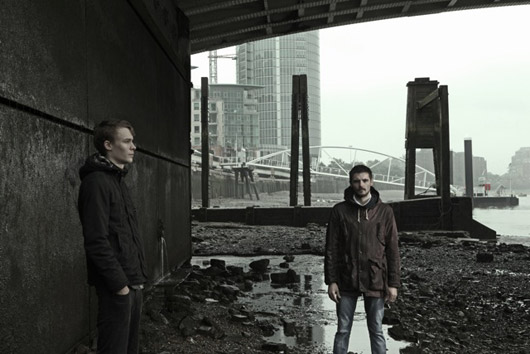
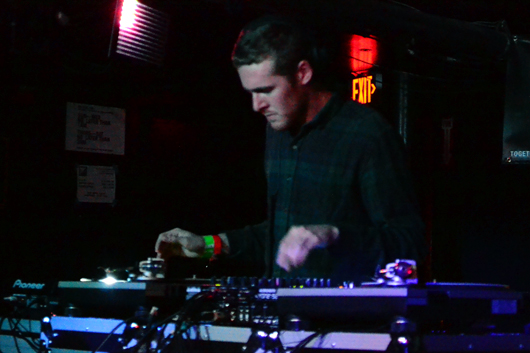
After a stellar four-day session in New York last year, the seminal Unsound Festival has revealed the first wave of artists slated to appear at its upcoming 11th edition, taking place in Krakow, Poland this fall. This year, Unsound will once again curate a multi-genre event, turning its focus towards the increasingly developing noise scene and both the experimental and dancefloor-oriented sides of electronic music. As part of the October festival, San Francisco-based ambient artist Robert Rich will be performing “Sleep Concert”—an event where lengthy suites of drones and meditative washes are played for a sleeping, daydreaming audience—for the first time since 1996. On a similar note, pioneering duo Porter Ricks—also largely absent since the ’90s—will be bringing its brand of dub techno for a special performance during the week-long festival. In addition, Unsound’s 2013 edition will include performances by King Midas Sound, RP Boo, DJ Qu, Karenn (a.k.a. Blawan and Pariah, pictured above), Stellar OM Source, Laurel Halo, and more. The entire list of artists so far announced for the upcoming festival (taking place October 13 through 20) can be found here. (via FACT)
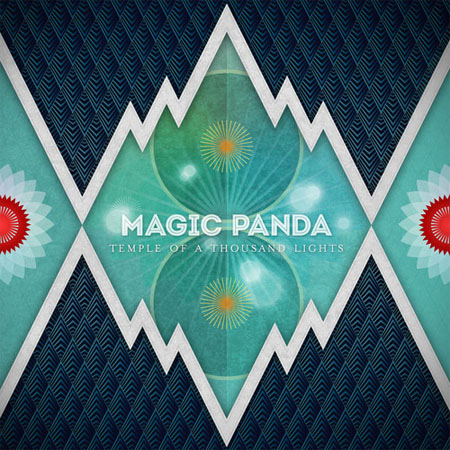
Hailing from Norfolk, up-and-coming producer Magic Panda is in the midst of readying his debut LP for the Kid606-helmed Tigerbeat6 label. Entitled Temple of a Thousand Lights, the full-length explores a wide range of electronic composition with a keen sense for enveloping arrangements and dense synthwork. One such cut is “Days Are Numbered,” a driving, but melodically led effort which appears early on in the forthcoming record’s run. Before the Temple of a Thousand Lights LP drops on June 24, Magic Panda has offered a streaming preview of all 12 album tracks (including remixes from Max Cooper and Kid606), which can be heard after the jump.
Legendary New Jersey DJ/producer Todd Edwards turned in an Essential Mix over the weekend for BBC Radio 1. The set is something to behold, featuring many of Edwards’ own original productions and edits—many of them exclusive to the mix—including his takes on Donna Summer’s “I Want Your Love” and Disclosure’s “White Noise,” as well as exclusive edits of Daft Punk, Giorgio Moroder, and Maria Minerva. The mix is no doubt timed to coincide with Edwards’ high-profile vocal contributions to Daft Punk’s Random Access Memories album, which officially sees a release today. A stream of the NJ house pioneer’s Essential Mix and its full tracklist can be found here.
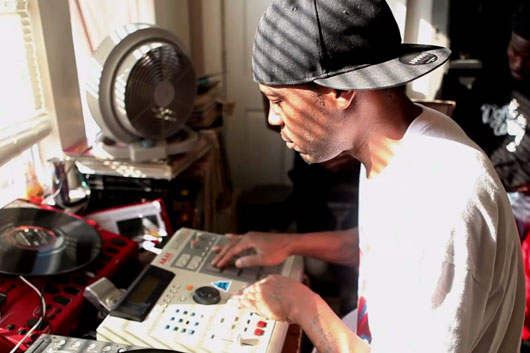
Veteran footwork producer and Planet-Mu affiliate Traxman recently took on Tim and Barry’s 10-minute beat challenge for Don’t Watch That TV, making a quick track with just a MPC and a few records at his disposal. After taking time to find some appropriate sample material, the Chicago native digs into the MPC, guiding the viewer through his process of putting together a tune as he chops up samples, programs drums, and pieces together an arrangement—all in under 10 minutes. The full video—which is part of an ongoing series of videos from Don’t Watch That TV featuring Chicago-based producers—can be watched below.
In terms of sheer scope, Together is gargantuan. The 2013 edition of the yearly Boston event was spread across eight days in a citywide selection of venues, acting as much as a test of endurance as a music festival. And based upon everything we saw this past week during our attendance of the event’s fourth annual incarnation, there appear to be no signs of organizers scaling things back. Processing it all was no easy task, but after persevering through a week-plus run of DJs and live performers taking to the various Boston stages, we’ve come up with a list of 10 key observations about what this year’s Together had to offer.
The festival’s name is not a misnomer.
A quick briefing of how Together works: the city’s most prominent party promoters dig as deep as they can into their contacts, attempting to net dream bookings. They then present their best efforts, as they normally would, at clubs throughout the main portion of Boston and surrounding boroughs, like Cambridge and Allston. The only difference is that all these parties and shows serve under the banner of this single festival. These nights run the gamut—from experimental techno to drum & bass to deep house. On top of that, Together’s organizers also seek out national tours passing through the Northeast, and convince them to trip through Boston, presenting a handful of those shows at some of the city’s larger local venues. Sprinkle in some daytime panel discussions, art installations, and movie screenings, and that’s Together in a nutshell.
Juicy J
Ultimately, because of the decision to include everyone in the planning process, the festival lacks the nuanced curation of something like Decibel or MUTEK. As such, much of the line-up caters to niche concerns, limiting the appeal of each show to a select few. This means that ticket sales are an obvious concern, which strengthens the temptation to tack on a “name” artist to stir some fervor amongst the public. Perhaps that’s how Together 2013 ended up with the likes of Juicy J and ?Z serving as primary selling points. That said, simply focusing on the acts that wouldn’t necessarily get XLR8R readers off their couch is missing the point. It would have been nice to see Together streamline the offerings a bit, but perhaps the overarching breadth assured that there’d be something for everyone.
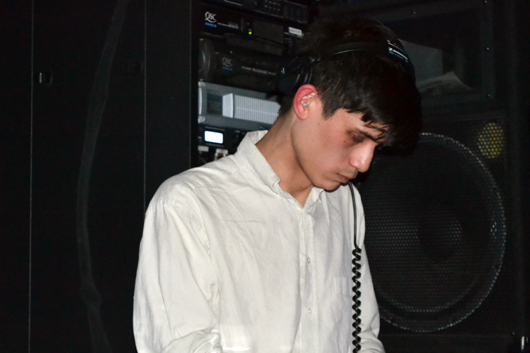
Anthony Naples
Anthony Naples wins the award for Most Improved Player.
Back in January, we profiled Anthony Naples as part of our Bubblin’ Up week. At the time, the young DJ/producer mentioned that he was still honing his DJ skills in preparation for a European tour. Apparently, the overseas jaunt did wonders for Naples’ chops. Slotted as Tuesday’s opener for Four Tet at the much-venerated Middle East club (which served as the festival’s official headquarters and was done up with an excess of LED paneling and a trumped-up soundsystem), the New York artist was granted a high-profile 90 minutes to flex his record collection in the sold-out basement spot. In spite of the seeming indifference amongst the bevy of beat heads waiting around for the headliner, Naples stuck to his roots, paying particular service to the distorted crunch of contemporaries like Huerco S. and the L.I.E.S. coalition. When the crowd finally reacted with even with a half-zealous “woo,” it made for one of the more precious moments of the entire week. Naples still seems surprisingly taken aback by the adoration that comes with being a renowned DJ, as he would consistently let off a sheepishly uncheckable grin in response to the hollering.
Andrés has a PhD in polarizing dancefloors.
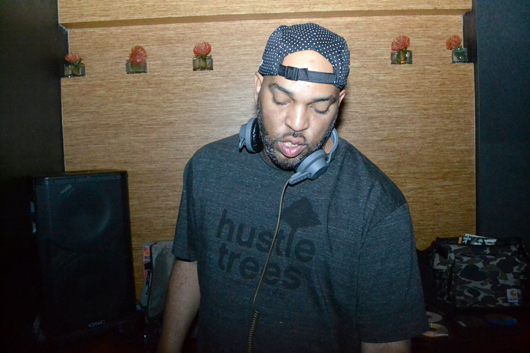
Arguably the most anticipated set of the week, elder Detroit stanchion Andrés had the Middlesex Lounge brimming for his midnight start time on Thursday. The opening residents wrapped a feverish, three-hour warm up of frazzled contemporary house with a disco hue, only to have DJ Dez step behind the decks and suck everything out the room with a breezy, soul-infused cover of Steve Miller Band’s “Fly Like An Eagle.” Things weren’t quick to escalate from there, as he worked in oddly pitched-up raps from A Tribe Called Quest and Souls of Mischief, sending folks toward the door in search of their anticipated deepness elsewhere. Patience paid off for those who stuck it out, though. Around 1 a.m., the sweeping strings of Andrés’ “New for U” trickled into the proceedings, accompanied by a gnashed together mix of “Smells Like Teen Spirit.” All bets were off from there, as everything became free game: Prince’s “Purple Music,” a white-labeled Gil Scott-Heron remix, and even “Bitch, Don’t Kill My Vibe” by Kendrick Lamar popped up. A lot gets made of a DJ’s role in catering to a room, but sometimes willing a dancefloor into submission can be just as rewarding.
Andrés
Crystal Castles delivers mania for folks of all ages.
Monday’s offerings were a tad bare by nature of its place in the week. After realizing that pacing our intake was the best course of action, we opted for the early evening Pictureplane and Crystal Castles bill. Though we had our sights set on the opening act, it was Crystal Castles who offered the surprise set of the week. Although a nearby gaggle of adolescents whipping their hair without regard for their surroundings threatened to ruin the show, the performance still served as a welcome reminder that even the most grating electronic sounds can be refreshing in moderation. Crystal Castles’ stripped-back live performance was driven only by a handful of carefully placed strobe lights and the rambunctiousness of frontwoman Alice Glass. She thrust her body into the crowd with little regard for anyone’s well-being, gargled down a bottle of Jim Beam, and lit cigarette after cigarette—paying no mind to the venue’s staunch security. The unadulterated energy was truly undeniable.
Thundercat. Whoa.
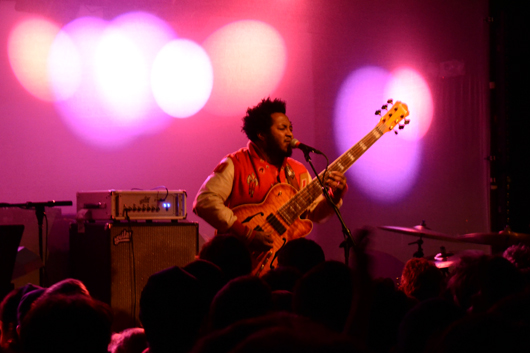
Catching the Flying Lotus (pictured at top) and Thundercat bill was a no brainer, as the pair always seem to play off one another effortlessly. Yet somehow, their back-to-back sets for last Sunday’s Brainfeeder-helmed opening party didn’t reflect this. Thundercat was fully up to the task of leading his three-piece ensemble, as he abused his wood-grained six-string with a fire typically reserved for lead guitarists. In contrast to the drifting nature of his The Golden Age of the Apocalypse LP, the live set was confidently to the point.
Thundercat
Flying Lotus, on the other hand, came off as meandering, sometimes even lost, and the oblong rectangle shape of the Paradise Rock Club did few favors for his intricate visuals. Nestled behind opaque netting and in front of a backdrop screen, he was meant to appear as though he was voyaging through deep space. But unless viewed head-on, the effect was rendered null by the shape of the room, a near-impossible task in the oversold club. Making things worse was the fact that FlyLo abandoned the decks any time he managed to spark a hint of momentum, running to the front of the stage to assume his rap alter-ego Captain Murphy. Still, the younger crowd didn’t seem to mind and reveled in the freeform platform, especially when he took the time to introduce a new song that he produced for Earl Sweatshirt’s forthcoming LP. On the other hand, those looking for more cohesion and subtlety from his live performance likely left unsatisfied.
Zomby
Zomby does what he wants, and everyone just has to deal with it.
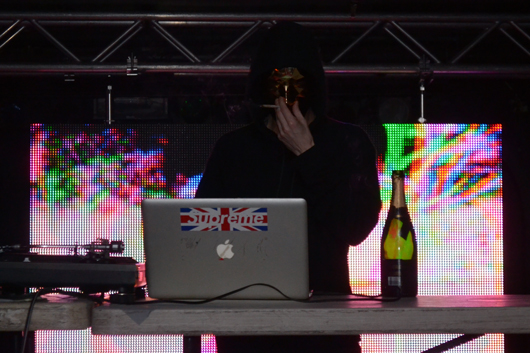
Saddled with a pretty nasty reputation, Zomby at least proved that he was a man of his word on Saturday night. Earlier that afternoon, he let off a tweet that read “im unleash some demons on boston tonight i hope you bring your bible to the dance.” After taking to the stage 15 minutes late despite a strict curfew, he owned up to those lofty expectations. Merely selecting songs off a laptop—sometimes letting them play out to the point of silence before picking another one—Zomby opened with 10 minutes of churning ambience before diving into some abrasive jungle. People looked confused and Zomby looked indifferent, only motioning to lift his mask a tad and sip on his champagne bottle. Halfway through his hour-long set, one audience member, clearly taking umbrage to Zomby’s reluctance to play towards anyone’s expectations but his own, positioned himself at the front of the stage and raised a middle finger in the producer’s direction. Without missing a beat, Zomby flicked the remnants of a spliff at the dude and cut the jungle in favor of brutalist techno, the most lethal selection being Boddika’s VIP take on his and Joy Orbison’s “Mercy.” When someone came over to inform him that he was nearing his time limit, he put on “Dis Ain’t What U Want” by the comparably polarizing drill rapper Lil Durk. Zomby let it bang for eight bars, and kept reloading it until the soundman had no choice but to cut him off. Some of the crowd reveled in every second of it, while there were others who simply weren’t buying it.
Objekt
Go see Objekt as soon as possible.
A shoebox-sized Irish soccer bar might seem like a less than ideal space to house the shadowy textures of Objekt, but therein lies one of the sneakily cool aspects of Together. With different circumstances, the Berlin-based artist might be capable of drawing a much bigger crowd; but because the people behind JASS typically hold their monthly outings at the Phoenix Landing, and because Four Tet was playing on the same block at the same time, there were maybe 50 people at this particular show. Nevertheless, those with enough foresight to make sure they were in attendance were treated to the set of the week. Exhibiting an uncompromising hand, tossing on record after record of flagrantly warped techno, Objekt smelted the crowd into a heap of bodily contortions. Some were even compelled to bang their head in time to the industrial thump. Seeing as his career has only excelled in the two years since he arrived on the scene, it would be impossible to say Objekt is at his peak. But if he keeps up the kind of momentum displayed this past Tuesday, he might not be far off.
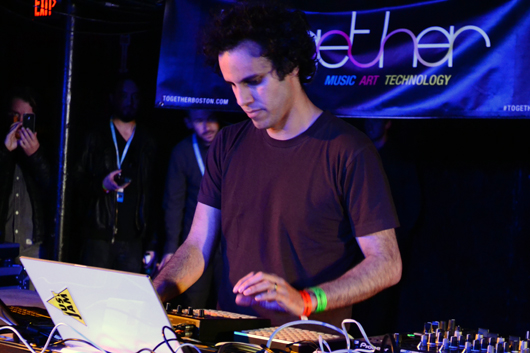
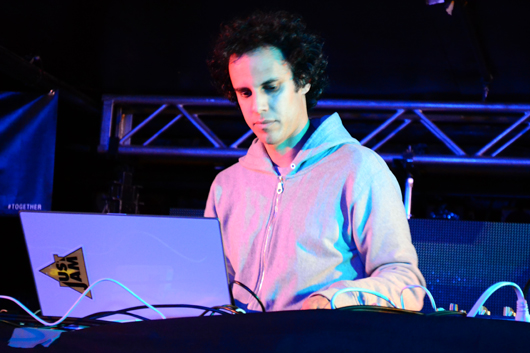
Four Tet
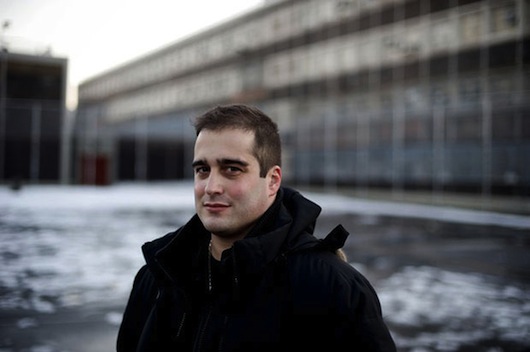
Get familiar with the name John Barera.
Because a large chunk of the week consisted of showcases for local parties to peddle their brands, we’d be remiss in not mentioning the residents who provide the city with its sound for the surrounding 51 weeks. Best amongst the lot was John Barera, a fixture at Cambridge’s Make It New parties. That weekly Thursday event has mutated its scope over the past couple of years away from bass music toward more adventurous house and techno fare, thanks in no small part to Barera’s presence. Taking to the decks with a tumultuous bop to coincide with his selections, he delivered one of the more ardently rowdy sets of the week. Unfortunately, he was given the unlucky task of opening for Andrés, who probably would’ve just prefered to walk into a room of dead silence and go from there, but Barera’s reverence to the veteran shined through his warm-up set.
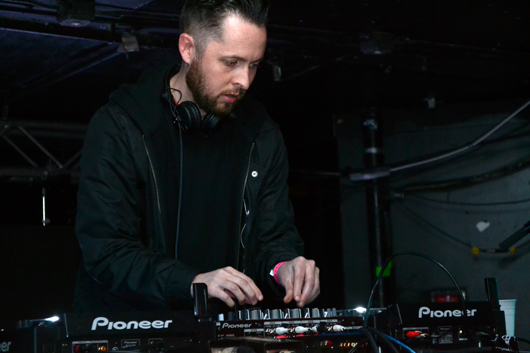
Duke Dumont
Duke Dumont is about to be a thing in the States, too.
Friday’s Turbo showcase at the Middle East was a bit of an unusual affair. There was a spike in the number of attendees who had little clue that the night was even part of the festival, and were mainly there just because it was a place to dance on a non-work night. (Unfortunately, that also meant they were there to shrilly whistle in time with and holler along to headliner Duke Dumont‘s “Need U (100%).”) Opening sets from Bordello and Nautiluss offered hour-long slots of light-hearted 4/4 sounds accented with slingshot drops, and Duke Dumont pushed more of the same. Still, after a week of hearing more challenging fare, an opportunity to mindlessly shuffle around while mouthing along to vocal hooks like “bump it” and “let’s jack” was an oddly welcome reprieve. When the lights came up near 1:30 a.m., Duke Dumont’s syrupy remix of HAIM’s “Falling” was greeted with the largest crowd response of the week. If his Together appearance is any indication, the Londoner’s star may be poised to shine just as brightly here in the States as it currently does across the pond.
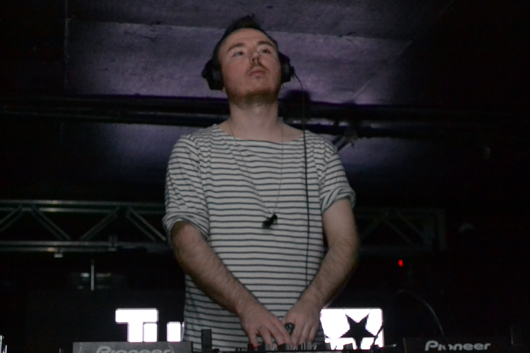
Nautiluss
Eight days is too long for a festival.
Quite honestly, the lack of unified curation largely worked in Together’s favor, with every day honing a different vibe from the last. That said, eight nights is entirely too long for a festival. Even some music obsessives—including the organizers themselves—seemed to be overwhelemed by the sheer number of events throughout the week. Granted, there was one night off, a better solution would be to condense the fest to a four or five-day outing. There was no need to cut any of the acts—they just needed to be scheduled more tightly. How sweet would a double billing of Andrés and Chez Damier have been, as opposed to having them play consecutive nights? Or what if Objekt had been paired with Four Tet, instead of having them overlap at venues that practically touch one another? Of course, Boston’s puritanical 2 a.m. curfew is tough to work around, so why not start earlier? Eight hours of music spread across for four days could help draw out-of-towners looking to check out the city for a long weekend.
Four Tet
All that said, Together remains a festival by Bostonians for Bostonians, a fitting labor of love for a city in need of as much love as it can get. Reminders of last month’s Boston Marathon tragedy were visible at every turn, and a palpable sense of community was on full display this past week. It made Together all the more enriching for the city and its people.
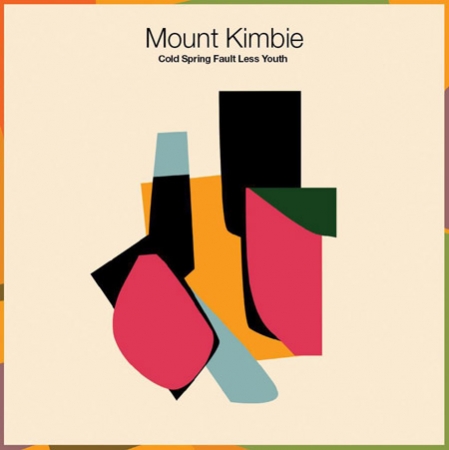
The burgeoning UK producers spotlighted in today’s “From Studio to Stage” feature, Mount Kimbie has followed up three adventurous singles from its second LP for Warp with a full stream of that record. Today, NPR premiered Cold Spring Fault Less Youth before its release on May 28, all of which can be heard now, here.
Oslo disco obsessive Todd Terje has announced that he’ll soon follow last year’s breakout, XLR8R Pick’d It’s the Arps EP with another 12″ for his own Olsen label. Strandbar will be the third record issued by the imprint, and will feature three versions of its title track: a “Samba” on the a-side, “Disco” on the flip, and a “Bonus” version finishing off the release. Juno describes each track as sounding like a “loose limbed take on piano house,” Terje’s idea of music for the Virgin space shuttle, and a “mix which strips everything down to a DJ tool of Latin-inspired percussion,” respectively. Before the 12″ drops sometime in early June, clips of each track can be previewed here.
Moscow-based producer Anton Zap has unveiled a new clip for “Water,” a track from his forthcoming album of the same name. Directed by Ernest Yakovlev, the black-and-white video parallels the peaceful and hypnotizing nature of the recording, as kaleidoscope-inspired shapes expand and compress to the tune’s rhythms. Zap’s seven-track Water LP will drop on June 18th via R&S sub-label Apollo.
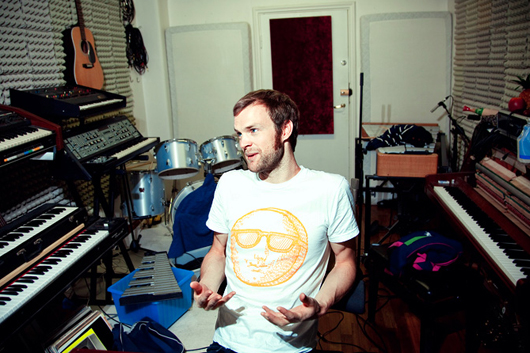
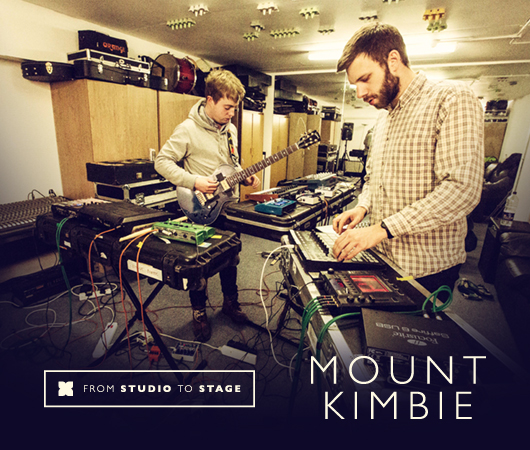
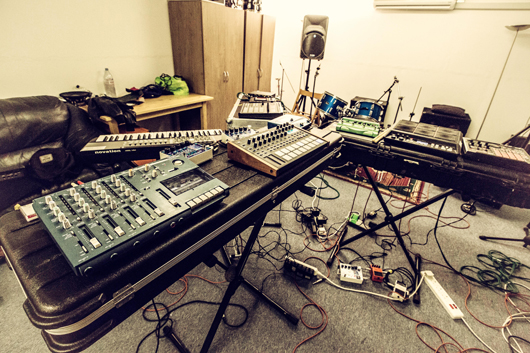
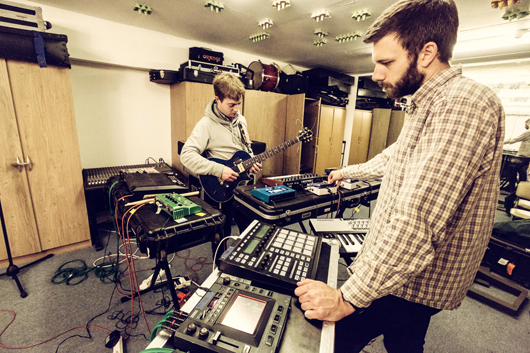
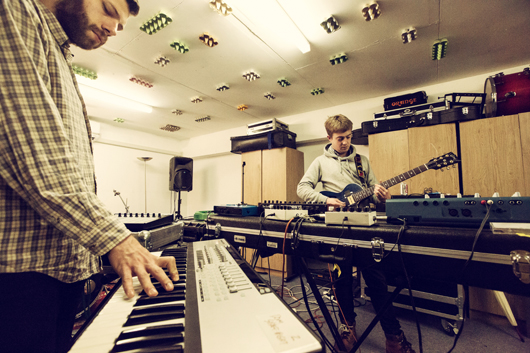
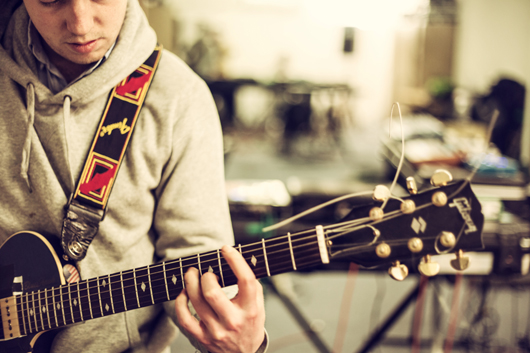
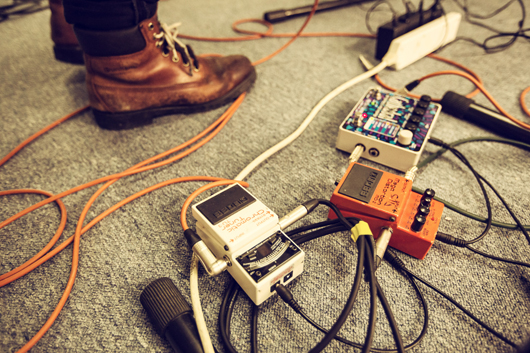
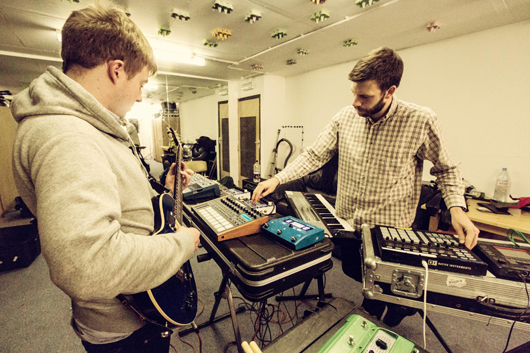
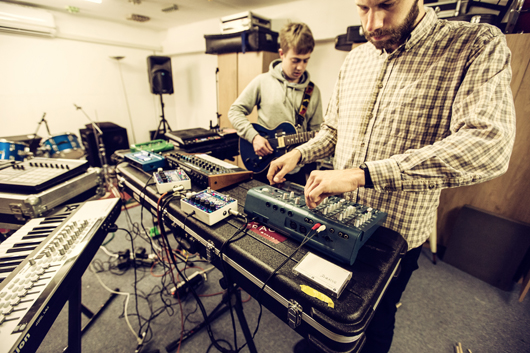
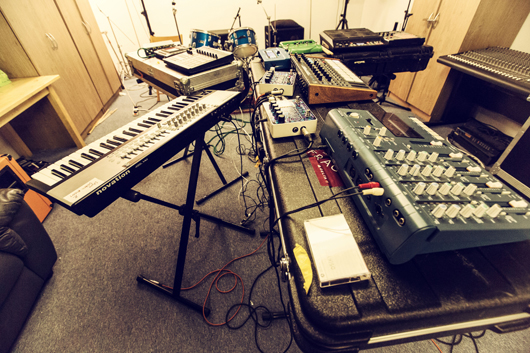
It’s been well over two years since Mount Kimbie‘s debut LP, Crooks and Lovers, landed and—in the process—helped define the UK’s then-nascent “post-dubstep” sound. Partially because of its status as a genre-defining album, Crooks and Lovers also launched the duo of Dominic Maker and Kai Campos into the midst of a constant touring schedule. The London-based pair travelled around the world multiple times over since the release of its first full-length, a rather unprecedented feat for a pair of bedroom producers tinkering with a considerably understated strain of underground electronic music. Now, with the impending release of Mount Kimbie’s sophomore LP, Cold Spring Fault Less Youth, Maker and Campos have been busy preparing a fresh live set focused on their new material, incorporating for the first time a third live member in drummer, percussionist, and jack-of-all-trades Tony Koos. Because the pair’s production studio is currently in a state of limbo, Maker and Campos invited XLR8R out to its East London rehearsal space to take a look at the pieces which make up their current touring rig, and gave us some insight into how they translate their studio creations into a live performance.
XLR8R: When you were making Crooks and Lovers, you were probably not very concerned with being able to translate the record’s songs live. But now with the new record, were you conscious of how the songs on Cold Spring Fault Less Youth would translate to the live arena while you were producing them?
Dominic Maker: We tried to not let that creep into our mindset when we went down to record, but naturally, we’d be making a few things and think, “That’s going to be amazing in the live set.” Really, once the record was done, figuring out how to do these things live came to the forefront. At the moment, we’re still going in and trying to figure out exactly how we can achieve what we want onstage. It’s really good fun having new songs and just a new bank of material to play out. We played the old stuff so much that it’s really been a breath of fresh air.
You ended up touring your last record for well over a year, right?
DM: Yeah, it was about two years. By the time we finished, I couldn’t believe those songs had such long legs.
Where do you start the process of translating the recorded songs to a live performance?
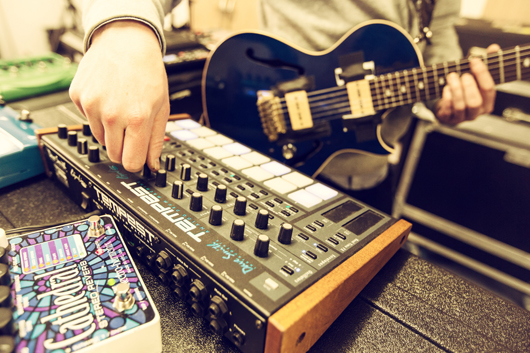
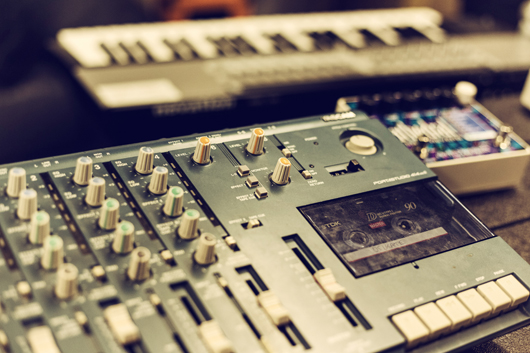
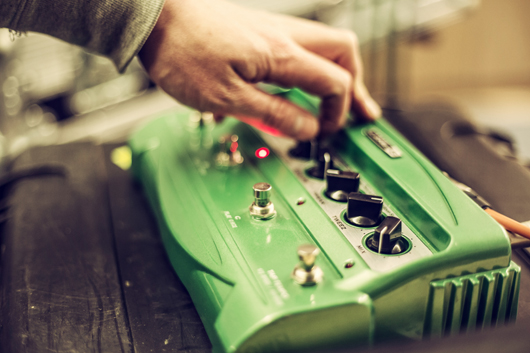
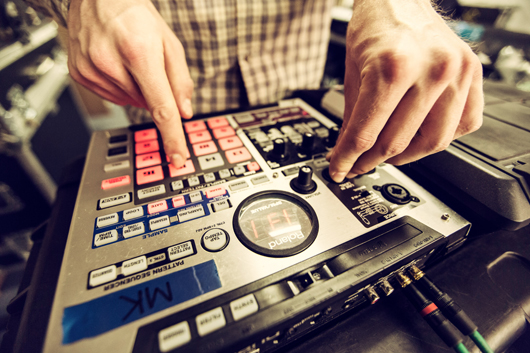
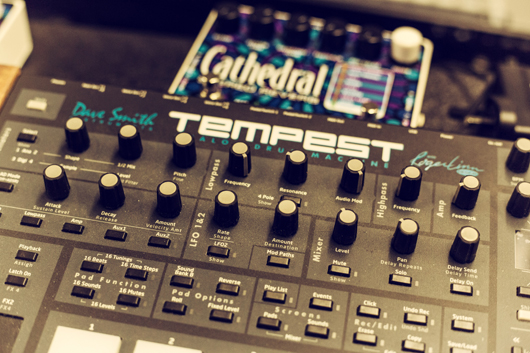
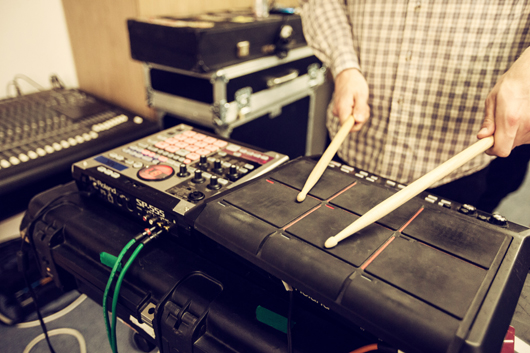
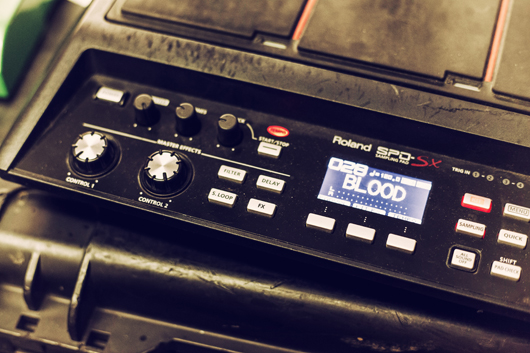
Kai Campos: Over the course of doing Crooks and Lovers and turning that into something to play live, we were trying to figure out how we could turn what is essentially static, on/off sample triggering into something that was more expressive. We started to seek out pieces of gear like the Roland SPD-S, which allowed us to assign what happens [to a sound] within a range of how hard or light we hit the pad. Those were the sort of small things that actually had quite a big impact on how we could perform and get into the music. Having done a lot of that for the last record, we were a bit quicker this time at knowing how different parts would work on different pieces of equipment. There are some new pieces we’ll be using with the new material, too. [For example,] there are some tracks that were made with the Tempest drum machine, so we just decided to take it out with us live and use that in the same way we did when we were making the music, really. On the record, we used a four-track tape machine, as well, recording parts to that just to see what it sounded like when we brought [what had been recorded] back into the track. In a couple of cases, that sound really brought something different to the song, so we’ve incorporated that into the live setup. On the four channels are the different arpeggios that were recorded in before. So, we’re using a pre-recorded sound, but the expression comes from the fact that all the arpeggios are slightly out of time with each other, and so you’re forced to build something new from it. But we try not to use gear just for the sake of it. We only add something to our set if it serves a purpose that the existing equipment can’t accomplish. Everything up there is totally vital to the sound.
DM: Yeah, but then we had a show in Moscow on Saturday, and we forgot one of the fucking tapes. [laughs]
There seems to be a lot of equipment that you use on stage that can’t be synced—the tape machine, the pedals, etc. Are there any pieces that sync up together and talk to each other via MIDI as part of your setup?
KC: Actually, nothing has been MIDI synced. It’s been like that from the beginning, just because we didn’t know how to do it and really just didn’t want to get involved in MIDI too much. Now, we’ve just gotten used to having it that way.
DM: At one point we had considered giving our drummer a click track, but really there’s no electronic syncing of sound at all. [Our drummer] Tony Koos is becoming, rhythmically, the base of everything, and we play around him, so insuring that he is tight is the main thing.
How long have you guys been incorporating a live drummer into the set?
KC: We did our first show with him toward the end of last year, and then he’s been involved in rehearsals of the new material.
DM: He uses the acoustic drums a bit, and there’s an SPD-SX pad that he uses. He’ll also play bass guitar and a bit of keys—he’s quite versatile in that respect.
KC: In terms of the music not being synced to any kind of tempo map: Quite a lot of the time in our old sets, Dom and I were trying to control four or five pieces of gear and still be in time with each other, which didn’t leave much room for anything else. Now, with the three of us, it’s given Dom and I more space mentally and physically on stage. We can now get more involved in the one or two things that we are in control of at any one time. Ultimately, I think that will be better for the performances.
You’re trying to make more time for you two to really be able to get into the music, rather than just making sure everything is working right and all in time.
KC: Yeah.
How about when, say, the Tempest is running a sequence, does Tony follow along somehow, or is he adding rhythmic parts on top at that point?
KC: When we brought him in, we were quite reluctant to needlessly put drums on top of things; you see that with electronic music sometimes and it can feel like a cheap way of saying, “We’re a live band.” There is quite a lot of the set where he’s not playing acoustic drums. There is definitely some stuff that is meant to come from a drum machine, and I don’t see the point in changing that just to make it feel more “live.”
Especially now with having a drummer involved, are there any moments that are left up to improvisation in your sets?
DM: At the moment, when we’re on stage, everything has a specific arrangement, but we’ve been loving having a drummer. It’s so fun to jam stuff at the end of songs. The other day, we were playing a track, and the USB cable came unplugged so that the notes it was triggering were just held indefinitely. We just went off on this crazy tangent. I don’t know what sort of style we were going for. [laughs]
KC: It was maybe a housey, Krautrock thing? [laughs] There have been a few of those moments during rehearsals. I think we all need to build up our confidence in regards to playing live though—we haven’t played a lot recently. I hope by the end of the summer we can be in tune with each other enough that those crazy tangents aren’t just a piss take. We’d like to try to incorporate those sort of things live, but I don’t think we’ll start pulling it out until we are 100% confident with each other. When considering the level of musicianship on display, it can be a scary thing to be onstage, but I think the thing that excites people when they are watching someone improvise is that there is a sort of fear. I think at some point we’ll probably have to take the plunge and just go for it.
Do each of you have specific roles in the live performance that perhaps mirror the roles you take while producing?
DM: Well, we sort of have our own stations, but with the new songs, we’re just constantly interchanging between these two places. When we were recording, everything we use live was just set up—so pieces like the Tempest would just be sitting there waiting to be used. When we’re producing, we always start with the individual ideas we came up with on our own—which we did for the first few months [of the recording sessions]—then we come together and work whatever ideas we are both keen on, the bits we felt passionately about and think are strong enough to make a song. When it comes to then translating those ideas to a live show, it’s about dividing things up so that there is, like we said before, room to be expressive with it. If something needs to simply just be triggered, then we trigger it, and if that frees one of us up for another aspect of the song, then great. It’s really not that calculated. It’s more of a natural thing.
What does it take to make you feel like you really have a song down? Do you find there’s a lot of experimenting?
DM: Well, just the idea of playing that recent show in Moscow was a bit of a wake up call. All of these recent, sort of preliminary shows have been about just getting stage time and getting used to being in a testing environment. I felt before that we were really ready, and then we went on stage and I realized we weren’t ready. Being in front of an audience, you just instantly notice the moments that need to be changed and the areas that you need to work on.
KC: Yeah, rehearsal is really so far away from actually performing.
DM: You can’t really recreate that feeling. Our ears are much better tuned now, and we can know very quickly what the problem is and what we can do to make it better. Before, we probably would have just gone on with it.
There are some electronic artists that maybe don’t like playing live as much as they enjoy making their tracks or just DJing. Do you enjoy playing your music live? Would you say it’s as rewarding as the process of making the actual songs themselves?
DM: Oh yeah, definitely. Sure, we’ve had struggles on the road—who doesn’t?—but nothing beats the instant satisfaction you get when you play a really great live show. We felt that, with the music we make, it just wouldn’t come across right if we were DJing it. DJing in the future might not be out of the question, but we would have to be really good at it, in the same way we’ve dedicated ourselves to our live show.
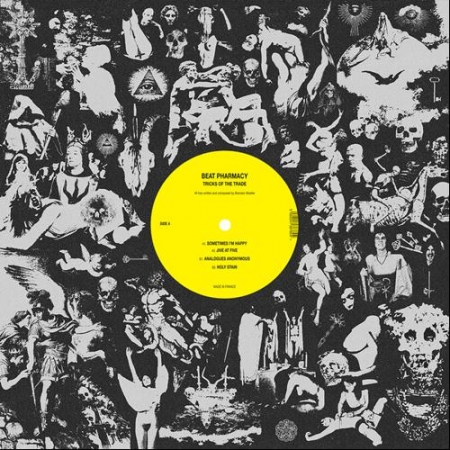
Dub-techno veteran Beat Pharmacy (a.k.a. Brendon Moeller) will soon add to his immense discography with the release of a new EP, the aptly titled Tricks of the Trade. Set to drop May 27 via Throne of Blood, the four-track record opens with “Sometimes I’m Happy,” a cut that blends standard dancefloor rhythms with off-beat synth licks. As an artist who operates under multiple musical identities, Moeller has certainly retained a unique style for his Beat Pharmacy project, described in the EP’s accompanying press release as “analog weirdness designed to move butts and make you think.”