The visuals for Atlas’ beautiful “Feel Me” are appropriately nocturnal, all blurs and dimmed streetlights floating by. It’s the most direct visual interpretation that we could imagine for the new single, but somehow that makes it more effective. The two Leeds producers that make up Atlas, Rem Sutton and Luke Fantom, are night owls themselves, making a sort of downtempo garage aided by vocalist Emily Harris’ smooth vocals. They’ve been slowly perfecting this haunted slow-jam formula since their Cities EP was released last year. “Feel Me” has been released as a 12″ backed by “Don’t Explain” via COJA, with remixes of “Feel Me” by The Soft, Bam Spacey, and Luvian coming soon as part of a digital package.
Souleance “Biscornu”
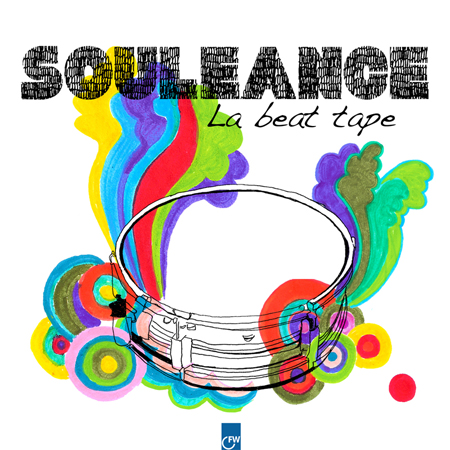
The two producers comprising Souleance make no bones about the fact that they’re DJs making records for other DJs. The French duo of Fulgeance and DJ Soulist approached its latest beat tape with only one goal in mind: making tracks that would seemlessly integrate into their own sets of raw, crate-dug funk. Souleance seems to know its stuff, too, as its tracks are built upon a rotating array of influences. “Biscornu,” taken from the back half of the forthcoming La Beat Tape, is built on a thick break with a fuzzed-out bassline strutting over top of it. Synth chords drop 30 seconds in, and what starts as a break track morphs into a sweet, trip-hop-touched interlude before bringing back the funk. The rest of the 20-track La Beat Tape will be released digitally on February 4 via First Word—with a 7″ of four of its most “DJ friendly” tracks to follow soon after—but you can preview each of its tunes before then, after the jump.
Eskmo Terra
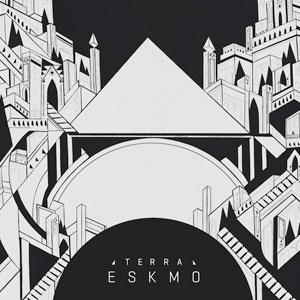
It would be an understatement to claim that Eskmo‘s undergone quite the metamorphosis over the years. The California-based producer’s early releases dabbled in sounds across the electronic spectrum, including drum & bass and assorted futuristic breaks. But nowadays, most associate Eskmo with the wider West Coast beat scene, thanks in part to well-known efforts like 2010’s “Cloudlight,” an enjoyably off-kilter exercise in beat scene-meets-dubstep-styled production that appeared on the expansive Ninja Tune XX compilation and the producer’s self-titled LP that same year. The release of 2012’s Language EP heralded another change in the California-based beatmaker’s sound, including a heavier focus on vocals and a toning down of low-end elements, but the record didn’t quite resonate with many listeners. Now, Eskmo stands poised to delve into sounds of a different, quieter sort with his latest offering, the seven-track Terra EP.
Despite being named after the Latin word for “earth,” Terra often doesn’t feel very firmly rooted or grounded when taken as a whole; its sound is dominated by skyward cascades of atmospheric synths, and even its rhythms—replete with fills and unorthodox patterns, when present—can sometimes seem to meander a bit. In fact, the vocals on each track, which are just as heavily programmed as the beats themselves, tend to be the only constant; the instrumentation of songs like “Shadow” and “We Are All Terrestrial,” for example, swirls and morphs beneath repeated mantras that don’t appear to expand further than saying the name of the song. While this technique can get a tad repetitive, it works because these incantations don’t try to supplant the beats; they instead try to fall into the mix as just another element. Eskmo’s voice also shines the most when used sparingly, as Terra‘s attempts at deeper lyricism (combined with the sometimes annoying Auto-Tune-like effect that coats the vocals) fall flat. One such attempt, “Giant,” features lyrics that get so wrapped up in their own surrealism (mentions of “powdered cloud drops” and allusions to “the shoulders of giants” abound) that they nearly overwhelm the song with new-age cheesiness.
If anything, Terra‘s finest moments happen when Eskmo finds a median between elements of his old and new production styles. “Push and Pull,” the best example of this balancing act (and arguably the best track on the EP), is true to its name, featuring an aggressive push in the form of punishing staccato low end that grapples with and eventually yields to calm, atmospheric synth sweeps. The vocals are kept to a minimum, aside from the occasional surfacing of a short “push, pull” refrain. “Buffalo,” the album’s opener, is also worth mentioning in this respect, as it nearly strikes a similar balance via a hard-hitting, driving drumbeat that plows its way through a thick haze of synth melody, but the song ultimately suffers from its vocals (wistful, Auto-Tuned repetitions of the word “buffalo”), which seem a bit out of place and a tad too prominent in the mix.
Taken as a whole, Terra is a little underwhelming, which is disappointing when one takes its meticulously crafted drum patterns and lush atmospherics into account. While it’s well produced from a technical standpoint, it just feels a bit flat, as though Eskmo is trying too hard to keep his listeners guessing.
Yumi and the Weather “Not Again (Ambassadeurs Remix)”
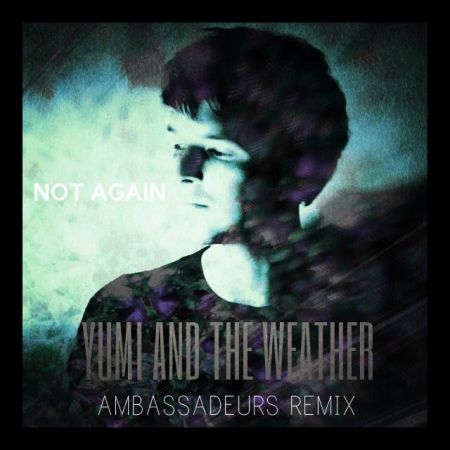
Brighton-based tunesmith Ambassadeurs just sent over his new remix of emerging artist Yumi and the Weather. You may remember Manni Dee’s remix of the UK producer’s “Not Again” tune, which made it into our Top 20 Downloads of December. Here, Ambassadeurs adds an extra dose of lush vibes in his take on the same song, chopping up the vocals before soaking them in reverb and weaving them in and out of his footwork-and hip-hop-leaning beat work.
In the Studio: Toro Y Moi
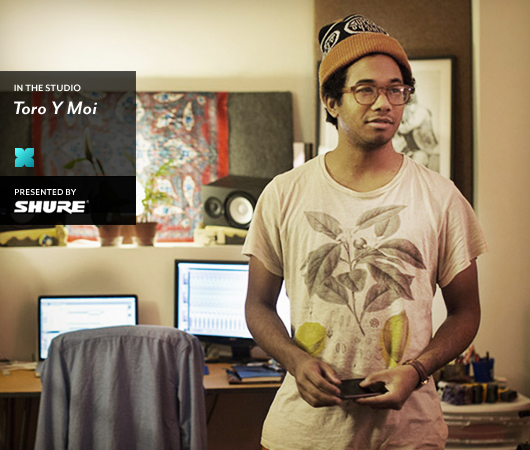
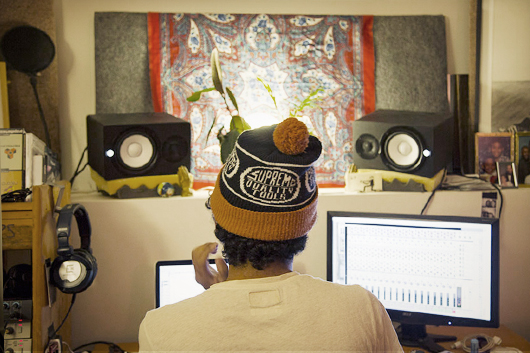
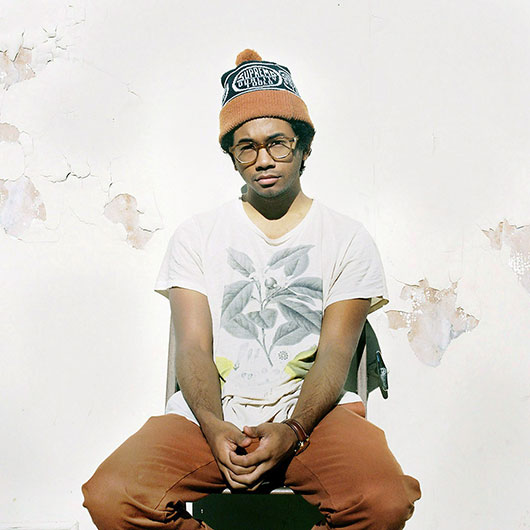
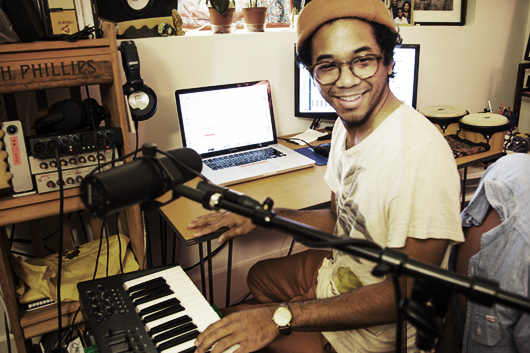
Toro Y Moi (a.k.a. Chaz Bundick) has come a long way over the past few years, both literally and figuratively. Having moved beyond the chillwave tag that was initially affixed to his music, this week the South Carolina native is releasing Anything in Return, his third full-length. The album was actually written and recorded in the Bay Area, the place Bundick now calls home after relocating to the West Coast more than a year ago. While the record still features many of his trademark hazy synths and sunny melodies, it also finds Toro Y Moi trying new things, most notably by experimenting with a sound palette that explicitly pulls from hip-hop, R&B, and pop. Curious about his production methods, we made a trip to Berkeley and paid Bundick a visit at his home studio. In the process of showing us his set-up, Bundick spoke about how his current space came together, the evolution of his production methods over the years, his growing interest in electronic music—something increasingly realized via his Les Sins side project—and his favorite pieces of gear.
XLR8R: This particular studio you’ve only had for a few months now.
Toro Y Moi: Yeah, since last August.
When you’re setting up a studio space, what’s important to you?
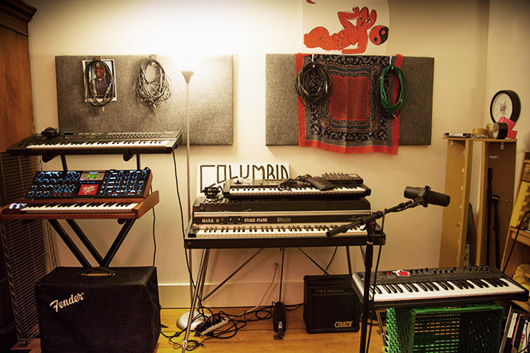
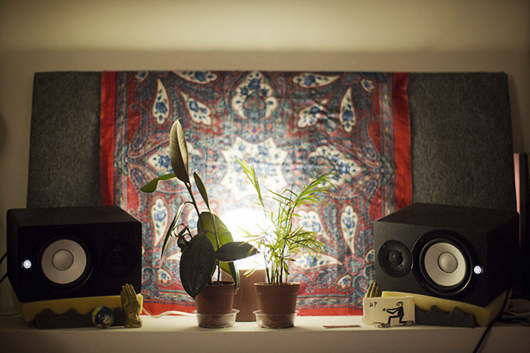
Aside from treatment, it would probably just be light. I need light to work. This room is windowless, so it took me a good couple of months to get used to it and be comfortable. I put this rug in here, and it really dampened a lot of the reverb. It really gave a better warmth to the room.
How do the decorative touches come about?
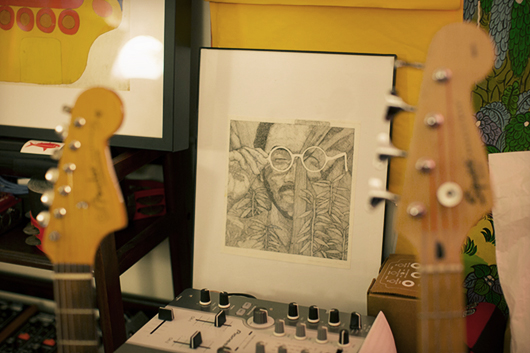
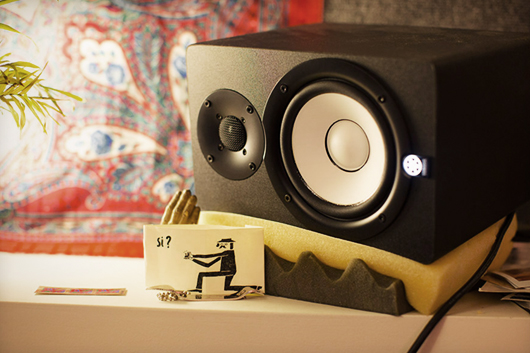
That just collects over time. Before, I didn’t have these random things hanging around, but I think that’s the best part about living in a blank space, is that you fill it up over time. I know a lot of people are anxious to get little decorations up, but I don’t want it to look like I’ve lived here for 10 years.
Your studio space is in the same place where you live. Do you like that?
I could see how people could maybe get lazy or just not like having their workspace at home, but I like it. It’s something I’m used to, just waking up and going straight to the studio, or going straight from the studio to bed, as opposed to driving somewhere or walking somewhere. It doesn’t bother me at all. It’s just me at home all day, working.
Do you ever have a problem unplugging from the studio, because it’s too accessible?
I try to get on a schedule. This is the first time [I’ve done that]. My girlfriend and I live together, so when you move in and live with someone, there are a lot of sacrifices. It’s something I’ve learned to do, is to just get on her schedule, so we can be together more—go to bed when she goes to bed, wake up when she wakes up.
It’s almost like working a 9-to-5 in your own house.
Right. I [also] try to do more things now, especially since I’m working full time on music. I draw more. I try to exercise. I try to get out and take a break from this cave.

When you first started producing as Toro Y Moi, you were 15 years old. What kind of set-up were you using?
I started with a four-track, a Fostex cassette-tape four-track. It came with a microphone and maybe headphones. It was just me and an acoustic guitar and this Roland keyboard that had a bunch of orchestra sounds and fake pianos and stuff. I was doing drum beats and piano with that—everything was coming from this one keyboard. It progressed from there. I bought a bass, and started adding that. I bought a drum set, and started adding that. Then I got a laptop, and once I got a laptop in college… well, I got it for college, but then I ended up getting Fruity Loops from a friend. From there, I just started using the laptop for sampling and programming.
The first record, Causers of This, is pretty heavily sample based, right?
There are samples in it, but a lot of it is just programmed MIDI stuff. There are a lot of soft synths and default drum patches.
Were you using Reason at that point?
Yeah, that’s when I started. “Blessa” was actually the first song I made with Reason, and I was really just experimenting with what it could do. That got big, I signed with Carpark, and Causers of This was pretty much me experimenting with Reason and me trying to figure out how I was going to make an album.
When the album got big and you had to start playing live shows, was it a challenge to take this Reason-based album and translate it into a live set?
Yeah. At first, I started with a MIDI keyboard and a guitar and a loop pedal. I had never done that before and I didn’t like it. I wasn’t used to being on stage with a laptop and being solo. I got a band as soon as possible. I sort of had to start over. We couldn’t really make the songs sound like they did on the album. So, when it came time to do Underneath the Pine and this new album, I knew I wanted to play them live.
So was Underneath the Pine made in more of a band context, or were you still writing everything?
It was still solo, but it was written with band in mind. I knew that I needed a bass part and a drum part that would be solid live. That’s why the album was so groovy I guess.
Were you still writing on virtual instruments, or did you switch to “real” instruments?
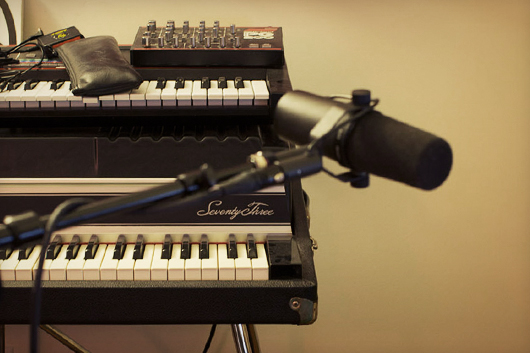
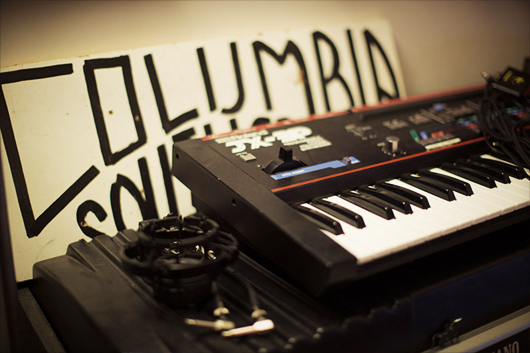
I actually did it on the Roland JX-3P synth and the Rhodes electric piano. [I also used a] bass, just a Squire Bronco. The only thing [from the album] that’s not here is the drum set, this cheap drum set I got for Christmas one year.
Were you playing everything as well?
Yeah, I played everything. I took it to the studio in Athens—it’s called Chase Audio—and we mixed it there. That studio is really amazing because everything is anti-plug-in and anti whatever ProTools wants you to do. Everything is hardware, everything is analog. That’s what I was going for on the album, so I really wanted to go there.
How did you record it? Were all of the sounds just generated by your synths?
At the time, I was recording with a Boss digital nine-track. I tracked everything into that, and exported it into Reason. I was using Reason 3 or something like that at the time, and that was before Reason was made to work with WAV files. I would draw it out in the NNXT and mess with it there. So, if I had to listen to the middle of a song or something, I had to start from the very beginning so the MIDI key would pick it up. At the time, I really didn’t know what I was doing. [laughs] If I knew that I could loop stuff—that just never occurred to me. I just thought, “Oh, I have to play the drum part all the way through,” instead of just looping this section.
You were playing your drum tracks all the way through?
Yeah, because it was just me hitting record, and I didn’t have a way to punch in, so I would seriously have to—because of the hardware and the way it works, the timing. So yeah, when [I found out] about drum loops, I was really kicking myself, like, “Crap.”
For the new album, Anything in Return, what was the recording process like?
I wasn’t here. I was at this old apartment complex, living underneath a hoarder crazy lady. She would not let me make a sound. She was really anal about any sounds going on. I worked in headphones a lot, so I feel like that sort of made it what it is. It’s such a headphone-heavy album, just the way that things are panned and mixed. I knew I wanted to not use a lot of soft synths. Pretty much everything came from the Moog, the JX-3P, the Rhodes, and the Nord. Then, at studio where I mixed it—Different Fur—they had a few different things, like real piano, which was really cool. We mic’ed up the real piano with four different contact mics. They also had a Korg MS2000.
What software are you using to record now? Are you still on Reason?
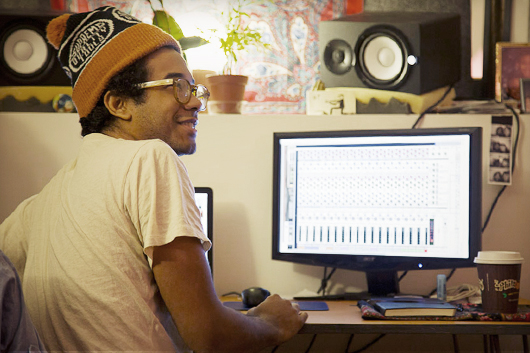
Yeah, I use Reason 6. The new Reason has that SSL board, which is pretty cool. It’s super accurate, they have all those different EQs and filters.
On Anything in Return, are you still writing and playing everything?
Yeah, I did that again. I think on the next record though, I definitely want to try and have a more live aspect attached to it. I’m just ready to try something new.
The new album has more of a hip-hop and R&B influence, was that intentional?
Yeah, I was definitely listening to a lot of hip-hop and R&B. I like to make hip-hop beats, and I kind of just wanted to do that, to see if I could turn them into pop songs. It’s sort of me just having fun and experimenting with a more poppy sound.

With your Les Sins project, are the production methods the same? Do you use the same equipment?
Yeah, the same stuff. With Les Sins, [that was when] I started to get out of the habit of using soft synths. I try to program differently too. I sample drums differently, try to make [the music] weirder. I don’t want to do that French thing any more. [My] newer stuff, it’s definitely darker and more groovy than just four on the floor.
Do you still see Toro Y Moi and Les Sins as separate things?
Yes, I definitely do. With Les Sins, I’m not afraid to do some dark stuff or just completely alienate a crowd. With Toro Y Moi, I definitely want to keep that pop element in there. With Les Sins, I’m comfortable with making a seven-minute dance track, and [making it for people who understand] that’s how dance tracks work.
You don’t have a long history with club culture or house and techno. Getting into it, how have you learned to make it?
Listening to records, mostly. What I like the most about dance tracks is the production, just how big the drums can sound and stuff like that. I like the drums the most.
Who are some producers that you like in that realm?
I like Motor City Drum Ensemble. Kyle Hall. I like a lot of the Hessle Audio stuff. I like Jeremy Greenspan, and of course Daphni and Four Tet. I think Four Tet’s grooves are so on point. He always just makes really emotional dance music that’s not crazy overproduced.
Have you been spending more time in that world?
Yeah. I’ve actually started DJing more. I try to DJ a lot now. I recently bought a mixer, so I can practice.
Getting back to your own production, at this point, how much of the music you produce is being made by a “real” instrument?
Ever since I started on Anything in Return, it’s been like 90% hardware. The only thing that’s programmed are seriously just the drums. There might a couple of pads from Reason or something, but the only thing that’s coming out of software are the drums. [Also,] if I’m ever using a straight-up sine wave or a triangle wave, that’s coming from the sampler I’m using on Reason. Samples, too. Anything that’s sampled.
Do you do your own mixdowns?
I do my rough mixes. I’m trying to not release stuff that hasn’t been mixed in a proper studio. There are a couple of tracks I might release [because] I just want to get them out or something, but when it comes to the album quality, it’s definitely going to be mixed in the studio.
After you’ve spent so long making something, is it hard to then hand it over to someone else?
I was there for both mixing sessions, for this album and the previous album. They do take control, so I have to take their advice and just trust them on some certain things. They’ll say, “That’s as loud as you want to go,” and I’ll say, “No, I want it louder.” And they’ll say, “Trust me, this is good,” and then it gets mastered and it’s perfect.
Last question—what are your favorite pieces of gear?
Probably my Moogerfoogers. I can’t leave them alone. I use the Cluster Flux a lot on the keys. It’s just a chorus pedal that can also be a weird LFO pedal. Also, I recently got this Yamaha DX7s synth. It’s awesome. I’m using that on everything right now.
Toro Y Moi’s Anything in Return is out this week via Carpark.
Leibniz “Fein”
Leipzig-based producer Leibniz is set to release his self-titled debut EP on February 6 via Fairplay. Though not featured on that record, “Fein” will give you a sense of what Leibniz is all about. His roots clearly lie in house and techno, as evidenced by the heavily shuffling 808 groove that propels the track. Yet he brings a certain dark and suspenseful quality to the overall vibe with the help of chilly synth stabs, some eerie FX, and creepy mumbling—helping make “Fein” a foreboding house track that excels in its texture and moodiness.
Raudive Traffic EP
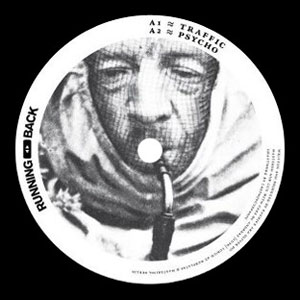
The latest EP from 18-year production veteran Oliver Ho might be subtitled something like “Reflections on the Banger.” This doesn’t mean that the record offers a SND-style intellectual deconstruction, but rather pieces realized with the casual, rapid control of sketches executed by a seasoned artist. The focus of this EP for Running Back is on Raudive’s draftsmanship—his ability to rattle off a stylish study of a subject from various angles without undue hardship. There is no bigger picture to Traffic, but the only real downside is that, at times, the EP feels authorless in the way tech-house records tend to do.
“Traffic” kicks things off with the kind of muscular brashness that Night Slugs has dominated for the past couple of years. Despite the inherent dirtiness of the track’s guttural piano note, clomping toms, and smeared vocal sample (something, appropriately, to the effect of “Break through the wall”), “Traffic” is every bit as glossy, in its way, as something like Jam City’s “The Courts.” The EP’s other three tracks (the digital version includes, additionally, an alternate version of “Beams” and the DJ tool “Traffic Beats”) follow in the same vein, as if Ho was trying to make of classic-house sounds something bruising, verging on larger than life. “Psycho” is the exception. Done up in a more laid-back fashion, its strutting grove, slanting sawtooth buzzing, and sampled “Yeah!” that must be Planningtorock—that parodic, grating Julia Child opera voice couldn’t belong to anyone else—don’t lead anywhere in particular.
This record’s b-side addresses the first side’s inconsistency but otherwise continues the burly vibes already underway. Another glowering voice, this time muttering “Slave,” finds its way onto “Relentless.” The voices that respond, in watery tones, “Get free!” are less than convincing, but the track’s crunchy layers of hi-hats and various techno sequences are textured enough to keep it from becoming generic mid-set filler. Traffic concludes on its strongest moment with “Beams.” Even if the Geiger-counter pips that seem to strain the rhythm here are lifted from Gui Boratto’s “Mr. Decay,” the tapered, slapping sounds around it unfold slowly enough to keep the listener’s attention focused on what’s coming next.
Detboi “I Can’t Take It”
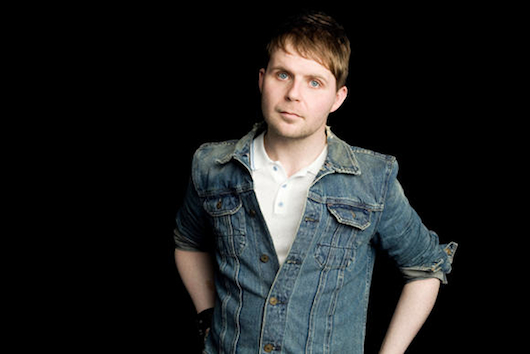
The Dublin producer of dark and heavy bass music, Detboi is set to release a 14-track record called Sliding Floors via UK label Cheap Thrills. Ahead of the release, he’s given us the premiere of “I Can’t Take It,” a two-step groove driven by soulful, pitched-down vocals that belt out the mantra which gives the song its title. Detboi’s beat eventually caves into a bass-driven jam perfect for any early evening DJ set. There’s also a video for the new tune, which you can check out after the jump before Sliding Floors arrives on on February 25.
Youngstar Pulse X Remixes
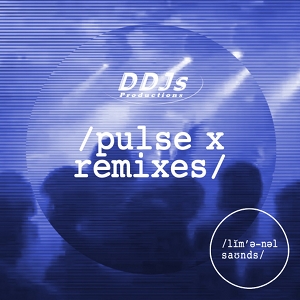
How does one rework a certifiable classic? And what is the desired goal in doing so? Should the track maintain what made the original great or be completely indistinguishable from it? Some tracks simply have more mileage than others—Masters at Work’s “The Ha Dance,” for example, has been enduringly malleable—but horrendous remix packages of the Trax and Nu Groove catalogs have recently proven that these are few and far between. Grime hasn’t seen the same level of retroactivity as house and techno, for a number of reasons. It’s an MC-driven music, for one, and many of its MCs have been as ephemeral as the rudimentary productions they spat over. The scene’s connection to pirate radio has meant many of its classic moments were just that: moments of pure, spontaneous energy. Moreover, grime is only about 10 years old at this point, and its few truly anthemic instrumentals have been mercilessly rinsed. Youngstar’s “Pulse X” is one of them. The track has appeared on virtually all of the genre’s seminal radio sets, and still gets play today—along with some of Wiley’s eskibeats, it’s often the modern DJ’s token grime track of choice.
“Pulse X” is a simple proposition, its light-footed bassline skirting around a punchy percussive skip, occasionally switching into blunt overdrive. Its appeal comes down to sheer alien ferocity. Like so many classics, the track seems to will itself into going as hard as it does. There is no extravagance, just a few unmistakable elements locked into a powerful arrangement. London label Liminal Sounds has found five producers willing to remix “Pulse X,” though the track’s singularity is too much for any of them to handle.
That isn’t to suggest they don’t try. The artists are a formidable bunch, representing the current crème of experimental, grime-influenced producers. Visionist‘s take adds a strangulated R&B vocal and urgent string arrangements in attempt to lend the brute original some melody. When he deploys Youngstar’s distorted bass bounce, however, his personal contribution falters. This continues as a general trend throughout the EP—new touches are offered, but any hint of the original (usually in the form of bass hits) overpowers. Blackwax introduces tensile, gymnastic break rolls, while Slackk‘s extended, fairly reverent rearrangement adds clusters of syncopated hand drums. As with the others, Pedro 123‘s revision is ruled by the bassline, which seems slightly off-kilter. He constantly breaks up the track with rewinds, which, while removing a fair bit of energy, does make it well-suited to MCing. Finally, Elsewhere adds a clipped Dizzee Rascal sample and semi-constant hi-hats before dropping in some 8-bit plinks toward the end. There truly isn’t a poor production here, but each pales in comparison to Youngstar’s track. Although the reworks testify to the lasting appeal of “Pulse X” by highlighting (or being overwhelmed by) what makes the original great, there is no such treasure to be found on these mostly undaring efforts.
The Lowdown – This Week’s XLR8R Top 10 with Four Tet, Oneman, Trus’me, and More
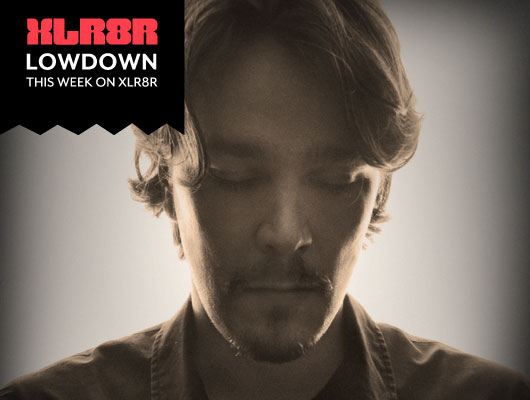
Throughout the week, a whole lot of material gets posted here on XLR8R. And while we know—and love—that some hardcore readers will eagerly pour over every single news story, interview, podcast, video, and MP3 download that appears on the site, we also realize that for most people, it’s impossible to see everything, which means that some quality XLR8R content is likely to get missed in the hustle and bustle of everyone’s daily lives. In the interest of making it easier for everyone to catch up, every Friday we present The Lowdown, a weekly wrap-up of the top 10 tidbits from our site.
1. We kicked off the week with Welcome to… the Internet, an in-depth look at how the internet has affected electronic music in recent years. It included quotes from Nguzunguzu, MikeQ, Fatima Al Quadiri, RL Grime, Brenmar, Physical therapy, and Matrixxman.
2. This week’s XLR8R podcast featured an exclusive mix from UK house veteran Trus’me (pictured above), who will soon be releasing his first new full-length since 2009.
3. In a surprise move, Four Tet offered up a free album of previously unreleased material.
4. London producer Otik is only 19 years old, but his skippy house cut “Tremble” was the most popular new tune in our Downloads section this week.
5. Oneman made his first major announcement of the year; he’ll soon be releasing a new mixtape and posted a free slow-house edit of The xx’s “Chained” to whet our collective appetites.
6. The UK was in a generous mood this week; Pariah gave away a beatless production from his archive, “Numbers Station,” as a free download.
7. LA beatmaker Shlohmo announced the impending release of a new EP, Laid Out, along with an upcoming North American tour.
8. Cosmic-disco stalwarts Todd Terje and Lindstrøm will soon be releasing a collaborative single, and are also in the midst of planning an extensive joint tour.
9. Nina Kraviz will be soon releasing another set of remixes, the next installment coming courtesy of Detroit veterans Marcellus Pittman and Urban Tribe.
10. Next month, Joy Orbison will be crossing the Atlantic for a short North American tour.
An expanded version of the The Lowdown is also available via a weekly email newsletter. Those interested in an even more in-depth round-up of XLR8R content, including a complete listing of all the free downloads we’ve offered in the past seven days, should sign up by entering their email address below.
Subscribe to the XLR8R Lowdown