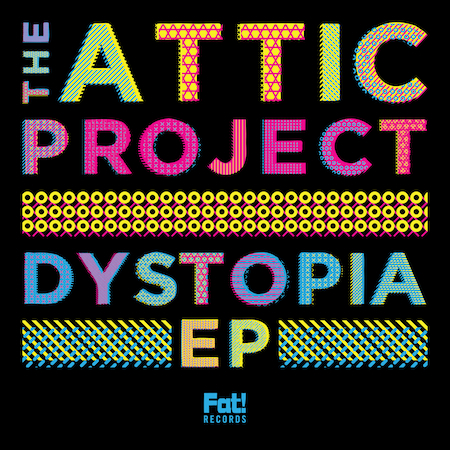
Though the artwork for his latest EP may suggest a release filled with bright and funky tunes, 19-year-old Gus Nisbet (a.k.a. The Attic Project) has instead conjured up some dark and mystic material for the Dystopia EP. The four-track record is a journey into Nisbet’s wild imagination, haunted by prayer calls, strange drones, and the sounds of eerie eastern music. “The Gale” is perhaps the strangest and most mysterious tune of them all, one which is most obviously influenced by eastern vocal music. Sitting somewhere in between mellowed-out dubstep and, say, the soundtrack for Crouching Tiger Hidden Dragon, Nisbet created a truly cinematic soundscape riddled with conflict and sadness throught his production. You can check out more of The Attic Project’s Dystopia EP, which is out today via Fat! Records, after the jump.
Bassline stalwart DJ Q has announced that his next record will arrive at the end of this month via London’s burgeoning Local Action label. The four-track 12″ boasts the swinging original version of “Trust Again” alongside DJ Q’s “4×4 Mix” of the single, a remix from fellow bassliner TS7, and the “first vinyl remix in several years” from Karl “Tuff Enuff” Brown of Tuff Jam fame. DJ Q’s original production features a vocal contribution from South London vocalist Louise Williams, and can be streamed in full before it’s released at the end of January, below. Word has it that this single precedes the arrival of DJ Q’s debut LP in fall of 2013.
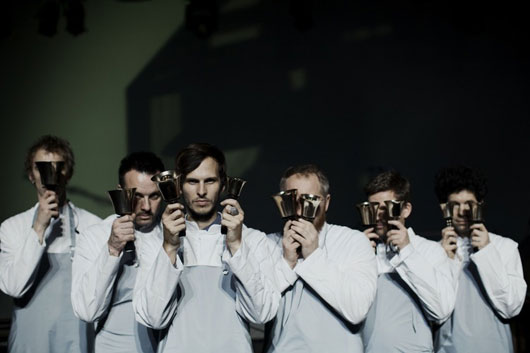
Announced late last year, Elements of Light, German technoist Pantha du Prince‘s collaborative LP with Norwegian quintet The Bell Laboratory, is still a week away from its official release via Rough Trade, but that hasn’t stopped the artists from unveiling a full stream of their five-track, 44-minute album today. Courtesy of NPR, you can listen to the kind of austere, minimalistic, intricate, ambient, percussive, and flat-out gorgeous techno that makes up Pantha du Prince & The Bell Laboratory’s Elements of Light, here.
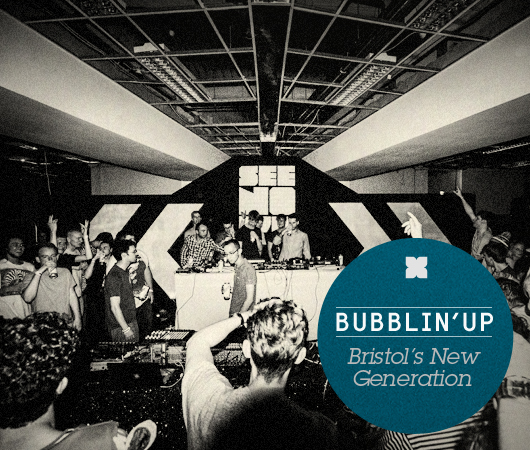
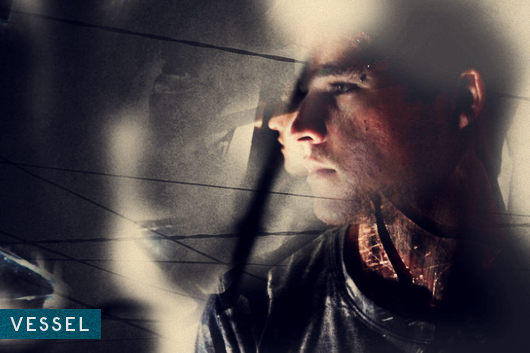
“It’s hard to say how much influence Bristol has had on me, musically speaking,” says Seb Gainsborough (a.k.a. Vessel) on the ties between his music and the city he’s grown up in. “When you’re making electronic music, it seems hard to get away from your geography. The musician’s working environment is often of greater interest than the musician, and by default a whole history and set of assumptions is transplanted that aren’t necessarily relevant. That said, I do believe that a person’s environment will influence what they create.” It’s a dichotomy that seems of particular relevance to Bristol; unlike cities like Detroit, Chicago or Berlin, it’s difficult to tie the city to the history of a single electronic genre, and various attempts over the past twenty years to trace the path of a specific ‘Bristol sound’ have felt forced and clumsy. Yet for over three decades, the city has been an undoubtedly fertile breeding ground for electronic and experimental music; from its links to trip-hop, drum & bass, and breakbeat in the ’90s to its deep-rooted affiliation with soundsystem culture, its adoption as dubstep’s second city in the mid ’00s, and the Julio Bashmore-led house boom of recent years. It might not match the backstories of the aforementioned hometowns of house and techno, but there is undoubtedly something special about Bristol, something that allows certain late-night strains of music to flourish. “It’s much more of a social element, or support system,” continues Gainsborough. “Because of the strong links that exist between musicians in the city, there is a real sense that everyone is rooting for everyone else. We all want each other to achieve success, whether it be in a noisy guitar band, a techno act, a soundsystem, or whatever.” Gainsborough’s assertion is more than just a one off hypothesis—that same supportive, positive climate is a recurring theme among the Bristolian artists we speak to.
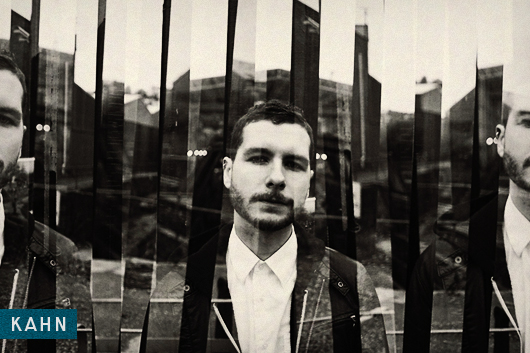
It’s no coincidence that right now one of the city’s most wholehearted embodiments of this positive creativity can be found in the form of Young Echo (pictured at top), a collective of experimental electronic artists that counts Gainsborough among its founding members. At its core, Young Echo is group of six musicians and longtime friends, loosely focused around an irregularly broadcast internet radio show. “We formed about two years ago and started our radio show, which we began by streaming out of our bedrooms and playing all the music we liked that we wouldn’t really get away with playing in a club,” explains fellow Young Echo member Joseph McGann, best known for his releases as Kahn. “We’ve allowed it to grow naturally over time and we now stream the show out of my studio in central Bristol.” Over the past year, that natural growth has led to an increasingly impressive lineup of guests dropping in on the group’s broadcasts, and has seen the crew members step out beyond their studio for a number of group DJ/live sets and a guest mix for Mary Anne Hobbs’ XFM show. This year will see the collective put out its first group album, in the form of a chunky double-vinyl release due on Ramp Recordings.
Yet despite this increased momentum and growing release schedule, much of Young Echo’s charm still lies in its rough-edged approach and lack of production values. Its radio shows tend to be sprawling, ramshackle affairs which often stretch well past the five-hour mark, complete with skipping vinyl and obligatory technical problems. The crew eschews tendencies toward overt self promotion, instead adopting a DIY ethos that borrows from post-punk, soundsystem culture, and the free-party circuit. It’s an attitude that bears something of a resemblance to Shackleton and Appleblim’s seminal Skull Disco project—which operated with one foot in Bristol between ’05 and ’08—one which executes a delicate balancing act, avoiding either pandering to expectation or sinking into self-absorbed pretentiousness.
Yet while Skull Disco’s releases were largely limited to two core artists occupying either side of a 12″, Young Echo’s output is far less simple to keep tabs on: Gainsborough and McGann have so far found their biggest audiences separately as Vessel and Kahn, but the pair also work together as Baba Yaga; Amos Childs and Chris Ebdon work together as Zhou, but Childs also collaborates with Alex Rendall as Jabu; Sam Kidel releases both under his own name and as El Kid, while Killing Sound is a soundsystem-informed project that features input from all members. Add to that a long list of alternative aliases, collaborative works, and a constant cross-pollination of ideas and the picture begins to look increasingly hazy.
“To the uninitiated, the similarities between the music we all make individually would seem few and far between—and they are, superficially speaking,” Gainsborough explains. True enough, it’s difficult to link the collective to a specific sound—listening to the radio shows, a passion for the spacier ends of dub seems to be a unifying theme, yet the group’s releases run the gamut from the energetic garage shuffle of Kahn’s “Like We Used To” to the unkempt techno of Vessel’s “Court Of Lions,” the beatless atmospherics of Jabu’s recent debut, and beyond. “It’s to do with our approach to composition,” he continues, “from how we think electronic music should be consumed and absorbed, to the actual physical power of sound. Those ideas feed back into our individual productions I guess, so collectively it makes a sort of sense.” McGann takes a similar view on his fellow members’ music: “I feel there’s a freedom in the music they’re all making individually, and though there’s context that ties all our work together, it spans across a spectrum of styles and ideas.”
While Young Echo itself is still in its relative infancy, its individual members’ roots in the city spread back considerably further. McGann in particular has numerous connections to Bristol’s club scene that pre-date the collective’s formation. Growing up in between Bristol and London, he attended one of the city’s biggest secondary schools a year below Guido, Mensah, and Buggsy. Like a lot of his generation, he started hitting clubs underage at 16 (“It was a lot easier to get past the bouncers in those days”) and began producing around the same time. As with many Bristol producers, he cites Pinch’s Subloaded nights—at which local soundsystem Teachings In Dub occupied the second room—as an important influence.
But it was the Sureskank Convention nights that would have the biggest effect on McGann, as he was quickly absorbed into the collective of artists behind the events, and began to use the nights as a place to hone his skills as a DJ. “The Sureskank Convention has been running as a club night and crew for over six years, in both Bristol and, for a time, Brighton,” McGann explains. “It started out as a birthday party in a basement and ever since then, the events have been more of a party environment than a heads-down affair. It’s been a great platform for everyone involved (such as myself, Neek, Gemmy and Superisk, amongst others) to showcase their work and grow as DJs. I also think it was one of the only clubs in Bristol for a significant period of time that you would regularly hear grime, before the big resurgence that’s been going on over the past couple of years.” The influence of those nights can still be heard prominently in the more energetic ends of McGann’s music, particularly the unashamed grime floorfiller “Percy”, a collaboration with fellow Sureskank member Neek. “I like to think it’s taken its own place in Bristol club night history,” he adds, “certainly for my generation.”
In the strands of McGann’s varied output, it’s possible to trace a number of the shifting trends that have been prevailing in Bristol during the past couple of years. A few years ago, dubstep dominated the city’s electronic scene and, despite plenty of variation in sound and texture, anything that dipped below 138 bpm seemed like a hard sell. Tempos have certainly dropped of late though, and not just to the obligatory 120-to-130 realms of house and techno; it’s no longer uncommon to find reggae, R&B, or hip-hop sitting on bills alongside dubstep, techno, and house. But far from being a reaction against dubstep, the thing that seems ties these disparate strands together—and separates the sounds coming out of Bristol from those prevailing elsewhere—is a depth and moodiness that harkens back to dubstep’s best moments; there’s a shared knowledge that club music can be dark and raw in the same way that it can be energized and danceable—and that none of these qualities are mutually exclusive.
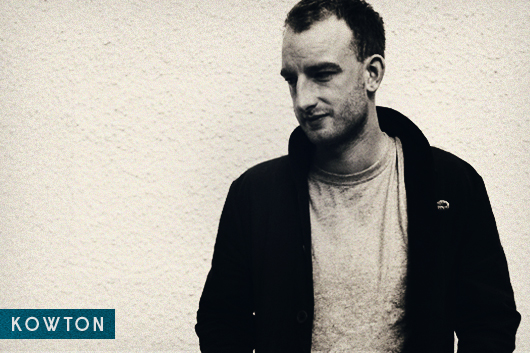
Like Kahn, Joe Cowton (a.k.a. Kowton) is a producer with roots that tie him back to previous generations of Bristol artists. Despite spending his formative years between Manchester and the Lake District, Cowton has been a prominent member of Bristol’s dance music community for several years—staffing record stores and promoting events, all the while stoking the slow-burning rise of his production career, propelled by a string of tunes that excellently meld the spartan power of classic techno with the city’s dubstep heritage.
“When I first moved down there was a tiny club called The Tube about 10 minutes from my house where Under_Score were putting on the cream of European techno and the Crazylegs and Donuts lot would be promoting all the UK funky and garage crew,” he recalls. “People like Roska, Emvee, Cooly G when that sound was super fresh, sometimes it would be almost empty, but I guess that’s just because people weren’t on those sounds yet.” It’s at these early nights in Bristol that Cowton got to know Chris Farrell, then an employee of Rooted Records—the record store run by Tom Ford (a.k.a. Peverelist), which acted as something of a hub for Bristol’s dubstep community, not to mention a geographic home for Ford’s influential Punch Drunk label. “From chatting to Chris and Pev in Rooted I ended up working there for a few months before it shut,” he explains, “and I then helped Chris when he opened Idle Hands two years ago.”
Idle Hands—the record shop which shares its name with Farrell’s vinyl label—was founded in response to the closure of Rooted back in 2010. When it opened, it not only filled the void for physical music left by Rooted’s absence, but provided a new epicenter for the city’s dance-music community around Stokes Croft, an area that was already home to Pinch’s (sadly now-defunct) Dubloaded events, along with The Bell, the pub that plays hosts to the Sunday afternoon Boundary Object sessions that Cowton curates. “Working in the shop has been something thats shaped me,” Cowton explains. “Getting to know pretty much everyone in the Bristol scene, being exposed to a huge amount of music, and just really learning how the industry works a bit more. I only work a few hours a week nowadays, but its been a large part of my life.”
While his releases as Kowton only date back to 2009, Cowton has actually been making tunes for the best part of a decade, his first releases originating back in ’08 under his now-retired dubstep alias Narcossist. “It’s funny looking back, because there was definitely a divide at the time between the techno and dubstep scenes,” he says of the change in identity. “Now, it’s much less pronounced, but it did feel like it mattered at the time. Changing my name from Narcossist to Kowton was really just trying to separate the styles of music I was making. It all seems a bit daft now, but fuck it. Kowton is easier to spell.”
The past couple of years, however, have seen Cowton really come into his own as a producer. He’s moved beyond those early dubstep and techno influences to find his own niche creating tracks that wring volumes of power and tension out of skeletal 909 rhythms and minimal, pulsing basses. Take “Jam01,” a track constructed of delicate brushes and muted kicks that gradually become engulfed by a thunderous clap and rigid hi-hat loop, or “Never Liked Dancing,” an exercise in shuffling, stripped-back techno coated in an atmosphere of pure longing and desperation. Then there’s “Des Bisous,” one of the standout tracks of 2012, which ties the same raw, drum-machine beats to a heavily saturated bass hook and synth strings lifted straight out of classic grime.
It’s worth noting that Cowton’s ties to the Rooted/Punch Drunk generation run deeper than acquaintances and employment though: in 2011 he founded a label, Livity Sound, with Peverelist and fellow local Asusu, and last year saw the trio expanding the project into a live entity. The group’s live shows feature the three artists working with a laptop, drum machine, and analog mixer, reinterpreting tracks from their collective back catalog into a hardware-driven club set. “The Livity Sound [live] thing was Pev’s idea,” he explains. “There were a number of motivations for it, but I think the main one was that none of us were particularly comfortable with idea of doing solo live shows, but thought that as a group, perhaps we’d be able to push things a little.”
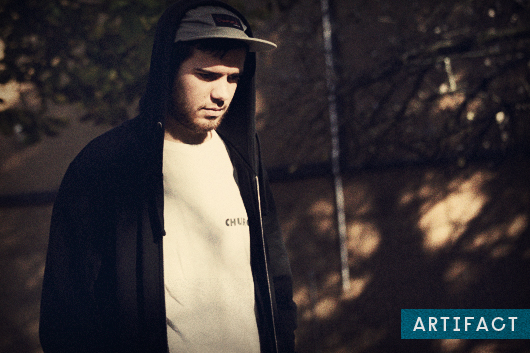
As with Kowton’s releases, some of the most exciting electronic music coming out of Bristol right now comes from artists blending the deep bass weight of the city’s dubstep past with the inherent danceability of classic house and techno—Ryan Bonfield (a.k.a. Artifact) is one such artist. “I moved to Bristol to go to Uni and pursue dubstep,” explains Bonfield, who grew up in a small town outside Swindon in South West England. “Funnily enough, I arrived just as that scene was dying out, and instead discovered loads of new sounds via new artists and club nights.” The resulting meld of influences has led to a string of infectious tracks—such as last year’s “Archaic Line” and “Burst,” and the forthcoming “The Way It Do”—which tie the melodic percussion and driving subs of dubstep to a powerful 4/4 backbone.
After having played in bands since his teens, Bonfield turned to electronic music around four years ago, inspired by memories of his uncle’s studio: “I have some real early memories of him in his room with loads of gear everywhere, so I guess I’ve kind of had an interest since I was young.” Some of those earliest experiences came working alongside fellow rising Bristol artist Ziro (whose debut “Coded” was one of the finest things to come out of Bristol in 2012.) The pair toyed with various dubstep tracks early on without releasing anything, but eventually reunited last year for an EP as Portrait. “Me and Ziro have been friends since meeting in our first year of University,” Bonfield explains, “and we’ve always been interested in similar forms of music.”
When discussing this network of like-minded producers, and the influence of his surroundings, he touches on a similar point to Vessel: “The city is full of very supportive artists and no one has ever really seemed above talking to up-and-coming producers,” Bonfield explains. “Bristol definitely provides a link between artists that I think you’d be hard pressed to find elsewhere.”
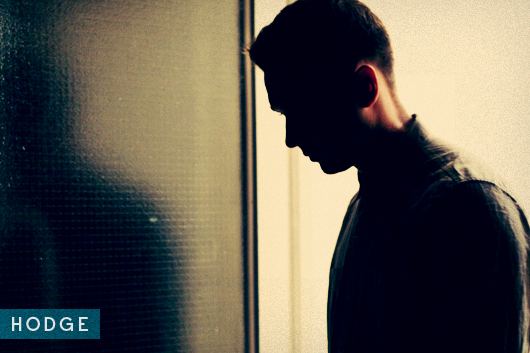
One artist Bonfield linked up with early on was Jacob Martin, whose solo releases as Hodge have traced a similar path between dubstep’s depth and the driving rhythms of house. Despite having only a handful of releases to his name—three solo, and another five as one half of the duo Outboxx—Martin’s is a name that repeatedly crops up as a talent to watch amongst the other Bristol artists we speak to. As with Artifact, Martin first arrived in the city a few years ago to study and started getting serious with production around the same time. “I started messing around with music around the ages of 16 or 17, when I was at college,” he says. “Nothing serious, just making hip-hop beats for my mates to rap on or use in their skate video, or just jamming with some mates when there was nothing to do… which was a lot of the time. I didn’t sit down and start taking it seriously until I had been in Bristol a couple of years.” Similarly, he also traces his earliest experiences with electronic music back to his family: “My dad has always been really into his music and was recording jams with his mates since he was 14 or 15. He’s always saying how he used to have a 303, 707, 808, 909, etc., and he sold them to buy me food or something.”
Between his two projects, Martin seems to have tapped into the balance between pure enjoyment and sonic experimentation that seems to be flourishing in post-dubstep Bristol. With Outboxx—who are set to release their debut LP this year—he’s exploring the unadulterated fun of vintage house, albeit in a manner which coats the music in layers of saturation and raw sonic experimentation. Solo, on the other hand, he takes dark, often aggressive building blocks and shapes them into something surprisingly danceable and infectious. “When we do the Outboxx music, it’s all pretty much jam based and we are just having fun,” he explains on the difference between the two. “I think that is kinda reflected in the music. The main difference is the stuff I end up writing [as Hodge] is darker and a bit more moody. I live with a few guys that are really into their grime, so hearing them mix and write tunes has been having a lot of influence on me recently. Maybe that’s why everything I’m writing is harder and darker than before. Plus, that darker sound I’m hearing more of right now is real exciting.”
With that last comment, Martin seems to nail why Bristol continues to be such a hotbed of production talent: not only is the city’s music scene creative and supportive, but it’s excited. Each artist we speak to seems to be genuinely excited and inspired by the music being made around them. “[It’s an] amazing place to be based, so many supportive and creative people,” Martin says before concluding, “I need to be around people that are pushing things forward—I bounce off of that energy.”
Flote is a budding East Coast producer keen on crafting hip-hop inspired beats lodged somewhere between stoney and experimental sound spectrums. “The Cascades” is one such track, pulled from the man’s recent Sacred Wisdom album (artwork above) and featuring Bibio-style reversed guitar, swirling synths, rolling toms, and just a touch of boom-bap. After giving this Flote cut a listen, you can pick up the man’s entire 15-track LP for free over on Bandcamp.
2012 was another intensely productive year for German tech-house producer Butch (a.k.a. Bülent Gürler). Since he first appeared in 2007, Butch has maintained a prolific output that often manages to ride the line between quantity and quality. Yet, as could be expected from someone with so many releases, his style sometimes feels undefined beyond its slick production aesthetic. Lullabies to Paralyze doesn’t do much to change that, with two tracks that never stray far from the accepted norms of contemporary tech house.
That isn’t to say the music won’t work a dancefloor. If anything, that’s where these tracks ought to excel. Everything is predictable and on the grid, and nothing is dirty or left to chance. A-side “Horus” opens the EP with a loopy house rhythm running beneath small percussive hits that recall Grace Jones’ “Pull Up to the Bumper.” Its hook is a rising arpeggiated analog synth lead that contorts and pushes against the edge of a low-pass filter. All the changes happen where one would expect, as it all seems carefully calculated for maximum effect on large soundsystems. But despite its effectiveness, the song lacks any real distinguishing characteristics. It’s dancefloor candy, with all the positive and negative associations that phrase might connote.
The same goes for b-side “Medusa.” By contrast, it takes a minimal route with drones and clicky percussive hits that whir like wind-up toys. Here, the focus is on plucking notes and ambient pads that push and pull above the basic four-to-the-floor rhythm. It’s more atmospheric than the a-side, and though it’s still tuned for a large system, it’s less suited for prime time. Ultimately, it’s well executed, but like the rest of the EP, it’s more about being functional than making any kind of distinct statement.
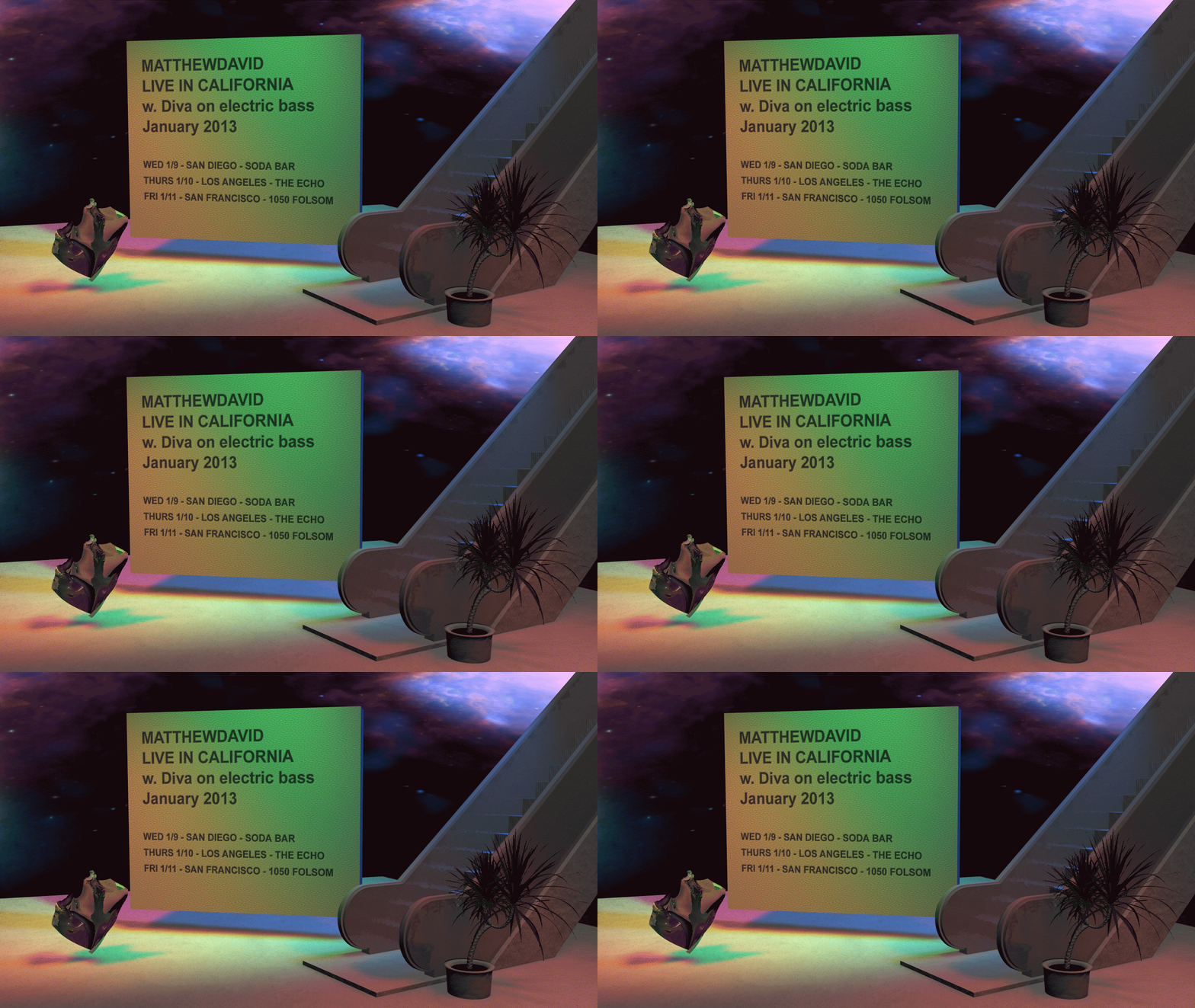
The original version of “Into the Night” by Davis, the collaborative project with Matthewdavid (pictured above) on production and Serengeti on vocals, is set to appear as part of the forthcoming Dual Form compilation, a collection put together by both Stones Throw and Matthewdavid’s Leaving label. But before that release drops on January 22 (although it should be noted that Dual Form is out now as a limited double-casette), Matthewdavid has passed along the fuzzy, ’80s soul-sampling instrumental version of “Into the Night” to preview the release and inform our readers of his planned mini-tour through California. After giving the warm hip-hop beat a spin, you’ll find the man’s upcoming dates—which kicks off this Wednesday—displayed on a slick, cosmic GIF after the jump.
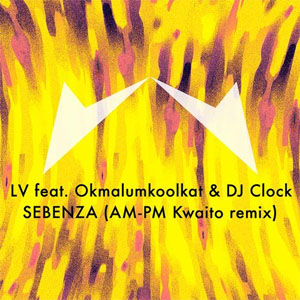
The marriage of LV‘s ice-cold London production and Okmalumkoolkat‘s relaxed, swinging delivery makes an impression simply via the raw novelty of the coupling. Nevertheless, over the past few years the globe-crossing collaboration has reliably produced clever material which emphasizes the inherent strengths of each hemisphere through crafted juxtaposition. In truth, the partnership has grown so organically that to align Okmalumkoolkat’s vocal with production by a fellow South African is initially a confounding variable. However, DJ Clock‘s “Sebenza (AM-PM Kwaito Remix)” manages to find a melodic and relaxing Kwaito vibe underneath Okmalumkoolkat’s acappella, almost like it was the proto version of the LV original.
DJ Clock (a.k.a. Kholile Elvin Gumede) hails from a township in Vosloorus on the East Rand in South Africa, and his take on “Sebenza” resonates with what we’ve come to expect as typical from that part of the world—it’s deeply polyrhythmic, loaded with surprisingly soulful horn presets, and difficult to sit still to. A bell-like bassline underscores the chatter of percussion and forces a half-time feel, lending a backyard-barbeque lean that’s eminently more approachable than the snappy grime timbre of the original. The dubby horns and witty arrangement of dry string presets push this even further; this tune would be as welcome in a lounge setting as it would be in the dance.
While not wildly original or edgy, DJ Clock finds novelty in his own sound thanks to the existing perception of the usual LV and Okmalumkoolkat production. It’s Clock’s sound that is buried beneath the ingenuities of the likes of LV, and this track is a prime example of that inspiration—a curious case of a remix that sounds more like the original than the original itself.
Throughout the week, a whole lot of material gets posted here on XLR8R. And while we know—and love—that some hardcore readers will eagerly pour over every single news story, interview, podcast, video, and MP3 download that appears on the site, we also realize that for most people, it’s impossible to see everything, which means that some quality XLR8R content is likely to get missed in the hustle and bustle of everyone’s daily lives. In the interest of making it easier for everyone to catch up, every Friday we present The Lowdown, a weekly wrap-up of the top 10 tidbits from our site.
1. Back in December, DJ Shadow was infamously kicked off the decks at Miami’s Mansion club, prompting a firestorm of criticism directed at the venue. In response to all the hullabaloo, the veteran artist has posted the infringing set online. Now, everyone can listen and decide whether or not his music was, as he put it, “too future.”
2. Berlin’s Wankelmut will soon be releasing his first record for the long-running Get Physical imprint, so the label sent over this Kasper Bjørke remix of his song “My Head Is a Jungle” as a free download.
3. The long-running Ghostly imprint gave away a free compilation of new music this week, which included tunes from Com Truise, Heathered Pearls, Matthew Dear, Mux Mool, Tycho, and Michna, among others.
4. Jamie xx decided to edit his own band, offering up an edit of The xx’s “Sunset” as a free download.
5. As we do every month, we tabulated the most popular tracks that were posted in our Downloads section during December, and posted them all in a single, easy-to-peruse list.
6. Fresh off his new release for Halocyan, Florida’s Sumsun offered up a stellar remix of Daphni’s “Yes I Know,” which we posted as a free download.
7. Koreless and Sampha have been working together since 2010, but the two have elected to make it official, announcing an impending release from the project, which they’ve dubbed Short Stories.
8. Inventive UK producer Ossie recently gave away a new EP, Ossie Baba, via SoundCloud and we posted the title cut in our Downloads section.
9. Throwing Snow is an artist who’s prone to frequent stylistic shifts, and his most recent offering, “Buck,” is no different. Grab it as a free download.
10. We were thrilled to see Doctor Nick return for 2013, and everyone’s favorite wiseman quickly got down to business, offering advice on how to score DJ gigs from afar and enlisting his pal Nick Catchdubs from Fool’s Gold to speak on the proper etiquette of offering free downloads.
An expanded version of the The Lowdown is also available via a weekly email newsletter. Those interested in an even more in-depth round-up of XLR8R content, including a complete listing of all the free downloads we’ve offered in the past seven days, should sign up by entering their email address below.
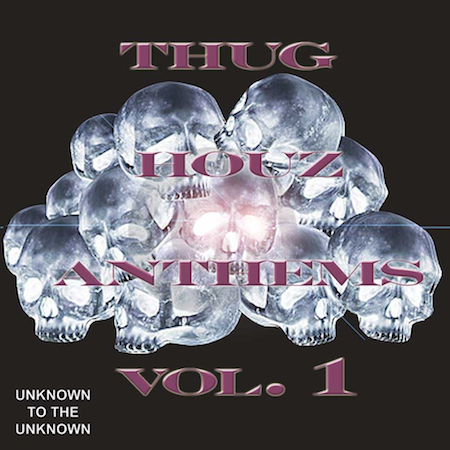
Unknown to the Unknown label boss DJ Haus just dropped another slamming house track, “Thug Houz Anthem!,” which arrives with news of a forthcoming mixtape of the same name. If you’re familiar with DJ Haus, you may remember the freebies his Hot City duo dropped recently and his FACT TV interview from November, in which he discussed his love for throwback rave tunes and his desire to revamp and improve that classic ’90s sound. In that vein, “Thugz Houz Anthem!” sounds like something out of a ’93 warehouse party, but with the quality of a contemporary studio production. With an infectious vocal chop lifted from Bone Thugs-N-Harmony’s infamous “Thuggish Ruggish Bone,” it’s a tune that’ll undoubtedly rock just about any house-inclined dancefloor. You can check out the “ear bleeding” video for DJ Haus’ latest after the jump, and be sure to look out for the Thug Houz Anthems Vol. 1 mixtape when it appears via Unknown to the Unknown.