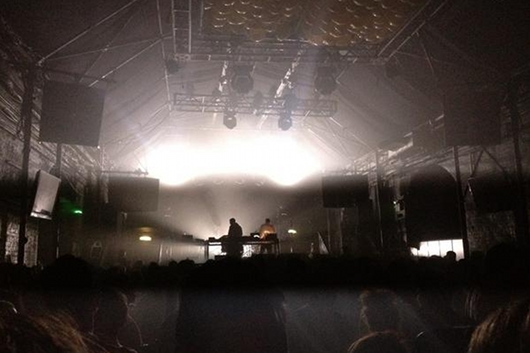
Lux, the latest record from ambient mastermind Brian Eno, saw a release through Warp earlier this week, and to celebrate, Eno and a team of artists are planning to launch an interactive web-art experience, curating audience-submitted photographs during four seperate broadcats of the album this weekend. Here’s the premise: Eno’s new LP was inspired by “a play of light through the window in his studio,” so during the four “live and in full” broadcasts, the producer and a team of fellow artists will curate and assemble a visual accompaniment live with photos of light submitted by the audience. Like all things Eno, it’s a lofty concept, but we really can’t think of anyone better to make a project like this work. You can check the times for each performance below (note that they are in EST), and Warp is encouraging those who wish to participate to request an email reminder, here, or join the Facebook event, here. All broadcasts will be availible to watch during their respective times, here.
Lux – Day of Light Broadcast Schedule: Saturday November 17, 2012 (times are in EST, date may vary with time zones) Play 1) From 01:45 am to 3:00 am Play 2) From 6:30 am to 7:45 am Play 3) From 10:45 am to 12:00 pm Play 4) From 4:00 pm to 5:15 pm
UK artist Tropics has just shared the video for “Invitation,” a tune from his recently released Popup Cinema EP for Svetlana Industries (stream that here), which takes us on a swirling journey on either a microscopic level or telescopic level, but it’s always a little hard to tell with an untrained scientific eye. The piece was created by Davy Evans and Hannah Temple, and contains images of matter that may represent plasma or glittering cosmos. And if you can’t get enough of Tropics’ R&B-flecked, house-inspired pop, make sure to check out an equally solid remix of “Invitation” from label mate Kelpe, here. (via Dummy)
Though we wouldn’t call it proper jazz, “Mating Dance” by young producer fLako does boast plenty of jazzy drums and other swinging, acoustic elements, like a flute and horns. However, the track actually sounds like it could soundtrack some kind of island-inspired Zelda game, as distant vocals flirt with bright and simple synth tones before the song breaks into a bouncing rhythm surrounded by balmy atmospheres midway through. The song is taken from fLako’s Eclosure EP, which will drop via London label Five Easy Pieces on November 19 with more of the same warm, human elements.
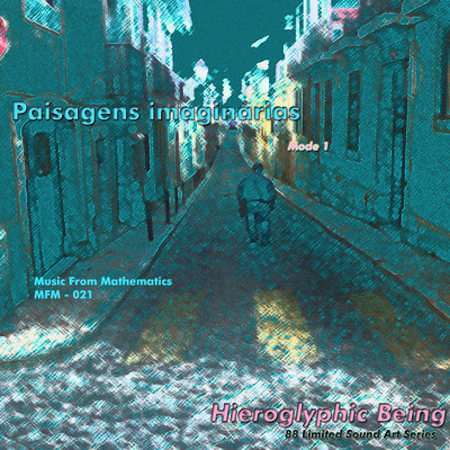
Chicago producer Jamal Moss, a prolific artist who we profiled recently as a part of our In the Studio series, has announced that he’ll drop a new album under his Hieroglyphic Being moniker early next year. If you’re familiar with the alias, which fosters the more experimental side of Moss’ productions, then you may already know what to expect from the record. Entitled Imaginary Concepts, the LP features the 10 “Imaginary Landscapes” that he’s recently put online. Today, Moss debuted the video for “Imaginary Landscapes 2,” which features dream-like footage of a woman dressed in a white dress and animal masks moving about a forest. You can check out the video below, and preview the rest of the tracks from Imaginary Concepts on his SoundCloud before it’s officially released via Moss’ own Mathematics Recordings in February 2013. (via Juno)
Over the last five years or so, UK label Hypercolour has steadily crept toward dance-music prominence. In that time, it has built from tentative, occasional releases—largely from a homegrown roster—to something approaching an English variation on the conglomerate model employed by Dutch institutions Rush Hour and Clone. Chiefly run by Jamie Russell, Alex Jones, and Ste Roberts, Hypercolour is triangulated between Bristol, London, and Leeds. It incorporates the eponymous main label as well as three sub-labels: Glasstable, Losing Suki, and Hype_LTD, each of which represents a different facet of the management’s interests. But at the crux of the operation, of course, are the records. Beyond releases from that initial group of like-minded producers, the label has hosted sterling turns from a vast array of artists, and are poised to further that success in the future, both in terms of quality and diversity.
Alex Jones
Jamie Russell
Hypercolour’s prominence didn’t happen overnight. The label emerged from humble beginnings in 2006, as Jones explains, “We officially started the label in 2005. It was an extreme case of bad luck. The day our first record came out, our distributor went into liquidation. We manufactured 1000 records that I imagine just got burned—a baptism of fire, I guess. We then went to Intergroove in Germany, so really, officially, [we started in] 2006 [with Glimpse’s Talking To Girls href=”http://soundcloud.com/glimpse”].” Jones and Russell describe that period as “transitional,” with the label growing out of its founders’ respective nightlife careers. While Russell put on parties in London, Jones was busy DJing in a duo called The Insurgents. It was in Russell’s hometown of Brighton that the two bonded, as Jones held down a residency at Big Beat Boutique; originally Fatboy Slim’s night, it was then in thrall to the likes of Radio Slave and DJ Touché (now better known as Fake Blood). “It was the height of minimal techno,” Russell remembers. “Minus was huge; Hawtin [had a] God-like status. There was a lot of pots-and-pans-sounding instrumental techno circulating.” “We thought we could do a better job than a lot of the stuff that was knocking around at the time,” Jones adds.
Ste Roberts
Early releases came exclusively from friends of the management, like Christopher Spero (who records as Glimpse), Tom Demac, Kris Wadsworth, and Laurie Shenoda (who records as Shenoda), as well as several turns from Jones himself. Those early years highlighted deep and quirky takes on tech-house, the music floor-facing but also making gentle nudges toward experimentation. The label has since branched out considerably, yet a sense of family still rests at its heart. Releases by newer recruits Huxley and Maya Jane Coles are perhaps more streamlined, not to mention more influenced by garage and the ever-nebulous UK bass, but those early idiosyncrasies—the “colour,” if you will—persist. “I think [a sense of family] is integral, really,” Jones says. “We’ve never jumped onto bandwagons—we’ve always stuck with our core artists and nurtured them, and having an outlet like us, to put their music out and have [our] support, means we get the best out of them.” The two are adamant that Hypercolour is still treated more like an art collective than a moneymaking enterprise. “There’s a close knit group of friends involved in the label, so we bounce [ideas] off each other or inspire each other,” Russell says. “Everyone’s on their own little journey. We’ve been there from the beginning for a lot of them—we put out their first records. If you look at the likes of Maya [Jane Coles] or Laurie [Shenoda], they’re doing really well for themselves, so it’s really positive and great to see.” Jones maintains that there’s also at least some level of critique occurring: “We wind each other up, take the piss, or are brutally honest about somebody’s music as well. It’s a viable business, but I don’t think we’ve ever treated it like that.”
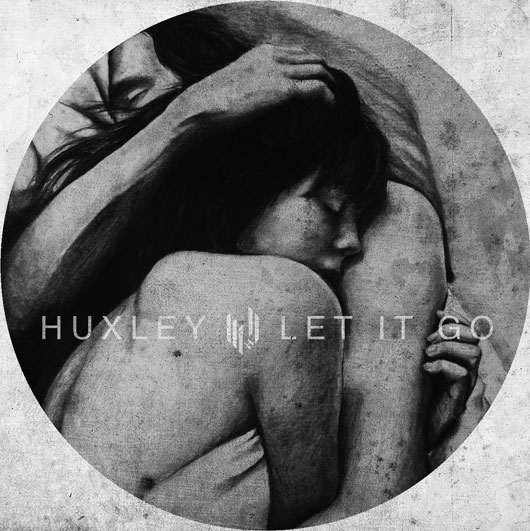
Huxley “Let It Go” on Hypercolour
This sense of collaboration is furthered by the label’s distinctive artwork, which is designed by Jones. Every record receives an individual touch. “I’ll see what the title of the track is and try to make it around that,” Jones says. “Sometimes it can come out quite bizarre, but generally people warm to it. But we give the artists [room for input]… we take feedback or criticism, and I try to make the art as bespoke as the artists actually want. I’ll take that into account and do that for them. It’s just nicer to do, and makes them more involved with the label.”
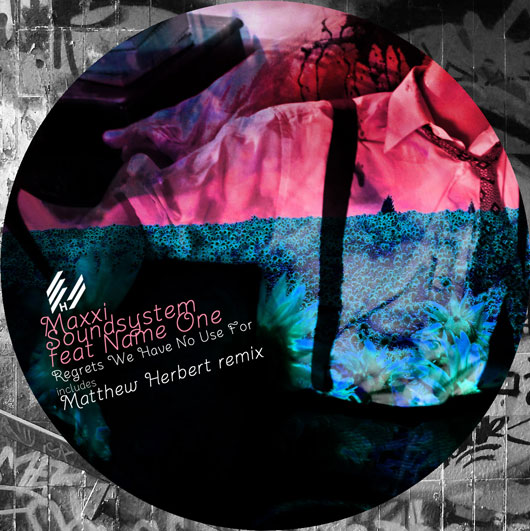
Maxxi Soundsystem “Regrets We Have No Use For” on Hypercolour
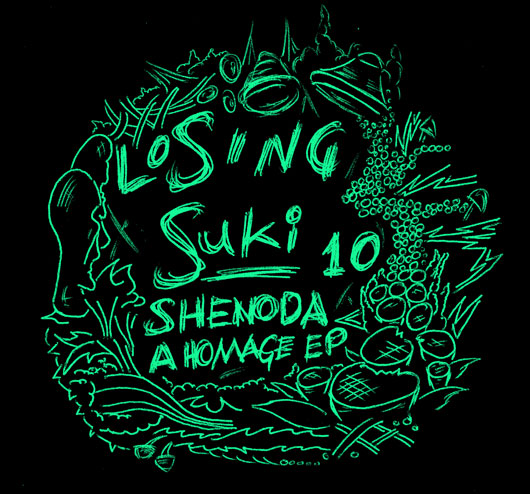
For the sub-labels, Hypercolour takes a slightly different approach. Glasstable’s sleazy imagery is further gratified via picture disc. The Hype_LTD artwork features a modified variation on its parent label’s logo, while each Losing Suki cover is hand-sketched. These subtle modifications speak to their other differences as well. Each sub-label is less a vanity project than a necessity. With the volume of records Hypercolour has come to release, these other labels allow a diffusion of the less dancefloor-oriented material and avert a bit of confusion.
Tom Demac Obstructing the Light EP on Glasstable
Russell explains Glasstable as, “a straightforward conceptual label.” Its entry in 2010 was, “based around the fact that we used to sit around this table in Alex’s living room and listen to demos and new music, and talk about the future of the label. It was a certain type of music we’d listen to around that table in those early hours, and it was less club orientated—it wasn’t peaktime bangers.” It was Jimmy Edgar’s demo for Hush that convinced them to mint Glasstable, as its, “high-end production… epitomized what we [wanted to do].”
Shenoda A Homage EP on Losing Suki
Losing Suki has a similarly lackadaisical namesake: Jones’s grandmother’s cat was named Suki, and it died. Russell explains that its start, also in 2010, was principally about new artists: “We were getting sent demos from a lot of new and interesting artists that were perhaps slightly too risky to [be] put out on vinyl, so we started it off as a digital [label]. We started doing vinyl on the sixth release, and now we’re up to eleven [releases]. I think it’s got a distinctly UK sound.” He cites Last Magpie‘s No More Stories as an exemplary release, as it, “spans between UK garage and house, but is distinctly UK.” Hype_LTD, which began last year, has, “traditional roots,” as Russell says. “The Amir Alexander (Everybody’s Beautiful) and Murphy Jax (Acid Rapper) records were sort of retro house.” Jones adds, “we’re kind of forced to put out bigger sounding records on the main label. It’s not a compromise at all, but at the same time, we could put out techno on [Hype_LTD] if we wanted. And deeper stuff—slightly more mature.”
With cross-pollination being so rife over the last few years, one wonders how the Hypercolour braintrust goes about choosing which artist goes where. Mosca seems a prime example of a producer who could record for any of the sub-labels, and yet this year’s Eva Mendes EP ended up on Hypercolour proper. “We actually approached him prior to taking on this housier sound,” Russell remembers. “When I first came across him, it was Tilt Shift for Fat City, and that was straight-up grime. We just said, ‘send us some music and and we’ll see where it fits.’ It just turned out he made a record that was more tailored for us.” In that sense, Eva Mendes is symptomatic of a larger trend. “As a DJ, I guess his sound has changed,” Russell remarks. “There’s something happening in the UK. I don’t know if it’s spreading, but house and techno are sort of the premium genres that DJs seem to be playing in clubs. Look at Blawan and Joy Orbison.” He continues, “our heritage is rooted in UK club culture, so it was bound to rise to the surface at some point. That’s where the garage influence is coming [from]. It’s just been a natural progression. Those are the sort of producers, over the last couple of years, that we’ve been impressed by and have been tracking down to do music with. It wasn’t something we consciously set out to do.”
Amir Alexander Everybody’s Beautiful EP on Hype_LTD
Be that as it may, Hypercolour does embody some part of the zeitgeist. Jones mentions that they’d like to parlay their success into branded events, and cites Dirtybird‘s worldwide parties as a model. Russell also prioritizes artist albums: “It’s an area that we would like to delve more into, and push our artists to take [the album format] into consideration.” Jones adds, “we want to grow into something perhaps a bit more than just a dance label. Warp and XL are heroes to us. We’d like to at least have a stab at doing what those guys do.” Nevertheless, they acknowledge that for the time being they are a 12″ label, rifling off a shocking variety of artists, new and old, preparing records for their company: George Fitzgerald, Tom Demac, Maxxi Soundsystem, Eats Everything & Justin Martin, Braille, Will Azada, Axel Boman, Glimpse, Alex Coulton, Youandewan, and Kris Wadsworth.
Even with such an extensive list of releases on the way, Russell and Jones agree that high standards are of the utmost priority, and are adamant in their refusal to let quality control slide. “If we stick to the same ethos that we started with, which is quality… initially it was quality over quantity, but now we’ve got lots of quality,” Jones offers. “Between me, Jamie, and Ste… I can’t really remember the last time we put out a dud record. We’re more critical of the music we’re hearing now, [more] than ever, so I think onwards and upwards. Say next year there’s a drought of decent music, and we’re not blessed with as much good music as this year, then I just don’t think we’ll release it, and you might see a slightly more sporadic release schedule from us.” In the end, however, Hypercolour is all about its artists. The label may be branching out and finding new names, but its core group of producers veritably ensures a sort of safety net. “The dream is to maintain these high standards that we’ve created for ourselves,” Russell says, “and with the caliber of artists that we’re working with, there’s no reason we can’t continue to do that.”
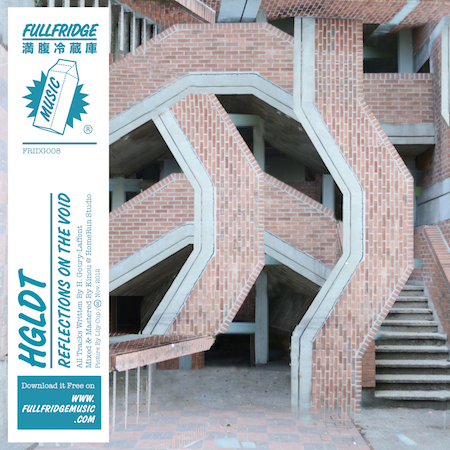
It’s rare to come across a techno tune that’s been stripped of the essential 808, 909, or 303 drum and bass sounds. However, Montreal-based DJ/producer HGLDT has done just that with the a-side of his brand-new release for Full Fridge, Reflections on the Void. “Fight/Flight” is a dark, percussive techno number that utilizes acoustic drum sounds in lieu of the classic drum machines. With virtually no melody, HGLDT’s production rises and falls with the help of a swung cymbal groove, heaps of brute toms, and plenty of eerie and airy FX. You can also hear the b-side of HGLDT’s new record after the jump.
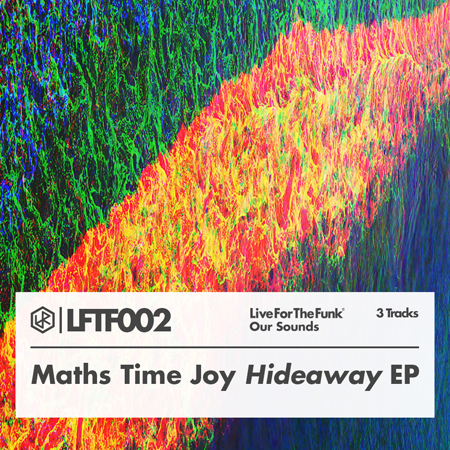
London producer Maths Time Joy (a.k.a. Tim Worthington) has helmed the second release for Live for the Funk‘s fledgling Our Sounds series, bringing three bass-heavy cuts from the bosom of bass music. On “Always,” the whirring synths, soulful vocals, and percussion—snaps, rimshots, et al—nod to James Blake and Mount Kimbie, but Maths Time Joy flaunts the ability to recast those influences with an able hand. Although it starts out with a slow, broken beat, the tune gathers momentum as it rolls along, tossing out pitched samples in its wake. And if “Always” is your kind of jam, make sure to cop the rest of the Hideaway EP for free, here.
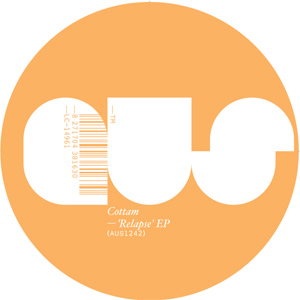
Since his string of under-the-radar, vinyl-only singles made a stir a few years back, Cottam has stepped out from underneath his cloak of anonymity to reveal himself, not as a Burial-esque mystery producer but rather as a former DJ who rekindled his love for dance music via a copy of Ableton and an admiration for the slow-motion house of Mark E and The Revenge. (Also, he didn’t want to get sued; his original 12″s were rife with potential copyright infractions, which prompted the anonymous angle.) The Relapse EP marks the Preston-based artist’s second outing for Aus in as many years, and finds the man folding more bits of techno into his silky, slow-brewing productions while enlisting Cosmin TRG for remix duties.
Cottam is certainly not one to rush things. His steady, but by no stretch urgent, output has yielded about two EPs each year following his initial 2009 run of untitled singles. Relapse actually marks the producer’s first really visible effort of 2012. It would appear that Cottam’s affinity for taking his time is a theme that also stretches into the way he crafts his songs, not only because of their slowed-down tempos (both of the original tunes here operate well below 120 bpm), but also because of the elongated track lengths; the title tune clocks in at over seven minutes and “I Remember” at almost 10. To his credit, these extended outings never drag on and the patience displayed in the steady progression and methodical builds are rewarding to get lost in. With Cottam’s steady hand, “Relapse” seamlessly morphs its moody chords and phased drum rolls into a driving excursion of deep and funky house, eventually adding on all sorts of clattering percussion and delayed horn samples as well as a gliding synth lead complete with just a touch of acid flair. “I Remember” gets to similar ends from more familiar beginnings; launching with looped hand drums and alternating chords, the meticulously assembled track waits four minutes before diving full on into acid territory with a classically tweaked line that somehow doesn’t overwhelm the rich combination of percussion and warm chords it rests above.
On its own, these two Cottam productions are a solid pair of tunes from a man whose quiet presence on the scene has somewhat undersold the strengths of his talent. But Aus’ A&R likely deserves some credit for giving this record just a bit of an extra push by offering Cosmin TRG a chance to rework the title track, as the Romanian producer turns in one of his deepest and most shimmering workouts of recent memory. Pushing the tempo up and transforming the song with a more forceful touch, Cosmin TRG’s remix is an ace, and one that helps make this three-track EP a versatile piece of vinyl.
Like so many producers of his generation, US-born Berliner Antaeus Roy (a.k.a. Lando Kal) has steadily edged his sound from idiosyncratic beat experiments toward the clean, linear lines of house and techno. In the late ’00s, Roy began releasing music as half of duo Lazer Sword, and alongside Bryant Rutledge (a.k.a. Low Limit), put his name to glitchy, lighthearted takes on hip-hop production. The duo has since grown a bit more serious, as this year’s Memory LP formed a sleek adjunct to Jimmy Edgar’s brand of stylized electro. Roy’s solo work, meanwhile, has consistently honed in on a slightly wonky tech-house template. He further explores that sensibility on “Let You in the Sky” b/w “Help Myself,” his first release for the fledgling Icee Hot label. (Full disclosure: Icee Hot is run in part by XLR8R editor Shawn Reynaldo).
“Let You in the Sky” recalls the lithe, streamlined bump of Cosmin TRG (Roy’s one-time labelmate on Rush Hour’s Direct Current), as it’s an exercise in squashed economy. The track alternates between free reverberation and taut, down-to-business jacking; on the latter tack, its chattering, pitch-shifted vocal is tied to a bulbous, divebombing synth. Montreal’s Grown Folk trades its skip for a stomp, and swaps in a chugging bassline in accompaniment. The remix’s optimistic melody lends it more pop appeal than the original, but in doing so also removes some of its claustrophobic complexity. On the frenetic “Help Myself,” Roy throws snatches of a funk bassline and faded chords at a blunt thud. Like “Let You in the Sky,” it’s enriched by the alternating tightness of its elements, but its finale is considerably messier, with organ stabs, handclaps, unhinged vocals, and a g-funk line all competing for attention. Anthony ‘Shake’ Shakir gives it a typically brain-bending mix, as Roy provides him with ample material to make his own. Shakir inserts rolling hand drums, searching, high-pitched drones, and a deep, squelchy bassline, but most notably, he shifts the titular vocal phrase (“I just can’t help myself”) into a throaty, inhuman screech, something like Danny’s intonation of “redrum” in The Shining when he freaks out and writes the word on the door. As elements pile around it, the track starts to feel like a demonic rite, a grave, knowing nod to the dark side of hedonism. Finally, “So Correct,” a digital-only track, takes a page from Shake’s book, as Roy persistently filters a looping set of chords and intersperses them with quick vocal cuts. Using a strict grid, it sounds like a modern take on any number of tracks from the Frictional Recordings catalog. Like Shakir, Roy has transformed his hip-hop roots into svelte dancefloor gear, and he only seems to be improving.
Last week, Night Slugs mavericks Bok Bok and Girl Unit played a special combined set at London’s Heaven club, in which they pulled out bespoke versions of “Silo Pass,” “Reminder,” “Look,” “Ensemble,” and “Wut.” What’s more, a recording of the pair’s hotly tipped performance is now available to stream and download. Whether you’re hearing it for the first time or reliving the magical night, you can listen to Girl Unit and label co-owner Bok Bok do their thing below, or download the music via Night Slugs, here. (via FACT)