Just last month, Brooklyn tropical-bass label Dutty Artz released a new 10-track compilation called Iswayski Says Ur Good Bread. Ranging from reggaeton to dub to violently percussive juke to atmospheric hip-hop, this collection is an overtly diverse showcase of up-and-coming talent, featuring tracks from the likes of Nadus, Annalove, Lil Jabba, Knox, and featured here, Boody. “Guap” is a menacing, drum-heavy track with a large helping of sustained sub-bass topped with creepy, indecipherable vocal clips. Drones of what sounds like alarms propel the madness throughout, and will undoubtedly keep listeners on the edge of their seat, or at least in the middle of the dancefloor.
It’s interesting to see how producer Johnny Jewel went from being almost entirely silent to considerably prolific since the release of Chromatics‘ Kill for Love double-LP. Between his Symmetry project, the drumless version of Kill for Love, After Dark 2, and the remastered version of the first After Dark comp, the Italo-obsessed artist has been pumping out tunes all year long. Now, he’s offering another collection of new sounds, 35 minutes of unreleased material from the sessions that birthed Kill for Love. Running from the Sun appeared on Johnny Jewel’s SoundCloud today along with a message. He writes: “Recorded November 2009 through December 2011, these songs were all mixed between 4 and 6 a.m. After hours of tracking at the studio in Montreal, we’d clear the channels on the mixer, open a bottle of wine, and feel around in the dark…working our way through the atmospheric elements and peeling back layers of rhythm…throwing the songs into the abstract pile and playing them while driving home in the snow.” Of the eight tracks offered here, a few are alternate versions of previously released songs, some have never been heard before, and others have surfaced but been unavailable to download. You can stream/download Chromatics’ Running from the Sun and check out its tracklist below.
Dreaming In Color (00:23-03:08) Red Car (03.09-07:27) Kill For Love (07:27-11:30) Last Wish (11:31-15:01) Running From The Sun (15:02-19:13) Disintegration (19:14-22:31) These Streets Will Never Look The Same (22:32-30:53) Blue Moon (30:54-34:38)
In 2010, the then entirely Cleveland-based trio of John Eliot, Steve Hauschildt, and Mark McGuire (collectively known as Emeralds) concluded a virtually non-stop string of releases with Does it Look Like I’m Here?, a tenderly sprawling record capping a run that began in 2006 and yielded no less than 17 tapes, CD-Rs, and legitimate albums from the group. As McGuire, the guitar-wielding member of the outfit, puts it, Does it Look Like I’m Here? was, “the culmination of scrambling in the studio constantly for four or five years,” before adding, “Basically, our lives were recorded in real time from 2006 to 2010.” Since then, however, Emeralds in many ways has become a different band than it was during that five-year stretch. Most importantly, no longer are its members simply three dudes from neighboring Cleveland suburbs listening to records, getting stoned, and making music together. These days, they are well on their way to becoming accomplished musicians and producers, with each exploring a variety of solo interests. In the case of McGuire, the transformation has been even more dramatic, as he’s embarked on a life largely lived outside of his native Ohio. Still, even as the members’ collective relationship has changed, and the group’s music has undertaken some large evolutionary transitions, Emeralds’ latest album, Just to Feel Anything, somehow still effortlessly taps into the band’s keen understanding of distinct, genuine, and constantly surprising ambient music.
As the story goes, after Does It Look Like I’m Here? and the subsequent extensive touring schedule that followed, Eliot, Hauschildt, and McGuire did not write much music together. At the end of it all, they had embarked on four or five tours, but there hadn’t been much recording, as a number of solo projects and other musical efforts had taken up the trio’s time and attention. Eventually, as McGuire tells it, he made the call to say that he was itching to work on some new material as a group. “There was a point where I was really psyched on a bunch of stuff I was recording at home in Portland,” he says. “But [I thought to myself that] if I was hanging with those guys right now, [the results] could be really, really sick.” After some planning and scheming, this past June found the three members at Tangerine Sound, a studio in the town of Akron, Ohio—a city less than an hour’s drive away from Hauschildt’s and Eliot’s Cleveland base. As McGuire explains, “The initial idea was to have a place where we could constantly be recording.” Whether that would be a practice space or a house, McGuire says the group felt it was important to find, “a place where we could shut the rest of the world out and focus on the music, because when we’ve done that, we can get way deeper and end up with a lot more interesting results.” Ultimately, all the artistic and economic concerns lined up best for the band to hunker down in the windowless Akron studio, where Just to Feel Anything would be put together over the course of a month.
“There wasn’t a concept going into the album that we wanted to fulfill,” explains Hauschildt. “I think the concept, if there is one, arose out of the conditions we were placed in when we were recording in Akron. Things were just run down and there were a lot of dead malls, hollowed out buildings, and stuff like that.” From the sounds of it, when the three of them showed up to the studio last June, there wasn’t much of a plan other than to simply make music. Ostensibly, they would lock themselves in the studio and jump full on into recording with the help of friend and engineer Andrew Veres for three or four days straight, working late into the night and usually all the way into the early morning. The group did head back to Cleveland every so often to get some rest, but the surroundings and routine Emeralds had chosen clearly had a major impact on the record—McGuire speaks of the trips to and from Akron as “episodes of a TV show,” the opening credits playing as they entered the last leg of the trek from Cleveland to the studio and ending when they emerged from their self-made cocoon days later. Eliot too acknowledges the effects of the process on the mood of the music, explaining, “The surroundings will always play a big role in the music created in a situation like recording an album… We would usually hit our stride between 3 a.m. and 6 a.m. and we didn’t really see much sunlight, which [is something] I think really wore off onto the album.” Seeing as the LP was conceptualized, recorded, and mixed entirely within this month-long studio session, the roots of Just to Feel Anything lie in these experiences.
From the very beginning of the record, “Before Your Eyes” signals a more commanding Emeralds with its mighty chords, soaring guitar lines, and the group’s first recorded use of a drum machine. “I bought a TR-808, and I figured I should probably use it,” says Eliot, before explaining how he attempted to utilize the legendary machine in a way that was comparable to a drummer joining the band. After all, he was simply thinking, “Why not try something different?” In many ways, the 808’s rhythmic presence (which can be heard on about half of the record) plays into an aesthetic shift that Just to Feel Anything documents—Eliot, Hauschildt, and McGuire sound more focused, sonically speaking, than ever. The elements each uses are bolder and clearer than in the past, and, in comparison with past Emeralds output, the productions here are considerably pared down. There was a time when indistinguishable piles of sound formed much of the group’s mass of audio, but now, fewer sources are being sculpted into wider ends. This, it turns out, was entirely by design. McGuire again helps explain, stating, “We put more of our attention into the detail and being more minimal. On our last couple of records, we were adding more and more elements; we’d play our parts and then just kept adding stuff to see how it sounded and would usually keep most of it. But this time, it was more like making one sound really cool before working on the next one.” Eliot provides more insight into exactly why that was the case this time around, saying, “You can’t just think of a sound and make it instantly appear. There is a lot of time and energy that goes into finding these sounds in your mind and somehow pushing them out into the instruments. Many times, you’re messing around with something and accidentally arrive at something very interesting, and it makes you step back. If you’re not careful with an instrument, it will start to play you, which can be good and bad.”
“Even though we all individually have an established identity for our work outside of Emeralds, when the time comes to do Emeralds, we do Emeralds,” states Eliot when asked how he separates the role of being a band member from his many other projects. McGuire echoes that sentiment in some ways too, relaying, “It’s an unspoken thing, our band is just something that we all created—we’re the three parents of this weird kid and we all know his deal, but we don’t ever talk about him because it’s instinctual, like second- or third-nature.” In a sense, this may be the key to how Emeralds continues to sound so cohesive as a group, even as its members’ individual sonic aims continue to evolve. For a band that started largely as a collection of talented young men jamming and making sound for nothing more than the sake of it, each contributor has learned to hone his craft toward more specific ends, and furthermore, seems to have no trouble finding ways to seamlessly fit his different skill sets and stylistic leanings together. In part, this may be because in the making of Just to Feel Anything, the members of Emeralds again discovered how their partnership fit together all at the same time. The combination of excitement from not having recorded together in two years, being surrounded by all the new toys housed inside Tangerine Sound (McGuire says it was akin to being a “kid in a candy store”), and the task of making music in an entirely new situation for them as a group no doubt led to a recording process based on discovery. Hauschildt talks of building the songs “piece by piece” with a process that relied on extensive overdubbing to result in sections, rather than with the straight-through, improvisatory approach that defined the group’s earliest output. “We did want to approach it a little differently, and track a little slower and we ended up building the album almost totally linear,” tells McGuire. “We started at the beginning and worked our way through the first five songs before we even knew what was going on.”
Without a doubt, Just to Feel Anything does not sound like any of Emeralds’ past records. McGuire’s guitar is more present and, well, more often sounds simply like a guitar; the mood is consistently more brooding, the sounds a shade darker; and the skittering hats and snappy snares of the 808 are certainly something new to be heard amongst the outfit’s sonic pallette. Still, somehow, there is no mistaking the trio’s newest album for anything other than the work of Emeralds. It’s hard to pinpoint exactly why or how, but Eliot, Hauschildt, and McGuire seem capable of opening new views into their captivating collective spirit over and over again, just through a slightly different lens each time around. “We make music for ourselves and when we go to make a record, we make it for us, to challenge ourselves and to confound our own expectations and predictions of what may happen,” says Eliot. “Anything else that happens outside of that really doesn’t matter.” While their reasons for making music appear to be deeply personal, it’s hard to deny that the Emeralds boys have shown an ability to tap into a vein of ambient music that is easy to appreciate—their music stands up to the most attentive of listeners, while also inviting others to become endlessly lost in the vivid layers which make up the fabric of their aural worlds. To this point, Eliot gets the last word by elaborating, “The aim for Emeralds is to always be moving forward—[to not] look into the past, [to not] repeat things, and to challenge the people who care to listen and follow our trajectory.” So far, it’s been a trajectory that continues again and again to be something worth following.
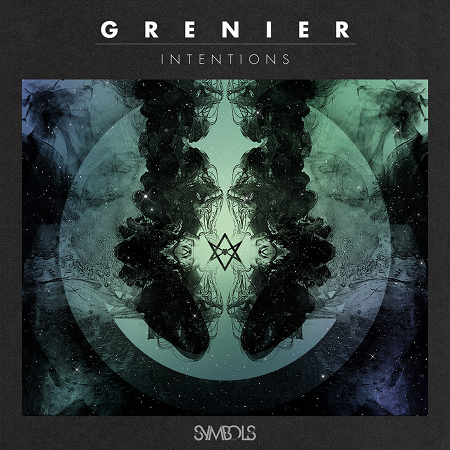
Dean Grenier, who you may remember from our Bubblin’ Up feature in July, just sent over a cut from his forthcoming Intentions EP, giving us a taste of its bass-centric productions before the whole set drops on November 13 via Kastle’s Symbols label. On “Gutta,” the Bay Area producer and Frite Nite affiliate (who recently changed his moniker from DJG to simply Grenier) layers complex patterns of percussion over a solid dancefloor beat and a contorting, acid-inspired bassline; hauntingly dissonant synth textures wrap the whole thing in a heavy and anxious mood.
Hans-Peter Lindstrøm isn’t taking any chances on his latest LP, but it’s hard to blame him for doing so. Back in February, he made a misstep with Six Cups of Rebel, an LP that moved daringly away from the “space disco” tag he’s had since 2003. And while it did explore the other aspects of the Norwegian producer’s personality, it the effort was weighed down by prog-rock pretensions and psychedelic overreaching. Now, he’s back with Smalhans, a return to his old self that alternatively plays things a little too safe by offering six tracks of Lindstrøm-by-numbers.
Lindstrøm’s return to form is coded throughout the entire release. Though “smalhans” means “scarcity” in Norwegian, it the word also contains a dual meaning that refers loosely back to the artist himself—it could also be translated as “thin Hans,” a reference to Lindstrøm’s first name and the fact that he’s skinny. Furthermore, each song on Smalhans is named after a Norwegian comfort food. Lindstrøm sent along a short translation of the tracklist, and it reads like a Lonely Planet cheat sheet; all sorts of foods are represented, from lamb and fish to a dessert composed of mixed egg whites and sugar. These items are basic dishes of Norway, nothing like the Nordic haute cuisine that became popular a few years ago. The foods are a good metaphor for the music itself, as it’s simple and without frills.
That said, in Lindstrom’s world, simple does not mean minimal, and the LP operates on a gargantuan scale, unfurling epically spiralling arpeggios and constantly rising chords on nearly every song. Halfway through, it feels like the whole thing is less of an album and more like an extended single track—something akin to a lesser version of Manuel Gottsching’s “E2-E4.” Nevertheless, monotony never quite sets in—Lindstrøm’s sound design and production are both too solid for that. The synthesizer tones are richly programmed, and seasoned in such a way that they almost evoke taste and sensation over mental imagery. This is a testament to the assistance of Todd Terje, who did the mixdown and, according to Lindstrøm in a recent interview with SPIN, “added some subtle analog stuff.” What this stuff is exactly is hard to pin down, but the overall palette shares much with Terje’s recent hit, “Inspector Norse.”
Track by track, Smalhans is a mixed bag of attempts at the same thing. And while there’s nothing on the level of his seminal “I Feel Space,” there are a few standouts. “Raakost,” the LP’s first track and lead single, cruises along in a Maserati of its own creation with a driving Italo bassline and a floating melody. It’s the most streamlined song with the least amount of cheese, making it the finest cut on the album. Yet because it’s the opener, the song sets a high bar for what follows. And while that mark is never surpassed, “Lammelaar” and “Eggedosis” both get within reaching distance, though they float a little further into space.
At its worst, the album sometimes sounds like Mannheim Steamroller or music designed for a VST installation screen. In fact, listened to in the wrong mood, Smalhans might sound like both of those things. “Faarikaal” and “Vafler” are particularly questionable, displaying a sound that’s so baroque and huge, it could almost pass for trance. Granted, this has always been an issue in Lindstrøm’s music, and his best work tends to find a balance between his cosmic aspirations and his more Earthly reality. Six Cups of Rebel went too far in one direction, and now Smalhans has swung a bit too far towards the other. The difference, however, is that Lindstrøm has a stronger blueprint to work from when he’s operating out beyond the stratosphere.
Wiesbaden up-and-comer Matthias Zimmermann is back today with his sophomore EP, Botanica Dub, for Sound Pellegrino. Though still a relatively unknown name in the grand scheme of electronic music, the producer has already garnered support from the likes of Hudson Mohawke, Martyn, Joakim, Modeselektor, and more. “Paul,” the first track off of Zimmerman’s new record, picks up right where his Isla Dub EP left off. Though the pre-historically heavy and percussive “Luther” might have been the most popular cut from that release, Zimmermann’s production work is also noteworthy because of his thick, melodic synthesizers, which are here in full effect. Beginning with a faint chant and a hypnotic piano riff, “Paul” evolves into an indefinable sound that sits between the artist’s hard-edged and lush tendencies, as it’s laced with intricate, tribal percussion and golden-age house vibes.
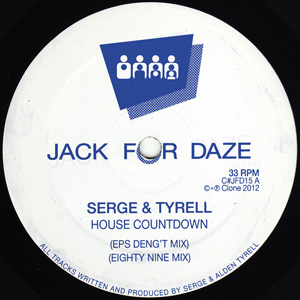
Serge Verschuur and Martijn Hoogendijk (a.k.a. Alden Tyrell) have recently collaborated on several edits and remixes for Verschuur’s Clone conglomerate, lending their touch to tracks by Gerd and Rodney Bakerr Presents Mystic, as well as one of Hoogendijk’s solo productions, “Touch The Sky,” which featured Mike Dunn on vocals and was released earlier in the year. House Countdown, part of Clone’s Jack For Daze series, marks their first full record as Serge & Tyrell. The two are notorious classicists, at least in their tendency to push music with very few frills. It then follows that their official debut offers upfront, bare-bones business.
House Countdown is not dissimilar in spirit to Gerd’s recent excursions as Geeeman. The pieces here are cleaner cut and considerably less reckless than Geeeman’s, but they embody the same tracky ideology. The title track’s “ESP Deng’t Mix” is dominated by jacking vocal chops and a grinding, old-school house bassline, which are placed atop a straightforward, driving rhythm. Its “Eighty-Nine Mix” is similarly forceful, although the song has been modified to fit the titular throwback template. The bassline is slightly modified in tone, and hand drums roll under the kicks. Organ stabs and a more orotund vocal part round out the mix, situating it comfortably alongside a number of productions from the late ’80s and early ’90s. Finally, “Pump-O-Matic” sounds like Dance Mania by way of New York, mingling a cut-up vocal repetition (“Pump it”) with rattling rimshots and dense rave organ. Uncomplicated and inherently functional, the record is more revitalization than rehash. There’s little to differentiate it from its golden-era influences, but Hoogendijk’s involvement (he’s a mastering engineer by trade) at least guarantees his signature bump throughout.
Throughout the week, a whole lot of material gets posted here on XLR8R. And while we know—and love—that some hardcore readers will eagerly pour over every single news story, interview, podcast, video, and MP3 download that appears on the site, we also realize that for most people, it’s impossible to see everything, which means that some quality XLR8R content is likely to get missed in the hustle and bustle of everyone’s daily lives. In the interest of making it easier for everyone to catch up, every Friday we present The Lowdown, a weekly wrap-up of the top 10 tidbits from our site.
1. Toronto outfit Azari & III (pictured above) had a busy week. The group reissued its self-titled debut album, kicked off a North American tour spearheaded by the Sónar festival, and put together an exclusive mix for the XLR8R podcast series.
2. Later this month, Brian Eno will be releasing a new album, Lux, via the Warp label. Although it’s not yet available for purchase, a full stream of the LP surfaced online.
3. Veteran synth explorer Legowelt gave away a sample bank with more than 300 pieces of audio culled from his own vintage Korg Mono/Poly.
4. This week’s contest offered XLR8R readers the chance to score a pair of Sony’s new XB headphones. Enter now before it’s too late.
5. Following a trip to Asheville, North Carolina last weekend for the annual Moogfest, we posted a review highlighting the many things we liked and outlining the one thing we thought needed improving.
6. Jamie xx remixed Four Tet’s “Lion,” and a stream of the tune appeared on SoundCloud.
7. Amongst all the activity of Moogfest, we sat down with the boys from Disclosure for a brief interview, peppering them with questions about their impressions of America and the group’s new-found success.
8. A mysterious act simply going by the name Unknown has surfaced, and while speculation has mounted that the music is being made by an notable producer, the artist’s true identity remains a secret. XLR8R was sent a moody cut from the beatmaker entitled “#010”, which we offered up as a free download.
9. Jacques Greene’s Vase imprint gave away a free package of tunes, including tracks from Samoyed, Ango, Zodiac, Arclight, and Greene himself.
10. Party-starting duo Bicep dug deep into its knowledge of ’90s house and garage and selected five of its favorite tunes for the latest edition of our High Five series.
An expanded version of the The Lowdown is also available via a weekly email newsletter. Those interested in an even more in-depth round-up of XLR8R content, including a complete listing of all the free downloads we’ve offered in the past seven days, should sign up by entering their email address below.
When we dropped the first leak from sound sculptor Eskmo‘s Language EP, it became the most popular item on XLR8R that week, and it’s hardly died down since. As such, we figured you’d probably like to hear the rest of his brand-new, self-released record, too, so we’ve got it here for you to stream now. Below, you’ll find the player hosting the now LA-based producer Brendan Angelides’ new five-track record, and if you’re looking for something to read while you immerse yourself in the hyperreal textures and punishing beats of his latest work, we suggest you check out his recent interviews with LA Weekly and FACT.
XLR8R Couldn't find the embed function for type: "topspin" and source: "<iframe id="tsFrame161599" src="http://cdn.topspin.net/api/v3/player/161599" width="400" height="550" frameborder="0"></p>
</iframe>".
Tokyo-based producer Yu Asaeda (a.k.a. ENA) is set to release his newest record, a two-track slab of vinyl, via 7even Recordings. “Purported” b/w “Whereabouts” sees the Japanese artist creating big soundscapes with minimal elements, much like how he does on one-off track “Come with Me.” Driven mostly by otherworldly atmospheres and delayed synths, ENA’s tune eventually drops with heavy subs, spacey percussion, eerie FX, and a wobbling lead. Before Asaeda’s new 12″ drops next week, you can preview both of its tracks after the jump.