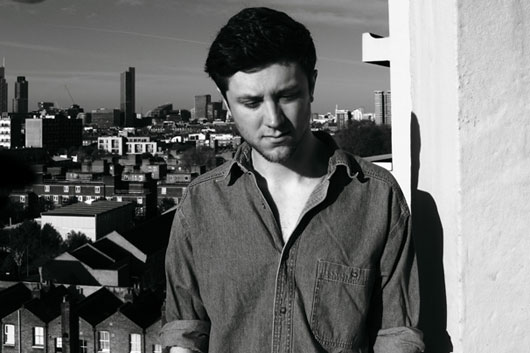
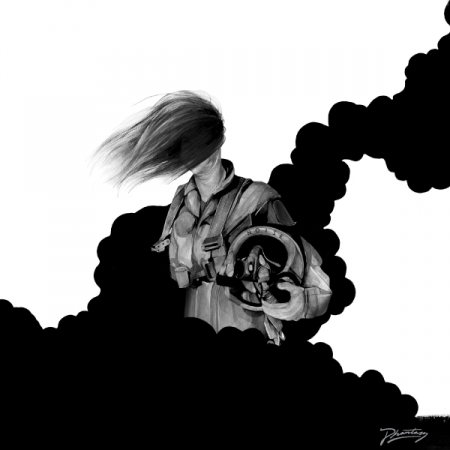
“I hear a vibe and steal it!” So says the Facebook page of Last Magpie. It’s an unusual ethos, but it’s served as something of a rallying cry for the mysterious producer, an artist who’s often relied upon liberal pilfering while crafting his small handful of releases for Hypercolour and its Losing Suki sub-imprint. With bits and pieces interpolated (though more often blatantly sampled), it’s understandable as to why his identity is deliberately kept under wraps. Yet while previous releases have looked elsewhere for inspiration, 1995 feels at times bit like a snake biting its tail, as it occasionally looks to Last Magpie’s own back catalog for inspiration.
This realization actually comes at the EP’s end. After three tracks of driving interpretations of house, garage, and early 2-step, “Fallen” sees the producer drop his guard as he literally rips the lead-ish bassline from “No More Stories,” his debut from earlier this year, to create what amounts to almost the exact same song—minus the crucial vocals and razor-sharp percussion. Of the song, the EP’s press release states that Last Magpie “is adept at crafting catchy bangers, [and] this one might just be his most assured track to date”—the catch being that “Fallen” pretty much sounds just like the track that was previously his most assured to date. Of course, it’s not exactly the same, but the degree of similarity almost demands comparison.
On the other hand, the more uptempo and, by contrast, less self-referential works are all strong in their own way. Opener “1995” is a multi-colored blast of laser shots and stuttering diva vocals led by the straightforward four-to-the-floor charge of ’90s house. Described in such terms, it might come off as though this is just another retro attempt, but its rumbling bassline and echoes of dub ensure that there’s enough mixture of references that it never comes off like an intentional shot at a specific vintage.
“Hypno” drops all house pretensions and moves towards a loose, woodblock-led dubstep rhythm. Generating a cavernous amount of space, heavily reverbed found-sound recordings of a city are given life by a massive Reese bass and a voice warbling “Playin’/Stop playin’ with my heart.” Organs rise and then fall as the percussion picks up the pace, almost setting up a perfect segue into the similarly pad-heavy “Roots.” Here though, it’s all uptempo, a TR-909 hammering away beneath a vortex of blurting vocals. Riding a build-up with pads suspiciously reminiscent of 808 State’s “Pacific,” it drops right down into retro-futuristic UK garage nostalgia with pumping sub-bass, vertigo-inducing pitch shifts, and jazzy stabs. And while its most unique element might bring to mind certain oceanic qualities, there’s nothing aquatic here—it’s all upfront in the mix, blaring out of speakers with a pirate-radio bravado. And, as of now, it’s that kind of attitude that seems to bring out the best in the Leeds-based producer’s work.
As FACT reports, you can now download the forthcoming second album by NYC DJ/production duo Wolf & Lamb for free, while supplies last. Versus—which features contributions from the likes of Soul Clap, Night Plane, and Pillow Talk—is now streaming in full via SoundCloud, but the first 5,000 people with quick fingers can also download it for absolutely no cost. How’s that for inventive marketing? If you don’t mind 192kbps MP3s, you can get your hands on Wolf & Lamb’s Versus before it drops on October 22 via the pair’s own label, below.
After releasing his excellent Child Remixes EP just this week (read our review here), George FitzGerald has announced that he’ll soon unleash a three-track 12″ via Hypercolour. The Needs You EP boasts two cuts of “garage-house fusion” from the London DJ/producer and ManMakeMusic label boss, with a remix of b-side “Every Inch” delivered on the flip by Swiss technoist Deetron. You can check out the artwork for George FitzGerald’s forthcoming record, as well preview its two original productions, before it drops on November 19, below.
As a part of Pixelord‘s Supaplex Remixed offering, Berlin-based artist XI has put his spin on “Vibrate,” a heavy track from this year’s Supaplex EP. If you liked the banging original, chances are you’ll dig the remix, too, as it shares the same kind of complex beatwork and explosive energy. The most noticeable difference in XI’s version is his removal of the original bassline’s erraticness, which gives his track a smoother vibe.
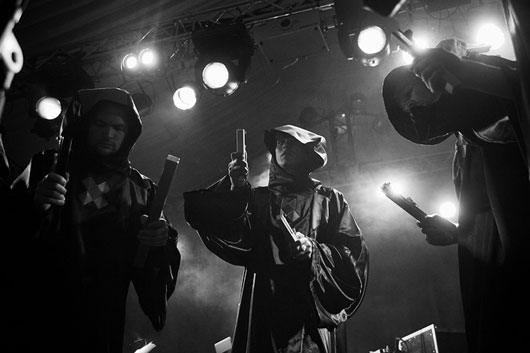
Having already released a handful of records this year for labels like Throne of Blood and Erol Alkan’s Phantasy imprint, not to mention a contribution to the Fabriclive mix series that is on the way, breakout London DJ/producer Daniel Avery just added another EP to his already impressive discography. This week, the prolific artist dropped the vinyl release of his new Water Jump EP, announcing that it will be available digitally on October 29, both arriving courtesy of Alkan’s label. You can listen to snippets of each of Avery’s four latest tunes in the player below.
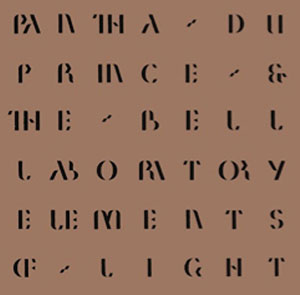
German ambient-techno patron Pantha du Prince (a.k.a. Hendrik Weber) is set to finally follow up his excellent LP from 2010, Black Noise, with a collaborative album he recorded and produced with The Bell Laboratory. Called Elements of Light, the record is scheduled to appear on January 15 via Rough Trade, and features five compositions centered around a 50-ton Chinese instrument called a carillon, with other sounds coming from “tubular bells, marimbas, xylophones, cymbals, chimes, handclaps, finger snaps, and other percussion.” Weber will be touring North America and parts of Europe before next year’s release of Elements of Light, the dates of which you can check out below, underneath his upcoming LP’s artwork and tracklist and the streaming player for album cut “Photon.”
10-20 Hamburg, Germany – Kampnagel 10-23 Montreal, Quebec – SAT 10-24 Toronto, Ontario – Wrongbar 10-25 Washington, DC – U Street Music Hall 10-26 Asheville, NC – Moogfest 10-27 New York, NY – Blkmarket 10-30 Miami, FL – Bardot 10-31 San Francisco, CA – 103 Harriet 11-01 Los Angeles, CA – The Echo 11-02 Chicago, IL – Smart Bar 11-03 Vancouver, British Columbia – Venue 11-04 Seattle, WA – Neumos 11-17 Metz, France – Musiques Volantes
While we await the November 19 release of his debut LP, London DJ/producer Sigha will tide us over with a two-track, limited-edition 10″ at the end of this month. “Scene Couple” b/w “Brood” features the artist’s stripped-down and atmospheric brand of techno, with a cut from the upcoming Living with Ghosts album on its a-side and an unreleased tune on its b-side, the latter of which will only be available on this vinyl-only release. Look for Sigha’s record to drop on October 29 via Hotflush.
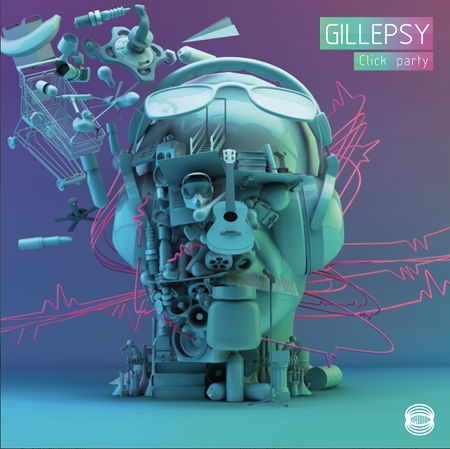
After releasing his Click Party EP today via Russian imprint Hyperboloid, Moscow producer Gillepsy sent over its closing track. Though it’s easily the most subdued offering in the set, “The Scientist” still features some harsh synths stabbing through a layer of spacey effects and complicated beat work. It brings to mind a number of artists working in similarly dubstep-inspired realms, but nonetheless holds its own thanks to some top-notch production quality. You can preview more of Gillepsy’s brand-new EP after the jump.
Following the release of his “Evidence” single back in September, UK house mangler Gerry Read has shared the full details of his forthcoming Jummy LP. We now know that the album will be released on November 19 via Ramp sublabel Fourth Wave, and will feature 13 original track from Gerry Read, including the aforementioned single. You can check out Jummy‘s artwork and tracklist, as well as stream the fresh “Let’s Make it Deeper,” below.
1. Four Miles 2. Evidence 3. Give Myself To You 4. Be Pushin (She) 5. Moving Forward 6. Crawl 7. Idiot 8. Turn 9. Purple Fire 10. Gibbon 11. Let’s Make It Deeper
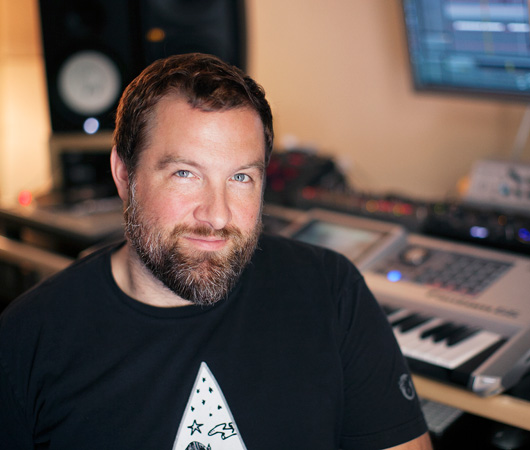
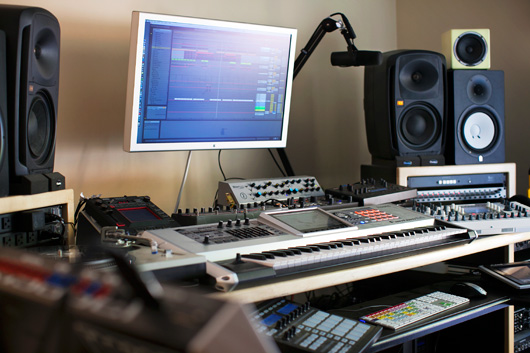
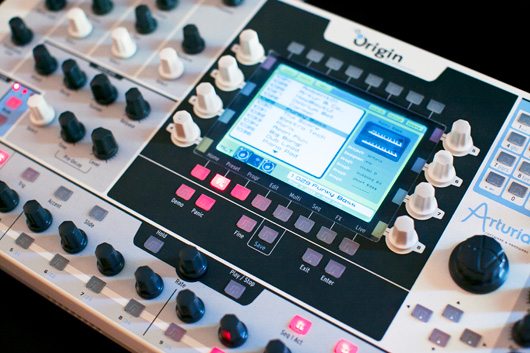
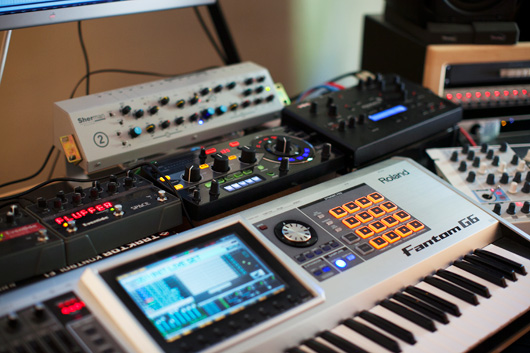
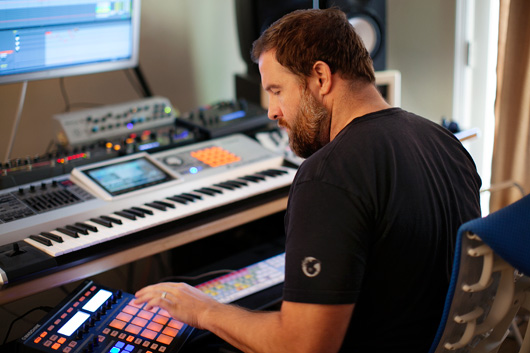
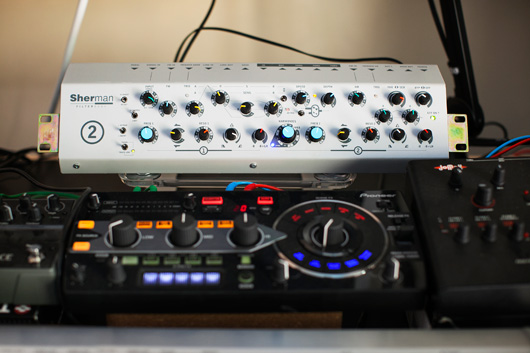
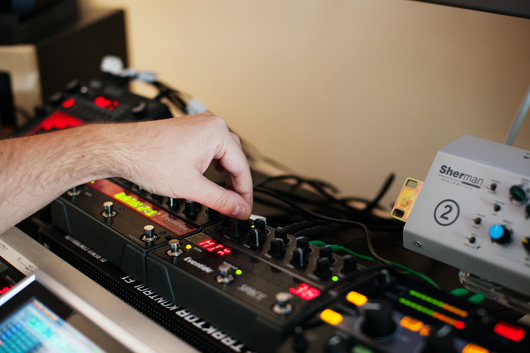
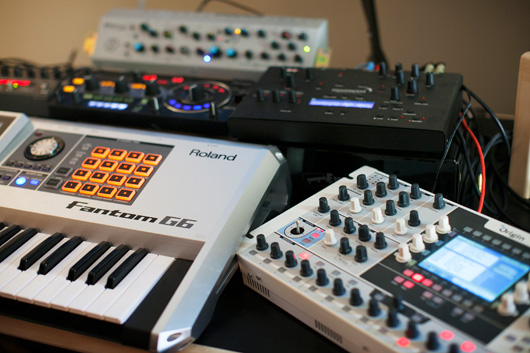
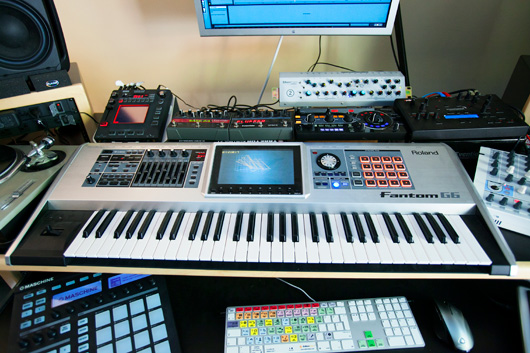
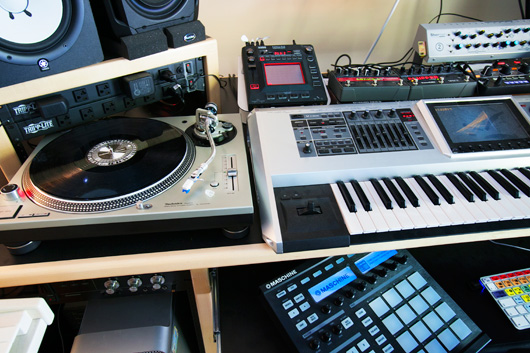
It only takes a quick glance at Claude VonStroke‘s studio to realize that the man loves turning knobs. No matter which way one looks, there’s a neon glow emanating from his various FX units, synths, samplers, keyboards, and the like, all of which are situated within arms reach. In truth, this is the result of a shift by the Dirtybird label head towards a more hands-on workflow, leading him to cover his desk with various pieces of hardware and fill his racks with choice signal processors in an effort to do more creation outside of a purely computer-based realm. Recently, we followed the normally San Francisco-based producer down to his new room in Los Angeles, both to get a look at his current set-up and to find out how his approach and the tools at his disposal have evolved over the years.
XLR8R: How long have you had this studio in LA? Did you head down here for any particular project? Claude Von Stroke: This is actually a brand-new room. I moved all of my stuff down here to try it out, to see what I can get into [in a place] where, basically, the entire music business is [located].
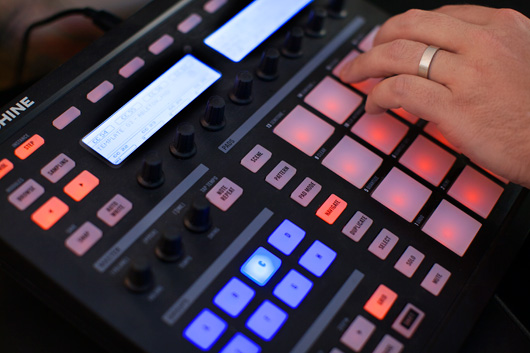
When you say brand new, do you mean just a few months? Not even a few months. I pretty much finished setting this up a few days before XLR8R called. It was set up before, but it was really raw—just the Maschine and my computer. Then I started building it back up from all the pieces that I had.
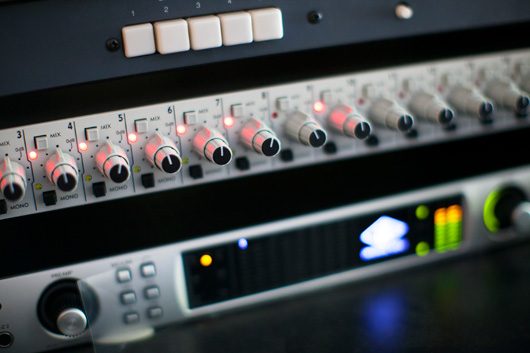
How long did it take you to end up with this configuration? It looks like there are a lot of newer digital pieces lying around. There’s a lot of analog stuff too, but it’s all in the racks. There is a good amount of digital stuff, but I always try to dirty that up with what’s in the rack. The way that I got to this point was that before, I had done everything in the box with Reason, but then it just started to feel like I wasn’t playing music anymore [laughs], so I added some keyboards and my Moog, and set up this whole rig. The whole rig is connected by a semi-modular patch bay in the rack (called the Dangerous Liaison), that makes it so I can route anything I’m playing or recording through any of the effects that are on the desk, just by hitting a button and switching them. It took about 10 million years of wiring, but I can send any signal to the analog compressor, the preamp, the Kaoss pad, or whatever with the touch of a button. I can also now—which I could never figure out how to do before—route signal out of my computer and then back in after running it through all of the outboard gear; this system allows me to do that. Basically, I’m just trying to take the awesome elements of outboard gear and put it all back into the box again, as well as add in some live playing.
[Before I built this set-up,] my buddy Tanner Ross [told] me, “I’m just showing up to the studio and I’m actually hammering the beats with my hands and recording it and then playing the synths, and I can get a groove going in 10 minutes.” For me, it was taking something like five hours to get a groove going because I would be sitting there typing it in with a mouse. So now, I’m all about throwing on Maschine’s step-sequencer and just rocking in a beat. Then, I’ll just play some stuff and see how it goes. It’s way more fun.
And then you chop up what you had recorded? Yeah, the fun only lasts so long. Eventually, I’ll get something going that’s decent and then I put it into Ableton and arrange and chop and do all the stuff that sucks. [laughs] That’s become my new way of working. It ends up being very technical at the end because of all the little things I like to do, all the little details. But if the whole thing is technical, it can be draining. There has to be some fun, like playing a keyboard through some live echoes and stuff. And really, it’s not the same when you have a MIDI keyboard triggering some VST synth. Working this way really commits you to the sound—you can’t change it once it’s in there.
When you’re routing stuff out from the computer, are you recording that back in once you have the sounds you want or are you recalling effects? I’m definitely recording it back in. If I have this beat that is sounding too clean cut, I’ll run some of it out to give it a little grunge or some tube feeling and then record that in. You could probably do this all on plug-ins, but this way is just more fun. Sometimes, I’ll just sit there for half an hour with a loop running and mess around with all the stuff that’s on the desk and tweak it, and then maybe I’ll use just four seconds of audio from that whole half hour—but it’ll be an awesome four seconds. [laughs] Happy accidents.
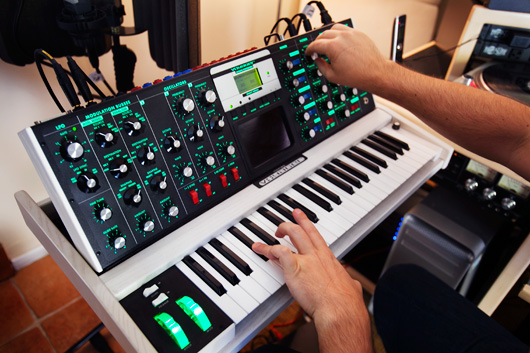
How did you end up with the Moog Voyager? I just wanted one so bad forever. I’ve used it on almost everything I do since about 2010. It’s not always the featured thing [in a track], but it gets used—I go to it for something, always. I have this weird justification for buying gear, which is if I use a piece of gear in a track, and the track does well, then it paid for itself and I can keep it. I literally do sell everything that doesn’t end up in a track. I just get rid of it!
So then, which song made it so the Sherman Filterbank could stay in the rig? Ah, the Sherman Filterbank is in my very first album’s opening track; “Warming Up the Bass Machines” is just an 808 getting totally mangled through that filter bank. And then I did all this drum & bass stuff that no one ever heard that had all been gnarled out by it too. That was actually my Sherman Filterbank 1, and I just got the Sherman Filterbank 2 about six months ago. That is not on a track yet, so it has to get in the mix soon or it’s out of here.
Do you feel pretty confident that it will make the cut? Yes. It’s a really aggressive-sounding filter, and it is one of the only things on my desk where I can say—for sure—that you could not make the same sounds in the digital world. It’s a little too messed up and raw.
You have three sets of speakers for your monitoring set-up. What do you check on each of them? I use the Event [Opals] on everything. Those are the nice, expensive ones and they sound great. The Yamaha [HS80Ms] are actually really good, and pretty cheap, about $200 each. If you are just starting out and need to buy a pair of speakers, I think those are a good first pair. For me, they serve as a really nice “B” check, especially in this room because they are a lot hotter on the treble. On the very top are the [Avantone] Mixcubes, [and I use those] to see if any of my bass is going to register on someone’s speakers in their 1992 Honda Civic. Literally, they are just speakers to see if your mix is going to sound good in every situation. It’s really cool to listen to them though, because if your mix sounds good on those, you’re really looking good.
Even though you’re making music for clubs, you still make sure it will sound good on a variety of systems? Yeah, definitely, because you know that people are just going to put it on their iPod or laptop and they’re just not going to get that same earth-shattering bass experience that they might get at the club. And it’s actually true that a lot clubs have really shitty sound. It’s not like everybody is going to Fabric every weekend. Sometimes it’s just a guy DJing at a bar with pair of Mackie monitors.
You have a turntable on the desk too, is that there for sampling? It’s just there to help me get good ideas from all my old drum & bass and hip-hop records. I don’t do a lot of sampling, but I will sometimes sample a drum sound or a bass patch. I don’t take loops. Loops are awesome if you’re an old-school hip-hop producer, but for me, it just wrecks the chances of a song being able to do anything because you have to go clear a bunch of samples—it limits the flight pattern of the song in the world.
On a good, productive day how much work are you getting done? Are you always building in steps or is there ever a day when you bang out a track in one sitting? No way! There is never a day when I can make an entire track and it’s [completely] done. That’s never happened. [laughs]
And you do all your own mixing as well? Yeah. I would love to not be doing that though, because that’s the part that kills me. The mixdown is actually taking more days than the creation of the song. Because [technology enables you to do] everything now, you do everything. It’s three different jobs actually—making the song, mixing the song, and then mastering the song—and you can’t be amazing at all three of those jobs unless you’re an absolute genius. It sucks that everybody is doing all three of those jobs now. In the best-case scenario, you would just be creative 100% of the time, and the first part is where you’d put all of your energy. Then you’d go to a studio with a guy or girl you trust and they’d do the mixdown with you, but you wouldn’t be spending tons of brainpower on it. Then you’d send it off to your mastering person, which is something I actually do. That’s part of the downside to the fact that we can do everything now—everybody is kind of medium-good at everything instead of being really good at just one of those jobs.