Hailing from Derby in the UK, Immersed Audio is a blog that’s been operating in the realms of house, techno, and beyond for some time now, but only unveiled its label division, known simply as IA Records, this past February. Its second record will arrive on Bandcamp next Monday (with a proper release scheduled for June 2), but we’ve been given the first leak off that four-track EP today, in the form of Corporal F‘s “CCS.” The British artist’s hard-hitting tune touches on just about all of the right notes—boasting punchy drums, dirty basslines, spacious sound design, and plenty of rhythmic samples flitting about within the track’s dark grooves (get ready for the piano turnabout around minute four, too). You can preview the rest of Corporal F’s split with 1point5, which is called Totality, following the jump.
As cult rapper Lil B’s main producer, Keyboard Kid 206 has been at the forefront of the based movement, crafting tracks out of Goo Goo Dolls samples and basically soundtracking Lil B’s “common vibe of peace.” The literally named Transition EP is Keyboard Kid’s first official release without Lil B, and it makes a strong case for the based aesthetic owing as much to the beats as Lil B’s intense charisma. Building off a template of positive-affirmation synth washes and trap rap-meets-frenetic techno, The Transition recalls a bit of Rustie and AraabMuzik, but with a sugar-coated immediacy that’s unique to Keyboard Kid 206.
Immediacy can be a polite way of saying “shitty production,” and as far as Keyboard Kid 206 is concerned, there’s a pretty big range of polish between his best and worst beats. The Transition EP is mostly in line with his better work, but there’s a definite sense that these beats were made in quick moments of inspiration. The high midrange buzz of “Welcome X,” for example, is the kind of beat that would fatigue most producers’ ears to the point of scrapping it; there’s layer after layer of melody, each one squeezing out the last, the whole thing building until the track morphs into a manic flurry of chipmunk vocals and stompy kick drums, almost like a parallel vision of happy hardcore.
Lil B’s shadow does sneak in here and there, notably on “The Most,” which seems like a beat custom-made for him. However, Lil B’s monotone drawl is absent, and it’s hard not to hear the candy bed laid out for him and imagine that voice anyway, shifting back and forth, on and off the beat, circulating through brilliance and nonsense while masses of strings and stuttered snares pile over each other.
“Long Live Swag” closes out the EP similar to the mania of “Welcome X,” sounding like the ecstasy-fed companion to AraabMuzik’s “Underground Stream.” But where “Underground Stream” is all doom and menace, “Love Live Swag” revives the pill-rush cheesiness of an old DJ Sy record, complete with a half-tempo breakdown and a cheerocracy of positive synth riffs. The only thing missing here is a cuddle puddle.
Considering Keyboard Kid 206 got into making beats after hearing Kanye West’s “Through the Wire,” The Transition EP is an undeniably weird place to end up. It’s also no small testament to the game-changing power of the based movement that an EP like this could even be considered rap, something Lil B’s anti-rapping has garnered most of the credit for. But when these beats are put in isolation, it’s obvious that part of the brilliance also belongs to Keyboard Kid 206. Very few people are taking risks like this, and even though the execution is occasionally lacking, The Transition EP is a worthy satire of rap’s old-guard complacency.
Exciting London producer Bullion released a new and strikingly different EP today via Deek Records, and is currently streaming the whole thing, too. The Love Me Oh Please Love Me EP (artwork above), which follows a single for R&S from the beginning of the year, showcases six tunes from the UK artist—including a cover of Robert Wyatt’s “The Age of Self” and other vocal-infused productions. You can listen to the whole thing in the player below. (via Dummy)
Tomorrow marks the release of the third album by Detroit-born-Berlin-based electro/techno wunderkind Jimmy Edgar, who precedes the auspicious occasion by letting go of a free tune you won’t find on Majenta (artwork above). And it makes sense, too; “U Need Luv,” while a totally solid and well-crafted homage to ’90s house music, is almost completely uncharacteristic of the producer’s catalog. Regardless, Edgar’s track makes for a tasty morsel of stylish dance music, which arrives just in time to tide us over until his first album in nearly two years arrives via Hotflush. (via Pitchfork)
Canadian artists once again reveal their many talents to the world in this piece for the deep, skittering “For the Fame II” by Kuhrye-oo. The video was directed by underground-pop chanteuse of the moment Grimes (a.k.a. Claire Boucher) and Calvin McElroy, who spend most of the time indulging in ballet-esque interpretive dance in and around deserted, run-down locales as the track’s producer spends most of his time toying with soulful vocal samples, gossamer soundscapes, and propulsive dance rhythms. Kuhrye-oo’s production is an alternate version of “Give In (For the Fame),” which is available now on his debut EP for New York’s UNO label.
Drum & bass stalwart and Exit Records chief dBridge is releasing a two-track single on fellow Autonomic cohort Jon Convex‘s Convex Industries imprint. Using a new moniker, Velvit, London-born Darren White has subtly shifted his style for this new alias, drawing on “a vast sound palette taken from as far afield as ’90s jungle to the sleaze and seduction of more modern contemporaries such as Jimmy Edgar via the futurist soul of Africa Hitech.” For instance, “Scarlett” combines the roiling Reese bass of jungle with the handmade percussive stylings of Detroit’s Omar S, and is a tune to watch for as the summer heats up. The single is available now as a digital download and will be released physically on July 14; preview the two Velvit tunes below.
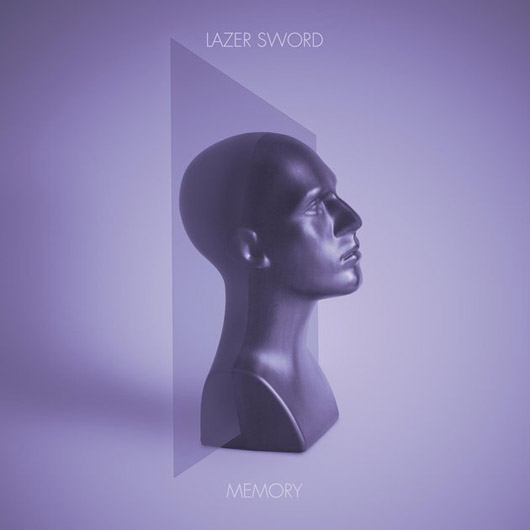
On its new album Memory, the intercontinental duo expands its reach and narrows its focus.
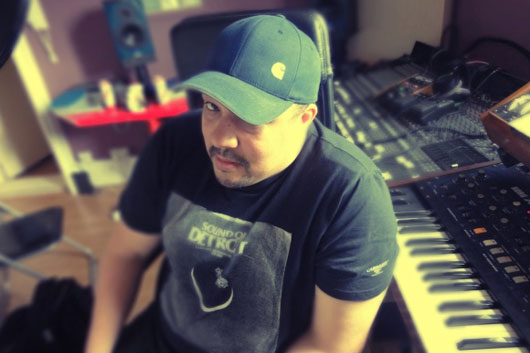
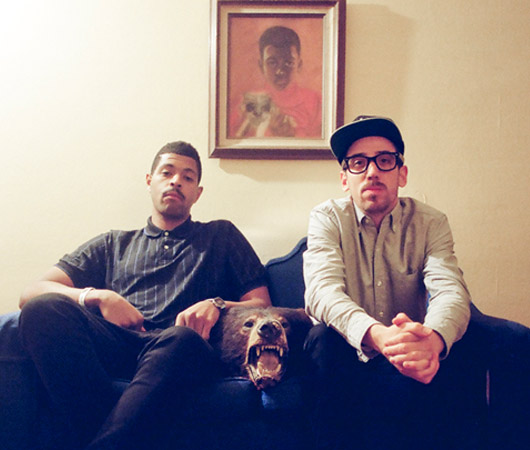
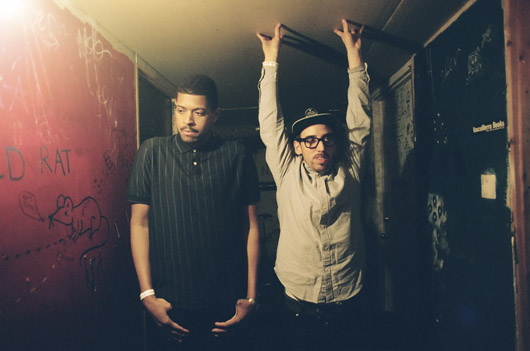
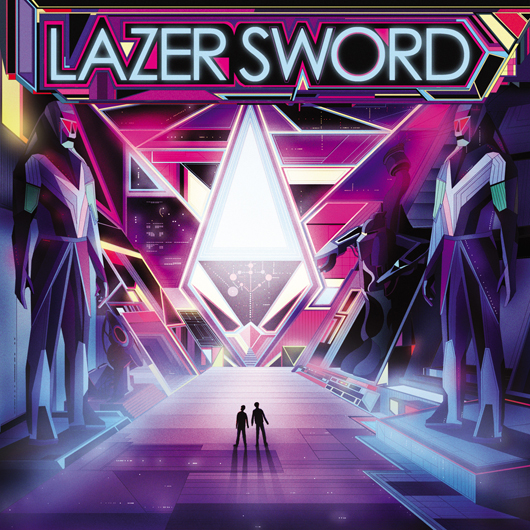
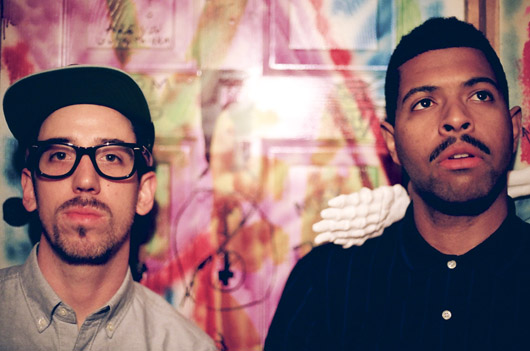
Antaeus Roy and Bryant Rutledge have tapped into a truly remarkable connection over the past four years as Lazer Sword. After first meeting in the West Coast haven of San Francisco (and—full disclosure—working together at XLR8R), Roy and Rutledge began their production careers simultaneously, venturing through the neon grasses of leftfield hip-hop, buzzing electro, and gut-rattling boom-bap with a (excuse the pun) lazer-sharp focus. After an early string of sought-after singles and remixes, followed by the eventual release of the pair’s debut self-titled LP, time and circumstances ran their course, sending Roy to Berlin (after a brief stop in New York) and landing his counterpart in Los Angeles shortly thereafter. For a while, it seemed that the Lazer Sword partnership might be destined for the back burner, with Roy enjoying a well-regarded solo career as Lando Kal in Europe and Rutledge putting in consistent work from his SoCal base under the guise of Low Limit. Yet the pair’s collaborative chemistry was simply too potent to set aside, and now, with a little help from Modeselektor and its Monkeytown imprint, the international production duo has returned with Memory—an LP brought together by experimentation, evolution, and file sharing.
“Missed a Spot” from Memory
As if it was necessary to find another reason why the internet is so amazing, it is the ability to share data over thousands of miles that makes Lazer Sword possible at all. The outfit’s entire album was put together with the duo sharing Ableton files through Dropbox, exchanging the tracks-in-progress back and forth a number of times before landing on a final product. Even still, this barely scratches the surface of the pair’s collaborative process, one that has no doubt sharpened and honed over several years of real-life interaction. “We’ve gotten to a point where we both know each other’s style pretty well,” notes Roy. “It’s actually really fun to get a session back when it sounds totally different. It can be weird to hear the new transition that’s been made, but it’s fun to take it in too. It adds to the experimentation.” When discussing their process, both Roy and Rutledge seem entirely open to possibilities. It becomes apparent that they check their egos at the door and simply work as a unit—albeit one separated by an ocean and two continents. Somehow, alone in their studios, they manage to keep the other in mind, fusing styles and inclinations together as one entity, so much so that even those very familiar with each member’s solo work would find it hard to point out which element or which movement could be attributed to which party. Somehow, this combination of production styles beamed across the world in ones and zeros yields a truly seamless collaboration.
Memory presents a considerably new side to Lazer Sword, almost entirely leaving behind the “future-blap” inclinations which marked its earlier output. Instead, the pair steps firmly into the growing bass-music continuum, lacing its productions with fragments of house and techno (from both the Berlin and Detroit side of the spectrum), juke, garage, and everything else in between. In fact, there’s not a single heavy-handed snare or buzzing lead (two sounds which ostensibly defined the “Lazer Sword sound” only two years ago) to be found on the entire album. Clearly, both Roy and Rutledge (separately and collectively) have evolved their sound since the Lazer Sword LP appeared, moving away from the more aggressive natures of space-age hip-hop and bombastic electro-glitch in exchange for woozy chords, chopped harmonies, and spiralling percussion. “I feel like we’ve been working towards the direction where our album is now for a while. It’s been a more gradual evolution than it might seem,” points out Rutledge. “When Antaeus and I met each other, we were just beginning our lives as producers, and rap was a starting point for both of us, but I feel like we’ve become a lot more interested in dance music over the years.”
However, “dance music” is a rather far-reaching term, and Memory is not concerned with a lot of it. There is a specific sound which characterizes the record, one which is informed by much of the UK-and-beyond bass scene, moving through its various facets with an aimed focus on smoothed-over textures, landing the listener in a slowly revolving space between dense and brooding atmospheres. “Toldyall,” the LP’s first full-on production, sets the tone rather clearly. Its drum programming is very much indebted to footwork, but the rest of the tune has more in common with the warm trappings of analog techno. From there, the hybrids take their different forms—”Point of No Return” pits a shuffling break against ravey stabs while “Better From U” swings with a half-time step, filled to the brim with tuned toms and luscious, gliding chords. No matter where each album cut ends up, there is a thread that runs through each contribution, a sort of imbued soulfulness that renders itself sonically in the form of vast productions where each element drips and overlaps into the others in an almost gooey fashion. Roy gleams a bit of insight into how this sound was landed on, “Over the last year or two, both Bryant and I have acquired a bit more hardware, and we definitely tried to incorporate that into this album. We didn’t want to necessarily have that full-on computer sound, [but] it’s fun to tweak toys here and there and mess with sequences.”
“Batman” from Lazer Sword
This sonic consistency lends itself to a certain mood, one that’s not quite introspective but definitely isn’t yelling out for attention. It’s a temperament that is quite different from the pair’s established discography, but is also something that it seems had been turning in their minds for some time before approaching the new record. “Two or three years ago, I think there was almost a defining point where certain people got into the really hard stuff,” says Rutledge. “Some people ended up really into dubstep and everyone else was like fuck that shit.” It’s safe to say that Lazer Sword ended up on the “fuck that shit” side of the equation. His counterpart lends a slightly more cerebral outlook on the group’s current sound. “As an artist, it’s fun to test yourself a bit and work with new styles and techniques. It keeps it interesting for everyone, really. If we were to go back and say, ‘How can we keep this relevant with all our past efforts?’ it’d be boring.” Roy goes on to add, “We’re trying to bring soul back into it a bit, trying to have more rhythm and more melody. When it comes down to that [big room dubstep] stuff, it’s almost the exact opposite. We’re looking more towards having better structure and melody in our music.”
It’s surprising to find out that the entire 11-song effort came together in about a two-month period, resulting in—as they both admit—a rather accurate picture of the mindset they were operating under during that time. According to Rutledge, this was partially by design. “Something that might have flawed our last record is that we tried to do a whole range of styles and [looking back,] I don’t necessarily think that was the greatest idea. We had discussions before we started working, as far as where we felt the direction was going and how to meet in the middle and we thought it didn’t make sense to try to hit every angle.” This sentiment rings true as the LP runs its course, as there is a noticeable cohesiveness between each tune and nothing appears out of context or attempts to turn a head on the “big picture.” Rutledge explains, “It’s an album, so it’s a story to tell, really. If something was out of place, we decided not to try to just shove it in there.”
But the question remains, will this new direction alienate their established fan base? So far, both Roy and Rutledge seem to think their evolution has been well received, as Roy states, “I think [the new style] opened up the gate a bit more… we were afraid we were going to scare some people away a bit. For the most part though, our fans are going with the transition just as much as we are.” And who can blame them? Even as Lazer Sword makes a clear statement in a new direction—putting them more in line with artists more like labelmates Benjamin Damage and Doc Daneeka or Machinedrum (who, incidentally, counts for one of two guest appearances on Memory, the other coming from Berlin-by-way-of-Detroit producer Jimmy Edgar)—both members’ production abilities have only sharpened with time. Ultimately, some fans will undoubtedly be left behind, but hopefully plenty of new ones will be gained, and, in the end, a more compelling and rewarding picture of both Lando Kal and Low Limit will take shape. As long as the internet allows for the exchanging of musical ideas with such rapidness and disregard for distances, most producers will have to move just as quickly along with it. Doing so with the sort of genuine inventiveness Lazer Sword displays on Memory will be the test for those who wish to push the envelope further.
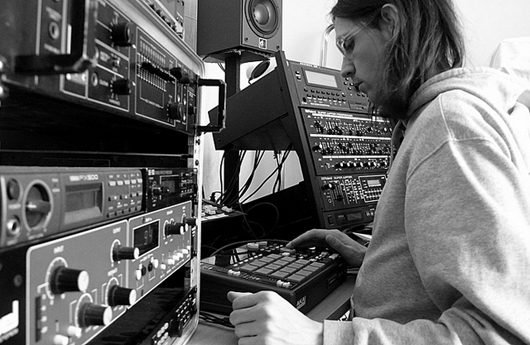
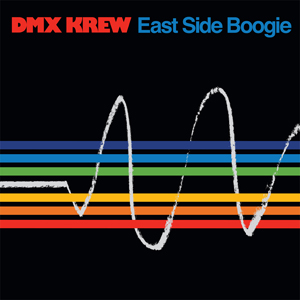
A new, six-track EP is set to drop on Voltaire Records from a certain Ed Upton (of Rephlex fame), once again producing as DMX Krew. Creating spacey, urban dancefloor cuts from his analog-laden studio, Upton crafts a haunting electro jaunt on “Turing Test,” a song taken from the aforementioned East Side Boogie EP, which is due out on May 8. Hard-hitting stabs of bass and vintage synthesizers punctuate the stuttering flow of this jam, writhing on several different melodies and resolutions before arriving at a chugging bassline that closes out the gritty proceedings. Accompanied by five other tunes (including a classic-sounding title track and its remix counterpart), “Turing Test” drives on its own wavelength, one distilled from countless hours spent in front of racks and racks of gear. You can check out the cover art for the EP and stream it in its entirety, after the jump.
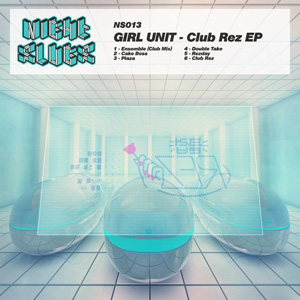
Girl Unit (a.k.a. Philip Gamble) may not be in charge of Night Slugs, but he is the producer responsible for the influential label’s biggest tune, 2010’s “Wut.” The song—which has held up rather well despite being effectively played to death over the past two years—continues to be regarded as an anthem, and will likely stick with Girl Unit throughout his musical career. Following up a record like “Wut” is never easy, and although the London-based artist has dropped a steady stream of remixes during the last 18 months, he’s certainly taken his time with the Club Rez EP. It’s an incredibly detailed and intricate effort, and while none of its six tracks is likely to have the same kind of scene-altering impact as “Wut,” it’s nonetheless an impressive new chapter from a talented producer who’s likely to be turning heads for years to come.
Club Rez begins on a high note with “Ensemble (Club Mix).” Built upon a sturdy frame of rapid-fire 808 drum sounds, the track finds Girl Unit nudging into new sonic territory—namely, ’80s electro and boogie. The song’s chunky bassline is undeniably funky, as are some of the track’s opening synths. That said, “Ensemble (Club Mix)” is no simple throwback, and Girl Unit’s penchant for dramatic builds has remained intact, as he brings in an eerily serene melody as the track’s focal point. Part new-age blissout, part vintage RPG videogame score, the melody may be unexpected, yet it complements the rest of the Girl Unit’s production—even the ’80s-referencing elements—in spectacular fashion. The EP’s other ’80s flirtation, “Plaza,” is even more overt. Sounding like an updated take on Yaz, the song layers hooky synth riffs over clap-heavy electro percussion. It’s less adventurous and more linear than “Ensemble (Club Mix),” but it’s similarly effective.
While Girl Unit’s glances toward the ’80s might provide the strongest moments on Club Rez, those looking for the same kind of dramatics that powered “Wut” may gravitate toward the EP’s last two selections. “Rezday” is centered around a triumphant synth melody that borrows equally from big-room trance and crunk. Combined with a flurry of hi-hats and a swirling low-end, it’s a potent number, albeit a simple one as compared to its counterparts on the release. The melodies get even bigger on “Club Rez,” as the EP’s title track dials down the percussion ever so slightly while rolling out an array of full-blown Eurotrance synths. It’s not exactly the most tasteful thing Girl Unit’s ever done, but it’s more than capable of tiding over the punters simply looking for “Wut II: The Revenge.”
On the other end of the spectrum are the EP’s remaining selections, “Cake Boss” and “Double Take,” two tracks that essentially eschew melody in favor of hard-hitting percussion and inventive drum patterns. Granted, Girl Unit has never been a slouch when it comes to drums, but percussion has rarely been the focal point of his original tunes. His remix work, on the other hand, has occasionally strayed away from big melodies, and “Cake Boss” is more in line with his reworks of Kodiak and Nguzunguzu. The track is an all-out assault, as he piles layer after layer of drums and propels the entire affair with a harsh synth stab that repeats throughout the song. More mellow is “Double Take,” a track which finds Girl Unit easing off the accelerator and getting a bit weird, crafting something similar to the off-kilter, hip-hop-flavored rhythms that populated labelmate Jam City’s Magic Drops EP. The song actually does have some melodic elements, but they don’t appear until nearly four minutes into the track’s five-minute runtime, when Girl Unit brings in a filtered trance melody that quickly segues into a breezy, synth-colored hip-hop beat. The brief passage is one of the EP’s most compelling segments, yet it’s all over too quickly.
On the whole, the Club Rez EP is an interesting release. With six tracks and almost 30 minutes of music, there’s a lot of material to explore. That said, it’s not really a definitive effort, or even one that provides a clear roadmap of exactly where Girl Unit is heading as an artist. He’s experimenting with new sound palettes, refining his production techniques, and creating more detailed tracks than ever before. Songs like “Ensemble (Club Mix),” “Cake Boss,” and “Rezday” are all quite different, yet they all sound like Girl Unit and, more importantly, are all quite good. His evolution may not be complete, but the process hasn’t prevented him from making quality tunes in the meantime.
The tough kicks of early-’90s boom bap and the sultry, heavily swung rhythms of classic disco are what make up this new tune by Boston’s Nitetime, “Jive Talk.” Recommended to the Future Classic imprint by party-starting production unit Soul Clap, Nitetime is a collaboration between Kon (of Kon & Amir; you may remember our XLR8R TV episode featuring the crate-digging duo) and Ben__ (of Whisky Baron), who have joined forces to lay down what sounds like a sun-streaked street party in Latin Harlem circa 1993. Rolling bongos and an ominously festive string sample carry the tune forward until we’re met with a laid-back funk rhythm at the five-minute mark, swirling the tune amidst (presumably) ’70s Axelrod samples in a languidly lush conclusion to this humid summertime jam. The Jive Talk EP is available now; Kon also performed a guest Nitetime mix on Gilles Peterson’s new BBC 6Music show recently, the stream of which can be found after the jump.