If there is a still-active group whose past discography is undoubtedly ripe for revisiting, it’s German duo Mouse on Mars. Composed of veteran artists Jan St. Werner and Andi Toma, the band boasts a rich and unprecedentedly varied musical history during which the pair has experimented with elements of glitch, dub, ambient, noise, acid, IDM, classical, and even pop music across the span of 18 years or so. But Mouse on Mars aren’t out-of-touch has-beens; in fact, the duo’s music might be more relevant now than ever before. It’s not difficult to hear the influence—both direct and otherwise—that the trailblazing artists have had on the evolution of electronic music (they started utilizing oversized bass wobbles before anyone had even considered the ideas of dubstep), and now, Mouse on Mars’ forward sounds have culminated in another offering of patently skewed and challenging tunes, the Parastrophics LP for Modeselektor’s Monkeytown label.
Obviously, the guys have no problem crafting classic tracks and consistently reinventing their sound album after album, but it turns out that they can tell pretty good stories, too. We recently asked St. Werner and Toma to give us an oral history of some of Mouse on Mars’ most notable albums, and they had plenty to share. Starting with their debut LP, Vulvaland, and finishing with their brand-new full-length, the accomplished producers told us a bit about their musical background, the perils of making film soundtracks, how the breathtaking Idiology was conceived, and why the best time for electronic music is right now. Read all that they had to say below, and make sure to take a listen to Parastrophics, here.
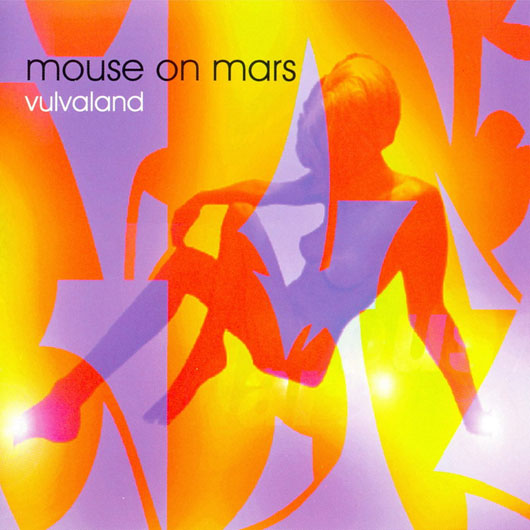
Vulvaland (1994, Too Pure)
Andi Toma: When we got in touch with Too Pure, it was actually after we sent a tape to Seefeel, who was on that label. In the end, Too Pure signed us, and Seefeel went over to Warp. I remember we had to go to London for a gig, and we put all our equipment in my old car, an old Renault. We traveled all the way down to Belgium to take the ferry to Dover. We were on our way to London, and I switched on the radio and they were playing our song. It was so amazing. I was just switching on the radio, searching for a channel, and suddenly they were playing “Schnee Bud!” And I felt, like, “Wow…” I never will forget about that.
Jan St. Werner: Going to London completely infected us with jungle. We were were about 21 or 22 and in love with the rhythm of this music. And there was so much of it, which was just unbelievable. In Germany, if something was new, [it would be], like, one of a kind. But they were just throwing all these jungle tracks at you, and it was great.
AT: At the time, we were really into dub music, also. We used a lot of old equipment that was used to do reggae dub, and with this jungle music, it really opened up a lot for us. Like Jan said, we’d been infected. [laughs]
JSW: Some of the ideas we also liked [back then] came from weirder, sample-type bands, like Negativland.
AT: And there was gabber and breakbeat and acid…
JSW: And Chill Records, which was just, like, the best label in the world. Our friend Tommi—who lived in the same commune-type building that I lived in with other musicians, like Alec Empire—had all these records. He introduced me to all this electronic music. As a teenager, I was from [the middle of] nowhere. I was just listening to what I could get ahold of, like Brian Eno’s stuff or King Crimson or a weird record by Nocturnal Emissions, but not much of this electronic stuff. Not even Krautrock! [Tommi] had really cool breakbeat stuff, and I’d take it home as much as I could. Hanging out in London made it all come together. In a way, we didn’t really want to make [electronic music] an obvious influence on our music, but it just broadened our horizons drastically. It made us more confident to continue with our own sound. Vulvaland was relaxed and kind of spacious. It had a kind of womby atmosphere, but, sound-wise, it was kind of all over the place and quite shy. The way we picked the sounds was quite random. We were very tolerant in a way, but I think the second album, Iaora Tahiti, has a really dense sound design or sound identity. I think that was because of our whole London experience.
Glam (1998, Sonig)
AT: This was going to be a soundtrack for a new movie called Gangster Glam. The director called us up, and was, like, “You guys are so cool. I need a soundtrack for my movie, and the way you make your sounds is exactly what I need.” He came out to our studio, and he was so crazy. He was talking all the time during the recordings, he couldn’t wait for the scene to finish.
JSW: He wanted sound all over the movie. He wanted a movie where the sound would never ever stop, [where there would always be] some kind of musical ambiance. It was crazy, but we realized that he wanted that because during the shooting of the movie he had talked into the sound. He was completely neurotic and overexcited, but not necessarily about the stuff that was around him. He was excited about himself being excited about something. He was annoying but sweet at the same time, he was not a bad guy. So, he eventually left, and we finished the soundtrack according to what we understood his expectations to be. We sent all of it over to the US, and then we didn’t hear back for a while. Eventually, we got him on the phone, and he said, “Yeah, the music, it’s not really the [right] thing [for the movie].”
AT: They licensed some of the tracks, but there was still all this music [left over]. And we thought, “What’re we going to do with this?” So, we just made our own artwork and released it as a record.
JSW: But it was nice to make music that way, to make music for the images. It made the music have totally different arrangements than we normally would have done them. Things stopped and started at unpredictable places because it was edited along with the pictures. It made the music have something very special. I think, when you hear the record, though it’s very relaxed and meant to be kind of atmospheric, it still has something odd and unexpected about it. That created an interesting tension, and, in the end, a nice record. Glam, for me, has always been this kind of changing point. We left Too Pure, and it made us start our own label, Sonig.
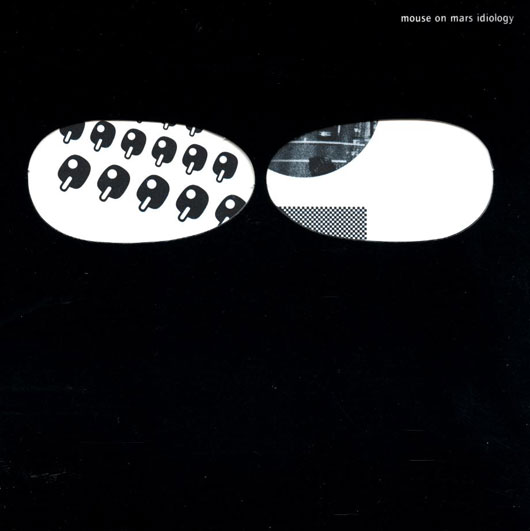
Idiology (2001, Thrill Jockey)
JSW:Idiology was stylistically quite all over the place, but we never cared really what style [we were making]. We were just absorbing everything we found interesting. I think Idiology was the record where we really let go, and went into many different directions. We felt good about the sound we had developed over the years. There was already a progression from Iaora Tahiti to Autoditacker to Niun Niggung, which was already kind of a peak of the sound alphabet that we had created. Niun Niggung was just an endless variety [of sounds] that we could use as a tool to create whatever we wanted. It was like an almost-bursting dress. There was so much on that record, that, I think, with Idiology, we just cut the buttons and let this thing kind of explode into whatever direction it wanted to go.
AT: And it had this agressiveness to it. People always said that our other records were sweet or funny, and we kind of didn’t like it. I think this is the reason why we became, not destructive, but a little bit more extreme in the way we produce. Sometimes, I feel like it was kind of a response to the image people had of us. We would destroy the arrangements again and again, and cut the sounds endlessly and try to put them together in a different way, like what you do today with plugins.
JSW: I’m sure the perception from the outside played a role, because, over the years, you gain an image, and we didn’t want to be pigeonholed. I don’t think it was only the “sweet” part, though. It was being [called] electronic or a part of this or a part of that. In the beginning, people didn’t know how to deal with us, they didn’t know what this type of music was. We felt very free, but the more music we made and the more known we became, there was a lot more labelling [of our music]. We’ve never felt comfortable with anything that seemed to be decided from the outside. We want to decide everything ourselves from the inside, and Idiology was a decision to see how far we could go and how far an album can go and what a listener can deal with. [We asked] ourselves, “Is this still a band? What are we? Are we sound maniacs? Weird professors? Are we two single persons throwing their ideas together onto one platform?” I think Idiology is all of this. It was a bit of a departure or a change, but it was also the closing of a chapter.
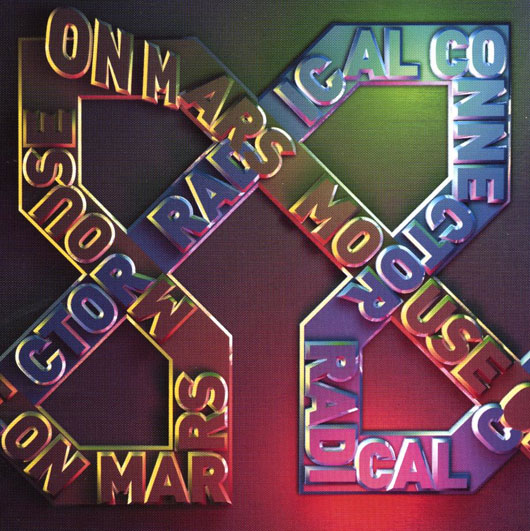
Radical Connector (2004, Thrill Jockey)
JSW: With Radical Connector, we wanted to make an R&B record, but we didn’t really know how to make it right. Of course, we didn’t have the cultural depth or background that a real R&B producer or hip-hop producer would have, but we just wanted to try it. We wanted to make a pop record. Because, who gives a fuck?
AT: I remember we weren’t listening so much to electronic artists anymore. There wasn’t so much good music coming out from the electronic scene, but we really liked to listen to these R&B pop songs and radio stuff. We found it more interesting, and wanted to do something like that in our way. Listening to this record now, it’s strange. We tried to do something… Actually, we always try do something we can’t do well. [laughs] The songs always turn out differently from what we expect, but from a distance, I think the idea was quite good. The production was a little too ambitious. I think if we’d been a little more relaxed, it would’ve been a good album. If you listen to some of the music produced now, I hear some similarities—not programming the beat in a totally quantized way, making the structure to be more fragile.
JSW: But in the end, it doesn’t matter. That’s the great thing about music. Music is so patient, so free, so gracious. There is nothing right or wrong about music. It’s really the perfect field for what we do, because whatever ambition we have and whatever misunderstanding leads to the actual production of something, it doesn’t matter. It doesn’t harm anyone. And if you do it with your heart, if you do it with confidence, you find people who share it with you.
Parastrophics (2012, Monkeytown)
AT: Now, we feel like a circle has closed. Maybe just because of the break we had, then how suddenly everything came together, and how [making Parastrophics] kind of felt like the first album.
JSW: The first record is composed of tracks we did over quite some time, and we weren’t seriously thinking about making a record. But at the end, we realized, “Okay, this is an album.” It was relaxed, in a way, to make those tracks, and then compile them. With [Parastrophics], it feels like we also collected a pile of tracks over a certain period of time, and we picked the ones that made us feel relaxed. It kind of reminded us a bit of the work, as we remember it, we did for the first album. Obviously, this record is influenced a lot by the music we’re into at the moment, kids who are doing odd stuff with cut-up beats and plugins.
AT: The people around us are making the music we’ve always wanted to make. There’s so much good stuff. I don’t remember a time when so much good electronic music was produced.
JSW: Yeah, never.
AT: Everyone says, “Yeah, the ’90s [was the best electronic music period],” but it’s the peak now. Now, I can stop making music, because there’s so much good stuff coming out.
JSW: Honestly, we thought, “Why should we do another record?” At this point, we have all this freedom. We started doing our orchestra project [Paenumnion] and we’ll keep doing those shows. It was so nice, really. Why would we bother doing another album if we don’t feel like doing one? But then, suddenly, we felt so much like doing one. [laughs] Then, at the same point, we met Modeselektor, and they were very reassuring. They said, “You should definitely make a record, and you should really make it now. It’s your time.” So, they actually came to the studio, and they found a lot of tracks that they wanted on the record. But they didn’t realize that once they did that, that’s when we actually started to make the album. [laughs] We did a lot of new tracks, and we reworked the tracks that they’d already heard. There was quite a bit of confusion with the tracklist when we handed over the record. But it was because we felt good, and that’s what we wanted to do. It was our statement.
AT: After a long time of not releasing [music], it was nice to have a clear vision. The fire was glowing again. It felt right to do it.
JSW: We were also not aware that [releasing] a record means relief. We thought it means work, which doesn’t mean we weren’t happy being in the studio. We did a lot of work in the studio—working on music software, testing instruments, trying new plugins. But at some point, we realized that we had taken a long journey, and that an album is an amazing platform to tell that story. Parastrophics is a record that spans over time and distance. In the period between Varcharz and now, I think we added half a globe of countries that we’d never been to into our lives. Parastrophics is an abstract vision, an abstract remembering, an abstract image or blueprint of all those things.