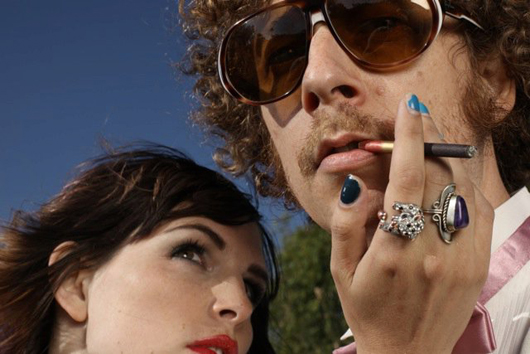
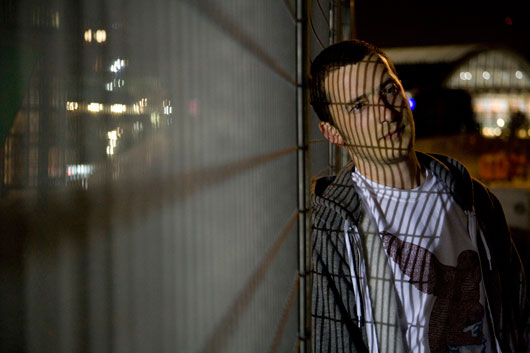
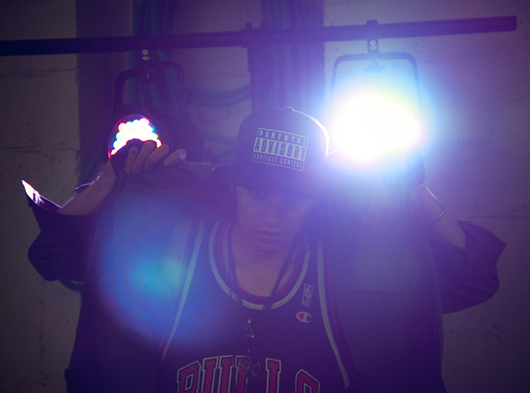
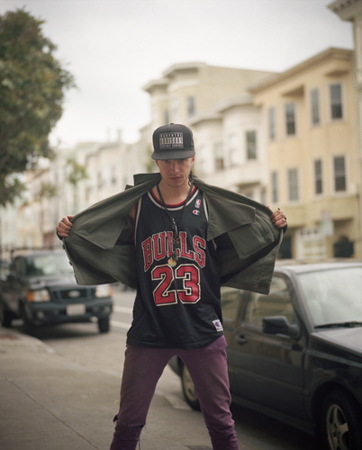
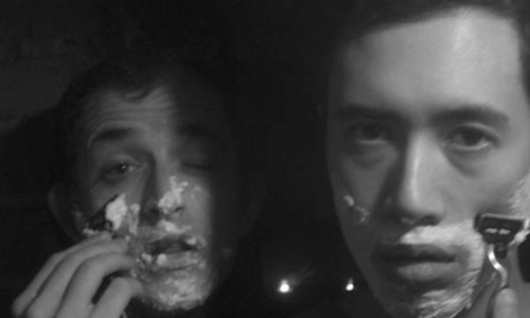
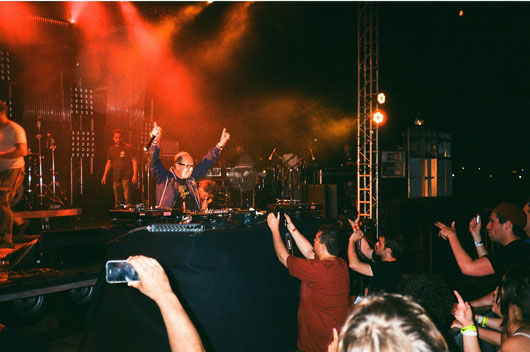
The ex-SF, now LA-based producer/vocalist/bloggerBaron Von Luxxury (formerly known simply as Luxxury, pictured above) has a new LP for Manimal Vinyl still a few months away from seeing its release in September, but fellow West Coaster Loose Shus has already turned in this remix for the album’s track “Terry Richardson.” Believe it or not, this version of the tune considerably tones down the disco-pop obsession of Von Luxxury’s original, smoothing things out with some deliciously retro synths and classic drum machine work. Sure, the vocals still have quite a bit of cheese to their credit, but Von Luxxury’s whole MO is to find the “fine line dividing what is cool from what is deeply embarrassing,” and Loose Shus seems content to continue this flirtatious experiment within the ever-changing “guilty pleasure” realm set off by his Los Angeles counterpart.
Burgeoning British bass producer Throwing Snow has a new record on the way, coming this time as the first release from the Brighton-based Sneaker Social Club imprint, which is run by the man behind the Hypercolour and Glass Table labels, Jamie Russell. The 12″ will feature two deep, low-end-centric club tunes, called “Shadower” and “Sanctum,” along with a “limited-edition poster insert,” and will drop sometime in September.
On his last album, 2009’s stunning Dark Rifts, Travis Egedy (a.k.a. Pictureplane) proved he was a steady hand when it comes to blurring genres, creating a super-vibey dance record from some unexpected sources. (Fleetwood Mac samples, anyone?) But with his latest, Thee Physical, which comes out tomorrow on Lovepump United, he extends that pastiche to meld his deconstructions of hip-hop, diva house, and pop music with a sensibility that’s as rooted in mysticism as it is in the “real.” Last month, on a west coast visit to shoot a video for “Post Physical” in LA (he calls Denver home), he stopped through San Francisco for a chat about Genesis P-Orridge-style magick, his hip-hop-obsessed youth, and what it really means to be soulful.
XLR8R: You were just in LA doing a video? Pictureplane: Yeah, it was for “Post Physical,” which is on my new record.
I wanted to ask you about that song, because if you do a surface read of the title, it seems like it’s about—I hate this phrase—body politics. I like making things that are conceptually cohesive—especially albums. I like the idea of a concept record, and all my visual artwork is very conceptually based and so this record was really about, to me, the human hand as a symbol of how we experience the physical world—like all-sensory, really. It’s an album about physical touch, basically, and communicating through your hands, and all the things that go along with feeling and touch, like fetishism and sensation—like how things feel physically. So it’s called Thee Physical and it deals with the physical plane.
XLR8R Couldn't find the embed function for type: "vimeo" and source: "<iframe src="http://player.vimeo.com/video/26480359" width="530" height="292" frameborder="0"></iframe>".
I was reading it as a transformative kind of thing. Definitely. That word is such a central theme to everything I do, kind of—transformation. It’s really important to me, and I love thinking about the future of humanity and evolution, like, where we’re going as a species, in a positive way, and change.
When you read a word that’s “post-something,” you sort of assume there’s a theoretical concept involved, and I want to know how you define “post-physical.” Is it informed by different philosophies? Mysticism? Structuralism? I am into mysticism. And “post-“, to me, it’s like an art term also. So post-physical was like the idea of ‘beyond a physical body,’ kind of. I don’t want to say “after the physical,” because that denotes death or the afterlife or something, and that’s not really what I’m trying to say. It’s more like the spiritual plane, I guess, or like what’s beyond what you can see and touch. But I guess “post-” really means ‘after,’ and maybe it could be ‘after the physical,’ when we’re sort of post-humans—when we’re not what we would call human anymore. I like post-human theory and futurist ideas of using us as a technology and where we’re going with that.
I feel like artists like Genesis P-Orridge really embody the post-physical idea, and I wonder if he’s influential to you at all? Actually, Genesis is a huge influence on me. The past couple years I was really into reading his writings. I was really getting into chaos magic writings. I don’t remember how I discovered Psychic TV, really. I’ve always been into noise and industrial stuff, and I think I found out about Psychic TV like not even musically—I found out about them through magic. Genesis P-Orridge I think is one of the more important philosophers of the last 100 years, I would say. Just his central theme of understanding of the self and its magical possibilities, of being a pure individual, and social deconditioning and removing yourself from all of the mind pollution everywhere—not being a drone in society. His stuff, his performance artwork, his whole life has been crazy—just really influential to me.
Prior to that, did you have others kinds of life experiences that led you in that way of discovering self identity and awareness? You know, I’m not really sure. I always sort of did my own thing, and always had an interest in the hidden, the occult, and the unseen, and I think I got into following my own path by just doing what felt right. I was always a very intuitive person before I even knew what that meant or why that was important. I’m just really interested in, like, being me, kind of. I think a lot of adults lose that as they get older—it’s really a childlike thing. As a child, you don’t really think of things like that—you’re just who you are and you just do what you do. You have a personality, and then as you get older, there’s a lot of pressure: You have to get a job, you have to buy things, pay rent, you get sort of molded into these boxes, basically. I never wanted to be molded into a box at all.
You moved to Denver for school, but what was New Mexico like growing up? It was funky, man. Northern New Mexico is a very sort of new-agey place; a lot of hippies moved there and settled there. It’s an extremely beautiful place; I spent a lot of time outside in the mountains. It’s got a crazy culture there. A lot of Native American history, and Hispanic culture. There’s just like a Santa Fe style.
How did your parents end up there? They left college on the east coast in the early ’70s and just headed west and settled there.
Are they hippies too? They were. No longer.
I guess in that respect, I’m curious as to how you grew up. I was a hip-hop kid; I was obsessed with rap in high school. Like indie rap—the weirder, the better. But that’s like when that stuff was actually—like I was real big on Anticon, in like early 2000s, and I started making rap.
I feel like when I listen to Pictureplane, there are so many reference points, but what it’s mostly about is a vibe. And I wonder if that is sort of the product of hippie-ish environs and being in the club and being into dance music as well. I think a lot of musicians don’t understand vibe—it’s an abstract word—and no one really does. It’s a feeling. But I’ve always liked music that has a special energy to it—it’s more real, or like something you can feel. And I don’t know if two people could ever really agree on what that is necessarily, but it’s an intuitive feeling I guess. And like creating a mood in a whole room, and being able to affect people’s moods and energies; music is really conducive to being able to do that. And a lot of people will just make music, but it’s just cold, it’s real vapid, and others will make something that actually touches your soul—it’s soul music. Lots of music has it, a lot of music doesn’t. Different genres, too—it doesn’t matter what kind of music it is. It can either really have soul, or not.
I get that a lot from your music, too. It’s clearly cheaply produced and is referential of all those things that generally get associated with being soulless music, but there’s still something pretty soulful about it. It’s not soulful in the Curtis Mayfield-soul way, but it’s vibe-soul. It’s not cheaply produced because it’s fashionable, either. It’s just how it is; it’s how I’ve always done it. Really ghetto.
You made this new record in LA with the HEALTH guys? Well, I made it all in my room like I normally do, in my bedroom, but then I went to LA and Jupiter [Keyes from HEALTH] helped me a lot to mix everything down. We dissected every single song and just really beefed up everything. I can’t do that in the program I use—it’s really old and very limited—so he just made everything sound really good, and then I re-recorded all the vocals using a nice microphone (which I never do, either), so it sounds a lot better.
What do you use at home? I just have this cheap mic and I run it through an amplifier. And I don’t have like a vocal booth or headphones, so I just sing over top of the song being played really loud. So you get my voice and a bunch of just background noise. But that’s how I always made tracks, so it’s always muffled, and people can never understand what I’m saying or anything.
But that’s part of its charm, right? Yeah, so we wanted to keep that dirtiness but also make it big and club-ready, kind of. Like actually produce it well.
I’m also curious what got you into dance music. Well, I just got like really disillusioned with the hip-hop scene; it got so annoyingly stagnant. It wasn’t moving anywhere. I’ve always been really experimental with my interests and approach, and it was just so boring. Everyone was the same, it was really misogynistic, homophobic, like just not open at all. Which is ironic, because the indie rap kids were supposed to be like fighting back against the mainstream, and it just completely flipped around—the mainstream ended up being more progressive than the underground was. And so, yeah, I’ve always liked dance music. I would listen to trance and electronic music in high school and I just got more and more disillusioned by hip-hop and more and more interested in dance music. And then in the early 2000s, I was really into dance punk. And all those bands broke, like The Rapture, The Faint, and stuff. So that started affecting my production, and I started making faster tempos and stuff. And then I started looking at the history of dance music and it just went from there.
Did you go to a lot of raves? Denver seems like a kind of ravey city. I was not a raver. Denver does have this crazy history of raves, actually. The guy from Hercules & Love Affair [Andy Butler]… he grew up in Denver, and talks about these legendary raves in Denver in the ’90s and stuff and this huge scene, but I wasn’t there then, and my parents wouldn’t really have let me go to a rave, I don’t think, when I was really young. I went to some things, but they weren’t really that ravey, though. I discovered that later.
I feel like the dance-music touchstones in your music… I wonder how filtered they are, because trance isn’t the kind of thing that dance-music purists would touch with a 10-foot pole—and indie people, too—but you have it in there and make it work, and I wonder if it’s like a conscious thing. Trance rules, man!
Well, I’m curious as to what you like about it. It’s big and emotional. It’s, like, awesome, and sure it’s cheesy, but a good trance song? There’s nothing better that that. A lot of it’s shit, of course, but that’s with anything. Just these epic, cascading build-ups—it’s music about a feeling. Like, you could start crying at a sick, epic trance breakdown. [laughs] And it’s ecstasy music. It’s supposed to be fun. I’ve always liked drug culture and drug music, kind of, and trance is just [part of] a long lineage of psychedelic music.
What do you look for in music to appropriate? I guess, as you say, part of it’s emotion. I don’t know. Whatever strikes my ear. I’m not gonna go digging around in country-record crates or anything like that, but it’s, like, soul music—as we said, whatever that means.
When you were into hip-hop, did you do anything like that? Scratch DJing or crate digging? No, I was an MC and a producer. The weird thing about “Goth Star” [from Dark Rift, which samples Fleetwood Mac’s “Seven Wonders”], what people don’t know about that song, is that I started that beat when I was in high school, when I was sampling stuff like Fleetwood Mac. I would probably never sample a Fleetwood Mac song now. It just was still on my computer and I never did anything with it, and then a couple years ago I just opened up that file and just like made the song. It just clicked, kind of, but I’d been working on it for years… When I sample now, I sample trance songs, vocal house stuff. That’s what I look for—vocals.
What do you like these days, just to listen to? A lot of stuff. I’m really all over the place. Last year I was big on Night Slugs stuff, ’cause I DJ a lot, too. They were just flawless, everything they did. A lot of UK funky, I still love to play that out. A lot of grime stuff. I love British, forward-thinking club stuff—the different rhythms, the time signatures, the step.
Do you find touring in Europe a lot different in terms of the audiences that are coming to see you there? Yeah, I think Europe is just sort of starting to understand the concept of like—I do like a weird bedroom punk-rave kind of thing, and I think that’s like a weird concept over there. They have just a very different history of electronic music over there, so things that are maybe weird or ironic to them, as Americans, we fully embrace it unironically, like things like trance or something, whereas they grew up with it and it’s culturally saturated over there, and here, we’re sort of toying around with these ideas just because it sounds new to our ears or something. And so I think my music is kind of misunderstood a bit in Europe, or they’re a little slow to catch on to it. I don’t really know how they interpret it, but it’s weird seeing like a dance producer playing. Like, I’m a performer, I play live and I sing, and I think they’re like, “Well, is he a DJ? What is he doing? Why is he singing?” Because electronic music, I think, it’s only DJs there. Like, huge clubs, that’s their idea of dance music. You go to a massive club and you rave all night; it’s not a performance. So it’s weird; there’s a disconnect, kind of.
So what’s the ideal live setting for you then? I get the sense that it’s just like a smaller party. Yeah, that’s what I like. Like smaller clubs that are full of like artsy people. I mean, I consider myself a performance artist; I studied that in school. And Pictureplane is kind of a performance-art project to me; I just happen to make music for it also.
XLR8R Couldn't find the embed function for type: "soundcloud" and source: "<embed allowscriptaccess="always" height="305" src="http://player.soundcloud.com/player.swf?url=http%3A%2F%2Fapi.soundcloud.com%2Fplaylists%2F897038&show_comments=true&auto_play=false&show_playcount=true&show_artwork=true&color=ff7700" type="application/x-shockwave-flash" width="100%">".
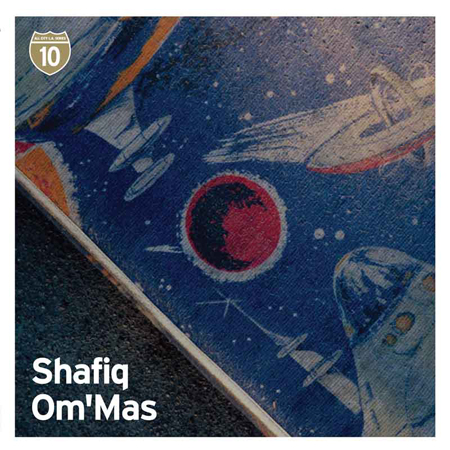
This stoney piece of “for the heads,” West Coast-style beat work comes from what we are sad to report is the last 10″ in All-City’s LA series, which has chronicled the work of Teebs, Tokimonsta, Dam-Funk, matthewdavid, and many more of the Southern Califonia ilk since starting its run back in January of last year. For the final offering, the Dublin-based imprint has tapped Shafiq Husayn and Om’Mas Keith, two thirds of the futuristic hip-hop crew Sa-Ra Creative Partners, with each taking a side of the vinyl to show off their respective solo chops. Here we have the final piece of Husayn’s three-part, seven-plus-minute contribution to the release’s a-side, marked by flashes of woozy jazz, sloppy bass, and just the right touch of off-kilter drums. LA #0 (artwork above) is set to hit the streets later this month, hopefully to be followed by another expertly curated All-City series sometime soon.
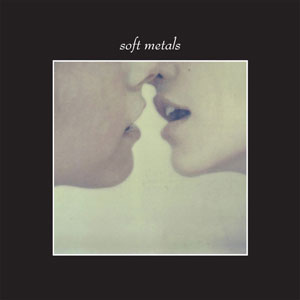
Musically speaking, we live in an age where just about anything conceivable is possible. Artists are making music out of the life and death of a pig (i.e. Matthew Herbert’s forthcoming One Pig LP), turning the internet into their own personal sample bank, and testing the limits of what constitutes a dance beat. So, when a band such as Portland duo Soft Metals comes along, touting a sound that owes just about everything to a bygone era, you can’t help but wonder why.
Soft Metals, producer Ian Hicks’ and singer Patricia Hall’s eponymous debut LP, was likely born out of love for its influences, a love that its creators have carried around with them for a long time. In that way, the album was produced solely for themselves. It’s the pair’s attempt at tacking their name up on the New Wave Wall of Fame, hoping to land as close to their synth-pop heroes as possible. To enjoy the LP, you just need to care as much as the band does about how high they can reach.
On the lush, hypnotic singles “Psychic Driving” and “Eyes Closed,” Soft Metals nears the Berlin mark, crafting dreamy pop tunes with layers of warm analog synths, drum machines, and lilting vocal melodies. Cuts like “The Cold World Melts” and “Do You Remember” recall DFA artists The Juan MacLean and The Crystal Ark, who both managed to nicely update the ’80s sound with their darkly sensual, acid-tinged disco grooves, while “Voices” and “Pain” tread heavily on the well-worn territory belonging to Orchestral Manoeuvres in the Dark. It’s hard not to make these kinds of connections while listening to Soft Metals. While it’s obvious that Hicks and Hall know their way around both sound- and songcraft, they rarely—if ever—use those skills to sound like anything but a band even the most casual synth-pop fan would be familiar with. Hopefully next time Soft Metals will aim to write something more fresh.
Over the past few months, the non-cello-playing half of the always inventive duo The Books, Nick Zammuto, has been breaking out on his own again, dropping solo tracks here and there simply as Zammuto. “Idiom Wind” is the latest such track, and it serves as another moving example of the striking and unique songs the Vermont-based musician/producer is capable of putting together. Replacing fellow Books collaborator Paul de Jong’s deep cello bowings with a lush layer of multi-tracked fiddle (courtesy of Gene Back), Zammuto weaves a meditative performance of intricate pop complete with sparse, polyrhythmic drums, a simple bassline, and a generous helping of his own calm, layered vocals. It appears there is no talk of a new solo album in the works so far, but we’ve certainly got our fingers crossed. (via Pitchfork)
In this interesting piece from Amoeba Music‘s What’s In My Bag series—in which the West Coast music retailer talks to contemporary artists about the music and movies they purchase while in town—UK post-dubstep posterboy James Blake chats about his love for Outkast and old-timey gospel and piano records. The artist doesn’t just go for the classics, however. He makes sure to cop a Martyn 12″ from Hyperdub, too. You can see the full list of what Blake nabbed at the San Francisco Amoeba record store here.
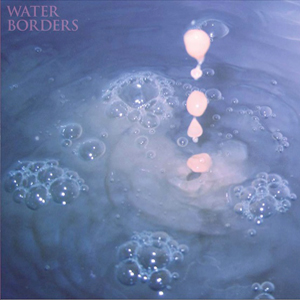
San Francisco-based industrial-electronic duo Water Borders have just announced the imminent release of Harbored Mantras, their debut LP on witchy Brooklyn/London label, Tri Angle Records . Following in the footsteps of the Drippings cassette, their last release, Harbored Mantras promises to further their sound which is—according to their press release—”primarily inspired by their lifelong passion for ’80s industrial legends Coil and the kind of underground UK dance productions often heard on Rinse FM.” Sounds good to us! You’ll be able to pick up a copy when it drops October 10, but in the meantime check out the tracklist and album art below.
1. Tread On Them 2. What Wiwant 3. waldenpond.com 4. Bad Ethos 5. Even In The Dark 6. Feasting On Mongeese 7. Seed Bank 8. Miners 9. Antechamber
On September 5, UK bass music patron George FitzGerald will launch his own imprint, called Man Make Music, with the release of a two-song 12″ by the label head himself. The “Fernweh” b/w “Hearts” record features the kind of soulful, percussion-heavy future-garage the producer gained his solid reputation for on earlier Hotflush and Aus Music releases. Snippets of each track from George FitzGerald’s new single can be streamed below.
XLR8R Couldn't find the embed function for type: "soundcloud" and source: "<embed allowscriptaccess="always" height="81" src="http://player.soundcloud.com/player.swf?url=http%3A%2F%2Fapi.soundcloud.com%2Ftracks%2F18284747" type="application/x-shockwave-flash" width="100%">".
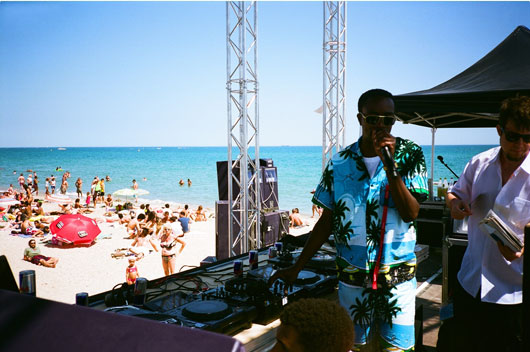
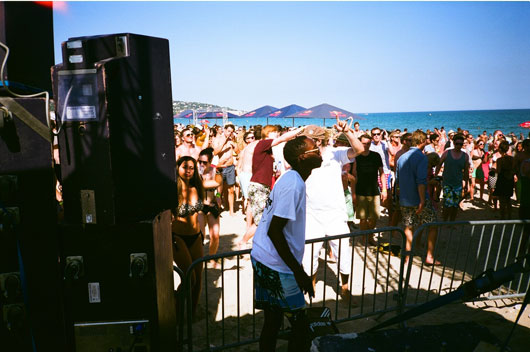
Last weekend, loads of Londoners and other assorted dance music fans flocked to Sète, a small fishing village in the South of France, to attend Gilles Peterson’s Worldwide Festival. For the past six years, it has turned this picturesque landscape into a scantily clad hotbed of tunes, booze, and dancing. While Sónar is about listening to music all day and making separate beach excursions, Worldwide smacks the two together, turning the concept of a sun holiday into something much more appealing than those old-school cheesy family vacations.
One caveat: The venues are quite far away from one another, and the official festival buses seemed virtually nonexistent. Renting bikes, scooters, and mopeds is definitely the way to go—and there’s nothing like a 6 a.m. bike trip home along a stretch of road directly overlooking the sea, with a stop off at the just-opened boulangerie for some pain au chocolat.
Here are our five favorite things about Worldwide:
Gilles Peterson knows what’s up. As an internationally recognized tastemaker via his BBC Radio 1 show, Gilles Peterson (above) is the perfect person to curate an electronic-leaning five days of beats on the beach. Known for his eclectic musical palate and constant support of new talent, his prowess as Artistic Director truly shined this year. There was something on offer for fans of garage, cumbia, dancehall, post-dubstep, funk, Afrobeat, techno, house, and tons of other genres, from Flying Lotus (backed by Dorian Concept on keys) to Konono No. 1, and Brandt Brauer Frick to Mount Kimbie. (photo Pia Clarke-Ebrill)
Location, location, location The three main venues that festival guests inhabited were a lighthouse on the water, an open-plan theater on the water (which looked like a castle and came complete with FIVE disco balls, and featured amazing projection mapping on its exterior), and a giant beach. Each one provided a unique locale for the ultimate music-appreciating experience. A real standout was James Blake’s live gig at the theater (clip above). Set up so that the audience was looking towards the sea with him set in front of it, his haunting, melancholic voice carried beautifully over the space, and the thoughtful lighting and breezy weather gave everyone the warm-‘n-fuzzies. The 18-hour closing-day waterfront party was also great for Extreme Beach Bogling and raving while swimming; calling out “TUNE!” during Rainer Trüby’s set from atop a yellow float is a nice way to spend an afternoon. Dancing on sand does eventually wear on the calves, though. (photo Pia Clarke-Ebrill)
Funktion-One sound outdoors Leave it to an expert like Gilles Peterson to ensure that, even in outdoor rural France, the sound at the festival is impeccable. With trustworthy Funktion-One speakers set up at each venue, it was actually possible to wake in the morning and brush your teeth without those awful ringing ears. This also meant there was no harm in getting right up near the front when David Rodigan (directly above) played “Uptown Top Ranking” and Kode9 threw down Ossie’s “She’s In Control.” (photo Pia Clarke-Ebrill)
No dodgy festival food One of the coolest things about Worldwide Festival is that you’re also in France, and can thus take advantage of the region’s superior cuisine. Local restaurants served up prawns, shellfish, and squid pulled straight out of the sea, and the rosé flowed like water. Inside the venues, stalls sold foie gras sandwiches, and there was always a stand hocking more locally sourced fresh seafood. (photo Gynelle Leon)
Jamie xx still wears all black when DJing in the scorching sun Amazing, but true: Even under the blinding rays of the sun, the young producer/DJ sported his trademark black clothes during his set, which was broadcast live via Boiler Room (and, his recently released “Far Nearer” was the unofficial tune of the entire fest). It was interesting to see how he and other afternoon selectors like Jeremy Sole and Sofrito Soundsystem adapted their playlists to fit the daytime vibe. (photo Pia Clarke-Ebrill)