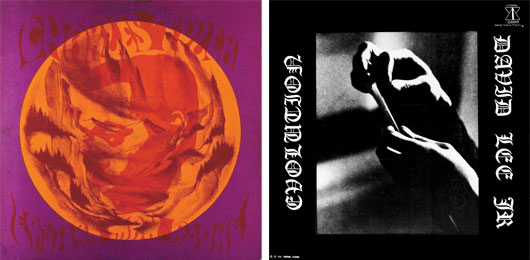
Under the Covers: A new Soul Jazz cover-art retrospective traces the visual roots of ’60s free-jazz radicalism.?

Freedom, Rhythm and Sound: Revolutionary Jazz Cover Art 1965-83 (SJR Publishing; hardcover; $39.99), a stunning retrospective of jazz cover art, is about much more than cool-ass graphics, though, that is undeniably a vast part of its appeal. Curators Stuart Baker and Gilles Peterson trace a potent history of “deep, spiritual, Afrocentric radical artists, and musicians,” pointedly locating their sonic and visual work alongside the actions of momentous political figures such as Martin Luther King and Malcolm X, groundbreaking legislation like the Civil Rights Act of 1964 (which prohibited racial segregation in schools, public places, and employment) and the Voting Rights Act of 1965 (which outlawed discriminatory voting practices), and even the first manned space mission.

Frequently undocumented, the records of this period present, says Soul Jazz Records founder Baker, “not only a historical archive but also a fascinating display of DIY culture created by a mixture of associations, collectives, individual musicians, and entrepreneurs all determined that their radical music be heard on their own terms.”

On records like Steve Reid’s Odyssey of the Oblong Square and Phil Ranelin’s Vibes from the Tribe, the “outness” of early-’60s free jazz was juxtaposed with the sensibilities of mid-’60s black power and civil rights to forge a radical new music that Peterson now perceives as “as a kind of pre-punk,” with Sun Ra as its Malcolm McLaren figure (though one must wonder if this does the Afro-futurist bandleader a disservice).

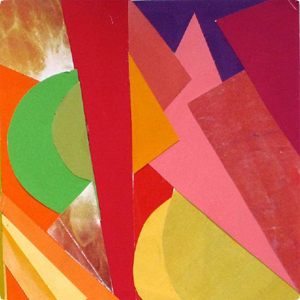
Pre-empting punk’s do-it-yourself aesthetic, these short-run records were frequently packaged in naive, starkly monochromatic sleeves (for reasons of economy) with simple, direct typesetting: the African-American Jazz Ensemble packaged their Malcolm X College in a black-and-white snap of the eponymous place of learning; New Life’s Visions of the Third Eye (which is appropriated as the collection’s front cover) deploys a simple-but-effective single color-block graphic; Marcus Belgrave’s Gemini loses nothing for being packaged in the most uncomplicated of etchings.

But what relevance do such sleeves have in 2009? Why publish a book on old jazz cover art now? “I’m not sure,” admits Baker. “I wasn’t conscious of this while we were putting the book together but once I start to analyze it, the election of Barack Obama seems like a final destination in the path of many of the artists of this period. I hope people will use the book to fire their imagination.”

For Peterson, the justification is aesthetic: “It looks so good! In this world of easy downloads with no soul, this book can act as a guide.”

Happily, a companion CD is to follow. “The artwork is a true representation of the music,“ explains Baker. “For me, the best covers do seem to go with the best music.”

Ernest Gonzales “Self Awakening”

Hot on the heels of Friends of Friends Vol. 2 (if you need a refresher, we posted acouple of mp3s from the release), the LA-based label is coming back with the Self Awakening EP from Texan Ernest Gonzales. Featuring remixes by Faunts, Yppah, and Mexicans with Guns, the EP should also whet appetites for Gonzales’ upcoming full-length, slated for release on FoF early next year. In the meantime, they’ve offered up the EP’s title track for download—its melancholy guitar work recalls bands like Tristeza, but Gonzales’ music is also backed by peppy laptop beats and glazed with a warm Nintendo fuzz.

Self Awakening

Self Awakening

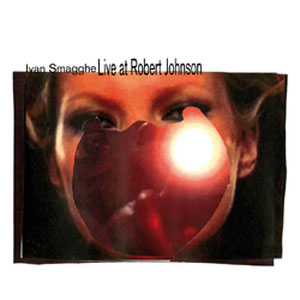
Ivan Smagghe Live at Robert Johnson Volume 3

As a former member of the genre-bending Black Strobe, Ivan Smagghe‘s contribution to the popular Robert Johnson mix series suitably features an eclectic selection of different dance music styles, from the hypnotic minimal sexiness of the Wighnomy Brothers to the campy disco revival of In Flagranti. While employing this sort of catholic selecting technique is laudable, the individual tracks here have such personality that the overall feel is one of scattered incohesiveness. It’s not that the tracks aren’t mixed well—they’re mixed expertly, in fact—but all of the pieces are so big and different that they cancel each other out. Smagghe is an excellent DJ, but this mix is not his best work.

Podcast 108: Kode 9’s Bubble ‘N’ Squeak Mix

When it comes to dubstep and the outer fringes of UK garage, few names ring out quite like Kode9. Next week, the Hyperdub label head will release 5, a two-disc compilation that both looks back at the influential label’s history and lays the groundwork for its future. To help commemorate the release, we asked Kode9 to submit something for the XLR8R podcast. Apparently, 5 has put the man in a historical mood, as he delivered this Bubble ‘N’ Squeak Mix, comprised entirely of classic UK garage and 2-step from 1999-2002. Originally aired as part of the special 25th-Anniversary broadcast of Radio Lancashire’s On the Wire, XLR8R and Hyperdub are now making it available as a proper download.

01 M Dubs feat. General Levy “Sweet Love” (Wildstar)
02. DJ Narrows “Dreams” (Resurrection)
03. Moreso “Take My Hand (Dem2 Over There Dub Mix)” (Locked On)
04. Horsepower “Classic Delux” (Tempa)
05. Ordinary People “Ghetto Lovin Dub” (Social Circles)
06. Monie Love “Slice of the Pie (El-B Dub)” (Relentless)
07. Lucy Pearl “Don’t Mess With My Man (Wookie Dub)” (Beyond)
08. Bass Masters “Bass Bug” (black label)
09. Groove Chronicles “1999 The Remix” (Kinky Fox)
10. Mario Cee feat. Alexia “Negativiti (Chris Mack 2 step)” (Electric Melt)
11. Chris Mack “Baby Gonna Rock Dis” (First Class)
12. DJ Double G “Get Loose” (DFL)
13. Pay As U Go Crew “Know We” (Solid City)

Download MP3
Download M4A (iTunes enhanced)
Subscribe to Podcast (RSS)

Podcast_Mix_2009_10_15

Samiyam “Swamp Tarts”

Los Angeles beatsmith and FlyLo compatriot Samiyam is yet another foot soldier in Southern California’s army of electro-crunk futurists. Taken from the Cinnaman– and Jay Scarlett-compiled compilation Beat Dimensions 2, “Swamp Tarts” glides on a stuttering beat while speaker-rattling synth stabs and woozy melodies creep into your earlobes. Blunted beats for 2010 and beyond.

08 Swamp Tarts

Neon Indian Psychic Chasms

In the realm of Neon Indian‘s Psychic Chasms, producer Alan Palomo is the wizard behind the curtain and his own personal Oz has no future, only memories of life and music past. Besides crafting the album’s psychedelic electro sound and “check out these old tapes I found in the trunk of my car” aesthetic, Palomo finds time to muse on missed opportunities (“Should’ve Taken Acid With You”) and lousy vacations (“Deadbeat Summer”) while synth tones seemingly lifted from ’80s sci-fi VHS and guitar licks pilfered from his parents’ records dance around his slacker nostalgia. Throughout the album, Palomo doesn’t want to take you anywhere, but rather sit with you, roll a joint, and talk about what was and what could’ve been.

Listen: “Terminally Chill”

Download This Track

Roberto Carlos Lange “Amazonian Pacific”

Known to many as Helado Negro or as collaborator with Guillermo Scott Herren on Savath y Savalas, Brooklyn-based overachiever Roberto Carlos Lange has contributed his productions to Volume 5 of Asthmatic Kitty’s ongoing Library Catalog Music Series. His 12-track exploration of elongated rhythms, warped analog effects, and found-sound collages, entitled Music for Memory, is a stand-up addition to the series’ other installments (we previously shared tracks from Volumes 1 and 3). Here, “Amazonian Pacific” starts out like a warbled Flying Lotus b-side before it descends into rhythmic field recordings, vocal loops, and reverberated machine noise; returning occasionally to friendlier, head-nodding beats.

Amazonian Pacific

Traxx: A Chicago house fiend takes a decidedly old-school approach to making jakbeat.

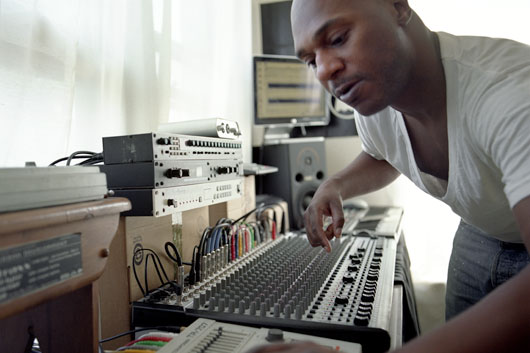
Drawing inspiration from the halcyon days of juice bars, loft parties, and the earliest glimpses of the Chicago rave scene, Melvin Oliphant’s skewed vision of the past is a creative force unto itself. Recording under aliases such as Traxx, X2, and Saturn V, Oliphant’s lo-fi production style can, within the space of a single track, flirt with jackhammering industrial noise, brittle string melancholy, and acidic bassline repetition—as if all the disparate sounds of 1988 joined forces. Oliphant calls the sound ‘jakbeat,’ and along with Tadd Mullinix, D’Marc Cantu, Beau Wanzer, and a few other like-minded producers, they’ve carved out a sort of alternate reality for house music. It’s definitely not the glossy sound we’ve come to expect from Chicago, but rather a messy and chaotic space in between. Below, Oliphant tell us how he gets the raw sound with a relatively simple set-up.

XLR8R: Are you using a computer at all while recording?
Melvin Oliphant: Only at the final, final stage… after I’ve recorded to a Denon cassette tape. I just run it from a [Behringer] mixer to the cassette deck to the computer, so you’re getting the tape noise. And I don’t use compression after that—all I do is normalize so I can get the dirtiness to come out.

So everything before the computer is analog?
Yeah. For example, I use one of the first sequencers from the ’80s. It’s called an Alesis MMT-8. I do have some VSTs in my studio, like the [Korg] MS20. But I’ll tell you right now that basically the entire album, Faith, was done with analog gear: Roland synthesizers like the SH-101, a Juno 106, and the TR-707 and 505 drum machines. Or I’ve got a Korg Poly 800 and this German acid synth, the [Acidlab] BassLine. The thing is, I did use that MS20 VST on the track “Violent Epoch,” but you wouldn’t be able to tell! That’s the whole point. I’d rather allow for more of the human part, the old machinery that gave out that certain signal; that certain frequency. So if you listen to “Violent Epoch,” and not the bassline but this weird sound that comes in… that’s the VST. And I really don’t think you can tell.

True, everything around it sounds so raw.?
And that’s a choice that you can make, even if it’s a choice that not everyone seems to realize they have. For me, I just feel better using these machines because I have to work. I have to actually do something. Lift my fingers up and move around and get the exercise. And you know what? A lot of people making the music right now could stand to do the same. Do some work! Step up your game. I don’t want to hear that shit anymore—half these people aren’t doing anything. They’re just talking and bull-jiving. What happened to being diverse? What happened to taking real risks? Because to me, these people—and they know who they are—they’re saying, “I want to make my money by being safe.” If you’re making the music, let me see you actually do it!

?Is there a connection between “doing work,” like physically moving, and taking risks as a producer?
Absolutely.

In that respect, you’re probably one of the most physically active DJs out there.?
Yes, although let me make this point, if I can: I am not a DJ, I’m a disk jock. There’s a big difference there. I am not your request. What a disc jock is supposed to be is a medicine man, a shaman. And I don’t give people what they want; I give them what they need.

Do people need to hear some of the past again?
Well, it’s like… my beat patterns always come from myself, but I do listen to the old tracks and I do try to take those old patterns into a different place. But just so you understand this: It is not copycatting to take those ideas and go somewhere else with them. It comes from this whole jack thing, spelled j-a-c-k. It’s an idea that’s made from the house music concept, but not in a way to rehash what we already know. And the thing is it’s not like I’ve been producing for like 20 years. I started in 2000, and I’ll be completely honest with you—I’m not a pro. But I do know enough to know what I don’t want things to sound like.

Overproduced?
Yes, and you get a thousand claps for that. I’m not sure how to say this, but… I’m taking from inside of the machine, and working from the inside backwards. I don’t know if you know what I mean. But I’m not going by the laws of physical gravity. I’m going by the alternative.

??Traxx’s Faith is out now on Nation.

Check out Traxx’s exclusive podcast for XLR8Rhere.

NastyNasty “No Names”

San Francisco’s NastyNasty is one of the Bay’s up-and-coming masters of bass, and on “No Names,” he kicks it down with dark bass rumblings, synth blips, and some truly impressive polyrhythmic intensity. Though the genre can often get a bit tired, this track is particularly noteworthy because of a prominent Marvin Gaye vocal sample, which turns a well-done but standard bass track into a much more sentimental affair, with a resonance approaching that of Burial. Next month sees a new single on Frite Nite, featuring remixes from wonky leftfield bass producer Slugabed, among others.

No Names

Cobblestone Jazz’s Danuel Tate to Release Solo EP

Founding member of Canada’s improvisational techno outfit Cobblestone Jazz, Danuel Tate, has announced the follow up to 2007’s Pushcard EP, the 5-track Doesn’t Like You Back. Coming October 19 on Wagon Repair, Tate’s latest output showcases his proclivity for jazz-influenced tech-house delivered with a strong dose of swelling horn sections and playful vocoder synth throughout. Doesn’t Like You Back is also said to convey the “moment on the dance floor when you realize the woman next to you is way out of your league.” Truthfully, as long as we’re gettin’ down to these beats, we’re not too worried about that. Tracklist and more after the jump.

Tracklist:
1 Careful Mind
2 4/5
3 La Boite
4 She Like You?
5 Remember Me

pictured Cobblestone Jazz

Page 2629 of 3781
1 2,627 2,628 2,629 2,630 2,631 3,781