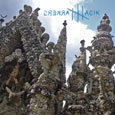
In its eight years together, out-there noise-rock duo Magik Markers has released a horde of CD-Rs and proper releases, combining Sonic Youth rockisms with free-spirited soundscapes. Balf Quarry, their latest and first for Drag City, shows the band’s continued forays into structure. Opener “Risperdal” throws out some molasses-paced jams via impossibly fuzzy guitars, while “Jerks” is straight-up punk rock. Elsewhere, songs like “State Numbers” build creepy anthems out of odd choices, while 10-minute closer “Shells” eventually lands on a sweetly stripped-down passage of piano and vocals. Succeeding in both diversity and cohesion, Balf Quarry is a remarkable album.
Lady Sovereign’s producer takes grime out of the PlayStation and into the mixing desk.
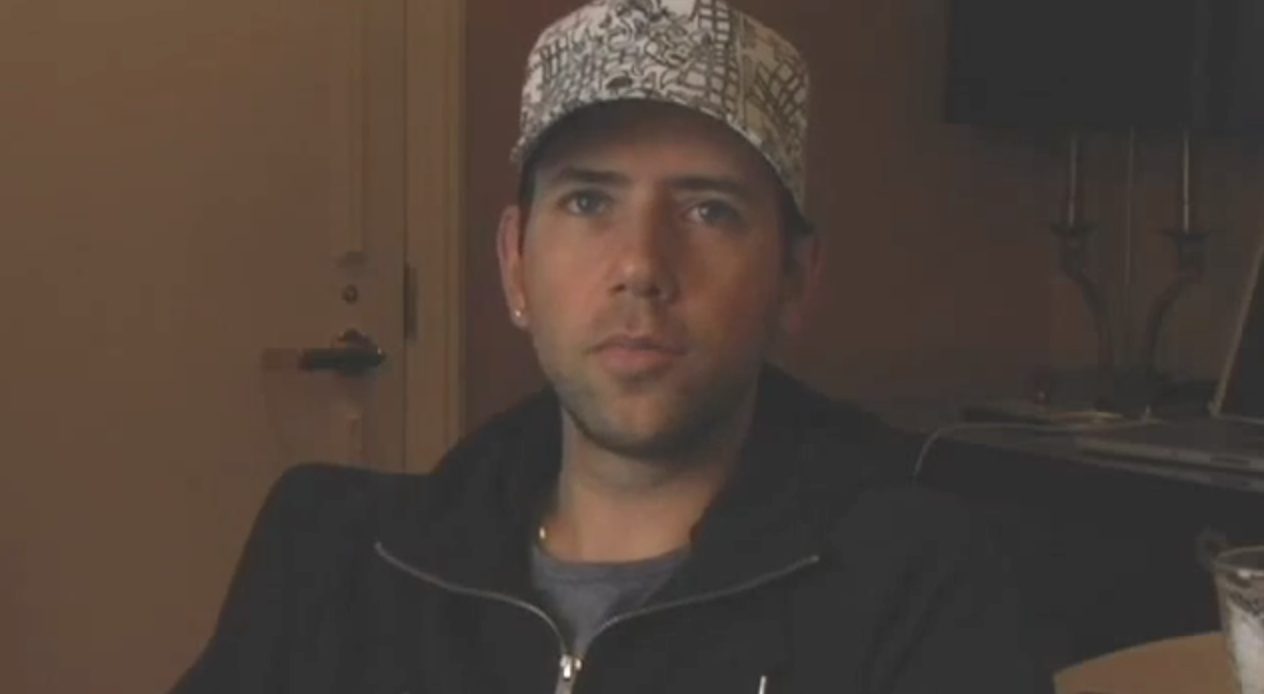
As Lady Sovereign’s right-hand man, Hackney-based Gabriel Olegavich (a.k.a. Medasyn) has the difficult task of creating polished genres on the fly. Wedged somewhere between grime, hip-hop, electro, and straight-up pop, the beats he and Sovereign come up with are often inspired by gritty underground styles, but they still require well-honed pop instincts and methods. As such, there isn’t much room for shoddy PlayStation beats or murky mixes—the tracks on Sov’s new album, Jigsaw, are about as radio-friendly as it gets. Olegavich filled us in on how he builds that polish without losing the natural feel.
XLR8R: Can you describe your current signal path for vocals?
Medasyn: I’ve been building the studio up for a long time now, but maybe six or seven years ago I got a Soundtracs [Inline 36] analog mixing desk. That’s a big part of the sound, since everything runs through it. On the front-end, I use a Neumann M 147 tube [microphone], which is really nice—I think it has a bit more body than the U87. That goes into a Chandler Germanium pre-amp that I got in New York about a year ago. Prior to that, I was using the pre-amps on the mixing desk. Now, pretty much all the vocals for Jigsaw were recorded through the Chandler.
How much of a difference did recording through a nicer pre-amp make?
It’s amazing; I should have gotten it years ago. It just adds something to the signal—this sort of smoothness. Some of the frequencies just feel better. And after working with a few female MCs besides Sovereign, I’ve found you have to be really careful with some of the mid-range, especially around 2k. It can get quite pokey and in-your-face. But with a nice pre-amp, there’s a lot less frequency you have to tame—it gives a much better signal to start with. Are your beats done in hardware as well? Actually, I use Logic. The ESX sampler gets quite a bit of use as I’ve built up a pretty huge collection of drum sounds for it. In the past, I used Akai samplers, and I’ve got an MPC, too, but in the U.K., there’s definitely more of a Logic culture than, say, an MPC culture. But I still play beats off a keyboard, and try to quantize them as little as possible—just enough to add a little bit of rigidity so it’ll still fit with other pieces, like guitar.Speaking of guitar, there’s a lot of traditional “acoustic” instrumentation on Jigsaw. Did you layer in those parts as you went, or was it a more pieced-together loop approach? Almost everything on the new album was done as we went. With the exception of the underlying beat for “Jigsaw,” which I had originally done with another project in mind, the beats largely came together with Sovereign and I in the studio together. I’d be programming drums, for example, and she’d vibe off it. It was an exchange, like, “This part sounds good,” or “Let’s try guitar here.” And I think that’s the best way to work—it feels more “right” when there’s that exchange. Even if I added some synth lines in after she’d gone home or whatever, having the root of the song be collaborative was important.There’s a lot of interplay between your basslines and the kick drums on the album. Is it ever tough to get those elements mixed together properly? When we first set up my studio, we put this bass trap in the ceiling, and sometimes I still get really paranoid about it. Am I hearing all the bass, and that sort of thing. But yeah, that can be a funny one. There is, of course, the safe way of doing it, which is using sidechain compression with the kick and bassline—that way the sounds won’t really clash because you can make one get ducked by the other. That was used to a ridiculous extreme on “I Got You Dancing.”Did you lean towards any specific gear for creating bass sounds? I find the Korg MS-10 is really good for when I want to make some kind of crazy pitch-bend bass noises or filter sweeps. It’s got a very tough sound to it, too—it doesn’t have that same older, warmer sound like, say, a [Roland] Jupiter 4. It can also be a lot quicker than some of the plug-ins because you’ve got all the knobs in front of you—you just fiddle around with it, and boom, you’ve got the sound you need. For those certain things, plug-ins can actually be more complicated.
More music is coming from Sasu Ripatti’s camp, this time from his Vladislav Delay project, which is also the name under which he produced some of his earliest work. Ten years after the release of Ele and a couple years since 2007’s Whistleblower, the Finnish house producer will return this summer with yet another Delay release, Tummaa.
He’ll release the album via the Leaf label on August 24. The title roughly translates to “darkness,” so there’s a clue as to the musical direction this time around. Ripatti has described the sound on his new work to be his “introverted and slightly darker side,” and also cites those long, cold Finland winters as a source of inspiration.
Texas isn’t exactly what springs to mind upon hearing experimental hip-hop flavored with melodic electronics, but Lone Star State residents Rae Davis and Aether have made just such a track here, and there’s more where “Drama Free” comes from. The two will release a collaborative EP later this year, though no name has yet been chosen for the project. Stay tuned for more details.
XLR8R picks the hottest videogames and gear of the month.
Blockbuster season approacheth! Robots! Mutants! More robots! But why give your hard-earned bailout money to those Hollywood fatcats? Give it to the long-suffering videogame industry. Hasn’t Silicon Valley always been there for you?
Oooor, you could always give it to both, as this month sees plenty of movie-to-game tie-ins, most of which are abhorrent. But not our first entry, X-Men Origins: Wolverine (Activision; Xbox 360, PS3, Wii), which features everyone’s favorite grumpy mutant, Hugh Jackman provides the voice of the slicey-dicey anti-hero as he battles comic-book baddies in fury of hair and claws à la God of War. While most movie-to-game adaptations are quickly cobbled together and look like crap, Wolverine is perhaps the most gorgeous effort we’ve seen for the genre yet.
Our next movie game is no slouch in the looking-good department either. Terminator: Salvation (Warner Bros.; Xbox 360, PS3, Wii) takes all the metallic fury of the big screen and gives us the firepower to wipe out our artificial nemeses in a hail of bullets and explosions, third-person style. Taking place between the events of Terminator 3 and Salvation, the game puts you in the boots of rapper Common’s character, Barnes, as well as that angry guy from the internet who was also in that other movie with that one dead guy. Rose McGowan also lends her sultry pipes to game-exclusive character Angie Salter. Play it! It’s fucking distracting!
You see, the great thing about WWII wasn’t just the creation of war bonds, Rosie the Riveter, or the atomic bomb. No! It’s that we can relive all those glory years through the wonder of interactive entertainment. No one knows this better than the folks behind Battlestations: Pacific (Eidos; Xbox, PS3), who take us to the exotic Pacific Theater of War where you can play as either the American forces bent on wiping out the island-hopping Japanese or play as the Japanese in a “what if” scenario that sees them through a victory at Midway and all the way to a full assault on the good ol’ US of A. Experimental vehicles, weather effects, and online multiplayer round out this unique take on the well-tread source material.
Speaking of the Japanese, they sure are way more wacky and adorable these days than they were during WWII, aren’t they? There is no better proof than this month’s Patapon 2 (Sony; PSP). Last year’s Patapon mixed rhythm and strategy with addictive gameplay and a killer soundtrack; plus, its dancing tribe of one-eyed warriors charmed the pants off damn near everyone who played it. The sequel takes the lil’ guys and strands them on an all new island with old enemies, who you must actually work in tandem with to defeat an all-new threat, the dreaded Akumapon! New units such as the flying Toripon and Ham-Fisted Robopon will be available as you join in the chant.
Not sick of Guitar Hero yet? Metallica certainly hopes not! This month sees the release of the band’s own version of the biggest name in music games, Guitar Hero: Metallica (Activision; Xbox 360, PS3, Wii), featuring dozens of their classic tunes like “Hit the Lights” and “Master of Puppets,” as well as tracks from acts the band admires, including Slayer, Motörhead and The Sword. While every member of the band will be rendered in the game (including some of their friends), we are still morbidly holding out hope for a Cliff Burton avatar. Ever see that 1985 live video of him bass soloing into “For Whom the Bell Tolls”? Yeah, that dude ruled.
If you would rather rock a sweatband and plum-smugglers than denim and leather then give Virtua Tennis 2009 (Sega; Xbox 360, PS3) a try. Featuring over 20 of the biggest names in tennis—from Venus Williams to Roger Federer—the latest in the best-selling title also allows for all-new arenas and create-a-player options, as well as the opportunity to compete for the officially licensed Davis Cup. Had I known during my seventh-grade tennis lessons that I could have gotten myself in a videogame and been paid millions by swatting a ball over a net, I may might have tried harder. Oy, what a racket!
A new single, “Party in My Head,” is on the way from Miss Kittin and partner-in-crime The Hacker, from their recently released album TWO. A few remixes will come packaged with the song, including this one, from Thieves Like Us.
As the West Coast’s so-called “lazer bass” scene has blown up in the past year or so, Nosaj Thing (a.k.a. L.A. producer Jason Chung) has been one of those artists you often hear about without actually hearing any music. With the release of his debut album, Drift, it’s a safe bet that you’ll be hearing a whole lot of Nosaj Thing’s tunes from here on out. Settling somewhere between Flying Lotus’ otherworldly jazz and The Glitch Mob’s crunked-up floor-fillers, Drift is an impeccably produced record that sounds amazing in headphones but also has enough bump to hit the dancefloor every now and then. With its sliced-up vocals and buzzing synths, the haunting “Coat of Arms” is a clear standout, but “Light #1” and “Light #2” have enough funk to get your head nodding, and album closer “Lords” doubles as a cathartic religious experience.
The Canadian producer dishes on Soulwax, James Murphy, Gonzales, bacon, avocado, and turkey.
He may have just released Ciao!, a feat of organizing and collaborating with producers from around the world, but Tiga seems perplexed by his inability to recount a single funny story from the experience. Which is, of course, is a funny story unto itself.
Surveying the “conflict R&B” sound of Scandinavia.
Bubbling up from the hot springs and fjords of Scandinavia, a crazy sound called skweee is flying out of drum machines and synthesizers. ?Fat, chunky bass blurts that seem like they’re tumbling over themselves are mixing with brittle beats that could have been made by a group of manic eight-year-olds let loose in the Korg factory. Described as “synthetic funk” or “conflict R&B,” this magical musical land of skweee lies somewhere between hip-hop, R&B, electro, dancehall, and 8-bit. And, as the mid-tempo genre pioneered by a bunch of Finns and Swedes takes off, its sound is now touching down in Norway, Spain, England, and the U.S.?
“Scandinavia is traditionally known for dark, serious, and melancholic music,” says skweee artist Mesak. “Think of polished Swedish techno or Finnish avant-garde folk. Skweee is something quite opposite: it’s funky and danceable, but still a bit stiff.” Fredrik Mjelle (a.k.a. Beem) adds: “To me [the music] is about playfulness and attitude. It’s about making people want to move and have fun…. If people are hearing hotel lounge [sounds] in my music, they should turn the volume up a bit and try to play some air synth to it!” That playfulness is characteristic of this scene, a trait reflected in the names of many of the scene’s anthems (including “Rick James is Dead” and “Skweee Like a Pig”).?
Producer Daniel Savio coined the term “skweee” in 2007 when he was testing the limits of his Roland Alpha Juno-1 synth, trying to squeeze every last ounce of juice out of it while making his “Bubble Bump” 7-inch. That same year he turned heads with his World’s 1st Skweee Mix mixtape (under the name Kool DJ Dust), which is still worth tracking down. But for the last three years the entire genre has rested solidly on two labels: Flogsta Danshall and Harmonia. Flogsta was started in Stockholm by Frans Carlqvist (a.k.a. Pavan); its inaugural release in 2005 was a 7-inch called “Punt Kick/Crank Up” which collected his wonkybleeps and bloops. Four years later the label has released 11 seven-inches and two CD compilations called The Museum of Sound. Meanwhile, across the Baltic to the east, Helsinki’s Harmonia label, (run by Randy Barracuda and Mesak, who is half of Mr. Velcro Fastener) has followed the same format, with several single releases and two superb compilations, Harmonia Presents: Skandinavian Skweee Vols. 1 and 2. Virtually every artist in the scene—including Rigas Den Andre, Claws Costeau, Boyz of Caligula, Beem, and Eero Johannes—is represented by one of these two labels.?
Events like Helsinki’s I Can Skweee Clearly Now, Bergen’s Basstronomisk Institutt, and Stockholm’s Skweee Marathon showcase live performances, and the unique sound and antic-filled concerts have started to elicit international attention, especially from the dubstep world. (Many artists consider the skweee soundclash showcase at Sonar 2008 to be the highlight of the scene so far.) Late 2008 saw Mike Paradinas’ groundbreaking British indie label Planet Mu release Eero Johannes’ self-titled debut, which sounds gloriously like Timbaland getting in a fight with Arthur Russell.?
Big things are happening in 2009 for skweee artists, starting with the birth of Oslo’s superb dødpop label. So far, they’ve released two genre-pushing 7”s with tunes by Norwegian’s Beatbully, Melkeveien, and Sprutbass. March’s big event was the release of Savio’s Dirty Bomb LP on Flogsta, and he’ll be touring the States this summer in support of the album, thanks to U.S. skweee enthusiasts DJ Staypuft and Kid Logic. Mesak and Randy Barracuda will be out in the States as well. With this kind of momentum, it may not be long before Barracuda is granted his ultimate wish: “To play Easter Mass at the Vatican!”?
A quick sampling of some of our favorite Skweee events and tracks
Skweee Like a Pig party in Turku, Finland
Pavan + Easy + Mesak live at Spasibar, Oslo, Norway
Randy Barracuda & Mesak “Black Vaseline” (Eero Johannes remix)
I Can Skweee Clearly, 2007 tour with Mesak and SLA
Kaiku (the Finnish word for “echo”) moves past the usual club space and into Finland-born DJ Kiki’s private, hedonistic backroom. On his second album, Kiki (Joakim Ijäs) explores his dark side with a virtual toy box of accents—rain-stick synths, sampled telephones, alternately mawkish and menacing vocals, and clear references to the iconic A Clockwork Orange soundtrack. With driving percussion, noisy textures beneath squirrelly synths, and breathy, distorted vocals that grow increasingly sinister, “Twins” might be disturbing enough to make any dancer feel like a pervert. “Mogadishu” maintains the evil vocals, but targets the dancefloor more directly with a straightforward 4/4 beat and retro house synths. Ethereal closer “Helios” is like morning after a long, dark night chasing demons.