DJ Vadim “Soldier”

While one doesn’t necessarily need an artist’s personal biography to enjoy their music, it’s worth noting a few facts about the recent life of Vadim Peare (a.k.a. DJ Vadim). In the last year, the veteran hip-hop producer watched his father go partially blind, his mother nearly lose her house, and was diagnosed with eye cancer that left him blind in his left eye. So a track entitled “Soldier” is meant to be taken seriously. The song comes from Vadim’s forthcoming full-length, U Can’t Lurn Imaginashun, which will be released in May via BBE, and despite having what he describes as the worst year of his life, he’s delivered another album of solid beats and lyrics.

DJ Vadim – Soldier

Thunderheist “Sweet 16 (Eli Escobar Remix)”

The first track on Thunderheist’s self-titled debut full-length gets a reworking here, just in time for the album’s March 31 release. In the hands of electro producer/remixer Eli Escobar, “Sweet 16” becomes a synth-heavy (and slightly dirty) club banger.

Thunderheist – Sweet 16 (Eli Ecsobar Remix)

Ezekiel Honig “Porchside Economics”

Mellow, soothing, and minimal are terms that aptly describe the music of New York-based electronic music producer Ezekiel Honig. “Porchside Economics” is from his latest full-length, Surfaces of a Broken Marching Band, out now on his own imprint, Anticipate Recordings.

Ezekiel Honig – Porchside Economics

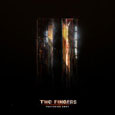
Two Fingers Two Fingers

This debut from Brazilian icon Amon Tobin and collaborator Joe “Doubleclick” Chapman takes psych hip-hop one step forward. A quick listen could prompt suspicions that the duo scanned the Cliff Notes for Timbaland, but the acid-melted percussion and fluid rhythms recall Tobin’s ’00 masterwork, Supermodified. “What You Know”’s clanging Middle Eastern beats resemble those of the Tobin oldie, “Saboteur,” while the closer, “Moth Rhythm,” is electro-fried funk at its galactic best. Yet the album’s true centerpiece is MC Sway, a North London rapper whose deft vocal acrobatics occasionally slip words off his tongue faster than the mind can process them, as heard on “Not Perfect.” Two Fingers just might be taking hip-hop into the ’10s.

Inbox: Au Revoir Simone

Sure, we’re always curious to know about an artist’s upcoming release, most recent tour, or arsenal of analog gear, but XLR8R‘s also got a curiosity for quirk. Thus, each week, we email a different artist and find out what makes them tick, in the studio and in life. Now, if anyone has a story or two from life on the road, it’s Au Revoir Simone. Bandmembers Heather D’Angelo, Erika Forster, and Annie Hart have spent the last two years on tour, an experience that’s shaped their forthcoming full-length, Still Night, Still Light. The ladies were nice enough to sit down and write us a few anecdotes that involve singing policemen, adventures in Denton, TX, Italian toilets, and the loss of some very prized possessions.

XLR8R: What are you listening to right now?

Heather D’Angelo: Silence. I just got back from SXSW and my ears are taking a well-deserved rest.

Erika Forster: Frida Hyvönen’s Silence is Wild. It’s the most beautifully composed, performed, and produced album. Seriously brilliant.

Annie Hart: Uninhabitable Mansions, A Faulty Chromosome, and Slow Club, amongst a smorgasbord of others.

What’s the weirdest story you ever heard about yourself?

HD: I heard that I came out of a bathroom with my skirt tucked into my pantyhose. Which is weird, because I have no recollection of that wardrobe malfunction at all.

EF: Someone forwarded our band’s Wikipedia page to me because there was an entry saying I was rumored to be dating an avant-garde British fiction writer (whom I had never heard of). There was absolutely nothing on Google about this person and then the entry disappeared a few weeks later.

AH: What’s the weirdest story I haven’t heard about myself? I have a pretty bad memory for events, so a lot comes up years later at parties, when people are talking about me, mostly in the boys-I-don’t-remember-making-out-with-in-college department.

What band did you want to be in when you were 15?

HD: At 15, I think it was a tie between Deee-Lite and Smashing Pumpkins.

EF: Anything psychedelic and ’60s.

AH: The Brentwood High School Green Machine. I was a band nerd and getting into [a] marching band was my dream. That uniform, that hat, the glory. Years later, the pictures leave much to wonder about why I thought it was cool.

Worst live show experience?

HD: We played from inside of a cage in the middle of a rollerskating rink. You should visualize that before I continue with the story. Anyway, all of our instruments shorted out because there wasn’t enough power to handle our massively manly keyboards, so all we could do was just feebly plug and unplug things with the hopes of getting things working again, while a pack of pissed-off hipsters skated circles around us in silence. It was like a nightmare.

EF: I was sick as a dog on our first headlining tour in Europe. The night we were in Hamburg, I could barely sing and I kept running off stage to cough and gather lozenges.

AH: I had a whole paragraph written about the skating before I read Heather’s [response]. I guess it was really traumatic for us all!

Favorite city to play in?

HD: There are too many! But I guess I’d say Tokyo, because Tokyo = Blade Runner.

EF: Lisbon. The audiences in Portugal are so full of love and we have some great friends I always look forward to seeing.

AH: My favorite shows happened in Cleveland, Paris, Dublin, San Francisco, everywhere we’ve played in Portugal, Chicago, Malmo, and Vancouver. Those places have fans that really let go, sing along, and give lots of love. That makes me feel so good about the world and the oddball decisions I am making in my life.

Your many travels over the last couple of years have played a big influence on Still Night, Still Light. Do you have a particularly exciting or weird story from the road?

HD: Annie dropped her in-ear monitors in an Italian toilet. That was one of the grosser/weirder moments of tour. But really, there are too many stories at this point. We should write a book one day.

EF: We were eating falafels outside of our van in after a show in Barcelona on the last night of a tour and a very crafty thief managed to steal my purse from the backseat of the van, even though we were all standing right there and the doors had only been unlocked for a few seconds at a time. I felt [like] a victim of a cliché, but it turned out that the police were equally sharp. In the middle of this giant open square there was an incredibly handsome cop waving at me from afar. He had my passport and called me Colorado. Our sound engineer, Caroline, came with me to the police station where i filled out some papers. They found out i was “a singer” and I was persuaded to sing to them. Pretty soon, we were all singing Beatles songs aloud and I was given a giant bouquet of, like, 4 dozen roses [and] carrying them around like a pageant winner. We were waiting there forever, but totally drunk on the bizarreness it. It all felt so choreographed.

AH: We’ve had so many nutty experiences running around the world. One of the most triumphant happened on our way to Denton, Texas. Erika, her friend Mallyce Miller, and I were driving to meet Heather, who flew in from L.A. About 80 miles outside of Dallas, our van broke down on the side of the highway in the hot sun. We managed to enroll in Triple A, get towed by the friendliest Texan in Texas, who [drove] us for miles until we found a proper mechanic, who was closing in 10 minutes and happened to have a random old minivan he let us rent for the night. As the sun was setting, we sped as fast as we could with all our gear wedged on the seats and in our laps to a fretting Heather in Denton and made the show! Insert triumphant horn melody here. Oh, and those in-ears? I returned them to Guitar Center and got new ones, no questions asked!

What is your favorite thing you own?

HD: My boots! I’ve worn them nearly every day since I got them. There’s a hole near the toe now, and the laces are broken, but I’m still in love with them.

EF: My new MacBook.

AH: I really like all my new plants I got to spruce up the house. I’m halfway to making the apartment feel like a jungle.

Name one item of clothing you can’t live without.

HD: Underwear? That would be pretty hard.

EF: Summer Dresses.

AH: Well, if we did a tour of nudist colonies this would be a moot question, but since we’re in the real world, I’ll say a really good bra. Especially for stage.

Do you have a favorite song on the new album?

HD: No! They’re like our children! (Actually, yes, I’m quite fond of “Only You Can Make You Happy,” because it was one of our more ambitious ventures)

EF: “Tell Me.”

AH: Hmmmm. Hrmmm… I definitely like some more than others, but I think the song I am most proud of is “Tell Me.” And it’s a blast to play live. Or, wait, I also really like “Knight of Wands” and “Only You Can Make You Happy.” I could keep going, but I guess the short answer is clearly, “no.”

What did you always get in trouble for when you were little?

HD: Talking too much/not paying attention. Also, I once took off my closet door and used it as a catwalk by laying it bridge-like between my bed and dresser. My mom was none too pleased about that one.

EF: I was shy and didn’t really own up when I broke or messed things up, so I guess I got away with a lot. But once, I got in sooooo much trouble for coloring on the floor, because the markers went through paper and colored the glossy white wood floor of my sister & my bedroom. We never painted over it, and then we moved. It really wasn’t that tragic.

AH: Staying up to late and reading. I was always reading under the covers with a flashlight or by my nightlight. And I wonder why I have to wear glasses now.

What other artist would you most like to work with?

HD: Bjork. Sigh. One can dream.

EF: Bjorn Yttling.

AH: I want to be in Matt and Kim. Matt, Kim, and Annie. Come on, please? My answer is the only one that didn’t start with “Bjor.” I’m clearly an outsider.

What’s the last thing you read?

HD: Yikes. Honestly, the Twilight series of books. I swear, I do read more demanding literature than that.

EF: I’m reading Miranda July, and also a book called A Pride of Lions, about some of my ancestors.

AH: I just finished the April issue of Glamour that someone left in my seat-back pocket. As far as serious stuff, I am jut about done with The Omnivore’s Dilemma. It’s good, but I was pretty heavily involved in the animal liberation movement, so a lot of it is more “News from the Obvious Department.” That said, I’m really glad it is out there and a bestseller. More people should be educated about our messed-up [method of] food supply.

Complete this sentence: In the future…

HD: We no longer say “yes.” Instead, we say “affirmative”

EF: We’ll rely on renewable energy.

AH: It will be the year 2010. That year is going to be awesome. I can feel it.

Stupidest thing you’ve done in the last 12 months?

HD: I made some poor investments in the stock market. We don’t need to get into that.

EF: Well, not listening to my instincts in general, but the other night, coming back from a show in my neighborhood, I started talking to some acquaintances on the street who were watching some other people yell at each other. A fight broke out and someone pulled out a gun and we all ran away, but I really didn’t need to be loitering around there.

AH: There [have] been a lot, but what I most regret is losing my perfect notebook filled with notes on how to play every song on [the new] record. It’s gone! It’s somewhere in Hong Kong. My stomach is still in knots about it.

What’s next?

HD: I’m headed out to the Boston Science Museum to watch some IMAX movies. After that, a nap!

EF: I’m spending five days in Hawaii to visit my mom, then back to the practice space and touring, touring, touring.

AH: Using all my frequent flier miles and tracking down that darn notebook.

Still Night, Still Light is out May 19 via Our Secret Record Company.

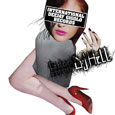
DJ Hell CD Eleven

While the International Deejay Gigolo imprint may be forever tied to notions of electroclash, head honcho and Berlin veteran DJ Hell continues to press on and take the label back toward his techno roots. While the tracks presented on CD Eleven undoubtedly bear traces of electro, the double-disc compilation is a surprisingly deep and measured affair. Sure, artists like Motor, Seelenluft, Fetische and Me, and Hell himself will drop in their fair share of squelchy synths, but the music never feels theatrical or over-the-top. The second disc is particularly tasteful, at times even dull, prompting thoughts of whether IDG would be better served by letting just a tad more of that old partying spirit back into its tunes.

The Prodigy: Fire Starters

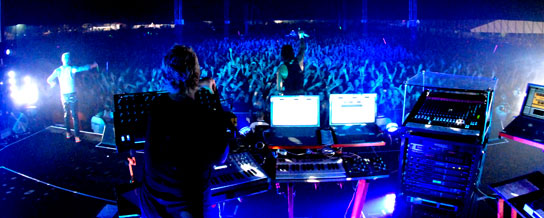
Excerpts from our interview with Liam, Keith, and Maxim of The Prodigy.

XLR8R: Liam, when you first started The Prodigy, did you not want to be the one in the front of the stage? 

Liam: When we started, we were all kind of equal and our personalities allowed us to push forwards or back or whatever. But I’ve always been, like, sort of the mad controller. Even when I was into hip-hop, I was into that idea, more of the DJ thing. I always visualize myself, if I was in a traditional band, as the bass guitarist or the drummer or something. I’m not a frontman. With his personality and the way he is, Keith is a natural frontman, he’s a naturally flamboyant… kind of lunatic. It wasn’t ever a competition to see who could be in front. That became more and more obvious as time went on. 

Seems to me the foundation of all the albums is the same thing. 

Liam: Even though people have said we have reinvented ourselves, I don’t believe we ever have. I think we’ve always done the same thing. The foundation is the drums and the bass and the energy behind the music. When we were doing this record, we felt like we were comfortable enough as a band to kind of go “Yeah, this is us. We’re happy with where we come from—our rave roots and culture. We kind of look at some bands and they’re kind of trying to change all the time. That makes them look like they lack confidence in what they’re doing. Definitely on this record, going back to looking at our first two albums was a natural thing that happened; that whole early rave sound—we own that. That’s in us. That’s always been there in all our music, but it’s pushed forward more on this record. I don’t think we’ve been a band to move with the times. Maybe some of the production might get slightly influenced by what’s going around, but I’d hate to think it had an effect too much on the ethics of the band. It’s really important for us to remain focused on what we do and keep that strong instead of doing a weak version of something else. 

How was the process of the last album, Always Outnumbered, Never Outgunned, different than this one. 

The previous one I started in a house and messed around for three or four months with producer Neil McLellan. I had bought this place in Essex, it was very cut off from everything. Neil called it the castle. It was totally isolated. It was just us two fucking lunatics in the house rattling around. Funny thing happened, though. We used to sit in the studio all day. He had his computer and I had my computer and we’d just be throwing ideas around and I’d be like “I’m going to bed man. Give me a bottle of wine, I’m just going to go watch James Bond or something.” I’d go in the bedroom and all of a sudden I’d think, “I’ve got to go write a tune now.” So all the tunes were written in the middle of the night. I’d come back in the morning and Neil would be like “What were you doing last night man?” because he was staying in the little spare bedroom next door and could hear me in the bedroom all pissed up dancing around.

Does it make a difference where you write the album?

Liam: I think a studio’s got to be throwaway. I’ll never have a studio in my house ever again. It’s a bad idea. I bought an expensive studio for my house and didn’t really do fuck all in there. Plus I like the fact that the room [we made this album in] is really small. It’s like a bedroom. It’s what I need. Totally back to basics. 

Keith: Plus you don’t get loads of people hanging out…

Liam: That’s the trouble with the room downstairs. It became a massive party room. When we were drinking quite a bit. We’d just go down the pub. We’re in Ladbroke Grove so it’s quite a mad area with a lot going on.

The thing about this record is we’ve come out of a time when it was the bad time for the three of us. It feels like we really fought to make this record the best record it could be. That’s the only way you can make a good record. After you’ve had a big record it’s very difficult to drum up the hunger. It breeds laziness. After fat of the land id idn’t want to be lazy but I was fucking content. I wasn’t pissed of about anything. I was like “hey, everything’s beautiful.” 

I got to say its really triumphant. I always equate it of being like over the last five years of what we’ve been through. The down period and coming back and doing always outnumbered I’ve always wanted to have a next album. Actually going through the writing period of this album and the eagerness of wanting this album to be finished and then once actually having the album done. Its definitely a product of the last five years.

Production-wise, what do you usually spend the most time on? 

Liam: I usually find the initial brainstorm of writing an idea and lyrics and stuff happens straightaway. Once it’s pushed it’s never as good as the first idea, the pure idea that comes out straightaway. When recording Keith and Maxim, especially Keith, we always use the first couple of vocal takes. I think the finishing stage takes the longest—getting the record sounding how I want it to sound. The way I used to work, I used to finish a song, produce it, and get it all sounding good before the vocals but this record we got all the ideas out and I went back to the songs and made them sound good later.

Do you ever use any of the same gear you used on your first album?

Liam: I’ve got the keyboards that we used from day one. The old analog shit. The Moog Prodigy, a Roland W30. I stopped using that because a lot of people were using it and it’s got a very recognizable sound. I still use the SP12 for drums, that’s definitely got a certain sound in the swing of the beat that’s fucking good. If you’re a producer and you really know what kind of sound you want it’s easy to get that sound using other equipment. You can get a bit lost in the “Oh I’m going to go back to fucking use a memory Moog because that bass sound sounds really warm.” That’s bollocks. There’s things out there that can make better noises and the same sounds. I think it’s a nostalgia trip, but it doesn’t really make a difference. We got a guitarist who played on the record using AC-30s because I like that traditional punk rock sound. Most of the other distortion on the albums was the Unboys plug-ins from France. They’re the best; they’re insane. 

How much do you listen to underground dance music these days? 

Liam: All the time for production purposes. We can all learn off of each other. As records come out, I’m not interested in the songs—I mean, we’ve got songs covered—I’m more interested the sounds. I listen to a lot of hip-hop records as well; you can get a lot from that, n just how stripped down they are and how big a record can sound by having not a lot in it. 

Maxim: Music can be very minimal and yet the sound has a groove. It just goes to show you, on a musical level, you only need four or five elements in a tune to make it bang.

Liam: I never big bands up. I’m fed up with that. But my love for dance music has grown definitely over the last couple years. It moves slowly in different directions but it never seems to have a complete flip. When we started to record this album, we went back to all the early rave tunes that we were listening to in, like, 1990. They’ve got that really instant, raw production. If you listen to our song “Warrior Dance” on headphones its got clicks, it’s got glitches—not, like, fashionable glitches—it’s just got this really raw style. That’s what we like. That’s what we’re aiming for. 

Some great musical genres, like acid and grime, are super, super raw.

Liam: Yeah, it’s no different when I had the Roland W-30 workstation back in 1990. Just using the brain to use fucking 14 minutes of sampling time to its maximum potential. That’s the beauty of this music. It ain’t a bunch of posh boys in a studio with a bunch of gear. 

Maxim: Technology has gotten to the point where it’s like ‘I’ve got to buy that I’ve got to by this. You get to the point where you’ve got 20 or 30 pieces of equipment and you’re only using 10 percent of each. Whereas someone who has got one piece of gear really knows the ins and outs of it. It’s like that with the dancehall boys, man. It’s just pure minimal and it’s just massive. 

Have you ever gotten to a point as a band where you thought you needed to streamline things?

Liam: Yeah, the last album [Always Outnumbered] was…. not minimal, but very digital sounding. To be honest, that had a lot to do with the mastering. We went to New York to master the last record with Emily, who’s a good friend of mine. I love her to death and she’s one of the only female mastering engineers in the world that I know. Basically, she’s really talented but she does have a habit of pushing it too much and sucking all the warmth out of the bottom end. That record just ended up sounding very digital, and quite hard to listen to it all the way through. 

Maxim: I think there’s a difference in the way they master music in America to the way they master it here. It’s a loudness war. 

Liam: On this record we actually went back to New York to see her and I said ‘Please don’t master [Invaders Must Die] like you did the last record. Imagine you’re cutting it to vinyl and do it a bit quieter so you get a bit more depth because this record is a lot more like Fat of the Land in its bottom end then the previous record. The end result was that it didn’t sound good so we ended up ditching it and doing it in London instead. I listened to it now just to compare: Emily’s one is louder but our record has got a lot of bottom end and it’s big. It’s a shame but that’s just the way it goes. 

How do you feel when you listen to your first album, The Prodigy Experience?

Liam: On edge! Like that. (grits teeth) Slooww down. Fucking hell. 

Maxim: It’s so fast, innit? But its just a reflection of the time. 

Liam: It’s just a snapshot of the rave era at that time. It’s funny because we didn’t want to do an album. Doing an album at that time was like selling out. It was the worst thing you could imagine. So by the time we got in the position to do a record they were like, “Okay, we’ll put ‘Everybody in the Place’ on it, and ‘Charly.’” And I was like “No! I’ve got to remix everything. I’m not putting any of those tracks on as they were.” I felt like it was a bit of a rip-off that people buying the album would have already had those tracks. 

Tell me about your first gig.

Liam: It was at Labrynth at the Four Aces in Dalston. I met Maxim for the first time at the gig. We’d literally formed a couple weeks before. We formed over the phone. I remember I was on an E in The Barn, and Leeroy came up to me and was like “I heard your demo” ’cause I had given Keith a demo a couple weeks before with one side of my music and one side of my DJ set. We saw a lot of bands in those days, like Adamski and the early rave acts. Leeroy was like, “Man we could fucking bust it up up there with your tunes. We could fucking front it, it would be wicked.” And I was like, “Yeah, let’s do it.” So we started and we literally had a friend who was our manager, loosely… He knew lots of promoters and he was like,“Yeah, I got you a gig in Dalston.” I don’t know if you know that place, but it’s a pretty dark part of London. 

Was it nerve-wracking? 

Maxim: I was buzzing being on stage.

Keith: I remember turning up early and there were all the bits of gear and wire around. The sound system was crazy; it had this cable that went across the roof and went up high across the DJ booth. I remember asking Joe, the guy whose club it was, “What other bands have you had here?,” thinking he would say like, the Sex Pistols or something. And he was like “We don’t have bands. Well, we did have one once but they got chucked off the stage and we just didn’t have bands after that.” 

Liam: I think it was easy to play a lot at the beginning because people were just up for it. You’d play a beat and people would be like “Aaah.” (screams) For me, it didn’t really come together until the second wave, like 1993. We were deadly serious about our music. As we traveled the country, it became obvious to me that things were so far away from what they were in the beginning. We had a gig in Scotland and I remember I’d had enough at that point. It was obvious that I could just play just a beat, any beat, and people would go crazy. And I was kind of bored of it really. That was when we went to America for a month and a half to take time off. We came back totally changed. We still loved the rave scene but in England the Criminal Justice bill was creeping in and we were like “Well, is that it? Are we a band now?” I got this whole new expression in my head that had almost nothing to do with what was before. 

Do you think it helped you when you started playing stadiums that you had a lot of experience playing to crowds at raves? 

Keith: With raves we did have the good fortune of stepping on the stage weekend after weekend. Friday would be the banging night, and by the time we’d finished he was like “You’ve got to be back here on the Saturday.” Between that week where we we first played and the next Saturday, at Labrynth, we were fully booked for the next three months. And after that we were booked from there on. 

Liam: We were going on stages in front of 10,000 people straightaway. 

Keith: In respect to that question, certainly playing at three in the morning in really dark clubs is not the time when there are a lot of people there to help you out. People were getting stabbed and it was fucked. We were still completely under the radar as far as the press and becoming the darlings of the music magazines. We’d played for hundreds of thousands of people before anyone knew who we were. There was nothing intimidating about any of it. When we branched over into more of that rock scene, we basically had to start again. We had done raves playing in front at least 5,000 people every time and then we had to go back to doing universities and college parties. 

Where did the punk influence come in? 

Liam: None of us were around in the punk era, but punk didn’t end in 1979. Punk in its aspect and its spirit lives on in all aspects of music. Like in ska music and the aliveness of it and the attitude of it. We don’t draw on any direct influences. I mean, Keith was into The Jam. That was the first band that he was into, and they were punk, but it ends there really. Punk isn’t a word I really like. 

Maxim: It’s more of a belief and where you are at, rather than a style. 

Liam: We always took something from everything. We like to think that we were kind of slightly outside of always what was going on in the dance scene. We really pushed the beats thing when no one else was doing it. To us, that was being individual and doing something different. 

Keith: I think its also part of the makeup of who we are from growing up, and the display of Britishness. 

Liam: I was thinking the other day about how something that’s so obviously trying to be punk is so far away from punk rock. Like the band The Offspring. It’s so in their heads that they think they’re punk but they’re so far away from that. 

Keith: At the end of the day, it ends up just being are you a good band or are you shit? Green Day, fucking good band. Offspring: Shit. So there you go.

Lotus Plaza The Floodlight Collective

Although Deerhunter frontman Bradford Cox’s oddball antics may snag all the headlines, much of the band’s signature swirling reverb can be traced back to guitarist Lockett Pundt. The Floodlight Collective is Pundt’s debut solo album, and Deerhunter fans will be delighted to know that Lotus Plaza is powered by a similar brand of shoegazing psychedelia. Yet this is much more than a retread—simply put, The Floodlight Collective is a gorgeous album filled with seemingly endless melodies that glide, drip, and melt into one another. While Pundt does sing on the record (quite nicely), his vocals are often purposely buried in the mix, ultimately registering as just another harmonic hum in a warm sea of spacey pop sounds.

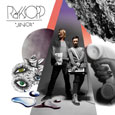
Royksopp Junior

The third proper album from Svein Berge and Torbjørn Brundtland is, conversely, both a disappointment and a joy. Though Junior feels like an album that will improve with play, it undeniably lacks the poise of its predecessors. The inclusion of three Swedish female vocalists—Lykke Li, Robyn, and, most successfully, The Knife’s Karin Dreijer Andersson—alongside frequent Norwegian collaborator Anneli Drecker is perhaps a misstep, an over-egging of a pudding. Nevertheless, the album is still largely a delight, as the duo reconfigures the influences they demonstrated on their Back to Mine mix album (Mr. Flagio, Kasso, Pino D’Angio) into a brash, anthemic, and contemporary European pop album.

Page 2742 of 3781
1 2,740 2,741 2,742 2,743 2,744 3,781