Glitch Mob, Busy P Join Movement 2009

No less than 25 more artists join the lineup for the previously announcedMovement 2009 festival, which will take over Detroit’s Hart Plaza from May 23 – 25. The longtime electronic music festival is both a multi-day and multi-genre affair this year, with dubstep star Benga, electro producers Busy P and Krazy Baldhead, and future-blappers Glitch Mob joining Ellen Allien, Flying Lotus, The Prodigy, and Steve Bug.

According to Jason Huvaere, president of Paxahau, who organizes the festival, the 25 additions to the bill make up most of the remaining artists scheduled to perform, but it’s likely one or two more will join the list over the next few weeks. Stay tuned, and in the meantime, pick up a weekend pass, now going for $40.

Additional Lineup:
Al Ester, Anthony Attalla, Anthony Rother (Live), Benga, Busy P, Chuck Gibson (a.k.a. Perception), Craig Gonzalez, Delano Smith, Drumcell, Exchange Bureau (Live), Glitch Mob (Live), Henrik Schwarz, AME and Dixon Present Innervisions Live: A Critical Mass, Jay Denham, Kevin Reynolds (Live), Krazy Baldhead, Lusine, Marc “MK” Kinchen & Scotty Deep, Mieka du Franx, Mike Clark, Neil Landstrumm, Nic Fanciulli, Nikola Baytala, Octave One, The Sight Below, Will Webb

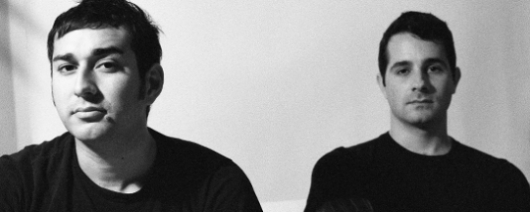
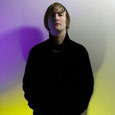
Pictured: Glitch Mob.

Odd Nosdam and Jel “Tune in an Afternoon”

Amazing what a trip to the junk store can get these days. XLR8R armed anticon. co-conspirators Jel and Odd Nosdam with 40 bucks and challenged them to come up with a track in a single afternoon, made solely from records they found at a shop in West Berkeley, CA. The result, the aptly titled “Tune in an Afternoon” is a beat-heavy breeze—hazy, psychedelic, and perfect for a summer afternoon.

Watch XLR8R TV Episode 102 to see Jel and Odd Nosdam shopping, sampling, and discussing the creative process behind the track.

Jel and Odd Nosdam – Afternoontune

Artist Tips: Telefon Tel Aviv

Immolate Yourself, the latest from Chicago’s Telefon Tel Aviv, is a notable departure from the band’s previous post-rock leanings. Released this past January, just days before bandmember Charlie Cooper’s untimely death, the record finds TTA letting go of their trademark wandering guitars and icy programming. Instead, analog synths and tape loops tend to take up much of the space on this nearly danceable, beat-driven debut for BPitch Control. We talked to member Joshua Eustis in early January about some of the record’s integral components.

Arp Solus synthesizer
This synth is so underrated, it’s a joke. They are getting more expensive now, because people are catching on that it’s basically a monophonic Odyssey, or a two-oscillator version. It has a digital ring modulator, which is totally radical for the Dopplereffekt/Elecktroids vibe. I use it more for really warbly melodies, like on “You are the Worst Thing in the World.” It doesn’t stay in tune very well, but it has become a really beautiful part of its character. Just let it warm up for 20 minutes prior to use.

Oberheim Xpander synthesizer
This is the six-voice VCO analog synth to end all of them. The voices can operate in stereo as well, which is great. It makes pads more lush than any piece of software has to date. It also makes the most evil 16th-note Giorgio Moroder basslines of death. It is a classic, warm, gigantic, vintage beast. Think Violator by Depeche Mode.

Otari MX5050BII tape recorder
This is our two-track, 1/4-inch mixdown deck. Marc Hellner of Pulseprogramming gave it to me on the condition that I would mix his record on it. This thing changed the entire way that we work, and gave us a real physical way to get into sound manipulation in a very old-fashioned, almost classical way. Aside from the fact that we mixed our record down to tape for the master, we’d make tape loops of drums and run them against themselves, slightly slower or faster, and make this kind of Steve Reich phasing thing happen, as on “Your Every Idol,” for instance. It’s not delay making the drums flam and freak out—it’s two tape loops, one slightly faster than the other.

Roland Jupiter 6 synthesizer
I drove out to Bumfuck, Missouri and picked this up off some crazy monster-truck-type guy. I almost electrocuted myself when I reached back to unplug it. The guy had some crazy rigged-up wires attached to it for the power cable. Although it almost feels like a toy to program, it’s really very versatile. You can make amazing string patches, like the one on “Your Mouth” or the bass patch on “Immolate Yourself.” You can also make amazing rave patches and massive Hoover bass sounds.

Arp Omni II synthesizer
We always dreamed of having an Arp string synth. We loved the string sounds on the old soul records, usually made on an Arp Solina—really fake and phase-y sounding. A bunch of bands like Tangerine Dream and Duran Duran used this guy. We used it throughout the record but it really stands out on “You are the Worst Thing in the World.” This thing has no MIDI programming capability and the keyboard plays like its made out of wood.

MP3: “The Birds”

Dan Deacon Bromst

Named for the rolling percussive sounds present throughout the record, Bromst is Dan Deacon’s ambitious follow-up to his 2007 spaz-party breakout Spiderman of the Rings. Determined to part from the “wacky” tag that has doggedly followed him since, Deacon employs a widened instrumental palette and mature sonic arrangements that build upon drone-y passages and Steve Reich-esque ambient textures. That works on grand, slow-building pieces like opener “Build Voice,” but too often Bromst feels stuck between this new approach and the caffeinated outbursts of Deacon’s prior work, making the record feel disjointed. Ultimately, Bromst isn’t a complete about-face or Deacon’s Kid A moment; instead it reveals an artist in transition, admirably trying on new ideas to mixed results.

Claro Intelecto Warehouse Sessions

Over the past three years, Manchester’s Mark Stewart (a.k.a. Claro Intelecto) has been releasing a steady stream of lovely dub techno. Last year’s Metanarrative floated in on a rain cloud with its lush pads, whispers, and ambient passages. Yet Stewart has also been pumping out a series of Modern Love 12” singles devoted to hard-as-nails warehouse music. This CD neatly collects those six volumes alongside one new track, documenting a love of classic techno. Though melody is largely removed from the equation, each track is a sublime crusher colored by layers of subtle funk and pummeling bass. Warehouse Sessions is one intense album—“New Dawn” could have soundtracked the last 15 minutes of Terminator 2.

MachineDrum “Late Night Operation Feat. Theophilus London”

The ever-prolific Travis Stewart is back with yet-another album as MachineDrum, and if you’re not familiar with that particular moniker, think pop-drenched hip-hop that’s been run through the synthesizer a few dozen times and given a finishing touch by someone like Daft Punk.

“Late Night Operation” appears on Stewart’s forthcoming album, Want to 1 2, which will drop on Normrex in 2009.

MachineDrum – Late Night Operation

Contribute to MUTEK at Fundraiser

A flailing economy doesn’t mean all festivities and fun must cease, it just means one has to be a little more creative in generating the means to hold said festivities and fun. Hence, MUTEK‘s first-ever fundraiser, which will aid in gathering money to support the festival’s 10-year anniversary event.

“Given the current economic climate, we believe that a diversification of revenue sources is necessary if we are to fully realize all of our ambitions,” the company stated in a recent press release, before putting aside fancy economics lingo and inviting fans to head over to the Agora Hydro-Quebec Cour des sciences on Wednesday, April 8. Attendees will be privy to a premiere performance of POWER, a film specially commissioned for the 10-year anniversary, which they may watch while ingesting top-shelf wine and snacks.

Tickets are $250 each. Purchase them via the MUTEK site. For those wanting to help but nowhere near Montreal, visit the same location to donate some cash to the cause.

Dan Deacon “Red F”

Dan Deacon‘s Bromst, finally out today, is right up there with Animal Collective’s Merriweather Post Pavilion in terms of pre-release hype, and it’s a safe bet that half the people reading this have already heard the former in its entirety. For those who haven’t, “Red F” is the second track off Baltimore DIY ringleader‘s new album, for which he employed a 15-piece band to assist with the musical orchestration. Photo by Josh Sisk.

Dan Deacon – Red F

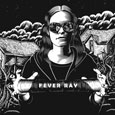
Fever Ray Fever Ray

Hiatuses just don’t work for everyone. After The Knife’s Silent Shout exploded and became one the most celebrated albums of 2006, the brother/sister duo of Olaf Dreijer and Karin Dreijer Andersson were supposed to take a break. After all, Andersson had her second baby on the way. Apparently, she didn’t get the message because she just kept on writing, eventually winding up with a batch of songs that would become Fever Ray.

Not surprisingly, Fever Ray isn’t a grand departure from The Knife. Andersson’s otherworldly vocals, and the litany of effects used to make them sound as alien as possible, continue to haunt her solo debut. Fever Ray’s stark, gothy synths certainly sound familiar, as does the occasional flourish of traditional rock instrumentation. Given that half the album was produced with the assistance of Knife mixer Christoffer Berg (the other half was produced by fellow Swedes Van River & The Subliminal Kid), the sonic similarities aren’t exactly shocking.

That said, Fever Ray is no retread. Where albums like Silent Shout and Deep Cuts were grandiose, genre-defining efforts, Fever Ray is decidedly restrained and downbeat. Listeners won’t find any high-energy techno flirtations here—Fever Ray is more like The Knife on Quaaludes. Lead single “If I Had a Heart” features a humming synth, virtually no percussion, and vocals that rarely rise above a growl. Another icy number is “Concrete Walls,” whose ominous vocals have been pitched down and warped to a point where they barely register as human. Similarly spooky is “Dry and Dusty,” although the track’s lilting melodies and plinking beats do manage to pick up the pace a little bit.

While all this may lend the impression that Fever Ray is some sort of dour mope-fest, some of its best moments happen when Andersson dials down the emotional detachment. Where The Knife’s experimentation with processed vocals only enhanced their eerie aesthetic, Fever Ray shines brightest when Andersson sounds more human. “Grow Up” is downright emotive, with the vocals soaring alongside a plucky bassline and playful keys. “Seven” could be mistaken for a lost ballad from Madonna or some other ’80s dance queen, while the chiming synths and swirling melodies of “Triangle Walk” sound like something Siouxsie and The Banshees would have dreamed up. A truly unexpected delight is “Keep the Streets Empty for Me,” a sonically stripped-down offering that easily qualifies as the most organic thing on the record. With its gently strummed acoustic guitar, untreated vocals, and simple arrangement, the song recalls the more delicate moments of someone like Polly Jean Harvey.

Comparisons to other artists aside, it’s all but impossible to examine Fever Ray without looking through the prism of Andersson’s previous output. While she may have scaled things down in terms of scope and set the sensor to pensive, Fever Ray retains real emotional heft. Andersson knows that storming the dancefloor isn’t always necessary; sometimes it’s fun to play it cool and twirl quietly in the corner.

Page 2744 of 3781
1 2,742 2,743 2,744 2,745 2,746 3,781