DJ Koze Reincarnations: The Remix Chapter 2001-2009

“Hi friends, how are you?” introduces the vocodered voice of Kompakt mainstay Stefan Kozalla. “I am DJ Koze and I am sitting in my studio in Hamburg, drinking red wine, collecting my best remixes for you. For those that like this kind of music, the music is very good.” But this is understatement, as this (overly truncated) collection of Koze’s reworks of other people’s tracks is not merely “very good,” it is a thing of beauty. Applying his idiosyncratic worldview to music from the likes of Lawrence, Heiko Voss, Wechsel Garland, and Ben Watt, Kozalla finds splendor in pummeled cowbells, filtered disco effects, and mangled voices. Crucially, Koze’s anything-goes approach circumvents wackiness, instead producing heartbreaking works of staggering genius.

Zombi Spirit Animal

Despite its home on metal powerhouse Relapse, Pittsburgh duo Zombi is all vintage synths and prog theatrics. The group’s sixth release, Spirit Animal, is perhaps its most sprawling, building sci-fi epics from deep synth tones and sprawling arrangements. The title track opens on a strong note with a slow build, which nicely segues into the rhythmic pulse of “Spirit Warrior.” “Earthly Powers” follows suit with some laser-like riffs and arena-rock drumming, while “Cosmic Powers” is menacing like a tricky NES level. Zombi wraps up the album on a grand scale with the heavy 17-minute epic “Through Time,” perfectly capping a killer batch of heady, spacious synth jams suitable for stoners and wizards alike.

Videogames Seeing Red

The Wii has certainly left its cuddly white mark on the videogame industry by outselling both the Xbox 360 and PlayStation 3 by a healthy margin, making the two more powerful systems look anemic in comparison.

Despite its astronomical sales, the Wii is known more for its waggly controls and its droves of mom-friendly shovelware than it is for an abundance of stylish or mature-themed titles. The Wii could simply not been viewed as the machine for the hardcore. Until now…

Mixing the dystopian über-violence-cum-entertainment vibe of the “running man” with a graphic-novel-in-motion aesthetic (where the only color you’ll see is that of the gallons of crimson spilled by the game’s many eviscerations), Sega’s MadWorld gives the Wii its most visually aggressive, hard-edged title to date.

Taking on the role of Jack, a brutish mechanic with a chainsaw arm, you compete in twisted game show called Death Watch, run by a group of terrorists known as The Organizers who have taken over your fair city. Getting rid of the many enemies chasing you down in a variety of ways is the name of the game here—from ripping them in twain and hurling them into walls of spikes to straight-up decapitation to smacking them into a giant dartboard with a baseball bat. This ultra-violence in turn entertains the onlookers, who are betting on your success. The more you please the bloodthirsty viewers, the more options open up to you.

“There are no games like it on the Wii right now,” says Executive Producer Atsushi Inaba of developer PlatinumGames, “so we thought it would be exciting to make it for the Wii for that very reason. We think we were able to make a game that stands out on any platform but the fact that it’s a Wii game makes it that much more surprising.”

While the violence is over-the-top and satisfyingly visceral, it’s MadWorld’s art style that really set’s the game apart. Looking like an interactive version of Frank Miller’s Sin City (or even the video for KMFDM’s industrial dance classic “A Drug Against War”), MadWorld really sets the paradox bar high for both minimalist color palette and outright visual mayhem.

“We had no intention of going with a realistic art style,” says Inaba. “That wasn’t the kind of game we wanted to make. In order to portray violence that was too over-the-top to be real, we went with a Western comic-book motif. In addition, we included the black-and-white element that’s not seen in games.”

While it may seem that a purely black-and-white game would lack depth and be difficult to play, Inaba explains why PlatinumGames went this route: “Visual impact is the main reason. Fun gameplay alone isn’t enough to draw people in—the art style is important, too. Initially, our thought was that it might make the game a little more difficult to play… but as we worked on the game, we took steps to make sure the game was still easy to play, such as adjusting the way we show the backgrounds.”

With balls-to-the-wall gameplay, a unique aesthetic, and a hip-hop soundtrack to boot, MadWorld is sure to burn a brand on the brains of Wii owners thirsty for something meatier than carnival games or yoga in 2009.

A History of Violence
While there may be a dearth of original “hardcore” titles for the Wii, Nintendo is no stranger to stylish violence on their systems. Here we take a look at some past releases aimed at quenching Nintendophiles’ more base urges.

Mortal Kombat
(Midway, 1993)
When the first Mortal Kombat appeared on the Super Nintendo, the company decided that the blood and fatalities would be too much for their fans and had it removed. They were sadly mistaken—the uncensored Sega Genesis version was widely considered superior when both were released in 1993. Nintendo wouldn’t make the same mistake twice; they allowed Mortal Kombat II’s digitized gore to go untouched a year later.

No More Heroes
(Ubisoft, 2008)
Cel-shaded graphics, an outlandish story, and plenty of ass-kicking via lazer swords and wrestling moves makes No More Heroes one of the more unique titles the Wii has to offer.

Killer 7
(Capcom, 2005)
As if taking on the role of a crippled, schizophrenic assassin were not wild enough, this Gamecube cult fave has your multiple personalities, including a Mexican wrestler or British albino, take on a group of mutant terrorists only to discover that you yourself are a god. WTF?

Resident Evil 4
(Capcom, 2005)
A risky departure from what came before it, Resident Evil 4 proved to be the most impressive Gamecube title ever in both style and substance. You battle crazed Europeans infected with some gross virus that makes heads explode. Get vaccinated before traveling overseas, kids.

Conker’s Bad Fur Day
(Rareware, 2001)
Inspired by South Park’s potty-mouthed tykes, Conker took the average cutesy squirrel and basically turned him into Andrew Dice Clay for the Nintendo 64 audience. He drinks beer, swears, pisses on things, chases tail, and fights a living mound of shit. Yet despite all the toilet humor, Conker was actually one of the best N64 games ever made. Go figure.

Manhunt 2
(Rockstar, 2007)
Undoubtedly the most controversial game to ever grace/shame the Wii, Manhunt 2 has you ruthlessly murder your would-be captors in a variety of gruesome ways, setting the bar pretty high for what is tolerable on Nintendo’s latest system. Unfortunately, it wasn’t that great a game.

Circlesquare “Hey You Guys”

Not all of the tracks on Circlesquare‘s recently released Songs About Dancing and Drugs are ones to which the feet naturally move, but this remix proves itself highly danceable. DFA’s Juan MacLean turned Jeremy Shaw’s original into an acid-drenched, tempo-changing number that will be released on an EP of the same name later this month (March 24). Hey You Guys will also include an instrumental version of the track and another remix, from Ed Banger’s Micky Moonlight.

Circlesquare – Hey You Guys (The Juan MacLean Remix) 1

Tanya Morgan “So Damn Down”

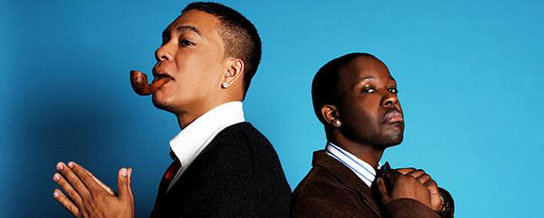
Today, Von Pea, Donwill, and Illyas (a.k.a. Tanya Morgan) unveil a first glimpse of their forthcoming sophomore album, Brooklynati (named after a fictional landscape the boys concocted). If “So Damn Down” is any indication, the new release is a soul-meets-hip-hop world with a distinctly classic feel to it.

Brooklynati is out May 12.

Tanya Morgan – So Damn Down

The Chap Launch North American Tour

Having released a very danceable third album last summer (Mega Breakfast), London-based pop foursome The Chap is finally hitting up the U.S. for its first-ever North American tour. The band plans to pass through the East Coast, Midwest and, in just a few days, Austin, for South by Southwest.

Check the band out here, talking and about Led Zeppelin and abusive venue owners. Then you can check them out live at one of the following venues (where they will hopefully have better luck with the on-site management):

Dates:
03/12 Lexington, KY – The University of Kentucky
03/13 Ann Arbor, MI – The Blind Pig
03/14 Hamtramck, MI – Throwbridge House of Coffee
03/15 Chicago, IL – Schubas
03/17 Forth Worth, TX – Lola’s Sixth
03/18 Austin, TX SXSW – Club 1808
03/18 Austin, TX SXSW – Mohawk
03/21 Austin, TX SXSW – Urban Outfitters
03/24 Atlanta, GA – Eyedrum
03/26 Poughkeepsie, NY – Matthew’s Mug
03/27 New York, NY – Le Poisson Rouge
03/28 New York, NY – Cake Shop

Tim Hecker An Imaginary Country

An Imaginary Country finds Tim Hecker exploring brand new tonal territory, not to mention some nasty emotional nether regions. Eschewing the trademark gnarled guitar streams of his previous work, he instead opts for a heavily processed Mellotron organ and a frosty sense of doom. The pace is quick, the melodies are distant, and the results are unsettlingly beautiful. It‘s as though the album was conceived of, written for, and performed alone in a Gothic cathedral… during a nuclear winter. Not that An Imaginary Country isn’t a lovely record—Hecker’s music has always been beautifully haunting. His latest offering only proves that he’s found yet another way to send a chill down our spines.

Fidel Nadal Crucial Cuts

Following a split from ska/punk act Todos Tus Muertos, Argentine reggae artist Fidel Nadal has gone on to release more than a dozen albums on the solo tip. On Crucial Cuts, Latin music imprint Nacional gathers some of his more notable work from the past decade to create a 17-song collection rife with relaxed riddims. While blatantly influenced by roots reggae on traditional-leaning tracks such as “Emocionado,” Nadal proves he has traversed the terrain of Latin and Afro-Caribbean music. On “La Puerta Negra,” Nadal taps into reggaeton, banda, and hip-hop for a curious concoction that actually works. For an alternative perspective on reggae, this retrospective is worth a listen.

Mi Ami: Wet and Wild

It’s a Saturday afternoon, and Daniel Martin-McCormick is using breakfast to describe his band, Mi Ami. “I love when you go out to breakfast and get eggs, toast, hashbrowns, and coffee. All those things fit together nicely on a plate,” he explains. “If you think about the way you would construct a song, bass, drums, and guitar are archetypes of frequency ranges and the way that sounds are made. The drums propel it, the bass holds down the low-end and locks in with the drums, and the guitar sits on top.”

As simple as that sounds, Mi Ami is actually very complex. Comprised of Martin-McCormick on vocals and guitar, bassist Jacob Long, and drummer Damon Palermo, the band builds post-disco jams that constantly shift, transforming into noise freak-outs and layered dub grooves. On their debut full-length, Watersports, the band drops hints of surprising influences like Arthur Russell, Ricardo Villalobos, and Manuel Göttsching, but also nods to African guitar music, post-punk, and free jazz. “It’s not that we’re beyond influence, because that’s a fucking preposterous and super-pompous thing to say,” Martin-McCormick admits. “It’s more about cultivating this conversation we’re having with each other than looking back at our old records.”

Martin-McCormick met Palermo when he was studying classical guitar at San Francisco State University. Both connected over a desire to bridge their loves of noise, disco, and punk. “I had this really good feeling [about meeting Palermo], kind of like when you first meet a girl and you’re like, ‘Oh, shit,’” Martin-McCormick recalls. “I didn’t want to come on too strong but I was pretty sure that it was going to be something awesome.”

They recruited bassist Jacob Long a year later. Martin-McCormick had previously played with Long in the proto dance-punk band Black Eyes, but felt limited by their compromised dynamic. “It was not a band that I feel like had a unified vision,” he says. “It didn’t have a strong clarity of purpose so much as a lot of energy coming from each member that wound up in the shape of songs.”

As a trio, however, Mi Ami has struck the perfect balance between collaboration and individual vision. That democratic ethos certainly pays off on Watersports. From the opening dub sound of “Echononecho,” through the messy-but-jovial guitars on tracks like “New Guitar,” the album showcases some familiar rock moves (the quiet/loud dynamic, pulsating dance moments, thrash excursions) as interpreted through the diverse perspectives of three very obsessive music fans.

Going to music school and studying heady, high-art compositions, Martin-McCormick felt the pressure to achieve. “I got really stressed out for a while because I thought I needed to be making masterpieces or making music that somehow represented the grand mystery of the cosmos,” he says. Rather than give up, he realized that he could pair his lofty ambitions with the immediacy and urgency of punk rock. “I think art is where you should have a bold, flawed, personal vision. The world doesn’t need any well-oiled art machines. We don’t need perfection. We need humanity and flaws.”

MP3: “New Guitar”

Reebok Teams Up with Kidz in the Hall

To celebrate the release of its new Classic Remix collection of updated classic footwear styles—a combination of “then and now” items from Reebok’s history—the famous shoe company is teaming up with a number of well-known and emerging hip-hop acts.

Each of the artists involved in the project, including the likes of Kid Sister and B.o.B., will re-interpret a song from the ‘80s for distribution with the new line of shoes. First up on the agenda are Kidz in the Hall, who will tackle the song “I Got it Made” by Special Ed. This and other songs in the series will be available to download by customers who purchase any footwear from the Classic Remix collection. Reebok will continue to add new colors and styles to the collection throughout the year to reflect the musicians involved.

Starting today, you can get your hands on a pair at any Foot Locker store, where the line is exclusively sold.

Page 2750 of 3781
1 2,748 2,749 2,750 2,751 2,752 3,781