eLZhi The Preface

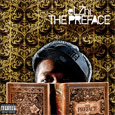
One of the most respected MCs out of Detroit and one-third of Slum Village, eLZhi lives up to the hype on his proper solo debut, The Preface. With a knack for wordplay, clever concepts, and a breathless delivery, eLZhi has skills that many MCs lack. On “Guessing Game,” he spits incomplete bars, testing listeners to finish the line before he does. The Preface is produced almost entirely by Detroit luminary Black Milk, whose crafty beat work evokes the ghost of Dilla with heavy bass and slapping snares. The disc is further enhanced by guest verses from Detroiters Royce Da 5’9”, Guilty Simpson, and Phat Kat, and makes for a worthy contender for hip-hop album of the year.

Totally Faded: Efrim Menuck

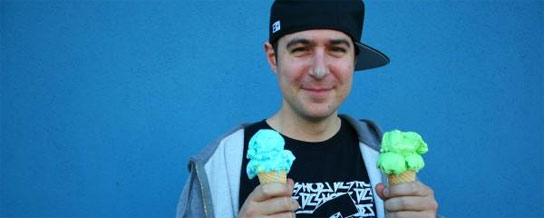
For the next four weeks, XLR8R will chat with four indie engineers who invite us into their studios to discuss production philosophies, gear, and how to set your music free. This week we talk to Efrim Menuck of HOTEL2TANGO, which has hosted recording sessions by Arcade Fire, Wolf Parade, Tony Conrad, and Pony Up!

Do you have a particular philosophy when entering the studio?

A recording studio is a dangerous place–it’s full of sketchy musicians and electricity, the hours are long, the air is bad, and a fresh reel of two-inch tape smells like burning cat piss when you first spool it on. There is so much that I do not know about making records, and there’s so much glorious confusion knotted into the hairy guts of music that’s just plain unknowable, that all you can do is try to go into it humble and reverent. I believe in music, people, labor, and impossible circumstances, and when a band is experiencing one of those rare communal states of grace that makes one’s heart thrum like kittens falling through a rainbow, it can feel like there’s sounds just hanging there in the air like motes of dust in a cloud of light, and you just have to drop the microphones there and let them inhale. Most days, though, are a little more austere.

Is there a process which you undergo before you go in?

A series of short double espressos, a brisk walk, and deep breathing. Sometimes I’ll spend a few hours prior with earplugs in.

Who are you currently working with in your studio?

These past few days I’ve been helping out on a session by a band called Land of Kush, fat little baby of local hero Sam Shalabi. It’s long-form Egyptian music with 24 musicians: four drummers, three cellos, violin, viola, one trumpet, two saxophones, one guitar, two synthesizers, one lap steel, four singers, electric bass, string bass, lap-steel and oud. Last week was Grant Hart (from Hüsker Dü) mixing.

Tape or hard drive?

We track onto two-inch tape on a 24-track Studer A820 machine. We mix-down to 1/4-inch tape when the client’s budget allows, and mix-down to hard-drive when it doesn’t.

When a band comes into your studio, what do you typically wish they had more prepared, and why?

A lot of bands seem to have a clearer idea of what they don’t want to sound like than any sense of what their own clumsy, stubborn strengths might be. It’s like an inherent musicians’ trait, a certain type of self-doubt and insecurity that can lead to hours of flailing and a no-win endgame where everybody gets bummed. A recording studio is not a good place to work out self-esteem issues, but if you love thyself and thy band, and go forth into that murky darkness and make your own damn light to follow, then you’re golden.

Who is the most prepared band you’ve worked with, and why?

The only bands I’ve worked with who’ve been prepared in the traditional sense have been incredibly dull.

When producing [x] band, what went well and what not so well?

I’ve fucked up a lot of records; big fuck-ups and little fuck-ups, technical fuck-ups and emotional fuck-ups. I am, for real, a rank amateur, but the worse job I ever did was a record by a band from Toronto called The Phonemes–good band and good people. I’ve known the drummer since I was 10 years old, and though the session was free, I did not do right by him. We recorded their record during off-days at the studio over the course of two and half years. A broken chain of short, abrupt workdays, like knitting a scarf out of patchwork twine on days that it rains. The songs were great, but the execution was a little nervous. The bass player had just had a baby, so the initial bed tracks were recorded between nursings (which sounds a lot sweeter than it actually was). The gaps between recording days were so long that I completely lost focus, and did not practice due diligence. We spent hours doing little fix-its and replacements, over-whittling until the tracks lost all dynamic and spatial coherence. Mixing was like an exercise in meditative self-laceration. Somehow, though, I think it turned out alright; like a flash Polaroid, it has its own washed-out charm, and rings true, at least, to the circumstances that bewildered its conception.

What’s the centerpiece of your studio, gear-wise?

Our console. It’s a Neotek Series II. It’s about as sexy as a K Car, but it rides like a well-worn dream.

What’s the production element you tend to spend the most time on, and why?

Bed tracks, bed tracks, bed tracks. You can’t fake the sound of people playing together in the same room, and a record built out of overdub piles is about as rewarding as a mid-’80s car-chase movie.

Aside from equipment, what other things need to be in place before you can record?

Mid-day sobriety, absolutely. A drunk musician in the afternoon is worse than any Jonas Brother. No joke.

What’s more important than equipment when it comes to producing a record?

I think that intention is the only thing that really and truly matters–everything else is just context, back-story, and circumstance.

What records that have been produced at your studio are you particularly proud of, and why?

Two records: I recorded a record by Carla Bozulich under her Evangelista guise that was like wrestling a bear, except the bear was glorious and deserving, and it won. Also Dull Lights by Eric Chenaux–guitar, electrified pre-war banjo, and drums, tiny amplifiers, highland balladry, and fields of treble. I sweated over boundary mic placement like a nervous matron. At certain points, listening on headphones, you can actually hear the nails in the floorboards ring.

What are the most important elements to have in check before a record is mastered, and why?

If you’re the type of band that likes or needs to crossfade chunks of music into each other, then dummy that shit up ahead of time and figure out the fade lengths and crossing points ahead of time. Also, don’t let yourself get bullied so late in the game–have a clear idea of what you like about your pre-masters and protect them like your own kin.

In your opinion, what’s the best-produced album ever made, and why?

Astral Weeks by Van Morrison, because it sounds like it was Scotch-taped together. And it soars.

What are the most common mistakes that home producers make, and how can they avoid them?

Aspiring to be like Brian Wilson leads to frustrated desires and mental illness. Also, plug-ins make everything sound like cotton candy, a food which is entirely lacking in fiber–you need fiber in your diet, or else you just shit yourself to death.

Who is one engineer you really look up to or would really like to work with and why?

I love Jack Nitzsche, but he’s dead.

Last Week: John Vanderslice

Nightmares on Wax “195 lbs.”

“195 lbs.” is off of Nightmares of Wax’s sixth album, Thought So…, released earlier this year. The album is rooted in lead man George Evelyn’s experiences during a road trip from his birthplace of Leeds to his new home in the middle of Ibiza. This single’s jazzier reggae beat matches the song’s muffled vocals, which take a back seat to the peaceful melody and loping hip-hop rhythm. In the N.O.W. tradition, this is a low-key groove to kick back to among friends. Lulu McAllister

195 lbs.

The Top

CGI, rapid cuts, and flashy guest appearances continue to reign supreme in the music video world. Enter Francis and the Lights. Director Jake Schreier was wise to step back and let casually eccentric headman Francis Farewell Starlite do his thing in this video for “The Top.” The shoulder-padded, floppy-haired crooner takes center stage under a classic spotlight, armed with nothing but a mic and a serious case of happy feet. On top of a simple-but-compelling beat, Starlite lays down a whole range of vocal styles–from quivering falsetto to growling Tina Turner-esque hooks–to match his corresponding range of expressive dance moves. Watch him go! Lulu McAllister

Justin Martin Announces New Single

A new track from longtime Buzzin’ Fly member Justin Martin is on the way. On November 24 he’ll drop “My Angelic Demons,” another number suited for the dancefloor. As usual, the S.F.-based producer and dirtybird Records co-founder has added a bit of quirk to the European house sound, staggering the 4/4 beat, switching up the tempo, and throwing in a plethora of laptop-generated noises, one of which sounds like an old-fashioned cash register opening and closing. The single will be available in 12″ and digital formats.

The single comes off Martin’s just-released Chaos Restored 2, a follow-up to 2007’s Chaos Restored 1, which was his inaugural mix CD. Among its 20 tracks, the disc features an exclusive remix of Radiohead’s song “Nude.”

Chaos Restored 2
01 Justin Martin “How I Feel Intro”
02 DJ Koze “Let’s Love”
03 Stateless “Bloodstream (Henrick Schwarz Remix)”
04 Rodriguez Jnr “Pina Colada (Voodeux Brew Remix)”
05 Dapayk Solo “50mann50hz”
06 Onkel Brutalo “Selva (Mri Smiling Faces Remix)”
07 Loco Dice “M Train to Brooklyn”
08 Kreon & Lemos “Lookooshere (Wighnomy’s Rollmps Rework)”
09 Stimming “Kleine Nachtmusik (No Beats Mix)”
10 Tim Green “Mr Dry”
11 Einmusik “Challenge”
12 Radiohead “Nude (Justin Martin Remix)”
13 Christian Martin “Elephant Fight (Justin’s Jungle Beats)”
14 TIm Green “Revox (Justin Martin Remix)
15 Robag Wruhme “Moscavia”
16 Marshall Jefferson “Mushrooms (Justin Martin Remix)”
17 Per Eckbo Orchestra “Kodo Verano”
18 Justin Martin “My Angelic Demons”
19 Karmina “Wonder 21 (Matthew Jonson’s 21 Roses Remix)”
20 Justin Martin “How I Feel Outro”

Photo by Mozhgan Shariat.

Dntel “Blinded by the Lights (Cover)”

Jimmy Tamborello and Mike Skinner aren’t two people you’d automatically associate with one another, but the former has gone and covered Skinner’s “Blinded by the Lights,” which appeared on 2004’s A Grand Don’t Come for Free. No, Tamborello isn’t rapping on this version. Rather, he’s turned the number into a synth-heavy instrumental that mimics the melody of the original. The track is one of a few he’s recently recorded and made available via the Dntel site. Photo by Robin Laananen

Dntel -Blinded By The Lights 1

War Song

Right in time for today’s election comes this video from Nudge, which appears to be a commentary on current American culture. Directed by Multifresh, this visual accompaniment to the Infinity Padlock EP’s track “War Song” follows Honey Owens as she aimlessly wanders about dressed as both a bedraggled soldier and some kind of strange animal-like creature. Cut with clips of bombs dropping from planes, trips to McDonald’s, over-priced boutiques, and other facets of life in the modern U.S.A, this video is an eerie one indeed.

The Sight Below “Life’s Fading Light”

This track unfolds a bit like a day smack in the middle of January would–slowly, softly, and with melancholy undertones. Off The Sight Below‘s soon-to-be-released album, Glider, “Life’s Fading Light” is a dreamy blend of barely touched acoustic guitars and echoing loops laid over a beat that mimics a human heartbeat. Sunny music this is not, but it’s easy to picture the reclusive, unnamed producer behind the album hard at work in drizzly Seattle. Glider will arrive in full on November 11, just in time for winter.

Glider
01 At First Touch
02 Dour
03 Without Motion
04 Life’s Fading Light
05 Further Away
06 The Sunset Passage
07 Already There
08 A Fractured Smile
09 Nowhere

The Sight Below – Life’s Fading Light

From Lisbon with Love: Buraka Som Sistema

Buraka Som Sistema has become a European sensation, thanks to its unique take on kuduro, a strain of dance music from in Luanda, Angola. The genre originated with resourceful Angolan DJs, who managed to turn free computer sample sounds from outdated PCs into some of the most kick-ass and energetic dance music around. Earlier this year, the band worked with M.I.A. to produce the song “Sound of Kuduro,” and more recently released its debut album, Black Diamond.

Martinez Bros: Four-on-the-Floor Prodigies

At the dawning of the 21st century, the DJ is on the brink of becoming a cliché.

When the mastery of Serato Scratch and a well-stocked iTunes library are the only criteria necessary to rock a party, craftsmanship and a near life-support-like dependency on music seem to be long-forgotten prerequisites.

But Bronx-bred brothers Steve and Chris Martinez are insistent on bucking the trend on a few different levels. At 19 and 16 years of age respectively, The Martinez Brothers exhibit an impressive dexterity as DJs and an intimate connection with a genre of music deeply ingrained in their DNA: house. They’re an anomaly of their generation, and not just because they’ve spun crowds into frenzies in Ibiza, Hong Kong, London, and Switzerland before they’ve even hit legal drinking age.

They’re two teens who hail from the birthplace of hip-hop but who have eschewed the path of jockeys like Cipha Sounds and Whoo Kid for the trajectory of house legends like Kerri Chandler and Dennis Ferrer. They’re known to rock the dancefloor with their mélange of disco, soulful house, and tech-house, and all the styles converge on their 12” single, “My Rendition.” Even more surprising is that these future kings of house music are sketching out their nascent four-to-the-floor career from the sleepy environs of Monroe, NY, a middle-class suburb an hour outside of New York City.

Good Life
It should be noted that the princes of the turntables weren’t exactly pleased with relocating to a new kingdom. “When we first moved here, I was pissed,” recalls Steve. “I would have an attitude every day, always arguing.” Their father, Steve Martinez, Sr., who is currently building an addition to the family home to house a new mixing board, concurs: “In the beginning, it was kind of tough for them to get acclimated, because we’re from the ’hood.” But TMB soon found a way to shake their suburban homesick blues and bring some boogie-down Bronx flavor to the boondocks. “People started moving out of the neighborhood because we used to play so loud,” says Chris. “We had our drum kit and would go all night.”

TMB owe a great deal of their love for house music to their father. An ordained minister and former devotee of legendary disco institutions Paradise Garage and The Loft, Steve, Sr. indoctrinated his sons with house music early in life. “I used to bring Steve into my room on Saturday nights to listen to Timmy Regisford spin on 98.7 Kiss FM,” he recalls. As Chris and Steve progressed into adolescence, their dad became concerned that his sons would absorb some of the sordid elements of hip-hop. “They were listening to a lot of hip-hop, and some of the stuff they were listening to wasn’t positive. And I said to myself, ‘This music is dope. The beats are hot. But some of the music is denigrating women.’” Engaging his parental instincts, he made the decision to reintroduce his sons to a genre of music he saw as possessing a more redeeming value. “I bought a Kenny Dope disco compilation for them, and they liked it.”

Can You Feel It
It was the ensuing proclamation, however, that caught Steve, Sr. off guard. “A few weeks later, Steve approaches me and says, ‘Dad, I wanna DJ,’ and I started laughing,” he says. “I told him to study the music, know the labels, know the arrangers and who wrote this and who played keyboards on that.”

Steve and Chris, both well versed on keyboards, drums, and percussion instruments, soon also became adept at the software-based computer application Virtual DJ, which prompted their father to buy them a novice DJ set-up in 2004. But Chris and Steve’s lofty hopes of wreaking havoc on the wheels of steel would soon be deflated. “I don’t know about Steve, but I was talking about being a hip-hop DJ,” admits Chris. “When my father bought us CD decks, I remember almost crying because they couldn’t scratch.”

Making the best of their situation, the brothers crafted an impressive mixtape that flabbergasted Steve, Sr. “I almost started crying,” he recalls fondly. “I reminded them again, ‘If you want to be in this, you gotta know the game because people are going to think you’re a gimmick.’” In addition to homework and household chores, Chris and Steve began feverishly scouring the internet, meticulously dissecting the minutiae of the dance music culture of yesteryear.

“We wanted to learn,” insists Steve. “We looked at where these songs were played and what year they came out–the history behind a label. We would be on the computer for hours.”

Grooving Without a Doubt
After getting their sea legs at a 2005 party called 45 RPM, promoted by their father along with former Paradise Garage DJ Victor Rosado, offers to spin at NYC nightspots began pouring in. But it was Chris’ correspondence with house DJ Dennis Ferrer via MySpace that segued into an invitation to spin at one of New York’s longest-running house parties. “I just hit him up as a fan,” admits Chris. “After I sent him a mix, he asked if I wanted to play with him at Shelter.” Asking Ferrer if Steve could tag along, however, was almost a deal-breaker. “I asked him if I could bring my brother, and he wasn’t really feeling that.”

But their set would prove to Ferrer and others that TMB were more than the sum of their parts. “They went on, and it was bananas,” gleams Dad. “It got so packed on their floor, they had to close it down early because nobody was upstairs on the main floor!”

In their three short years as professional DJs, TMB have racked up an impressive resume of credentials that many DJs twice their age still only aspire to. But it’s apparent that they’ve heard the hater’s anthem from many skeptics. “There’s guys that are 40, 50 years old that have been doing this forever,” acknowledges Steve. “So when you hear about some 16-year-old playing music who’s supposedly good, I guess you might have your reservations. But a lot of times, these people have never even heard us spin. And when they do, a lot of times they backpedal.”

On the other hand, many have heralded TMB as the second coming of lauded NYC-based DJ/production duo Masters at Work (“I think they only say that because there’s two of us,” says Steve).

The Kids are Alright
Their newfound celebrity and acclaim aside, Chris and Steve are your average teenagers: they lose their Sidekicks, they defend Lil’ Wayne’s lyrical prowess, they wield bragging rights among their classmates. It just so happens that they can also wax poetic on obscure releases from classic dance labels like West End and Prelude and spin soulful house at the most posh nightclubs in Paris. “[My classmates] don’t believe me,” says Chris with a sly grin. “And it’s not like I go around like, ‘Oh, I’m a DJ.’ It just comes up in conversations at school, like, ‘Yo, what did you do this weekend?’ and I’ll say, ‘Oh, I went to Tokyo.’”

Besides working on tracks for an upcoming album to be released on Ferrer’s Objektivity Records, life for Chris and Steve in Monroe has been pretty peaceful. And they’ve since learned to appreciate the tranquility of their new home base. “When you get home at six in the morning from a gig, you don’t want to come home to ambulances and police sirens,” reflects a slightly older and wiser Steve. “You just want to chill. Now I love it. I don’t think I would want to go back to the city.”

Extra: Martinez Brothers on Their Favorite Gear

Page 2817 of 3781
1 2,815 2,816 2,817 2,818 2,819 3,781