Totally Faded: John Vanderslice

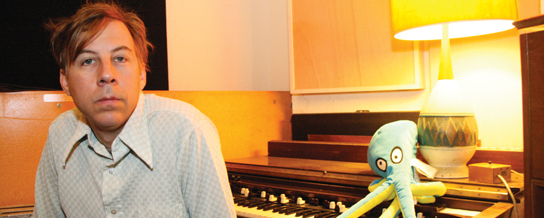
For the next four weeks, XLR8R will chat with four indie engineers who invite us into their studios to discuss production philosophies, gear, and how to set your music free. First up is John Vanderslice of Tiny Telephone Studios in San Francisco, where Numbers, Cex, and Spoon have recorded.

Do you have a particular philosophy when entering the studio?

The question “What’s best for the songs?” has to be addressed way before the session. Sometimes you go in blindly, hoping it will sort itself out in the studio, but that’s where the shit can really fall apart! Thinking about what gear to get, borrow, rent, what session players or friends to corral, and trying to set a realistic schedule is a good way to start.

Is there a process which you undergo before you go in?

If I’m working with a band I immerse myself in all of their material, not only new demos, but older records. Then the engineer and I decide what to go for and what to avoid. On the Mountain Goats’ The Sunset Tree, engineer Scott Solter and I decided to lose a lot of distortion we had introduced on the group’s We Shall All Be Healed, keep the tempos up, and go for as much live performance as possible. When Scott and I did my last record, Emerald City, we decided to make it a study in distortions.

Who are you currently working with in your studio?

Scott Solter and I are recording my next record right now. He’s a genius so it’s been pretty smooth sailing. We’re in the middle of a 14-day block; we should have a lot of songs finished by the end. We’re dragging in a lot of session people on this next round: violins, clarinets, oboes, upright basses…

Tape or hard drive?

For my records, it’s always tape. We have a no-computer rule for my own records. For me, everything about random-access recording is amazing except the sound. Tons of bands use Pro Tools at Tiny Telephone as we’re just installing an HD system.

When a band comes into your studio, what do you typically wish they had more prepared, and why?

The common complaint I hear from engineers is that bands bring in very little gear. One bass, one bass amp, one guitar, one guitar amp, etc. Your options run out quick, especially if your gear sucks, which happens all the time.

Who is the most prepared band you’ve worked with, and why?

Deerhoof is extremely prepared and organized. They book way ahead, never move their days, and come in ready to make art.

What’s the centerpiece of your studio?

Our 1976 Neve 5316 mixing console. It’s got 50 channels on mix-down, and it took me five years to pay it off. It was previously owned by the BBC in London and used at Central TV. It’s a beautiful-sounding board.

What pieces of gear do you most often return to?

Millennia Media TD-1, Moog Source, Yamaha grand piano, my Gibson 1952 J-45 acoustic guitar.

What’s the production element you tend to spend the most time on, and why?

Lyrics: For me it all comes down to the content of the songs. Then it’s easy to see what’s possible sonically.

What non-technical things need to be in place before you can record?

Shit-loads of PG Tips tea!

What’s more important than equipment?

The attitude of the band: They have to be wide open to the world and not stuck inside of genre and strait-jacketed by a musical identity.

What records that have been produced at your studio are you particularly proud of, and why?

Here’s a few bands I thought did great work at Tiny Telephone: Granfaloon Bus, Court and Spark, Deerhoof , Death Cab For Cutie, and Okkervil River. There are tons more, Love Like Fire just did some fantastic recordings a few weeks ago.

What are the most important elements to have in check before a record is mastered, and why?

If things don’t sound good already, we’re all in trouble! Mastering should be the most subtle adjustment possible. I think preserving dynamic range in mix-down is key. We don’t use buss compression anymore, we just rely on the Ampex ATR-102 for its wonderful zero-attack compression. When mastering, we always request a reasonable volume–you will not win the volume wars!

In your opinion, what’s the best-produced album ever made, and why? Is there one that you always turn to for its production quality?

I think Slide by Lisa Germano is a really interesting record. It’s a super-stylized, high-concept bedroom record. It’s brilliantly produced by Tchad Blake. As far as the best-produced record, there would be 100s on my list. Early Kinks, Pink Floyd, Bowie, Neutral Milk Hotel, all Radiohead.

What are the most common mistakes that home producers make?

The thing that blows me away is how un-cynical they are about gear. They’ll read reviews as if they’re unbiased and informed. Recording magazines do reviews to get free or discounted gear–they are totally unreliable. There’s more raw information on message boards, but unless you know and respect the person posting, that isn’t very useful either.

Who is one engineer you really look up to?

Scott Solter (who I do work with all the time). I’d love to work with John Congleton, Tucker Martine, Jeff Stuart Saltzman, and Daniel Lanois–the list goes on.-
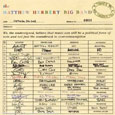

Matthew Herbert Big Band There’s Me and There’s You

Billed as a jazzy assemblage of protest songs, Matthew Herbert’s latest is a hybrid. Working again with his Big Band, the decorated British producer, avant-jazz arranger, and field recorder (samples here include condoms dragged, nails hammered, matches struck, and a host of other sonic clippings culled from the House of Parliament and Mickey D‘s) has crafted a period-pop album capable of doubling as a musical for people that hate show tunes. The result is anything but snoozy. Herbert’s horn arrangements are particularly kinetic on songs like “Battery” and “The Yesness,” brass lending a layer of bombast that counteracts the more subversive elements spelled out by Eska Mtungwazi’s vibrant, smokebomb vocals.

Lykke Li “Little Bit (Aether Remix)”

Up-and-coming producer Aether‘s got a solo album in the works, Artifacts, due out November 25, but in the meantime, the San Diego beat-maker who doesn’t sleep has remixed Swedish future-pop queen Lykke Li for fun. “Little Bit” saw an earlier reworking from DFA’s Tim Goldsworthy, under his Loving Hand guise, which was a minimal and very electronic affair. Aether’s chosen a somewhat different route here, opting for heavier drum sounds, airy synths, and lots of reverb added to Ms. Li’s sugar-sweet vocals. Photo by Andy Eisberg.

Lykke Li – Little Bit (Aether Remix) 1

Secret Spaces: The Bus

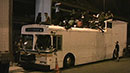
In another spotlight on unusual music venues, XLR8R TV introduces you to John Benson and his Bus. John transformed a former Oakland Police street command unit into a veggie-oil/solar powered mobile and all ages performance space. Since he bought the Bus in 2006, he and his motley crew have put on over 120 shows around the country that feature bands from around the world, and, despite constant vandalism to the bus, he has no plans to stop. This episode includes footage from a Bus show featuring Finnish psych-metal genius weirdos Circle.

Editor’s Picks! Glitch Mob Street Warfare

The Glitch Mob is notorious for its live shows—they remix on the fly and seamlessly finish each others’ basslines. Here, the crew takes it up a notch by setting up speakers and a generator renegade-style in the crowded streets of San Francisco for full-scale guerrilla beat warfare on the public. What they weren’t expecting was that San Franciscans prove themselves up to the attack—in a way that only San Franciscans can.

Lars Horntveth Readies Second Album

Always ready to bend and tweak musical formulas, Jaga Jazzist frontman Lars Horntveth has announced a follow-up to his 2004 debut solo album–and it’s a single track long.

Joined by 34 string players, three percussionists, a harpist, flute player, and trombone player (all of whom are collectively known as the Latvian National Orchestra), the Norwegian producer–who started Jagga Jazzist at the tender age of 15–has crafted a 37-minute-long trip through about 20 different musical moods on Kaleidoscopic. He’s citing everyone from Stereolab to Hitchcock composer Bernard Herrmann as influences for the album, if that’s anything to go by. The album drops January 27 on Smalltown Supersound.

Photo by Andreas Froland.

Mike Slott “Deux Three”

Just released last week is Heralds of Change/Lucky Me member Mike Slott‘s second solo 45 this year for Dublin’s All City Records. As with his previous endeavor for the label, Slott rolls a whole bunch of soul up with the hip-hop beats on this release. “Flunky” is definitely the bouncier number of the two, while “Deux Three” features some smooth vocals and futuristic synths. Preview the latter here.

Mike Slott – Deux Three

Marnie Stern Preps Tour Dates

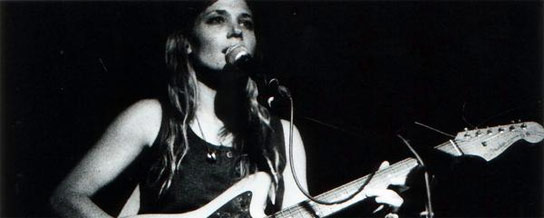
Femme fatale and absolute guitar wizard Marnie Stern has announced more tour dates for the fall, in addition to the previously announced batch with Gang Gang Dance. She’ll be showcasing songs from her elaborately named sophomore album and showing off those shred skills through the end of November.

11/03 Chicago, IL – Empty Bottle*
11/04 Minneapolis, MN – 7th St Entry*
11/05 Milwaukee, WI – Turner Hall*
11/07 Denver, CO – Larimer Lounge*
11/08 Salt Lake City, UT – Kilby Court*
11/10 Seattle, WA – Triple Door*
11/11 Vancouver, British Columbia – Biltmore Theater*
11/12 Portland, OR – Berbati’s Pan*
11/14 San Francisco, CA – Bimbo’s 365 Club*
11/15 Los Angeles, CA – El Rey Theatre*
11/16 Tucson, AZ – Solar Culture
11/18 Austin, TX – Mohawk
11/21 St. Louis, MO – Billiken Club
11/22 Bloomington, IN – The Lodge
11/23 Columbus, OH – The Summit
11/24 Pontiac, MI – Pike Room
11/25 Cleveland, OH – Beachland Tavern
11/26 Washington, DC – DC9
11/28 Brooklyn, NY – Music Hall of Williamsburg*
11/29 New York, NY – Santos Party House*
11/30 Milford, CT – Daniel Street
12/01 Boston, MA – Church

* = w/ Gang Gang Dance

The Presets “Kicking and Screaming (Bang Gang’s E is for Edit)”

If its preview, which we ran earlier this year, is anything to go by, the squad of electro hooligans that are the Bang Gang Deejays cover quite a bit of ground on their just-released remix album, D is for Disco, E is for Dancing. The double-disc set finds the crew reworking everything from A-Trak to Ghostface Killah, and here, they taken on Modular labelmates The Presets, reworking the opening track from this year’s Apocalypso release. It certainly is a track for dancing–with or without the E involved. Maverick Newberry

The Presets – Kicking and Screaming (Bang Gang’s E is for edit)

Large Professor Main Source

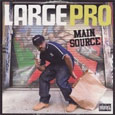
William Paul Mitchell got cracking with his Large Professor alias as part of early-’90s hip-hop trio Main Source, and went on to construct beats for Nas, Kool G Rap, Cormega, A Tribe Called Quest, plus dozens more. Like fellow ’90s greats Masta Ace, Pete Rock, or Gang Starr, Mitchell’s soul-sampling boom-bap blueprint has been modernized but remains largely unchanged. That’s a plus on infectious party tracks like “Pump Ya Fist” and “Hardcore Hip-Hop,” which rumble and rattle with funky loops and starchy-crisp beats. Jeru Tha Damaja, Styles P, AZ, and Big Noyd add some memorable bars, but Mitchell is musically and lyrically front-and-center throughout. With a title referencing his roots, Main Source is proof that Mitchell is still a pro.

Page 2821 of 3781
1 2,819 2,820 2,821 2,822 2,823 3,781