Doomunity: Beneath Portland’s Music Scene

The bucolic environs of the Pacific Northwest often inspire serene music, but they can just as easily lead folks like Daryl Groetsch (a.k.a. Pulse Emitter) to make music that sounds “like the apocalypse.” “I keep feeling like civilization is gonna crumble at the rate we’re going,” he explains in the new film People Who Do Noise (independent DVD; $15.99). “There’ll be a lot of death and lawlessness, but somehow just fantasizing about it in art… I just love it.”

As filmmaker Adam Cornelius interviews more of the scene’s noisemaking participants, it turns out that the “four horsemen” theme isn’t that uncommon. “To express that emotion and that impending doom–pop music doesn’t work anymore,” offers James Squeaky (a.k.a. Argumentix). “It’s too orderly. So people need something that’s directly tackling that issue.”

People Who Do Noise doesn’t tackle issues as grand as end times, but it does take a decidedly back-alley view of what lurks beneath the city’s idyllic landscape. Though there’s a somewhat predictable trajectory to the film–artists like God, Kitty Midwife, and the onomatopoeic Sisprum Vish are given a few minutes to wax philosophical on why they make noise (and a few minutes to throw down their screeching skills on stage)–it uncovers the unusual aesthetics and stories behind these projects, from the genesis of Argumentix’s existence (which came about first in a dream) to Yellow Swans’ Pete Swanson and Gabriel Mindell arguing over the restrictions of signal flow.

Most interesting are interviews with skronk pioneers Smegma, who provide context for the city’s venerable noise scene, linking it back to the late ’70s but connecting it with the still-going DIY community that’s been forged around cheap housing and creative minds and hands.

“Portland is full of people who are really actively doing things,” says Redglaer’s Bob Bellerue, echoing the Smegma members’ sentiments. And even when Bellerue talks about noise, he inevitably speaks to Portland’s community vibe. “It’s more about texture and energetic states, and really just being extremely present with whatever’s happening.”

Favorite Portland artist:
Adam Cornelius: Rabbits. They are just circus-heavy, down-and-dirty, bellyache and grimace-inducing moonshine metal at its finest. Plus, instead of singing about misogyny or the devil, they sing about animals, planets, and emerging from the primordial ooze.

Deerhunter Microcastle

Between all of the dreamy benzo pop of Bradford Cox’s overflowing Atlas Sound output and last year’s teaser Deerhunter EP, Fluorescent Gray, it’s easy to forget that the latter band, ostensibly with Cox at the helm, put out a debut three years ago called Turn It Up, Faggot that sounded like the psychedelic punk snarlings of a picked-on kid, and a divisive follow-up, Cryptograms, that at the very least sunk that spirit in its swirling, meandering, and frequently aimless drones.

So what was Cox so pissed off about, anyway? It likely doesn’t matter–punk isn’t what makes Deerhunter an interesting band. Punk was what made Cryptograms an interesting record, but not necessarily a good one. What made that album actually good were tracks like “Strange Lights,” which took blissful ’60s pop and showed–Kranky Records-style–just how dreamy you can really make a song. Next to wasteful, lazy ambient interludes like “Tape Hiss Orchid” and “Red Ink,” the thought and craft in that subsection of the record let us know this was a band worth sticking around for. We did, and got an excellent album from Cox’s Atlas Sound solo project, Let the Blind Lead Those That Can See But Cannot Feel; its soupy pop proved to be a somewhat accurate prediction of what Deerhunter would bring forth on its first post-hype full-length, Microcastle.

Microcastle is more an indie-rock record than most anything Cox and Company have attempted before. “Saved by Old Times” is even abruptly so–effects are kept in check and it’s mainly just Cox’s voice, as strange and ghostly and narcoticized as ever. The song itself is, dare say, bluesy, led by an un-effected guitar pattern that keeps an even meter (unlike “old” Deerhunter or Atlas Sound songs, which slowly expanded sponge-like into psychedelic space).

Microcastle’s jewel–and, so far, the band’s–comes about two-thirds of the way through the record on the six-minute mini-epic “Nothing Ever Happened.” Like “Saved by Old Times,” it’s a bit of a rock song, and one that tears at that. It’s also angry–the feedback is sharper than anything on Cryptograms, the bassline is urgent, and Cox intones morosely and surprisingly expressively (for someone who usually fronts as a phantom) “Nothing ever happened to me/Life just passing/Flash right through me.” At about the four-minute mark, it sounds like Cox decided Fuck it, I’m going to make something happen, and the song goes off into a thrilling climax of acerbic, soloing guitars. “Little Kids” succeeds in much the same way: About two minutes in, the song breaks out into a series of ecstatic, absolutely thundering crests.

These are such key moments–Cryptograms floundered often because some of its songs never got to any kind of resolution, they just bobbed up and down in a kind of pretty yet mundane stew. While Microcastle’s songs aren’t angry or punk–and they sure aren’t satisfied–its moments of roar and unrest have a direction; they mean something. That something–decode Cox’s anxious lyricism for what that might be on your own time–is what makes Microcastle Deerhunter’s most arresting and certainly most lasting record to date. At the very least, it shows the band is giving a fuck.

Larytta Difficult Fun

This Swiss duo of Guy Meldem and Christian Pahud may be the coolest thing to happen to weird-ass-avant-electro-poppiness since Ween. Difficult Fun is a hallucinogenic ride through an amusement park of off-kilter beats, soothingly psychotic vocals, and multi-dimensional melodies loosely strung together in a surprisingly cohesive format that keeps a smile firmly cramped on your face. “Love Love Odyssey” and “Wonder Vendor” hold things to a familiar and not-too-warped pop format in a Flight of the Conchords kinda way, but tracks like “Voodoo Things” and “Is This Cheese?” unhinge your sense of familiarity with superbly composed music abstractions and guided lyrical ramblings. Turn on, tune in, bug out.

Martinez Brothers Talk Gear, Tunes

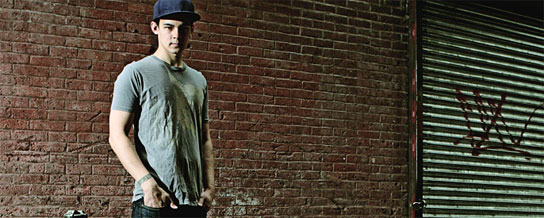
Bronx-bred brothers Steve and Chris Martinez are insistent on bucking the DJ trend on a few different levels. At 19 and 16 years of age respectively, they exhibit an impressive dexterity as DJs and an intimate connection with a genre of music deeply ingrained in their DNA: house. They’re an anomaly of their generation, and not just because they’ve spun crowds into frenzies in Ibiza, Hong Kong, London, and Switzerland before they’ve even hit legal drinking age. They’re known to rock the dancefloor with their mélange of disco, soulful house, and tech-house, and all the styles converge on their 12” single, “My Rendition.” Even more surprising is that these future kings of house music are sketching out their nascent four-to-the-floor career from the sleepy environs of Monroe, NY, a middle-class suburb an hour outside of New York City.

Steve and Chris sat down with us recently to talk must-have gear and their favorite tracks to play out:

The Martinez Brothers’ Steve Martinez Jr. on the duo’s must-have DJ gear.

Pioneer CDJ 1000
One piece that we most definitely cannot live without. It’s pretty much the basis of what we do, as far as the way we play… We love to manipulate records and acapellas and the pioneer CDJ 1000s allow us to do that t the best of our ability.

Pioneer EFX 1000
Another piece of equipment that is pretty vital to our set-up is the Pioneer EFX 1000. Again, we love to manipulate the records and make them our own, and it’s the perfect tool for adding effects such as echoes and flangers, and it’s also perfect for big build-ups.

Urei 1620 Rotary Mixer
Probably the oldest piece of gear that we still use today. Not many mixers that compare to this in our opinion. We pretty much always played with rotary mixers and this is the best of its kind.

Steve and Chris Martinez offer their five favorite tracks to play out.

1. Powerline “Double Journey”
This was one of the first disco records we ever heard and was on constant replay with us. The piano line just always captivated us, not to mention the sick bassline.

2. Kerri Chandler “Never Knew Her”
One of the first house records we ever heard, and a record that also introduced us to Kerri. It really inspired us to dig for “that sound” and of course for Kerri’s stuff as well.

3. Vince Watson “Mystical Rhythms”
We first heard this at a Joe Claussell party and it just blew us away! Amazing!

4. Pat Metheny “Are You Going With Me”
Just listen to the record!

5. Slum Village Featuring Q Tip “Hold Tight”
J. Dilla on drums, D’Angelo on keys, and Slum Village and Q Tip on the mic–what more could you ask for?!

Michna’s Top Gear

The Brooklyn-by-way-of-Miami prankster (sometimes known as DJ Egg Foo Young) reveals the secrets of his favorite machines.

Boss Dr. Rhythm DR-660 drum machine
I think there is a picture of this on Squarepusher’s first album. This is my first drum machine; it’s velocity-sensitive, and you can sequence in step or real time. When I first heard drum & bass, I was like, “How did they do that?” I eventually found out it was done with an Atari computer, but I tried to use this. Even though I rarely use this, I wouldn’t throw it away because sing drum machines with effects is the greatest thing known to man.

Korg Kaossilator phrase synthesizer
Thirty years after the MS-20, you have all of those sounds in this tiny thing. I’m working on a new live show and the drummer wanted to get quads–those drums they use in marching bands–but this makes all those sounds, and sound effects (good for DJing). I’m predicting that people are going to circuit-bend these, like make a knob on the side that distorts and pitch-bends the sounds. It’s a one-trick pony, but it’s fun, and battery-powered!

E-Mu SP1200 sampler
This is the Pete Rock specialty, the machine that defined the “Golden Era of hip-hop.” You’re limited to 10 seconds of sample memory, which lead to producers finding many creative ways to use this. One of the most popular is sampling a 33rpm record on 45 then pitching it up or down. All those squealing samples on the first Cypress Hill record are made from samples of B.B. King’s guitar-playing sped up. The machine itself adds grit and a bit of harmonic distortion, which means the drums end up sounding fatter.

Korg MS-20 synthesizer
A staple made in my favorite year, 1978. Aphex Twin has two or four of these, and you can definitely hear them on Drukqs; a classic move of his is to hold down a note while turning the scale knob. You could plug a guitar in here and distort it. Sometimes I run drums through it, but mainly I use it for solid, non-cheesy low bass noises.

Roland SDX-330 Dimensional Expander
An outboard effects processor that does what it says.

Eventide H3000SE Ultra-Harmonizer
If the SP-1200, MS-20, and Logic are the core elements of the soup, this is a very heavy spice. It does a couple of things really powerfully–namely reverb, pitch shift, and echo. It’s good for sampling your voice on the fly and fucking with it. I can sound like a ghost monster or, remember the movie Real Genius? “Kent, stop playing with yourself.” It’s got a very ’80s sound in many ways.

MAM 11-Band vocoder
You may remember this from the hook of the Beastie Boys’ “Intergalactic.” I used it a lot on the track “Swiss Glide.” I take the bass notes from the MS-20 and run them through here to get a wobble. The sound is nice and rubbery, not tinny.

Akai MFC42 analog filter
These cut-off knobs can be used to add movement to anything. Having knobs is always good–you can do it with a mouse, but it’s just not the same. You can use this to get that filtered disco sound à la Daft Punk.

Moog Moogerfooger pedal
Moog pedals are more expensive but you’re paying for Moog quality oscillators–it has to do with the warmth of the sine waves. Pedals are fun because you start to play around more, like, “I wonder what my trombone would sound like through this?”

Logic Audio software
I like the Waves plug-ins for reverb and EQs. These are old ones from the 1990s that are cracked; buying the new ones is expensive, but for good reason. The Battery plug-in is huge for me as well. I skipped getting an MPC and just use that.

Michna Tours, Makes Soup

Brooklyn-based beatmaker and former Secret Frequency Crew member Michna will kick off a tour tonight in Baltimore. The recent Ghosty International signee dropped his debut album, Magic Monday, earlier this month and it’s highly likely he’ll incorporate tracks from the album into the handful of live sets he’s scheduled to play, including one CMJ showcase with his new Ghostly brethren Matthew Dear’s Big Hands, School of Seven Bells, and Mike Servito.

There’s still a chance to catch Michna at home though–his actual home. Peep the video below, where he shows off his culinary skills, talks about his formative years in Miami, and discusses mixtapes and other music-related topics from the comfort of his own apartment.

Dates:
10/24 Baltimore, MD – Hexagon Space (Live)
10/25 New York, NY – Le Poisson Rouge (Live at Ghostly CMJ Showcase)*
11/04 Gainesville, FL – Sharab Lounge (Live)
11/05 Miami, FL – PS14
11/08 Detroit, MI – TBA (DJ Set)
11/13 Los Angeles, CA – TBA
11/15 Los Angeles, CA – TBA (DJ Set)
11/21 New York, NY – Museum of Natural History^

* = w/ Matthew Dear’s Big Hands, School of Seven Bells, and Mike Servito
^ = w/ Nick Catchdubs

MP3: “Triple Chrome Dipped”
Podcast: Ghostly Swim Michna Megamix

Termanology “How We Rock feat. Bun B & DJ Premier”

Termanology joins forces with an all-star studded supporting cast of Bun B and DJ Premier as they show the world “How We Rock” in proper form. Primo lays some solid ground work with a top-shelf beat featuring jazzy bass samples that evoke a sense of throwback private eye movie background music… and more cowbell. Termanology’s flow goes with the on-point vocal stylings of Bun B quite cohesively on this joint, from his debut album, Politics As Usual, which also dons collabs with Pete Rock, Easy Mo Bee, Large Professor, Freeway, and Prodigy. He’s currently on the Still High Tour with Method Man and Redman, touching down all over the states.

How We Rock feat. Bun B

Jesu Why Are We Not Perfect

Jesu explores the rare moments where industrial metal meets art-house pop–where crushing sonics bleed out over warm, gooey melody. Justin Broadrick, the band’s leader, has become increasingly prolific this year, releasing a steady clip of solo and split EPs since last year’s dazzling long-player, Conqueror. For this EP, Broadrick largely abandons his big, obsessively toned guitars for heady washes of flanging synths, fuzz bass, and his narcotic tenor. Why Are We Not Perfect, in other words, is all about the gooey melody–a development that doesn’t particularly suit a U.K. band whose vocals and simple-minded lyrics have never been its strong suit. Still, when Jesu goes instrumental, as they do on “Blind and Faithless,” shoegaze rarely sounds this heavy, or this blissful.

Brewtopia:Portland’s Brewing Scene

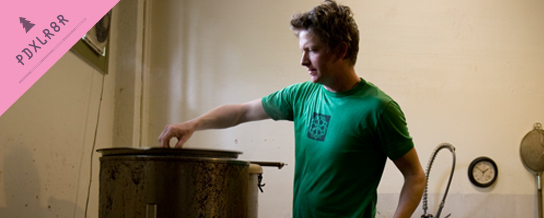
Dylan Goldsmith, who single-handedly runs Portland’s Captured by Porches brewing operation, takes a very DIY approach by default. Every pint of the company’s beer is made in a makeshift, one-room brewery–part of the process involves a dishwasher–at Clinton Street Brewing, the brewpub that sells the bulk of Goldsmith’s beer. The home brewer was first inspired during a stint working at a grocery store, when he transformed some apple cider into hooch using an old recipe from a Food Not Bombs customer. He continued making his own beer for parties and eventually became inspired to start his own venture. One day, while biking to school with some homebrew in his backpack, he saw his friends hanging out on someone’s porch. He never made it to class that day. In a friend’s words, he was “captured by the porch.”

“My DIY ethos comes from belief that the Walmartization of America can only lead to more low-paid and meaningless jobs,” says Goldsmith. “Every bar that is moderately busy could support a full-time brewer and only sell their own beer. They would save money–one-third of the price of a keg goes to the distributor–and create a meaningful and well-paying job. I guess when gas hits $10 a gallon, the choice will be made for us anyways.”

Goldsmith is one of many independent-minded local brewers who, over the last few decades, have turned Portland into a mecca for beer lovers. Located near the biggest hops-growing regions in the United States–which account for the bold, spicy, hopped-up varieties popular in the area–Portland boasts 30 breweries within city limits (the most in the world), along with a budding-but-healthy micro-distillery scene (local Integrity Spirits just released its own absinthe).

There’s a lot of pride in the local product. Over 11% of the beer made in the state is consumed in Oregon, according to the Oregon Brewer’s Guild. To make a comparison between music and the city’s massive craftbrewing scene: Many of the bigger independents, like Rogue or Deschutes, are the same size and stature as labels like Merge or Sub Pop, but there are numerous home brewers tinkering with recipes in their kitchens and basements. An entire community has coalesced around the creation of the social lubricant.

“There’s not that ‘we want to run you out of business’ aspect,” says Matt Wiater, who runs Portlandbeer.org. “Many of the new breweries are opened by guys who worked for other places and got help from their former employees. That sharing of ideas is why it’s gotten so big. It’s a growing industry and is still steadily growing.”

Part of that growth comes from the trend towards organic brews. The recently opened Hopworks Urban Brewery only serves organic beer and food; the building has numerous eco-friendly touches, like biodiesel-fired brew kettles, and was constructed with recovered materials. Rogue Ales, which is based in nearby Newport, just planted its own hops fields, in an ambitious plan to make an all-Oregon product by 2009.

“The innovativeness and the inventiveness of the brewers in the Northwest really stands out,” says Megan Flynn, editor of Beer Northwest magazine. “They’re not afraid to try new things. We have huge, hoppy IPAs and over-the-top stouts. The craft brewers of the Northwest are taking the traditional styles to the extreme.”

Howie B vs. Casino Royale Not in the Face

Reduce, reuse, recycle? In summer 2006, Howie B produced the album Reale with Italian roots/ska band Casino Royale. But Howie B, whose broad aesthetic has seen him work with artists such as Björk and U2, heard another album in there. He took that album back to the studio and came out with a dark, dubby treatment that tries to remain true to the band’s basic sensibilities. The results are sometimes fantastic–the bass on “Milano Double Standard” especially toward the end, is a thick slice of awesome–and sometimes not, as on the dull opener, “Easy Tranquillo.” Still, the re-imagining that went into this album makes it clear Howie B’s still got vision on his side.

Page 2823 of 3781
1 2,821 2,822 2,823 2,824 2,825 3,781