Alice Russell Tours North America

Alice Russell is an enthusiastic traveler. The Brighton, U.K.-based soul chanteuse toured relentlessly in 2007, darting around every pocket of the Europe and North America, and though we’re not even halfway through 2008, she is set to return to the road next week. For this handful of North American dates, she’ll be joined by her six-piece Alice Russell Live band, and with their help, show the rest of us how real singing (and crooning) is done.

Dates
06/18 Chicago, IL: Schubas Tavern
06/19 Miami, FL: Delano Hotel
06/21 New York, NY: Hiro Ballroom
06/22 Washington, DC: Bohemian Caverns
06/24 Washington, DC: Bohemian Caverns
06/25 Winnipeg, MB: Pyramid Cabaret
06/27 Montreal, QC: Club Soda
06/28 Toronto, ON: Supermarket
06/29 Vancouver, BC: Biltmore Cabaret
07/01 San Francisco, CA: The Independent
07/02 Los Angeles, CA: The Hotel Cafe

Image By Paul O’Valle.

The Bug Drops London Zoo Album

Can’t teach and old dog new tricks? Tell that to British producer Kevin Martin–he’s learned about 20 new musical tricks in a two-decade career that’s taken him from noise and ambient bands straight into cutting-edge dance music. After stints as a member of late ’80s industrial noise rock band Godflesh and collaborator in ’90s ambient electronic projects Techno Animal and Experimental Audio Research, Martin ultimately found his voice with experimental dub since 1996 via his moniker, The Bug.

Recently The Bug has issued several critic and DJ-endorsed dubstep singles, including “Skeng,” with MCs Killa P and Flowdan, and the bombastic “Poison Dart,” with female ragga chatter Warrior Queen. Now, Martin will unleash his whole arsenal on a new album, London Zoo, to be uncaged on July 29 on Ninja Tune.

The new album features Martin’s often harsh, uncompromising dancehall/grime/dubstep variations enlivened by a roster of London’s best toasters past and present, including the aforementioned Flowdan and Warrior Queen, plus Kode-9 collaborator Spaceape, reggae don Roger Robinson and Saxon Sound System veteran Tippa Irie. As with dubstep’s other successful album-based projects to date (Burial, Boxcutter, Skuba, Skream), The Bug’s music veers left of center rather than seeking mainstream club acceptance.

Martin’s output also embraces life’s harsh realities on tunes like “Too Much Pain (featuring Ricky Ranking & Aya)” and “Kill We.” Like the best Jamaican dancehall, The Bug makes sound system music for the “sufferers,” the roots people and working class just trying to get through life.

Catch The Bug live in New York at Trouble & Bass on July 25.

London Zoo Tracklisting
1. Angry (featuring Tippa Irie)
2. Murder We (featuring Ricky Ranking)
3. Skeng (featuring Killa P & Flowdan)
4. Too Much Pain (featuring Ricky Ranking & Aya)
5. Insane (featuring Warrior Queen)
6. Jah War (featuring Flowdan)
7. Fuckaz (featuring Spaceape)
8. You & Me (featuring Roger Robinson)
9. Freak Freak
10. Warning (featuring Flowdan)
11. Poison Dart (featuring Warrior Queen)
12. Judgement (featuring Ricky Ranking)

Kevin Martin a.k.a. The Bug with MC Ras B and Warrior Queen. Photo By Sheikh Amhed.

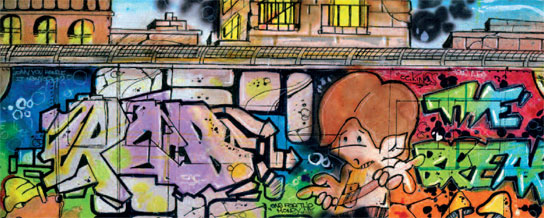
Pieces of Me: The Secret Life of Graffiti

As bombers already know, graffiti isn’t all adrenaline-fueled, freestyle madness. Before the art makes its way to be wall, it’s frequently sketched out in something referred to as a black book or a “piece book”—a fact overlooked by much of the press and media coverage surrounding the art form today.

Piecebook: The Secret Drawings of Graffiti Writers chronicles the evolution of graffiti, focusing on the works of New York City writers active from the mid-’70s through the mid-’80s. The book is the work of Sacha Jenkins and David Villorente (a.k.a. Chino BYI). The former is one of the founding minds behind Ego Trip magazine (as well as Ego Trip’s Book of Rap Lists and Big Book of Racism). The latter is an artist, longtime graf editor at The Source, and all-around graffiti guru.

It was after writing the intro to publishing company Prestel’s own The Birth of Graffiti that Jenkins pitched the publisher on a concept of his own: to physically reproduce the form and feel of an authentic piece book, and to fill it with the original sketches and work from various graffiti artists of the era. “Piece books definitely brought the experience home and kept the communication amongst writers, before there was what we know as modern-day media,” Jenkins says. The attempt, therefore, was to cull the best of the best in graffiti writers—whether in terms of natural talent or cultural significance—and to replicate the look and feel of what an actual piece book is like.

“Physically, the book is identical to a mid-to-large-sized black book,” says Villorente. “The cover texture, the page count, the cover stock—many of the small details are right on with a regular black book. Even the markers used on the cover and inside are the real deal.” Unsurprisingly, authenticity was of primary concern: Its subject matter is a culture that prides itself on such terms, and in its editors’ minds, there was no alternative to going big. Pick it up and you’ll understand–from the illustrations on the inside covers to the faux duct tape and stickers on the outside, Piecebook is an impressive recreation of its original inspiration.

Of course, getting the original art wasn’t easy, but personal legitimacy in the world of graffiti definitely greased the wheels. “Through years of doing print, I’m fortunate that the graffiti community understands that I have a pretty good track record with this kinda thing,” says Villorente. “Generally, when I’ve reached out to artists, I’ve had a lot of support. And with Piecebook, there were plenty of guys that were really eager to be a part of what we were doing, and opened up their collections to us.” That said, it wasn’t all for the sake of caring and sharing: “The other thing about graffiti is that it’s a really competitive thing,” Villorente continues. “Some of the guys are really just as competitive as they were 30 years ago. And when they hear that these three guys are in the book, they’re thinking, ‘There’s no way you’re gonna use my contemporaries without me being a part of that.’ For some people it was the support, and in some cases it was the competition. Both of these alternatives worked out for us.”

Villorente points out that one consideration was the fact that many of these books hadn’t been out of the possession of their owners for some 30 years; he recalls situations where he’d have to promise the artists their books back within the hour, the time it would take to properly scan and file a couple of the works inside.

And in many ways, such personal attachment gets to the heart of what the medium is about. “The thing about writing is that it’s a culture created by kids—most of them under 20,” says Jenkins. “And the beauty of that, back then, was that it wasn’t about media, it wasn’t about being on TV. It was about a community and an audience that was very specific. I think that technology has caught up with the culture. It’s now easier for artists to document their own works.” And, for better or for worse, it’s an art form that’s finally enjoying its time in the spotlight.

“From what I understand, books on Picasso and all the great classic, established artists—those aren’t selling as well as books on graffiti,” says Jenkins of his recent discussions with various book publishers. “So you’re gonna have graffiti on toenails, books about animals that do graffiti—they’re gonna hit it from every angle. It’s just bound to happen. But I think the books that will cut through the bullshit are books like this one. And really, it was such an obvious idea that nobody else thought of it.”

Ultimately, Piecebook is something that means as much to its owners as the art did its originators—a professionally put-together black book, made to feel like something passed between artists and meant to carry on in the hands of he or she who pays cold, hard cash for a copy of it. There are blank white pages meant to be written on, and stories to be told from within those already filled with imagery. “On every page there’s something to discover, whether it’s a message to another writer or a dedication to a female… there’s a story behind every single page, and behind every writer,” says Jenkins. “For students of the culture, there’s a lot to learn, and for those who are just fascinated by the art, there’s a lot to discover.”


3 Is A Crowd “Take It Back”

The Milan, Italy-based trio of Albi, Froz, and Giga like to crowd their tracks with heavy beats and genre-crossing influences designed to make dancers sweat themselves into a dehydrated frenzy. Often known as 3 Is a Crowd, the group has captivated the blogosphere with edits and remixes of fellow Italians like Crookers and Congorock. We like the fact that Northern Italy seems to be listening to Baltimore these days (and vice-versa); notably, this house track features some of the Maryland inspired flavor. Wyatt Williams

To read more about 3IAC, as well as other Italian artists, download a pdf of XLR8R Issue 118.

3IAC – Take It Back

What Not to Pitch XLR8R

Toiling away in the editorial assistant’s chair for far too many years than most would consider healthy, our resident crab, BJ “Bitter” Bastard, has seen his fair share of lame PR spam come through the XLR8R press release inbox. Whether it’s stories on your horrible band or hip-hop side-project or the stuntwoman you represent or, uh, socks, here’s what BJ recommends you don’t waste your time pitching us.

1. Lame hip-hop
Obviously we love hip-hop–good hip-hop, that is. And you know how we know when it ain’t gonna be good? When it comes from a company that calls itself so-and-so Entertainment or so-and-so Productions… and that name is misspelled. This also includes anyone working any artist who tells us they are a genius or insists we review their shit, anyone who tries to convince us we should cover an artist “because BPM and Nylon have already done articles on them,” or anyone whose PR sheet relies on press quotes from Perez Hilton. That’s not a selling point.

2. Shitty clubs
We may cover club culture, but we rarely cover clubs. Especially not your club. So stop sending us information on your new 80 million-square-foot eco-friendly resto-lounge in SoMa or your Las Vegas shithole that is going to “revolutionize the nightclub experience” with bottle service, “state of the art sound and lighting,” and parties hosted by old Playmates of the Year. No, poolside Kobe sliders will not get us to change our minds. [Speak for yourself. – Ed.]

3. Useless technology
If you have some niche-y social-networking website that you think is gonna be bigger than MySpace or Facebook, we’re just not interested. We already spent too much time farting around on that shit as it is. Same goes for pitching us on MP3-synced dildos and Spinz Pens. Since when is pen-spinning or jacking off in time to Fugazi something we need a special accessory for? We do have hands, you know.

4. Bad clothing and accessories
Look, we already go to the trade shows that you can’t afford a booth at, so if we gave a damn about your shirts that say “Disco sucks, Funk = Gay, Heavy Metal all the way,” you’d know by now. This also means you, Mr. Shutter Shades and Mr. Skull-Screenprinted-on-a-Blazer. And the next time you want to send us an email entitled “Should we send socks?” simply imagine us answering you with a friendly but firm “Are you fucking joking?”

5. Random Interviews
Here’s who we interview: musicians, artists, and (very infrequently) authors. Here’s who we don’t interview: stuntwomen, stars of the new Blu-Ray version of Rambo, members of Switchfoot or the Nitty Gritty Dirt Band (though we can see how this might be confusing), CEOs of internet start-ups, self-help gurus, computer-gadget brand consultants, makers of Bach or Beethoven bobbleheads, the singer/songwriter of the “new classic song ‘Happy Mothers Day’” (again, we admit this could get confusing), and organizers of food festivals–even if they are Edwin McCain.

Various Robert Hood: Fabric 39

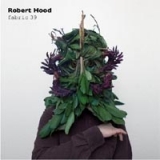
Few are better qualified to provide an overview of minimal techno’s parabolas and permutations than Robert Hood. Along with former Underground Resistance band-mate Jeff Mills, Hood’s been helping to define and shape vanguard dance music for nearly two decades. Fabric 39 finds this Detroit-raised producer/DJ working 32 tracks into 69 minutes, sifting through the deluge of mnml releases to reveal the hardest, most glinting gems, including (appropriately) several of his own creations. Cutthroat cuts from Pacou, Mills, Joris Voorn, Diego, John Thomas, and others typify Hood’s mix with their urgent, clattering pummel, generating subtly momentous fluctuations while rarely deviating from the soulfully stoic vibe. Listen, learn, and move to Hood’s master seminar.

Dante “Tucker Stomp”

Indie rapper Dante LaSalle Dauminque Tucker, who goes by the name of Dante when performing, has steadily gained popularity in the underground hip-hop scene since his first stage appearance in 1998. Now, Tucker is gearing up for a stint on the Vans Warped Tour as well as the release of his debut solo album, Roaming Empire, which is out July 15 via his own Havoc Pro imprint. “Tucker Stomp” is off the new album.

Dante – Tucker Stomp

All Natural Elements: Fire

On album number four, Chicago’s original DIY hip-hop heads, All Natural’s Capital D and Tone B. Nimble, return to form, employing a wealth of rugged beats and free-flowing rhymes. The fiery theme comes through nicely here, with head-nod-evoking anthems like “The All” and “Somethin of Nothin” carrying the incendiary energy of classic M.O.P. tracks, minus the blatant thug appeal. Yet the duo and its producers (Kev Brown, Battletek. et al.) don’t beat listeners over the head with the same boom-bap formula. On the dub-leaning “Signature Flow” in particular, Cap D shows that he can deliver his famous battle rap heat without getting overly heated. Essential for purists, and highly recommended for everyone else.

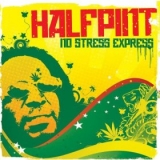
Half Pint No Stress Express

Twenty-some years ago, a young Jamaican singer named Half Pint ushered in a new era of roots reggae with classic dancehall anthems like “Mr. Landlord,” “Cost of Living,” “Crazy,” and “Greetings.” He’s since mellowed a bit, as evidenced by the irie surf-rock vibe of No Stress Express’ opener, “Unity” (featuring Sublime’s Jack Maness). That’s followed by a ska-ish cover of The Cars’ “Best Friend’s Girl,” several chilled lovers’ rock joints, and a smattering of traditional Rasta material like “Babylon Release the Chain,” “Children of His Majesty” (featuring Sly & Robbie), and “Bad Boys” (featuring Sizzla) sprinkled in among the lighthearted, worry-free tunes. Half Pint’s voice may have lost some crispness, but it’s still 100% niceness. Put this on, light one up, exhale… and watch the stress evaporate.

Podcast 41: Minus 10-Year Anniversary

January marked the beginning of Minus Records‘ 10-Year Anniversary doings, when Richie Hawtin announced the commencement of 10 weeks of silence. Once the quiet passed, a WMC appearance followed, as well as the kick-off of the CONTAKT tour, in which a strange cube is the centerpiece.

“It only seems like yesterday (1990) that John Acquaviva and I were two kids with a dream of releasing our first record on our own credit card funded label Plus 8,” Hawtin reminisces.

With that spirit in mind, he and his label commissioned New York-based producer Ambivalent and the über-prolific JPLS to compile an exclusive mix for the XLR8R podcast that showcases the history of Minus. The two brought in everything from the label’s inaugural release by Plastikman to later works by the likes of Troy Pierce and Matthew Dear under his False moniker.

Catch the Minus crew on the road for the remainder of the CONTAKT tour dates, and here’s to another 10 years of making and releasing music.

Tracklisting
1. Plastikman – Passage (In)
2. Plastikman – Consumed
3. I.A. Bericochea – RB
4. Gaiser – Egress
5. Richie Hawtin – E01
6. Algoritmo – Indus
7. Theorem vs Sutekh – Canis
8. Berg Nixon – Abstraction
9. Marc Houle – Bay of Figs
10. JPLS – Fuckshuffle
11. False – Fed on Youth
12. Plastikman – PK
13. Plastikman – Kink
14. Gaiser vs. Heartthrob – Nasty Girl
15. Runstoprestore – Arrows
16. Troy Pierce – Word
17. Robotman – Hypnofreak (Steve Bug’s Freaked Up Mix)
18. JPLS – Twilite 04
19. From Within – Lost
20. Niederflur – Sülzgürtel
21. MFW III – Silent Intelligence (Part V)
22. I.A. Bericochea – RB
23. False – River Camping
24. Heartthrob – Baby Kate (Sascha Funke Remix)
25. Troy Pierce – 5 Bitches (Gaiser’s Too Many Bitches Makeover)
26. Plastikman – Aquatik
27. Plastikman – Psyk
28. Marc Houle – FatCat
29. Magda – 48 Hour Crack In Your Bass
30. Ambivalent – Bunt
31. False – Bathe
32. Heartthrob – Baby Kate (Plastikman Remix)
33. Plastikman – Digital/Divide

Subscribe to this podcast: iTunes or mp3 format. For help, click here.

Download MP3
Download M4A (iTunes enhanced)
Subscribe to Podcast (RSS)

Podcast_Mix_2008_06_12

Page 2920 of 3781
1 2,918 2,919 2,920 2,921 2,922 3,781