Pon Di Wire: UB40 Row, Booyaka Exhibit, The Mighty Bop in JA

The UB40 singer drama continues. After announcing recently that U.K. singer Maxi Priest would assume lead singer duties after the departure of former lead Ali Campbell, now comes word that Ali’s brother Duncan will share the role. Duncan sings seven songs on a new UB40 album, which also features Ali’s final performances with the band. U.K.-based papers have also reported Ali and brother Robin (also in UB40) are no longer speaking and this may have hastened the former brother’s replacement.

Who produced the popular 83 and Rub-a-Dub riddims? That’s the subject of a dispute between No Doubt Records’ Kemar “Flava” McGregor and Greensleeves Publishing (owned by VP Records, U.S.) who have suggested that a 21-year-old musician, Llamar Brown, “co-produced the 83 Rhythm that McGregor in fact created.” An angry McGregor clarified that “Llamar is a musician, he plays keyboard for No Doubt, he is not the co-producer.” McGregor insisted that he didn’t want to sign a deal with VP and had other plans for his label: “We want to be in control of our destiny. If we’re going sign any deal, it must be non-exclusive.” The Rub-a-Dub riddim backs Morgan Heritage’s “Nothing To Smile About” and Richie Spice’s “Di Plane Land.”

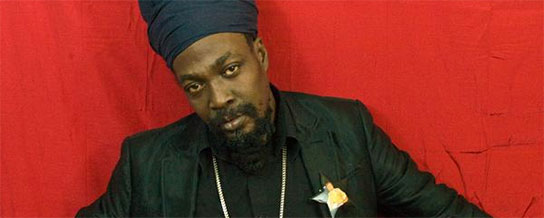
Junior Reid has signed a recording deal with Jah Cure’s Danger Zone/Sobe. A new album, The Living Legend, will drop soon and feature the new rap-reggae crossover single, “Don’t Play Me Dirty.” Reid has been recording since the 1970s and was lead singer for Black Uhuru after Michael Rose. Della Danger, the CEO of Danger Zone Music Group, commented, “We have been in the music business together for many years admiring each other’s work. Through the ‘Hot Long Time’ collaboration we were able to strengthen each other, and out of that project came Reid’s signing with The Danger Zone Music Group/SoBe Entertainment.”

A photo and art exhibition titled Booyakaopened on Thursday, May 1 at the National Library of Jamaica. It features a Wall of Fame that honors reggae greats via pictures, history, hit songs, and career background information. Featured are Peter Tosh, Culture, Garnett Silk, Bob Marley Augustus Pablo, and Jacob Miller, as well as less heralded artists like Nitty Gritty, Nicodemus, Barry Brown, Prince Fari, Hugh Mundell, Jack Ruby, Louie Lepki, and more.

The Mighty Bop has landed in JA. That’s right, noted French house and downtempo producer Bob Sinclar, a.k.a. The Mighty Bop from Yellow Productions, has been recording new material in Jamaica. In a recent Gleaner profile, Sinclar explained that he fell in love with the country while shooting a video in 2007. Sinclar returned recently and recorded tracks with Tony Rebel, Queen Ifrica, Christopher Martin, and youngster QQ for an upcoming project to be announced.

Check out Netherlands reggae information portal, Reggae Vibes, to preview tons of new riddims and releases. RV has sound clips for the Blue Tooth, High Grade, PeppaGrain, and Sweetie Come Brush Me riddims on deck now, plus audio podcasts that include a Leroy Smart selection, Studio One showcase with Black & George, Brentford All Stars, Jah Hugh, Larry Marshall, Owen Gray, and a U.K. Reggae selection with Archie Wonder, Don Campbell, Nereus Joseph, Sylvia Tella, and Prince Malachi. Serious!

Enter to win copies of Prince Fatty’s deliciously dubby, jazzy future-reggae album Survival Of The Fattest at Nice Up. The reggae website will give away five vinyl copies and five CD copies, compliments of Rasa Music. Click on the “Win Stuff” graphic.

Richie Spice’s new album, Gideon Boot, drops May 13. Also out now from the VP/Cousins Records camp is the Genesis one-drop riddim album featuring Gyptian, Turbulence, and Lutan Fyah with English artists Bobby Tenna and Anthony Que. In other news, reggae reissue label 17 North Parade has fully launched its new website. Find news and content about vintage releases and reissues by Cocoa Tea, Dennis Brown, Culture, and the Channel One studio.

Redbud will soon release its excellent one-drop Prosper riddim album, featuring Turbulence, Rob Symeonn, Lutan Fyah, Al Poncho, Donovan Steele, and others. This big version features musicians like Noel Alphonso on drums and keys, Val Douglas on bass, Dalton Browne on guitar, Bongo Herman on percussion, and Jerry Johnson on horns. Congrats to this dope Brooklyn-based label.

Upcoming Concerts

Monday, May 26: The 22nd Annual UCLA JazzReggae Festival, with Stephen Marley, Capleton with the Prophecy Band, Mr. Vegas, Alaine, Krossfayah Sound, and more at UCLA Intramural Field, Los Angeles.

Thursday June 19: Capleton, with special guests Culture Knoxx, Jah Thunder, Precious, Guardian, Nekia, plus Vybz Express and Stereo King Sounds at The Trocadero, Philadelphia PA.

Friday-Sunday June 20-22: The 15th Annual Sierra Nevada World Music Festival. Check the complete, three-day line-up online.

Friday-Sunday August 1-3: The 2nd Annual Reggae Rising Music Festival. Check the complete, three-day line-up online.

For more shows, read the Reggae Festival Guide Online, check out an excellent article in Jamaica Observer on global summer concerts and bookmark the LA Reggae Calendar.

Photo of Junior Reid by Shabazz World of Fotos.
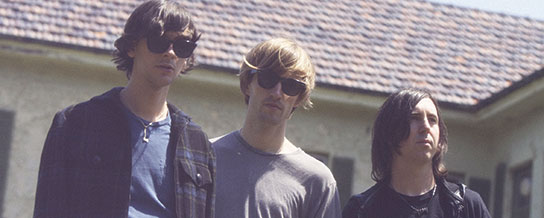
Don’t Stop the Rock: Part 1

Now that the wall between rock purism and the digital dancefloor has been reduced to mere rubble, a suite of newer, harder, brighter, faster bands are getting down to the business at hand: having a good time. This week, Melbourne’s dance-pop mood masters Cut Copy go from bright neon love to hazy ghost colors.

Critics love to talk about Cut Copy in relation to other bands. Reviews of the band’s 2004 debut, Bright Like Neon Love, repeatedly referenced Human League, Fleetwood Mac, and New Order’s Bernard Sumner, whom lead singer Dan Whitford sometimes sounds like. No doubt their newest record, a shimmering pop gem called In Ghost Colours, will invite comparisons to ELO, Jean-Michel Jarre, and Hall & Oates.

Whitford is only too happy to lay bare his influences. “I’m really into the music of the late ’70s, from disco to middle-of-the-road pop music, and the early synthesizer stuff that preceded new wave,” he says from the L.A. office of Modular Records, the dance-happy Australian imprint the band calls home. What Whitford hints at, and his records make clear, is that Cut Copy is more interested in mood than outright meaning–their music skillfully evokes bygone eras and emotions without actually ripping them off.

Melbourne-native Whitford, a coffee lover and huge Ghostbusters fan, is a graphic designer by trade, which definitely shows in the band’s painstaking attention to detail, the stylishness of their songs, and their eye-catching record covers and live shows. Cut Copy began in 2001 as Whitford’s solo instrumental hip-hop project, but the influence of French house (Alan Braxe, Motorbass) and electro-loving friends like Bang Gang DJs and Midnight Juggernauts slowly crept in. By 2003, he had recruited friends Mitchell Scott and Tim Hoey to play drums and bass, respectively. “The thing that appealed to me was just that DIY aesthetic,” says Whitford. “I just thought, ‘Why don’t we try to put together this Sonic Youth-style garage band and cover the songs that I’ve written in the studio?’ and it sort of evolved into what it is now.”

On the new record, the band indulges Sonic Youth-esque moments of catchy guitar feedback on “So Haunted,” and you can hear echoes of shoegaze’s flanged vapor trails on the carefully crafted interludes that string one track to the next. But what’s really revealed on In Ghost Colours is Cut Copy’s talent for pop songwriting. “On this record, I definitely became more comfortable with vocals,” admits Whitford, who recorded the album in Manhattan with the DFA’s Tim Goldsworthy (the previous record was tweaked in Paris with Cassius’ Philippe Zdar). “I’ve always been a fan of records with lush vocal arrangements and the Californian pop sound, like the Beach Boys and America. During ‘So Haunted,’ we just kept layering and layering more harmonies, and once we actually muted the track it sounded like Queen’s ‘Bohemian Rhapsody’ in the chorus. That’s a sound I love that isn’t captured by any other instrument but the voice.”

Don’t Stop The Rock Part 2: Does It Offend You, Yeah?
Don’t Stop The Rock Part 3: Late of the Pier
Don’t Stop the Rock Part 4: The Teenagers

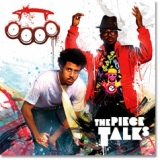
C.R.A.C. The Piece Talks

Blu, one of L.A.’s most promising MCs, captured the West Coast soul-tinged vibe pretty damn well on his 2007 debut with the help of producer Exile. But that album isn’t nearly as adventurous as Blu’s new collaboration with Detroit rapping producer Ta’Raach called C.R.A.C. (pronounced “crass,” not “crack”). What makes The Piece Talks magnetic is how their unrestrained approach allows them to cover so much ground without sounding overly rehearsed. Blu and Raach get breezy (“Love Don’t”), bugged-out (“Bullet Through Me”), and dead serious (“Respect”) while never really losing hold of their lucid flows and bump-worthy beats (courtesy of Ta’Raach). C.R.A.C. may very well go down as one of the best new hip-hop duos in the ’08.

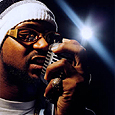
Ghostface Killah “Charlie Brown (Orgasmic Remix)”

Car companies have been incorporating dance music into their commercials for more than a few years, but the Toyota-owned Scion A/V has stepped past those hasty 30 second spots by releasing the music itself. Ghostface Killah lent his “Charlie Brown” track, left off of Fishscale because of licensing issues, to this Scion A/V 12″ series, to be remixed by a few hot electro acts. Featured here is the mix from Orgasmic-of Paris-based rap group TTC-who brings some high energy French beats to back the vocals of a legend. Wyatt Williams

Ghostface Killah – Charlie Brown (Orgasmic Remix)

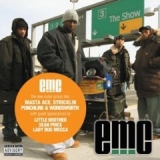
EMC The Show

EMC’s The Show delivers enough classic boom bap to make rap nerds strap on their backpacks in search of a cipher and that mid-’90s feeling. Juice Crew veteran Masta Ace, Lyricist Lounge acts Punchline and Wordsworth, and Milwaukee MC Stricklin (the weakest link of the crew) combine their talents for this concept album that follows the quartet preparing for an out-of-town performance. Proving they’re still relevant with genuine chemistry and precise lyricism, the battle-ready MCs explore a range of topics while pulling the punchlines they’re known for over beats by hard-hitters such as 9th Wonder, Nicolay, and Marco Polo. Now if only they’d get rid of all those damn skits.

Podcast 36: Osborne

Todd Osborn’s latest full-length arrived in record stores yesterday, and those curious about the new album, created on a hand-built computer and simply titled Osborne, should check this mix. The multi-talented producer–who, we discovered is as adept at making lego sculptures and speaking Japanese as he is at crafting music–delivers a mix of slinky, sultry house, fast-paced techno, and a few lush, layered string arrangements. Covering eighteen songs in just under fifteen minutes, many of the tracks here appear on the new album.

Tracklisting
1. Osborne “Afrika”
2. Todd Osborn “Bingata”
3. Osborne “Junk Food”
4. TNT “L8”
5. Osborne “Outta Sight”
6. Osborne “Even More”
7. TNT “Beat This House”
8. Osborne “Bout Ready To Jak”
9. Todd Osborn “Wait A Minute”
10. Osborne “Fresh”
11. Osborne “16th Stage”
12. Superstructure “Concourse”
13. Osborne “Detune”
14. Osborne “Downtown”
15. Todd Osborn “I Think It’s Me”
16. Osborne “Ruling”
17. Todd Osborn “Minibike”
18. Osborne “Air Pistol”

Subscribe to this podcast: iTunes or mp3 format. For help, click here.

Download MP3
Download M4A (iTunes enhanced)
Subscribe to Podcast (RSS)

Podcast_Mix_2008_05_06

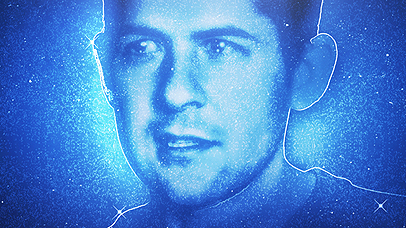
John Maus Wants To Scuba Dive

John Maus already had us intrigued with his beautiful and dark OMD-like brand of synth-pop. Then we caught his intense and frenzied one-man show at South by Southwest this year and were officially obsessed. Known previously as a collaborator with Ariel Pink and Panda Bear, Maus is clearly staking a claim on his own with his new album, Love Is Real. In his real life, he’s a philosophy instructor at University of Hawaii with endearingly bombastic opinions and is kinda crazy. Sigh!

Dominique Leone “Duyen”

Currently operating out of San Francisco, Texas-born Dominique Leone cites everyone from Claude Debussy to ABBA as his musical influences, and the multi-talented producer/songwriter/singer capitalizes on his classical music background as well. His self-titled debut album is the first for Lindstrøm and Smalltown Supersound’s new Strømland Records imprint, and is a collection of intricately arranged pop numbers that appear to utilize every instrument–electronic or otherwise–under the sun. Photo by Jess Halverson.

Dominique Leone – Duyen

Portishead: Do Not Disturb

It felt absolutely, resolutely endless. Gothic grey streaks and storm clouds splayed for miles across the Bristol, U.K. skyline, comprising the daily view from Portishead’s perch at the top of band member Adrian Utley’s stately, two century-old Georgian house. Camped out in the top two floors of studio space, the band was entrenched in an interminable stretch of music-making, broken occasionally by talking, fiddling with vintage instruments, and drinking tea.

Progress was slow, and the trio was frustrated. They pined for ideas and concepts, abstracts which often felt as tangible as white sand slipping through bony fingers. The self-imposed pressure was evident. When the group first approached Island Records about making another album–their first new material in nearly a decade–in early 2007, they had seven finished tracks. A year later, they were back down to six.

The band struggled to find a new sound–one that didn’t just revisit the dark trip-hop blueprint that made them famous–while grappling with unease at the state of the modern world and its wars.

“I feel like Rowdy Roddy Piper in They Live,” says band member Geoff Barrow of his sense of disconnection from society. “I feel that if I put glasses on, I would be surrounded by a bunch of aliens.”

Uneasy Listening
The making of Third, the band’s third real full-length, may sound like the musical equivalent of Sartre’s claustrophobic play No Exit. Frustration was nine-tenths of the album, confirms Barrow. But isn’t that, in some way, the perfect set of conditions for a band whose music has always sounded a bit tortured and uneasy? Portishead emerged in the mid-’90s with their own soundtrack of gritty beats and dark, smoky, painstakingly sculpted atmospheres–they sounded as enigmatic, somber, and damned as the double agents from the spy movies they occasionally sampled. The trio was a perfect union of an unlikely grouping of musicians: Geoff Barrow, a young hip-hop head and denizen of Bristol’s bustling recording studios; Adrian

Utley, a jazz guitarist who had once toured with Big John Patton; and Beth Gibbons, then and forever a mysterious, 21st-century torch singer, blessed with a voice and inflection that sounds beautifully cursed.

Utley and Barrow met in a recording studio in 1993–Utley was in session with a jazz band, and Barrow, in an adjacent room, was trying to sample his breaks through the walls. As the two started working together, it was clear they possessed a different chemistry and sound than their peers. Utley remembers fellow Bristolian Mushroom, a founding member of Massive Attack, coming into the studio where they were recording. “He said, ‘What are you doing? What the fuck? You’re playing that music?’ He had no idea you could do that. He came from just records and sampling.”

The trio added vocalist Gibbons and set forth their own gothic take on trip-hop with 1994’s Dummy and 1997’s Portishead (and again with a 1998 live album, featuring strings from the New York Philharmonic). The pressure to create a new chapter of this wildly influential trilogy made the new record a stressful journey. Nonetheless, Third finds the group reinventing themselves without repudiating their past. It’s an exquisite record of motorik rhythms, dread-inducing beats, and oscillating, off-key electronics–all without samples.

“I wanted it to sound like some weird live recordings from the Amazon,” says Barrow. “I wanted it to sound like it struggled.”

Unsolved Mysteries
On his blog, Geoff Barrow wrote that making this album was like watching Lost. Like that post-modern mobius strip of a television show, Third has roots in Sydney. In early 2001, Utley and Barrow entered a small recording studio in Australia, intent on making Portishead tracks. Both arrived from radically different places, having taken their own routes since the band burned out after its last tour in 1998. Utley dove into soundtrack work, scoring The Sound of Claudia Schiffer, a Nicolas Roeg documentary. Barrow got a tattoo, his name in a graffiti font on his arm. It signaled an end and a beginning–after getting divorced and feeling tired of making music, he decamped to Australia and helped found the Invada record label.

“I couldn’t find anything I was into,” Barrow explains. “I couldn’t find anything to say musically. I felt like I was on autopilot.”

Utley joined Barrow Down Under and worked for a month, putting together about six or seven tracks, which Utley describes as being “quite soundtracky.” But it wasn’t quite clicking. Barrow said it was more about feeling they had to do it, not that they wanted to do it. They scrapped all the tracks–none appear on the new album–but a seed had been planted.

A short while later, Utley found himself back in the English countryside, holed up in a cottage in Dartmoor with Gibbons. The wind was howling, it was pissing rain, and a milk churn near the door kept banging into the wall, but this pastoral moodiness suited Gibbons, who grew up on a farm, just fine. Utley had disassembled all his studio gear and carted it here to help Gibbons record her own material. She needed to say some things she couldn’t say in the context of Portishead, he recalls, and the process inspired her. Recorded shortly after the Australian session, the material would become part of Out of Season, Gibbons’ collaboration with Rustin Man.

To this day, Utley and Barrow don’t intrude on Gibbons’ vocals, an intensely private world, nor would they want to. Though she is an intriguing frontwoman–lyrically abstract, notoriously media-shy, often seeming anguished as she draws out her tortured notes–Barrow says she’s really rather straightforward. “Beth doesn’t seem mysterious by any means. She’s brilliantly able to communicate on so many levels. She is such an interesting person, a brutally honest person who throws up massive questions.”

Musically, Gibbons also prefers to push the envelope. “The madder stuff you give her, the better,” explains Barrow. “She responds to noise and echoes and weird places. People think, ‘Hey, I can give her real mad [electronic or hip-hop] beats.’ Well, no, you fucking couldn’t.”

On Edge
Barrow and Utley certainly oblige Beth’s penchant for weird beats on Third. The band immerses itself in noise, drone, and free jazz, and influences from Om and Sunn O))) to early electronic acts like Silver Apples. “[Listening to that music] kind of blew the cobwebs out,” recalls Barrow.

Third finds the band traveling down the same dark road, but with an expanded sonic palette and faster tempos–and tracks that are bit more noisy, aggressive, and purposely out of tune. The album-opening “Silence” commences with an enigmatic snippet of Portuguese dialogue provided by their friend Claudio, then steps into a sonic jungle. A squiggly, leaden beat is at the fore, but the periphery quietly teems with electronic echoes, unseen birds and beats calling from the darkness. And that’s just the first 45 seconds–somber strings, Gibbons’ plaintive vocals (“Did you know what I lost…. Did you know what I wanted?”), and sublime guitars follow. “Machine Gun,” a punishing march of electronic drums, alternately pummels with sound and elevates with warm, gauzy synths. The choppy melodies on “Plastic” sound like loose rotor blades. “The Rip”’s folksy guitar lines morph into pulsating melodies, while the tense, upbeat “We Carry On” manages to be booming and frenetic and hypnotic at the same time.

The approach to making this album was more communal and less static, employing much more instrumentation–Barrow played drums and keys, Gibbons contributed some guitar, and Utley strums a ukulele on “Deep Water,” inspired by the Steve Martin film The Jerk. This time around, the group creates real imperfections and oscillations instead of restructuring pockmarked samples. “I’ve got nothing against creative sampling,” offers Barrow. “But I feel weird about sampling nowadays, like people should have moved on and started writing their own shit by now.”

Barrow, who is dyslexic, doesn’t have a real visual sense to his production–he sees studio time as a chance to “turn his eyes off.” “When I do interviews, I hear the word ‘perfectionist’ a lot,” says Barrow. “And to me, it seems just the opposite. You’re struggling to get something that sounds good, or kind of good, or even okay. Fuck perfection, I just want to get it in tune, or out of tune.”

There is something more that Barrow is searching for, though–he’s always striving for a sound that has presence and space. “The edge is the most important thing,” he states. “For me, that’s the otherworldly thing, the unknown quantity, the glue. When you sample something, the glue already exists, because it was probably recorded in some great orchestral room. It’s that mystery.”

Odd Fellows
Last December, Portishead premiered their new tracks at All Tomorrow’s Parties’ Nightmare Before Christmas festival, which they curated. The three of them were much closer, artistically and geographically, than they’ve ever been, and there was a palpable sense of looseness and relief on stage. Parts of Third were finally exposed, and it seemed that all the exhausting conversations, painfully long nights, and musical soul-searching had been worth it, if not essential to the process of being Portishead.

“We’re an odd band,” states Utley. “There’s such an oddness to us. But that doesn’t worry me.”

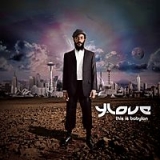
Y-Love This Is Babylon

Yitz Jordan ciphers spirituality and political consciousness into hip-hop without losing awareness of musicality–essentially, teaching without preaching. For the most part he succeeds. His debut is a musically rich recording that matches his live presence well, where the stage is a theater for his poetic musings. His lyrics (sung in five languages) revolve around unity and understanding, especially regarding the Israeli/Palestinian conflict. “From Brooklyn to Ramle” calls for recognition of “one race” while backed by a seriously banging instrumental, and “Bump” is an instant hip-hop classic in every sense of the word. The album sometimes lags with thin and dated beats (“Mind Transit,” “New Disease”), but overall This Is Babylon is a welcome introduction to a revolutionary wordsmith.

Page 2945 of 3781
1 2,943 2,944 2,945 2,946 2,947 3,781