Top 10: Plant Life, Anja Schneider

Power Douglas
Pentecostal Fangbread
FiveSixMedia
Release Date: April 15

You’ve never heard of Power Douglas? That’s okay. Just know that when Power Douglas hits you, it hits you. Signed to King Britt’s FiveSixMedia, this NY trio of eccentric vocalist Furor Thin and multi-instrumentalists Tim Harp and Jesse Crawford composes a genre-bending hybrid of post-modern punk and hip-hop with Furor Thin howling and rapping about all kinds of weird shit over skittery beats. Think Kool Keith meets Public Enemy meets TV on the Radio, and then smash the fuck out of what you think that might sound like. ZM

Housemeister
Inordertodance EP
All You Can Beat
Release Date: April 2008

For this aptly named EP, German producer Housemeister rolls out three tracks of distorted drums, fast-paced hi-hats, and lots of crashing around on a Roland TR-707. The title track is by far the heaviest, while the others stick to a much more stripped-down, minimal style, but throughout, the energy is strong. The construction dudes currently pounding on the walls outside my window have nothing on these beats. JM

Costa Music
Lighter Subjects
Rephlektor Inc
Release Date: May 6

Chicago-based electronic act L’Altra always made pretty music, but member Joseph Costa has truly come into his own as an artist with this debut full-length. He’s another one of those guys with a gorgeous voice who blends acoustics and electronics together seamlessly and throws some poignant lyrics on top with alarming ease. The icing on this gorgeously haunting cake is Telefon Tel Aviv’s Josh Eustis’ superb abilities when it came to mixing the album. JM

Cafeneon
Cafeneon
Station 55
Release Date: April 15

The punk flavors are very discernible here, but this four-piece outfit that hails from Brussels doesn’t stop there when it comes to deciding which of their musical influences will creep into the songs. Their self-titled debut album is peppered with shades of New Order, Mad Professor, and the aforementioned punk, was produced by techno powerhouse Cristian Vogel, and is sung entirely in French (not surprising, since the band is from Belgium, but it’s cool anyway). JM

Torae
Daily Conversation
Internal Affairs
Release Date: Out Now

There’s nothing groundbreaking about Torae’s Daily Conversation. But this debut is anything but boring. The all-star production lineup–DJ Premiere, 9th Wonder, Marco Polo, Black Milk, Khrysis–provides break-neck beats while Torae proves he’s the “new breed of raw” with ill lyrics and a hard delivery. Check “The Journey pt. 1,” his receipt for dues paid in the industry. ZM

Walter Meego
Voyager
Almost Gold
Release Date: May 2008

Walter Meego’s Voyager is pure light-show, electro-pop magic. Singer Justin Sconza whinnies over catchy synths and blippy beats to take the dancefloor on an irresistibly smooth and quirky voyage. Thought those unicorn t-shirts from Urban Outfitters look lame? Try ’em on with these guys blasting in the background. TH

Various
Playing Around I
Made to Play
Release Date: April 28

Jesse Rose has gathered some friends and cohorts to participate in his Made to Play imprint’s first-ever compilation, and this double-disc certainly lives up to both its title and the name of the label. Disc One is a collection of house, techno, disco, and electro bangers from the likes of Sinden, Oliver $, Izit?, and Rose himself that showcases some of the label’s impossible-to-find singles, as well as a few remixes. For the second disc, Oliver $ mixes the different tracks together for a whirlwind mix that has become my new “get ready to go out” soundtrack. JM

Anja Schneider
Beyond the Valley
Mobilee
Release Date: May 2008

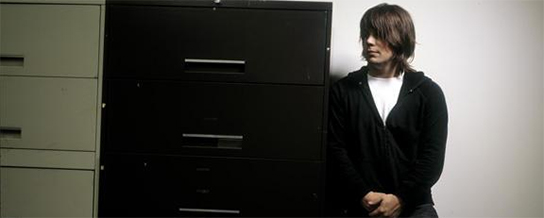
Fresh off a tour that pushed her Mobilee imprint further into the forefront of clubbers’ minds, Anja Schneider is set to drop this full-length and further showcase her many abilities (one of which is apparently channeling pagan spirits, but that’s neither here nor there). This is a minimal affair through and through, with carefully executed loops and samples that were arranged with great care and thought. JM

Plant Life
Time Traveller
Decon
Release Date: TBA

Time Traveller opens with Jack Splash waxing poetic about his many influences, citing everyone from Jimmy Hendrix to Dilla to the Talking Heads. It follows, then, that Splash and his Plant Life crew should launch into an album that jumps between hip-hop, funk, rock, and R&B, and it’s amazing how well they blur each of these genres together. The catchy lyrics add to this hilarious, absurd, yet somehow profound album. JM

Ming & Ping
Causeway Army
Self-released
Release Date: Out Now

Ming & Ping’s self-released Causeway Army is a call to the masses, full of high-energy electro pop that works just as well in a Prada boutique as it would a gritty nightclub in London. The fearless energy of their new wave-y pop tunes is just a small part of what they refer to as “The Ming and Ping Dynasty”; to you that means extravagant live multimedia tours, fashion shows, and a slew of photo shoots. To us it’s dance-pop bliss. TH

Jennifer Marston
Zoneil Maharaj
Taryn Harrington

Photo of Jospeh Costa by Andreas Larsson Photography.

Last Week’s Top Ten

Modeselektor, Kode 9, Carl Craig on Initial Mutek Lineup

The organizers behind Montreal’s annual Mutek Festival have announced the five-day event’s ninth edition, set to take place May 28 – June 1, 2008, in various locations around the Canadian city.

Mutek has consistently seen some of the best names in electronic music descend on Montreal for performances and panels, and the initial lineup unveiled today promises another batch of top-notch artists slated to play the festival, including techno legend Carl Craig, Ninja Tune’s Kid Koala, dubstep star Kode 9, and more. It’s pricey ($165 for the Mutek Passport and $95 for the Weekend Pass), but historically worth the money. Head here to buy tickets.

A full lineup will be announced mid-April. In the meantime, first acts are:

Carl Craig
Christian Fennesz
Christian Vogel
Dave Aju
DJ Olive
The Field
Jeremy P. Caufield
Kid Koala
Knifehandchop
Kode 9 & the Spaceape
Mathias Kaden
Megasoid
Metrika
Modeselektor
Murcof
Nôze
Onur Ozer
Radio Slave
Rechenzentrum
Sleeparchive
Tim Hecker

Photo of Modeselektor by Birgit Kaulfuss.

Loading… Patapon Reviewed

Patapon
Sony Computer Entertainment
PSP
$19.99

Once in a while, a game comes along that seems so ridiculous it has to be awesome. Patapon is one such a game.

Essentially a rhythm game, in the vein of PaRappa the Rapper, Patapon also mixes in a bit of strategy and some RPG elements as you take the role of a war general/deity worshiped by small, cycloptic warriors known as–what else–the Patapon. However, the feisty Patapon, are an extremely rhythm-oriented tribe and only obey your whims so long as you beat the correct patterns on the PSP’s face-buttons, which serve as your heavenly war drum, the crux of Patapon’s gameplay.

Initially, you only have a couple of different Patapon forces and command patterns (attack, defend) with which to control them as you start off hunting for the meat of fairly innocuous creatures to support your li’l guys. Eventually, you will encounter enemy armies and giant boss creatures that require a good deal of studying and perseverance to defeat, but who can yield new armor, weapons, new command patterns, or even new Patapon, such as bow and arrows units, horseback units, etc.

Success is all about keeping the beat and building up your “fever” meter, which gives your Patapon greater attack and defense powers. But if you can’t keep up, you will never reach the “fever” mode and likely never take out your enemies, thus ending your poor little Patapon’s campaign fairly quickly.

As far as our experience with the game, we’ll start with the not great news first:

Right off, hearing the “click track,” with which you are supposed to keep time with, can sometimes be difficult on the PSP speakers, especially if there is a lot going on at the moment (headphones help this somewhat).

When your army finally gets into the very necessary “fever” mode, they yell out a battle cry that, while cute, can totally throw you off the beat, thus taking you out of the mode and back to square one. And since, if you can’t keep up fever mode, you are pretty much toast, this can be annoying.

Our final sticking point is the need to use special patterns that allow you to defeat certain bosses (a rain dance lessens the damage of a fire-breathing dragon, for instance). These patterns often require you to first be in fever mode to execute them, which, as we said can be a challenge in and of itself to achieve consistently, and each boss often requires you to do this many, many times before they are beaten. It was quite frustrating to do these special dances repeatedly, only for our army to be continually decimated by a giant sandworm or ornery robot.

Now on to the good stuff:

Patapon’s art style is nothing if not absolutely charming. The simplistic design lends itself perfectly to the game and is uniquely mesmerizing. The Patapon themselves are very entertaining–despite only having one eye and no face to speak of, they are extremely expressive, love to dance, play instruments, and cook. Who knew?

The strategy/RPG elements, such as building up your armies and finding new weapons and armor, is actually quite compelling, making replaying levels and repeating boss fights (which get more challenging each time you do them) worth your while.

And as it is a rhythm game, music is important. So what about it? Totally fucking catchy. Tribal drum patterns and gritty basslines underlie the Patapon’s war chants, which will be stuck in your brain for weeks. Be prepared to catch yourself chanting “Pata Pata Pata PON!” at almost all hours of the day. It’s kind of ridiculous.

Finally, and most importantly, despite the game’s sometimes frustrating aspects, it remains extremely addictive. No matter how many times we got crushed, we kept coming back for more and loved every second of it.

The PSP has had some good games since its release a few years back, but Patapon is a one-of-a-kind experience that embodies everything that is great about the system. It’s simple, slick and fun. If you enjoy games, music or pop-art in any capacity, you owe it to yourself to pick up Patapon.

Lyrics Born: Confessions of a Shoe Ho

Bay Area hip hop favorite Lyrics Born has a famously tight shoe game. He even wrote a skit about it on his new album. But he’s about to go on an Australian tour with some other notorious shoe hoes–Kanye West, Cypress Hill, and Pharoahe Monche–and needs to step it up a notch. As we follow him to Shoe Biz on Haight Street in San Francisco, he explains what shoe hoes look for and what a sneaker needs to have to make it “clean.”

The Perceptionists, African Underground to Play Third Trinity Hip-Hop Festival

In the words of its co-organizer, Zee Santiago, the annual Trinity Hip-Hop Festival “demonstrates how hip-hop has become an international culture as well as an accepted academic area of study.”

Past editions of the festival have held true to this statement, with personalities like Can’t Stop Won’t Stop author Jeff Chang and film director Byron Hurt giving talks alongside performances from contemporary, “conscious” hip-hop artists.

The 2008 edition follows suite, with a keynote address from author Bakari Kitwana (The Hip Hop Generation and Why White Kids Love Hip Hop), which he has titled “Can Hip Hop Make the Transition from Cultural Movement to Political Power?” Following the address will be three days of performances by artists from places as close as Seattle and as far as Senegal, as well as a b-boy battle hosted by Rock Steady Crew’s Pop Master Fabel, workshops on beatmaking and graffiti, panel discussions, and more. Confirmed performers thus far include duo Zimbabwe Legit, The Perceptionists, DJ Boo, Nomadic Wax’s African Underground band, and a grip of others.

Festivities go down April 4 – 6 at Trinity College in Hartford, CT. Check the trailer below for a preview of the events.

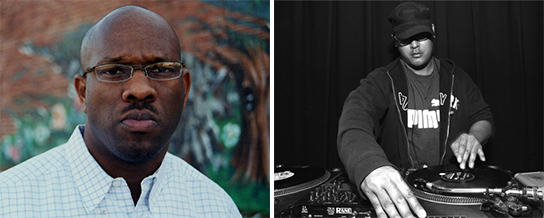
Pictured above, from left: keynote speaker Bakari Kitwana and DJ Boo.

Rhythm Nation Part 4: Pinch & Distance

Deep, dubby, cheeky, metallic. For the next several weeks, XLR8R will profile eight young DJ/producers exploring different facets of dubstep, the low-end sound of the London underground. Up this week, a London metalhead and a Bristolian dub dude issue the scene’s most surprising bass monsters.

Both Pinch and Distance are dubstep iconoclasts, making deep contributions to the bass-powered scene while standing just outside the spotlight that’s fallen on Skream, Digital Mystikz, and Kode 9. Distance (a.k.a. Greg Sanders of London) has a Jekyll and Hyde nature to his productions, balancing propulsive dance tear-outs like “Traffic” and “Taipan” with tightly wound, highly controlled creations like “Cyclops” and “Feel Me.” The world got a taste of his metal influences and apocalyptic atmospheres on last year’s My Demons, released on Planet Mu, and they’ll get even more with the recent launch of his Chestplate label.

About two hours west of London, Bristol’s Rob “Pinch” Ellis is busy running his Tectonic label, as well as producing some of dubstep’s most distinctive records, including 2006’s “Qawwali” (Planet Mu). While Tectonic releases from the likes of Skream, Loefah, Moving Ninja, and Hijak often show the influences of techno on the dubstep sound, Ellis stunned the scene with the November ’07 release of Underwater Dancehall. Influenced by Bristol’s deep Jamaican music traditions, the record is 10 stunning tracks (eight of them with original vocals) of slinky beats and deep, dubby bass. It’s as close as dubstep has come to producing a dancehall album, and its unique songs landed it on many a year-end top 10 list. “It’s one of the only albums I can listen to the whole way through,” offers Distance.

These two producers’ tastes for the more leftfield and boundary-pushing sides of the genre means they often DJ together, pulling off a mini-tour of the U.S. last May, with dates in New Zealand, Japan, and the Ukraine (“I didn’t know what to expect,” says Distance, “but the reception was mindblowing.”) Despite the world traveling, their favorite gig of last year was the two tag-team sets they played at the second birthday party of London’s DMZ night. “They had to open downstairs in [London club] Mass to accommodate all the people who’d turned up and couldn’t get in,” says Pinch. With the sound expanding rapidly–and Pinch and Distance unafraid to take risks with their records–it won’t be the last time.

Rhythm Nation
Part 1: Skream
Part 2: Benga
Part 3: Caspa & Rusko
Part 5: Cluekid & Cotti

Q&A: Miss Kittin

A special interview with electro doyenne Miss Kittin.

XLR8R: What’s one record that changed your life or changed the way you thought about music?

Miss Kittin: Probably Chill Out from KLF and all the first Warp releases like LFO, Artficial Intelligence 1. Before that, I wasn’t really listening to music consciously. Music was linked with “entertainment” and suddenly I could feel it through my cells, intellectualize it, analyze it, digest it emotionally. It became therapeutic, but also made me think forward; a new world opened. Coming back from illegal rave parties in the early ’90s, I would lay down with friends and listen to these records. Yeah, we were high, but we knew this music was the start of something big in music and in a more spiritual way, with machines.

Did you ever have a moment in which you considered quitting DJing?

I often try to imagine quitting, and it doesn’t scare me. I could do a lot of other creative things. I could finally write the book I am planning to write one day; I could be a full-time composer and produce other people; I could coach future artists; I could have a radio show. I could do a lot of things! It’s a healthy way to keep this free love relationship I have with music. I seriously considered quitting a few years ago when people started to consider DJs as superstars. It made my working conditions very difficult. I would DJ with bodyguards because people would steal my microphone when I would turn my back to take a record, or they would always need to touch or talk to me when I was DJing. I hate that; it has nothing to do with what DJing is. Recently, [me and producer] The Hacker talked about going back onstage for good and DJing only as a hobby. That’s more or less how we see our future now.

Were you ever nervous when you started doing vocals/singing? If so, what did you do to get over it?

I am always nervous. If I am not, it’s not a good sign. It shows I don’t give a shit, and I’ll play bad. I learned to welcome this nervousness as a little friend who gives me the extra power to do my best. I need quiet, relaxed people around me, because people “feeling” for me will only get on my nerves more! That’s why I need peace in the DJ booth, like a champion before a game.

How was the mood in the studio different when you were making Batbox than your last album?

During the last one, my life was a mess… I had no distance whatsoever with what I was doing. I was just doing it, traveling, playing, sleeping, eating, being with the wrong friends, away from what I really needed. But you have to get lost like that to find who you are. I can turn back and say I am more serene, more relaxed, and have a better quality of life. I worked hard to make it easier now. But it’s a hard process, you have to ask yourself a lot of questions, and this album talks exactly about that. I made it when I had free time, no stress, just fun. In life, don’t you think it should be like that?

What’s the best piece of advice you’ve ever received?

To never listen to what people say. Laurent Garnier gave it to me in ’94 when I got my first international gig. Mike Dearborn booked me in Chicago after I opened for him at a small party in France. I was not famous at all, and everybody thought I had sex with Mike. Some colleagues, today totally forgotten, even offered me condoms. I was so pissed. I asked Laurent if it was on the 8 o’clock news that I played in Chicago. He was the only one to say that I deserved this gig and warned me there will always be a lot jealousy.

Besides your house, where is your favorite place in Paris?

Probably my friend’s sofa… Sometimes I go to there in pajamas and fall asleep in front of the TV.

What band or artist were you obsessed with as a teenager?

None really… My dad bought me Madonna’s first album. He thought I was really into her.

What is the most annoying question you get asked by journalists?

The “woman in a male music business” thing.

What is the weirdest thing you own?

My alarm clock, a Japanese pink pig lifting weights with a melody to wake me up. It’s a present from my mother that we bought together in a Spanish 99¢ shop. It’s probably the oldest thing I have as well.

What is the most beautiful thing in your house?

The view, the terrace… I am very lucky, I have light everywhere—a real luxury in Paris.

Do you have any pets, and what are their names?

I have two female cats, Wednesday and Friday. They live with my ex -boyfriend.

Who is your favorite visual artist?

Today, it’s Helmut Newton.

Who is your favorite superhero?

Darth Vader.

What track are you most proud of on Batbox?

“Grace.” It came to me in a graceful moment, magical. I am proud it was me, but it could have been someone else. This feeling of being an instrument ourselves is very rare.

What’s one record made by someone else that you wish you would have made?

I never thought about it. What comes to my mind now is Johnny Cash American Recordings. More ambitious? The Beatles Sgt. Pepper’s. It’s not like I am a huge fan, but I grew up with this record, and even if I always found it much too hippie, the recording ideas are just genius. They surely wrote the most incredible songs for their time. One song? Maybe Elvis Presley’s “Suspicious Minds.” For a more current record, I would say “Windowlicker” by Aphex Twin, no hesitation.


Rusko “Get Ya Cock Out”

Like his friend and counterpart Caspa, 22-year-old Chris Mercer (a.k.a. Rusko) prefers his dubstep with a little cheekiness. The self-proclaimed geek who produces his music in London has a love of Squarepusher, chilled-out tunes, and bagels, all of which find their way into the music he makes. “Each to their own, but our music is completely dancefloor,” Mercer said in a recent article for XLR8R. “It’s got to be uptempo.”

Rusko – Get Ya Cock Out

Bostich + Fussible Tijuana Sound Machine

Their Latin Grammy-nominated Tijuana Sessions, Vol. 3 leaned more toward the techno half of their sound, but here Bostich and Fussible get closer to their Norteño side. It’s far from an acoustic album, with loops, vocoders, and synths throughout. But the accordions get turned up higher, the horns become brassier, and acoustic percussion plays a bigger role. The beats still draw more from techno, though traces of Norteño’s polka-bounce remain, as on “Shake It Up.” Some songs lean more toward electronics (“Rosarito”) than others (“Brown Bike,” which includes vocals), but everything is efficient, nothing clocking in even as long as four minutes. They’re not hard-core Norteño–no Mexican corridos about life on the border, say–but definitely closer on the family tree.

Page 2976 of 3781
1 2,974 2,975 2,976 2,977 2,978 3,781