
Raudive “Needles (Steve Bug Remix)”

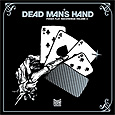
House and techno producer Oliver Ho has worked under his Raudive guise for the last couple of years, using it to explore the darker, more experimental sides of electronic music. Taken from the brand new Poker Flat compilation Dead Man’s Hand, this track sees label boss Steve Bug turning the acid-flavored “Needles” into a snappy dancefloor number, driven by pianos, synths, and hi-hats.

Raudive – Needles (Steve Bug Remix)

Cheb i Sabbah Devotion

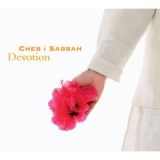
DJ/producer Cheb i Sabbah is the most recognizable force in America’s contribution to Eastern-inspired electronica: recognizable enough to become a victim of his own success. Sabbah’s trademark sound of Indian and North African classical music restaged within atmospheric dance music has become a cliché. But for Devotion, Cheb i Sabbah heads his critics off at the pass by returning to South Asia, site of his most successful inspirations. His resultant collaborators–devotional singers such as Rana Singh and Anup Jalota–keep Devotion more “global” than “beats,” and in doing so, making it more palatable to both listeners and dancers, who recognize that South Asian rhythms need little enhancement to make the floor shake.

Del tha Funkee Homosapien 11th Hour

As anticipated as the new season of Lost, Del’s fourth full-length comes from alt.rap powerhouse Def Jux, yet 11th Hour features none of the label’s usual suspects, and apart from one track by Opio, Del’s Hiero brethren are conspicuously absent as well. So it’s pretty much Del’s baby–luckily, everyone’s favorite funky Homo sapien has been boning up on music theory these past eight years, resulting in a tighter, more focused sound. As a lyricist, Del’s potential has always been scary; now that he’s firmed up his production chops, it’s downright devastating–fewer quizzical non-sequiturs, more “Naked Fonk.” Already a legend, on 11th Hour, Del takes a bold step toward complete mastery of the hip-hop art form.

Azzido da Bass Dooms Night Remixes

Crookers made my 2007 come alive with their infectious, well-produced madness and their great ideas never stop. Their spaghetti-western take on “Dooms Night,” a track originally from 2000, is amazing. But Azzido himself delivers an even more breathtaking mix that doesn’t so much update the classic but offers up a whole new track instead. One of the tracks that’ll make my Best of 2008!

YACHT Preps Tour Dates

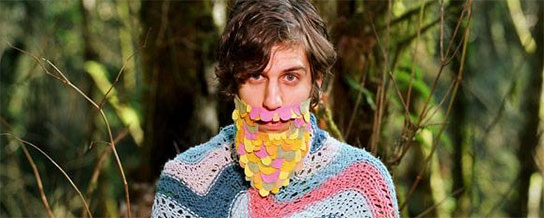
YACHT may never top that 2007 show in Portland, when he played on a water vessel of the same name, but Jona Bechtolt will nonetheless resume life as a road warrior this March. The renaissance man of indie rock (if you could even label his pop-meets-electronic programming such) will be traveling North America with Oakland-based rap rockers WHY? and New York’s Vampire Weekend, making the obligatory SXSW appearances, and generally stirring up mayhem with his hyperactive live shows. Last time around, Bechtolt was kind enough to keep fans updated with a tour diary that included videos. Let’s hope he has something similar in the works this time around.

Watch YACHT on XLR8R TV.

03/05/08 Santa Fe, NM: College of Santa Fe
03/07/08 Los Angeles, CA: Natural History Museum #
03/12/08 Austin, TX: Emo’s Main Room
03/13/08 Austin, TX: Wave Rooftop
03/14/08 Austin, TX: Urban Outfitters
03/19/08 San Diego, CA: The Casbah*
03/20/08 Los Angeles, CA: El Rey*
03/22/08 San Francisco, CA: The Independent*
03/23/08 San Francisco, CA: The Rickshaw Stop*
03/25/08 Portland, OR: Doug Fir Lounge*
03/26/08 Seattle, WA: Neumos*
03/27/08 Vancouver, BC: Richards on Richards*
03/29/08 Missoula, MT: Badlander*
03/30/08 Boise, ID: Neurolux*
03/31/08 Salt Lake City, UT: Kilby Court*
04/01/08 Denver, CO: Bluebird Theater*
04/03/08 Minneapolis, MN: TBA*
04/04/08 Madison, WI: High Noon*
04/05/08 Milwaukee, WI: Turner Hall*
04/06/08 Chicago, IL: Metro*
04/16/08 Brooklyn, NY: Studio B
04/17/08 Annadale-on-Hudson, NY: Bard College
04/19/08 Purchase, NY: SUNY Purchase

# = w/ WHY?
* = w/ Vampire Weekend

Photo by Sarah Meadows.

No Kids “The Beaches All Closed”

Come Into My House marks the first release for No Kids, the Vancouver, Canada trio of multi-instrumentalists who combine crisp, sharp programming and sweeping orchestral arrangements. In the words of Owen Ashworth (Casiotone for the Painfully Alone), the album, set for release on February 19, “turns the mundane into cinemascopic musical extravaganza.”

No Kids – The Beaches All Closed

Bruno Pronsato Why Can’t We Be Like Us

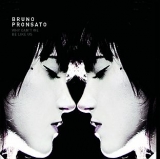
Over the last few years, Berlin-based producer Bruno Pronsato has issued several leftfield-techno 12s on discerning labels (Telegraph, Perlon, et al) while maintaining rigorous quality control. With this second full-length, Pronsato reaffirms that his music is worth the serious headphone scrutiny one devotes to a Pierre Henry or Eric Dolphy LP. Why Can’t We Be Like Us will also please the world’s more adventurous selectors, but its nine tracks are far from facile DJ tools. Pronsato labored prodigiously over the compositional elements and tones while constructing rhythms that are as labyrinthine as they are danceable. The acute attention to detail and psychedelic properties of the disc’s production elevate it to the rarefied heights of Villalobos’ best work.

Digital Music: Past and Future

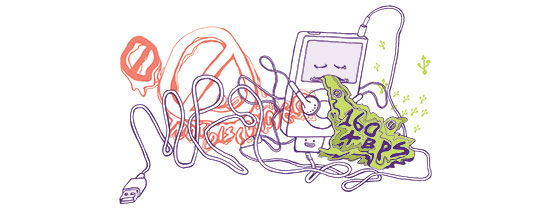
Radiohead’s self-issued, internet-first, pay-as-you-wish release of In Rainbows is perhaps the best-selling digital album ever, according to unofficial early sales figures. But the stunt’s revolutionary appeal was tarnished when it was revealed that the files were released at a sub-par bit rate.

It would be interesting to hear what Dr. Jürgen Herre would have to say about such a fanatical debate over bit rate, as he’s probably been involved in a few during his career. As Chief Scientist for Media Activities at the Fraunhofer Institute for Integrated Circuits in Erlangen, Germany, Herre is as clued-in to the history of the MP3 as his title suggests. Since joining the Institute in 1989, he has worked in the lab where MP3 technology was developed and finalized just 15 years ago. He remembers the jury-rigged devices used to test the technology in its infancy, and has seen the nascent format perfected, popularized, and retooled into multi-channel surround MP3 technology. Here recently spoke to XLR8R about the format’s creation and continued development.

XLR8R: What was the original reason for developing the MP3 format?

Jürgen Herre: At the time, people were looking for data reduction schemes for digital audio. The Eureka 147 project, which started in 1987, was underway, which was meant to develop digital audio broadcasting for European radio systems, and you needed a lot of space to carry all the frequencies. People started to compete to solve that problem. Also, broadcast reporters wanted to convey live sounds over broadband, so we wanted to find out how to squeeze high-quality sound through a digital telephone line.

Describe the tests that you were running.

At the time, tests couldn’t be done on computers because they didn’t have enough processing power to decode the audio in real time. We had to set up our own hardware boxes containing digital-audio interfaces, circuit boards, and processors, and then had to digitally connect a CD player into that box. The first time we transferred music, it took five signal processors. We would, of course, also test the format with certain songs to see if it accurately reproduced audio. There’s a difference between nice music (which we’d like to listen to) and critical music that is very hard to capture in high quality. We looked for tracks with castanets, triangle, soft voices, peace pipes, and things like that. We ended up using a Suzanne Vega acappella of “Tom’s Diner” quite a bit.

What do you and the other scientists think about the continued popularity of the MP3?

It’s a great experience to see that it’s not just something people would use in a niche, professional market.

How do you feel about music piracy?

We’ve never been supportive of music piracy. With the increasing popularity of MP3s, we’ve been investing quite a lot into projects to make digital music more secure. We’ve worked on one of the very first systems that can digitally encrypt and decrypt audio content for people who pay. We’ve done quite a bit more with digital-audio watermarks.

What new projects are you working on?

A team here is working on an interactive audio format. The listener would be able to manipulate different instruments [within a song]. You could boost the bass drum or maybe cover the voice to do karaoke. It gives the user a chance to make a favorite mix and reposition things.

Karizma: A House Iconoclast

Self diagnosed as “a.d.d. with music,” Chris “Karizma” Clayton has always aspired to be a producer who “keeps changing and moving on to different things for the challenge.” This is not always the easiest way to make a name for yourself in a music scene that praises a “signature sound.” But now, after 15-plus years as a pioneering producer and DJ in the Baltimore club scene, Clayton is getting attention worldwide, and most of his accolades are actually of his diversity as a producer.

Beat Street
Last year was truly big for this laid-back, thoughtful proponent of drummy deep house and artfully broken beats. He released his debut full-length, A Mind of Its Own, for the R2 label, as well as mix CDs for notable house labels NRK and Soul Heaven. Karizma remixes appeared on a brilliant spectrum of labels, including Defected, Yoruba, Sonar Kollektiv, Compost, and Raw Fusion. When I catch up with Karizma, he’s just returned home to Baltimore after a whirlwind two-month European tour. “I’ve been loving the last couple months [on tour],” he says. “As a DJ, I’ve been able to play everything I want to play, not be in a box as a regular house DJ or what have you.”

Karizma’s gratifying DJ tour may not have been possible, if not for the love A Mind of Its Own has been receiving. BBC radio DJs and nu-jazz tastemakers Gilles Peterson and Benji B latched on to the album, showing a particular amount of love to his raw, hypnotic, percussive workout “Twyst This,” a track that, transcends its B-more, broken beat, and house influences.

“The album was a really big extension of myself musically,” explains Clayton. “It’s everything I wanted to do. It’s all in the album: broken, hip-hop, moody stuff.” He goes on to talk about his appreciation for his new audience with the nu-jazz/soul heads (the kind that around Straight No Chaser magazine and Peterson’s Worldwide show). “I’m trying to slip away from the house stuff,” he explains. “You really can’t please the house crowd. No matter what music you do someone’s always saying something, like ‘You changed your style, you’re trying to do this now.’ If you stay at the same place you were two or three years ago, or even a day ago, then you’re not growing.”

Charm City Child
Karizma debuted on the Baltimore scene at age 13, DJing small house parties and fashion shows around the city. These early gigs helped him form his eclectic tastes, he says. “You couldn’t just play one kind of music. You had to play hip-hop, you had to play classics, you had to play the slow song for the dudes and girls to grind on. Seriously, dude, you had to play everything at the party.”

A stint as a hip-hop DJ on Morgan State University’s college station led to linking up with local house music staples Pope and Oji. Together, the three DJs forged their way into the Baltimore club scene, with some help from Basement Boy and Code Red Recordings owner DJ Spen. Karizma and Spen began recording under the Basement Boys moniker, starting with a remix of Mary J. Blige’s “Beautiful.” “That solidified how well we worked together,” he recalls. “I was like, ‘Dude, lets take over! We could be the next Masters at Work.’” Perhaps due in part to their regional limitations, they didn’t reach MAW’s ubiquitous status, but their partnership led to over 30 mix collaborations and numerous original productions. Along the way, Karizma even made a few rough ‘n’ ready breakbeat house-meets-Baltimore club music EPs (as K-Man) for Scottie B’s Unruly Records label.

Eventually, Karizma drifted away from the Basement Boys to do his own thing. These days, he’s working with West London’s Simbad as Izmabad, a project that combines their respective backgrounds to create a vibe that is simultaneously unpolished and edgy, underpinned by rich, deep house touches. With Canadian producer Martino he forms Soul Intentions, who create a more classic New York house sound akin to Masters at Work or DJ Spinna. He’s also teamed with New York soulful house don Dennis Ferrer for the first single on Ferrer’s Objektivity label.

Vision Thing
His dizzying collection of projects, aliases, and appearances on an array of labels–from Soulfuric and Yoruba, to Brownswood and Co-Op–has proved to be just what he needed to garner fans worldwide. But, say those who work with him, it’s Karizma’s sound that really leaves listeners wanting more. “He knows how to bring the vibe on the dancefloor and beyond with his beats,” concurs Simbad. “Somehow, most of his productions have a timeless element to them.”

“Everyone knows Karizma is a great DJ and beatmaker,” professes Martino. “He’s got the appreciation for beautiful melody and chord progressions, but at the same time, the raw, grimy edge has to be there as well–almost instinctively. Few people can get as dirty as he does.”

Perhaps those raw drums and grimy edges popping up in the music are a testament to Karizma’s Baltimore roots, or maybe it’s the musical aggression of a producer fiercely trying to do things his way. “Karizma is a dude who has to be by himself,” says longtime Baltimore club DJ/producer Scottie B, who worked with Clayton and the Basement Boys in the ’90s. “He has his own vision and it has to be that way. He’s a genius, this guy–his shit is hot and he’s a great DJ–but geniuses only know themselves.”

Clayton might not put it the same way, but it’s clear his success has been based on doing what he wants, even if that means severing relationships and rules. “You gotta change within yourself musically,” he offers. “Even if people don’t follow you, it’s just something you gotta do for yourself.”

Karizma on Dennis Ferrer:
“I met Dennis at [London club] Egg with Jerome Syndenham; we were enjoying ourselves and from that point on I just knew he was a cool cat. You know how you know a person and you know you’ll be able to get along with them and there’s no worries within your relationship, you know you’ll just be cool with this cat forever? Dennis is that person to me. We’re also each other’s ears. That’s the type of relationship we have, a real brotherly-type thing. Anything he needs on my end he got, and likewise. What Dennis is adding to the scene is what I like to call “out of the box”. He approaches music from a different angle. A lot of people like to do it the simple way or the way other people are doing it. Dennis cares but, then again, he doesn’t. It’s kinda the way I think about stuff: I don’t even think about what’s going on out there musically, I just do it. If it feels right then I do it, and that’s what I love about Dennis.”

Page 2997 of 3781
1 2,995 2,996 2,997 2,998 2,999 3,781