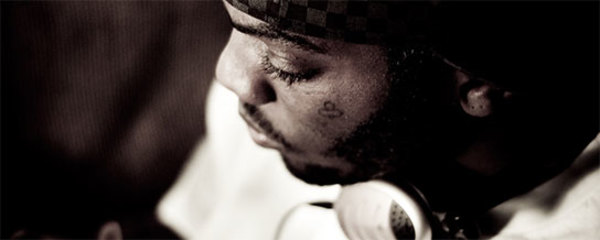
Inside Out with Atlas Sound

When Deerhunter emerged early in 2007 with Cryptograms–their second album but first real statement as a band–they immediately distanced themselves from a pack of increasingly similar-sounding indie rock acts.

Deerhunter was part of a new strand of primitivist Atlanta rock that mined the depths of ’60s pop and garage rock, but they stood apart even from their contemporaries, folding elements of ambient music, noise, and drone-rock into their music to create a novel brand of esoteric psychedelia. What’s more, Deerhunter had a bright star in frontman Bradford Cox, a gangly, sometimes outrageous stage entertainer who shocked, occasionally offended, and steadily captivated audiences throughout 2007.

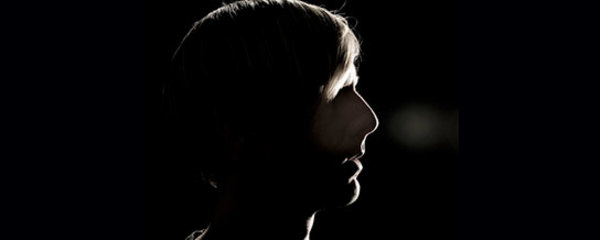
Cox, whose gentle affability belies his confrontational onstage persona, was born in Athens, Georgia but spent his adolescence in the suburb of Marietta. The affluent town–a breeding ground for ultra-conservative Republicans like Bob Barr and Newt Gingrich–was an odd fit. An artistic, effeminate soul, Cox suffers from Marfan Syndrome, a genetic disorder that causes victims to develop disproportionately long limbs and cardiovascular problems; by his own admission, he was “kind of a sickly kid.” Cox also felt out of place with the culture in Marietta. “I had a lot of friends but felt disconnected from them,” he says. “My friends’ parents all knew I was different, fucked up or whatever, but sort of turned a blind eye to it.” So he grew up with a lingering sense of subversion–“a quiet rebellion,” he calls it–that surfaces in the material Cox creates for Deerhunter and his solo project, Atlas Sound.

After dropping out of high school, Cox stayed behind in Marietta with other “outcast-y, loser-y kids, just sitting around smoking pot, doing nothing,” he says. In 2001, despite having “zero interest” in the band, he was dragged to a Black Lips show. Cox felt an immediate kinship with the group and would develop an intense friendship with its singer, Cole Alexander. Cox already had an interest in the Athens alternative rock scene–and the proto-garage sound that inspired it–and admired Black Lips for “combining that with this really psychotic noise element, really degenerate-sounding.” And, he adds, “They’re undeniably fucked up. We immediately bonded because of that. I knew they weren’t full of shit.” The two bands would grow together in a treacherous Atlanta scene full of “heroin [and] outsider kids,” and would share in debilitating lows (including the deaths of bandmembers) before eventually becoming hotly tipped on the indie rock circuit.

His relationship with Alexander is one of the few things Cox is slightly hesitant to speak about. He describes the friendship as “complicated” and “co-dependent” but tenses up a bit when pressed for details. “Cole and I bonded to such a bizarre extent,” he says. “We literally were not apart from each other for months at a time. There was a lot that was ‘almost’ about it.” At some point, the two drifted apart, but they continue to inspire one another through a shared aesthetic and approach to creating music.

That style, “a primitive [one], an immediacy,” Cox puts it, is obvious in both bands’ work. In the case of Deerhunter, this primal aggression is seamlessly combined with a beauty and vulnerability that it seems at odds with–this intriguing mixture of power and decay made Cryptograms and its follow-up EP, Fluorescent Grey, some of the finest guitar-driven music of the past several years.

A hyper-prolific songwriter, Cox recorded continuously while touring for Cryptograms, dreaming up a batch of tender material that wasn’t quite right “for a five-piece rock band,” he says. Initially recorded as 4-track demos, many of the songs were posted on the band’s well-visited blog before his label, Kranky, set him up with a laptop to lay down the ideas properly. The resulting tracks became Let the Blind Lead Those Who Can See But Cannot Feel.

Cannot Feel–his first official release as Atlas Sound–an album of gorgeously textured, deteriorating dream-pop.

Let the Blind… is essentially a bedroom recording–its songs retain a spur-of-the-moment quality because Cox’s approach to creating tunes isn’t based on conventional composition. Rather than conceiving an idea for a piece, writing it, and recording it, he instead seeks to capture a feeling. “I’m not a songwriter in the traditional sense,” he explains. “I have no ability to sit at a piano and ‘craft’ a song. It’s more about what’s happening in a room.” When asked to explain his intentions for Let the Blind…, he quickly counters, “There’s never any intention. Everything on the Atlas Sound record is just…recorded. I never do second takes, I never clean up anything. It’s kind of documentary-style.” One might think this stream-of-consciousness methodology would leave tremendous room for error, but in Cox’s skilled hands, tracks like the dazzling “River Card” and garage-pop number “Ativan” sound as if he’s been shaping them for years.

While Cox makes it clear he didn’t set out to make Let the Blind… an ambient record, the album is noticeably more atmospheric than his work with Deerhunter and markedly softer–if not outright prettier. He agrees, describing the record as “less masculine” and “more asexual,” and notes that the influence of electronic music is much more apparent. “I’m just as much influenced by Markus Guentner or Wolfgang Voigt as I am the ’60s pop song,” he offers. That’s clear on “Quarantined,” the record’s most buoyant track, and “On Guard,” both of which pulsate with the repetitive thump of minimal techno. Early electro is a clear inspiration as well–the work of Kraftwerk, Todd Dockstader, and Raymond Scott all had a hand in sculpting the album’s feel, says Cox.

Speaking reverently about Kraftwerk’s improvisational third record Ralf & Florian, which he describes as “perfect,” Cox stumbles onto something potentially profound about his own work. “I’ve always been really interested in creating ambient music and repetitive electronic music but with organic or acoustic instruments that have certain limitations or flaws. I think that just sounds more interesting,” he says. Tossing the comment aside and quickly moving on to a new topic, Cox doesn’t stop to ponder that he’s probably just pinpointed what makes his new album so exceptional–he simply forges ahead to the next idea.

Download the track “Quarantined.”

Deer Diary
Bradford Cox’s track-by-track notes on the new Atlas Sound record.

A Ghost Story
“In the background are treated hammered dulcimers soaked in enough reverb that they almost have a vocal quality.”

Recent Bedroom
“This is a song about losing your ability to express your emotions as you get older. It was inspired by my reaction to the death of my aunt.”

Quarantined
“This song was inspired by an article I read about Russian children living with AIDS.”

River Card
“Based on a short story from a book of Puerto Rican fiction I found at a thrift store.”

On Guard
“A lullaby about social anxiety.”

Winter Vacation
“When I first met my best friend Lockett in high school, it was right before Thanksgiving break. The next day my family took a trip to the beach. It was freezing, grey, and depressing and my parents fought the whole time. Thinking about my new friend kept me feeling good, and made everything seem charged with excitement.”

Cold as Ice
“I came home one night and Lockett was in his room playing guitar. I recorded a few segments and looped them. It has a heavy African feel to me.”

Scraping Past
“This is one of those songs that was entirely made in, like, one hour. I can barely remember anything about it, except programming the drums.”

Small Horror
“The most emotional and embarrassing thing I have ever made. I left it on to function as the album’s major flaw.”

Ready Set Glow
“I wanted to make a hymn or a vesper with strobe lights.”

Bite Marks
“A Christmas carol about a teenage prostitute walking home from an abusive episode.”

After Class
“Just for fun. A printout of a garage-pop song from a ‘new computer perspective.’”

Ativan
“A sad song about benzos and failed relationships and spring reverb.”

Let the Blind Lead Those Who Can See But Cannot Feel
“See, it was all only a dream…”

Yeasayer “Sunrise”

Yeasayer has been spotted on dozens of blogs and websites since the release of All Hour Cymbals in October, and with good reason. The Brooklyn-based four-piece has a knack for blending dancefloor-friendly rhythms and upbeat indie rock riffs with apocalyptic lyrics about the current state of the world. The result is an album that constantly swings between anxiety and absurdity which, after all, are pretty much the dominant feelings about today’s world.

Yeasayer – Sunrise

Fairmont Coloured in Memory

Perhaps spurred by the 25th anniversary of Blade Runner (and yet another Italo resurgence), there seems to be a hint of string machines in a wave of antigravity electronica. Fairmont’s Jacob Fairley certainly seems to have a thing for ascending synths and other glassy progressions. Canadian Fairley also has a thing for plinks as much as melodic pads, marking these 12 tracks as quasi-minimal, flickering with some uneasy lullaby influence from Boards of Canada. On the standout “I Need Medicine” multi-tracked voices go through pitch-shift palpitations, and arpeggios herald the arrival of churning sub-bass. Fairmont isn’t as granular or spindly as his labelmates, opting instead for slap-back reverberations to prog-infused set pieces.

Gorillaz D-Sides

Whether spinning elaborate tales of their cartoon selves or staging semi-virtual live shows, Gorillaz have made the art of machinations their business. What’s turned them into more than a digital hat trick has been their tunes. While not exactly new material, D-Sides offers a double-CD set of early demos, remixes, and b-sides, which should hold fans over ’til their third LP. As always, the best Gorillaz tracks breathe a bit of rock swagger into these catchy electronic ditties, like the previously video-only release “Rockit,” where slow, drawling basslines glide into a lazy strut for the nonsensical “blah blah blah” vocals. Now if only the animated ones would drop some new tracks–that would be the best caper of all.

Witchdoctor Diary of an American Witchdoctor

EJ the Witchdoctor may just be the most obscure member of Atlanta’s Dungeon Family collective but on Diary of an American Witchdoctor, he makes a strong case for inclusion in the same category as Andre 3000 and Cee-Lo. Like those two, Witchdoctor combines aspects of singing and rapping into his delivery, imbuing tracks with such divergent themes as “Put A Spell on Them Hoes” and “Prayer Call” with equal solemnity. Equally impressive is the production; with only one Organized Noise production to his credit, a cast of unknown stand-ins delivers beats that evoke the haunting and enigmatic feel of classic ’90s Dungeon Fam projects like OutKast’s ATL-iens. Call it gangsta gospel rap.

Pon Di Wire: Sizzla Busted For Pot, Big Year For Buju, Feb is Reggae Month

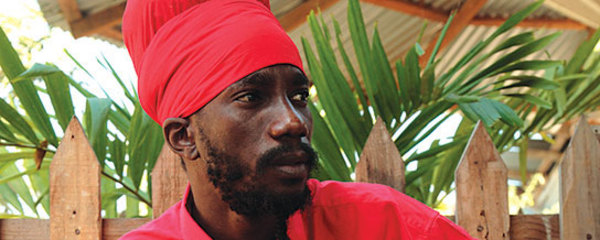
Don’t think police in Jamaica are more lenient on ganja than other countries. Celebrities have been finding this out the hard way. Reggae singjay Miguel Collins, a.k.a Sizzla, was stopped in Kingston by police, who arrested the performer for marijuana possession. He was in court January 4, where he was sentenced to pay a fine of $100 or serve 10 days behind bars after pleading guilty to possession. A narcotics conviction could prevent Sizzla from obtaining foreign performance visas.

Buju Banton has a big year planned. The singer born Mark Myrie is finishing an upgrade and renovation on his Gargamel Recording studios in Kingston, while also putting the finishing touches on an anticipated roots album due late spring/early summer. Rasta Got Soul described the new project to Pon Di Wire as a solid roots reggae album in the tradition of Buju Banton’s masterwork, Till Shiloh. Banton will perform at the WAMU Theatre at Madison Square Garden in New York later this year.

UK emcee Anthony Tippa Irie Henry has landed a radio show on popular portal Big Up Radio. The Tippa Irie Radio Show premieres Saturday, January 12, 2008, 5 a.m., 11 a.m., 5 p.m., and 11 p.m. EST. Henry emerged on England’s Saxon Sound International 25 years ago and helped pioneer the fast-chat toasting style. “One of the best things about internet radio is the ability to reach a worldwide audience without leaving London. It’s quite brilliant!” said Henry.

Lots going on in the dancehall world. Dancehall deejay Aidoina is currently in jail awaiting arraignment. According to reports, he is alleged to have been involved in a shooting incident where one man was killed. Meanwhile, Mavado is allegedly banned by authorities in Caribbean Islands St. Vincent and the Grenadines. According to YardFlex, Police Commissioner Keith Miller confirmed that Mavado was denied the right to perform in St. Vincent on January 19. Police officials were concerned about his lyrics, which were considered to be violent.

You can hear brand new tracks from Mr. Vegas at MySpace. “Must Come A Road” and “Can’t Help But Wait” should be chart-bound in the next few months.

See more 2007 Guinness Sting photos at BBC 1Xtra. Go backstage and see Ninjaman, Queen Ifrica, Tony Matterhorn, and more kicking it before and after their performances.

Prime Minister Bruce Golding officially declared February to be the first annual National Reggae Month in Jamaica. The month will highlight the reggae’s impact on Jamaica’s social, cultural, and economic development. The Reggae Month calendar of activities starts with the February 6 Bob Marley Birthday Dinner, the UWI Global Reggae Conference, a Reggae Film Festival, and a football match between the Reggae Boyz and Costa Rica, plus multiple concerts and other events.

Bunny Ruggs, Ibo Cooper, and Stephen “Cat” Coore, leaders of reggae super group Third World, celebrate 35 years in music this year. The group formed in 1973 and became famous with albums like 96 Degrees In The Shade, Journey To Addis, and You’ve Got The Power.

Reggae Report and other media outlets are calling 2008 a big year for women in reggae. Recent years have seen a resurgence of female artists, including Alaine, Spice, Tessanne Chin, Tami Chynn, Etana, Spice, Macka Diamond, Jovi Rockwell, Cherine Anderson, Queen Ifrica, and Brick and Lace. Many of these artists will drop new albums this year.

Photo of Sizzla by Martei Korley.

Jamaica’s Top 10 Reggae Singles
1. Etana “Roots” (Freemind)
2. Sizzla “Show More Love “ (Feed The Children)
3. Richie Spice “The World Is A Cycle” (Fresh Ear)
4. Edee & Irie Love “Revolution” (Unseen Label)
5. Noddy Virtue “Sang To Me” (Reflection)
6. Cocoa Tea “Poverty” (Minor 7 Flat 5)
7. Demarco “Fallen Soldiers” ( Star Kutt)
8. Cecile “I’m Waiting” (Danger Zone)
9. Little Hero “Praise God” (Inspire)
10. Christopher Martin “Take My Love” (Fresh Ear)

Yeasayer: Apocalyptic Dance Party

The world is about to end.

But at the moment the apocalypse hardly ranks on Anand Wilder’s list of concerns. The Yeasayer guitarist has been touring Europe for two weeks now, which means 14 days of dropping eight bucks a pop on Whopper Juniors. Eight bucks. A price so steep that the exchange rate will do him in just fine if the A-bomb doesn’t.

“Seriously, this English tour is killing us, man,” Wilder laughs, wrapping up a soundcheck at The Catch Bar in London. “The fucking pound…”

His lighthearted candor comes as a bit of a surprise considering Yeasayer’s debut, All Hour Cymbals, is an obtuse set, as comfortable trading in Eastern-tinged psych-pop or hippie-fied Krautrock as it is in gnarled gospel and sample-laden indie rock. The one unifier is a blanket of anxiety and fear of the future. So when Wilder goes from bemoaning the pound to recounting a night of drinking games with Welsh frat boys, I’m even more shocked.

But why? The idea of diversion from despair–à la the squalor-obscuring veil of Bollywood cinema, or the toothy celebration of Zimbabwean guitarist Thomas Mapfumo–is central to the Yeasayer universe, both in substance and sound. It’s fitting then, that our 45-minute chat runs the gamut from serious to silly to mundane–from discussing waxy English produce and fantastic breakfasts, to the best books about global warming and the band’s seeming preoccupation with the end of the world.

“There’s this sense of extreme emotions, and extreme ups and extreme downs [in our music],” says Wilder. “We’re not just trying to replicate our boring suburban, middle-class lives, you know? We’re trying to escape into something. We’ve always had a sense for melodrama.”

Much like Wilder, Cymbals is at once concerned with rejoicing and The End, reality and escaping from it. In less capable hands, this could have been a blatant pop album, or one long cautionary tale. But it’s both and neither, chafing in wonderful ways and turning a looming apocalypse into an all-hours dance party.

“It’s funny that people have been focusing on our lyrics so much,” says Wilder. “We don’t really consider ourselves lyricists or poets or anything like that. We’ve always been more concerned with the hook, with making it memorable. But if you can sneak a few subversive lyrics in there, then so much the better.”

Wilder’s modesty undersells the vitality and importance of Yeasayer’s message: that we might as well dance until our time’s up, or, as he puts it, “face disaster with a positive outlook.”

Download the track “Sunrise.”

One Be Lo Self-Releases Second Album

The Michigan-born MC known as One Be Low has always been something of a DIY man. Now, he’s taken that policy further, by preparing his second solo album, The R.E.B.I.R.T.H., for release via his own imprint.

Citing “shady business partners,” “phony cohorts,” and an amicable split from Fat Beats (who released 2005’s S.O.N.O.G.R.A.M.) as his reasons for self-releasing the new album, the man born Nahshid Sulaiman expressed, in a recent press release, excitement over his new situation. “My focus is stronger, and I’m hungrier than ever before. Whereas before, I was truly a ‘one man army,’ now I’m delegating responsibilities to a very competent team.”

A couple of those team members are Vitamin D and Jake One, who, among others, stopped by for production contributions to the album. The R.E.B.I.R.T.H. will be available February 19 on Sulaiman’s Subterraneous Records.

Tracklisting
1. Rebirth
2, Born & Raised
3. Keep It Rollin’
4. Smash
5. Headlines
6. War
7. Don’t Sleep
8. House Rules
9. Snap Shot
10. The G Gap
11. Hip Hop Heaven

Golden Death Music Ephemera Blues

Michael Ramey knows his way around psychedelic epics, even though his expansive Ephemera Blues is built out of songs that rarely last longer than a few minutes. The sunny strum of “Together” nevertheless feels like a good soundtrack for Roman Polanski’s Repulsion, while the dual consciousness of “Morning Sun, Mourning Song” unfurls like a primordial chant. Ramey’s Golden Death Music avatar has a way with media: A lengthy insert featuring compelling art from Lido Pimienta illustrating postmodern fables and folklore–”The Parable of the Discontented Gear” is a great one–fleshes out its architect’s acoustic wanderings. He may have written the most peaceful composition for a song titled “Lost in Violence” in the history of music. A trip.

Page 3016 of 3781
1 3,014 3,015 3,016 3,017 3,018 3,781