Clipd Beaks Hoarse Lords

“Death disco” is a sorely overused term, but Clipd Beaks embodies it from head to toe on Hoarse Lords. Throughout the disc, the Oakland noise-rock band’s rhythm section staggers across a mirrorball-glittered dancefloor as singer Nic Barbel wails his life away. It’s the sound of a basement party band trying to stand up after everybody else has passed out or gone home. Here and there, the Beaks add psychedelic touches that achieve a strange grace. They cut off the racket of “Wrathscapes” and ascend into outer space through peaceful, AOR-tempered guitar riffs, but Barbel’s strangled vocals tend to resemble a whine of broken amps, which can interfere with the band’s otherwise prime, art-damaged jams.

Kero One Kero One Presents: Plug Label

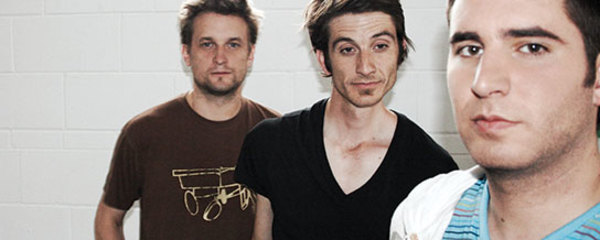
For those that missed these tracks as top-notch 12” singles, this compilation is the perfect chance to catch up. Plug Label owner MC/producer Kero One plays a sizeable role in these tracks (appearing on nine of ’em), and his beats and rhymes sound highly reminiscent of the Sound Providers’ cool, jazzy hip-hop. But this disc isn’t all about Kero; he also showcases impressive upbeat selections from underrated West Coast artists. As Choclit Kennedy, Ohmega Watts stuns with robust tribal funk on “Slippin’ Away” while Aloe Blacc and King Most induce hand claps on the feel-good anthem “With My Friends.” It’s a shame these songs haven’t been heard on a larger scale, but that’s sure to change now.

Cobblestone Jazz: The Spaces Between

When Tyger Dhula and Danuel Tate moved to Montreal at the tail end of the ’90s, the pair was practically penniless, with no choice but to live in an old converted factory with other (literally) starving artists.

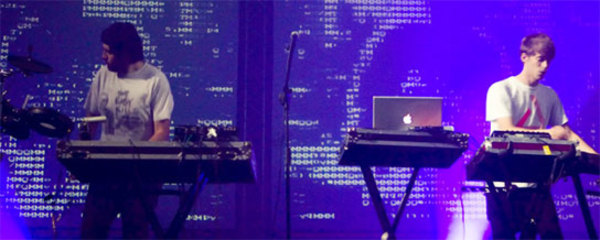
This was fine for the first four months–inspiring, even–as they toyed with techno and jazz motifs alongside longtime collaborator Colin de la Plante (a.k.a. The Mole). Together, they laid the foundations for what would become–with the addition of techno DJ/producer Mathew Jonson–the Modern Deep Left Quartet, and later, the groundbreaking trio Cobblestone Jazz.

Too bad an armed robbery had to go and ruin it all.

“Some guys pinned us down and pressed guns against our heads one night,” says Tate. “They took all of our equipment. We basically went back home [to Vancouver] with our tails between our legs and The Mole stayed because his roots are in Montreal.”

While their situation seemed ominous and overwhelming at the time, it forced Dhula, Tate, and longtime friend Jonson to focus even harder on the concept behind Cobblestone Jazz. Throughout the ’90s, the three casually played around Vancouver under band names and pretenses that changed nightly. There was always one recurring theme, though: trying to add a blunted Blue Note vibe to the pulse of electronic dance music.

“In the beginning, we played whatever we wanted,” explains Jonson of the fledgling Cobblestone Jazz. “It could be a jazz ballad for 25 minutes or drum & bass. Sometimes not all of us were into it, but we still tried to have fun and be open to new ideas.”

Feeling It Out
After live performances from the Montreux Jazz Festival to MUTEK and a series of single releases–notably their 2002 debut, the 5th Element EP, and the distorted and dazed four-on-the-floor sucker punch of 2006’s “Dump Truck” and “India In Me” (on their own Itiswhatitis and Wagon Repair labels, respectively)–Cobblestone Jazz released their first full-length, 23 Seconds, last month. The album is a striking display of the band’s future-forward palette and approach, which applies Tate’s traditional Rhodes rolls and improvisational jazz technique to Jonson’s and Dhula’s analog racks (synths, drum machines, samplers) and simple computer setups. This doesn’t come out of nowhere: Jonson was a jazz drummer well before he produced twisted techno tracks for Perlon, Minus, and Kompakt; Tate’s a jazz musician who has played keyboards for the past 15 years.

To emphasize the smoky lounge portion of the equation, the trio improvises their tracks to a live stereo mix while facing one another, a technique that leads to a lot of alternate takes. “We just feel it out as we go,” explains Jonson. “It’s all about listening to what is happening inside the spaces of everyone else’s parts. Contrasting the emotional content between players can give a song real personality and a live feel.”

Tate is a tad less philosophical about the group’s chemistry. “We’re all Geminis,” he adds, laughing, “So we’ve definitely called bullshit on one another more than a few times. The other two guys also have a lot of control obviously–they’re mixing everything live, after all–so they can cut me off if they want to.”

Jam Hot
For a trio used to untamed live shows and shambolic studio sessions, creating a full-length album was initially a daunting task. “We kind of refined our roles and said, ‘Let’s do what we’ve always done–stick with what we have live,’” explains Tate.

In simple terms, these roles are split as follows: Tate mans the Rhodes and vocoder, Dhula takes care of percussion and programming, and Jonson adds in basslines and live drum loops. The electronic parts of the equation are produced via a streamlined collection of mostly analog gear (see sidebar)–instruments Tate describes as “very turn-it-on-and-go.”

“Sometimes we jam for half an hour and it sounds like shit until something finally clicks,” explains Jonson. “‘Change Your Apesuit’ is a good example, as it took a really long time to get the bass right.”

The push and pull of Cobblestone Jazz’s recording process is exactly what makes 23 Seconds (which features an insightful live set on a bonus disc) such an exhilarating listen–a wholly unique meeting point between jazz and techno that doesn’t sound forced or fusion-y, with traces of micro-house and minimal lurking around every corner.

“People think techno and jazz should be separate, but it’s pretty natural,” says Tate. “As long as there’s technology around, people will try to find a balance between the two.”

“Some people say that our stuff is too jazzy, but as a jazz musician, it sounds normal to me to have live keys with techno beats,” adds Jonson. “In the end, it’s not really about techno or jazz; it’s about the music. If it has a groove, then that’s what’s important.”

Live It Up
Cobblestone Jazz’s essential gear.

Fender Rhodes
Created during World War II by Harold Rhodes, this piano was originally meant to be played by bed-ridden soldiers. Everyone from Daft Punk to the Flaming Lips has adopted it in recent years.

Roland SVC-350 Vocoder
Telecommunications companies first used vocoders to code and transmit speech in the 1930s. This particular model was used in the beginning of the Dr. Who theme.

Elektron Machinedrum
“The world’s number one beat box” creates, arranges, and distorts 16 tracks of percussion patterns. A customizable drum kit in a box, essentially.

Roland SH-101 Synthesizer
Squarepusher, Aphex Twin, and The Prodigy have all been known to use this small analog synth from the early ’80s. Sling it over your shoulder and you’ve got a “keytar.”

DigiTech Vocalist Live Harmonizer
This rugged little box analyzes complex guitar patterns and instantly creates the right vocal harmonies, smoothing out that slightly off-key singing when playing live.


Chris Watson to Appear in S.F.

Itinerant traveler, sound recordist, and ex-Cabaret Voltaire provocateur Chris Watson stops in to San Francisco for a rare presentation of three pieces–“Storm” (composed with BJ Nilsen), “Midnight at the Oasis,” and “Tortuga Bay”–at the end of November. Renowned for not only his musical experimentation, the U.K.-based Watson also regularly creates field recordings for film projects and BBC-produced natural-history documentaries. “Storm,” which Watson will present in Recombinant Media Labs’ unique sound-and-visual environment, consists of recordings made of storm fronts in Scandinavia and on the North Sea, where Nilsen and Watson respectively live.

“[Since 2000, we have been] gathering recordings on our respective coastlines and islands during the very active weather windows during the autumnal equinox and winter solstice,” Watson explains on his website. “This was focused around our following one particular cyclonic system, which veers over Snipe Point on Lindisfarne to the Isle of May in the Firth of Forth, and finally descends upon Öland and Gotland where Benny [Nilsen] listened in with a favorite pair of Sennheiser omnidirectional microphones.”

“Midnight at the Oasis” and “Tortuga Bay” feature Watson’s recordings from the Kalahari desert and the Galapagos islands, while computer-music enthusiast Florian Hecker, who opens the show, uses psycho-acoustic spatializing effects for a visceral, often disorientating presentation that’s sure to wreak immediate havoc on your motor skills.

Photo of Chris Watson in Iceland by Kate Humble.

Event Details

Friday, November 30, 2007
Asphodel in association with 23five, RE/Search Publications, and the SF Art Institute present:

Chris Watson (Touch Records)
Florian Hecker (mego, Rephlex)

Two presentations at 8 p.m. and 11 p.m.
Location announced with online reservation only. Suggested donation: $20

Donate and register for the performances.

Sonar 2008 Dates Announced

Screw Miami. This year I’m saving my money (and brain cells) and crossing the Atlantic for Barcelona’s Sonar Festival, which will be celebrating its eleventh installment this summer.

Perhaps it’s unfair to compare the two. The former is a bunch of haphazardly put together parties, the other is a set of carefully curated electronic music and multimedia showcases which, in 2007, hosted everyone from Justice to Devo, along with master classes from the Red Bull Music Academy and an unlikely appearance by the Beastie Boys.

The artist and showcase lineup has yet to be announced, but Sonar officially unveiled the dates for the 2008 edition this morning. Festivities go down June 19, 20, and 21. Stay tuned for a more detailed preview of the different programs.

Photo of Digitalism (playing at Sonar 2007) by Advanced Music S.L.

Waajeed Goes Global

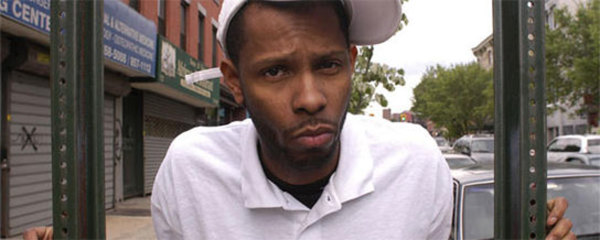
Hold on to your custom New Era caps–we’re about to drop a bombshell: “Waajeed likes Queen.” So reported Ubiquity A&R man Andrew Jervis when asked to reveal something exceptional about the PPP front man and producer of XLR8R 110 cover artist Tiombe Lockhart. I suppose we shouldn’t be surprised that Waajeed is into the ’70s British power-ballad band responsible for “We Are the Champions,” since he’s about to conquer the world himself.

Known as Robert O’Bryant on his birth certificate, Waajeed has expertly weaved through various scenes and cities, from his early days with Slum Village and producing Dwele in Detroit, to founding his company, Bling 47 Group, and relocating to Brooklyn while releasing music on labels as diverse as Rush Hour, Rapster, and Fat City. Waajeed has championed women in music, from soulstress Lockhart to hardworking MC Invincible, as well as released music from the late Jay Dee.

Meanwhile, he’s been DJing all over the globe (his sets feature hip-hop, R&B, house, disco, and club bangers galore), including parties like Sake-1’s weekly Thursday PST event. “He was our guest DJ the second week,” Sake recalls. “I remember he rocked some Patrice Rushen and Prelude shit [that night], and easily transitioned into deep house, broken beat, rock, and Afrobeat; I realized I had come into contact with a Jedi Master.”

“Waajeed is working (ahem)–I hope–on the next PPP album for Ubiquity,” says Jervis. “We’re looking forward to it dropping in 2008.” Bits of Waajeed’s productions and mixes have been leaking out from releases like The War EP (Fat City) and Lockhart’s Queen of Doom.

And what makes Waajeed’s music so unique? “Waajeed’s productions are always solid,” says Jervis. “No filler, and yet you never quite know what he’s going to come up with next. Could be a track like “Tron,” could be [the Simon & Garfunkel cover] “50 Ways to Leave Your Lover,” or it could be “Winter In Detroit.”

We know Waajeed’s prepping the new PPP (formerly Platinum Pied Pipers) album, and it’s sure to be a diamond. Bling47 Group manager Kenny Fresh says “We know you guys have been waiting for a minute now for PPP’s follow-up to Triple P (believe us, we have too!). Well, stay with us, cuz we’ll be giving you all a few sneak peeks and previews from the album on Bling47.com very soon.”

’Til then, catch the always stylishly attired Waajeed where you can, on the net or in a club near you.

Brad Laner “Out Cold”

Medicine member Brad Laner, whose solo debut was released this passed Tuesday on Hometapes, has been commissioned to score the soundtrack for Eric Green’s upcoming shoegaze documentary, Beautiful Noise. Here is a taste of Laner’s own production work, which includes his own flavor of the shoegaze sound.

Brad Laner – Out Cold

Brad Laner Scores Shoegaze Documentary

Rather than sit down to ponder a follow-up to his first official solo album (Neighbor Singing, released Tuesday on Hometapes), Medicine member Brad Laner has chosen to score a film. Eric Green’s Beautiful Noise is a documentary about shoegazer music that follows such likely acts as My Bloody Valentine, The Jesus and Mary Chain, The Cocteau Twins, as well as contemporary bands like Serena-Maneesh and Ladytron, who are still incorporating elements of shoegaze into their music.

It remains to be seen if Green can tell us something new about the genre that started a movement (and eventual backlash) of distortion, droning guitars, and muted vocals. Early buzz is positive, and he is said to be focusing on the late-’80s and early-’90s, during the genre’s “first wave.”

Laner has been commissioned to write the film’s soundtrack. His band Medicine is the only American outfit profiled in the film.

Download “Out Cold” by Brad Laner.

Page 3056 of 3781
1 3,054 3,055 3,056 3,057 3,058 3,781