Pon Di Wire: Mikey Dread, Shaggy and I-Wayne Videos

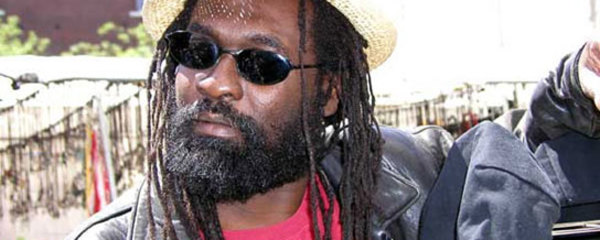
Our sincere wishes for a speedy healing to Michael “Mikey Dread” Campbell (pictured above), who announced that he’s being treated for a brain tumor. Campbell is undergoing chemotherapy at Duke University hospital in North Carolina. Earlier this year, he celebrated the 30th anniversary of his pioneering Jamaican radio program, and welcomed the birth of a son. The singer and DJ still runs his own Dread at the Controls Records and famously recorded with The Clash. Expect updates on Campbell’s condition in future editions of Pon Di Wire.
New England-based blog Rhythm Update– a site devoted to tracking new reggae “riddims” and their origins–features a podcast interview with UK dubmaster Mad Professor. Host Joshua B speaks with Neil “Mad Professor” Fraser about his significant contributions to the British lovers rock scene during the late ’70s and ’80s. The podcast also features music from Sandra Cross, John McLean, and Intense among others.
Check the new video releases from VP artists Shaggy and I-Wayne. Shaggys “Bonafide Girl” and I-Wayne’s “Book of Life” are online now. VP’s classics imprint 17 North Parade issued a remastered version of Dennis Brown’s Visions, plus all four volumes of Joe Gibbs & the Professionals‘ African Dub series.
Saturday, November 17 is Reggae Day on Melrose in Los Angeles, and will feature a photo exhibit of reggae legends by photographers David Corio, 30 years of Greensleeves album art, live DJ sets, musical guests, special sales, and the introduction of 400 Years struggle-inspired apparel. The event takes place at L&L and Capleton takes the stage at Jamaica Gold, 1718 Vine St., with DJ support from White Lightning, Alywad, Baby Ace, and Black Gold.
So Cal vocalist and musician Jack Miller charts his 30-year journey in Jamaican music with a new documentary and album, Dreadlock Rock. The documentary’s liner notes explain that, “In 1977, California musician, Jack Miller went to Jamaica, beginning a passionate, life-long pilgrimage into the heart of the Kingston recording scene. Miller befriended, recorded, and toured with reggae legends, including Toots Hibbert, Sly & Robbie, Big Youth, The Soul Syndicate, and members of Third World. Dreadlock Rock features archival and new film documenting recording sessions at Tuff Gong Studio, Harry J’s, and Channel One Studios in Kingston, live concert performances, and revealing interviews with Peter Tosh and Bob Marley & the Wailers.” XLR8R says: “See this film!”
1990s dancehall star Alley Cat is still doin’ it. Alley Cat’s Imperial Production produced Motion Picture riddim is creating waves as it is getting heavy rotation in Jamaica, overseas and via the net. Cat shot a medley music video featuring himself, G Mafiah, Tornado, Boom Dandimite, Mr. Lek, Scorpion, and Becky Glacier. “Things going very well for the Motion Picture project,” Cat told Jamaica’sXtra News. “It’s getting good airplay, and also on X/M satellite radio and other Internet networks.”
A new generation of Jamaican dancehall dancers have taken over where dance pioneer Bogle left off. Overmars, Ding Dong, John Hype, Sadiki, Shelly Belly, and Taz from Timeless crew are among the few dancers trying to conquer the musical scene. “As an entertainer yuh haffi can perform fi did people dem,” commented Ravers Clavers member Overmars to The Star. “Done know a Bogle did come start di ting but him neva get a chance to finish it.”
Dancehall artists are also making moves to improve education conditions in Jamdown. Mavado recently donated the first of several computers to the Connect Jamaica project, which aims to donate computers every month to schools around the island. Mavado explained, “I give thanks to God that I am now in a position to help my country. I gave to Constant Spring Junior High and Charlie Smith first, because I attended those schools myself, but we will be going to schools around the island. Our aim is to cover every school.”
Jamaica’s Top 10 Dancehall Singles
1. Munga “Wine Pon It” (Casper Production)
2. Beenie Man & Bar-Bee “Give It Up” (357)
3. Busy Signal “The Days” (Daseca)
4. Cham “Conscience” (Don Corleon)
5. Brick & Lace “Love Is Wicked” (180 Entertainment)
6. Timber Lee “Bubble Like Soup” (Ward 21)
7. Bugle “What I’m Gonna Do” (Daseca)
8. Munga “Take My Place” (Don Corleon)
9. Assassin “Sissy” (Don Corleon)
10. Busy Signal “Nah Go A Jail” (Jam 2)

Houseclouds
XLR8R Singles Update

Conforce
“Our Concern”
Rush Hour
Following its recent Population One remixes by UR’s Roland and Aardvaark, pioneering Dutch label Rush Hour continues to celebrate its 10th anniversary in style, with another limited single release from Amsterdam upstart Conforce. Recalling the best work of Kenny Larkin, Aril Brikha, or Vince Watson, melodic synths swirl on top of layered, arpeggiated keys and steady electronic percussion. With a nod to early-’90s trance and mid-’90s tech-house, this multifaceted track should be in heavy rotation throughout the winter.
Burger/Voigt
“Bring Trance Back”
Kompakt
This single dropped a few weeks ago, and has quickly slayed tech and house DJs around the globe. Jörg Burger and Wolfgang Voigt avoid clichés as they revive early-’90s trance-house (think Sven Vath, Jam & Spoon). Their rich melodic mixes feature steely synths, deep pads, echoing melodica, and even Western slide guitars. God, somebody get me a glowstick, pronto! This must-play EP should ready us for the forthcoming Burger/Voigt album, due in early 2008.
Aklimatize
“Aklimatize E.P.”
Future Elements
Here’s a big Latin broken-beat and future-jazz thing from Canada’s Future Elements label. Aklimatize proves he’s definitely one to watch, with three solid tracks in league with artists like Afronaught, Seiji, and Freedom Soundz. “Dime La Verdad” combines Puerto Rican vocals and percussion over a stomping broken rhythm, and UK producer Spiritual South has notched his support for this track. The flip side is a remix of Vancouver group Novalua’s track “Grey,” featuring the silky vocals of Uruguayan-born Valeria Matzner.
Edseven
“Too Much Talk”
Straight Up
With a reputation as one of Sydney’s premier freestyle selectors, Australian production wiz Edseven specializes in rough, funky downtempo and brainy hip-hop beats. His choppy Mr. Scruff-style tracks combine whiskey-soaked samples, boom-bap drum loops and other odd audio elements. If you dig the GAMM label’s club stompers or Madlib’s freeform funk, definitely hunt this down.
Kasper Bjørke
“Back & Spine’”
Plant
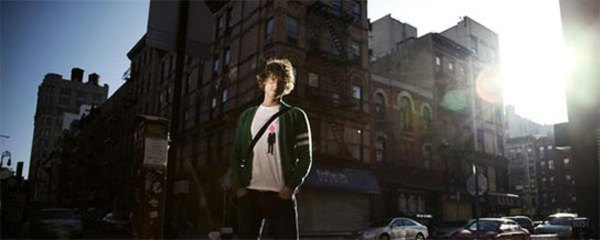
Taken from his new Plant album In Gumbo, Kasper Bjørke’s “Back & Spine” EP features remixes from Tomboy and two great album tracks: “Liquid Propagnosia” (with Dennis Young from Liquid Liquid) and the hanuting “Igo Ugo.” The original “Back & Spine” is a sinewy, dirty disco vocal number for fans of !!!, Blondie, or Black Ghosts. Fidel Astro’s heavy industrial dance mix will make you pull out all your old Nitzer Ebb records and have bedroom dance party.
Photo of Kasper Bjørke by Louise Brandt and Jesper Lund.
Black Dice Tours

So Brooklyn’s Black Dice has stepped away from DFA to further its musical endeavors with Animal Collective’s Paw Tracks imprint, but the arty trio hasn’t lost any of its magic in the transition, as suggested by some upcoming North American stops in support of the recently-released Load Blown.
Musically, the guys are still on the brutally buzzing synth-noise tip, but the 18 months spent composing Load Blown should mean a few surprises are in store as well. Check the band’s video for the debut single “Kokomo” for some hints.
Tour Dates
11/02 Montreal, QC: La Sala Rossa
11/03 Toronto, ON: Sneaky Dee’s
11/04 Detroit, MI: Scrummage University
11/05 Chicago, IL: Lakeshore Theater
11/06 Minneapolis, MN: Soo Visual Arts Center
11/09 Seattle, WA: Vera Project
11/10 Portland, OR: Someday Lounge
11/12 San Francisco, CA: 12 Galaxies
11/13 Los Angeles, CA: Echoplex
11/15 Denver, CO: The Walnut Room
11/16 Kansas City, MO: The Pistol
11/17 Iowa City, IA: Picador
11/18 Oberlin, OH: Oberlin College
11/19 Baltimore, MD: Ottobar
11/20 Washington, DC: Rock and Roll Hotel
11/21 Philadelphia, PA: Vacuum
11/23 New York, NY: Highline Ballroom
Joy Division Unknown Pleasures Collector’s Edition
At the end of 2007, there isn’t much to say about Joy Division that hasn’t been said already. If there were, it was probably broached in the Ian Curtis biopic, Control. But the reissued double-pack Collector’s Edition of the band’s Unknown Pleasures, their first album (Still and Closer have also been re-released), does shed a bit more light behind Joy Division’s dark exterior. No doubt, tracks like “Day of the Lords” and “Candidate” are deeply emotional, not-terribly-happy tunes, but when coupled with a frenetic live performance from Manchester’s Factory club from 1979 (on the set’s second disc), something altogether different takes over–something that the band took with them after Ian Curtis’ death, when they became New Order–and it’s as energetic, forward-charging, and–dare we say–upbeat as post-punk ever got. One listen to “Dead Souls,” “Shadowplay,” and “She’s Lost Control” live, and it becomes hard to swallow the line that Joy Division was at all a depressing band. Pack the collection with Peter Saville’s timeless cover designs and Jon Savage’s insightful liner notes, and you’ve got one of the finest reissue sets of all time. Period.
Various After Dark

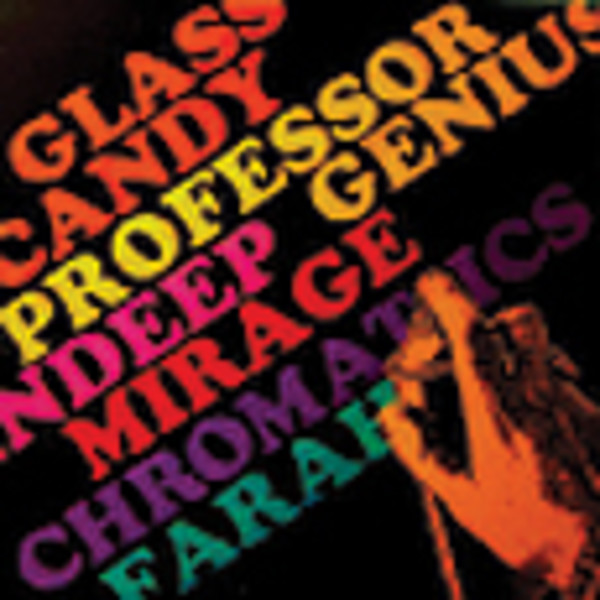
It’s rare for a compilation to introduce a new brand of music and simultaneously stand alone as a great record from end to end. Like Brian Eno’s No New York, a seminal overview of the city’s late 70’s no-wave scene, After Dark, a recent sampler from upstart imprint Italians Do It Better, achieves this same feat more than competently. Coincidentally, 1978 New York also proves to be a perfect entry point for After Dark, a compilation of new Italo-disco/art-rock tracks from an offshoot imprint of the noisy, no-wave-inspired Troubleman Unlimited label.
These songs, previously only available as vinyl singles, showcase a group of artists breaking new ground by putting a gloomy, dreamy spin on the aforementioned Italo–a European disco sound of the 1980s made famous by Giorgio Moroder. Mostly unknown in America, the genre stayed breathing over the years due to its influence on electroclash, house, and the odd Scandinavian nu-disco revivalist like Sally Shapiro or Lindstrøm. For the most part though, Italo’s been left untouched, partly because it’s viewed as the ancestor to some of the 1980s’ schmaltziest Eurodisco hits (see Taco’s “Puttin’ on the Ritz”). But, the After Dark artists retain only Italo’s bouncy, arpeggiated synths (none of its tackiness) and add a deeper noir to create an intensely moody vibe throughout.
Portland’s Glass Candy, who formerly trafficked in jagged noise rock, opens the disc with “Rolling Down the Hills,” a track that sets the collection’s dark-yet-buoyant tone. It pulses with disco elements–horns accenting a deliberate thump–while singer Ida No’s ice-cold vocals drift above the mix. Later in the set, Glass Candy contributes three more songs (all covers), and they sound equally accomplished. Their version of Kraftwerk’s crucial “Computer Love” swaps the original’s chilly robotics for warm, dancing synths and, on a remake of Bell Epoque’s “Miss Broadway,” Ida No reverently evokes Debbie Harry amid guitarist Johnny Jewel’s crisp, elegant production.
Chromatics, who employ a similar aesthetic but with a more somber approach, provide two more of After Dark’s highlights with “Hands in the Dark” and “In the City,” the latter a haunting number with a twinkling keyboard, staccato guitar, and swooshing synths accompanying frontwoman’s Ruth Radelet’s bleak portrait of after-hours city life. Their final offering, “Killing Spree,” is one of the few missteps here–as a brief instrumental demo it’s by no means unpleasant but only serves as filler.
The other members of Italians’ small roster–Indeep, Mirage, Professor Genius, and Farah–round out After Dark’s remaining tracks and almost all excel. The only track to actually dislike is Farah’s stream-of-consciousness dirge “Law of Life,” a song whose poor lyrics and vocal delivery spoil its winning instrumentation. Indeep’s excellent reworking of “Last Night a DJ Saved My Life” offers the album’s bounciest cut, and Mirage uses a vocoder (thankfully, the only artist to do so here) to imbue tracks such as “Lady Operator” and the stellar “Lake of Dreams” with a druggy, pulsating persistence.
On these 14 neatly packaged and well-sequenced tracks, After Dark succeeds on several levels: it aims for a nighttime mood, nails it, and re-introduces Italo–a genre some thought better left alone–as something new, unique, even sexy, for a new millennium. And, like Eno’s No New York, the record presents (if not invents) a subgenre that most folks didn’t know existed and would be remiss to not investigate.
To Kill A Petty Bourgeoisie “Lovers & Liars”

Kranky’s newest addition to its already powerful roster comes in the form of Minneapolis-based male/female duo To Kill A Petty Bourgeoisie. Like a blood-thirsty Blonde Redhead, these two rebels create textures that haunt and melodies that would make any capitalist pig run for his/her life.
Madlib Beat Konducta Vol. 3-4: Beat Konducta in India

India’s sensory overload of color and cultures , when described by writers like Salman Rushide, is living and dynamic, not just foreign and exotic. As the Beat Konducta, Madlib concocted a similarly organic combination on this new album, grafting together gritty slum beats, snippets of obscure dialogue, the regal sounds of Bollywood choirs, and mystical percussion. On “Indian Deli,” the static-filled beats crackle like samosas dropped in hot oil, then an earthy flute sample drifts by like a spice-filled aroma. Sampling Indian music is nothing new, but it’s rarely as unencumbered by clichés as it is here. While Madlib’s brief and eclectic sketches of the subcontinent’s music can be a mixed bag, they’re never one-dimensional.
Caribou In the Studio

Despite having produced some of indie electronic-rock’s grandest opuses, Dan “Caribou” Snaith has never worked in a professional studio. He makes all of his music alone in his tiny, apartment bedroom with little more than a computer, a cheap sampler, and a handful of instruments. But as evidenced by the songs “After Hours” and “Desiree” on his new LP, Andorra (Merge), it often seems like he has a 50-member orchestra under his spell. Since 2001’s Start Breaking My Heart (recorded as Manitoba), Snaith has crafted a vibrant, Technicolored sound that embodies the raw wilderness of his upbringing in rural Ontario, Canada. XLR8R rang up Dr. Snaith (he holds a Ph.D. in mathematics and is barely 28) at his current home in London to talk about tiny spaces and huge sounds.
XLR8R: You used to loop samples to compose songs in the past. Did you use that same technique on Andorra?
Dan Snaith: This is the first record where I didn’t record like that. It’s the first time that I’ve actually written things before I recorded them. In the past, it was always just building upon loops and writing things as I go, and just making stuff up to put over top. But this time, it was much more about writing things and [having] the whole arrangement in my head before I started recording.
Many of the vocals on Andorra resemble those found on ’60s pop albums. How did you record them?
I actually recorded every instrument that needed a microphone with this Russian microphone, an Oktava MK-012, which is just like a condenser microphone. It’s really bright-sounding. I recorded all of the vocals with that and I then used a TL Audio channel strip as a pre-amp. As far as getting the vocal sounds that I wanted, it’s a lot of layering. I’d record a part [numerous] times and layer them on top of one another. I tend to either like the dry sound that’s panned hard left and right, or use a kind of reverb on some of the vocals.
How were the drums recorded? The beats blend well in the mixes.
On “Melody Day,” I recorded the drums in our rehearsal studio, but then they actually knocked down that studio a few weeks after I did that. For all of the other tracks, it was usually just a floor tom, a snare, and a hi-hat or cymbal in my room, with the same overhead and a [Shure] SM58 [mic] under the floor tom. It was like a really, really stripped down kit… It’s me playing this weird, Frankenstein kind of kit with two shitty mics on it. I’d then play it twice and layer it on top of one another.
What software do you typically use?
I use Acid, which is the most basic audio-sequencing software on the market. I use a really old, expired version. It [enables me to] do some really simple things, like putting layers on top of one another, allowing me to loop bits or put in a few effects, but not anything like fancy reverbs or compressors. Any of these music programs that are out there do all the things that I want, so it’s not really a question of that being a big part of my sound or anything.
What’s your secret weapon in your studio?
The Boss Dr. Sample SP-303. As well as it being a sampler, it also has a line-in, a pre-amp, and a whole ton of effects on it. I don’t use any amps for guitar or bass or keyboards or any of that stuff; I just plug them straight into this thing and then I can put effects on it really easily. I tend to record effects and all of that kind of stuff on this thing rather than doing it later on. I put vocals, guitar–anything–through there… it’s a versatile little thing. The only thing that I’m really looking for is for everything to be really easy and intuitive to use so that I don’t spend all of my time fiddling with gear.
Given your education background, I’m curious if you use mathematical theories in your music.
Not at all. People think of mathematicians as being really methodical and being really careful, planned-out kind of people, but a lot of them that I met are the most scatterbrained, absentminded-professor type of people. That’s definitely the way I record. There’s crap piled up everywhere, a microphone falls over in the middle of a take, and everything is a bit of a mess; everything is plugged into the wrong thing, the levels are all set wrong, and it’s a constant messing around. As far as using formulas, it couldn’t be further from the way I record.