Cepia Natura Morta

Cepia (a.k.a. Huntley Miller) creates finely wrought, melodic IDM-or what your uncle once called “armchair techno.” While Cepia’s highly nuanced compositions probably won’t make you dance, they will induce pleasant daydreams and geeky appreciation of their meticulous construction. Natura Morta is Cepia’s most rhythm-centric release yet. Don’t be lulled by opener “Braille Wounds”‘s beatific, Budd-like keyboard whorls, because “Opening Parade” will jolt you out of your reverie with its rugged, complex hip-hop beats, which contrast with winsomely wistful synth pads. Natura Morta‘s best tracks follow that approach, juxtaposing tough, skittering beats with genteel, genial synth motifs-the sonic equivalent of a boxer festooned with feather boas.

Various Total 8

Capping a successful year that saw crossover success for Gui Boratto and The Field, Kompakt issues its annual compendium Total, the eighth in the series. Like before, we’re given a best-of-year disc and one of unreleased songs, and choice cuts reside on both. High-profile collaborative tracks from Burger/Voigt (the reunited Burger/Ink) and SuperMayer both offer nuanced, contemplative techno, but aren’t the album’s finest moments. The crashing percussive notes of Partial Arts’ “Trauermusik,” and the Rice Twins’ monument to shoegaze entitled “Can I Say” provide the true highlights, displaying the extensive reach of a label often unfairly dubbed a one-trick pony. Perhaps not the best Total, but there’s still a lot to love here.

G&D “One”

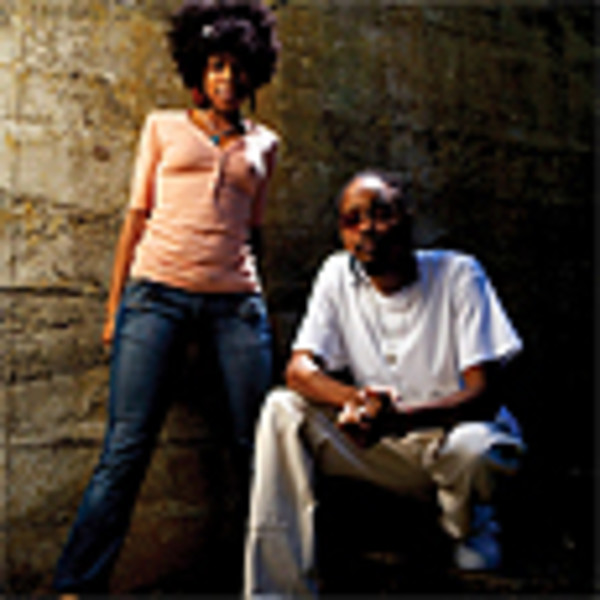
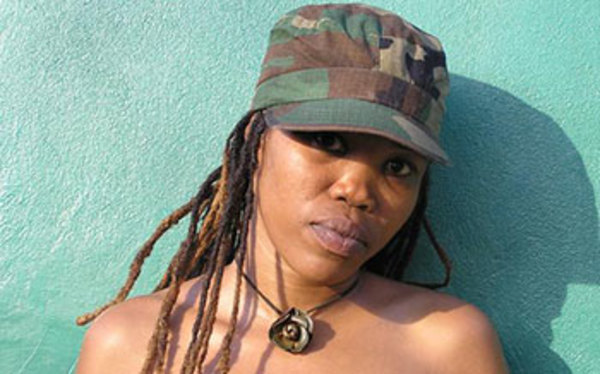
Georgia Anne Muldrow and Dudley Perkins (a.k.a. G&D) are two of the few soul revivalists that don’t have to hide behind retro samples and extravagant producers. Growing up under the wing of ’70s progressive jazz and funk, the duo has reinvigorated the songwriting and production process, using both live keyboards, an array of synths, and primitive software. “One” taken from The Messsage Uni Versa (Look), is a new face of conscious soul that transcends overtly positive hip-hop and all things throwback. Photo by Peter Z. Jones.

Georgia and Dudley – One

Institubes: Backpack Hip-Hop Heads

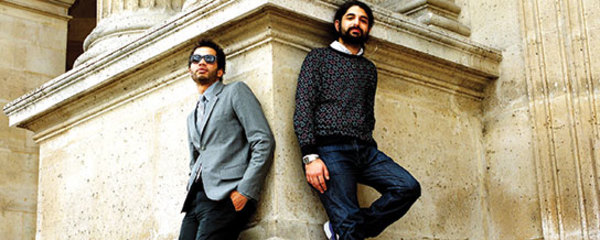
Institubes, the label best known for uniting hip-hop and techno on the dancefloor, was an idea incubated in the brains of Teki Latex (from avant-rap group TTC) and his friend, Martinique native Jean-René Etienne. The two met through the indie hip-hop scene in Paris, both writing hip-hop reviews for Radikal magazine and sharing a common fixation with Company Flow, Anticon, and Rawkus. “Teki and I tend to develop the same obsessions without really talking about it,” says Etienne. “And we are really happy to find someone else in the world with that same obsession.”

Fed up with the backpack scene (“It got very self-involved,” says Etienne), the pair discovered yet another shared passion: Destiny’s Child. “It was so striking to see that you could have very advanced and relevant music that wasn’t only for guys in a bedroom,” Etienne explains. “The first new R&B and Timbaland records were very important to us.”

Around 2003, the duo fulfilled their vision of taking rap back to the dancefloor, issuing Para One’s retro videogame hip-hop track “Beat Down” backed with “Turtle Trouble,” whose squelchy synths, banging bass, and insistent 4/4’s presaged the nouveau French house sound.

With genre barriers in dance music quickly melting, Teki and Jean-René joined forces with Emile Shahidi of Arcade Mode and fellow TTC producer Tacteel, and set up shop in Northern Paris, near the Clignancourt métro. Since then, they’ve issued U.S.-style hip-hop mixtapes from TTC’s Cuizinier and Orgasmic alongside gloriously insistent anthems, including scissored, next-wave filter house from Surkin (“Radio Fireworks,” his remix of Para One’s “Midnight Swim”), cheeky Baltimore and acid sounds from Bobmo (“To the Bobmobile,” “Legally Dead for 4’31”), and atmospheric maximal tech-house from Das Glow (“Cathedrale,” “Vulcanice”).

Each artist not only has a distinct musical persona but also presents a highly personalized graphic look, with art direction often provided by Etienne. “For us, it has always been very important to show that [we ’re making] dance music, but it hasn’t been done only by machines,” he explains. “What’s interesting about techno is that it’s really a struggle between a machine and the guy behind the machine. You don’t really see that in most of rock music, which is about the guy and his instrument as one. It’s a question of obvious mastery. In dance, we don’t really know what the guy is doing with his laptop–if he loves or hates his machine. To present it right, we have to find the proper look for the music and the people doing it.”

Institubes isn’t averse to a good marketing scheme, but even that is a labor of love for these rule-breakers, whose ethos is reflected in their name. “It’s a play on words,” explains Etienne. “You have ‘institute’, meaning some kind of cultural administration with patrimonial ambitions; but also with a research component to it. Then ‘tubes’ which, in France, means hit records. So it’s some kind of research lab or museum for hit records.” Indeed.

Jean-René Etienne dishes the dirt on five Institubes artists:

Bobmo
“Bobmo is from Bordeaux, the second most happening city in France right now, but he’s moved to Paris. He’s very young, very energetic, and quite bizarre. He’s this young, druggy-type kid–he’s not a heroin addict, he just looks that way. He’s also very obsessed with ghetto house. He wants to make Dancemania tracks, but he’s French so it comes out different. He’s an internet friend of Surkin’s, that’s how we got in touch with him. They have a duo together called High Powered Boys, which is them doing tracks via instant messenger. We’re doing a series of 10 10-inches of theirs.”

David Rubato
“He’s a very peculiar character. He’s a musicologist, which makes him the only guy on the label actually trained to write music. He also works in sample replay. Whatever you give him, he can reproduce it. He sent me a track that he made because he just bought a new controller and he wanted to test it out; it’s just 15 minutes of him doing live cuts and he added a bassline. I heard it and was like, ‘We have to put that out.’”

Orgasmic
“He’s really one of the best French DJs ever. He really introduced French kids to so much music that it’s kind of crazy when you think of it. He was playing Dirty South rap in France when it wasn’t popular in the States. We are preparing a producer album for him–mostly French rappers rapping on Orgasmic productions. He’s also the only proper rave kid in the crew. He knows everything about techno and actually experienced it, but at the same time he’s also the real hip-hop so it’s very weird. When American journalists talk about him, they always note how strange it is that a rap DJ would be so glammed up.”

Das Glow
“He is really into Berlin techno; at the same time, he’s the biggest fan of [French house label] Roulé. His music is techno but with very divergent influences. He’s a purist, but not really because his mind doesn’t work that way. He will send me a snippet of a track and two hours later I will get the same track but he will have mangled it and it sounds very different. He’s also a jeweler. He did some silver lace jewels for us.”

Surkin
“He’s the biggest retro gamer. He just bought a Vectrex in Japan, which is one of the first game consoles. He’s really young (and he looks 14) and he has very strong ideas about how everything should look. Surkin only likes house, mostly Chicago and ghetto house. And he has two faces. He has his public face that’s quite shy. When we were in Tokyo we were doing radio interviews and all the girls were like, ‘He’s so kawaii, he’s so small, he’s so cute.’ It’s a very good front he’s putting on–behind that he’s quite crazy.”

Papier Mash-Up: Paris Guides

While the web continues to show its strength with club listings and gossip blogs, Paris has got plenty of well-established, paper-and-ink publications that will set you on the path to ultra-coolness with their music, fashion, and culture coverage. Here are five of our favorites.

Les Inrockuptibles (€ 5.90)
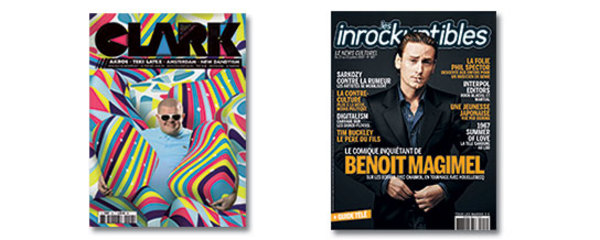
The venerable Les Inrockuptibles has been around for more than 20 years in some form or another. Now it’s a weekly, and its focus has moved beyond just rock music into discussions of art censorship, politics, and other broader social topics. Their website’s filled with reviews, and offers a recently launched podcast featuring tons of hot tracks.

Cover Stars: Björk, Emilie Simon, Sofia Coppola

Clark (€ 5)
A kindred spirit of XLR8R and Mass Appeal, Clark covers its fair share of streetwear, hipster trends, design, style, art, and, of course, sick music. We’re such close relatives we’ve employed illustrators like So-Me and Parra, and covered music from Dizzee to Ghostface to Hadouken. The French-language bi-monthly magazine is available at hip stores like The Lazy Dog, Artoyz, and Kiliwatch.

Cover Stars: TTC, Dalek, DJ Mehdi

Purple Fashion (€ 20)
The crème de la crème of Parisian fashion books, Purple features the world’s top designers’ work (usually photographed by Terry Richardson, Juergen Teller, or Richard Kern) alongside cultural news stories and interviews with subjects as far-flung as writer Chuck Palahniuk and Eminem. Like a French version of Interview, only far less frequent and way more expensive.

Cover Stars: Vincent Gallo, Mickey Rourke, Chloë Sevigny

WAD (€ 7.50)
Everyone’s outsourcing these days, so why can’t we? That’s the idea behind Paris’ WAD (an acronym for We’Ar Different) magazine, a guest-curated publication focusing on “urban fashion and culture.” Guest editors like Patrizio Miceli and husband-wife team Pedro and Nadège Winter (of Ed Banger and Colette, respectively) have helmed recent special issues of this highly stylized tome.

Cover Stars: mouths, arms, random body parts

Mondomix (free)
It’s pretty futile to try to cover world music without having a political bent, so Mondomix happily embraces the activist approach, uncovering all manner of stories–from music of the banlieues to the Norteño electronic scene in Tijuana. Launched online in 1998, Mondomix has expanded to include a 100,000-distributed print version and a world-music download site.

Cover Stars: Tom Zé, Tinariwen, Nortec Collective

Pon Di Wire: Mr. Vegas, Free Jah Cure Tracks, Ninja Man

Dancehall soundclash promoters Irish and Chin have announced that this year’s 10th annual World Clash-New York will be the final installment of the event they do. The three-tiered show, titled Game Over, takes place November 24 at Amazura, in Queens, New York. Vintage Cup Clash features outrageous “Don Gorgon” deejay Ninja Man selecting records, versus the U.K.’s “gentleman rudeboy” David Rodigan, while Celebrity Cup Clash sees Beenie Man battle Tony Matterhorn. Finally, The Main Event features past champions Black Kat (2003, 2004), Mighty Crown (1999), Bass Odyssey (2001, 2006), Rebel Tone (2002), and Sentinel (2005). “We are extremely ecstatic about closing out World Clash,” says Garfield “Chin” Bourne. “Our dedicated fans deserve to experience the best in soundclash entertainment, while being a part of history.”

According to Sharlene at Portmore Suss, deejay Queen Ifrica is blowing up big-time in JA, as witnessed by the crowds amassed at her video shoot for “Don’t Bleach.” Unlike previous female MCs that have made sexuality their main selling point, Ifrica’s style is closer to conscious artists Sizzla or Tony Rebel. “Jamaican people, dem love her,” Sharlene remarked. “Right now, it look like she is the female artist of the year. Derrick Morgan must proud of him daughter.” 

Mr. Vegas.

Mr. Vegas has a new album on Delicious Vinyl. Hot It Up features his recent hits “Hot Wuk” and “Tek Weh Yuh Self.” Mr. Vegas is the executive producer of the project, which also includes productions from Sly & Robbie and Stephen McGregor, plus vocal appearances from Jovi Rockwell, Lexus, and Vybz Kartel

Although Ninja Man’s career was originally propelled by graphic “gunman” lyrics, his first U.S. concert 15 years may show the artist turning over a new leaf. Decked out in all white clothing, Ninja declared to a Jamaican Star reporter, “Mi a set a different example, so di yout dem can see outta a evil come good. My aim is to work wid di government for a better country. I want to set an example, not for myself, but for the yout who are the future.” He’s done a turnabout like this before. In 1997, he christened himself Brother Desmond and released a gospel album.

A new Jamaican Reggae Academy has been established, and consists of singers, songwriters, record producers, studio engineers, artist managers, agents, radio personalities, nightclub owners, deejays, and entertainment journalists. The body will nominate artists and albums for the first annual Reggae Academy Awards, to be held in February 2008 at the National Indoor Sports Centre. “There are 34 categories that will be awarded, including two People’s Choice awards, and the awards will be voted on by the Reggae Academy members,” said Carmelita Riley, attorney and administrative assistant for the Reggae Academy. 

For a limited time, Danger Zone Music is offering free downloads of Jah Cure’s first singles recorded since his release from prison. “My Life” is a somber reflection of the artist’s life experiences, while “Freedom” is a celebration of his emancipation, in which Cure gives thanks for the prayers of his supporters.

A Rep JA Clothing Design.

United States-based Rep JA Clothing features popular Jamaica dancehall slang expressions on its new t-shirt line. Dancehall songs and popular phrases such as “Sell Off,” “Tek Weh Yu Self,” “Badman Forward, Badman Pull-up,” and “Goodas Fi Dem” inspire the designs. Artists Voicemail, Vegas, Black Bling, Twin Of Twins, Lexus, Mr. Peppa, and Junko are endorsing the line.

Finally, a quick look at the top five singles in JA and the U.K.:

Jamaica Dancehall Charts
1. Chuck Fender “Caah Kool” (Birchill)
2. Busy Signal “The Days” (Daseca)
3. Munga “Wine Pon It” (Casper Production)
4. Anthony B “Tease Her” (Trinity 7)
5. Cham “Conscience” (Don Corleon)

BBC 1Xtra Dancehall Charts
1. Tarrus Riley “She’s Royal” (VP)
2. Jah Cure “Sticky” (Danger Zone)
3. Collie Buddz “Mamacita” (Sony)
4. Damian “Jr Gong” Marley “Something For You” (Tuff Gong)
5. Cham “Conscience” (Don Corleon)

Stones Throw 2007 Tour Announced, Plus “Walk For Dilla” Date

It’s always a treat when the Stones Throw family comes to town, and Peanut Butter Wolf and crew are currently packing the tour bus for their annual label tour, which stops in most major North American cities and showcases the many sides of hip-hop that the L.A.-based label has to offer. Joining PBW in festivities for 2007 will be the almost iconic producer Madlib, jazz drummer and Detroit veteran Karriem Riggins, accomplished turntablist and Beat Junkies founder J.Rocc, and MC Percee P, whose debut artist album, Perseverance, recently arrived at record stores.

The 2006 tour rested somewhat under the shadow of the late J Dilla, who passed away from lupus earlier that year. Rest assured, the Detroit legend has hardly been forgotten in 2007. “Walk For Dilla,” a fundraising event coordinated by the Alliance for Lupus Research, will take place October 13 in New York, and aims to raise money for lupus research. Get involved here, then go enjoy the show.

Tour Dates
11/08 Los Angeles, CA: El Rey Theatre
11/16 San Francisco, CA: The Independent
11/17 Portland, OR: Berbati’s Pan
11/18 Seattle, WA: Neumos
11/19 Vancouver, BC: Richards on Richards
11/29 Minneapolis, MN: Foundation Nightclub
11/30 Chicago, IL: The Abbey Pub
12/01 Toronto, ON: Opera House
12/02 New York, NY: Highline Ballroom
12/03 Philadelphia, PA: Starlight Ballroom
12/04 Boston, MA: Paradise
12/06 Washington, DC: Black Cat
12/07 Baltimore, MD: Sonar
12/08 Atlanta, GA: The Loft 

Stones Throw Boss Peanut Butter Wolf. Photo By Joao Canziani.

Sunburned Hand of the Man Fire Escape

Known for its primitive, anarchic improvisations, Sunburned Hand of the Man believes in allowing lots of time for its sonic mantras to trigger the desired psychedelic payoff. To that end, the Massachusetts collective has been influenced by Amon Düül II’s chakra-opening, marathon communal jams and Angus MacLise’s miasmic percussion fantasias; what they lack in discipline and structure they compensate for in hypnotic power. But with Fire Escape, SHOTM changed tacks, using Kieran “Four Tet” Hebden’s studio and letting him mix the results. Hebden sharpened the focus, brightened the sound, and beefed up the rhythms, yet SHOTM’s exploratory essence remains intact. Hebden’s comparison of this music to avant-funk mavericks 23 Skidoo rings true-and that’s a rare, great thing.

Blue States First Steps Into…

Danny Boyle took the creepy yet chilled electro-pop of Blue States widescreen when he tacked their “Season Song” onto the end of his destabilizing horror classic 28 Days Later. States architect Andy Dragazis noticed: “First Steps…Last Stand,” the second song on his one-man band’s latest release, sounds like that song’s instrumental twin. The lesson being: Don’t fuck with the streak. Dragazis hasn’t, although his fourth album is a bit heavy on the high end, filled with crystalline structures like “Gaining Time” and “Allies.” First Steps Into… could use some darker moments besides the Ligeti-like “100s and 1000s.” (You know, the kind that got Boyle high.) Meanwhile, the streak for successful, if piercing dream-tracking continues.

Page 3080 of 3781
1 3,078 3,079 3,080 3,081 3,082 3,781